
October 25, 2026
Exhibitions
Exhibitions

A rare London exhibition of new works and historical material returns us to Cady Noland’s uncomfortable vision of American spectacle, power and the ordinary object.
The Armory Show’s 2026 programme places Caribbean art, museum acquisitions, performance and emerging galleries at the centre of the fair. The result is a revealing attempt to make the art fair function as more than a marketplace.
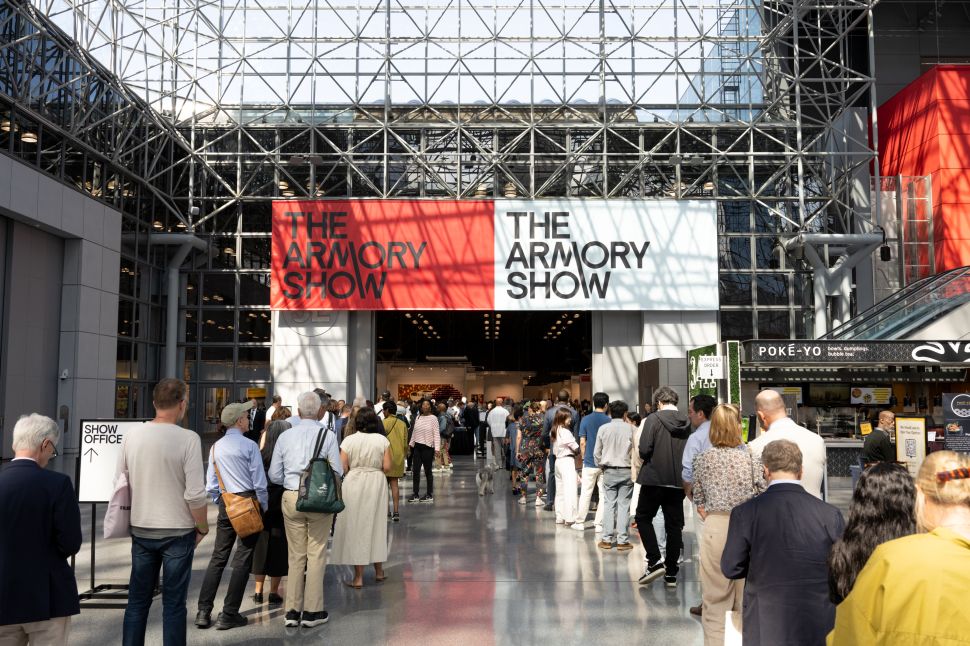
The most consequential part of an art fair may no longer be the fair. It may be the network around it: the museum that acquires from a young gallery, the curator who reframes a region, the performance that temporarily turns a convention hall into a public stage, the institutional conversation that continues after the booths close.
The Armory Show’s newly announced 2026 programme makes that argument unusually explicit. When the fair returns to the Javits Center from 24 to 27 September, approximately 230 galleries from more than 30 countries will still provide the commercial engine. But the programming around those booths has been designed to do considerably more work than decorate the marketplace. Caribbean art and its diasporas run through the curated sections; two museums will acquire works through new prizes; large-scale installation and live performance return to the centre of the floor; an after-hours programme extends the fair beyond conventional viewing; and the sections devoted to younger galleries have been expanded.
None of these developments abolishes the art fair’s fundamental purpose. Galleries attend to sell. Collectors attend, in large part, to see and buy. What is interesting is the increasingly sophisticated cultural structure being built around those transactions. Under Frieze ownership, The Armory Show appears intent on differentiating itself not simply through the size of its exhibitor list, but through the specificity of the ecosystem it can assemble in New York.
The Armory Show has occupied an unusually durable place in New York’s art calendar since its founding in 1994. Frieze acquired the fair in 2023, adding another layer to a city that already supports multiple major commercial events. The question since then has been less whether The Armory Show would survive inside a larger fair group than how distinctly it would be allowed to behave.
The 2026 edition offers one answer. The fair has moved to 24–27 September, later than the early-September dates familiar from recent years, and organisers describe an intentionally extended Armory Week around it. This is not merely scheduling. A major fair gains value when galleries, museums, collectors, curators and cultural institutions can use its dates as a reason to coordinate activity across a city. The fair becomes an anchor rather than a sealed event.
Inside the Javits Center, that strategy is visible in a floor plan and programme that give curatorial sections unusually prominent roles. The main Galleries section remains broad, but Solo, Presents, Focus, Platform and Not-for-Profit are designed to create different speeds of looking. Presents is reserved for galleries younger than twelve years. Solo narrows attention to one artist. Platform takes large-scale sculpture, installation and site-specific work into the fair’s central spaces. Focus gives a curator the ability to create a geographic and intellectual frame across participating booths.
For 2026, that frame is the Caribbean.
Focus is curated this year by María Elena Ortiz of the Modern Art Museum of Fort Worth and highlights artists from across the Caribbean region. In parallel, Platform is organised by Sculpture Center curator Jovanna Venegas under the title Passages and Threshold, with announced artists including María Magdalena Campos-Pons, Hew Locke, Bony Ramirez, Lucia Hierro, Valerie Brathwaite, Margarita Cabrera and Curtis Talwst Santiago.
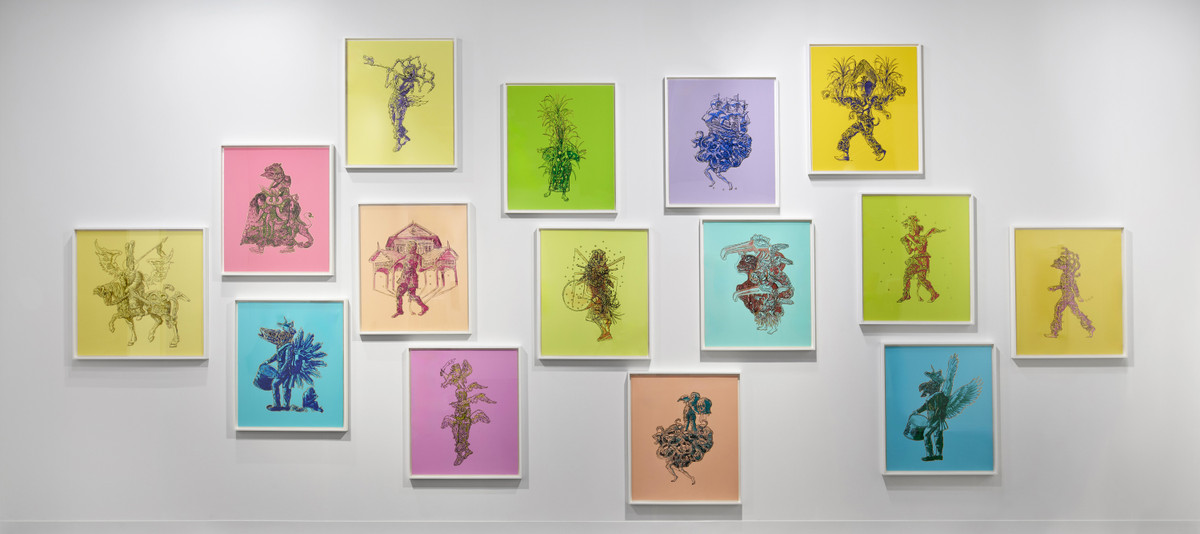
The overlap is important. A regional emphasis at an art fair can easily collapse into branding: a cluster of booths, a panel and a press-release paragraph. The Armory programme instead carries the Caribbean emphasis through different formats—commercial presentations, monumental work, institutional partnership, a residency prize, performance and the fair’s Spotlight programme.
That does not mean the artists share a single aesthetic or even a single definition of Caribbean identity. Quite the opposite. The value of a curatorial frame this broad is its capacity to hold migration, diaspora, colonial history, material traditions, language and contemporary urban experience without reducing the region to a style.
For collectors, the result should be approached with the same discipline applied to any curated section: use the framework as a route into practices, not as a shopping category. The strongest fair sections make connections visible, but the work still has to survive outside the theme that first brought attention to it.
The most structurally significant announcement arrived this week: The Armory Show is introducing the first museum acquisition prizes in its more than thirty-year history.
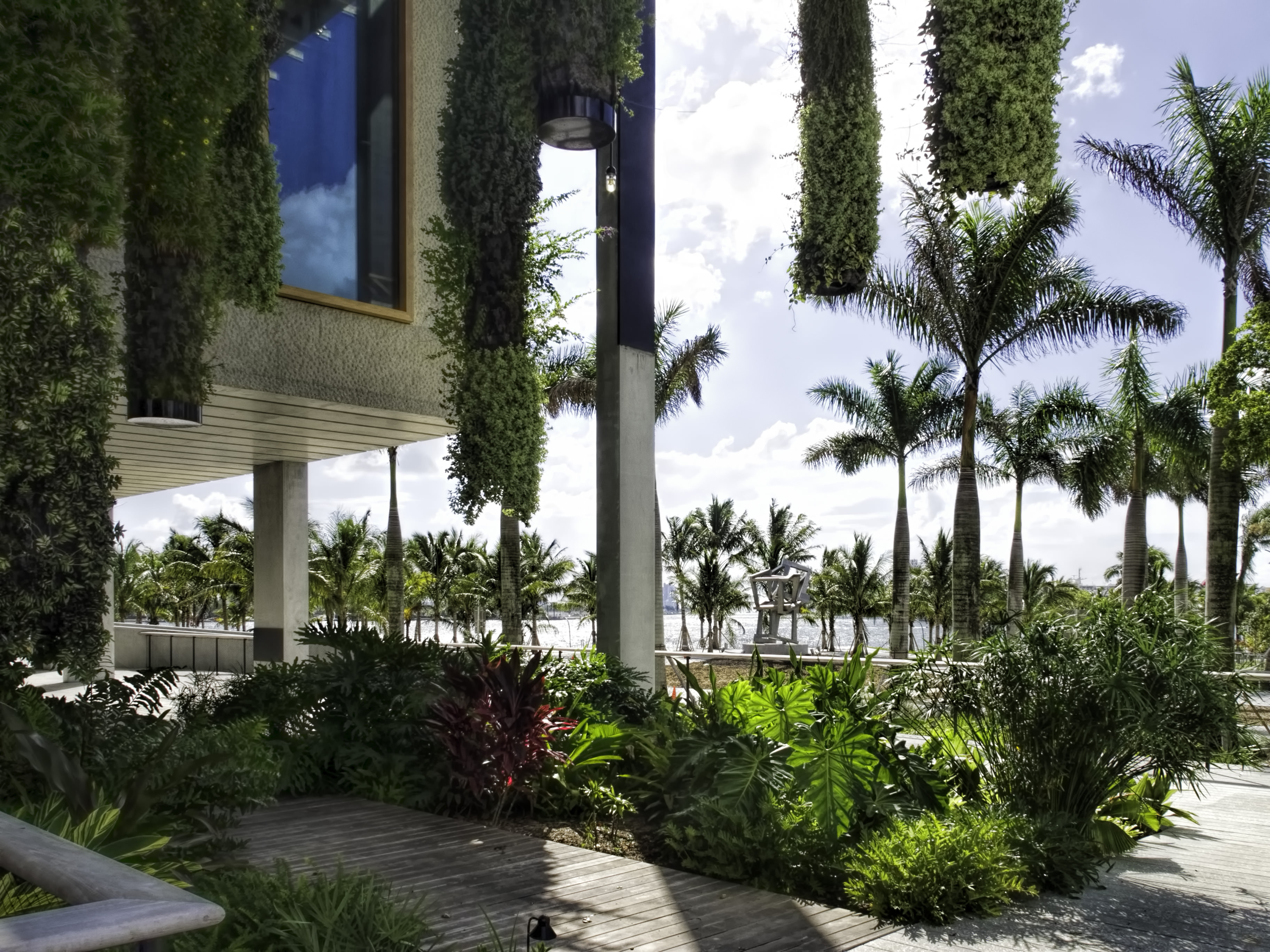
The Pérez Art Museum Miami Acquisition Prize will provide $20,000 at each edition to support acquisitions from the Focus section for PAMM’s permanent collection and the Green Family Foundation Caribbean Cultural Institute. The connection is unusually coherent. PAMM is based in a city whose history and contemporary cultural life are deeply intertwined with the Caribbean, while its Caribbean Cultural Institute has developed research and curatorial programmes around the region and its diasporas.
A second prize creates a $15,000 fund for the Bronx Museum to acquire from Presents, the section devoted to emerging galleries and recent solo and dual-artist presentations. This year Presents includes approximately fifty-five galleries.
In raw art-market terms, $20,000 and $15,000 are modest numbers beside the seven-figure works that can appear at an international fair. Institutionally, they can be far more consequential. A museum acquisition changes an artwork’s biography, gives an artist a public-collection reference and sends revenue directly through a participating gallery at precisely the part of the fair where smaller businesses and less established practices often operate.
The prizes therefore do something more interesting than award prestige. They convert fair participation into collection building.
They also change the way visitors can read the floor. Focus and Presents are no longer simply places where the fair tells you to discover something; they are sections in which museum curators will be making acquisition decisions in public view. Collectors need not follow those decisions, but they can learn from the questions institutions ask: Is the work representative? Does it fill a gap? Can it sustain scholarship? Does it make sense alongside what the museum already owns?
Commercial fairs have always had an uneasy relationship with very large art. Monumental installations attract attention but can be difficult to sell, move, store or place. Platform exists precisely in that tension, giving works that would overwhelm a standard booth space a central role in the fair.
Venegas’s Passages and Threshold brings together artists whose practices frequently engage movement, history, displacement and the politics of material. Campos-Pons’s work has long connected Cuba, Africa and the United States through photography, installation and performance. Locke has repeatedly used ships, pageantry, monuments and accumulated ornament to examine empire and migration. Ramirez and Hierro approach Caribbean and diasporic identity through distinctly contemporary image economies and material languages.
The announced Armory Sculpture programme extends that interest in scale with work by Sonya Clark, Rafael Ferrer and Kaloki Nyamai.
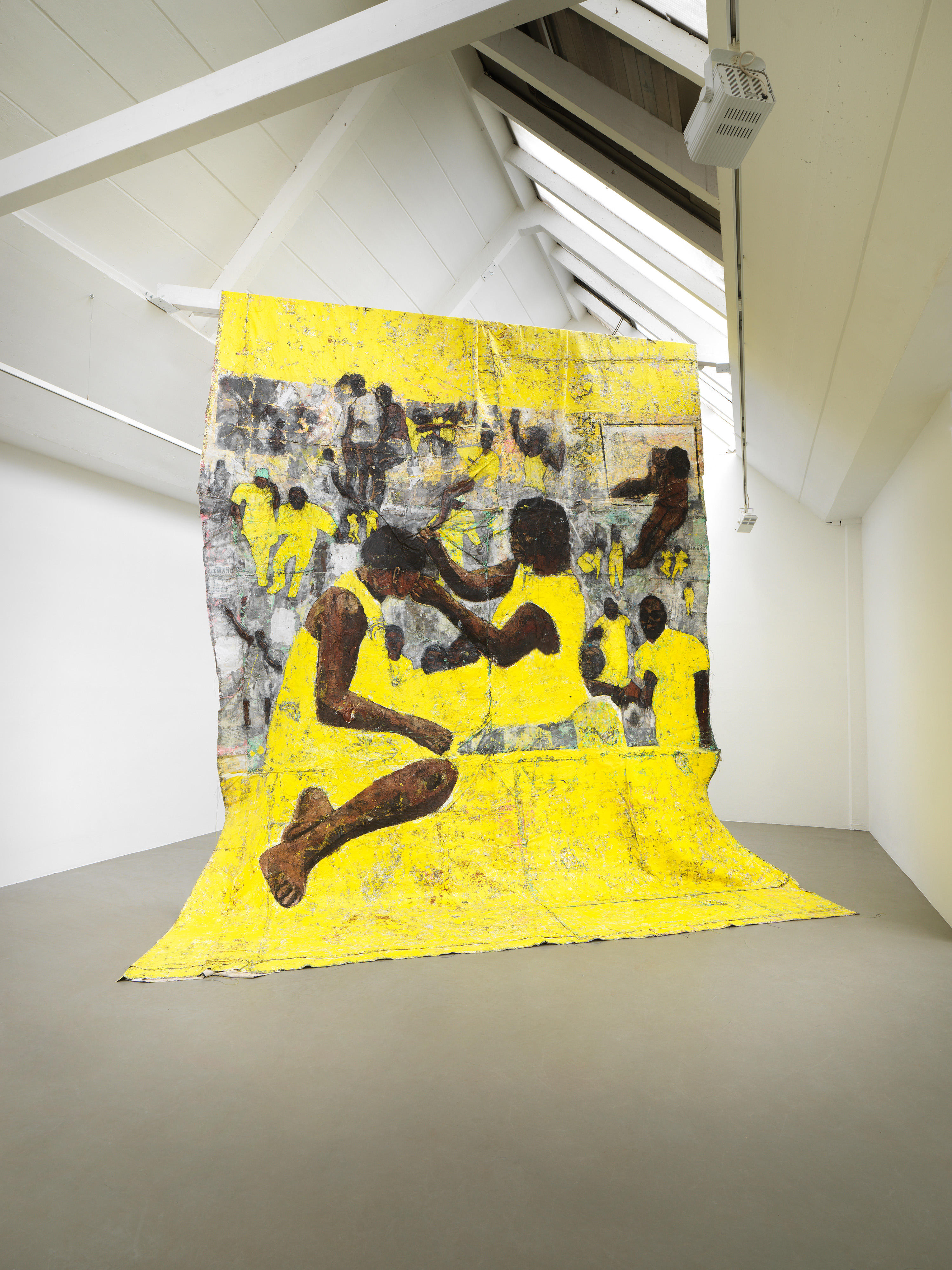
For the fair, these projects perform an architectural function as well as a curatorial one. Javits is a vast trade-show environment. Large-scale art breaks the grid. It interrupts the sequence of booth after booth and gives visitors landmarks by which to navigate. At its best, Platform turns the logistics of the convention centre into part of the exhibition design.
The 2026 Armory Spotlight recipient is El Museo del Barrio, the New York institution founded in 1969 and devoted to Latin American, Caribbean and Latino art and culture. Its presentation will feature Puerto Rican artist Lulu Varona in a participatory textile installation that invites visitors to contribute.
That choice is more than institutional visibility. Participation changes the social contract of the booth. An art fair ordinarily trains visitors not to touch. A collaborative textile work asks them to become part of its production.
Varona’s practice, which has used embroidery, cross-stitch and accumulated textile units to think about memory, repetition and everyday experience, also brings craft processes into a context still strongly shaped by the language of fine-art objects and market categories. It is a useful reminder that the strongest public programming at a fair need not imitate the sales floor.
The programme extends further through live work. Tavares Strachan will present a new performance, Special Blue: Act I, on 24 and 25 September, sponsored by Marian Goodman Gallery. Strachan’s practice has consistently used research, spectacle, scientific history and overlooked biographies to question who enters official narratives. A live performance inside a major commercial fair gives that inquiry a different audience and tempo from a conventional booth presentation.
On Friday 25 September, the fair will also debut Armory After Hours from 7 to 9pm. The announced programme includes a processional performance led by DJ Foreigner in recognition of the fair’s Caribbean focus.
This might sound like the experiential layer now expected of every large cultural event, but it points toward a real strategic problem for art fairs. The traditional model asks visitors to spend hours walking rectangular aisles while looking at hundreds or thousands of objects. Attention inevitably degrades. Performance, procession, food, conversation and after-hours formats reintroduce duration and unpredictability. They turn attendance into something closer to an event than an inventory review.
Collectors may arrive to buy art, but even highly committed buyers do not experience fairs purely as transaction machines. Relationships with galleries, artists and other collectors develop socially. A programme that deliberately increases those points of contact can therefore serve the market without resembling a sales initiative.
Another meaningful 2026 change is quantitative. Presents has grown to around fifty-five galleries and Solo to approximately twenty-five, with the fair saying the two sections have expanded by more than twenty per cent.
This is where the economics of the fair become inseparable from its cultural claims. Younger galleries have faced intense pressure from rent, shipping, staffing, travel and fair fees at a moment when the middle of the art market remains uneven. An art fair cannot solve those structural problems simply by adding more emerging exhibitors. But visibility, prize structures and museum acquisition opportunities can make participation materially different.
The Gramercy International Prize continues that emphasis. The 2026 recipient, New York gallery Margot Samel, is presenting Leroy Johnson and Sasha Brodsky in Presents. The programme’s historic purpose has been to give a young New York gallery a subsidised or supported route into the fair. Combined with the Bronx Museum acquisition prize, Presents now operates not just as a label for newer galleries but as a concentration of institutional attention.
The Armory Show’s programme also retains formats whose effects are less visible on the floor. Armory Live is the fair’s multi-day public symposium, bringing together artists and figures from the international art community. The Curatorial Leadership Summit is an invitation-only annual gathering of museum directors and curators that culminates in a public keynote.
These programmes matter because fairs have become meeting infrastructure for institutions as much as sales venues for galleries. A museum director may see a work in a booth, meet an artist at a dinner, speak to another curator at the summit and encounter the same practice again months later in a studio visit. The art world often appears to move through dramatic auction records and instant discoveries; in reality, institutional recognition is frequently built through repeated encounters of exactly this kind.
The fair is, of course, selling access to a marketplace. Nothing in the programme changes that. But a mature art fair now has to sell another proposition simultaneously: that being there matters culturally even if no purchase is made.
The Armory Show’s 2026 programme is strongest where those two propositions overlap rather than compete. Museum acquisition prizes create transactions with public consequences. Focus gives commercial presentations a curatorial frame. Platform gives difficult-to-booth art visibility. Spotlight moves a New York institution into the fair. Performance creates communal time. Expanded emerging sections place younger galleries closer to collectors and curators who might otherwise never encounter them.
Under Frieze ownership, The Armory Show does not need to imitate Frieze New York. Its more convincing route is to sharpen what has always made it distinct: a broad international fair with a particular relationship to New York, the Americas and the institutional ecology around the market.
The 2026 edition suggests that this is precisely the direction being pursued. The most useful way to visit may therefore be to resist treating programming as the material you look at once you have finished the booths.
This year, the programme is part of the map.
The Armory Show 2026
Javits Center, New York
24–27 September 2026
Reporting status: 21 August 2026. Programme details are based on The Armory Show’s current 2026 pages and announcements available at time of writing; individual events and participants should be rechecked immediately before publication and attendance.
A rare London exhibition of new works and historical material returns us to Cady Noland’s uncomfortable vision of American spectacle, power and the ordinary object.
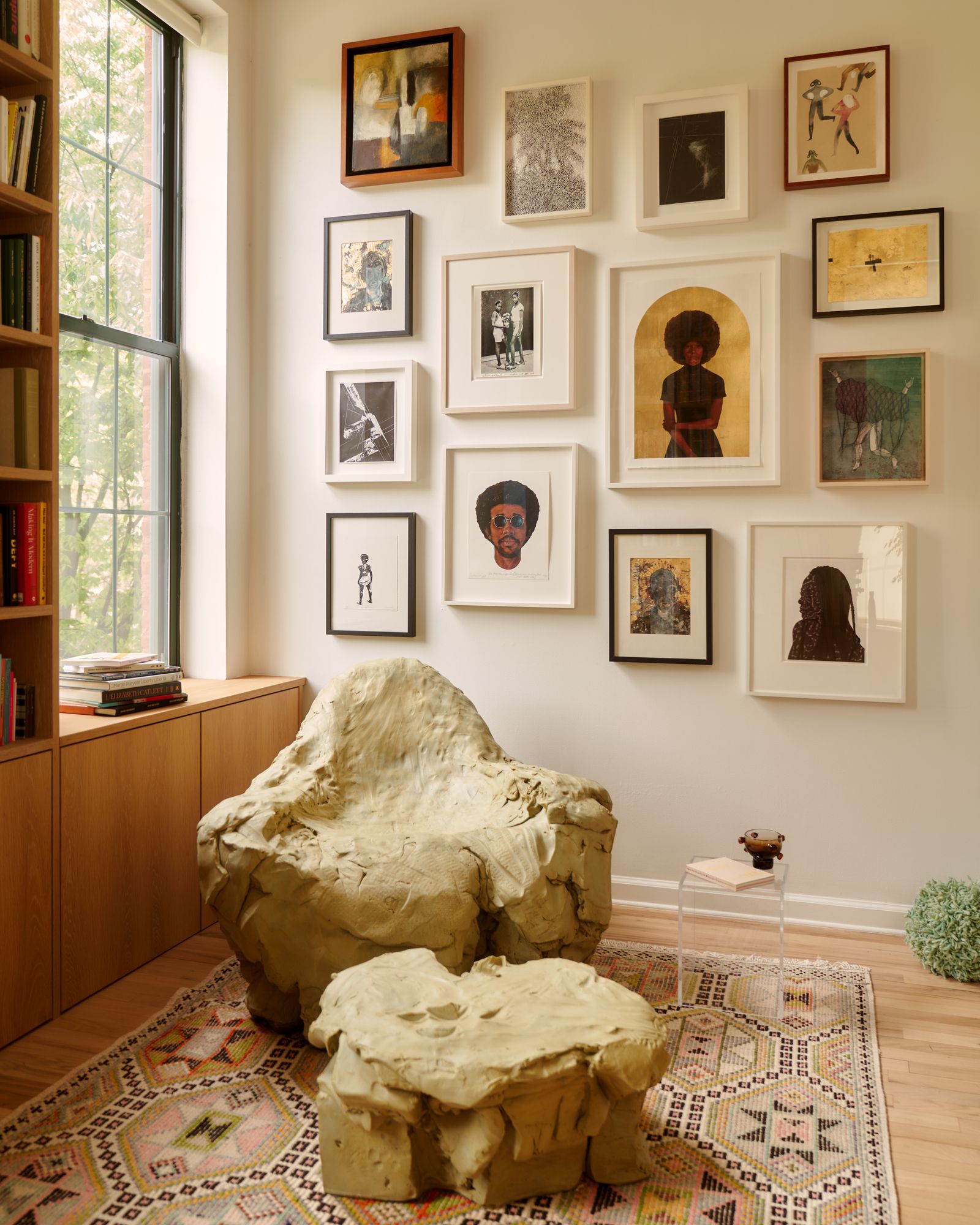
A gallerist’s Clinton Hill apartment reveals how painting, sculptural furniture, family history and unorthodox choices can make a home feel genuinely collected.
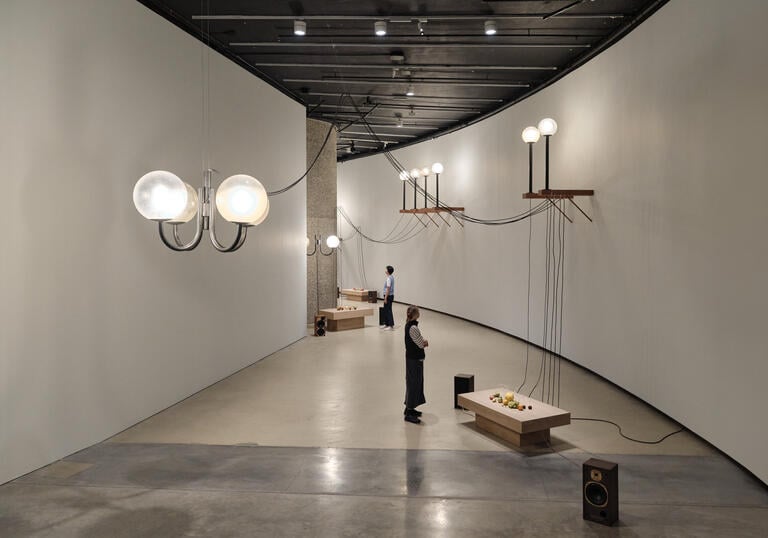
With light, sound, fruit and kinetic systems, Yuko Mohri makes the Barbican’s Curve into an argument for attending to what does not quite work as expected.