
November 16, 2026
Exhibitions
Exhibitions

A current, verified route to Abu Dhabi’s exhibitions outside Frieze: new works at 421, Louvre Abu Dhabi and Cultural Foundation, with the art behind each show.
A current, verified route to Abu Dhabi’s exhibitions outside Frieze: new works at 421, Louvre Abu Dhabi and Cultural Foundation, with the art behind each show.
Frieze Abu Dhabi opens its inaugural edition from 19 to 22 November 2026 at Manarat Al Saadiyat. Yet the most useful way to understand the city’s current art scene is not to confine a visit to the fair. Its strongest counterpoint is a circuit of institutional commissions, intimate solo exhibitions, sound and installation works, and public programmes unfolding independently of the market. For collectors arriving during fair week, these shows provide vital context: who is working locally, how artistic practices develop over time, and what is being commissioned when a sale is not the primary objective.
The strongest itinerary for November 2026 begins with what is actually on view. Across Mina Zayed, the Cultural Foundation and Saadiyat, three different settings frame distinct questions about language, history, material and the ways viewers move through space.
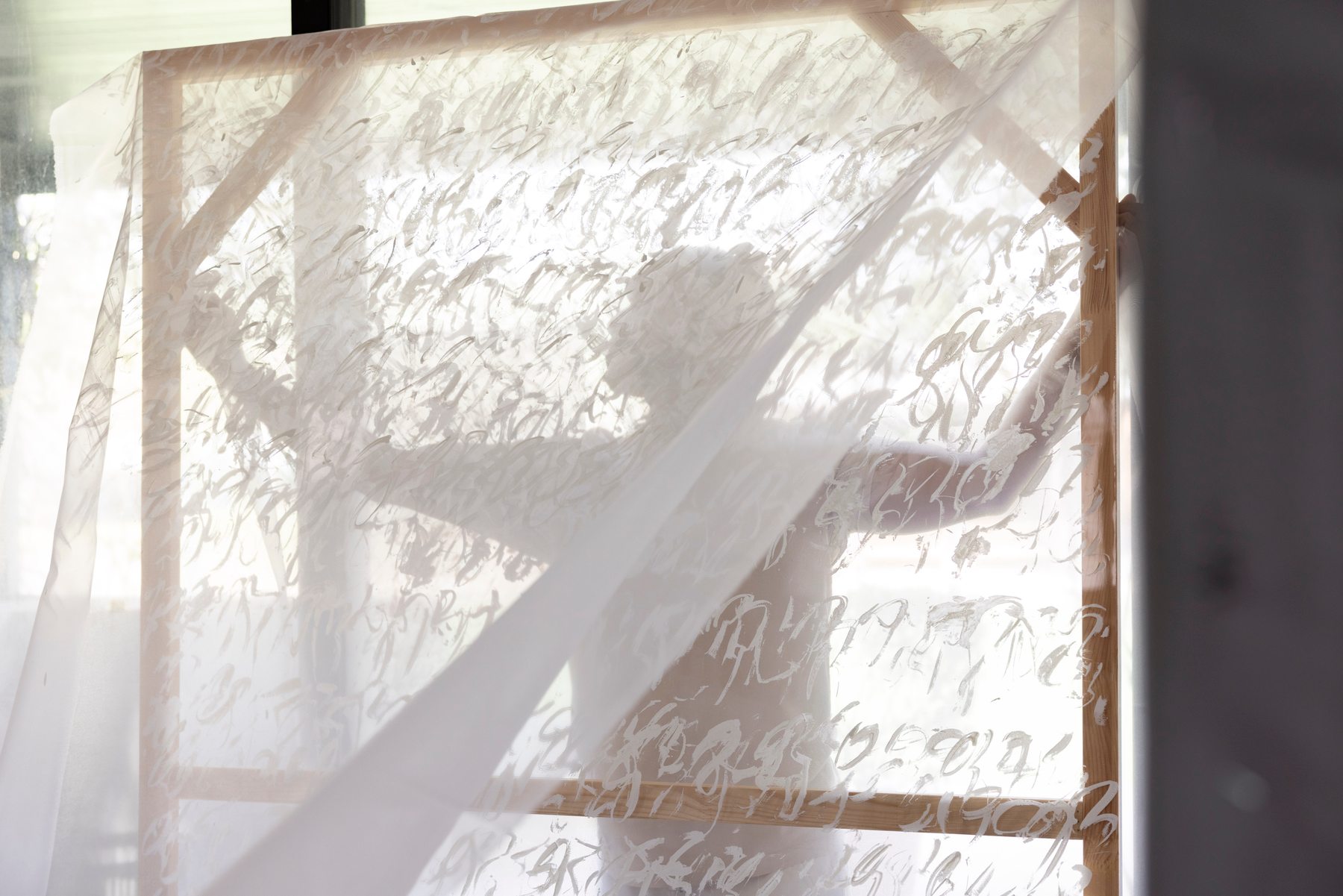
At 421 Arts Campus in Mina Zayed, Juma Alhaj’s Revelation runs from 4 October 2026 to 10 January 2027. The Emirati artist has expanded his practice from expressive inscriptions into an architectural environment: glass, fabric, water, light and a deliberately slowed journey shape how viewers encounter his marks. The project is the culmination of 421’s Artistic Development Program, which makes the exhibition particularly revealing as a case study in institutional support for an artist’s experimentation.
The exhibition opens with Balaa (2026), a diptych involving Alhaj’s accumulating tally-mark language, and includes Traces (2026), engraved glass in which reflections and passing light complicate fixed readings. The quieter enclosure Hijr (2026) introduces hanging fabric and water. These are not simply the subjects of a conventional wall-hung display: visitors’ movement and the architecture itself form part of the work. The official 421 press announcement names and illustrates the current installation; this is where photographs should be sourced.
In a companion exhibition at the same venue, Archipelago of Whispers asks how knowledge travels through forms often excluded from formal archives: gossip, murmurs, stories, acoustic signals and shared acts of listening. Curated by Deniz Kirkali and Elham Puriya Mehr, it includes artists Aliaskar Abarkas, Ruba Al-Sweel, Farah Al Qasimi, Gizem Karakaş, Yen Chun Lin, Omar Mismar and Ayman Zedani. It is open over the same 4 October 2026–10 January 2027 period.
The exhibition’s commitment to sound and participation creates a useful challenge for art collecting. How does one document a live or site-responsive work? What are the exhibition and acquisition conditions for a multi-channel sound installation? What has to be preserved if the performance, listening environment or technical apparatus changes? A visit here helps turn such questions from abstract collecting advice into the realities of specific works.
Opened on 11 November 2026 and scheduled through 28 February 2027, Art Here 2026: Confluences turns to the Indian Ocean as a historical and contemporary route of exchange. Guest curator Kamini Sawhney brings together six artists: Ahaad Alamoudi, Almaha Jaralla, Ravikumar Kashi, Reena Saini Kallat, Shamin Sharum and Vivek Vilasini. The exhibition is part of the programme associated with the Richard Mille Art Prize and uses the museum’s celebrated dome and waterfront setting as more than picturesque surroundings.
The premise connects historic trade and cultural encounters with contemporary migration, separation and communication. Among the current works documented by local reporting are Reena Saini Kallat’s Shorelines of Longing, drawing on messages exchanged across geographic distance, and Ahaad Alamoudi’s monumental I Was Promised the World and the Tide Came In. Both works belong to the current edition, not to a previous Art Here display.
At Cultural Foundation near Qasr Al Hosn, Shaikha Al Mazrou’s Two Horizons opened to the public in November and remains on view until 18 July 2027. Curated by Reem Fadda with Noor AlMehairbi, Paz Monge and Afra Saif Almazrouei, this expansive solo exhibition makes industrial materials appear unexpectedly pliant, provisional or weightless. It is organised around four chapters rather than an exhaustive timeline.
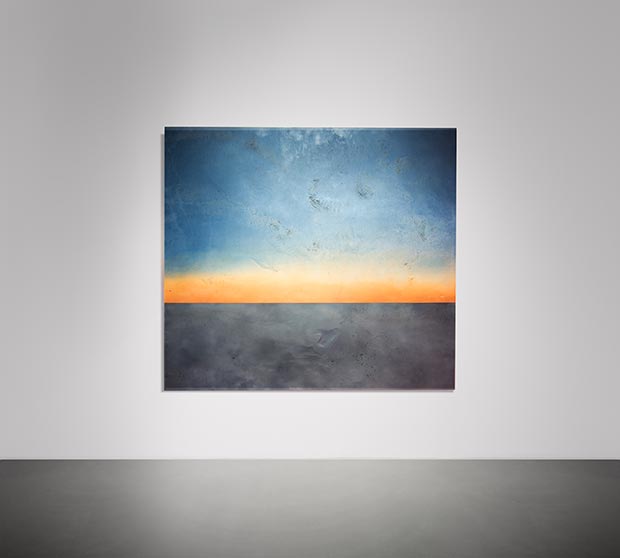
Current works include Fragmented Horizons (2026), an oxidised-steel installation that generates a shifting artificial horizon in the atrium; Displaced Coordinates (2026), which brings geometry into an unstable relationship with spherical form; and Water Was Never Blue (2026), engaging historical attempts to classify colour. For a collector of sculpture or design, the show rewards close attention to fabrication and to the way a work depends on its architectural setting.
The choice between the fair and the city is false. Frieze can intensify travel and professional exchange, while institutional exhibitions give that travel a stronger purpose. The works at 421, Louvre Abu Dhabi and Cultural Foundation resist being compressed into one regional style or a single investment thesis. They ask distinct questions about inwardness, speech, migration, material and perception.
A practical route would reserve a dedicated period for Mina Zayed and 421, followed by the Cultural Foundation near Qasr Al Hosn, and a separate Saadiyat visit covering Louvre Abu Dhabi and the fair. Visitors should check live hours, ticketing and individual exhibition access directly with the venues before travelling.
Because the current exhibitions occupy markedly different settings, it makes sense to organise the visit by district rather than by a single hierarchy of headline artists. Begin at 421 in Mina Zayed, where two exhibitions can be considered together: Juma Alhaj’s inward-facing installation and Archipelago of Whispers, an outward-looking proposition about how speech travels among people, machines and other living things. Their contrasting approaches gain in depth when experienced on the same visit. The work by Ruba Al-Sweel, Omar Mismar and Ayman Zedani makes the 421 programme more than a single-artist stop.
The Cultural Foundation offers a change of scale and setting. Shaikha Al Mazrou’s objects do not operate as isolated forms alone; the atrium, circulation routes and shifts in viewpoint help articulate the tension between a horizon perceived as stable and one that changes as a visitor moves. The building is an important site for local artistic life, so leave time for the space itself rather than treating the exhibition as a hurried detour.
On Saadiyat, Louvre Abu Dhabi places contemporary installations beneath a dome already associated with questions of light, shade and cultural exchange. Art Here 2026: Confluences is especially worth viewing in the context of Spices and Wonders: Sailing the Indian Ocean: one programme follows historical maritime connections; the other asks how movement, separation and exchange are lived now. The link is thematic, not an invitation to collapse six distinct artists into one account of the Indian Ocean.
Frieze visitors should consider these programmes as separate reasons to come to Abu Dhabi, not merely fringe entertainment. Access details and exhibition schedules should be confirmed on the individual institution’s website; fair credentials do not automatically grant entry to other venues.
A current, verified route to Abu Dhabi’s exhibitions outside Frieze: new works at 421, Louvre Abu Dhabi and Cultural Foundation, with the art behind each show.
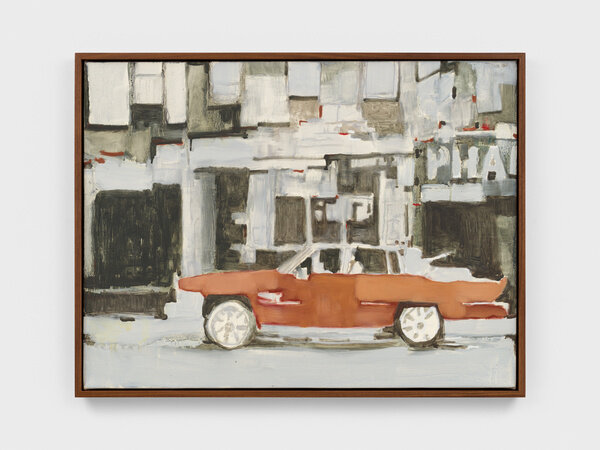
There is an unusual kind of uncertainty in Donyel Ivy-Royal’s paintings. A house can be unmistakably a house, and yet the air around it seems to carry several different moments at once. A wall may register as architecture, weathered paint, a partly erased sign or the memory of a place passed every day. The image remains recognisable without settling into description. This quality is at the centre of By the time the rain comes, we will be home, the Brooklyn-based artist’s first solo exhibition with Jack Shainman Gallery, opening in…

Frieze Abu Dhabi opens 19–22 November with 89 exhibitors. From regional modernists and Frieze Masters to Dala Nasser’s commission, our collector’s preview.
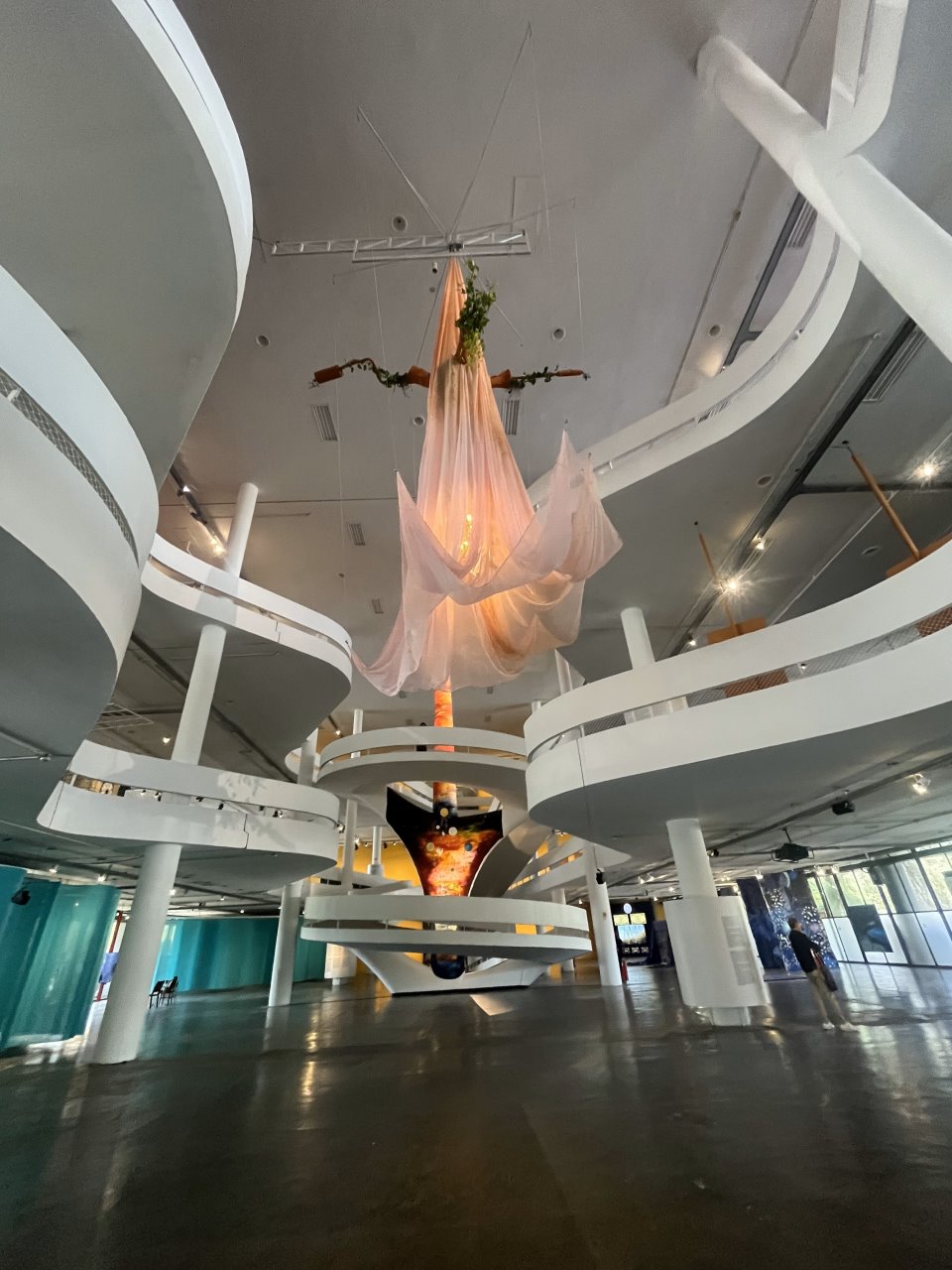
Carlos Amorales, the São Paulo Biennial at Tamayo, Julian Charrière and three sharper smaller-scale projects make Mexico City one of November’s richest research destinations.