
November 5, 2026
Articles
Articles
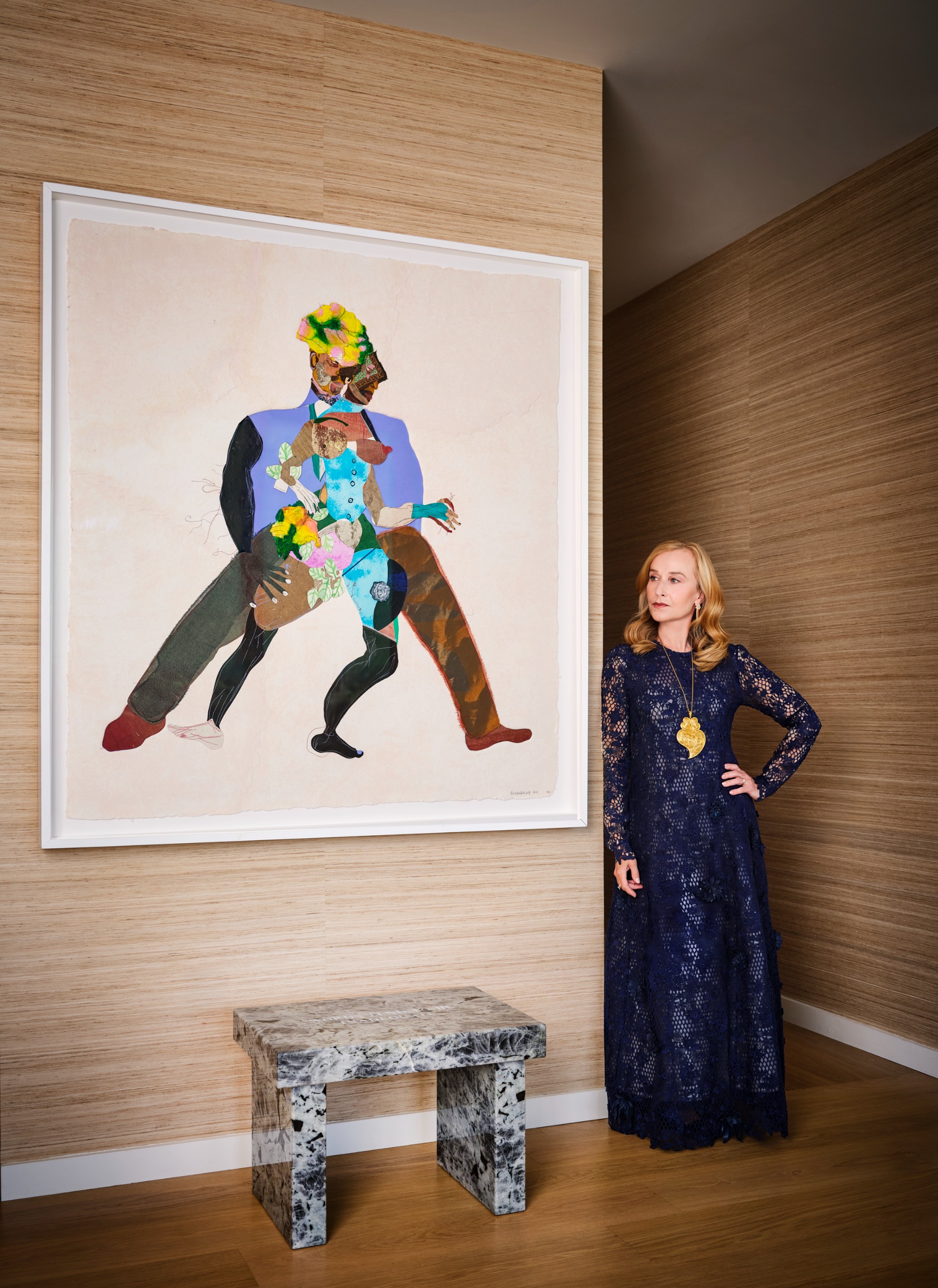
Kelly Behun’s West Chelsea apartment for former US ambassador Randi Charno Levine shows how a serious contemporary collection can grow from relationships, patronage and a new Joana Vasconcelos commission.
There is an unusual kind of uncertainty in Donyel Ivy-Royal’s paintings. A house can be unmistakably a house, and yet the air around it seems to carry several different moments at once. A wall may register as architecture, weathered paint, a partly erased sign or the memory of a place passed every day. The image remains recognisable without settling into description. This quality is at the centre of By the time the rain comes, we will be home, the Brooklyn-based artist’s first solo exhibition with Jack Shainman Gallery, opening in…
There is an unusual kind of uncertainty in Donyel Ivy-Royal’s paintings. A house can be unmistakably a house, and yet the air around it seems to carry several different moments at once. A wall may register as architecture, weathered paint, a partly erased sign or the memory of a place passed every day. The image remains recognisable without settling into description. This quality is at the centre of By the time the rain comes, we will be home, the Brooklyn-based artist’s first solo exhibition with Jack Shainman Gallery, opening in New York on 5 November 2026.
The show brings together oil paintings, ink drawings and a large-scale installation. Its ambition is not simply to demonstrate versatility. Ivy-Royal’s practice moves among painting, music, poetry, photography and found materials because different experiences of place demand different kinds of record. His images are constructed through accumulation and removal; what is left on the surface can feel provisional without appearing unresolved. For collectors and audiences interested in emerging painting, the exhibition offers an important chance to encounter that language beyond a single compelling canvas.
Ivy-Royal was born in Portland, Oregon, and now lives and works in Brooklyn. His work has been shaped by cities, landscapes and the music and social scenes through which he has moved. Photographs taken in passing may initiate a painting, but the artist is not working towards a faithful transcription. The photograph is a point of departure: its information can be broken apart, reordered, obscured or transformed by memory. The physical act of painting begins to compete with what the photograph seemed to record.
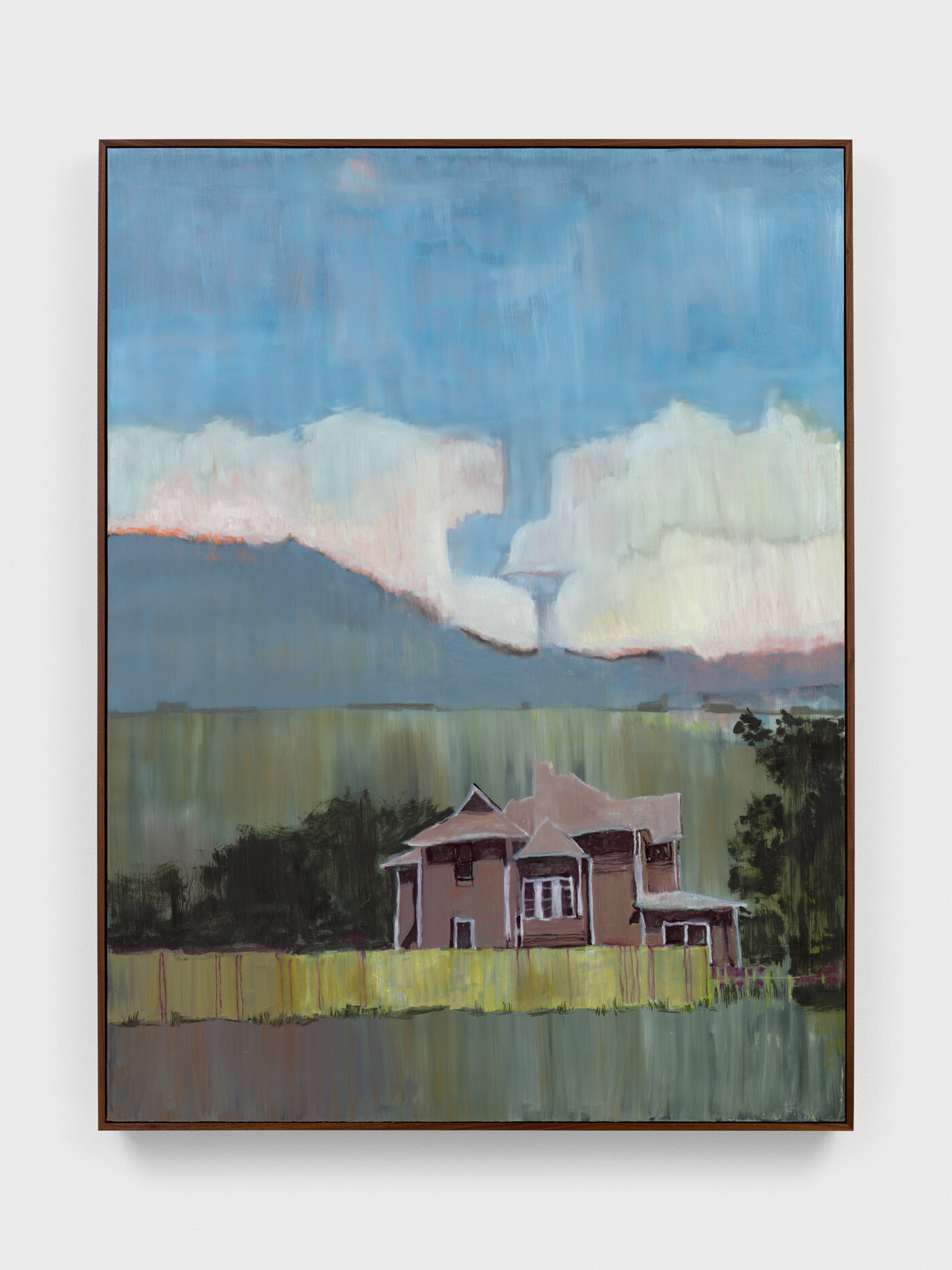
Consider Castle (2026), in which a house stands beneath an immense cloud-filled sky and against a layered landscape. The scene seems stable at first, but much of its atmosphere lies in the way paint describes and undoes a view. The house appears neither picturesque nor wholly abandoned; it is particular enough to suggest experience, while withheld detail makes it difficult to claim as one person’s memory. That balance between specificity and openness is central to Ivy-Royal’s developing visual language.
Graffiti belongs to the artist’s formation, but the relevance of that background is more complex than a few gestures associated with urban style. The gallery describes his practice as equally engaged with filling in a tag, building a painting and writing a poem. Each depends on repetition, revision and attention to what remains after one action covers another. A city wall is rarely pristine: posters, paint, weather, repairs and marks made by strangers turn it into a shared, unstable surface.
In The Sidewalk as Sky and More Birds (2026), a fractured architectural image retains small signs of life and movement within broader fields of colour. What could have been a document of a wall becomes an argument about what a wall remembers. The picture does not ask viewers to decode a fixed story. It asks them to notice how the surface holds traces of encounters whose original circumstances are no longer fully available.

The artist’s imagery frequently approaches abstraction without abandoning objects entirely. This can be mistaken for indecision, but the tension is purposeful. A form may begin as a photograph of a corner, a person or a building, then lose its initial identity as layers of paint are added and removed. The resulting picture records the act of searching rather than merely the thing found. Abstraction is therefore not a separate style laid over a recognisable subject; it arises from the way memory revises perception.
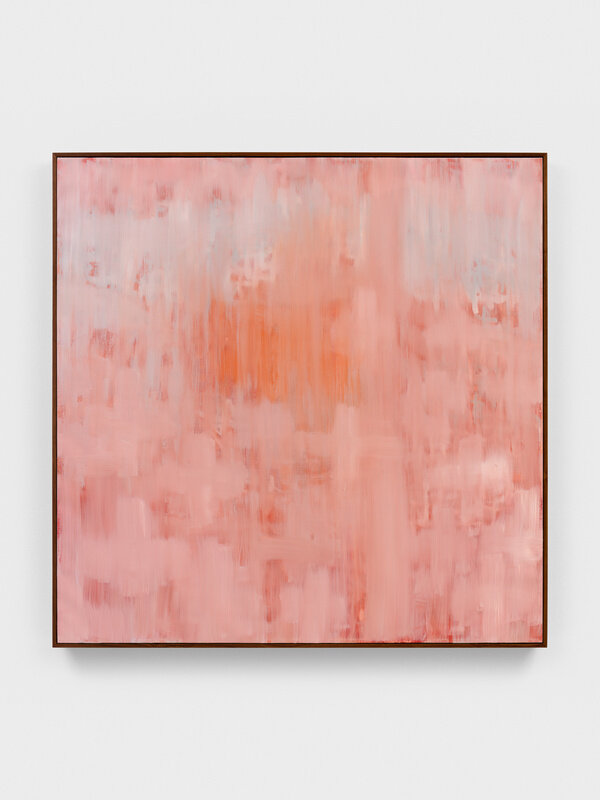
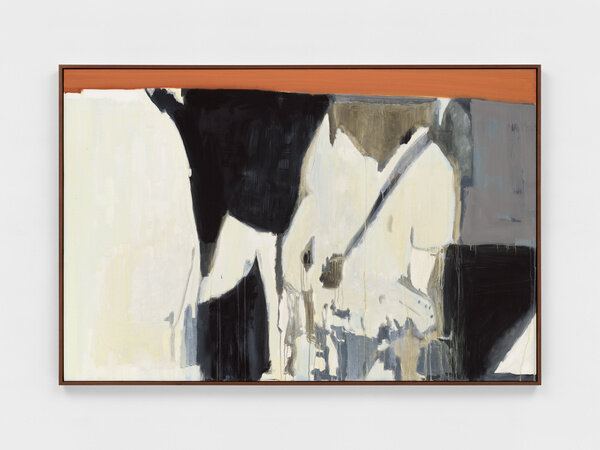
The paintings assembled for the show demonstrate how varied that process can become. Low Ceilings (2026) works through a restricted architecture of dark and pale forms, while another, predominantly rose-coloured painting puts almost all of its emphasis on atmospheric shifts within the paint. Those decisions allow different works to demand different modes of attention. Some start with a place; others offer a field in which a place may have almost disappeared.
Music is not just a biographical decoration in Ivy-Royal’s practice. The artist records sound in his studio and uses those recordings to help shape the work. That relationship is useful when considering the paintings’ movement between distinct kinds of mark. Rhythm can arise through returns, pauses, changes in density and the recurrence of a motif, without any literal representation of sound.
In a work whose catalogue title refers to Timmy the Terror and the Winter Coats performing at the Pink Room, musicians and instruments seem to emerge through layers of muted red and grey. The painting does not present the performance as a clean scene with a fixed foreground. Instead the image has something of the partial recall of live music: gestures are caught, figures overlap and the room persists as atmosphere. The subject becomes an experience rather than a fully narrated event.

At the centre of the Jack Shainman presentation, Ivy-Royal transforms a dividing wall into an architectural facade, using a fresco and materials gathered from studio and street. The work is especially significant because it brings the artist’s interest in surfaces into the gallery’s own structure. A painting of a wall and an altered wall are not the same object, but the friction between them can expand the questions each asks. The gallery ceases to be a neutral place in which pictures simply hang.
The installation also makes visible the importance of material histories. What was acquired on the street? Which marks were made by the artist, and which were already present? How are disparate elements held together, and what happens when the work is disassembled? These questions are intrinsic to the meaning of an architectural installation. They are not merely technical afterthoughts, and a responsible account of the exhibition should not treat the installation as an interchangeable backdrop for the paintings.

The gallery announced Ivy-Royal’s representation earlier in 2026. Its November presentation is therefore a significant professional moment, but a new gallery relationship is not proof of inevitable market ascent. The meaningful issue is how the wider practice is being developed and understood. His recent activities include exhibitions with David Peter Francis in New York and Hide and Seek Gallery in Portland, participation at White Columns, and a 2025 curatorial project titled Garvey flag: an art show. Together they suggest a practice growing through exhibition-making, collaboration and artistic community, not just through production for sale.
That context matters for collectors. Artists working across media can be poorly understood if a market isolates their most easily traded format. If painting, sound and installation are part of one investigation, collecting a painting should still involve curiosity about those other activities. They need not all be owned to enrich the reading of a single canvas.

Paintings made through repeated layering and abrasion invite careful condition documentation. An uneven or apparently distressed area may be integral to the artwork; a later loss of paint may be accidental. Collectors should obtain the artist’s intended finish, support and media details, along with photographs of the work at the time of acquisition. Where found or reused materials are included, stability, provenance of components and the boundaries of acceptable future replacement should be discussed openly.
The same principle applies to the show’s architectural installation. If components are sold or acquired, what exactly constitutes the work? Are there diagrams, fabrication specifications, installation rights or required materials that make re-creation possible? These are questions best answered while an exhibition is new and the artist and gallery can document its decisions. Good stewardship protects the complexity of the practice rather than forcing it into a simpler category.
The title By the time the rain comes, we will be home contains a promise of return without specifying where home begins. That uncertainty is well suited to work in which streets, objects, paintings and memories continuously remake one another. Ivy-Royal offers neither the certainty of a documentary image nor the complete withdrawal of pure abstraction. He works in the charged territory between them.
For a wider audience, that is the exhibition’s strongest proposition: to encounter an image as something living through revisions, rather than as a perfectly transmitted message. For collectors, the lesson is equally important. The value of a developing painter may rest not on an immediately recognisable signature, but on the range of experiences that the work can sustain as the practice expands.
Donyel Ivy-Royal: By the time the rain comes, we will be home — Jack Shainman Gallery, 513 West 20th Street, New York. 5 November–19 December 2026.
Source notes: exhibition dates, works and materials checked against the presenting gallery. This article is an independent research-based exhibition feature, not a claim of a first-hand visit.
Further reading: jackshainman.com · jackshainman.com
Kelly Behun’s West Chelsea apartment for former US ambassador Randi Charno Levine shows how a serious contemporary collection can grow from relationships, patronage and a new Joana Vasconcelos commission.

The new Dasha Shenkman Focus Fund has placed three Okiki Akinfe works into Abbot Hall. Its real significance is a model of private patronage that creates public institutional value early.
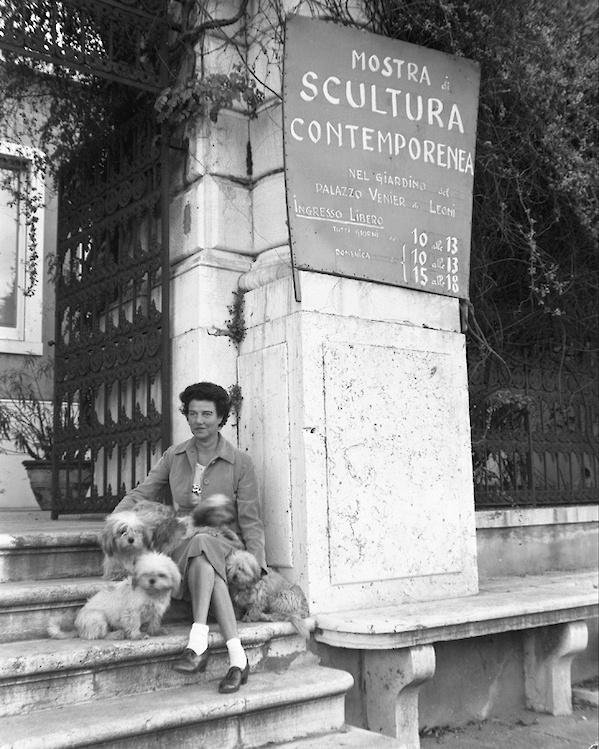
At Palazzo Venier dei Leoni in Venice, Peggy Guggenheim made modern art part of daily life—and left a model for the home as a living collection.