What happens when two women with a combined of more than 20 years of navigating the art world from within decide to create the opportunities they believe are missing from today's artistic landscape?
Julie Curtiss in New York: When the Familiar Becomes UNREAL
Julie Curtiss’s new paintings at Gagosian turn New York’s everyday encounters into unsettling studies of identity, ageing, self-presentation and uncertainty.

The city in Julie Curtiss’s new paintings is recognisable before it becomes strange. There are streets, laundromats, bodies in carefully selected clothes, the suggestive architecture of an apartment and scenes that might have been glimpsed while walking across Manhattan. Yet the ordinary elements refuse to assemble into an ordinary story. What begins as observation turns into speculation: what happened before this scene, who is hiding their face, and why do the accessories of a familiar life seem suddenly theatrical?
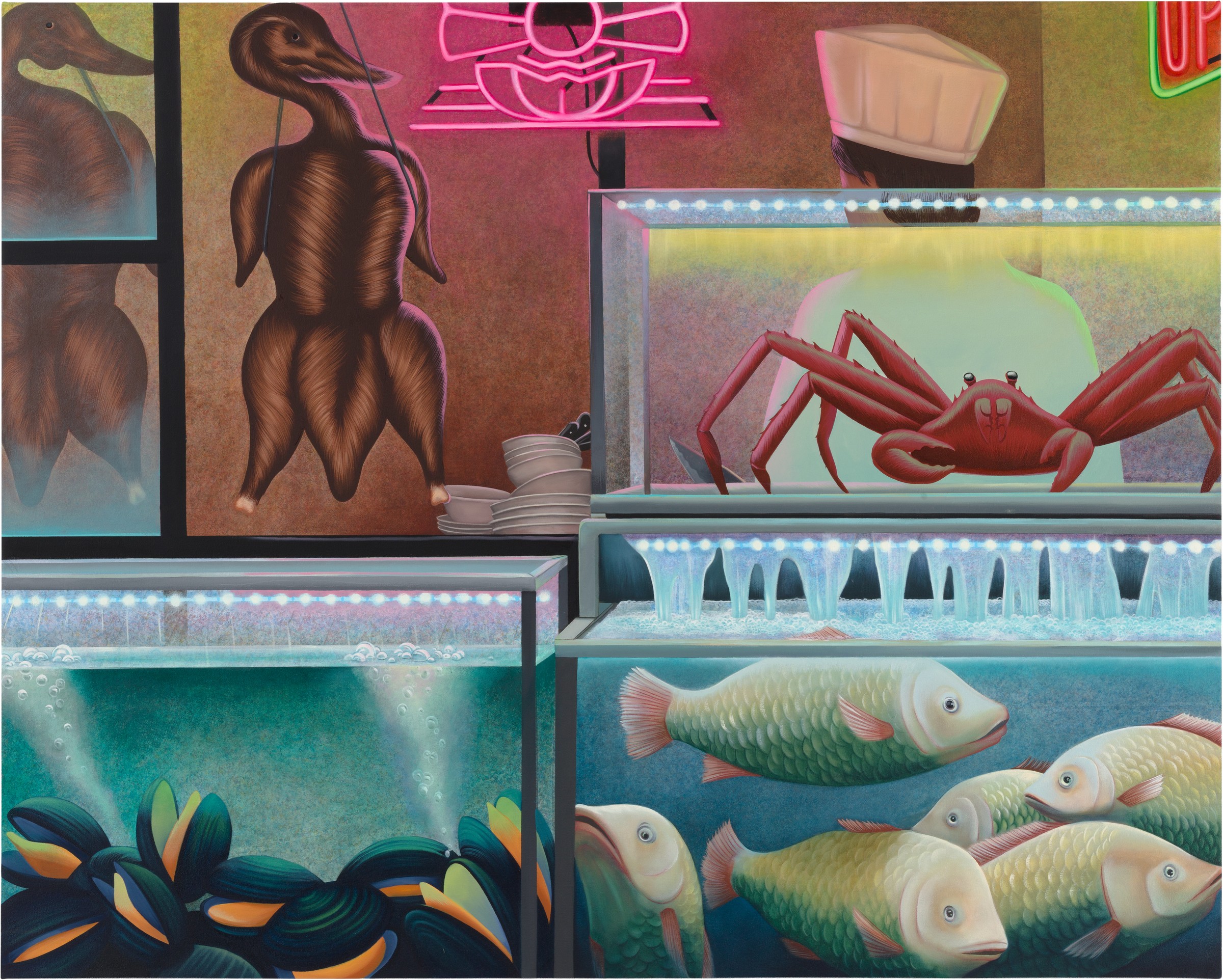
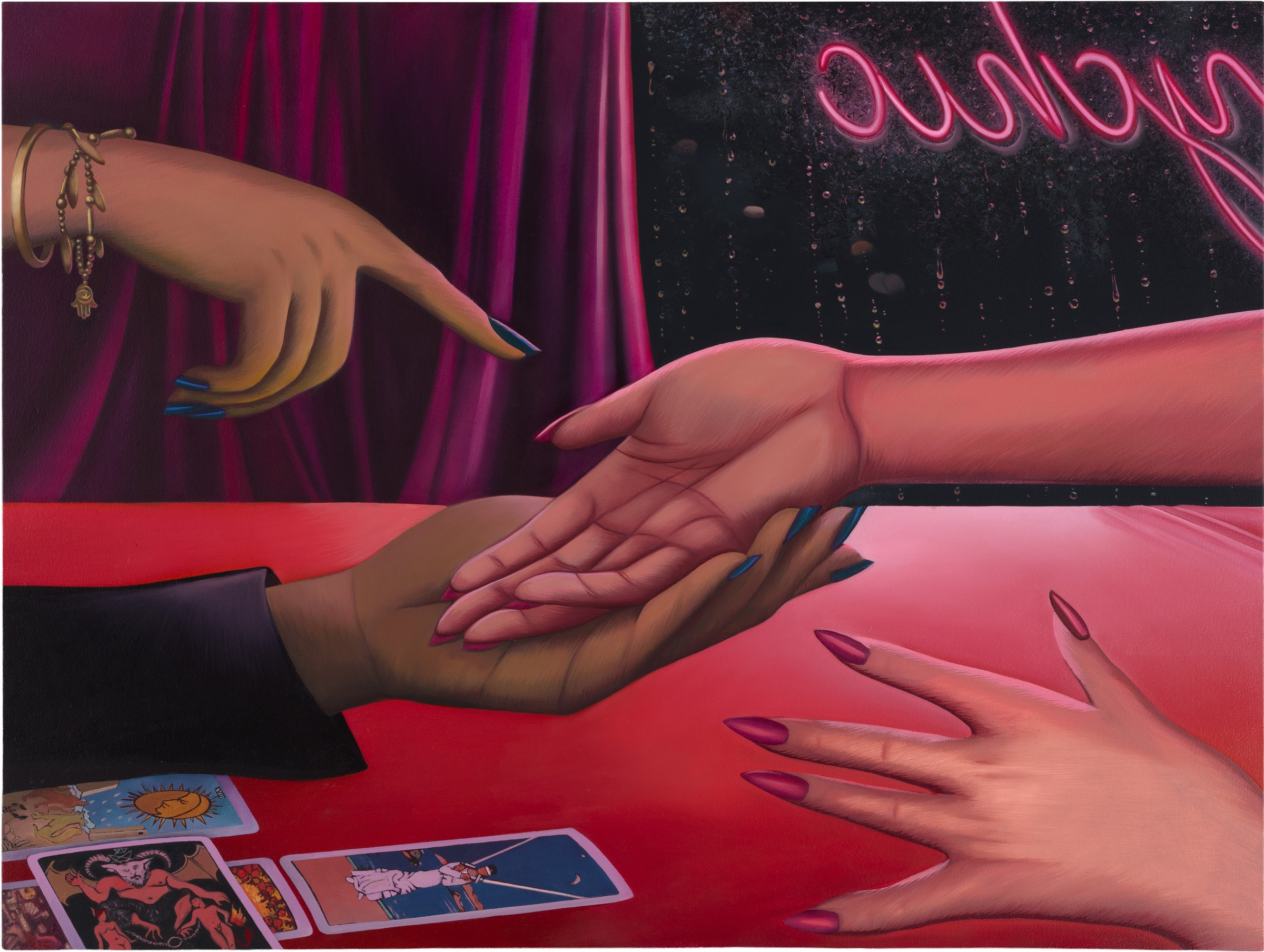
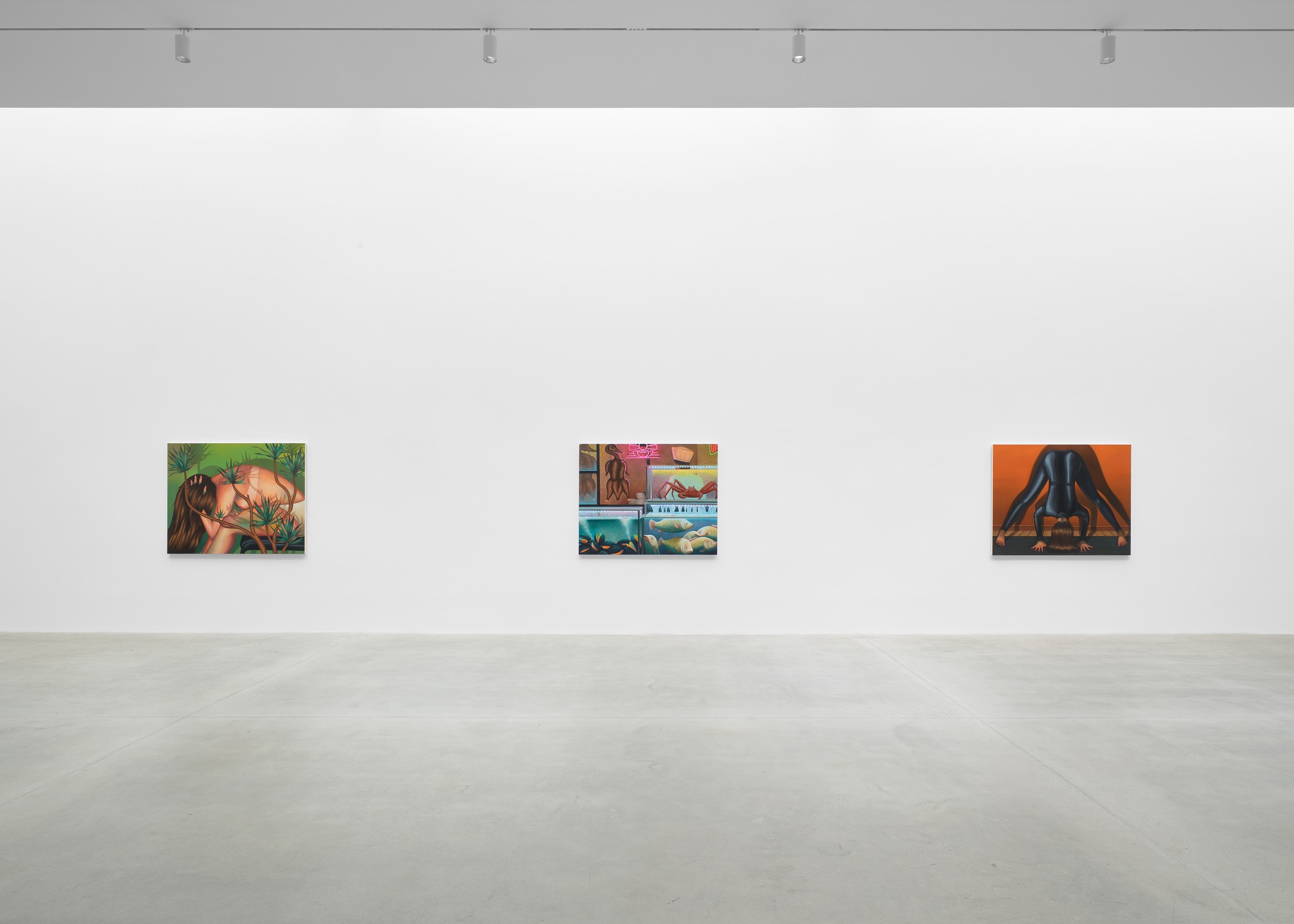
UNREAL, Curtiss’s exhibition at Gagosian’s 541 West 24th Street gallery in New York, runs from 10 November to 19 December 2026. The gallery calls it the artist’s first New York exhibition with Gagosian. It comprises new paintings whose cropped bodies and obscured faces make the city’s social codes feel unreliable. The work deserves attention not simply because its subject matter coincides with current anxieties about artificial images, but because Curtiss has developed a painterly grammar for uncertainty rather than illustrating a topical slogan.

The person as an assembly of signs
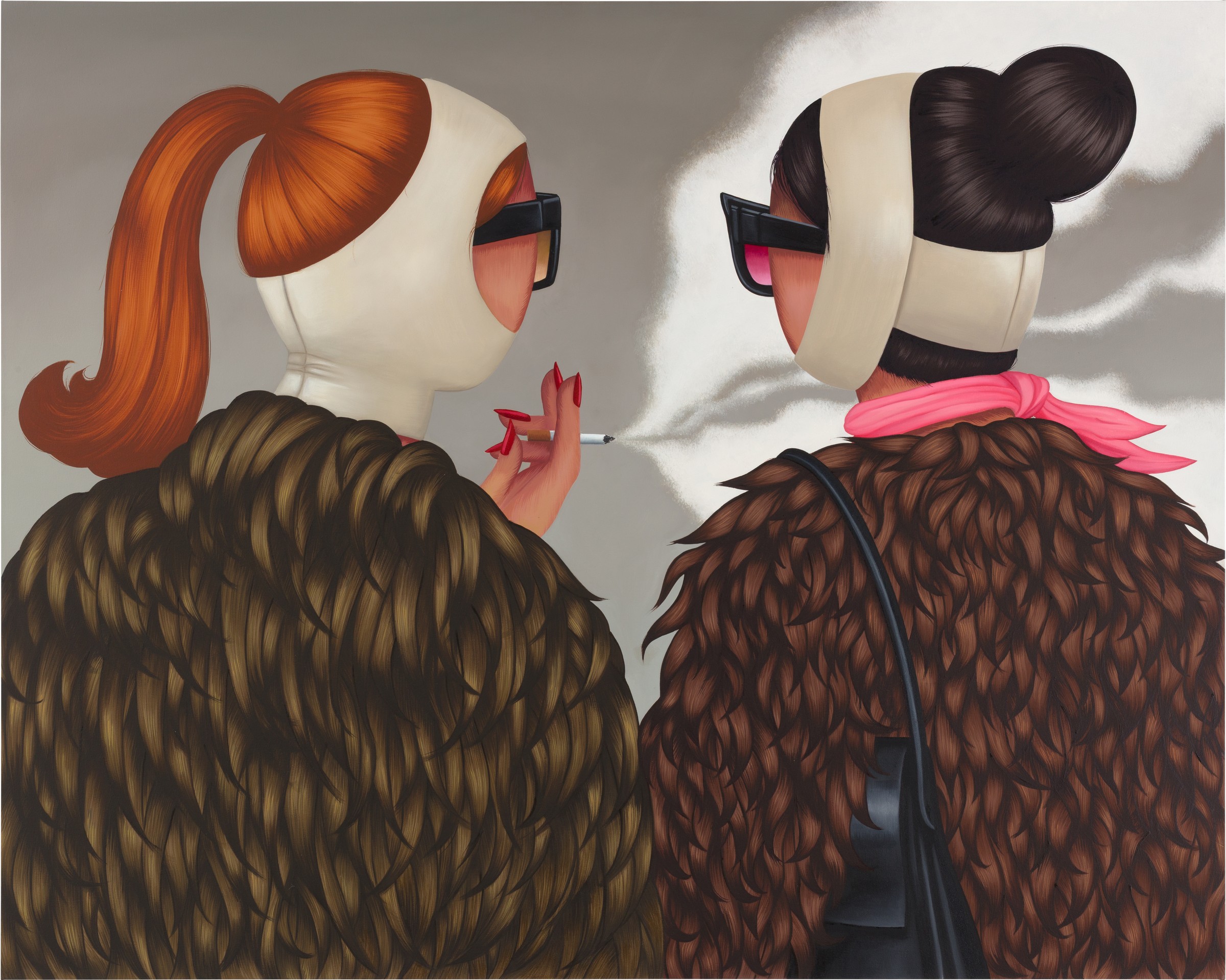
In Makeover (2026), two women on a city street are rendered through outerwear, sunglasses and postoperative compression masks. The gallery identifies the coats as fur and describes the women as figures through which status and the rituals of self-maintenance become visible. Curtiss does not supply an explanatory face. We read the outfits instead, interpreting wealth, privacy, performance and vulnerability in the same arrangement. It is a familiar urban experience: strangers communicate elaborate information about themselves while withholding almost everything that would establish who they are.

The logic of the crop is important. A conventional figurative painting might build psychological insight by carefully describing a face. Curtiss often removes the face from the transaction. A coiffure, gesture or detail of clothing carries the burden of character. That decision creates comic tension, but it also exposes how readily people manufacture biographies for those they cannot know. The viewer becomes another participant in the urban theatre, supplying stories from fragments.
This is why UNREAL is best understood as a show about unstable readings, not simply surreal pictures. A moment may be funny, disquieting and touching at the same time. The paintings do not instruct the viewer which reaction is correct. They invite the eye to oscillate between a beautifully patterned surface and an unresolved social situation.

New York as a set of interiors and thresholds
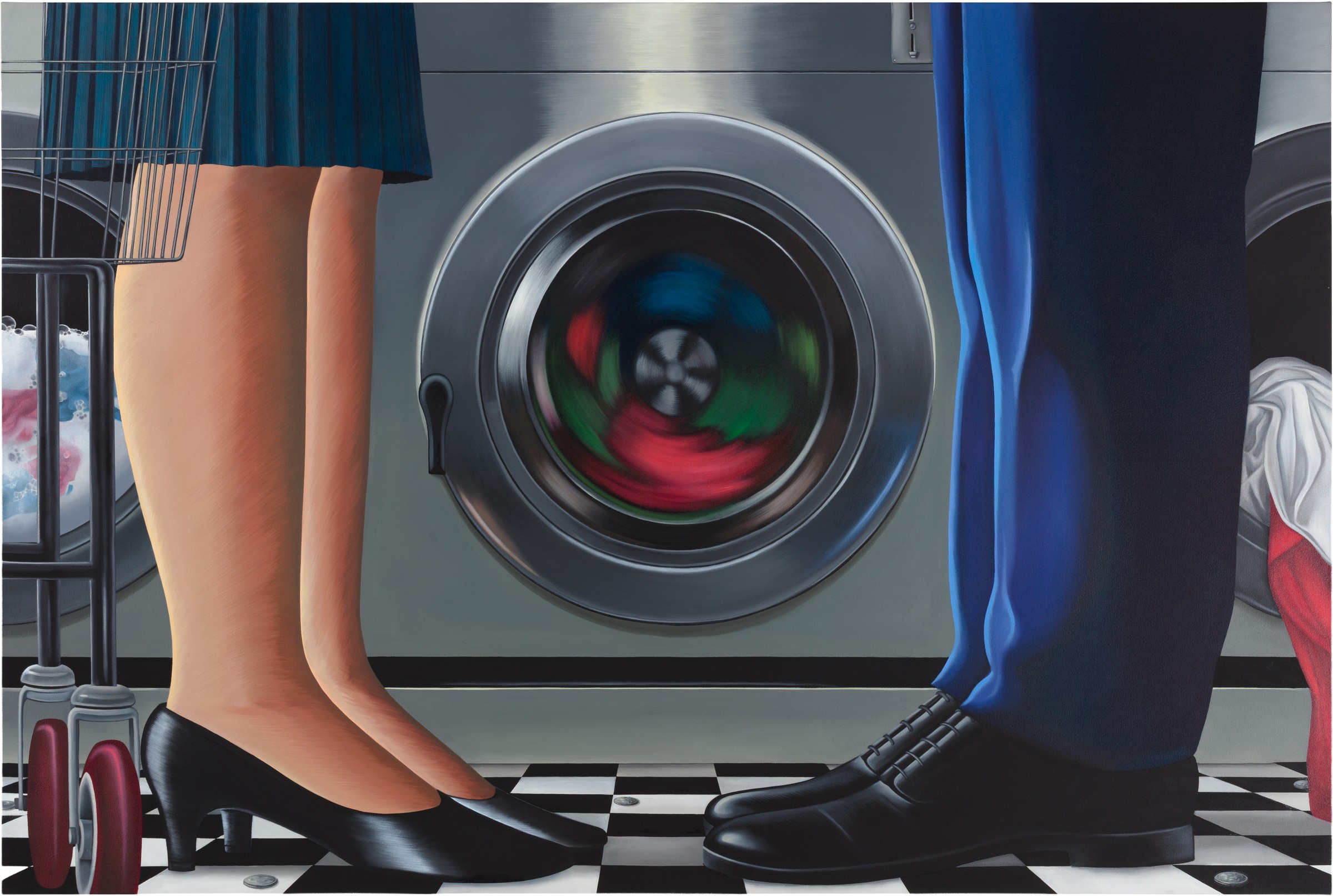
The works listed by Gagosian include Dirty Laundry, Grand Street, The Omen, Squid and Whale, Shoots, Kitchen Appendages and Penelope. Even their titles move between precise metropolitan geography, bodily suggestion and an atmosphere of foreboding. An ordinary corner of domestic life becomes a threshold: public and private, comic and threatening, decorative and psychological.
Curtiss’s compositions can feel cinematic, yet a painting does something different from a film still. A film promises a before and an after, even if the viewer never sees them. Her pictures offer neither. A body may be present without identity; a domestic detail may be painted with persuasive precision while its narrative purpose remains obscure. The visual evidence is available, but its meaning is withheld.
The show’s New York setting also matters to the artist’s treatment of surfaces. Hair, fabrics, glass and street furnishings have long given Curtiss a vocabulary of stylised pattern. In the new paintings those surfaces appear as social armour. They can protect, seduce or mislead. An image that appears lighthearted at first can end by asking who has the resources to control their appearance and who must be seen according to other people’s assumptions.

Why the work feels contemporary without being literal
Artificial intelligence is an obvious point of reference for a show titled UNREAL, and the artist has spoken about the difficulty of trusting images in an environment saturated with manufactured appearances. But the paintings should not be reduced to illustrations of AI. They are made with oil and acrylic on canvas, and the distinction matters. Curtiss uses craft, compression and abstraction to describe a problem that predates generative technology: the gap between what an image presents and what a person knows.
This gap runs through the history of portraiture. Dress has always communicated rank; props and settings have long offered clues to occupation and character. Curtiss inherits those conventions while making them difficult to trust. The missing face becomes an alternative to the reassuring portrait that tells a collector whom to admire. Her subject is often the act of inference itself.
That is an achievement of form. The flattened pattern of a coat can compete with the volume of a figure. A humorous object can sit in a space charged with anxiety. Scale, texture and the hard edge of a crop govern the viewer’s attention just as decisively as the narrative content. A photograph of a Curtiss painting transmits the image, but close looking must also attend to the object’s constructed surface.

A collector’s reading
Curtiss’s recognisable visual language makes it tempting to compare paintings through subject alone: hair, hands, shoes, masks or exaggerated bodily forms. That would be an impoverished way to judge the practice. The more productive questions concern how effectively a particular work organises recognition and doubt, how the composition balances its graphic and painterly passages, and whether the visual tension survives repeated looking.
An exhibition of new work is also an opportunity to understand a sequence rather than isolate a single image circulating online. Compare the treatment of public spaces with domestic settings. Notice where a character is fully embodied and where only an accessory is allowed to stand for a person. Watch how the palette moves from convivial to uneasy without changing the apparent subject matter. These relationships are part of an artist’s development and not adequately described by a market price.
For acquisition, the standard practical disciplines remain essential: verify title, date, medium, dimensions, provenance, condition and exhibition history, and distinguish a work’s visibility on social media from its place within the artist’s broader practice. The new Gagosian exhibition provides an unusually coherent setting in which to make those distinctions.

Seeing the show
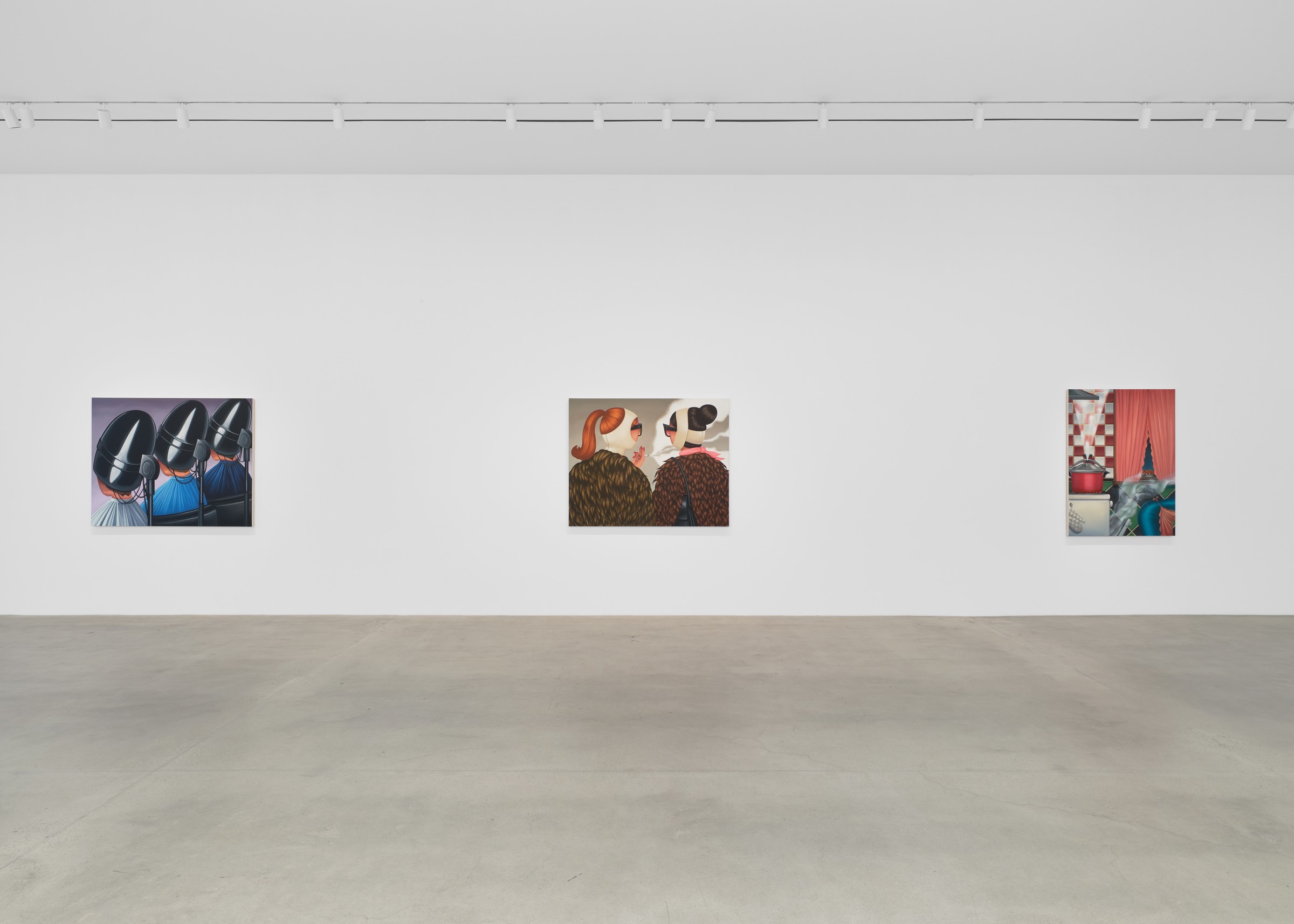
Julie Curtiss: UNREAL is on view at Gagosian, 541 West 24th Street, New York, from 10 November through 19 December 2026. The gallery’s exhibition page includes individual works and installation photography. This reading draws on the gallery’s documented works and installation photographs, together with published interviews and criticism.
The larger question posed by these paintings is an enduring one. We believe we can read other people because we can see them. Curtiss makes that confidence feel premature. In her New York, everyone is visible, but almost nobody is fully available to the gaze.