
November 14, 2026
Exhibitions
Exhibitions

Frieze Abu Dhabi opens 19–22 November with 89 exhibitors. From regional modernists and Frieze Masters to Dala Nasser’s commission, our collector’s preview.
Frieze Abu Dhabi opens 19–22 November with 89 exhibitors. From regional modernists and Frieze Masters to Dala Nasser’s commission, our collector’s preview.

The art market does not need another fair with a familiar international roster and a new airport code. Its more compelling question is what happens when a fair borrows strength from the artistic history of its host region. That is the promise—and the test—of Frieze Abu Dhabi, which opens at Manarat Al Saadiyat on 19 November 2026, with public visiting from 20 to 22 November. This is a preview, written before the doors open; there are no reported sales, stand reviews or claims to have seen completed installations.
The event is not arriving on a blank cultural slate. Frieze Abu Dhabi succeeds Abu Dhabi Art, whose seventeen-year history helped develop local collecting relationships and an international exhibition platform. What changes in 2026 is the Frieze partnership, wider global reach and a newly articulated curatorial framework—not the existence of art infrastructure in the emirate.
The latest organiser announcement lists 89 exhibitors from 37 countries and regions. The figure matters less as a superlative than as a signal of the fair’s intended scale: concentrated enough for a collector to trace relationships across booths, but broad enough to connect artists and galleries from the Gulf, West Asia, North Africa and South Asia with international peers. The launch is a new Frieze-branded chapter in an ecosystem shaped over seventeen years by Abu Dhabi Art. The difference between inheriting that history and treating it merely as a marketing advantage will be visible in the quality of the presentations.
In the global fair calendar, the UAE is still too often described as a source of demand for artists discovered elsewhere. Frieze Abu Dhabi’s curatorial structure suggests a more interesting order of operations: begin with artists, histories and galleries for which the region has been formative, then build outward. The announced roster brings Gallery Isabelle, Athr, Experimenter, Gypsum, Marfa’ and The Third Line into conversation with the likes of Gagosian, Pace and Thaddaeus Ropac.
That combination is not a guarantee of coherence. A regional gallery can be every bit as commercial as an international dealer, while a large gallery may bring outstanding art-historical scholarship. What matters is whether the fair encourages collectors to see artists beyond the most widely traded names. The programme’s references to the broader West Asia, North Africa and South Asia (WANASA) region are most persuasive when they translate into strong objects, carefully researched provenance and serious conversations rather than a neat geographic category.
A place to start is the planned presentation of Sudanese modernist Ibrahim El-Salahi by Vigo Gallery. His evolving Tree vocabulary has grown from calligraphic structure and the resilience of Sudan’s haraz acacia. A collector encountering his work alongside newer experiments in fibre or mixed media can begin with a question broader than price: how does an artist sustain a visual idea across decades and political circumstances?
The fair’s Focus section offers support to younger galleries. Its importance should be measured by what those galleries can do for emerging artists after the weekend ends. A carefully placed work, a first serious regional introduction and subsequent institutional attention can matter more than the number of red dots visible during the preview. The collector who arrives willing to learn about an artist’s sustained practice, not simply their latest social-media presence, may find the most rewarding conversations here.
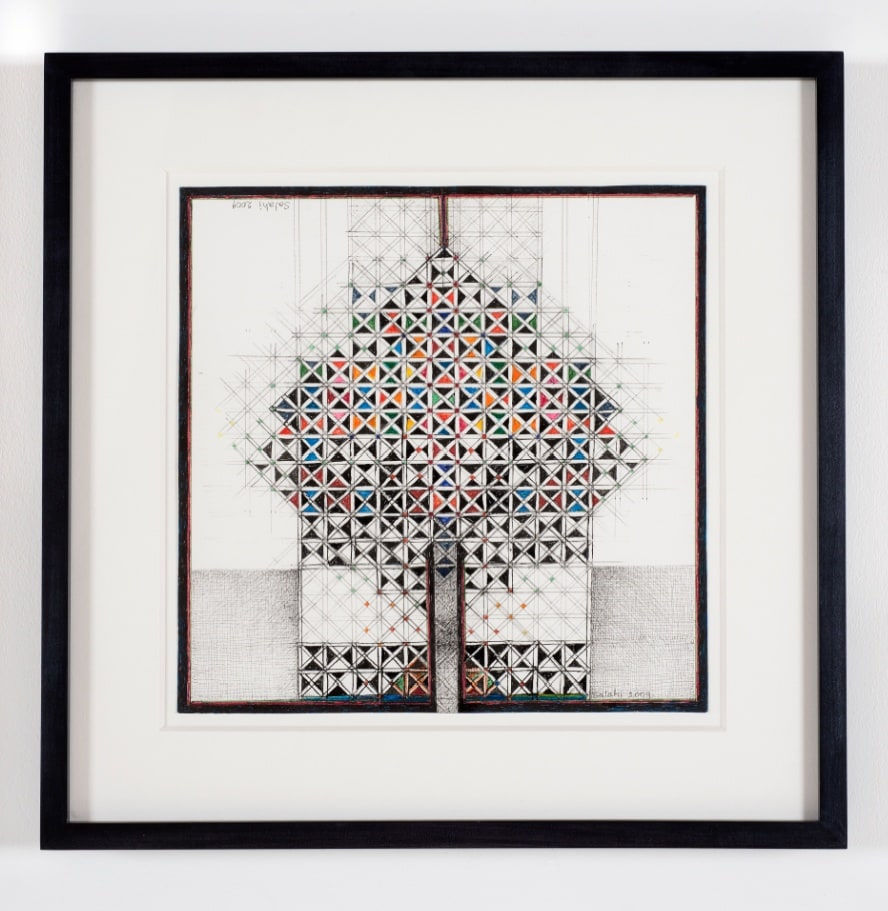
Sarah Almehairi, whose sculptural and painterly inquiries have been developed through Carbon 12, belongs to a generation using abstraction and unconventional surfaces to unsettle the line between image and object. Her earlier Off-Centered work suggests a practice that asks viewers to study balance, repetition and small decisions rather than identify an immediately legible subject. The precise works offered by galleries during the fair should be confirmed when the stands are installed.

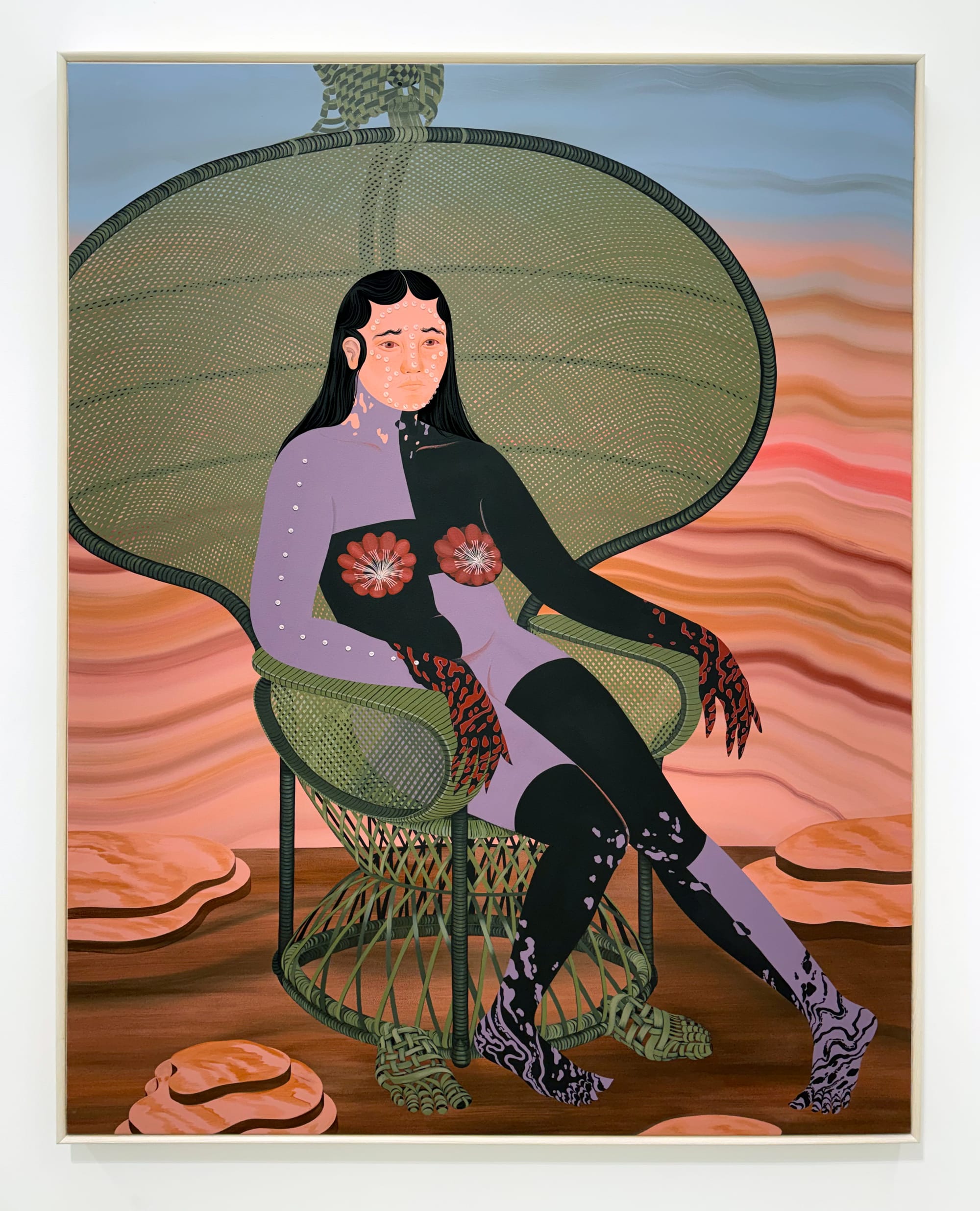
The announced younger cohort also includes Tahir Karmali, Chonon Bensho and Marigold Santos. Their material languages and cultural positions are emphatically different. Karmali’s attention to migration, labour and material process cannot be reduced to one signature texture. Bensho’s work emerges from Indigenous Shipibo-Konibo visual traditions while participating in contemporary international exhibitions. Santos builds figures and worlds around transformation, diaspora and memory. To visit their presentations as a group is not to propose a common style; it is to notice how easily the term “emerging” can conceal very mature conceptual commitments.

There are particular booths for which the organiser has offered unusually concrete information. Leila Heller Gallery plans a retrospective of Farideh Lashai, extending from painting and works on paper into a darkened projection space for her moving-image work. Pace has announced a career-spanning presentation of Emily Kam Kngwarray, placing early batik experiments in conversation with later paintings. Neither is best understood through the shorthand of a single recognisable style: the changing relationship between material, geography and biography is central to the encounter.
Among regional modernists, Athr will foreground Mounirah Mosly, while Sfeir-Semler draws together generations including Etel Adnan, Samia Halaby, MARWAN, and younger artists. Thaddaeus Ropac has announced work by Imran Qureshi alongside new falcon paintings by Yan Pei-Ming. These are valuable places to test a fair's claim to dialogue across histories: the point is not simply to assemble famous names, but to make the distinctions between their practices legible.
Frieze Masters Abu Dhabi, curated by Marika Sardar, proposes a conversation across historical objects and the routes of the Indian Ocean. In this context, the word “master” need not mean a hierarchy of Western canonical names; it can mean works that demand different tools of looking, attribution and interpretation. This is an opportunity for collectors of contemporary art to consider what becomes visible when an ancient object, a modernist painting and a living artist’s work share intellectual terrain, without being falsely described as interchangeable.
One announced object makes that argument unusually tangible. ArtAncient plans to show Portrait L, a first-century painted Egyptian portrait whose pearl earrings and other materials draw attention to the circulation of valuable goods. Daniel Crouch Rare Books will present cartographic material concerned with Indian Ocean routes. Their appeal is not novelty alone; such works invite questions about the history of looking, the ethics of ownership and the evidence that accompanies an object as it crosses collections and borders.
Global Futures, curated by Tarini Malik, provides a corresponding contemporary perspective. The fair also places Emirati artists Mohammed Kazem and Alia Zaal in an In Dialogue conversation developed with Dirwaza Curatorial Lab. These projects signal that curatorial work here is not confined to decorating the fair plan. The best response from visitors would be to give each section time, read labels and ask how the works entered the market and whether their contexts are being responsibly represented.
For collecting, this changes the questions to ask a dealer. What is the work’s history of exhibition? How does a particular object fit the artist’s wider development? Is a print a distinct edition, a unique variation or a later reproduction? Are there documented requirements for installation, maintenance or future loans? Such diligence is especially important when cross-border discoveries happen at the pace of a fair.
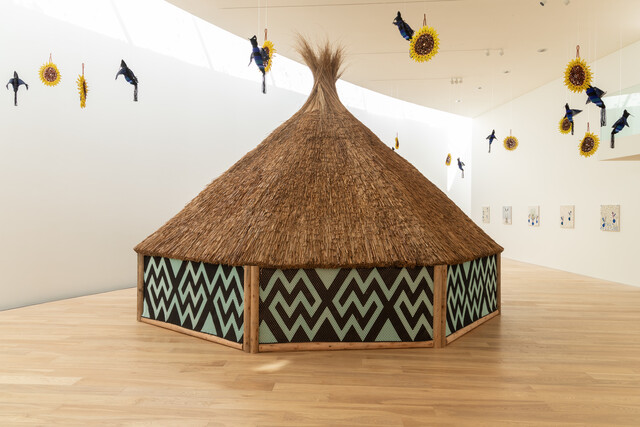
The artist award brings a new project by Dala Nasser, curated by Nabila Abdel Nabi. Announced as Qubbat Duris, the site-specific structure looks to the contested history of a structure near Baalbek and extends Nasser’s sustained examination of landscape, material evidence and the afterlives of conflict. The work is not yet on view at the time of writing; its details should be reassessed after installation.
Nasser’s 2025 project at Kunsthalle Basel demonstrated how timber frameworks and textiles can turn architecture into an unstable kind of document. That earlier project is pictured here to illuminate the artist’s concerns, not to substitute a photograph for the new Abu Dhabi commission. A commission of this sort matters to the fair because it asks a commercial audience to confront artistic work that cannot be judged simply by whether it could be hung over a sofa.
Sheila Hicks is among the announced international figures. Her long practice, where dyed fibre accumulates into sensuous architectural colour, offers a different way to think about value: the work’s physical intelligence is inseparable from understanding its materials, installation requirements and preservation. Her announced Contained Energy is worth seeking out not as an easy bridge between textile and painting but as a reminder that collectors’ categories can lag behind artistic invention.

Regional practices offer equally important challenges. Emirati sculptor Mohamed Ahmed Ibrahim, part of the announced outdoor programme, has created works whose organic forms are informed by the landscape around Khor Fakkan. In encounters with such practices, the conversation can move beyond nationality to how long an artist has worked with place, scale and material.

Abu Dhabi’s cultural infrastructure is becoming more layered, from Louvre Abu Dhabi and new museums to independent programmes, foundations and public art. A fair can intensify attention, but it cannot be the sole measure of a city’s artistic health. The key test is whether international visitors also make time for artists’ studios, local institutions and collections, and whether the exchange continues after the stands close.
The first edition arrives against a market environment where discretion, research and personal relationships matter increasingly to collectors. Experienced buyers will probably pay attention to historic regional modernists, artist-led material investigations and the younger galleries prepared to explain why a work matters. New buyers can begin by asking better questions rather than attempting to predict the next auction headline.
Visitor information. Frieze Abu Dhabi takes place at Manarat Al Saadiyat, Saadiyat Cultural District, 19–22 November 2026. Thursday 19 November is invitation-only, 2–9pm. Public admission is Friday 20, Saturday 21 and Sunday 22 November, 2–9pm, with last admission at 8:30pm. The final exhibitor list and the confirmed installed works should be consulted on the fair’s official website before visiting.
Frieze Abu Dhabi opens 19–22 November with 89 exhibitors. From regional modernists and Frieze Masters to Dala Nasser’s commission, our collector’s preview.
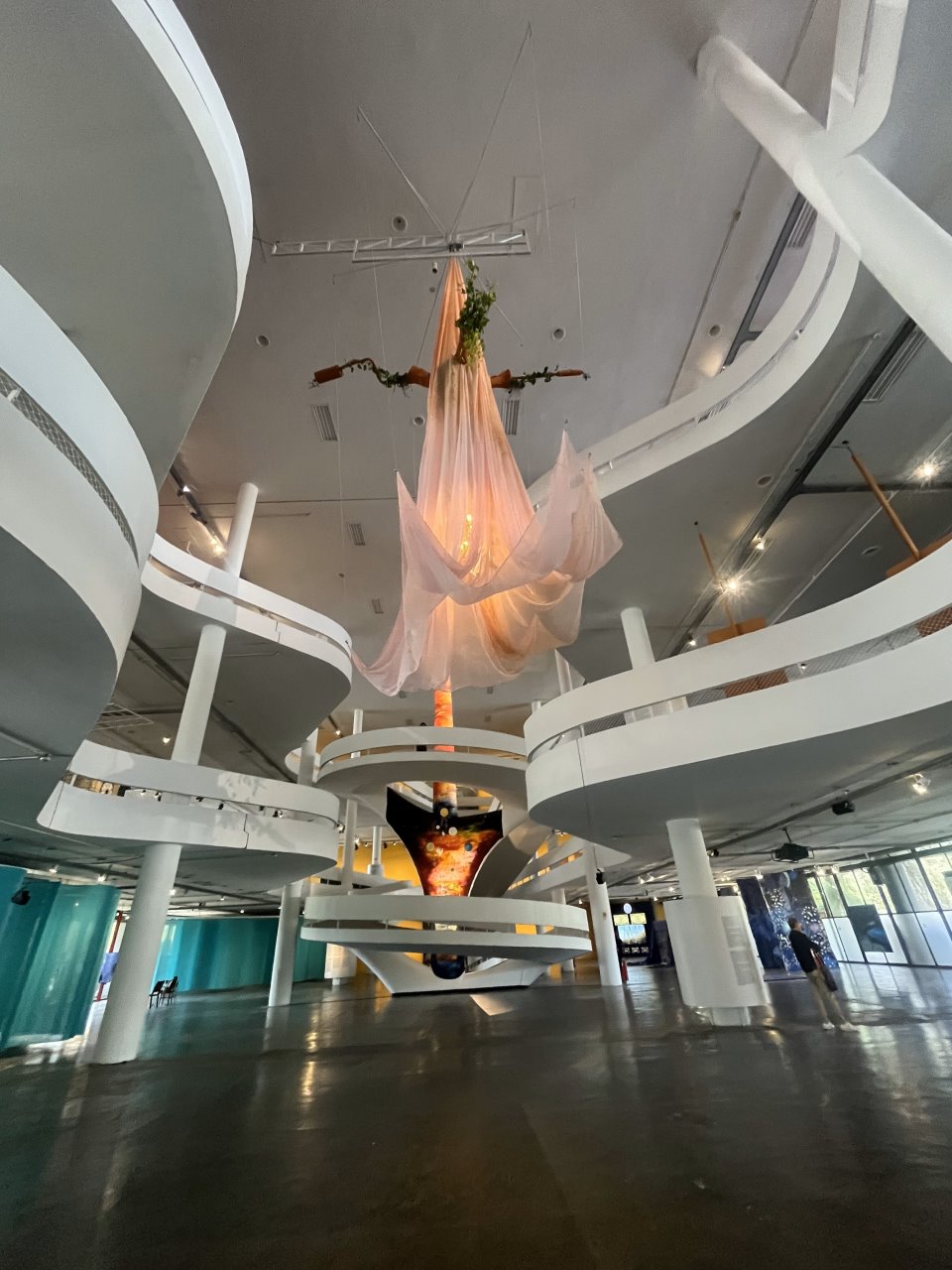
Carlos Amorales, the São Paulo Biennial at Tamayo, Julian Charrière and three sharper smaller-scale projects make Mexico City one of November’s richest research destinations.
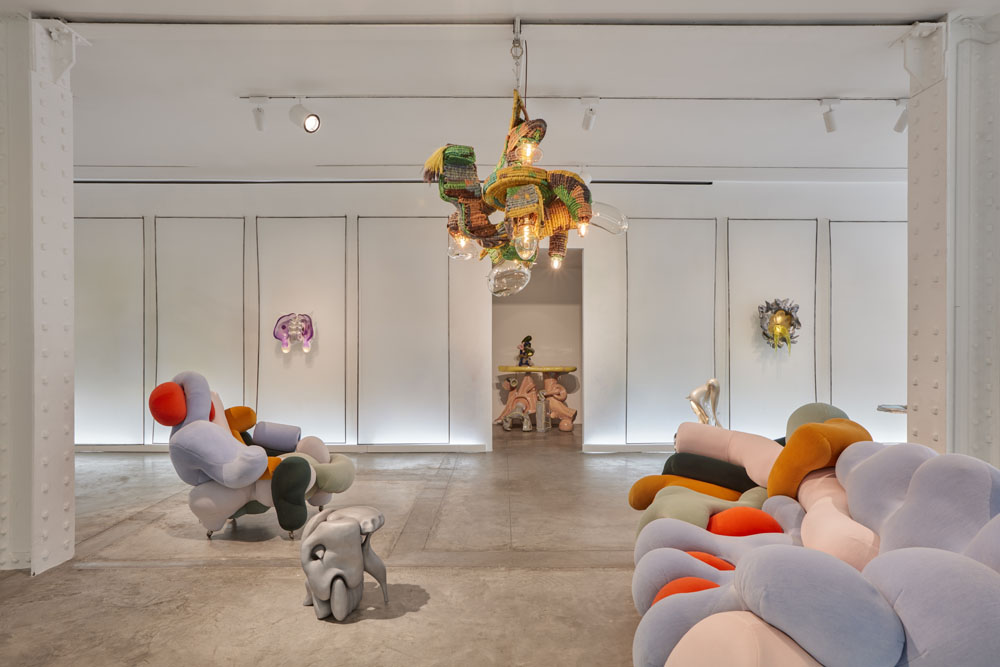
From Wendell Castle and Ron Arad to Joris Laarman and contemporary material innovators, a collector’s guide to authenticity, editions, provenance and living with sculptural furniture.

Michael Chow commissioned portraits from Basquiat, Warhol, Haring, Hockney, Ruscha and others. Inside the collection behind Gagosian’s Friends and Legends.