
October 25, 2026
Exhibitions
Exhibitions
A rare London exhibition of new works and historical material returns us to Cady Noland’s uncomfortable vision of American spectacle, power and the ordinary object.
Yayoi Kusama turned repetition, vulnerability and rebellion into one of the most recognisable visual languages of our time. A life shaped by exclusion, activism and radical self-invention became a legacy that transformed both art history and the global market.
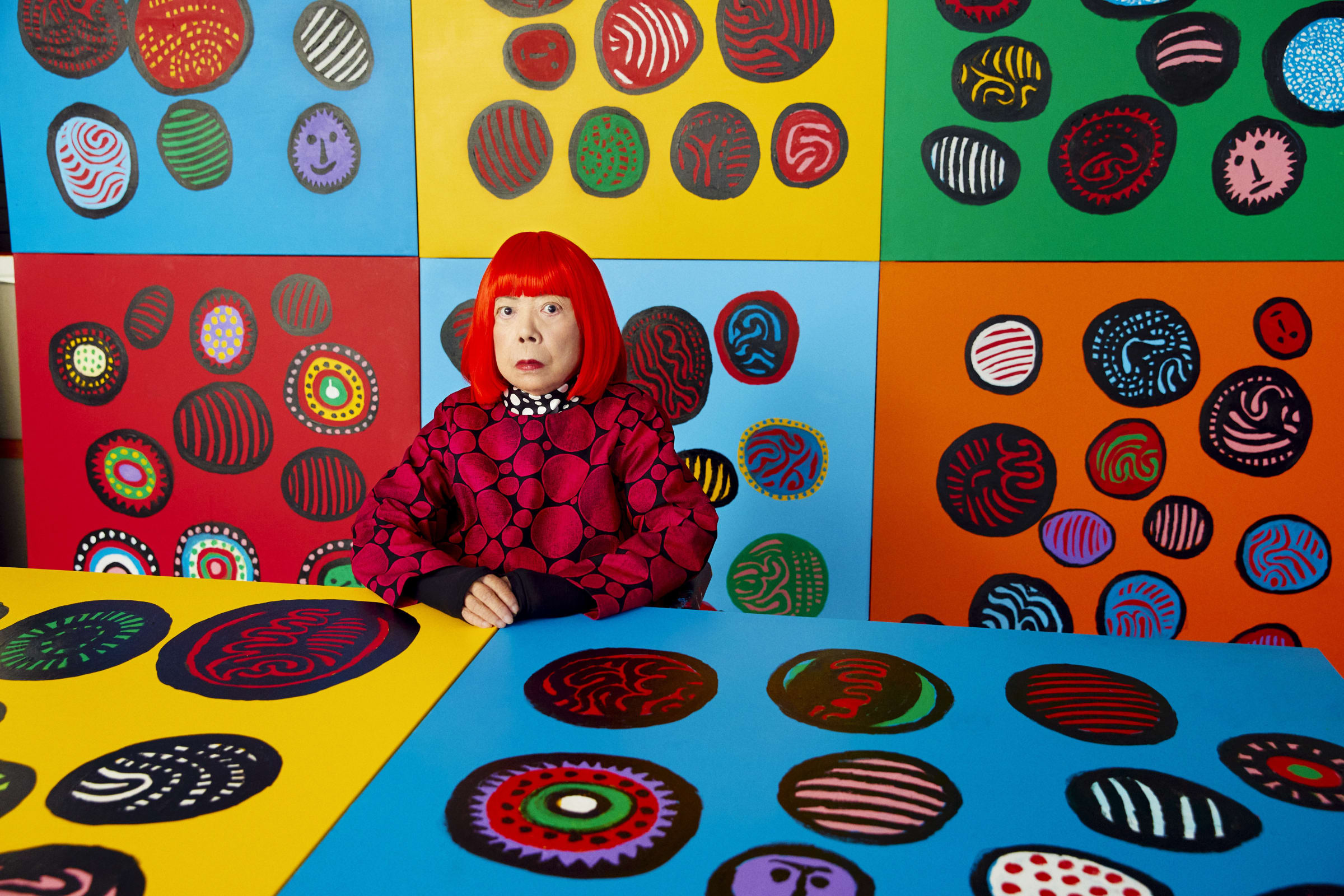
There is something almost mischievously contradictory about writing a memorial for Yayoi Kusama. For much of her life, Kusama made art about disappearance. She covered surfaces until they seemed to dissolve, multiplied forms until the individual became irrelevant, and placed bodies inside mirrored environments where the self appeared to continue indefinitely while losing its boundaries. She called this self-obliteration. Yet few artists of the last century succeeded so completely in making themselves impossible to forget.
Kusama, who died in Tokyo in August 2026 at the age of 97, leaves behind one of the strangest and most consequential careers in modern art: seven decades in which psychological experience became formal language, political dissent became spectacle, and an artist once treated as peripheral became one of the most visible figures in contemporary culture. The irony would surely have amused her.
The woman who wanted to obliterate the self ultimately created one of the strongest artistic identities of modern times.
Eventually, Kusama herself became something close to an artwork: the red wig, the patterned clothing, the staged photographs, the absolute visual consistency of the world surrounding her. Long before contemporary culture became obsessed with the artist as brand, Kusama understood that authorship was not only about making the work. It was also about controlling the terms under which the world encountered it.
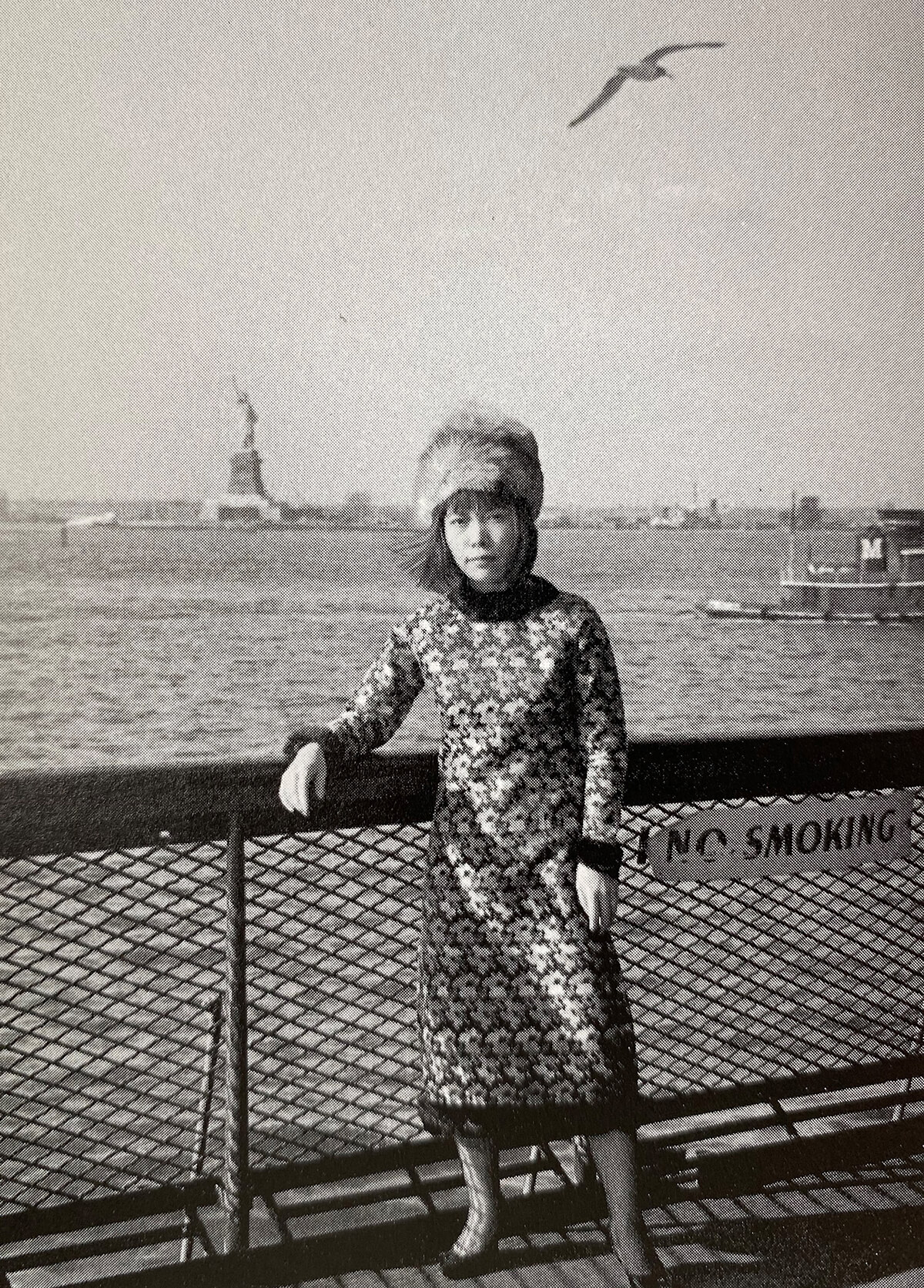
Born in Matsumoto, Japan, in 1929, Kusama grew up at a time when the possibilities available to an ambitious young woman were considerably narrower than those she imagined for herself. From childhood, she described visual hallucinations in which patterns spread across objects, rooms and eventually herself. Art history has a bad habit of romanticising psychological distress. Kusama's achievement was more interesting. She developed a system through which experience could be transformed into form.
By the time Kusama arrived in New York in the late 1950s, the American art world was in love with another kind of psychology: the heroic male artist. Abstract Expressionism had transformed the painter into a near-mythological figure, all gesture, scale and existential drama. The canvases were large. The personalities were often larger. Into this environment came a Japanese woman with formidable ambition. Her early Infinity Net paintings shared the monumental scale of the period while quietly dismantling its mythology. Instead of the singular heroic brushstroke, she offered thousands of repeated gestures. Instead of drama, accumulation. Instead of the artist announcing individuality, she produced surfaces in which individuality seemed to disappear.
New York celebrated rebellion, though—as with many avant-gardes—it was rather more comfortable with rebellion when performed by men.
Kusama worked at the same moment that Pop, Minimalism and postwar installation were taking shape. She explored seriality, accumulation, soft sculpture, immersive space and repeated imagery, yet her position in the canon remained less secure than that of many male contemporaries. Her response was not retreat but escalation.
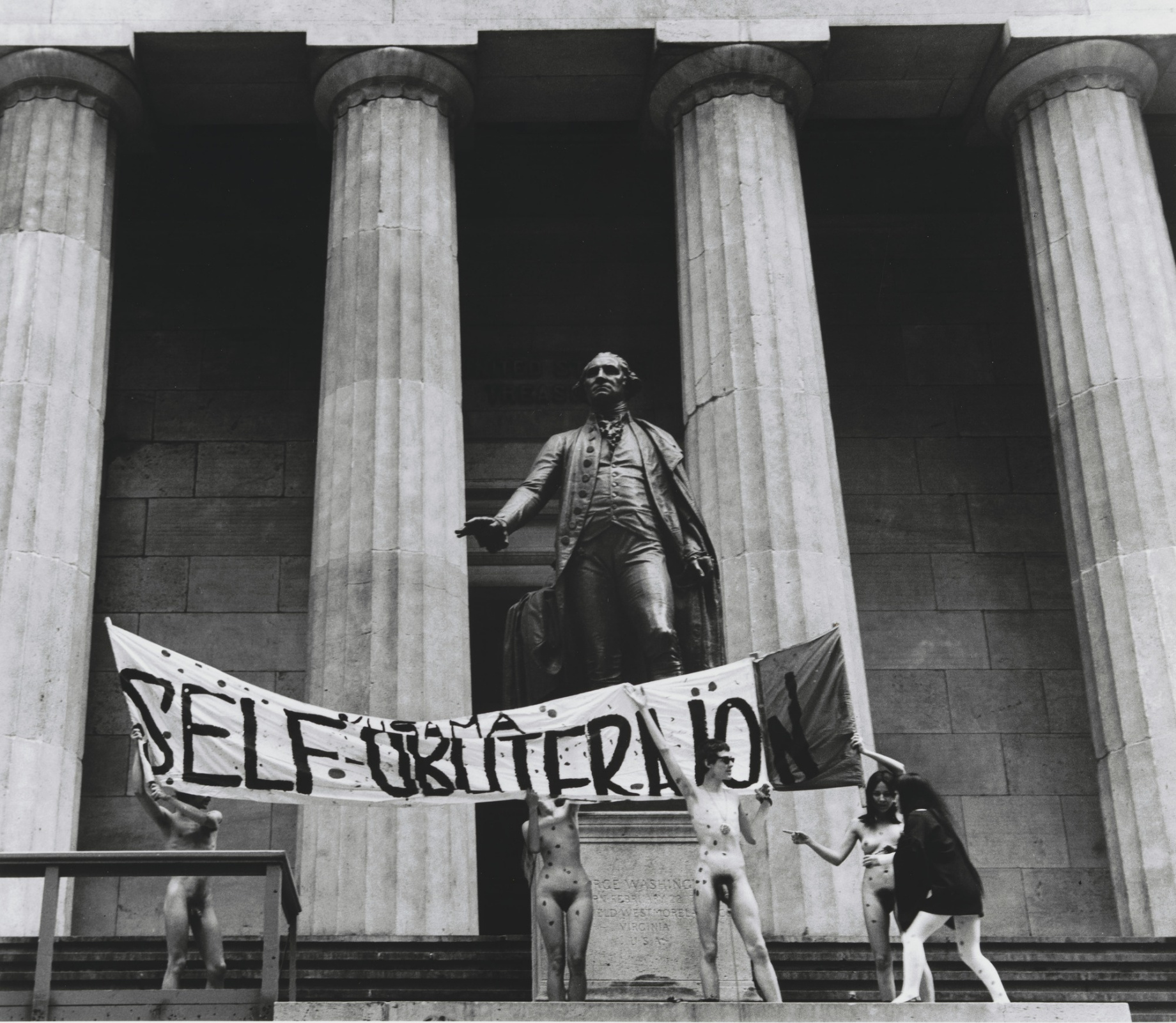
In the early 1960s she covered chairs, sofas, shoes and other domestic objects with masses of sewn phallic forms. Kusama took the phallus—that endlessly solemn symbol of masculine authority—and reproduced it until it became ridiculous. One symbol of power may appear imposing. Several hundred stuffed versions begin to lose their dignity. That humour is often overlooked. Kusama could make work about anxiety, sexuality, power and death without surrendering pleasure or absurdity.By the late 1960s, her art had escaped the gallery. Public happenings involving naked bodies, painted skin and collective performance became increasingly political, particularly in opposition to the Vietnam War. The politics followed naturally from the aesthetics.
If Kusama's visual language proposed the dissolution of the individual into a larger field, hierarchy itself became questionable. Bodies painted alike became simultaneously distinct and equivalent. Against militarism she proposed vulnerability; against conformity, collective participation. This side of Kusama is easy to forget beneath the later museum queues and photogenic pumpkins.
The contemporary museum made her easy to love. The earlier Kusama was considerably less convenient.
Perhaps no work captures that complexity better than Narcissus Garden, staged at the Venice Biennale in 1966. Kusama installed hundreds of mirrored spheres outside the official exhibition and attempted to sell them individually beneath the proposition: “Your Narcissism for Sale.”
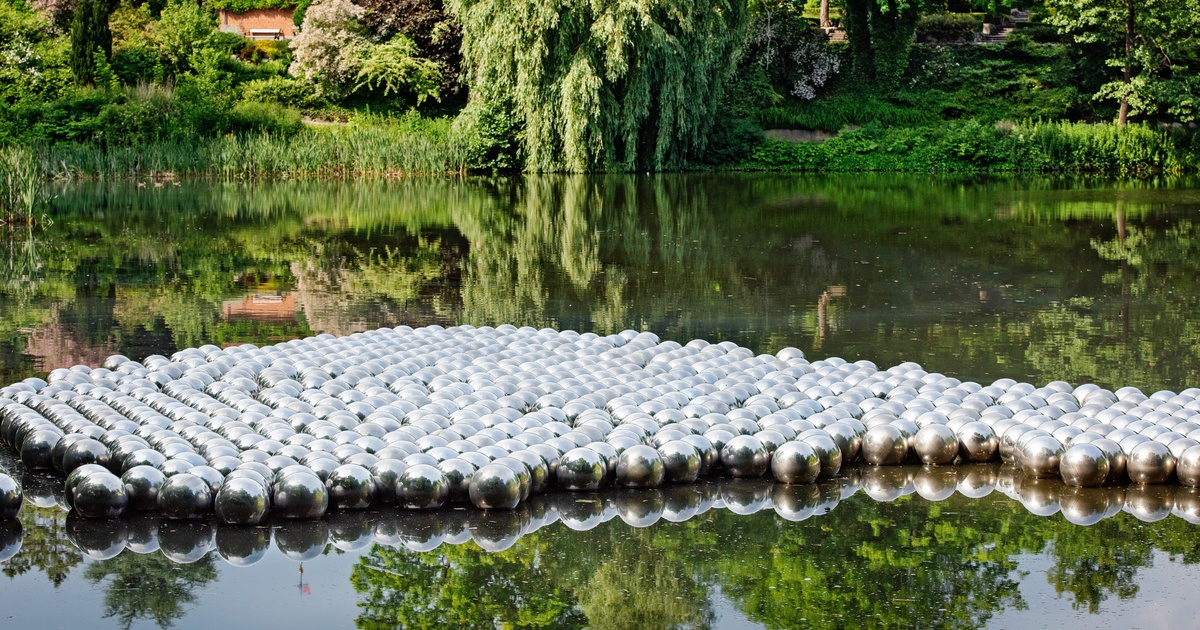
The gesture now feels almost prophetic. A mirrored sphere reflects its buyer. The buyer purchases their own image. Art becomes commodity, ego becomes merchandise and the Biennale becomes marketplace.It was satire, performance and entrepreneurship at once. Kusama understood early that criticising the art market from entirely outside it was nearly impossible. The more interesting position was to expose the transaction while participating in it.This makes her later commercial success less straightforwardly contradictory than it first appears.
The radical artist who mocked commodification would eventually become one of the market's most recognisable figures. Pumpkins moved through galleries and auction houses. Dots migrated onto luxury goods. Infinity Rooms became museum blockbusters. One can point to the contradiction.
But Kusama's entire practice was based on multiplication.
A dot becomes another dot.
A pumpkin becomes a field.
A reflection becomes infinity.
Why should an image stop when it reaches the edge of a canvas? Why should an artistic identity stop when it reaches the edge of the museum?
What changed, largely, was the price.
Her market success is particularly significant because the upper levels of the art market have historically remained overwhelmingly male. Kusama did not correct that imbalance, but she became one of the rare women capable of operating at extraordinary scale within it. The significance is not simply financial. Price is not a substitute for art history. What matters is what the market eventually acknowledged: enormous cultural and financial value in work by a Japanese woman whose position had once been precarious within the Western avant-garde. There is a satisfying historical reversal in that.
Yet Kusama's career was never an uncomplicated ascent.
After returning to Japan in the 1970s, her international visibility declined. She continued working, while much of the art world looked elsewhere. Her later resurgence was therefore not the discovery of a new artist but the recovery of one who had been allowed to drift from view. Her return to the Venice Biennale in 1993 as Japan's official representative made the reversal almost too perfect.
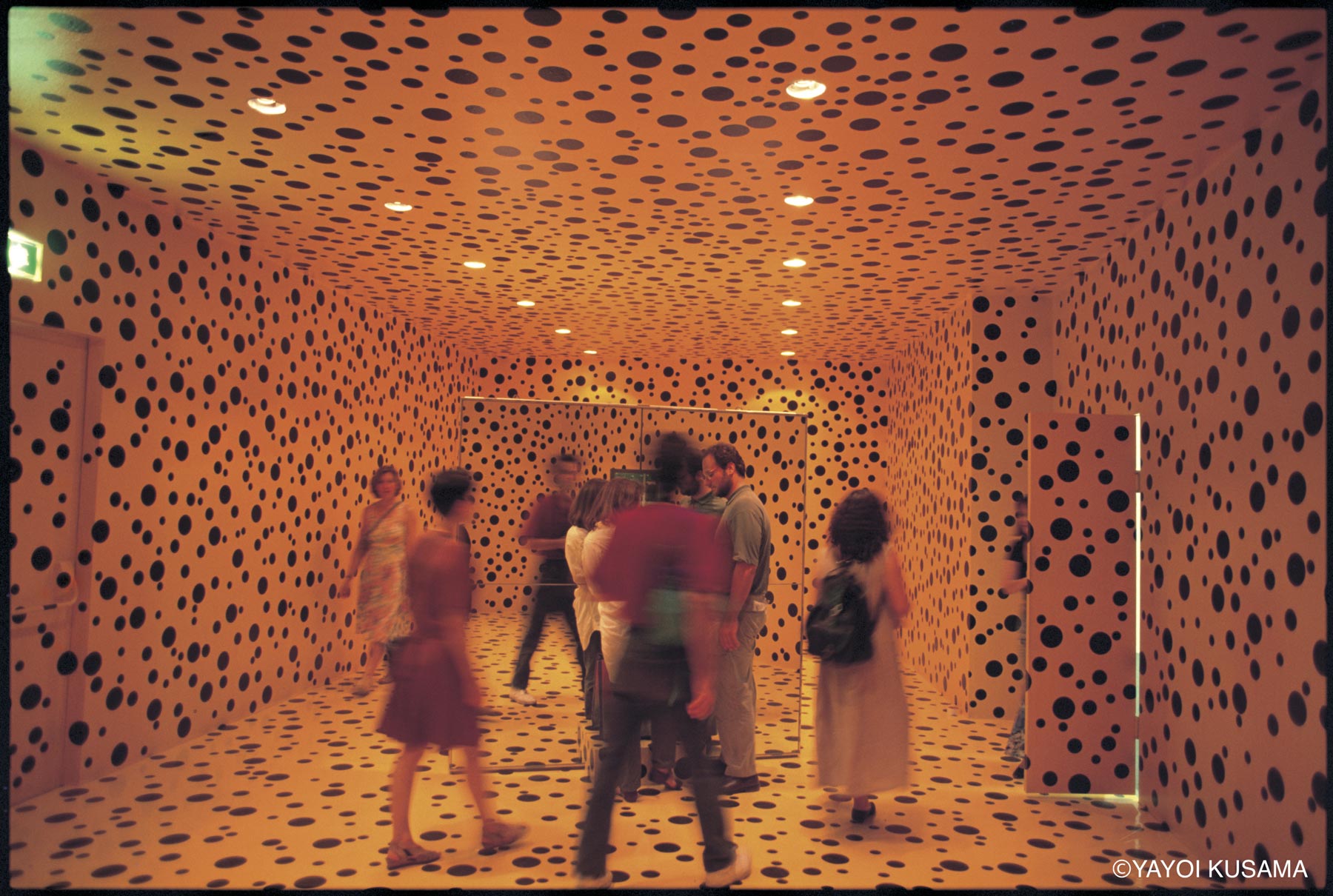
Institutions have a curious habit of eventually canonising the people who once inconvenienced them. From there came the retrospectives, the public sculptures, the Infinity Rooms and the transformation of Kusama into something rarer than an art-world star: an artist recognised simultaneously by museums, collectors, academics, fashion audiences, tourists and children. This popularity occasionally made the art world suspicious. There remains an unspoken assumption that if too many people enjoy an artwork too quickly, something intellectually questionable must be happening.
Kusama proved otherwise.
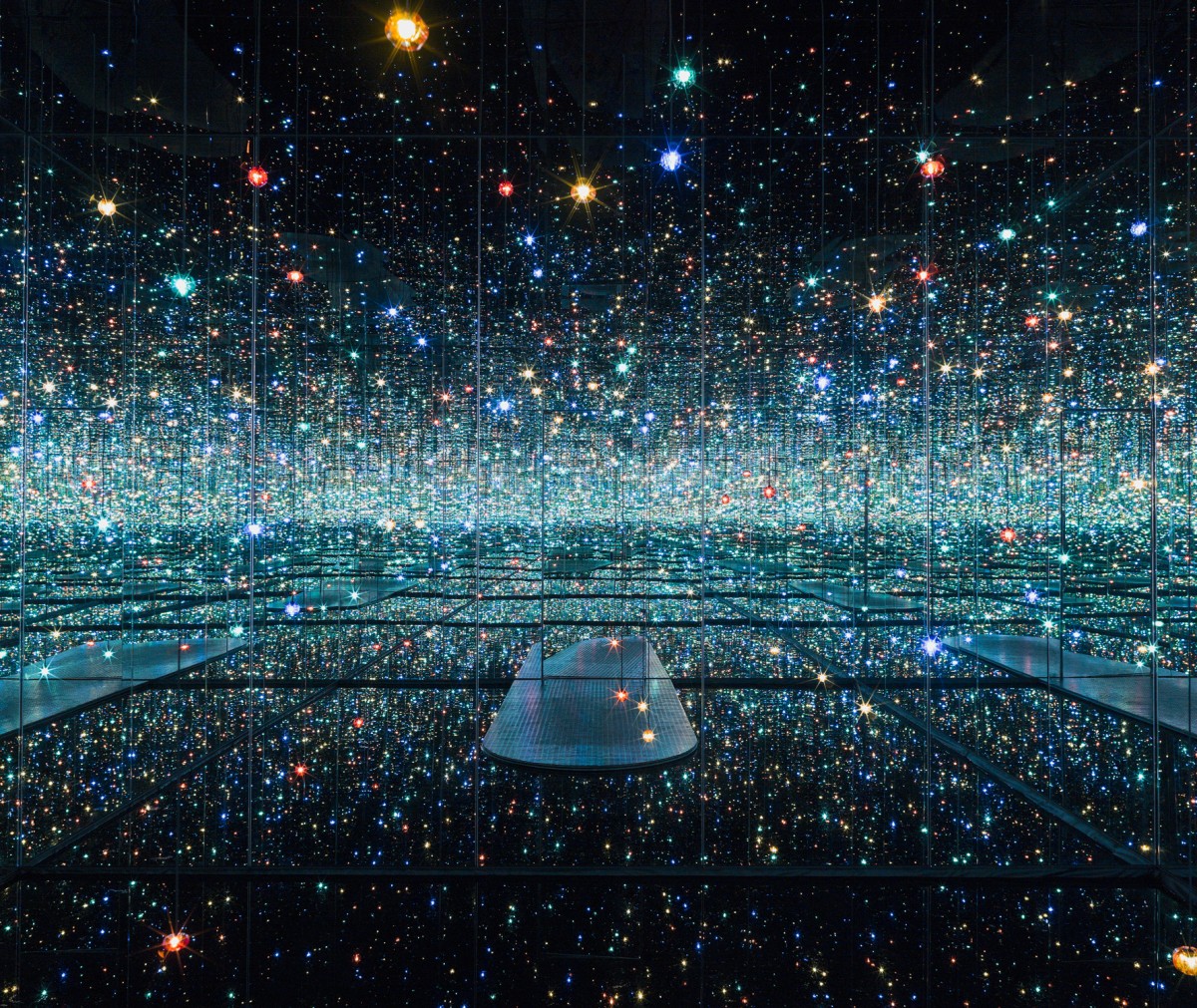
A mirrored room may be visually spectacular, but its central proposition is unsettling. You enter and encounter your own image repeated indefinitely. You are made central and insignificant at exactly the same moment. There are hundreds of you. Therefore none of you is unique. It is narcissism and annihilation simultaneously.
That idea became almost uncannily appropriate in the age of social media.
Long before Instagram existed, Kusama created spaces structured around an infinitely reproduced self. When visitors later began photographing themselves inside them, the work did not suddenly become superficial. The culture had simply caught up with its premise.
We entered the room.
We looked at infinity.
And then we photographed ourselves in front of it.
Narcissus Garden had acquired Wi-Fi.
Beneath the celebrity, however, remained an extraordinary commitment to work. The biography can become so spectacular that the labour disappears. But Kusama's achievement was constructed through decades of repetition.
Painting after painting.
Net after net.
Dot after dot.
Her familiar motifs were not shortcuts. They were the result of a sustained inquiry into a limited vocabulary capable of producing almost unlimited variation. In that sense, her career offers a useful corrective to the contemporary appetite for constant reinvention. Kusama returned, repeated, expanded and insisted. The same questions became larger because she refused to abandon them.
What is the boundary between the individual and the world? Can repetition produce freedom? Can the self disappear? Can an artist remain serious while becoming popular? Can art move between museum and marketplace without becoming entirely one or the other?
Kusama never resolved these contradictions. She made them visible. She was at once private and spectacular, vulnerable and fiercely ambitious, anti-establishment and institutionally adored, politically radical and commercially formidable. She advocated self-obliteration while constructing one of the strongest authorial identities in modern art.
For women artists in particular, Kusama's career carries another significance. Art history contains too many women whose recognition arrived late, partially or posthumously. Their work was placed behind male contemporaries, partners, movements and institutions.
Kusama developed another strategy.
She repeated herself until repetition became ownership.
She placed herself inside the image. She dressed inside her own visual language. She made the author almost impossible to separate from the work.
If history intended to erase Yayoi Kusama, she made the practical arrangements extraordinarily inconvenient.
One would first have to remove the dots.
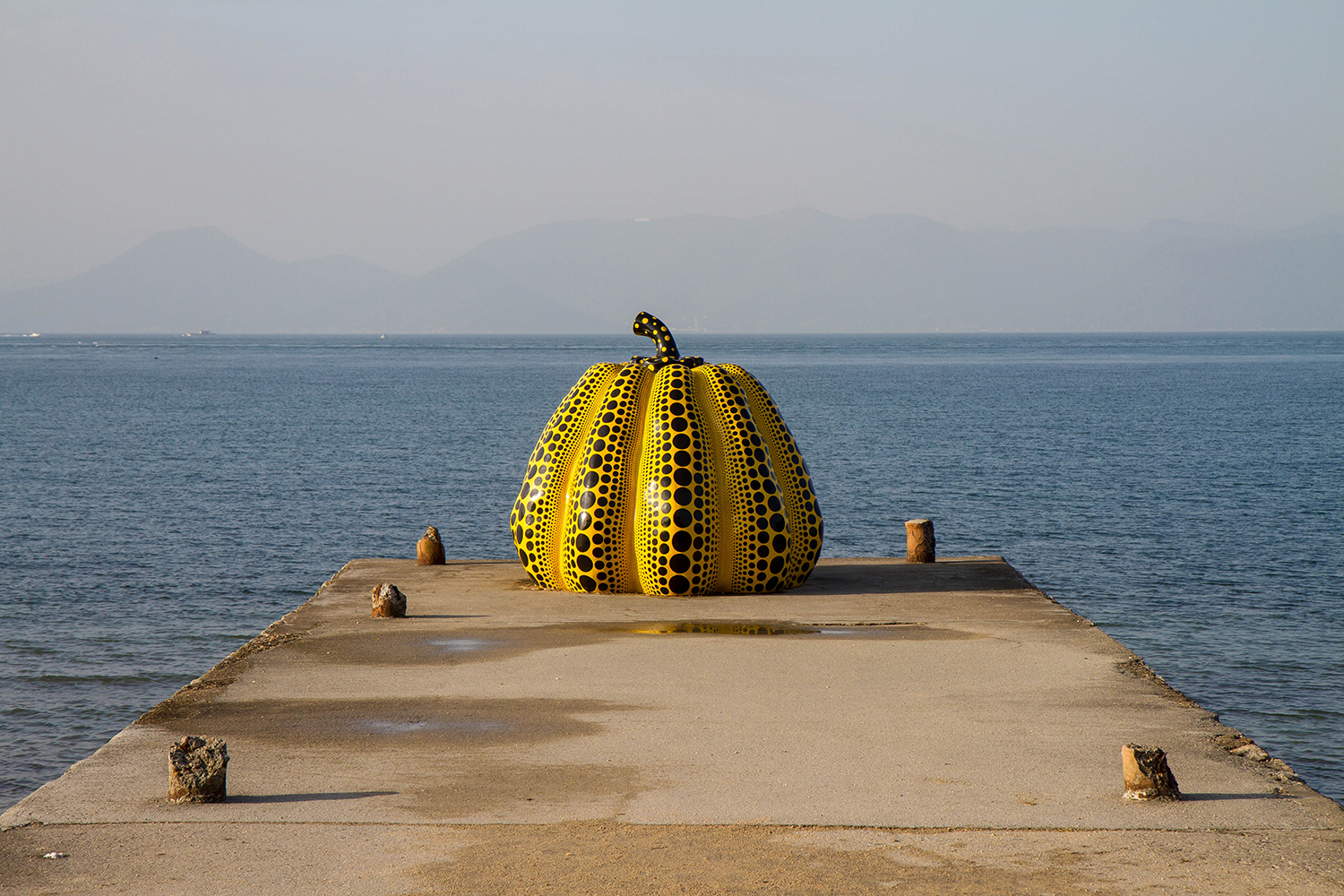
Then the pumpkins.
Then the mirrored rooms.
Then the paintings, sculptures, performances and photographs.
Then several generations of artists who inherited something from her conviction that an artwork could become an environment and an artistic identity could become a universe.
The young woman who once found the world available to her too narrow ultimately constructed a world of her own.
It contained sexuality and politics, fear and humour, painting and performance, commerce and critique, narcissism and disappearance.
And, rather generously, she allowed the rest of us to enter it.
Kusama spent much of her career exploring what might happen if the self dissolved into infinity.
Instead, she achieved the opposite.
She became impossible to erase.
Thank you for infinity
Yayoi Kusama
1929–2026
A rare London exhibition of new works and historical material returns us to Cady Noland’s uncomfortable vision of American spectacle, power and the ordinary object.
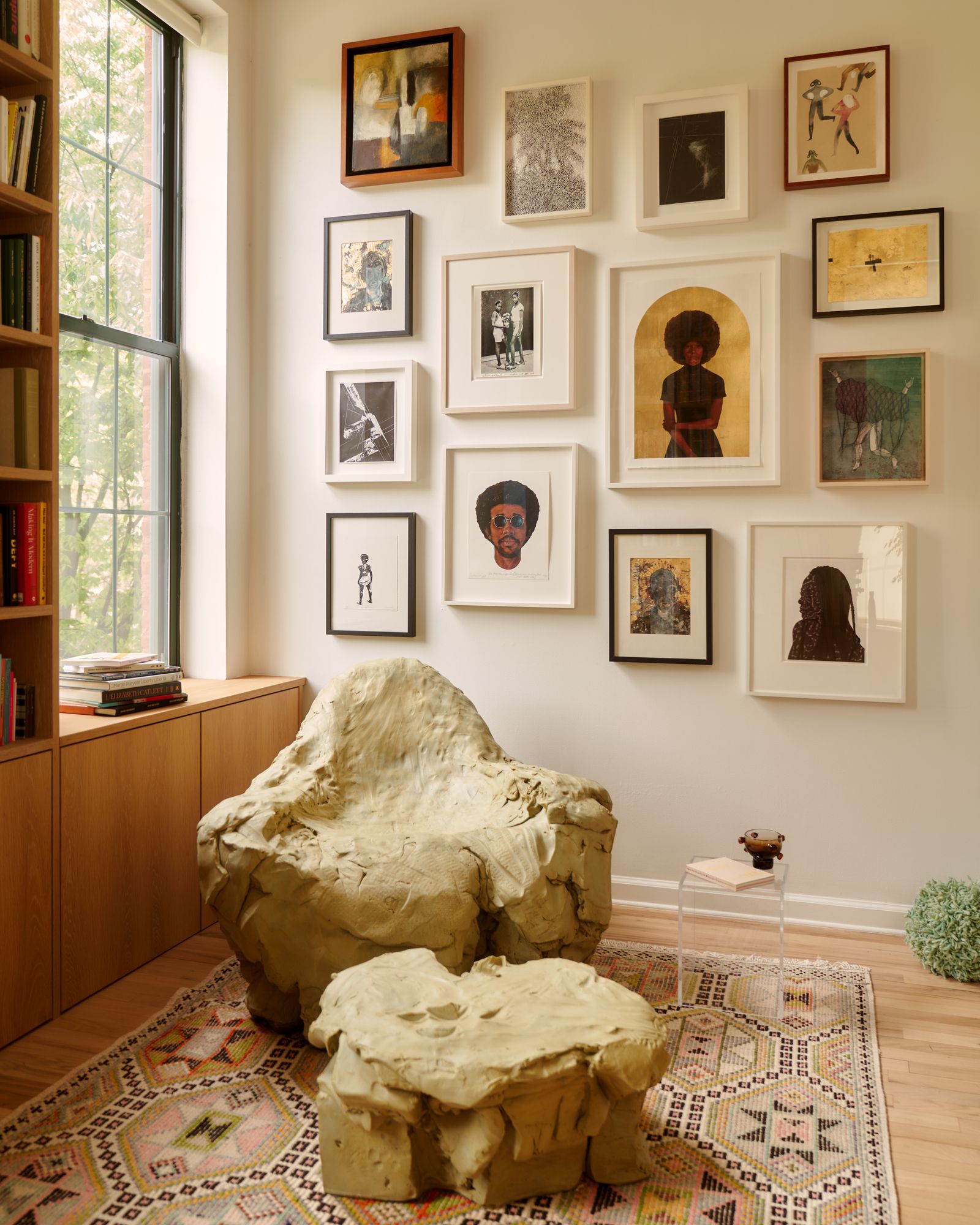
A gallerist’s Clinton Hill apartment reveals how painting, sculptural furniture, family history and unorthodox choices can make a home feel genuinely collected.
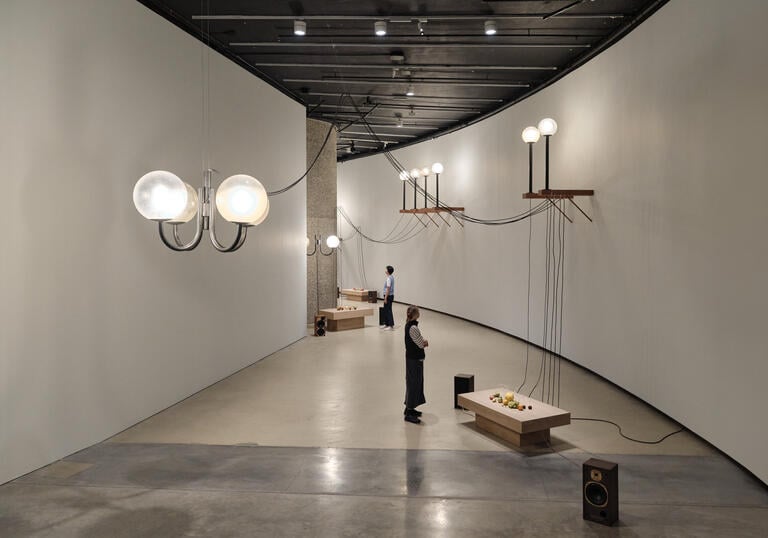
With light, sound, fruit and kinetic systems, Yuko Mohri makes the Barbican’s Curve into an argument for attending to what does not quite work as expected.