
October 20, 2026
Exhibitions
Exhibitions

Paris Internationale returns with 56 galleries, a new Canal Saint-Martin venue and a model built around discovery. Here is how collectors should use it.
Twenty-five years after 9/11, Thomas Ruff’s monumental jpegs ny asks how compression, circulation and the internet have altered collective memory.
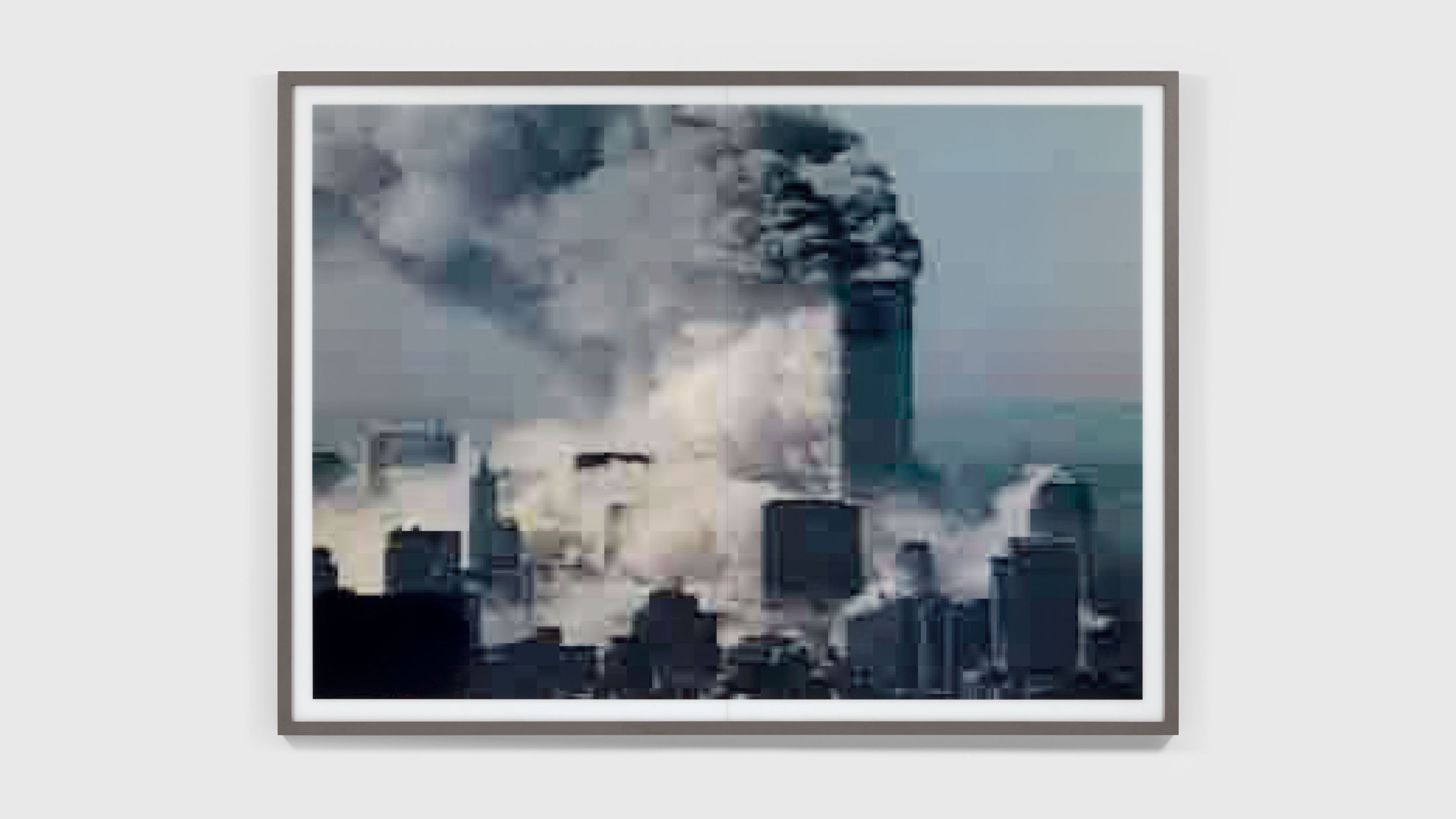
There are photographs that become inseparable from the events they record, and then there are images that become inseparable from the way an event is remembered. Twenty-five years after September 11, Thomas Ruff’s jpegs ny sits uneasily—and productively—between those two categories. The series does not ask us to look again for information. It asks what has happened to looking itself after an image has been copied, compressed, circulated, enlarged, forgotten and encountered again.
David Zwirner’s New York exhibition, running from 10 September to 17 October 2026 at 533 West 19th Street, brings together twelve works from jpegs ny to coincide with the twenty-fifth anniversary of the attacks. Ruff conceived the presentation as a commemoration. The same group was shown earlier this year in Art Basel Unlimited, where their near-history-painting scale made their physical character unavoidable.
The timing gives the work a particular gravity. These are not neutral experiments in digital aesthetics. Their source material comes from images of the World Trade Center attacks that spread across the early internet. Ruff’s transformation of those images—reducing information, exaggerating compression and then enlarging the result—makes the medium part of the subject. Memory is not presented as a pristine archive. It arrives damaged by transmission.
Ruff was in New York on 11 September 2001. According to David Zwirner’s account of the series, he photographed the day and its aftermath, only to discover after returning to Germany that there were no images on his camera. Three years later, with the attacks still present in his thinking, he turned instead to photographs sourced from the internet.
That missing personal image is crucial. Ruff was already an artist deeply skeptical of the idea that photography simply delivers truth. By using found images rather than positioning his own eyewitness photographs as privileged evidence, he shifted the problem from “what did I see?” to “how do images become what all of us think we saw?”

The jpeg series, developed from 2004 onward, took internet images and scans as its starting material. Ruff became interested in the geometric logic of JPEG compression: information divided into blocks of eight by eight pixels, simplified in order to make the file smaller. Normally, visible compression is treated as failure. Ruff enlarged the failure until it became structure.
Up close, the picture breaks into blocks. From farther away, the subject returns. That oscillation is the essential experience of the work. It is also a remarkably accurate metaphor for mediated memory: distance creates coherence; proximity reveals gaps.
The attacks occurred at a transitional moment in visual culture. Networked images were already circulating rapidly, but the smartphone-social-media system that now defines breaking news did not yet exist. Amateur photographs, news images, television captures and early web reproductions moved between formats and screens with uneven resolution. The event was witnessed globally through repeated images, but those images were technically fragile by contemporary standards.
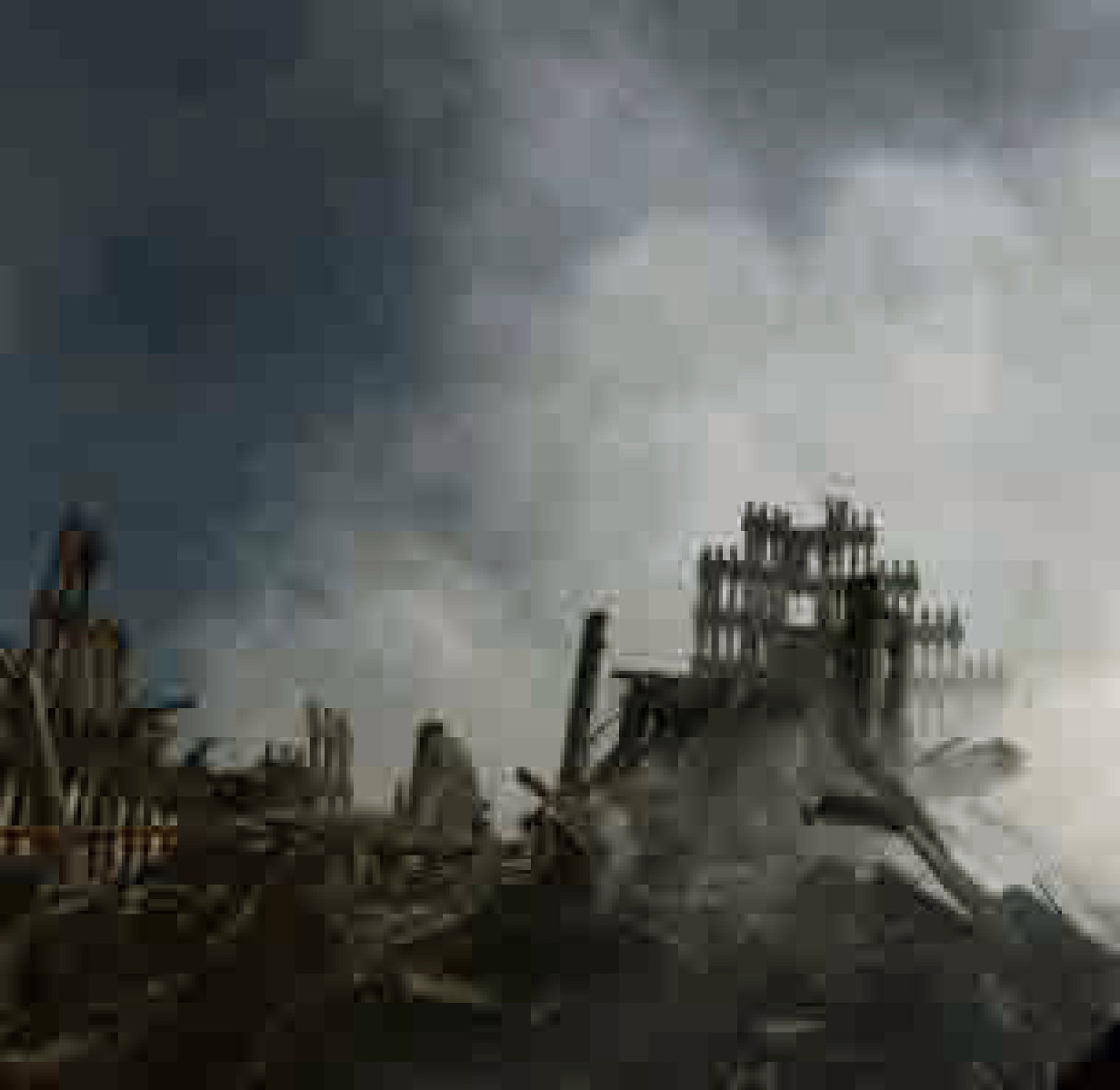
Ruff’s work makes that fragility visible. A low-resolution image does not simply contain less information; it carries the history of how it travelled. Compression becomes evidence of distribution. The blurred grid tells us that the image has been optimized, copied and made portable. The picture is therefore both of an event and of an information system.
That distinction feels even more important in 2026. We now live inside an image environment of algorithmic feeds, synthetic imagery, automatic enhancement, screenshots and perpetual reposting. High resolution has not solved the problem of trust. If anything, the ease with which an image can be made sharper, cleaner and more convincing has made technical clarity a poor proxy for truth.
On a laptop or phone, Ruff’s jpegs can look like deliberately degraded photographs. At full scale, they behave differently. The New York works are enormous; several reach dimensions associated more readily with monumental painting than conventional photography. David Zwirner explicitly connects their scale to nineteenth-century history painting.

This is where the series becomes more than a commentary on file formats. History painting traditionally transformed public events into large, authoritative compositions designed for collective viewing. Ruff takes an already-public image—one that may have existed online in a tiny, unstable file—and enlarges its technical weakness to monumental scale. Authority and inadequacy occupy the same surface.
The viewer has to move. From close range, the pixels dominate and the event recedes. Step back and the recognizable skyline or smoke re-forms. The work refuses the frictionless consumption of imagery that characterizes the feed. It makes looking physical again.
Any discussion of these works has to be careful with the word “beautiful.” Ruff’s transformations can generate extraordinary color structures and painterly effects, but the exhibition’s subject is mass death and collective trauma. The aesthetic force of the works should not be mistaken for an invitation to detach the images from what they represent.
Their seriousness lies in the tension. The images are compelling because they remain difficult to look at, not because the technical manipulation has neutralized them. Pixelation produces distance while the recognizable event continuously collapses that distance. The viewer is never allowed to remain entirely in abstraction.
Ruff emerged from the Düsseldorf context associated with Bernd and Hilla Becher, but his career has consistently expanded photography beyond the straightforward camera image. Portraits, architectural photographs, astronomical imagery, surveillance technologies, negatives, internet sources and digital manipulation have all become ways to investigate what a photograph is allowed to claim.
The jpegs are particularly important because they shift authorship. Ruff did not make the source photographs in the conventional sense. His authorship lies in selection, transformation, scale and presentation. That approach, once provocative, now feels central to a culture in which most people encounter far more images they did not make than images they did.
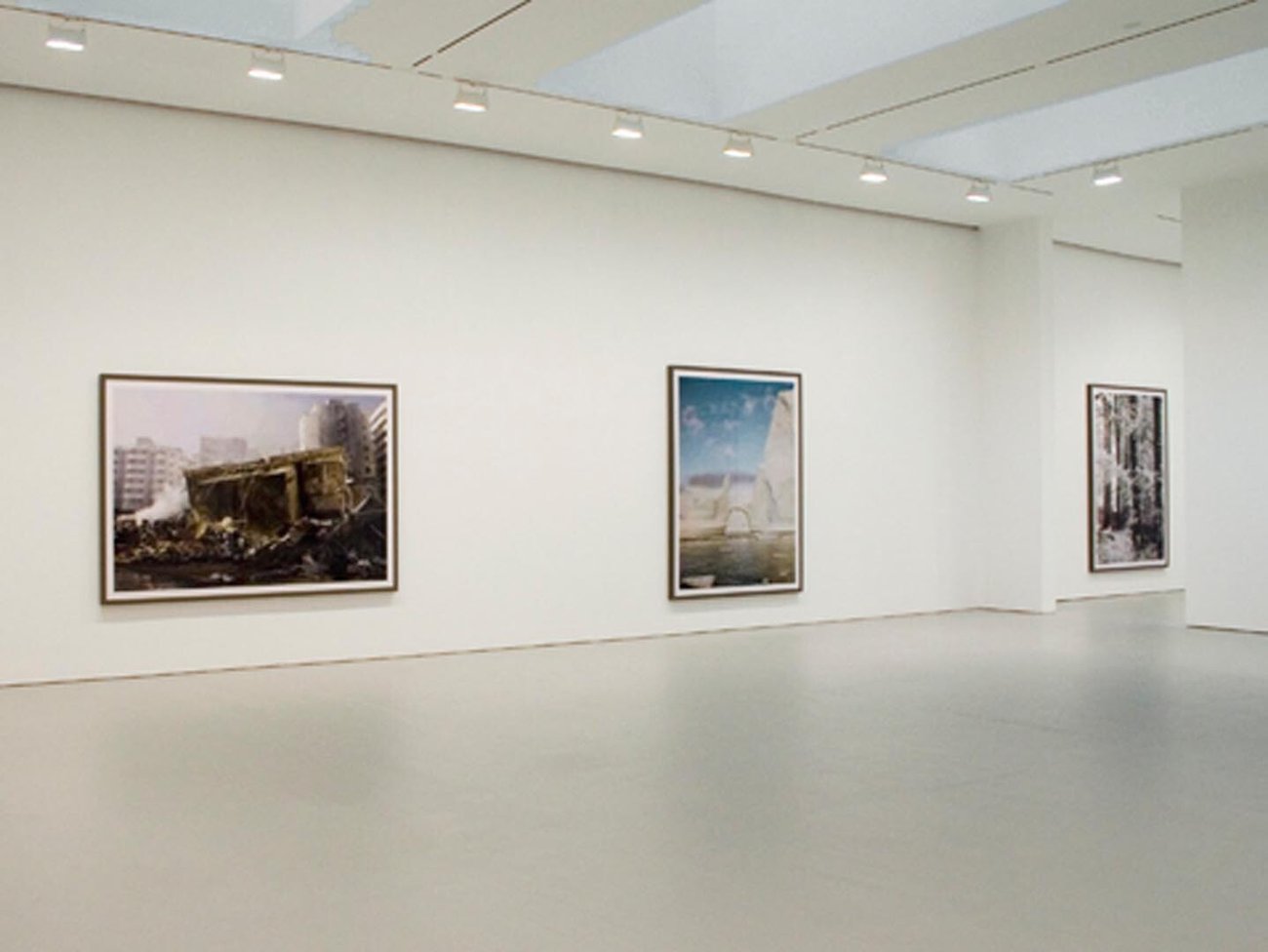
For collectors, the first point is that these are not casual digital prints. The jpeg works are editioned, large-format chromogenic prints with substantial physical presence; the artist’s official site lists the series as editions of three plus artist’s proof. Scale, production specification, condition, mounting and provenance all matter.
Second, the New York subset has a distinct conceptual unity within the wider jpeg project. A collector considering one of these works should distinguish between the broader series—an expansive visual encyclopedia of globally circulated imagery—and the specific jpegs ny group tied to September 11. Exhibition history, including the 2026 Art Basel Unlimited installation and the twenty-fifth-anniversary New York presentation, is likely to remain important context.
Third, conservation deserves attention. Large chromogenic prints and face-mounted works have different vulnerabilities from paintings. Condition reports should address surface, mounting, color stability, frame integrity and any history of treatment. The physical object may depict degraded information, but the object itself should not be degraded.
Ruff’s achievement is not that he found a new way to illustrate September 11. It is that he found a way to show how a historical event becomes inseparable from the technologies through which it is remembered. In 2004, the visible JPEG block was a sign of digital limitation. In 2026 it can look almost archaeological: an artifact from an earlier internet whose images seemed abundant at the time and now feel materially specific.
The exhibition asks us to look at an event we already know, through images we may feel we already know, and notice the machinery between them. That machinery—compression, circulation, distance, repetition—is part of contemporary memory. Ruff does not let us forget the image, but neither does he allow us to believe that remembering is the same as seeing clearly.
Paris Internationale returns with 56 galleries, a new Canal Saint-Martin venue and a model built around discovery. Here is how collectors should use it.
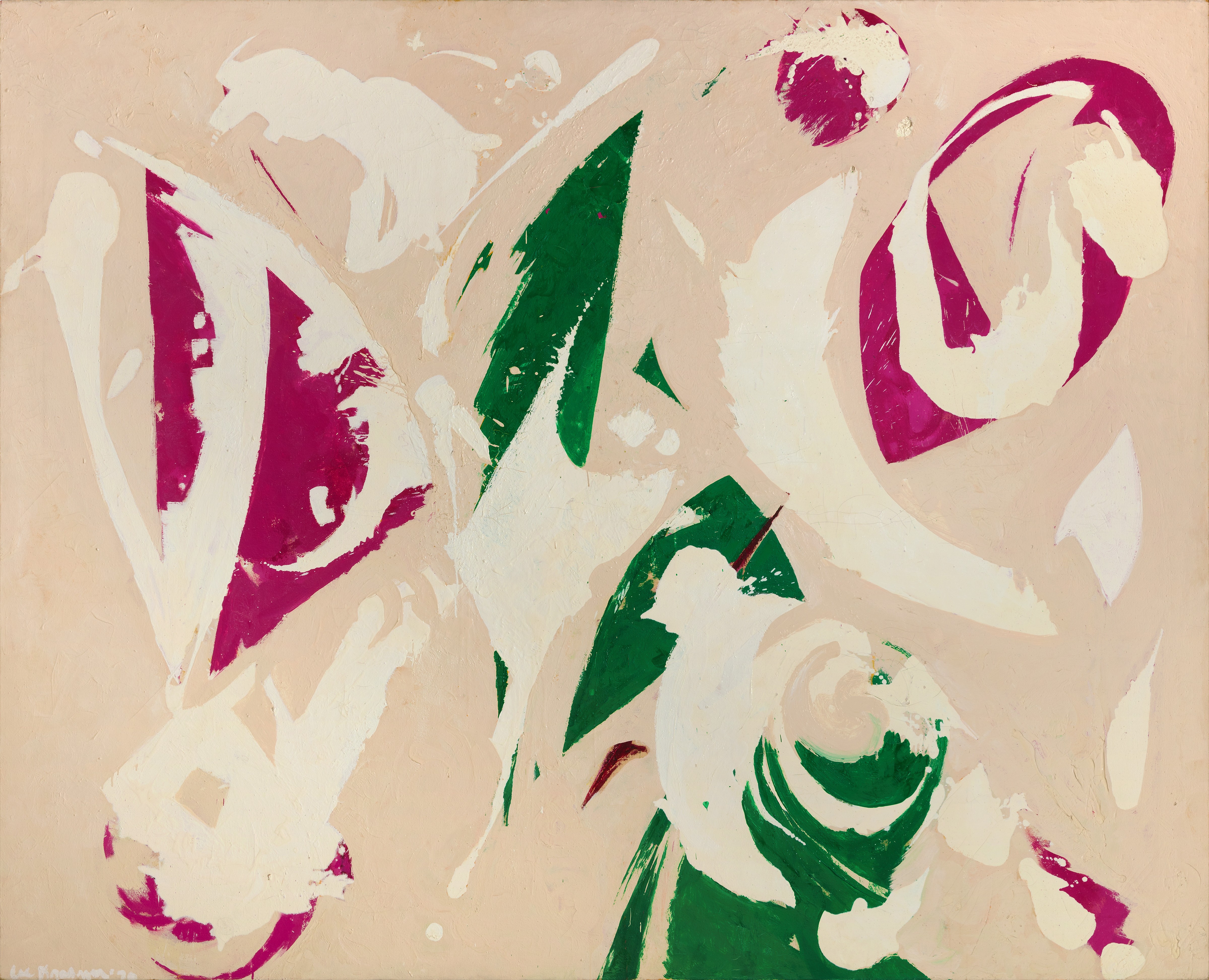
Ibrahim Mahama, Lee Krasner, Oscar Murillo, Tracey Emin and more: the exhibitions that turn Art Basel Paris week into something larger than a fair.

From a £5 million Brueghel and three major Alice Neel sales to George Rickey, global modernism and a £675,000 Triceratops skull, Frieze Masters rewarded collectors who looked beyond categories.