
November 10, 2026
Exhibitions
Exhibitions
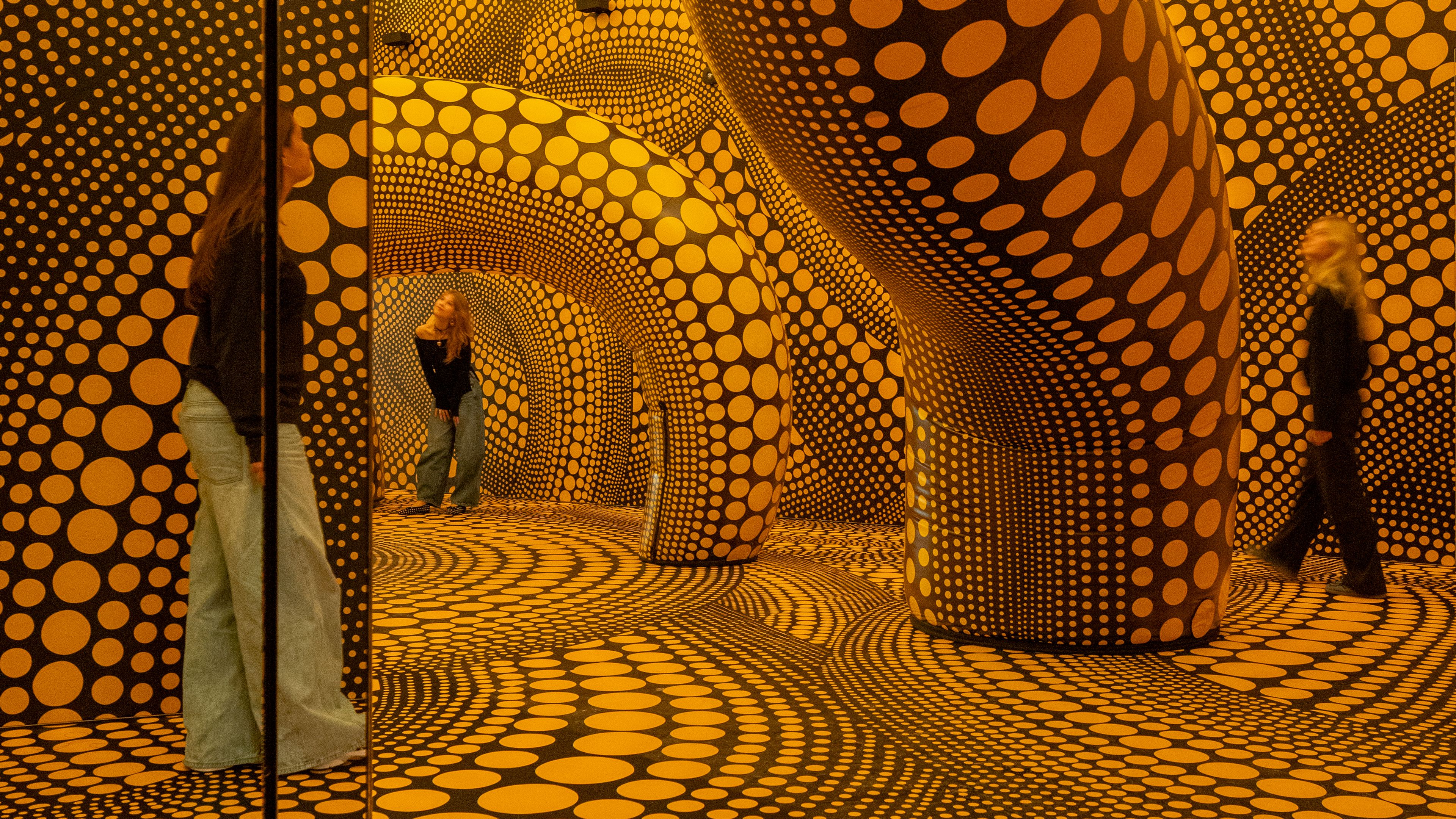
Amsterdam’s major Kusama retrospective, planned during the artist’s lifetime, has become a poignant opportunity to look beyond the mirrored rooms to seven decades of experimentation.
Amsterdam’s major Kusama retrospective, planned during the artist’s lifetime, has become a poignant opportunity to look beyond the mirrored rooms to seven decades of experimentation.
It is possible to have seen hundreds of photographs of Yayoi Kusama’s work without having looked closely at a single drawing. The mirrored rooms and endlessly proliferating polka dots are among the most circulated images in contemporary art. They have become part of the visual vocabulary of museums, social media and tourism. Yet Kusama’s achievement is not principally a triumph of photogenic installation. It is the persistence of an artistic inquiry across more than seven decades, across materials, continents and radical changes in taste.
The major retrospective at Amsterdam’s Stedelijk Museum, running from 11 September 2026 to 17 January 2027, presents that much larger history. It is the third and final venue of a travelling exhibition previously seen at Fondation Beyeler in Switzerland and Museum Ludwig in Cologne. Following the artist’s death in Tokyo on 14 August 2026 at the age of 97, confirmed by her studio, the Amsterdam presentation has also acquired the character of a farewell. Its original ambition, however, was historical and visual, not commemorative.
Kusama’s work crosses painting, drawing, sculpture, collage, installation, fashion, performance and the moving image. That range is not the familiar story of an artist branching out from a successful motif. Rather, a set of persistent questions took different forms as each medium offered a new way of testing them. How can a mark multiply until it absorbs its surroundings? What happens when the distinction between the body and the world becomes uncertain? Could repetition suggest both an unstable interior life and something cosmically vast?
Early works on paper reveal that the later installations did not arrive without preparation. Networks of marks, cellular shapes and swelling forms appear before the mirrored rooms that made Kusama a household name. The celebrated Infinity Nets paintings depend on obsessive accumulation; their visual calm is achieved through the almost improbable number of individual gestures required to construct them.
This is one reason the retrospective format matters. It allows an early mark and a late spatial environment to be considered in the same mental frame. Visitors can recognise a line of thinking that survives the changes in material and scale. A motif can migrate from a drawing to fabric, from fabric to an object, and from an object to an entire room. The effect may be spectacular, but its logic is rigorous.
Kusama’s time in New York during the late 1950s and 1960s was crucial to the formation of her international practice. She worked in a city that was debating painting’s limits and the authority of the individual gesture. Her response was to repeat the gesture almost beyond individuality. Later performances, public happenings and body-oriented interventions connected her art with questions of freedom, visibility and the politics of the era.
It is tempting to separate the ostensibly cheerful dots from the historical urgency of those experiments. Doing so diminishes the work. Repetition in Kusama can be joyful, unsettling, humorous and relentless. A field of dots can charm the viewer from a distance while also suggesting a world in which any stable self might dissolve. Her practice accommodates both experiences without resolving the contradiction.
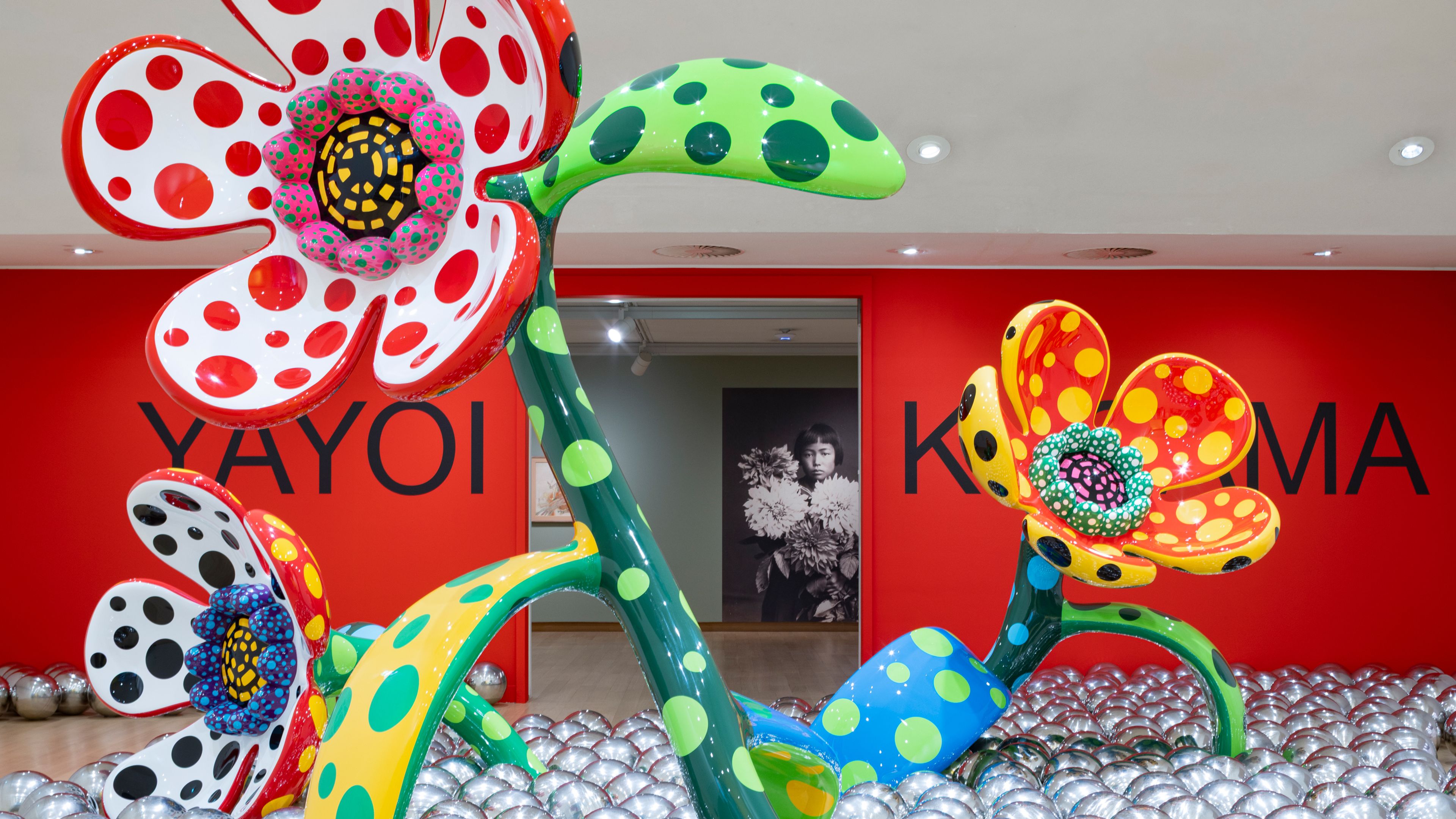
At the Stedelijk, the monumental flower sculptures make this tension especially apparent. They are brilliantly coloured and immediately approachable; their scale and improbable forms make them less easy to classify. Flowers ordinarily signify growth and fragility. In Kusama’s hands, they become exuberant presences with something almost alien in their refusal of conventional proportion.
The Infinity Mirrored Rooms have attracted extraordinary attention because they promise the viewer a moment of apparently limitless visual space. Yet the mirror is not merely an instrument for producing photographs. It is a material that denies the reliable boundaries of the gallery. The visitor sees a multiplication of lights, objects and sometimes their own figure, but cannot easily establish where the visible environment begins or ends.
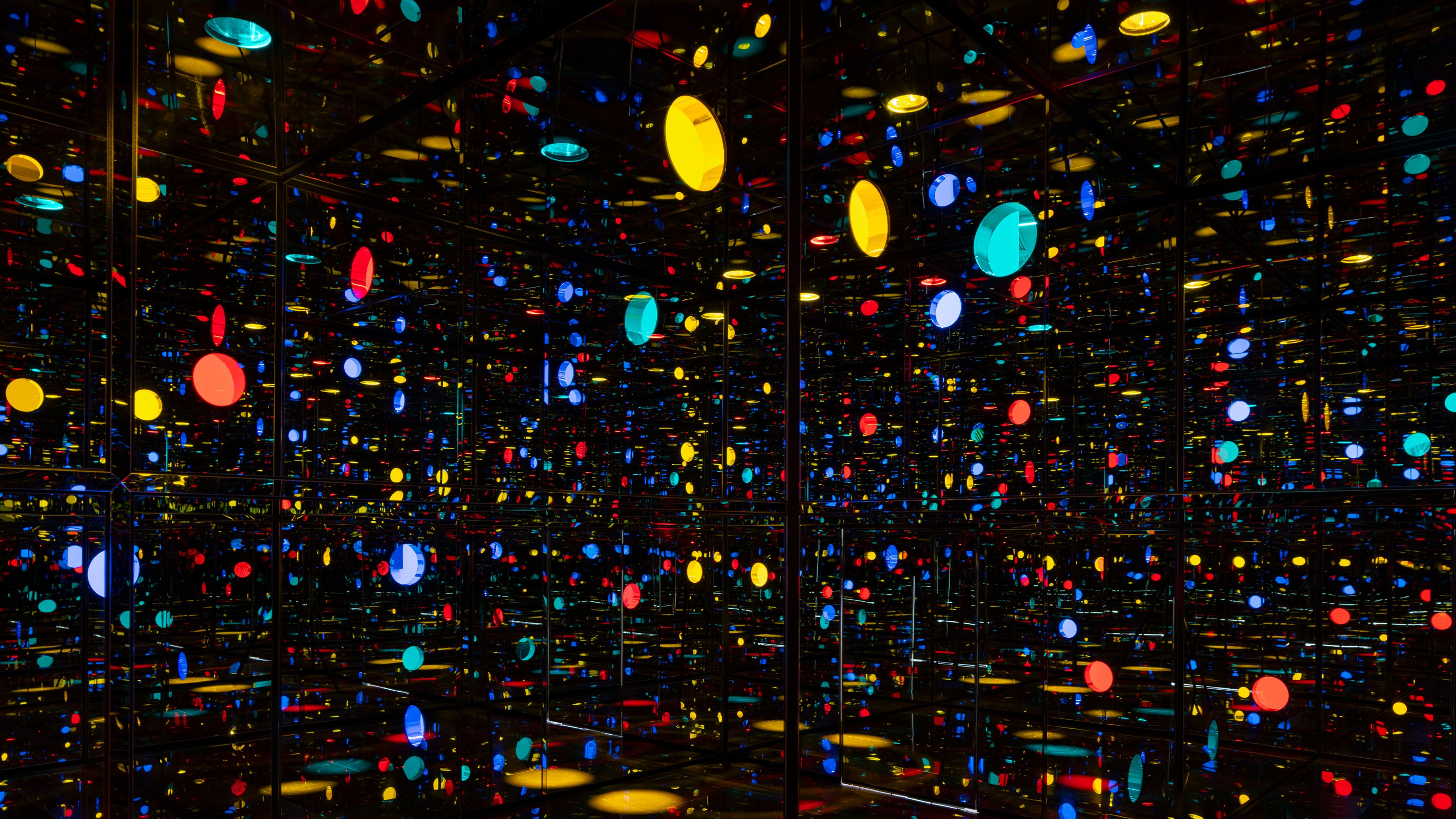
In Infinity Mirrored Room – The Hope of the Polka Dots Buried in Infinity Will Eternally Cover the Universe (2025), the repetition of dotted surfaces produces a heightened relation between physical enclosure and imagined limitlessness. In Illusion Inside the Heart (2025), points of light become a spatial event. Both rooms are associated with the exhibition through the artist’s gallery, and their titles show that the language of infinity remained a living concern very late in Kusama’s practice.
There is a productive irony in the way these works circulate online. A room conceived to unsettle the stability of an image becomes an image shared thousands of times. That mass familiarity may be unavoidable, but it should make the visitor more curious about the original experience. The body moves through an installation in a way that a camera cannot reproduce. The duration of looking, the adjustment of the eyes and the awareness of other visitors become part of the work.
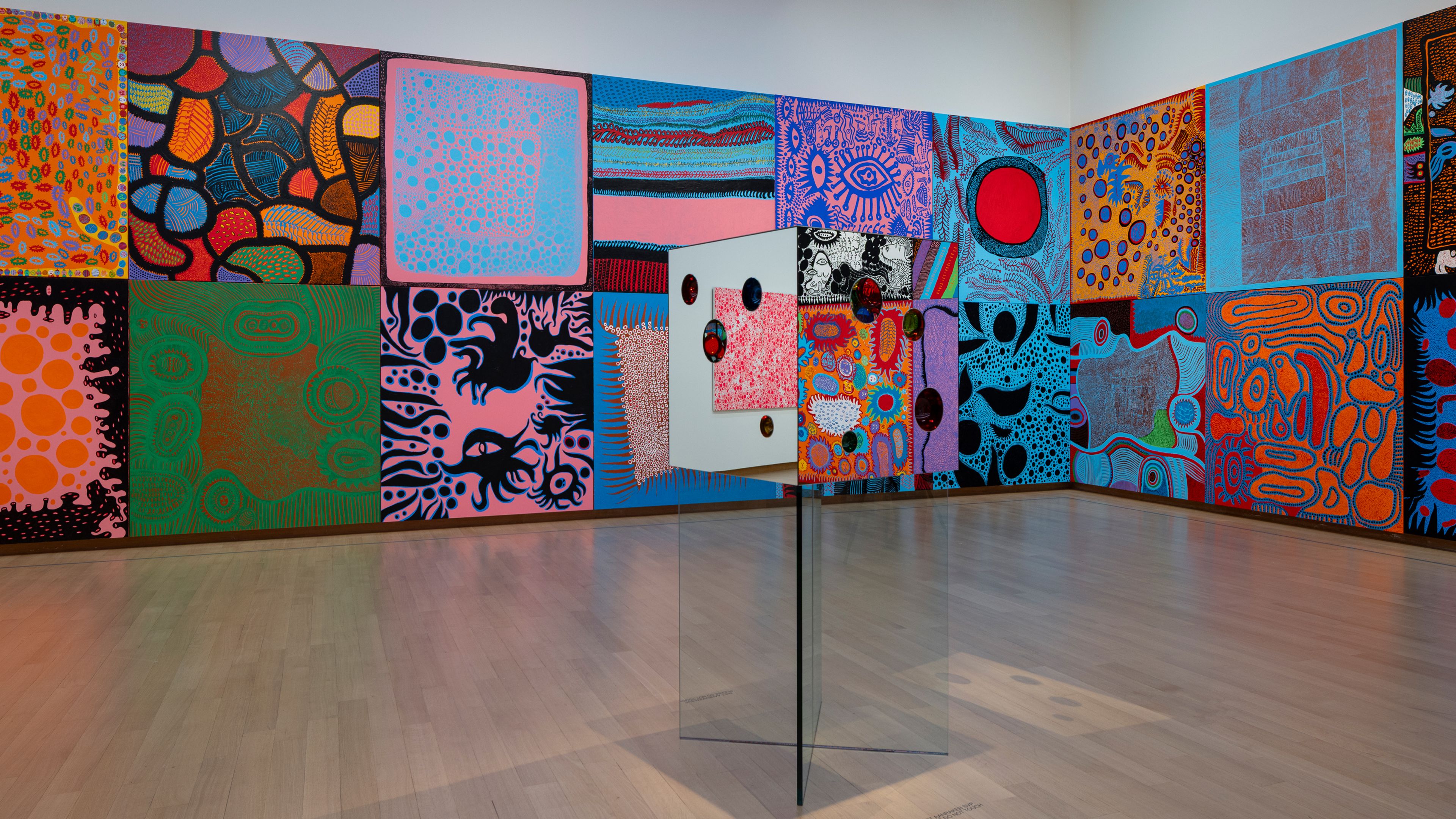
For collectors, it is useful to consider the whole career rather than treat the infinity room as its definitive centre. Kusama’s paintings and works on paper reveal remarkable changes in touch, density, colour and compositional intention. Some compositions feel tightly controlled; others are more playful or insistently rhythmic. Even where the motif appears familiar, its material treatment can alter the mood of the piece.
The painting gallery in Amsterdam restores that essential dimension of looking. A photograph can convey the outline of a composition but little of its true surface. Thin layers, edges, paint accumulation and shifts in pressure become visible in the presence of the work itself. In a career so often mediated by an instantly recognisable brand, that attention is an act of historical care.
A responsible approach to collecting Kusama requires equal attention to provenance, authorship, editions, materials and the relationship between a given work and the artist’s broader development. Vast popularity has created a complex market ecosystem in which different forms of production and distribution should not be confused. The museum exhibition cannot serve as a price guide, nor should it; instead, it provides the context through which the significance of an individual object can be better understood.
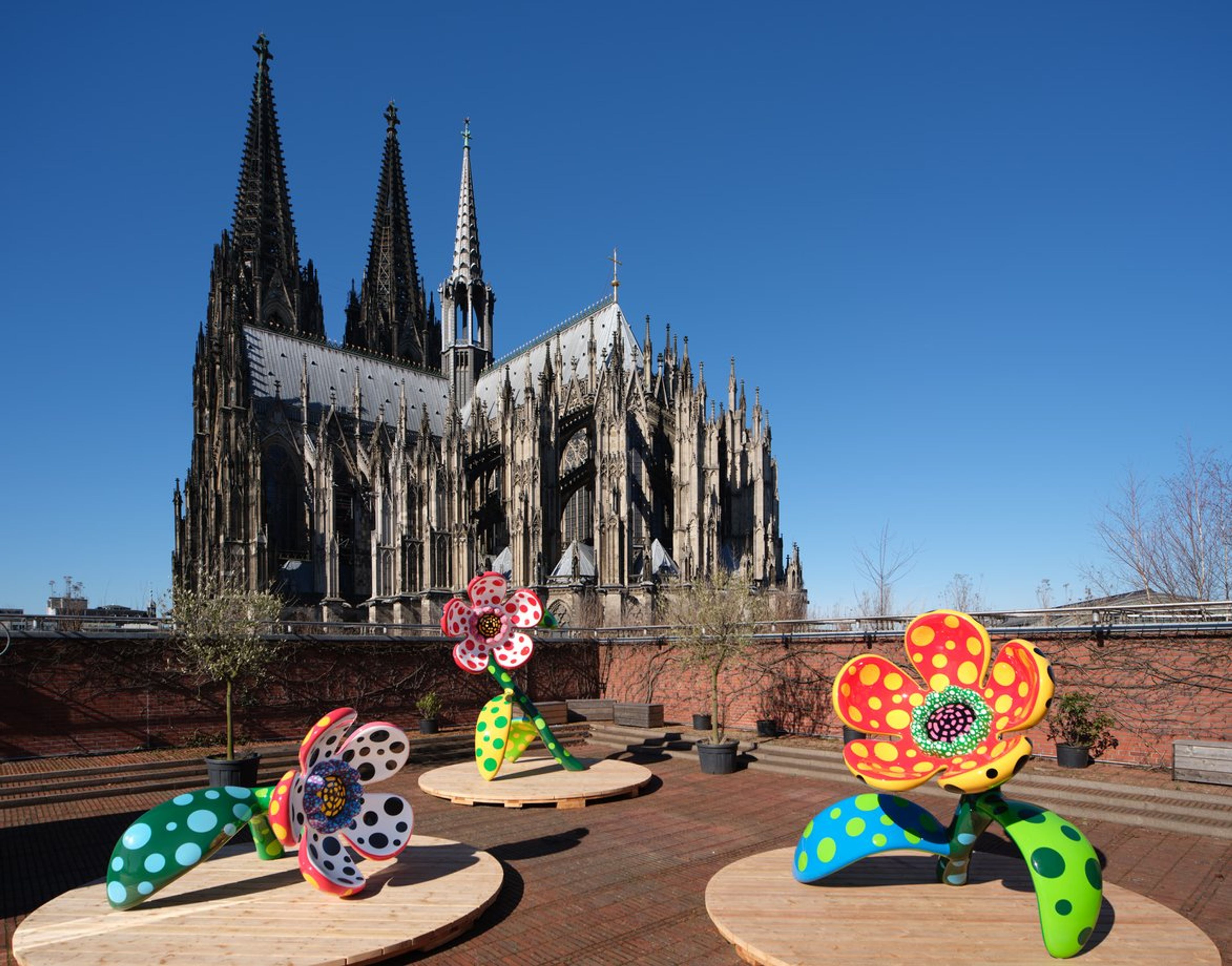
The retrospective’s passage from Switzerland to Germany and the Netherlands makes visible Kusama’s profound connection to European and American art histories as well as her life in Japan. Her achievements cannot be contained by a simple story of influence flowing in one direction. She responded to the avant-garde while challenging some of its assumptions about gender, recognition and artistic freedom.
The photography accompanying the current exhibition includes views from Cologne and Basel, earlier stops in the same travelling project. They should not be confused with the Amsterdam installation. Seen together, however, these views illustrate another aspect of Kusama’s practice: how works conceived around repetition can take on distinct relationships to the architecture and atmosphere of different institutions.
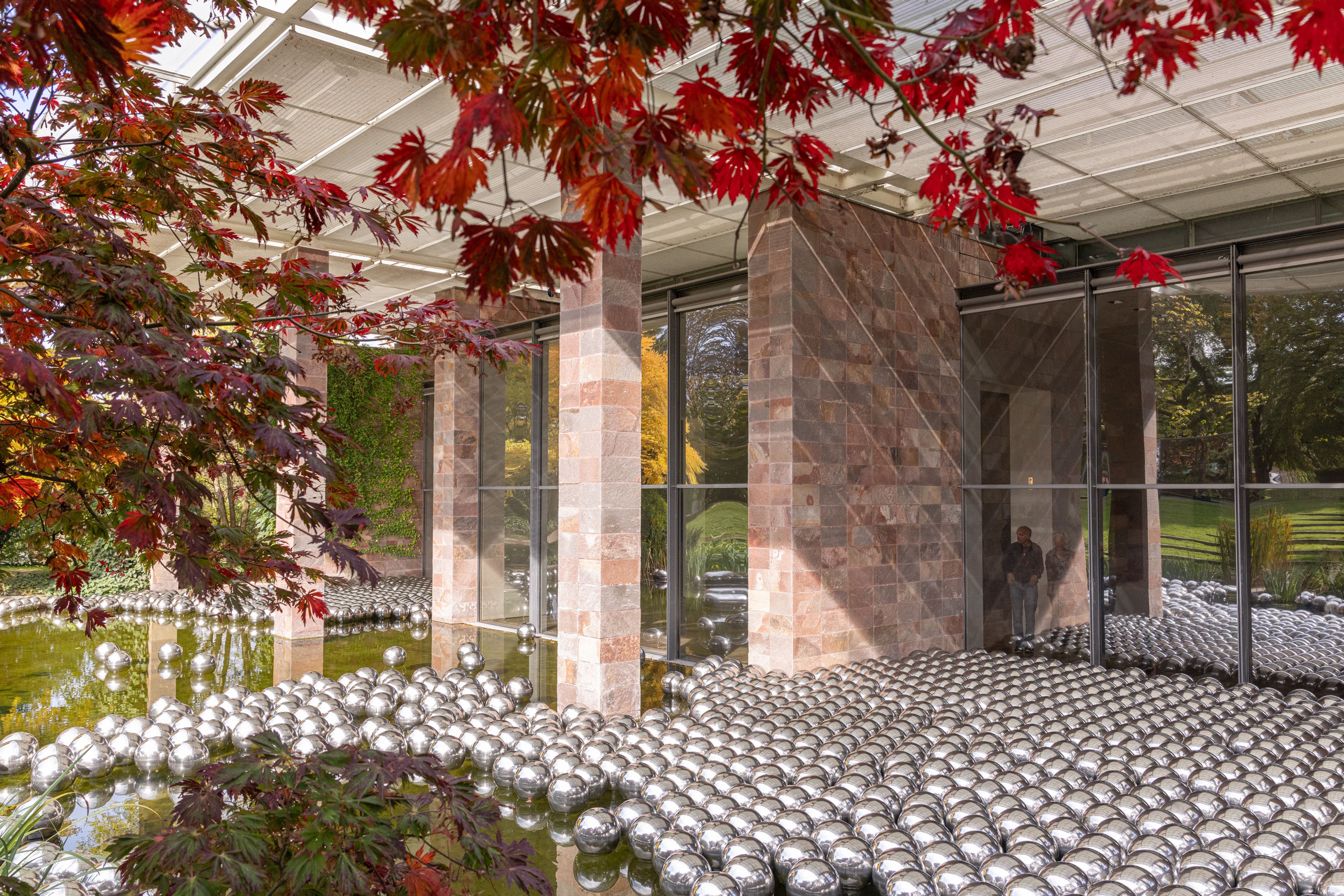
The Stedelijk’s larger historical responsibility is to make room for complexity. Kusama has often been framed through her biography, mental health and unusual public persona. Those aspects of the life should neither be ignored nor used as a substitute for analysis. The patient craft of the early drawings, the risks of the New York period, the evolution of the sculptural language and the late paintings deserve the kind of attention any major artistic career demands.
The artist’s studio announced her death in August, noting that she had continued painting until her final days. There is no need to romanticise that fact. It is enough to recognise the remarkable continuity of work, the willingness to return to an artistic problem and make it newly difficult. Her images may suggest limitlessness, but the achievement was built through finite acts: a drawn line, a painted dot, an object made, a room assembled, a decision repeated thousands of times.
Visitors leaving Amsterdam should take more than an image of themselves surrounded by lights. They should have a sense of the stubborn intelligence that animated the rooms and the quieter works alike. Kusama’s infinity is not only what the mirror shows. It is the long continuity of an artist’s thinking across a lifetime.
Amsterdam’s major Kusama retrospective, planned during the artist’s lifetime, has become a poignant opportunity to look beyond the mirrored rooms to seven decades of experimentation.
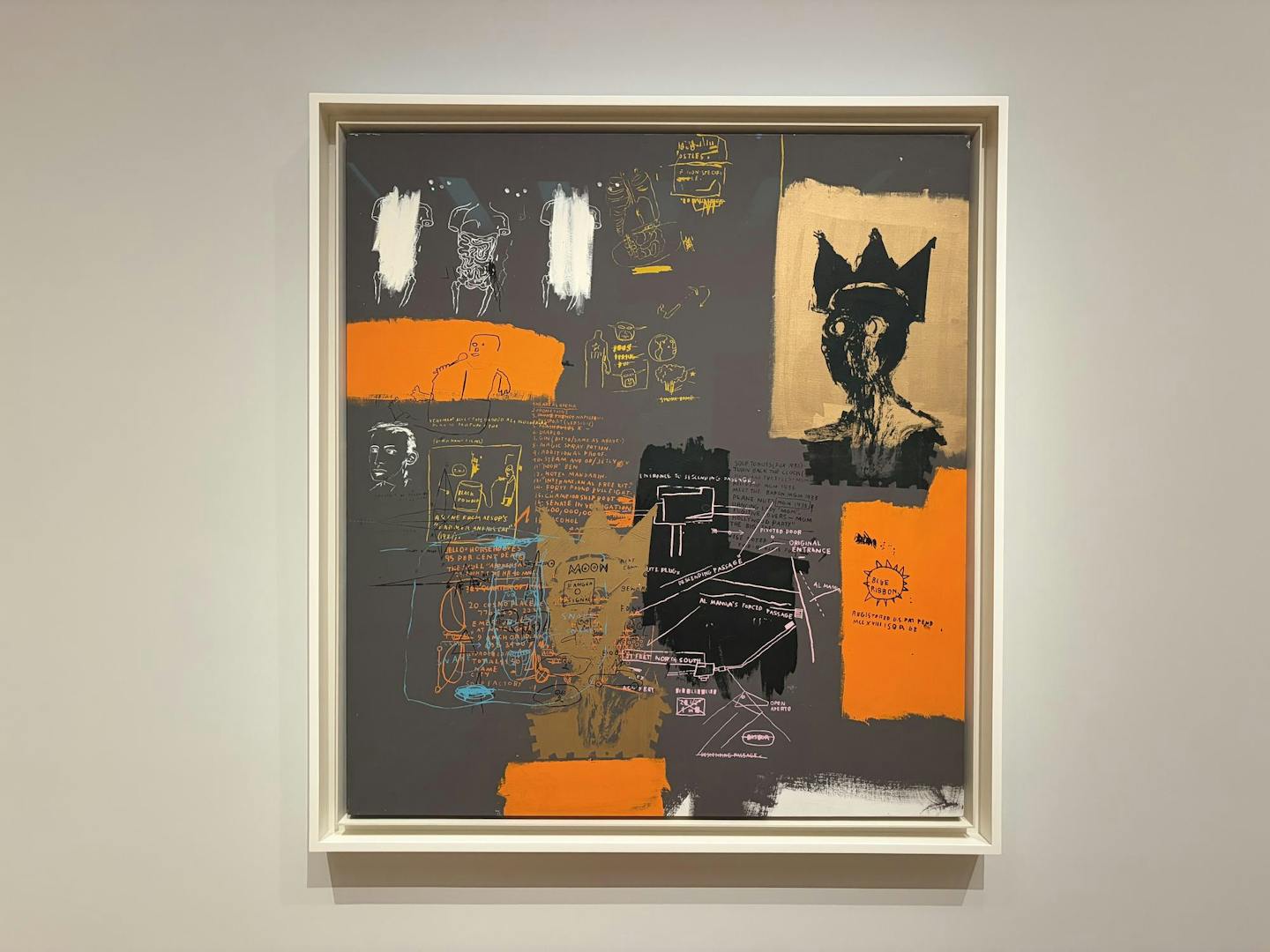
At Princeton, eleven paintings from 1984 reveal a Basquiat who copied, screened and revised his own images with exacting intent—complicating the myth of improvisational genius.
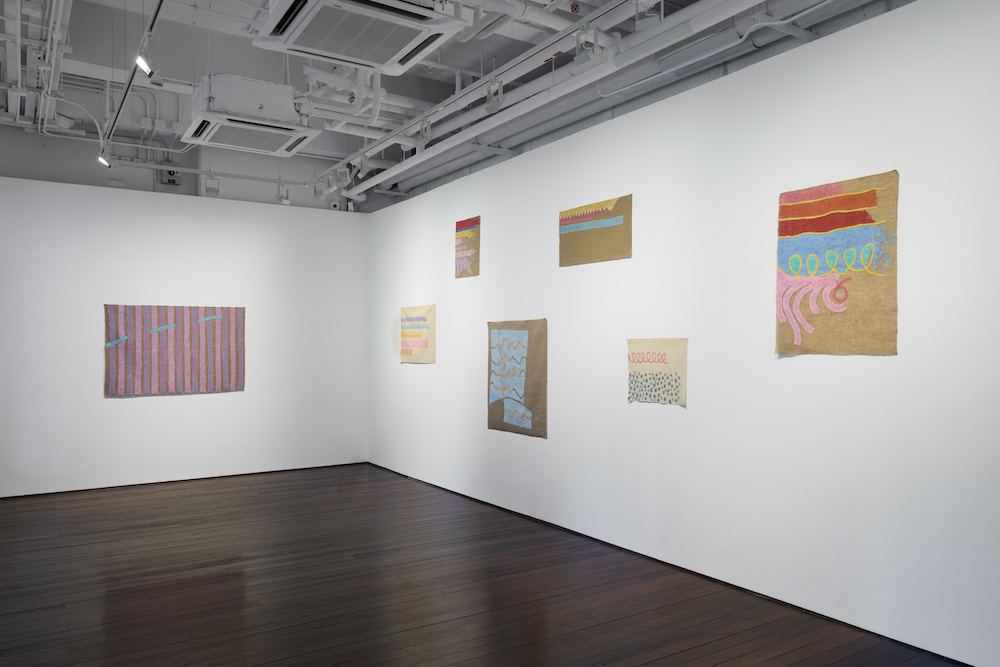
Seven confirmed Hong Kong exhibitions for November 2026, with artwork-specific photographs matched to M+, Tai Kwun, David Zwirner, White Cube, MASSIMODECARLO, Axel Vervoordt and Whitestone Gallery.
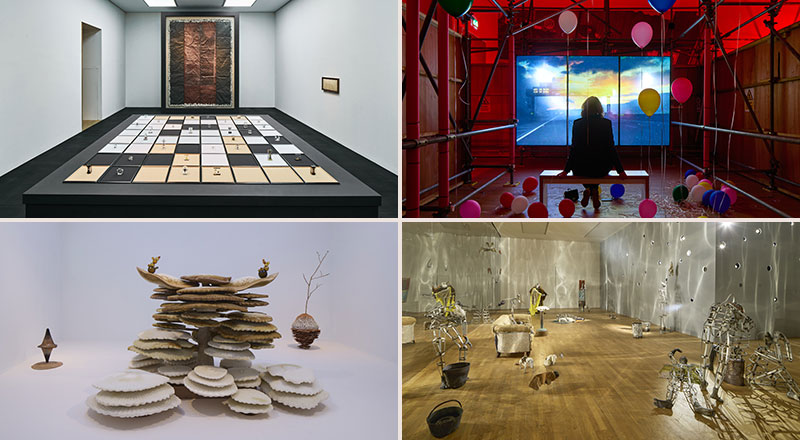
The Turner Prize can be most interesting when its four finalists refuse to represent a single trend. At Middlesbrough Institute of Modern Art, the 2026 exhibition brings together Simeon Barclay, Kira Freije, Marguerite Humeau and Tanoa Sasraku. Their presentations differ sharply in scale, material and temperament, yet all ask how contemporary life becomes embedded in the things we make, transport, inhabit or consume. The exhibition opened on 26 September and continues until 29 March 2027; the winner is due to be announced on 10 December 2026.