
November 11, 2026
Articles
Articles

Michael Chow commissioned portraits from Basquiat, Warhol, Haring, Hockney, Ruscha and others. Inside the collection behind Gagosian’s Friends and Legends.
Christine Sun Kim and Theaster Gates lead a Seoul route that also tests Pam Evelyn’s momentum and highlights Yuichi Hirako, Jenny Holzer and Heejoon Lee.
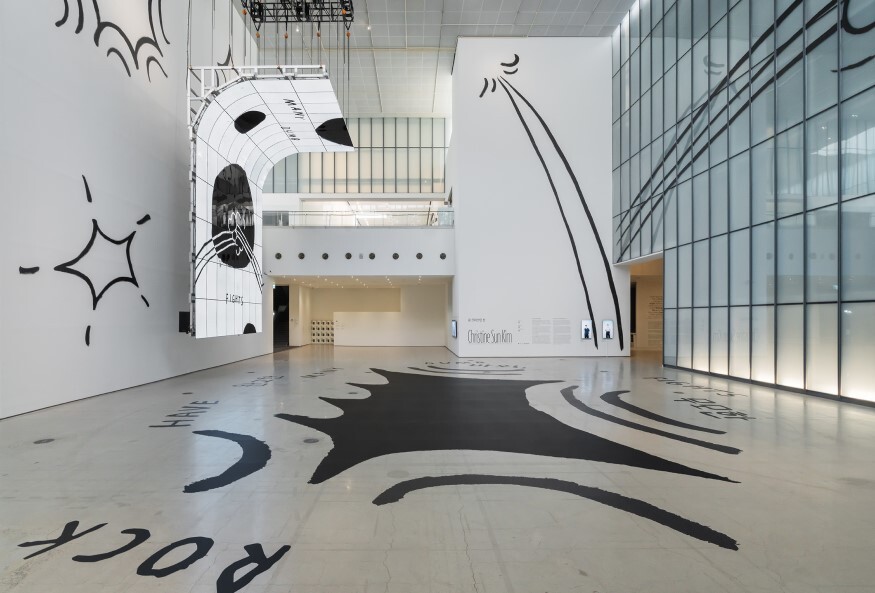
Seoul’s November programme is strongest when read beyond the fair calendar. Frieze Seoul is over; what remains is a city in which international galleries, Korean programmes and the national museum are testing very different relationships between material, sound, painting, language and architecture. The month also shows why Seoul should not be reduced to a market-growth story. Several of the best exhibitions are about forms of knowledge that resist easy commodification.
Christine Sun Kim’s large-scale MMCA project turns the Seoul Box into a field of drawn motion, language and a monumental curved OLED screen. Kim, who is Deaf, has spent years dismantling the assumption that sound belongs primarily to hearing culture. Musical notation, sign language, social rules and the politics of who is expected to adjust to whom become visual and spatial material.
The title’s apparently absurd conflict — fighting a rock — is characteristic of Kim’s ability to make power relations legible through humour. Her work is not an illustration of Deaf experience for hearing viewers. It asks how language systems themselves distribute authority.
Collectors should understand that drawings, editions, videos and installations occupy different positions in the practice. The monumental installation offers essential context for smaller works that can otherwise be mistakenly read as graphic wit alone.
Christine Sun Kim: Have Many Dumb Fights Against Rock
National Museum of Modern and Contemporary Art, Seoul
Through 29 November 2026
Theaster Gates’s first solo exhibition in South Korea connects ceramics to music and the social life of collections. Gates’s training in ceramics and urban planning has always made objects inseparable from the systems that hold them: buildings, archives, communities and histories of labour.
In African Still Life, ceramic vessels operate alongside a listening environment drawing on Dinh Nguyen’s extraordinary record archive. “Still life” becomes a way of thinking about how objects carry cultural memory rather than a conventional arrangement of things.
The Seoul context is especially productive because Gates has long engaged with East Asian ceramic traditions without treating them as detached technique. Collectors should look at the vessels in relation to use, ritual and display rather than as a convenient sculptural category.
Theaster Gates: African Still Life
White Cube Seoul
4 November–18 December 2026
Pam Evelyn’s first solo presentation in Korea arrives at a point when her painting has already attracted significant international attention. The challenge for any young painter in that position is to prevent market velocity from becoming the story.
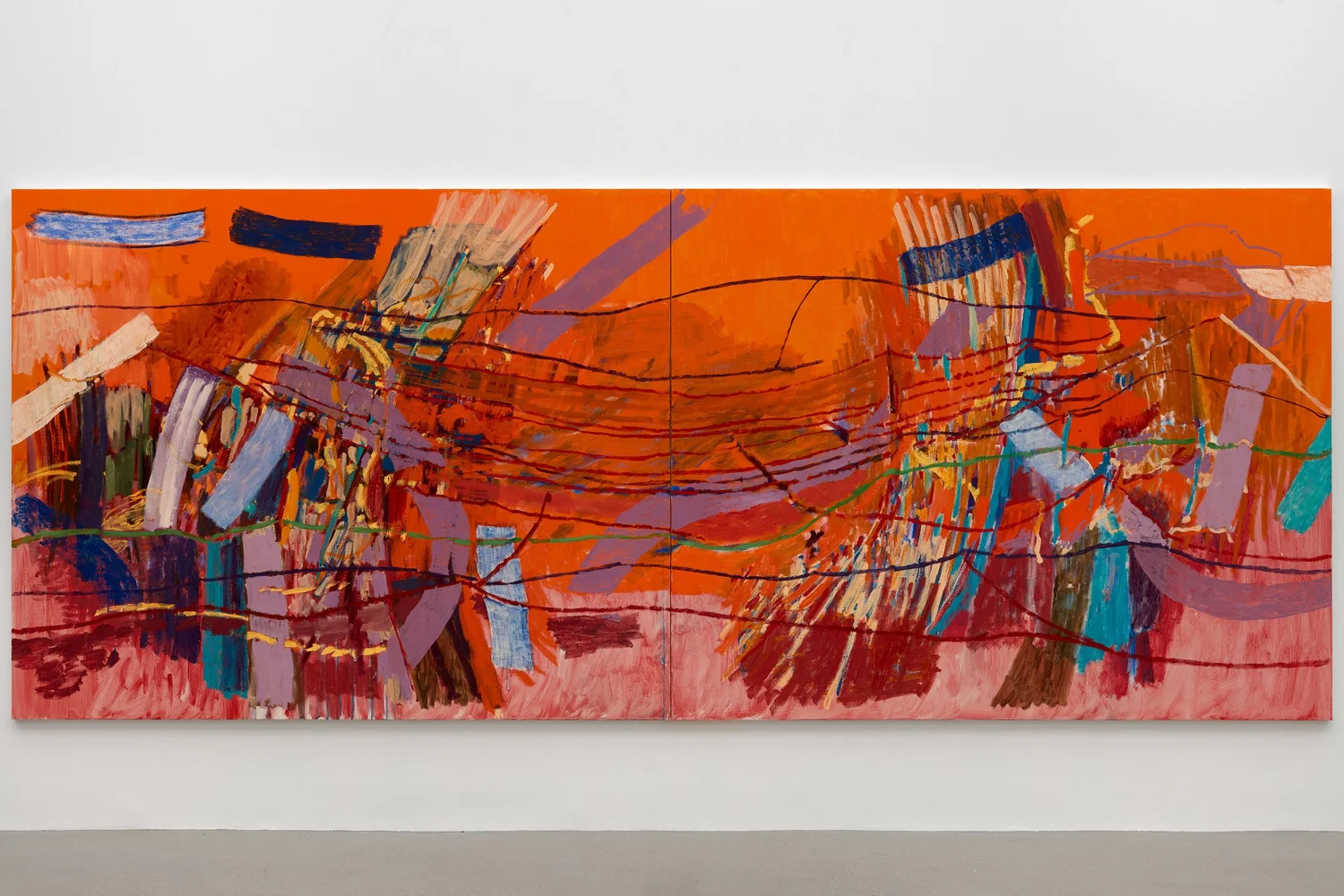
Evelyn’s paintings build through accumulation, scraping, staining and revision. Their energy can look spontaneous, but they depend on prolonged editing. The Wild Asphalt is therefore best judged as a group: does the work create distinct rhythms across nine canvases, or does gesture become a repeatable brand?
For collectors, that is the useful question at the moment. Early demand matters less than whether the painter can keep difference alive inside a recognisable language.
Pam Evelyn: The Wild Asphalt
Pace Gallery, Seoul
12 November 2026–9 January 2027
Yuichi Hirako’s recurring tree-headed figures and constructed forests can initially appear playful, but the work is increasingly convincing when read through deep ecology rather than character design. Human, plant and animal categories blur; the forest becomes a social and philosophical space rather than scenery.

Gallery Baton’s programme gives Hirako room to move across painting and sculpture, including a suspended work that changes the viewer’s relationship to the gallery volume. Collectors should consider the sculptural work seriously: it prevents the paintings from being reduced to a single recurring protagonist.
Yuichi Hirako: POSTFOREST
Gallery Baton, Seoul
22 October–5 December 2026
Holzer’s return to Seoul is a useful reminder that text art ages according to the systems around it. LED language, redaction, stone and public inscription meant something different before social media turned every surface into a stream of statements. Her work now operates against an environment of linguistic overload rather than scarcity.
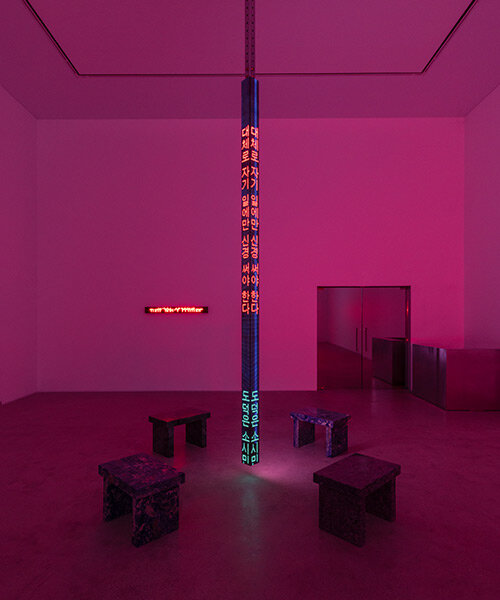
The strongest Holzer works do not simply offer quotable phrases. They make distribution, authority and physical placement part of the reading. A text scrolling on an LED, carved into stone or presented as a redacted document has a different politics in each form.
Jenny Holzer: BLANK
Kukje Gallery Hanok, Seoul
19 November 2026–31 January 2027
Heejoon Lee’s paintings begin from urban visual experience: architectural fragments, photographed surfaces, collage and geometric forms become unstable pictorial spaces. The work is precise without becoming sterile, and architecture functions less as subject than as a way of organising memory.
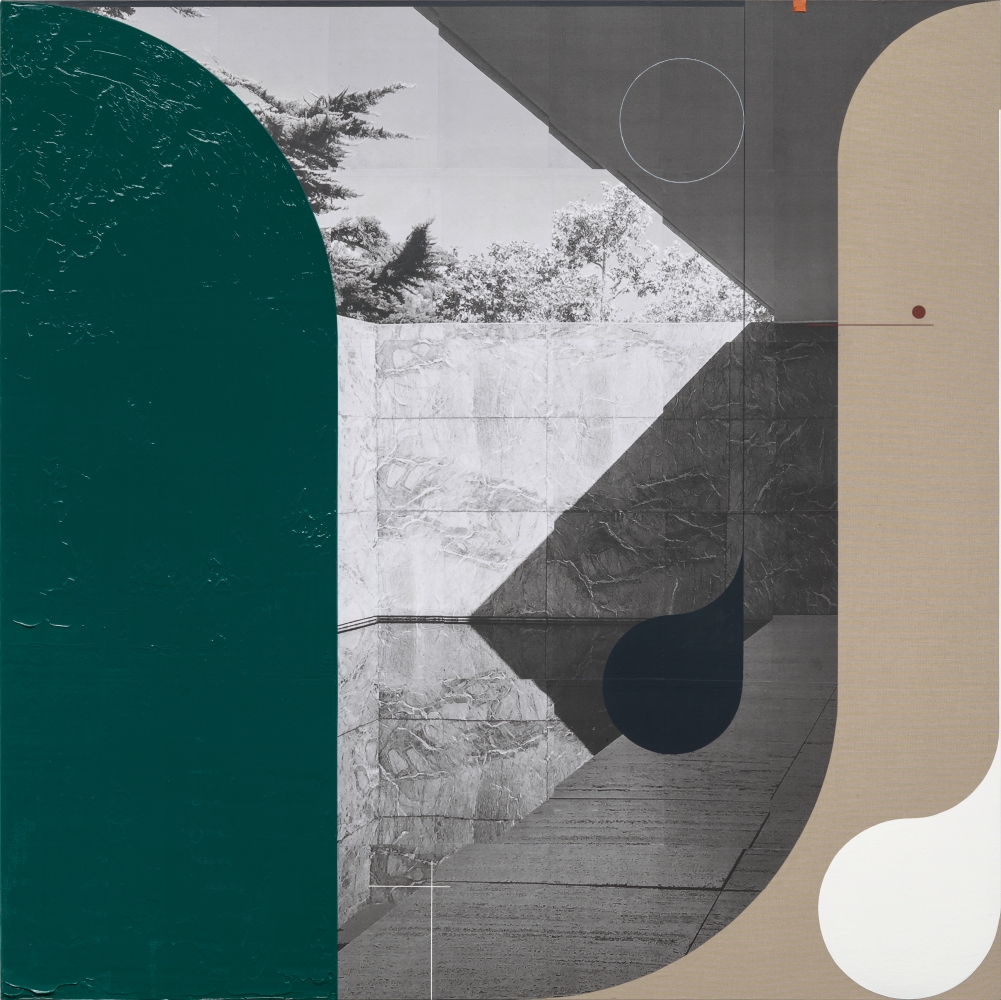
Showing simultaneously with Holzer allows an instructive comparison between two practices interested in systems but working at very different career stages. Lee’s question is how visual fragments connect; the title’s “stems and nodes” suggests a network in which no single image is complete on its own.
Heejoon Lee: Stems and Nodes
Kukje Gallery K1 & K2, Seoul
19 November 2026–31 January 2027
Seoul’s November exhibitions reveal a market and institutional ecosystem that is more complex than the annual Frieze narrative suggests. Christine Sun Kim and Theaster Gates bring practices in which language, sound, social history and material culture cannot be separated from the object on sale. Collectors need to understand editions, installation requirements, fabrication and the role of performance or activation. That is particularly important when a work’s meaning depends on context that may not survive a conventional domestic display.
Pam Evelyn presents a different challenge: a young painter receiving rapidly expanding international attention. The exhibition should be used to test breadth—how scale, palette and structure change across the room—rather than to confirm a market narrative already in motion. Hirako’s long-developed forest imagery offers more historical depth, while the simultaneous Holzer and Heejoon Lee exhibitions at Kukje place a globally canonical text-based practice beside a Korean artist working through architecture and collage. For collectors, that comparison is the point. Seoul is becoming most interesting not when it reproduces Western market hierarchies, but when international and Korean practices can be seen at equivalent scale and seriousness.
Kim and Gates make language, sound and cultural memory physically present. Evelyn tests the durability of a fast-rising painting practice. Hirako complicates the human/forest divide. Holzer and Lee turn information and architecture into different kinds of visual system. Together they make a stronger case for Seoul than another report about market expansion: the city is becoming an increasingly useful place to compare how international and Korean practices behave in sustained exhibitions.
Michael Chow commissioned portraits from Basquiat, Warhol, Haring, Hockney, Ruscha and others. Inside the collection behind Gagosian’s Friends and Legends.
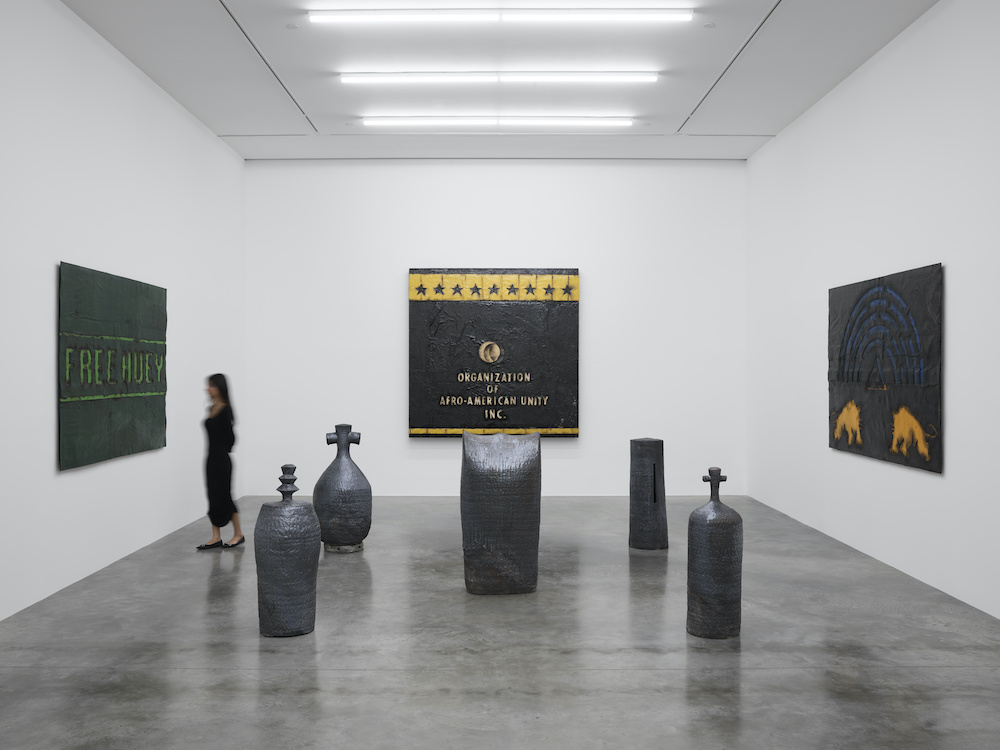
Christine Sun Kim and Theaster Gates lead a Seoul route that also tests Pam Evelyn’s momentum and highlights Yuichi Hirako, Jenny Holzer and Heejoon Lee.
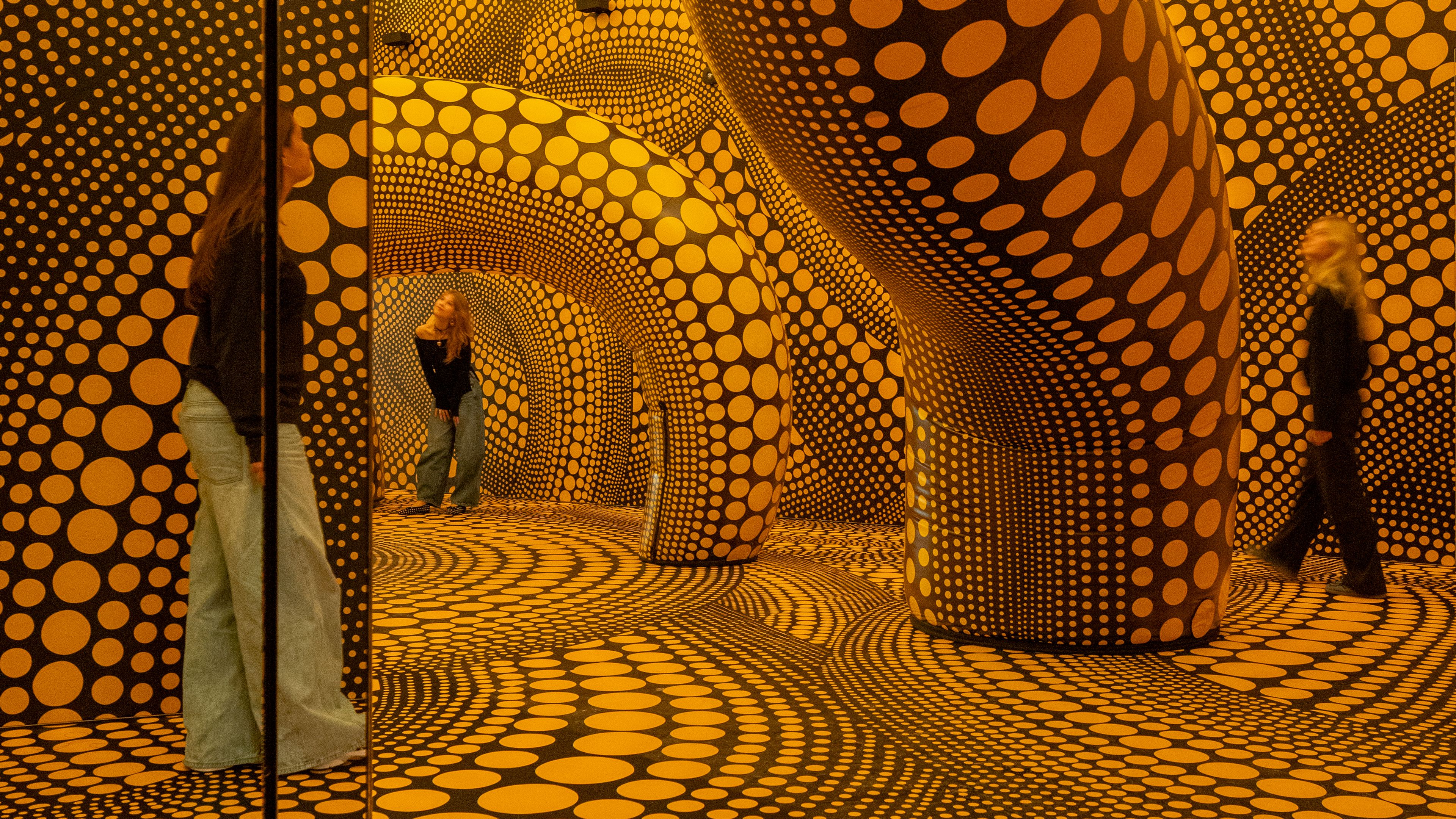
Amsterdam’s major Kusama retrospective, planned during the artist’s lifetime, has become a poignant opportunity to look beyond the mirrored rooms to seven decades of experimentation.
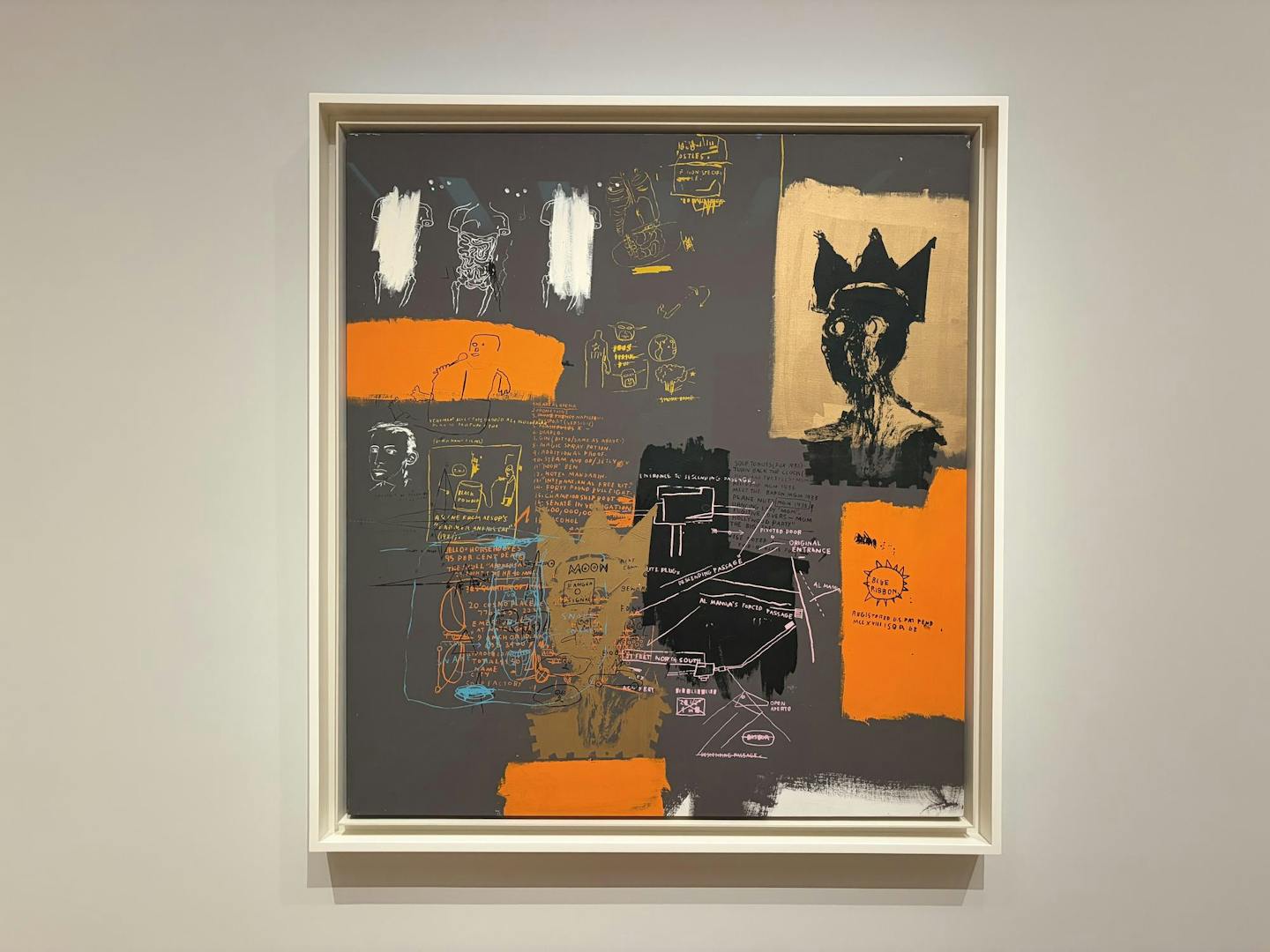
At Princeton, eleven paintings from 1984 reveal a Basquiat who copied, screened and revised his own images with exacting intent—complicating the myth of improvisational genius.