
November 16, 2026
Articles
Articles
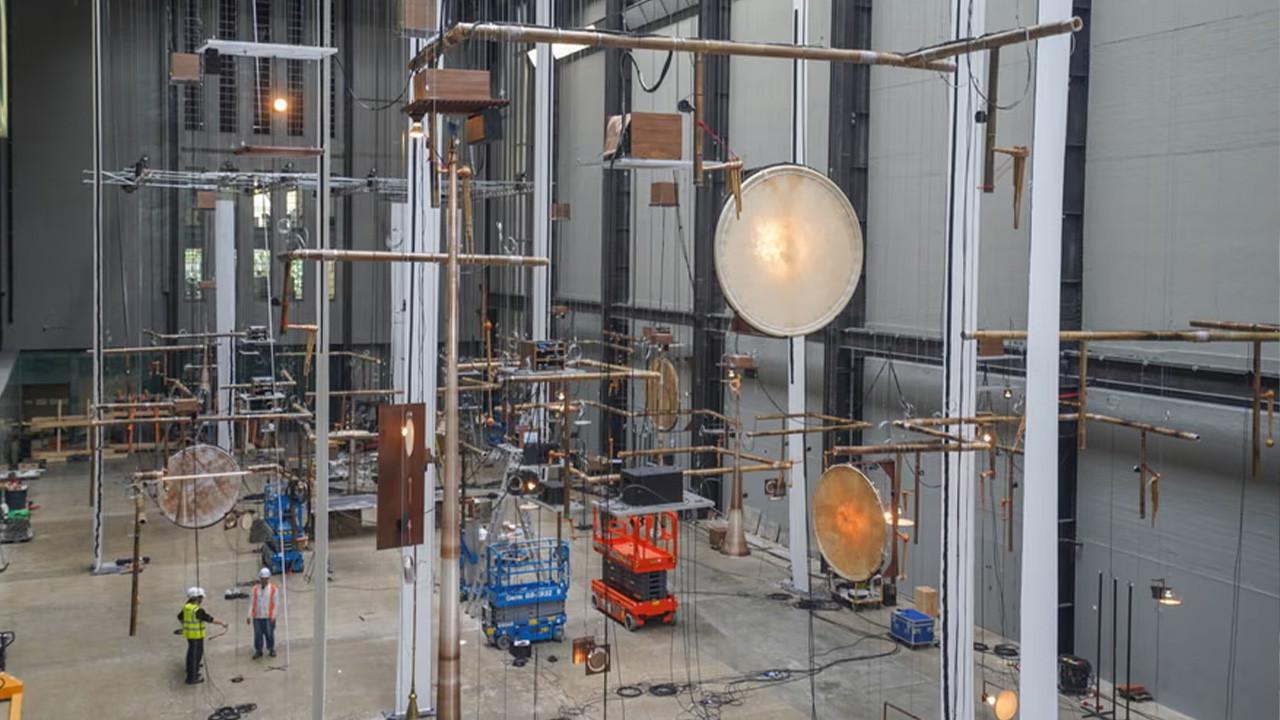
An installation of shengs, horns, drums, wind, software and vibrating stones redefines the museum as a place to listen with the entire body.
An installation of shengs, horns, drums, wind, software and vibrating stones redefines the museum as a place to listen with the entire body.
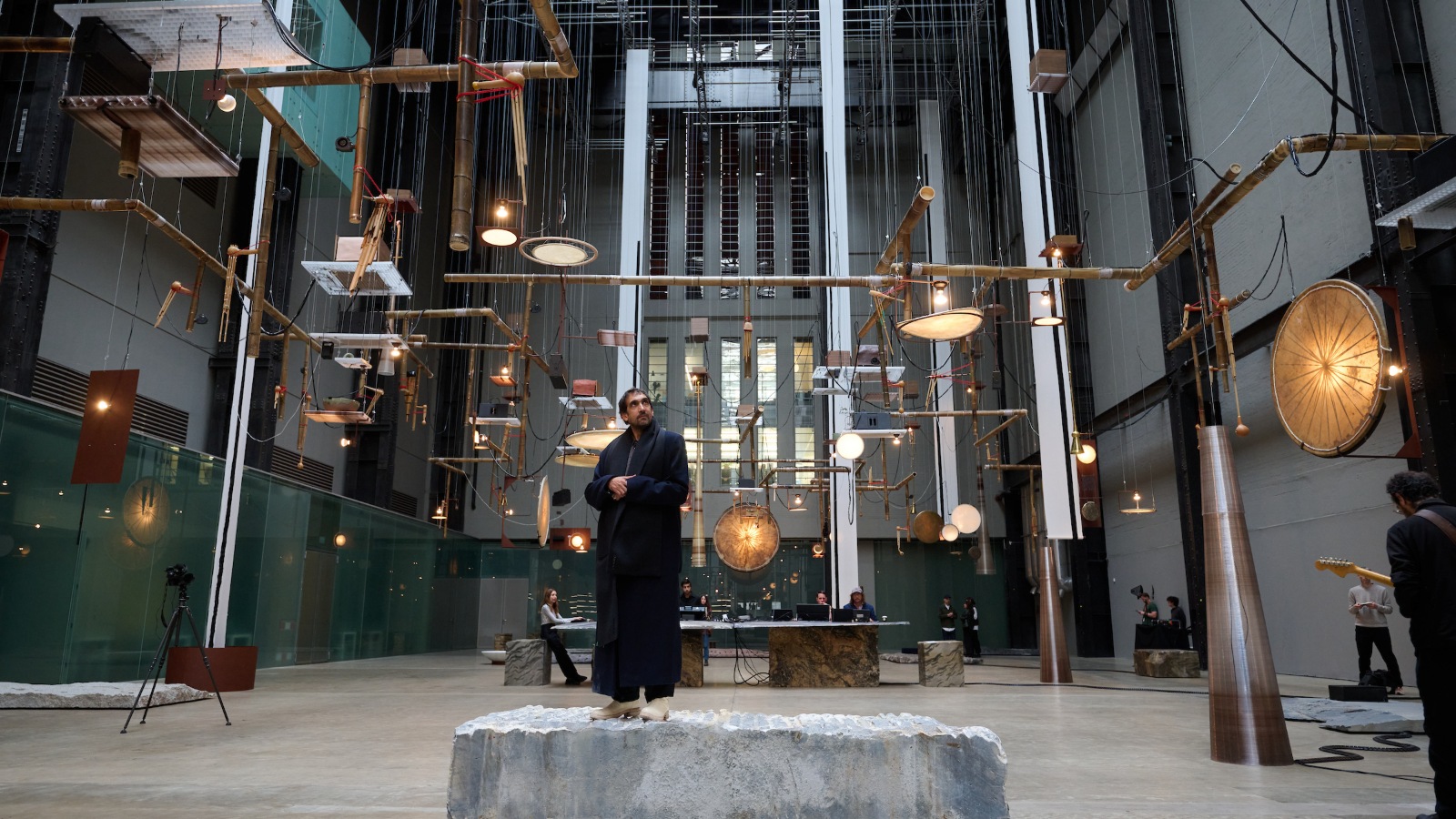
Large museum commissions are often understood through the image that announces them: an object monumental enough to dominate a hall, a spectacle for visitors who have not yet arrived. Tarek Atoui has chosen a less immediate proposition for Tate Modern’s Turbine Hall. Hold is not a sculpture that plays music in the background. The arrangement of instruments, motors, textiles, lights and stone asks the architecture to become part of a listening system. It is therefore possible to see only part of the work in a photograph. The rest unfolds through reverberation, movement and the individual route a visitor takes through the space. Its ambition lies not in filling the hall with a single commanding form but in changing how the room can be experienced.
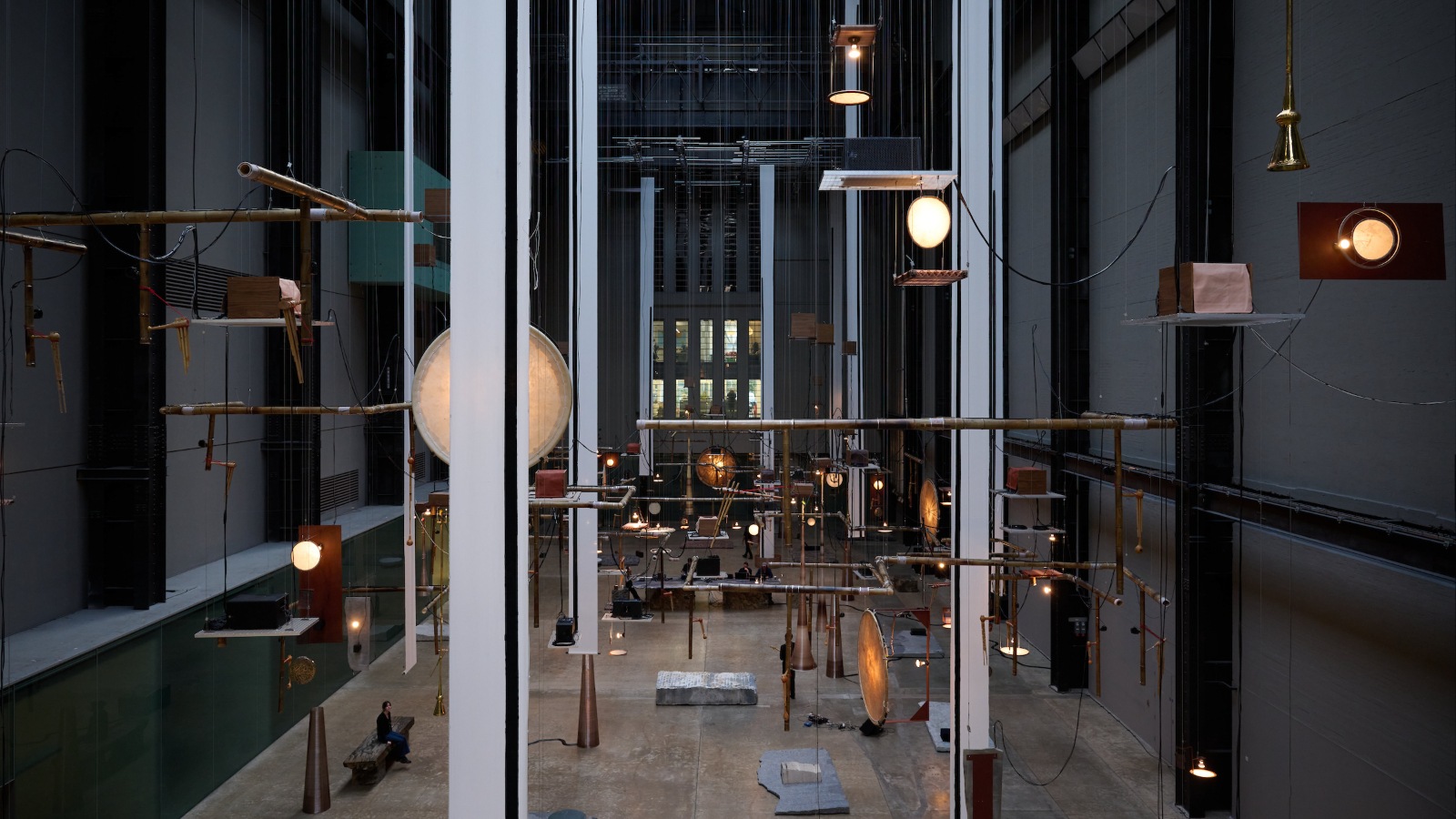
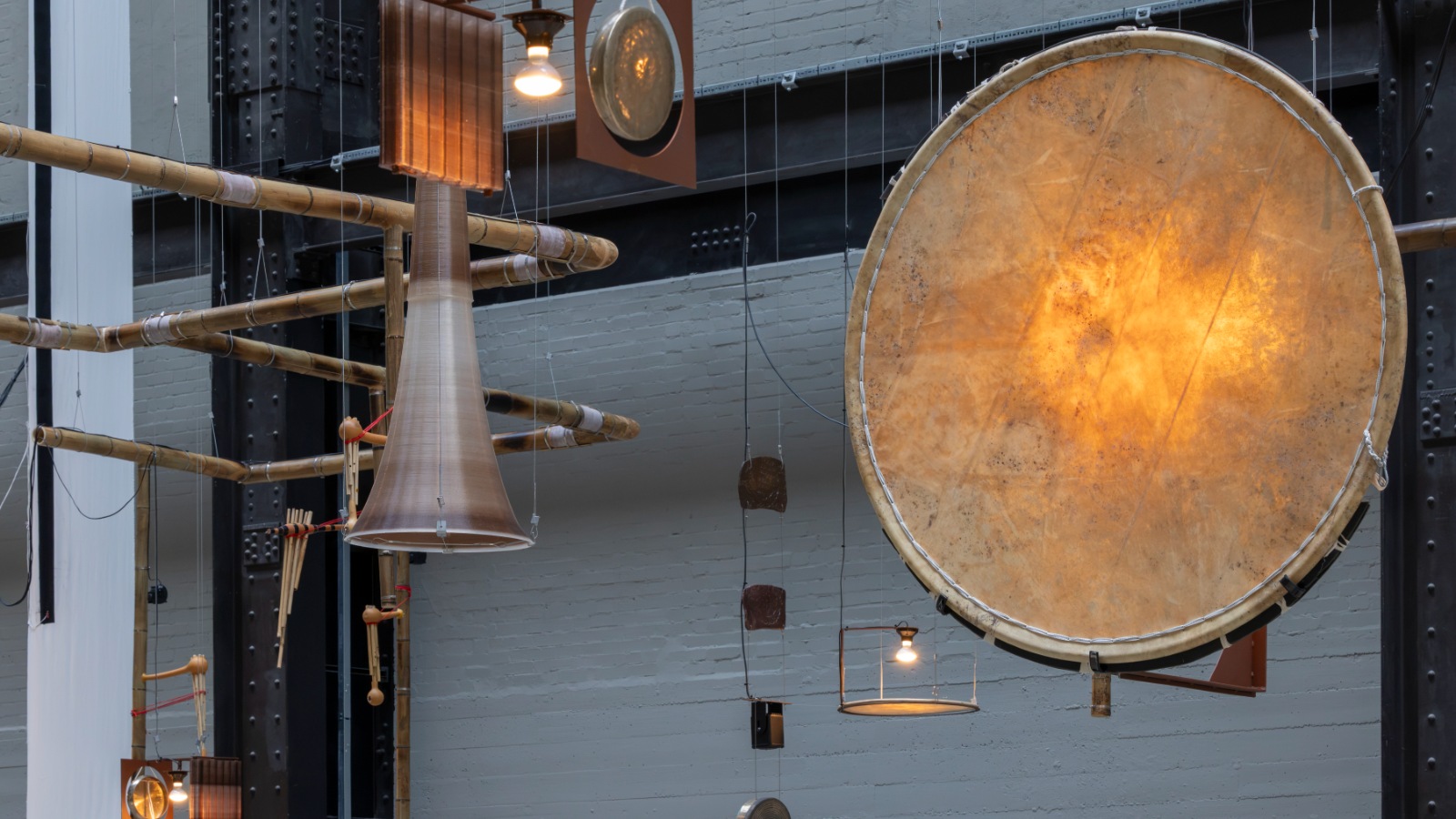
The Hyundai Commission opened on 13 October 2026 and runs to 11 April 2027. The installation brings ancient families of instruments into contact with contemporary engineering. A suspended network of bamboo pipes directs wind through shengs, the mouth organs associated with China and Southeast Asia. Korean drums are struck by mechanical mallets. An Uzbek karnai, a long ceremonial trumpet, is accompanied by 3D-printed horns made with materials including sugar resin and bamboo dust. Textiles of extraordinary length respond to air movement in the hall. Microphones gather sounds from the instruments and the public space, while custom software reworks and redistributes them. This is neither a faithful reconstruction of traditional performance nor a technological upgrade of an older instrument. It is a new ecology of listening in which the instrument, the room and the visitor alter one another.
Atoui’s career has involved sustained collaboration with instrument-makers, researchers, engineers and musicians. That history is fundamental to Hold. The instruments are not decorative references to global musical cultures; they are built through research into how materials move air, transmit vibration and generate sound. Wood, metal, fabric, stone and electronic components each impose different physical possibilities. The hall’s own air currents add another variable. A material that might be judged primarily for its form in a conventional sculpture exhibition is here encountered through the sound it can make. That shift complicates the collector’s familiar divisions between visual art, design, performance and instrument-making.
Visitors are invited to move through the installation at their own pace, including sitting or lying on stones that transmit vibration. This is an unusually direct challenge to museum habits. In many exhibitions, the body is treated as an obstacle: viewers are told not to touch, lean or cross a boundary. Atoui does not remove every distinction between artwork and visitor, but he invites a different form of participation. Listening becomes tactile as well as auditory. The ground is no longer passive flooring. The work must be understood through proximity and duration, and two people may experience noticeably different versions of the same installation depending on where they stand and how long they remain.
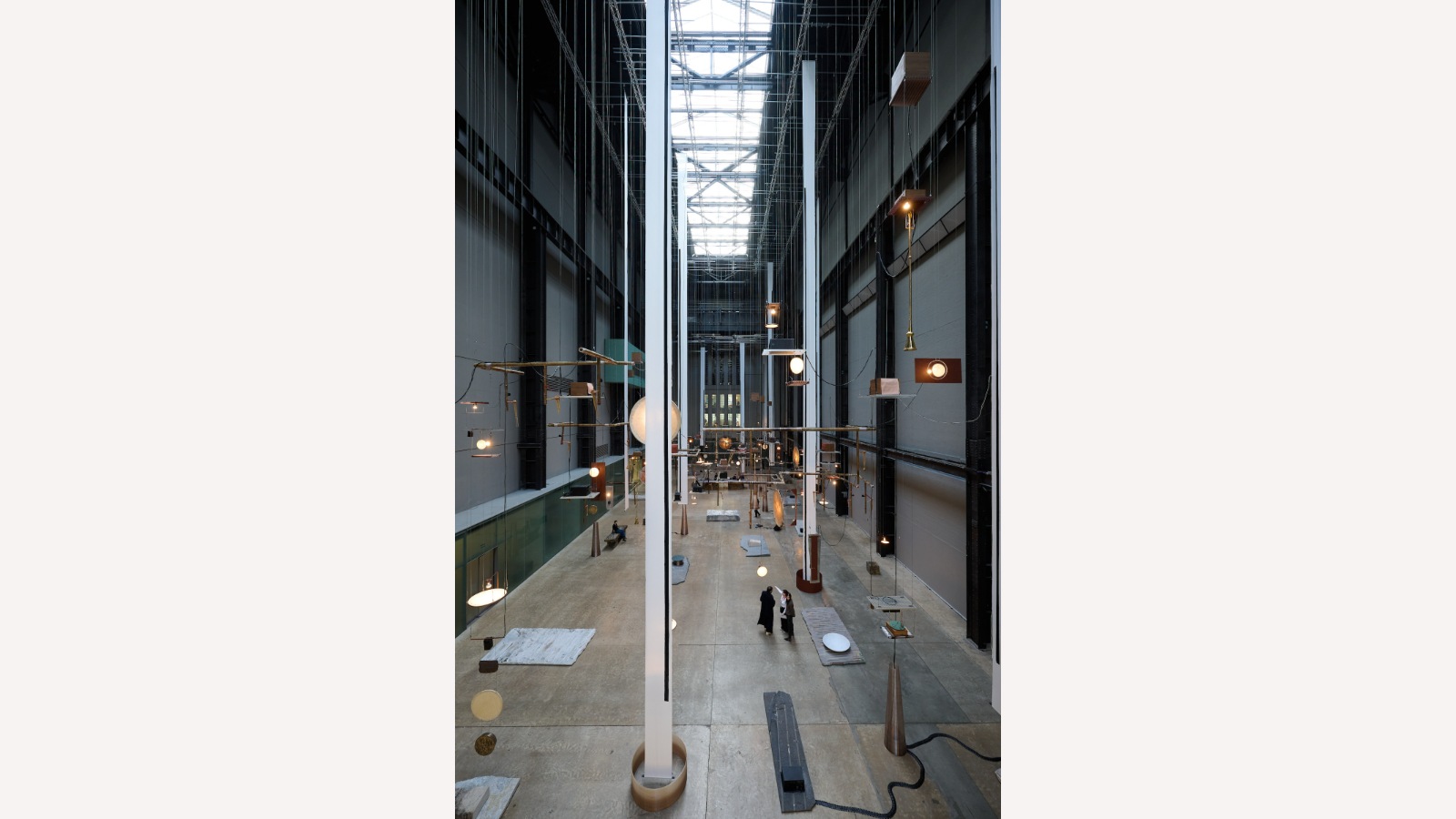
The embedded microphones and software mean that Hold incorporates its surroundings, responding to sound produced within the Turbine Hall and reshaping it in real time. This makes documentation unusually complicated. A still photograph can register the suspended pipes or the textiles; a video can describe a particular moment. Neither supplies a complete account of a work that changes as it runs. Institutions preserving such projects need to think about software dependencies, instrument maintenance, recorded sound, instructions and the social circumstances of activation. The question of whether an artwork can be reinstalled in a different hall is therefore inseparable from the meaning of the original commission.
Atoui’s installation is not complete when the doors open. The programme brings musicians into the space to work through it as a performance system. Tate lists sessions with figures including Emptyset, Mazen Kerbaj, Kenichi Iwasa, Aya Metwalli, Bendik Giske and Valentina Magaletti, with further performances scheduled across the season. What is normally called a museum installation becomes an evolving platform for collaboration. Performers introduce their own ideas and energies without erasing the artist’s structure. The result resists the narrow division between a work and an event staged around it. The event is one of the conditions through which the work continues to develop.
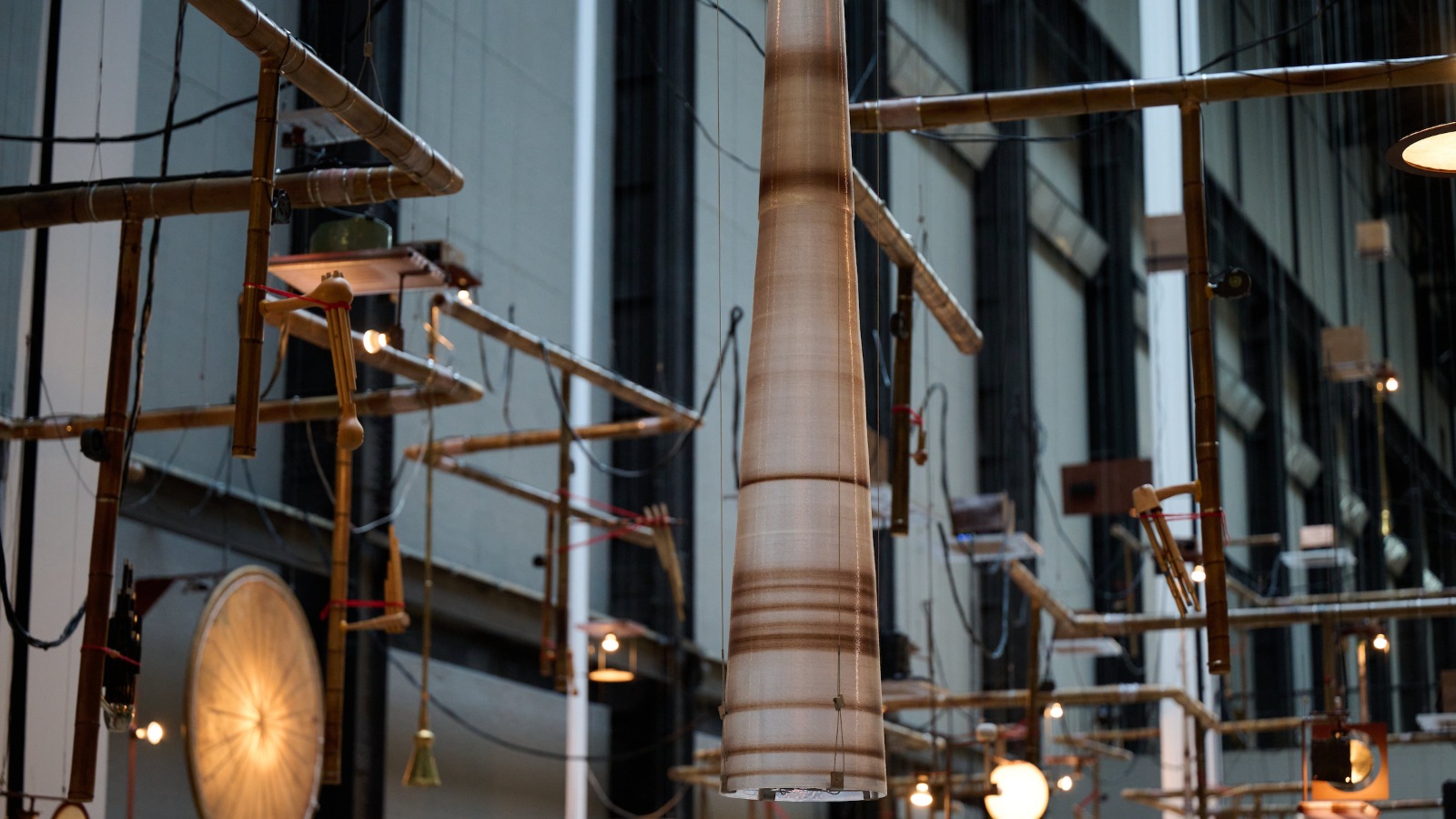
A useful way to approach Hold is to reject the expectation that a Turbine Hall commission must produce a single unforgettable photograph. Its visual language is relatively restrained: bamboo, mechanical devices, hanging instruments, draped fabric, warm lights. That restraint makes an argument. A large public commission can redistribute attention instead of concentrating it. It can encourage visitors to stop, listen and recognise the presence of other bodies rather than compete for a privileged viewpoint. The work is ambitious because it makes the building less predictable. It asks the museum to behave as an acoustic commons, not merely a container for visual objects.
For collectors and arts organisations, Atoui’s project illuminates the value of supporting work that is difficult to imagine as a single market commodity. The commission depends on years of collaboration, research and fabrication. Instruments may be unique, but their artistic force arises through their interdependence in a system. The same applies to technical expertise, maintenance and live performance. Acquiring such work, commissioning a related installation or supporting the artist’s practice involves responsibilities that extend far beyond a conventional certificate of authenticity. These are precisely the questions that help contemporary collecting mature: not just what can be owned, but what relationships need to continue for the work to remain alive.
The installation is free to visit at Tate Modern in London through 11 April 2027, with performance dates and access information published by the institution. Editorial images should come from the 2026 press set: the official Hyundai/Tate media pack identifies photographs by Ben Fisher and Yili Liu and sets out usage conditions. For coverage, a wide view can establish the scale of the Turbine Hall, while close views should identify the shengs, drums, horns, textiles and audience areas accurately. Anything less risks making this deeply spatial work look like an attractive collection of unusual objects. Its actual subject is the encounter between them.
An installation of shengs, horns, drums, wind, software and vibrating stones redefines the museum as a place to listen with the entire body.
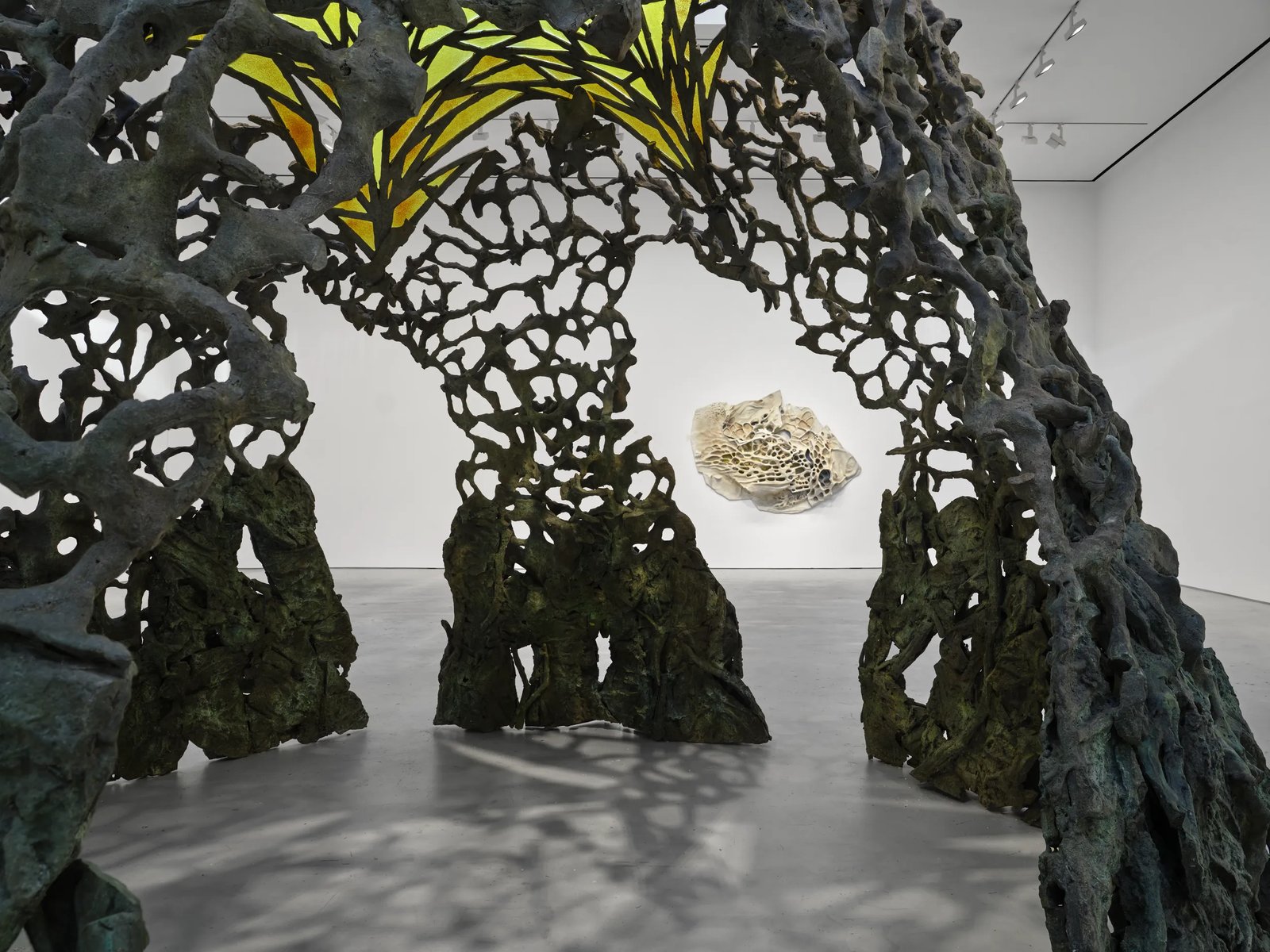
Cristina Iglesias’s new Dome and four 2026 wall sculptures transform Hauser & Wirth New York into a terrain of roots, erosion, geometry and changing light.

A current, verified route to Abu Dhabi’s exhibitions outside Frieze: new works at 421, Louvre Abu Dhabi and Cultural Foundation, with the art behind each show.
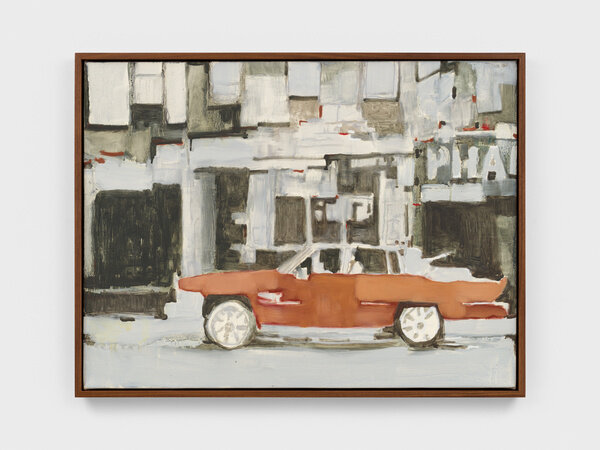
There is an unusual kind of uncertainty in Donyel Ivy-Royal’s paintings. A house can be unmistakably a house, and yet the air around it seems to carry several different moments at once. A wall may register as architecture, weathered paint, a partly erased sign or the memory of a place passed every day. The image remains recognisable without settling into description. This quality is at the centre of By the time the rain comes, we will be home, the Brooklyn-based artist’s first solo exhibition with Jack Shainman Gallery, opening in…