
October 25, 2026
Exhibitions
Exhibitions
A rare London exhibition of new works and historical material returns us to Cady Noland’s uncomfortable vision of American spectacle, power and the ordinary object.
Peter Simon’s collection is large enough to read as a survey of modern and contemporary art, but its more useful story for collectors is personal: how a commercial eye trained on textiles, colour and pattern became an art-collecting instinct — and why conviction still matters when markets move against you.
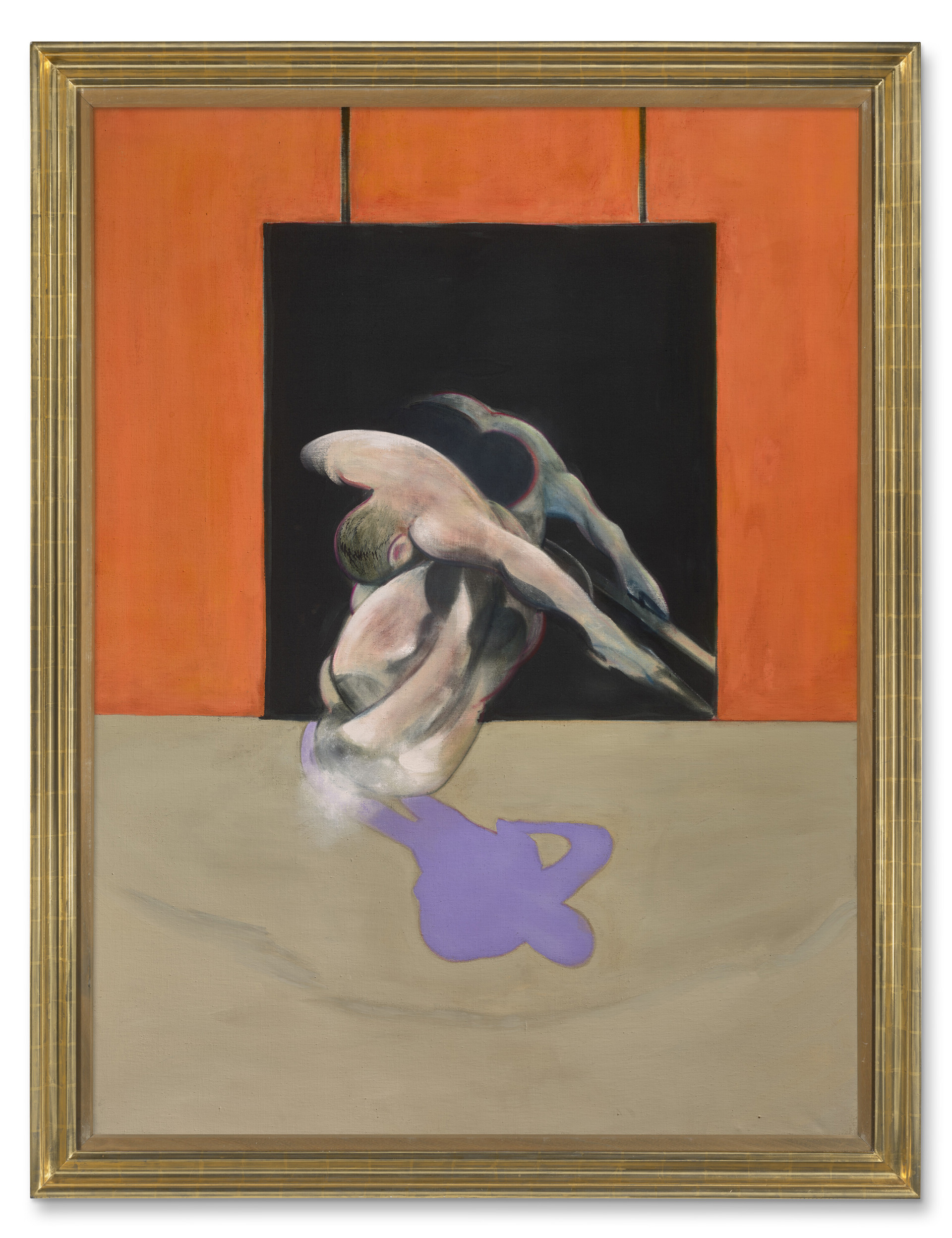
There is an obvious way to write about Peter Simon’s collection: as an auction event. Christie’s is bringing a selection of nearly 200 works from the Monsoon founder’s holdings to London in October, spread across dedicated evening, day and online sales during Frieze Week. Christie’s describes it as the highest-value single-owner collection it has offered to date in London within a single Marquee Week. Those numbers matter, but they are not the most useful part of the story for collectors.
The more revealing subject is how Simon learned to look. Over roughly three and a half decades, he moved from British modern and post-war art into European modernism, Op Art, Pop, Latin American painting and an increasingly international contemporary field. Francis Bacon, Ben Nicholson and Barbara Hepworth sit alongside Mondrian, Miró and Léger; later come Warhol, Bridget Riley, Alighiero Boetti, Beatriz Milhazes, Hurvin Anderson, Cecily Brown and Glenn Ligon. The collection is broad without feeling entirely indiscriminate because the same visual appetites keep resurfacing: colour, pattern, surface, rhythm and unusually decisive composition.
Simon has offered an unusually concrete account of where that instinct came from. In Monsoon’s early years, he spent hours looking through fashion and textile portfolios, choosing designs that could be translated into fabric. He has since reflected that the process sharpened his understanding of colour balance and composition. For collectors, that is more instructive than the romantic idea of simply being born with taste. Looking is trainable. Comparison, repetition and editing can make visual judgement more exact.
His collecting began seriously in the early 1990s, initially around British modern and post-war art. Bacon became an important presence. Figure in Movement from 1978 is one of the headline works in the October sale, while the much earlier Study for a Figure, circa 1945, brings a darker and more historically charged Bacon into the same collection. Nicholson and Hepworth introduce a different register: restraint, structure, relief and the intelligence of the hand.
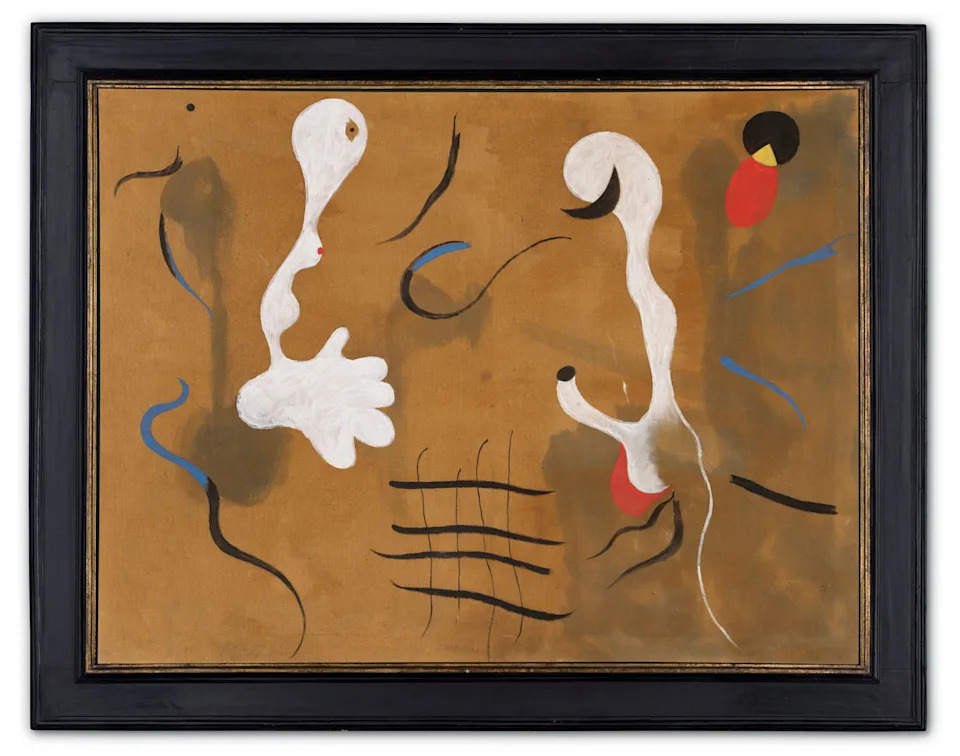
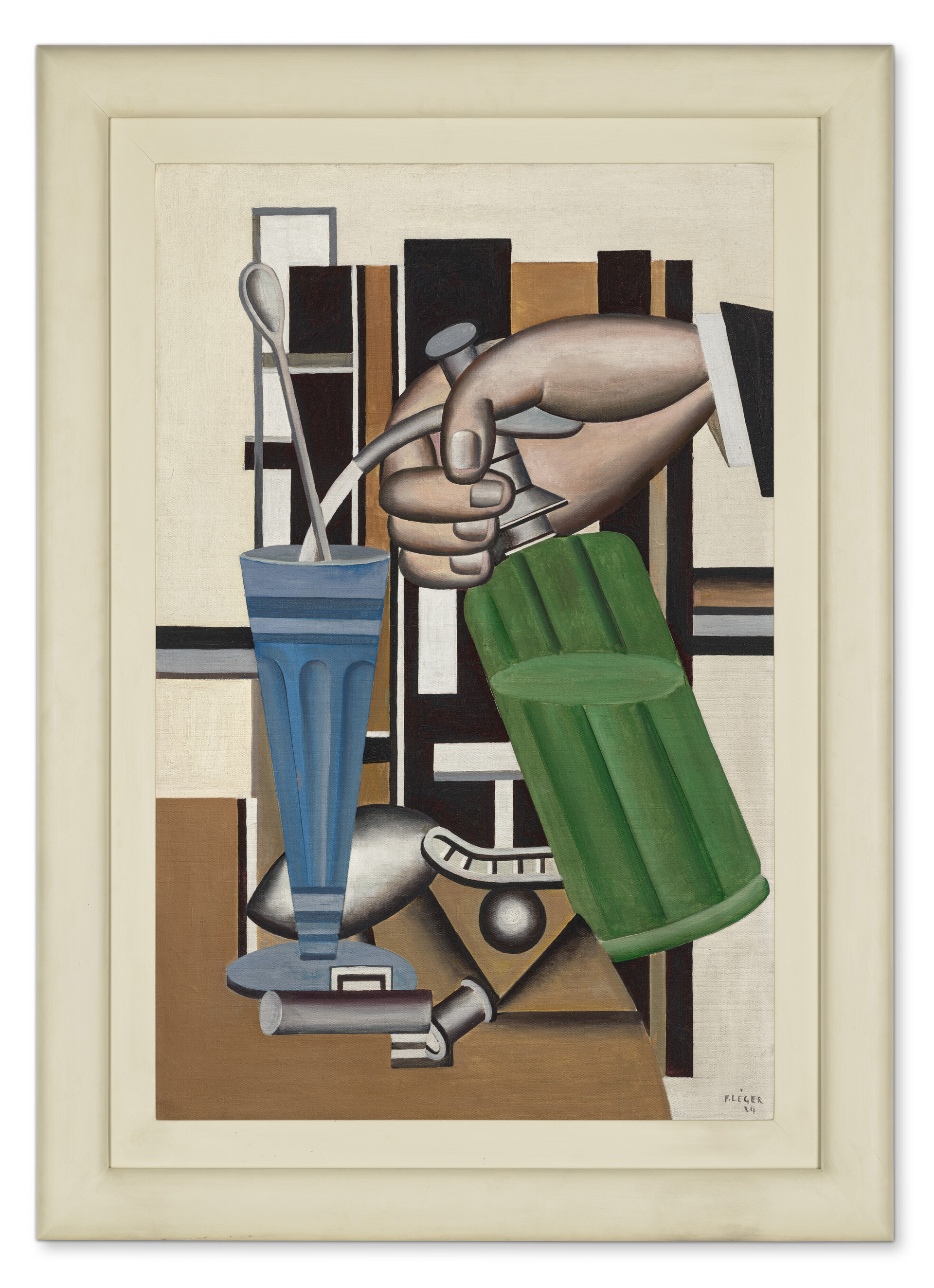
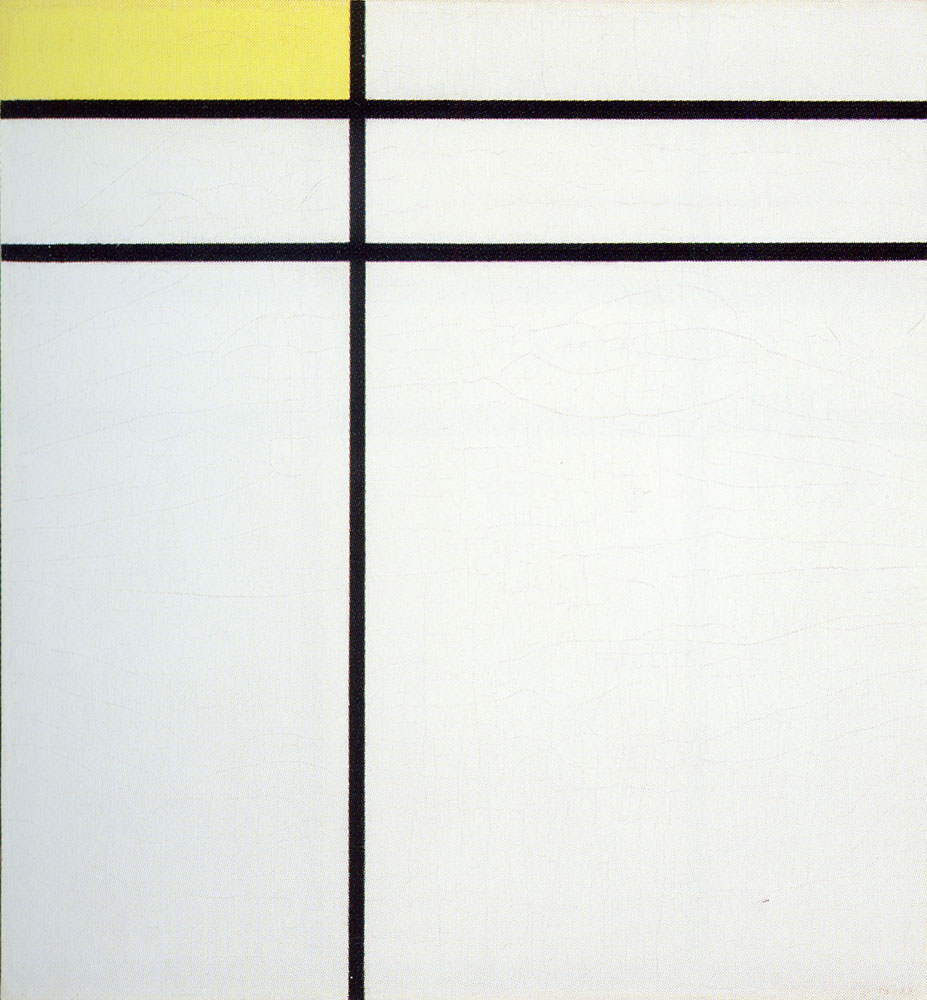
Simon did not remain within British art. Mondrian’s Composition A, with Double Line and Yellow of 1935, Miró’s Peinture (Les amants – Adam et Eve) of 1925 and Léger’s Le Siphon of 1924 represent radically different modernisms. What links them is less a movement than a confidence in structure. Each picture establishes its internal rules quickly and then rewards prolonged looking inside them.
That distinction is useful because collectors can easily mistake breadth for incoherence. A broad collection becomes convincing when the collector’s underlying questions remain stable even as artists and periods change. Simon appears repeatedly drawn to images that organise colour forcefully, make pattern active rather than decorative, or place sensuality against some form of order.
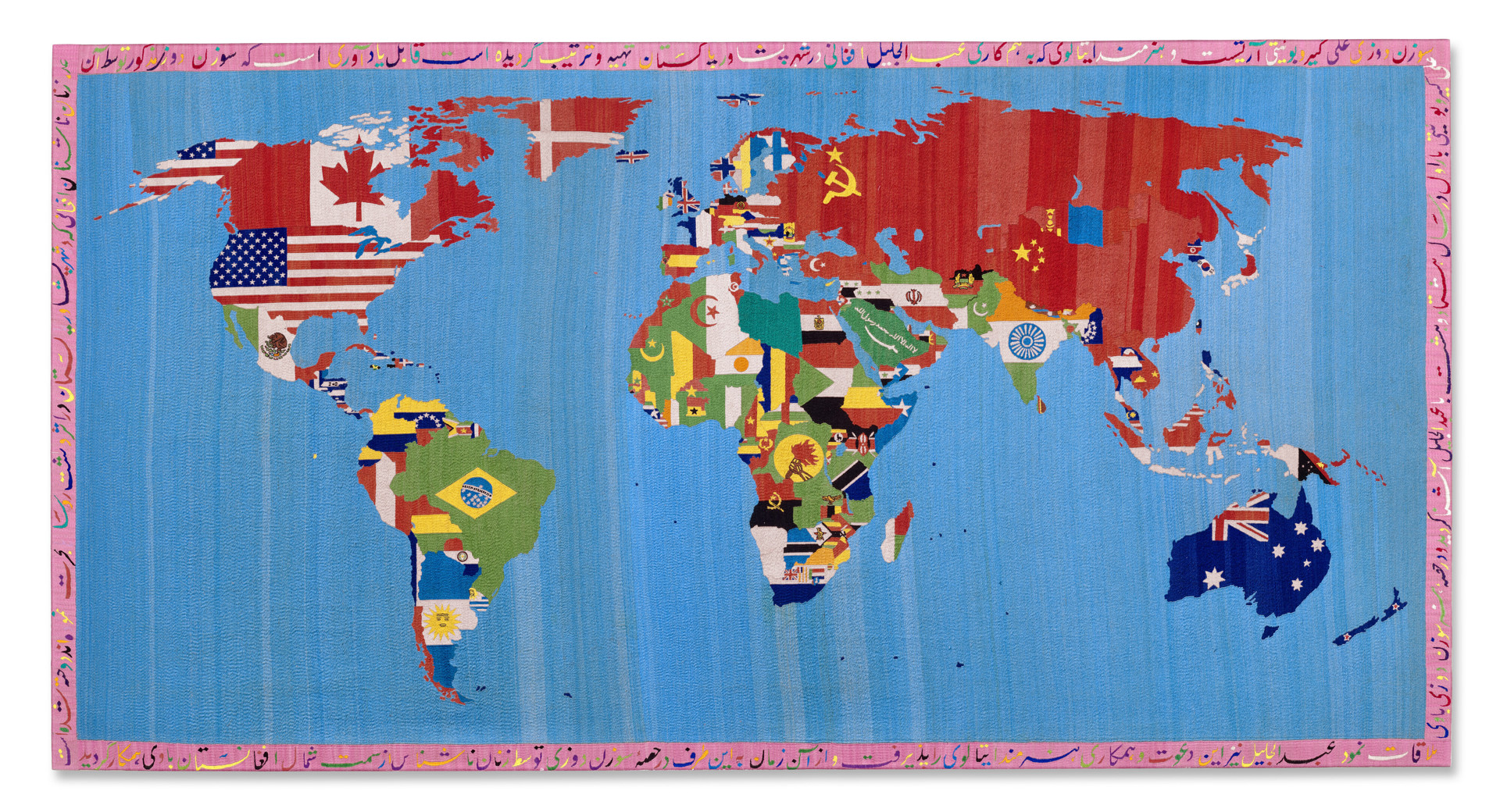
Boetti’s embroidered Mappa is an obvious example. It makes geography into a field of colour, language, national symbols and handwork. The piece also connects naturally to a collector whose commercial life was immersed in textiles, craft and international production, without reducing the art to an extension of the Monsoon brand.
The collection’s colour is not merely cheerful. Riley’s optical structures, Warhol’s Diamond Dust Shoes, Koons’s reflective Baroque Egg with Bow, de Kooning’s late arabesques and the layered surfaces of Milhazes all use colour differently. Taken together, they reveal how a collector can pursue one visual interest through completely different intellectual positions.
That is a useful discipline for anyone trying to build a collection rather than accumulate names. Instead of asking which artists currently belong on the accepted list, it can be more productive to identify the visual or conceptual problems you return to instinctively. The artists can change while the collector’s questions remain recognisable.
Simon’s collection is particularly valuable as a case study because it does not support the fantasy that a good collector is always financially right. The forthcoming sale includes artists and periods whose markets have strengthened considerably, while other purchases demonstrate that a famous name is not a guarantee of a straight-line return. The Koons Baroque Egg with Bow (Blue/Turquoise), for example, now carries a £1.5–2 million estimate; recent reporting on Simon’s collection has explicitly noted that some of his investments have declined in value.
That is not an argument against paying attention to price. It is an argument for separating price from quality and personal conviction. A collector should understand market depth, comparable works and liquidity, but none of those can decide whether an object belongs in a collection. The market can help establish context. It cannot supply the eye.
As Monsoon expanded internationally, Simon’s collecting widened. Artists from Latin America and Africa entered the collection, as did British artists whose work examines migration, memory and belonging. The important point is that these works were not placed in a separate 'global contemporary' appendix. They entered the same visual conversation as modernist and post-war painting.
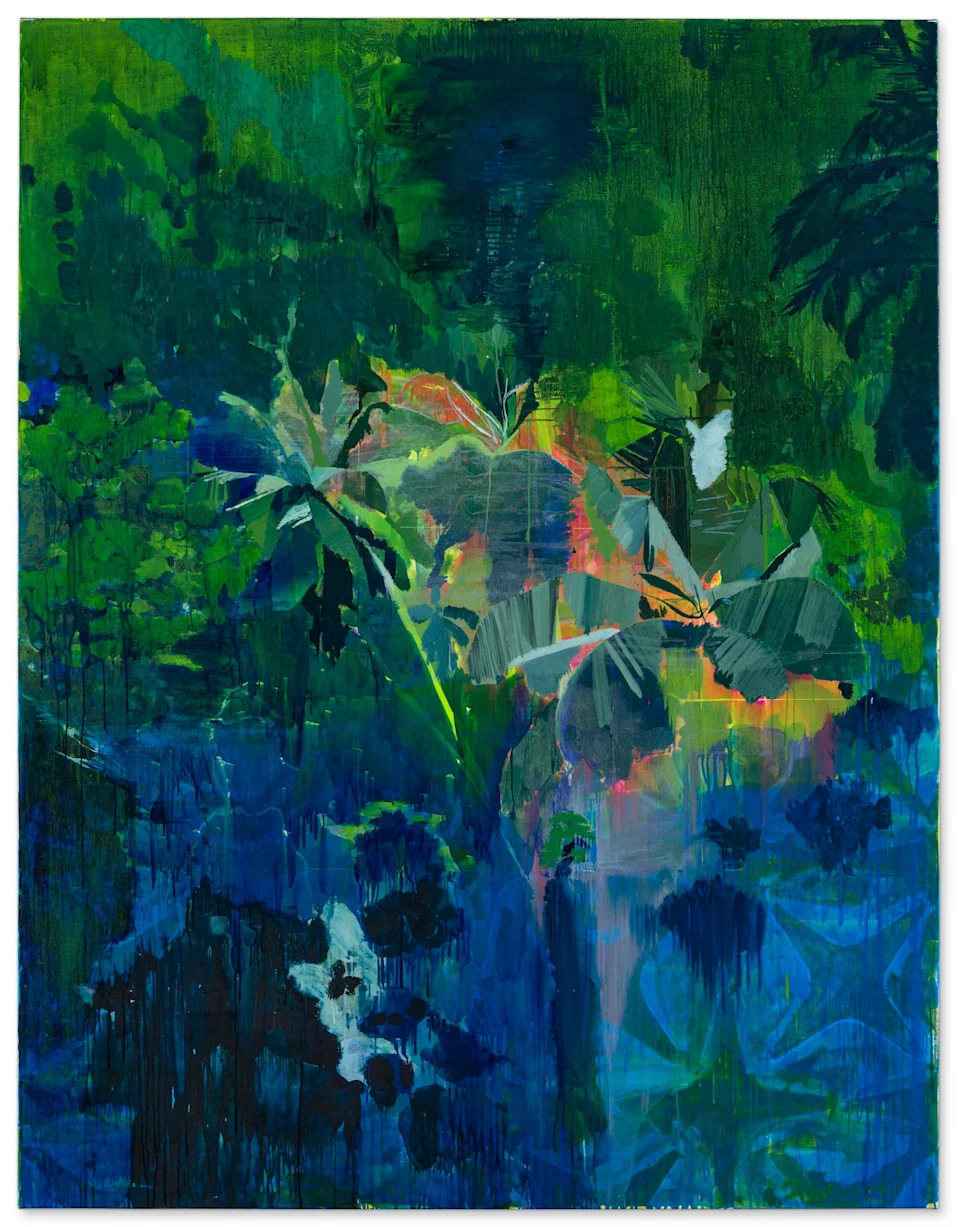
Hurvin Anderson’s Last House is especially revealing. Painted in 2013, shown in the context of Anderson’s 2017 Turner Prize presentation and newly resonant after his major Tate Britain survey in 2026, the picture seems tropical but takes the Palm House at Kew Gardens as its source. Its ambiguity between Britain and the Caribbean, observed place and remembered atmosphere, makes it a strong example of the collection’s interest in both colour and cultural displacement.
Milhazes occupies another important position. Her pattern-rich paintings can be immediately pleasurable, yet their construction draws on Brazilian visual culture, modernism, decorative traditions and collage-like processes. In a collection shaped partly by a life in textiles, that complexity matters more than simple chromatic exuberance.
A collection of this range could not be built responsibly through visual intuition alone. Different categories bring different questions of authenticity, provenance, condition, cataloguing history and market structure. Simon has also acknowledged the importance of dealers, advisers and museum figures around his collecting. That is not a contradiction of the instinctive-collector story; it is what makes the story credible.
The strongest collectors tend to know when to trust themselves and when to call in expertise. A Mondrian, a Bacon and a newly made painting do not demand identical due diligence. Advice should widen the field and expose weaknesses in an acquisition, while the final conviction still belongs to the collector.
Auction week encourages ranking by estimate. Simon’s dispersal is a reminder that importance is more complicated. Bacon’s Figure in Movement may command one of the collection’s largest estimates, yet a less expensive work may reveal more about the internal character of Simon’s collecting or represent a particularly sharp moment in another artist’s development.
For buyers, three questions are worth separating: is this an important work within the artist’s practice; is the price defensible against comparable examples; and does the object actually strengthen the collection being built? The last question is the easiest to forget when attention, advisers and auction momentum are all concentrated in the same room.
The October sales should not be read simply as an ending. Simon has described the dispersal as part of a transition and has continued to buy art. That makes the sale relevant to mature collectors whose holdings have outgrown their walls or whose interests have changed. Editing a collection does not invalidate the years spent building it.
Indeed, seeing the collection together before dispersal may be the most revealing moment. Individual results will generate headlines in October, but the stronger lesson is visible before the hammer falls: thirty-five years of decisions can produce coherence without a rigid masterplan, provided the collector keeps looking, keeps questioning and remains willing to change direction.
Monsoon: The Peter Simon Collection will be presented in a public exhibition at Christie’s London from 26 September to 1 October 2026. The dedicated Evening Sale takes place on 14 October, the Day Sale on 15 October, and the online auction runs from 1–20 October.
A rare London exhibition of new works and historical material returns us to Cady Noland’s uncomfortable vision of American spectacle, power and the ordinary object.
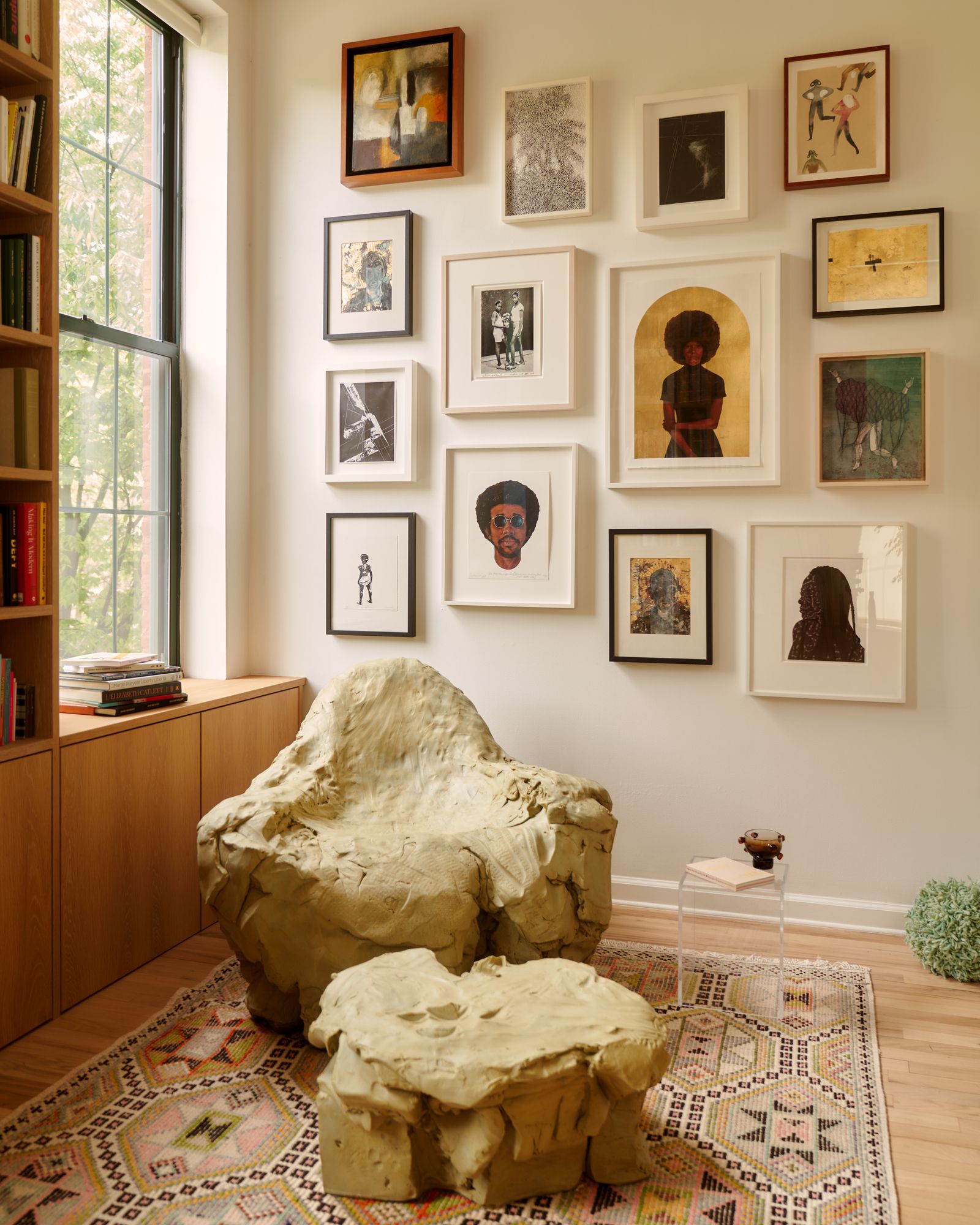
A gallerist’s Clinton Hill apartment reveals how painting, sculptural furniture, family history and unorthodox choices can make a home feel genuinely collected.
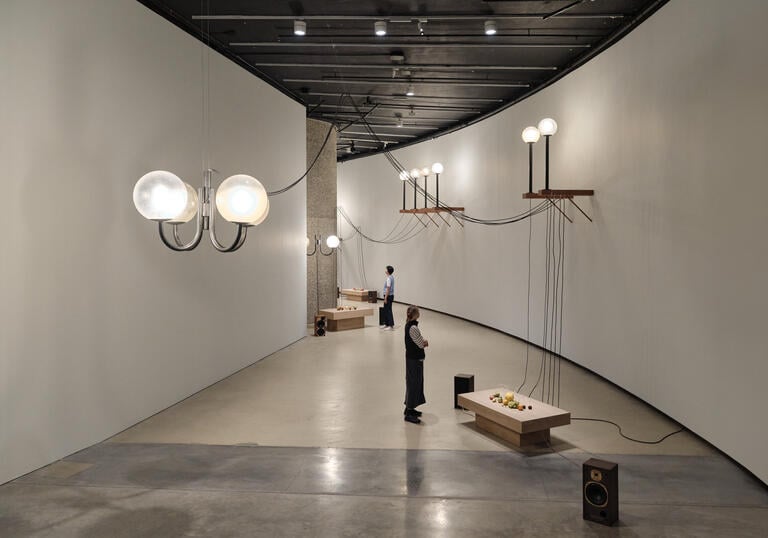
With light, sound, fruit and kinetic systems, Yuko Mohri makes the Barbican’s Curve into an argument for attending to what does not quite work as expected.