
October 10, 2026
Exhibitions
Exhibitions
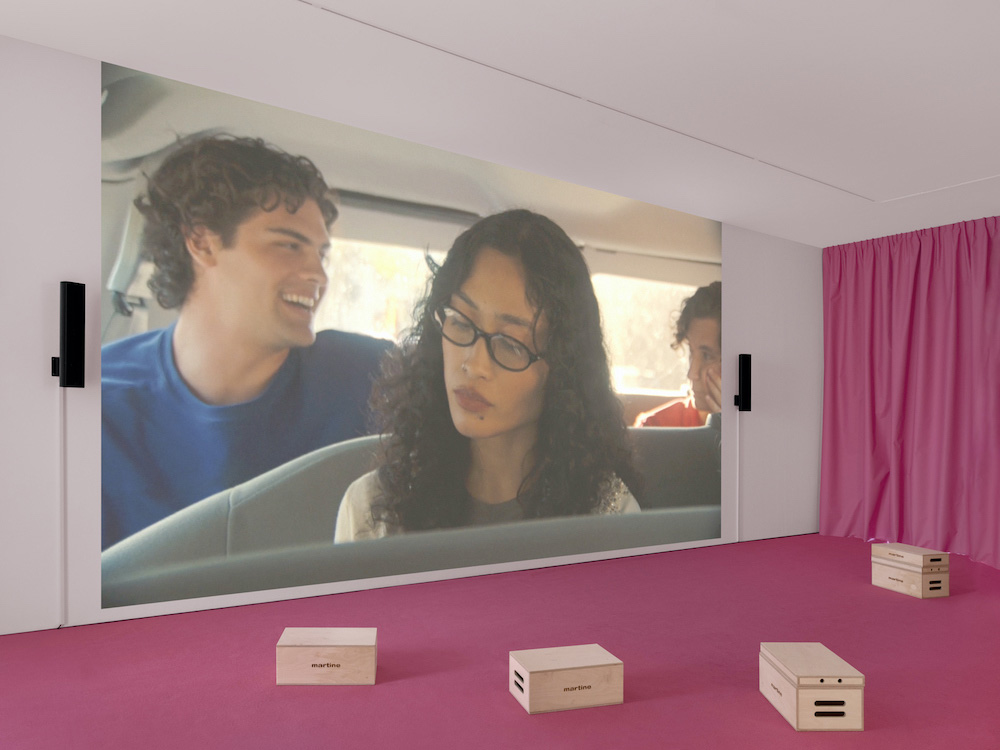
From Robert Ryman and Lorna Simpson to Mary Ramsden, Martine Syms and Nicola Turner, the strongest London route during Frieze week begins outside the fair.
Maurizio Cattelan’s first major solo exhibition in Germany places historical works and new commissions inside Mies van der Rohe’s Neue Nationalgalerie. Has the spectacle surrounding the banana obscured how serious—and how unresolved—his art actually is?
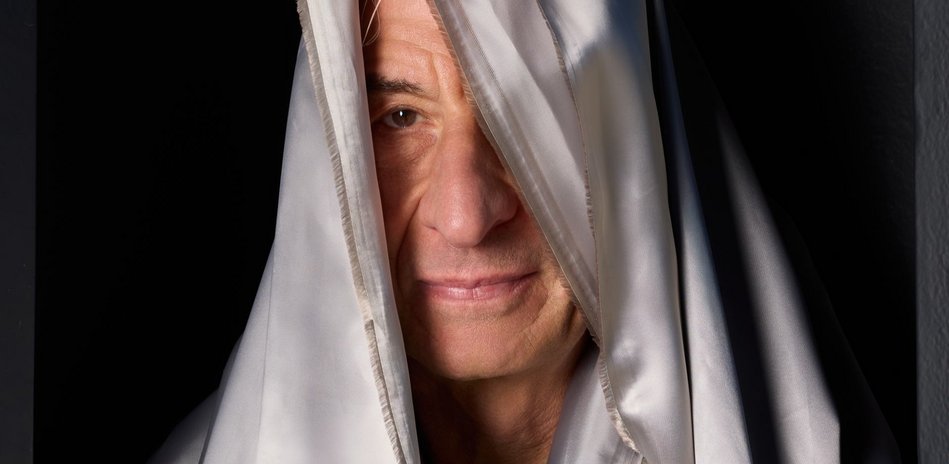
Maurizio Cattelan has spent much of his career arranging a peculiar bargain with the public: he gives us an image simple enough to circulate instantly, then leaves us with a problem that refuses to disappear.
A pope felled by a meteorite. A kneeling child who turns out, on closer inspection, to be Adolf Hitler. A taxidermied horse suspended from a ceiling. A solid-gold toilet. A banana fixed to a wall with duct tape. The images arrive first, often with the brutal efficiency of advertising. The unease comes later.
This September, Berlin offers a useful opportunity to ask whether the extraordinary visibility of Cattelan’s provocations has finally begun to obscure the seriousness of the artist who made them.
MAURIZIO CATTELAN. NIGHT, opening at the Neue Nationalgalerie on 10 September, is the Italian artist’s first major solo exhibition in Germany. Presented as the 2026 Preis der Nationalgalerie and curated by Lisa Botti and Klaus Biesenbach in close collaboration with Cattelan, the exhibition places important historical works alongside new commissions in Mies van der Rohe’s glass pavilion. The institutional setting matters. Few buildings in Europe are as visually disciplined as the Neue Nationalgalerie; few contemporary artists have been as committed to sabotaging the stability of the room in which their art appears.
Any contemporary discussion of Cattelan now has to pass through Comedian, the banana duct-taped to a wall that became a global spectacle at Art Basel Miami Beach in 2019. Its journey from art-fair provocation to one of the most widely circulated art images of the century—and ultimately to a multi-million-dollar auction result—has been so successful that it risks reducing the artist to his own punchline.
But Comedian makes more sense when understood as part of a practice built for decades around unstable relationships between object, image, authorship and belief. Cattelan has repeatedly made things that operate differently in person and in reproduction. He has spoken about wanting to create images that remain in the head, and some of his strongest works become almost unnervingly legible in photographs: the child-sized Hitler in Him; the exhausted animal in Novecento; the miniature self-portrait hanging from a coat rack in La Rivoluzione siamo noi.
The trick is that legibility is not the same as resolution. Cattelan’s images are easy to recognise and difficult to settle.
The banana therefore belongs to a longer history rather than representing a sudden turn toward virality. What changed was the media environment. By 2019, an artwork designed to behave like an image could circulate globally within minutes, generating outrage, jokes, memes, criticism, market speculation and brand-level recognition simultaneously. Cattelan did not invent that ecosystem. He simply understood it unusually well.
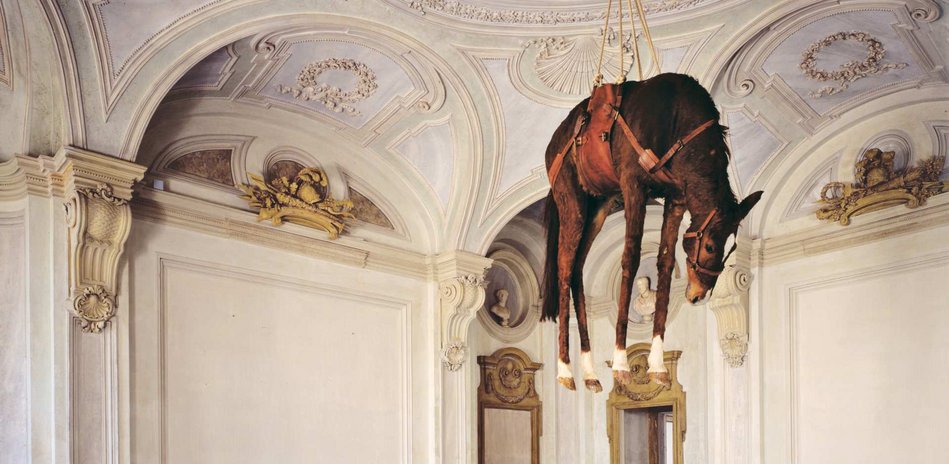
The historical works announced for NIGHT make the Berlin setting especially compelling. Novecento (1997), Cattelan’s taxidermied horse suspended from the ceiling by leather harnesses, is one of the defining sculptures of his career. At Castello di Rivoli, where it was originally installed, the animal’s heavy body hung inside ornate historic architecture, transforming equestrian grandeur into exhaustion and paralysis.
To bring that work into the Neue Nationalgalerie is to change its emotional temperature. Mies’s building is almost aggressively lucid: glass, steel, proportion, order, transparency. Cattelan’s horse introduces weight, death and helplessness into a building that appears designed to deny mess.
This is where Cattelan is often better than his reputation for jokes suggests. His most successful works are not gags placed in neutral rooms. They contaminate architecture.
The Guggenheim retrospective in 2011 famously suspended much of his career from the museum’s rotunda, turning Frank Lloyd Wright’s spiralling architecture into a kind of mass hanging. America, the functioning 18-karat-gold toilet installed at the Guggenheim in 2016, transformed a museum restroom into a site of queuing, security and absurd equality. Him depends almost entirely on the choreography of approach: seen from behind, the kneeling figure appears vulnerable; only when a viewer moves around it does Hitler’s face appear.
Mies’s glass hall should therefore be understood not simply as a prestigious container but as one of the materials of the exhibition.
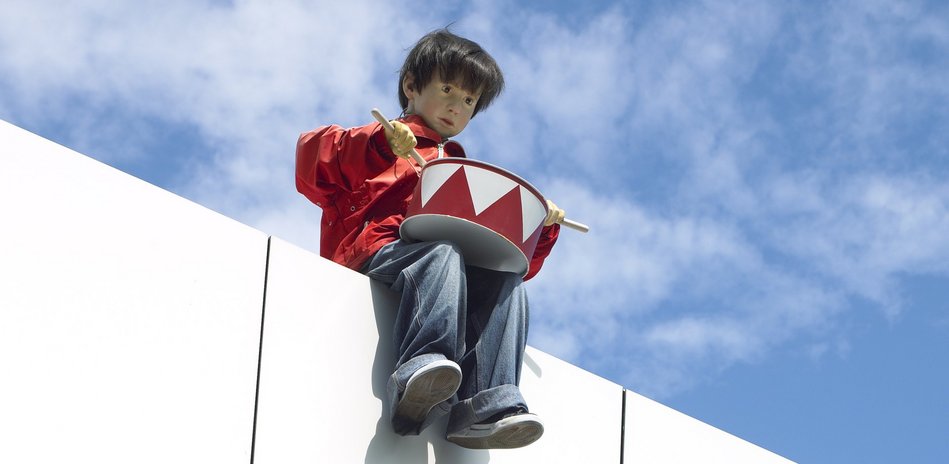
The Neue Nationalgalerie has used an unusually useful phrase in its public programming around the exhibition: “comic existentialism.” It captures the strange tension that distinguishes Cattelan from artists whose provocations rely principally on shock.
His work is often funny, but the laughter rarely has a stable target. Authority is mocked, but so is the person doing the mocking. Institutions are embarrassed, yet Cattelan has depended on museums to give his gestures scale. Celebrity culture is exploited while his own celebrity expands. The market is ridiculed while his works become extraordinarily valuable.
That contradiction is not an accidental hypocrisy attached to the practice. It is the practice.
The jury that selected Cattelan for the Preis der Nationalgalerie argued that his use of provocation and wit should not be confused with cynicism. In an era of increasingly polarised public discourse, they described ambiguity itself as a condition for critical awareness. That is a more interesting institutional defence of Cattelan than the familiar claim that he simply “makes us think.”
Ambiguity has become unfashionable. Public culture increasingly rewards instant declarations of position: good or bad, offensive or virtuous, serious or frivolous, art or fraud. Cattelan’s strongest works frustrate that demand. They are frequently offensive and vulnerable, stupid and intelligent, sentimental and cruel at the same time.
The exhibition also marks a return. Cattelan co-curated the 4th Berlin Biennale in 2006 with Massimiliano Gioni and Ali Subotnick. That edition, titled Of Mice and Men, was spread along Auguststraße rather than distributed through the city’s major institutions, already reflecting his attraction to exhibition-making as a medium rather than a neutral frame.
Twenty years later he returns not as curator but as the sole artist occupying one of Germany’s most symbolically loaded museums of modern art.
The timing is significant in another way. The Preis der Nationalgalerie itself has changed format. Founded in 2000, the prize enters a new phase in 2026, moving into the Neue Nationalgalerie and giving a selected artist the opportunity to realise a focused exhibition in the glass hall. Cattelan therefore becomes both artist and test case for a new institutional model.
It is difficult to imagine a more appropriate figure for that experiment. His career has repeatedly tested the difference between giving an artist a platform and allowing the artist to interfere with the platform itself.
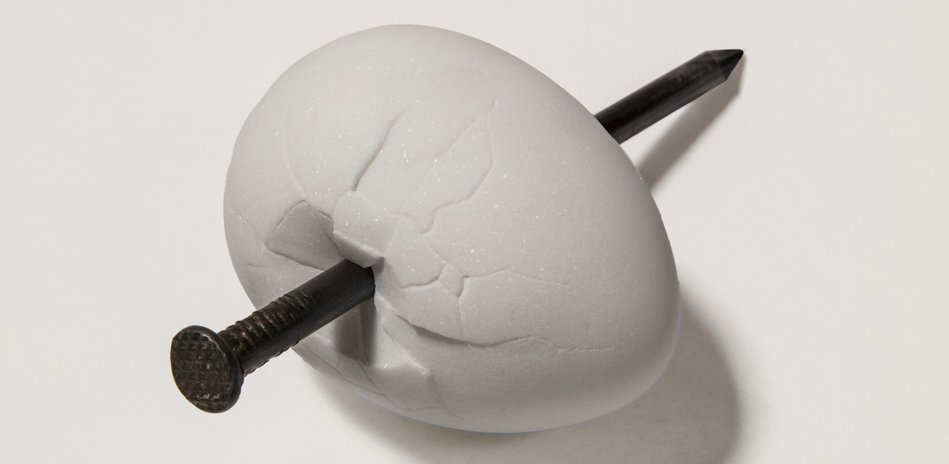
Collectors encounter another Cattelan problem: what exactly constitutes the work?
This question has followed conceptual art for decades, but Cattelan’s ability to generate globally recognisable images intensifies it. The physical object can be materially ordinary while the intellectual and cultural object becomes enormous. Certificates, editions, installation instructions, artist proofs, exhibition history and provenance may therefore matter as much as conventional craftsmanship.
Comedian made this exceptionally visible. Collectors were not buying a particular supermarket banana destined to decay. They were acquiring the authorised work and the right to realise it according to the artist’s specifications. The apparently ridiculous object exposed a sophisticated collecting reality: conceptual art often resides in the legal and intellectual framework that permits an object or action to be recreated.
That makes due diligence essential. A Cattelan collector should understand edition structure, certificates, replacement protocols, installation requirements, ownership history and exhibition record rather than relying on the apparent simplicity of the image.
The same principle applies more broadly to contemporary art whose materials are unstable, replaceable, technological, biological or ephemeral.
The real test of NIGHT is whether it can separate Cattelan from the publicity machine that has grown around him without pretending that publicity is irrelevant to the work.
There is little value in rehabilitating him as a secretly solemn sculptor. Cattelan has always understood comedy, spectacle, manipulation and media attention as artistic materials. To remove those elements would be to misunderstand the practice.
But there is equally little value in treating each work as another stunt.
The taxidermied horse is not interesting because hanging a horse from a ceiling is outrageous. It is interesting because the body becomes an image of suspended agency: power transformed into passivity. Him is not simply shocking because it depicts Hitler. Its force comes from the moral instability created by scale, posture, distance and recognition. America was funny because it was a gold toilet, but its museum queue converted wealth, bodily function and institutional privilege into the same choreography.
The joke opens the door. The architecture of the idea keeps us inside.
That is why Berlin matters. Mies van der Rohe’s Neue Nationalgalerie may provide Cattelan with the most unforgiving possible stage: a building in which almost nothing can hide.
Exhibition: MAURIZIO CATTELAN. NIGHT
Venue: Neue Nationalgalerie, Potsdamer Straße 50, Berlin
Dates: 10 September 2026 – 7 March 2027
Curators: Lisa Botti and Klaus Biesenbach, in close collaboration with Maurizio Cattelan
Context: Preis der Nationalgalerie 2026
Berlin Art Week hours: 10am–10pm daily, 10–13 September
Standard exhibition admission: €16; concessions €8
Collector note: For certificate-based or installation-dependent Cattelan works, provenance should include documentation governing realisation, edition status and replacement protocols as well as conventional ownership history.
From Robert Ryman and Lorna Simpson to Mary Ramsden, Martine Syms and Nicola Turner, the strongest London route during Frieze week begins outside the fair.
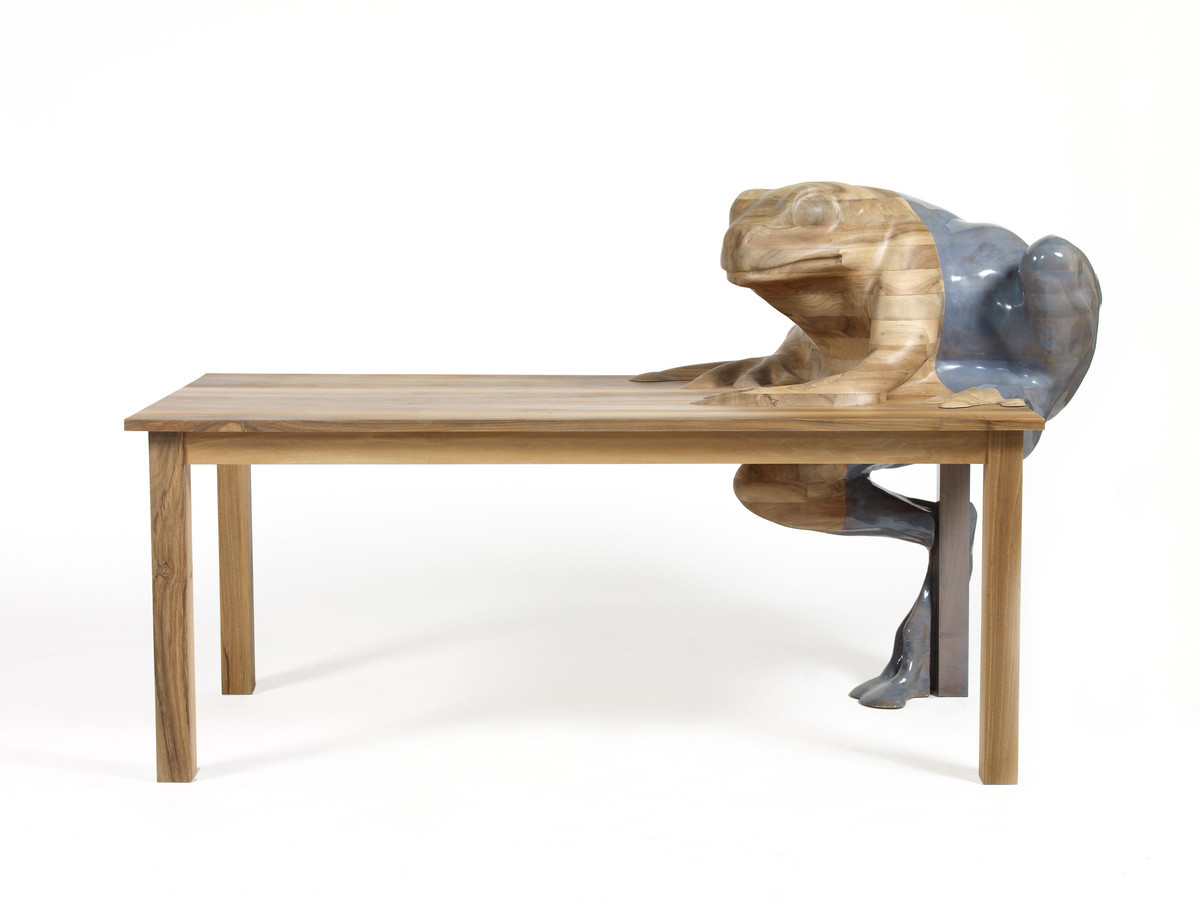
From the Polder Sofa to Frog Table and 300 coloured vases, Hella Jongerius has spent three decades proving that industrial design can retain craft, variation and material intelligence.
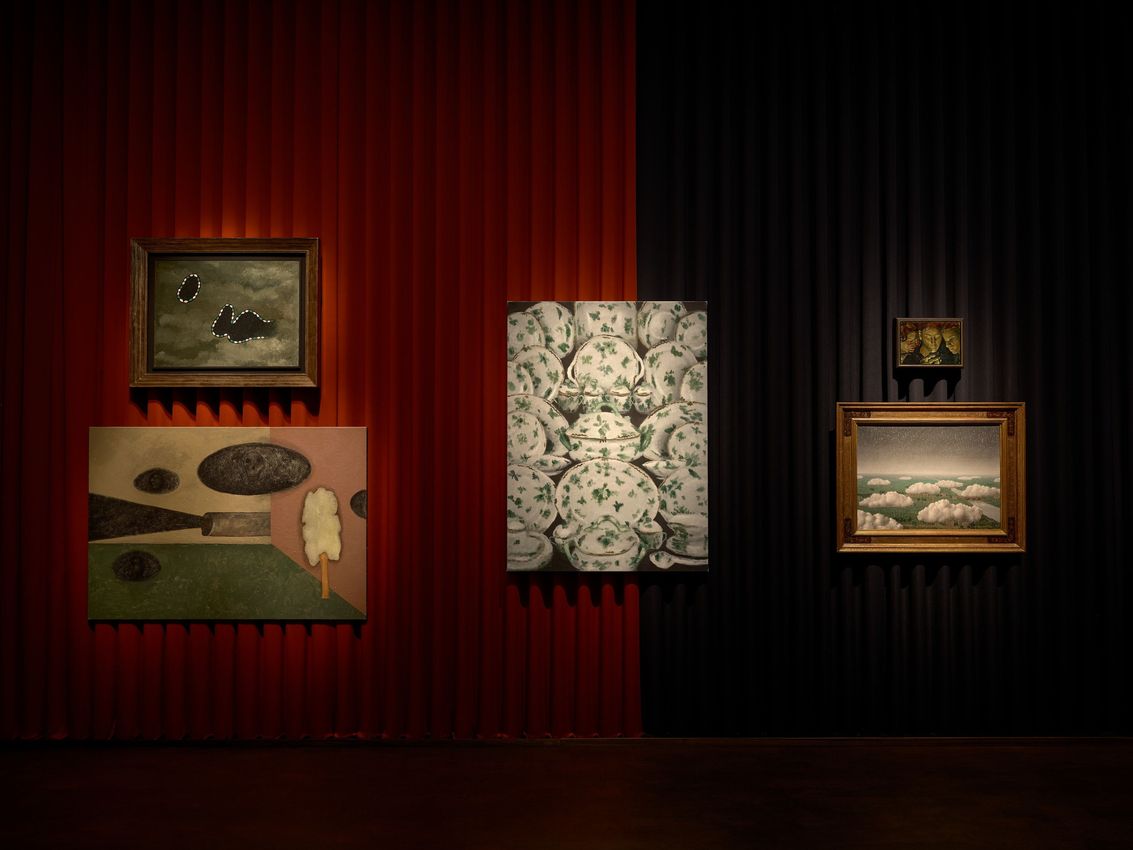
Gagosian’s ambitious London exhibition places René Magritte beside more than forty artists. For collectors, its real value lies in separating meaningful artistic inheritance from superficial resemblance — and in seeing why Magritte’s central problem, the unstable relationship between image and reality, feels newly urgent.