
October 23, 2026
Exhibitions
Exhibitions

From Faye Toogood and Kate Malone to textile art, post-war furniture and new material-led designers, PAD London showed why serious collector homes are built beyond the frame.
Our collector’s edit of London Design Festival 2026 prioritises sculptural furniture, studio glass, design history and emerging makers — the work most likely to matter after festival week ends.
London Design Festival opens on 12 September with the familiar problem of abundance. For nine days, design spreads across the capital through galleries, studios, showrooms, institutions and eleven design districts. The temptation is to chase novelty. Collectors should do almost the opposite.
The most useful way through the 2026 programme is to look for work that can survive after the festival language has been stripped away: pieces with material conviction, makers with a developed vocabulary, historic design that still feels alive, and younger practices worth encountering before the market has decided how to categorise them.
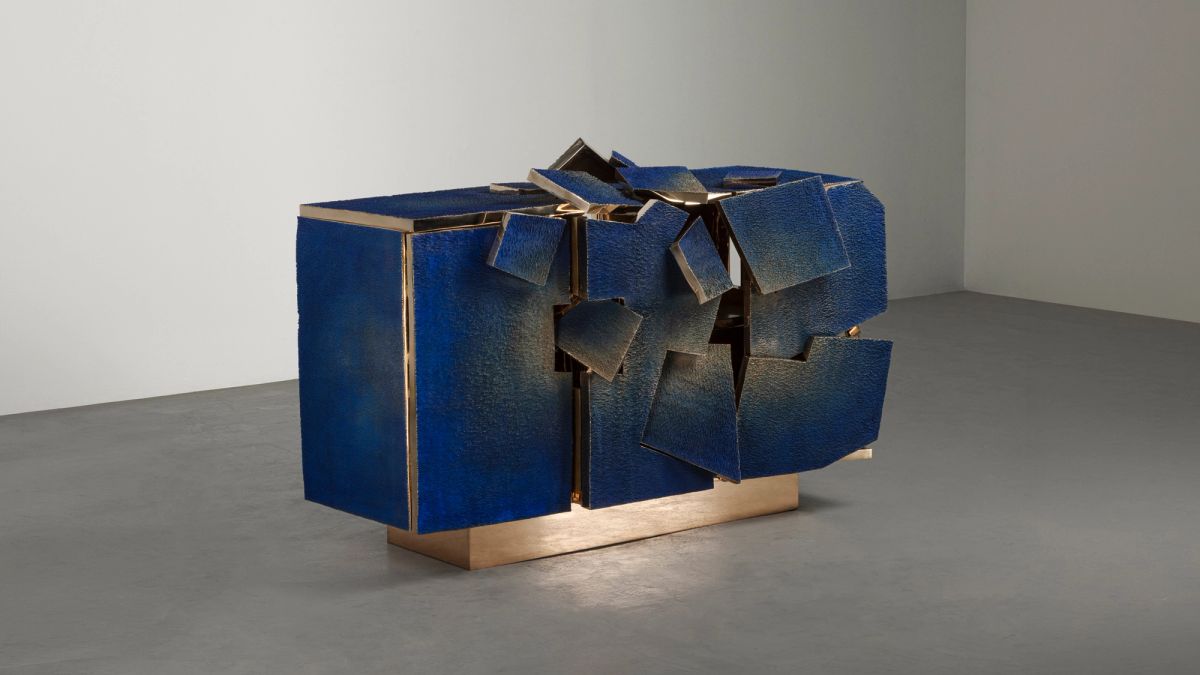
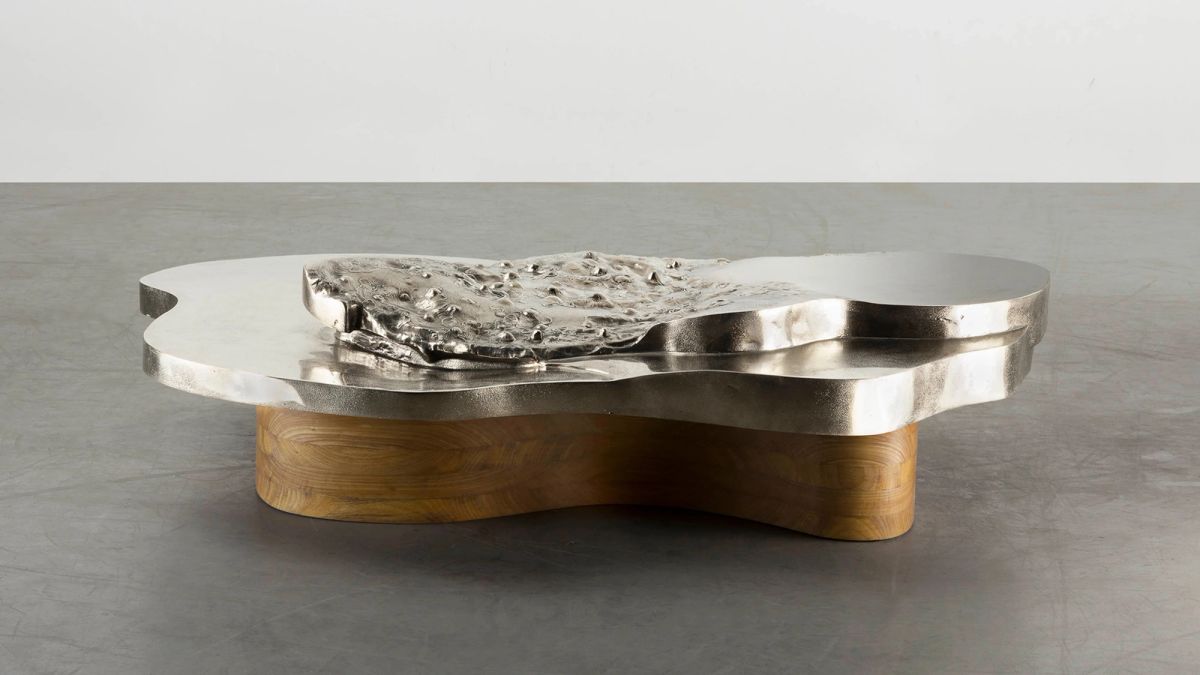
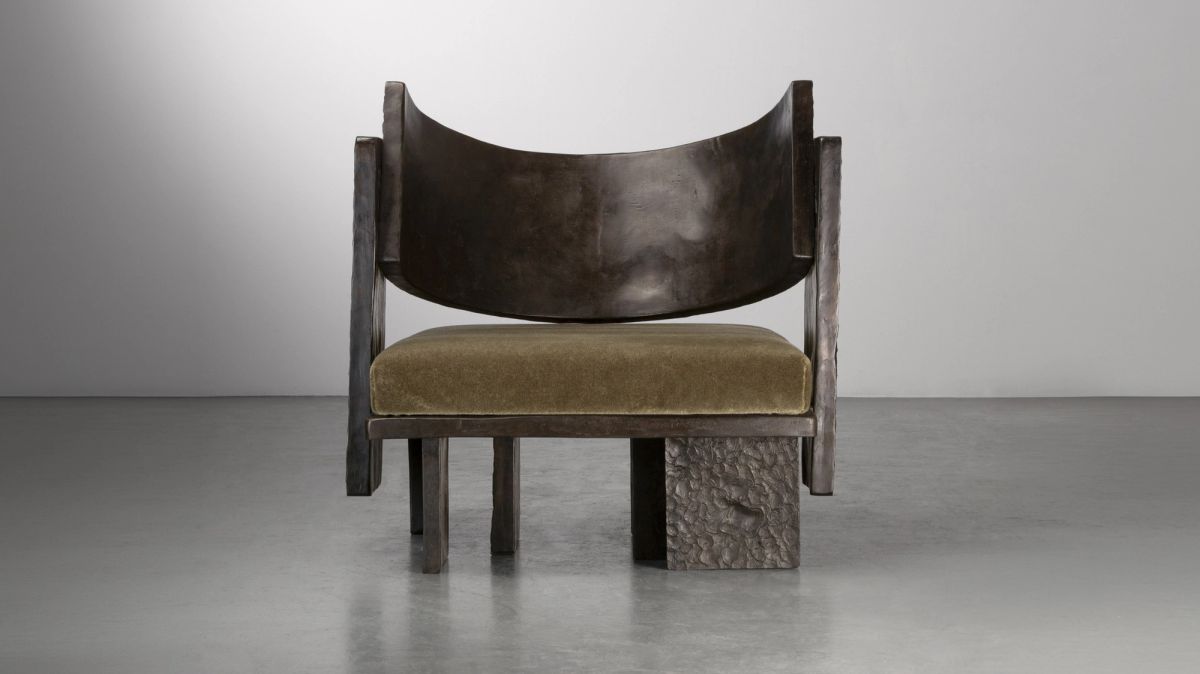
The clearest starting point is Ladbroke Hall, where Carpenters Workshop Gallery opens two exhibitions during the festival: Vincent Dubourg’s Blue Weather and František Vízner’s Beyond the Vessel. Together they describe two very different routes by which functional ancestry can become sculptural presence.
Dubourg’s new works combine bronze and wood in objects that retain the memory of force. In pieces such as Organic Table, metal appears to have cooled from a violent liquid state into a reflective plane, while Movingui wood below is organised into dense architectural structure. The tension is characteristic of Dubourg: furniture seems to have passed through an event and survived it.
The best of these works are not sculptural because they abandon furniture. They are sculptural because material, mass and void have been pushed until utility becomes only one part of the encounter. For collectors already comfortable placing contemporary sculpture beside historic furniture, Dubourg’s work makes intuitive sense.
Beyond the Vessel provides a quieter counterpoint. The exhibition brings together more than twenty sculptural glass bowls by Czech-born designer and glass artist František Vízner, largely from the late 1980s onwards. His forms are restrained, but their simplicity is deceptive: colour, wall thickness, optical depth and the precision of the rim determine whether the object reads as container, lens, mass or void.
Vízner is particularly relevant now because the collectible-design market has become more attentive to studio glass as a serious sculptural field. His work rewards the kind of connoisseurship collectors already apply to ceramics: condition, surface, colour, fabrication method, period and provenance can make apparently similar objects very different propositions.
Seen beside Dubourg, Vízner also reminds visitors that collectible design does not have a single preferred temperature. One exhibition is turbulent, architectural and metallic; the other is concentrated, optical and meditative. Both depend on control of material.
At Lyon & Turnbull in Mayfair, More is More: The Magical World of Peter Chang deserves particular attention from collectors interested in the boundary between jewellery, sculpture and design. Presented with the Estate of Peter Chang and Glasgow Life Museums, the exhibition brings together prints, jewellery, sculpture, drawings and archival material, allowing Chang’s radical colour language to be seen across disciplines rather than reduced to the wearable works for which he became best known.
Chang considered himself a visual artist first. That matters. His use of synthetic resins, plastics and found industrial material was not simply technical novelty; it was part of a larger investigation into surface, colour and transformation. Toothbrush handles, discarded plastics, razors and offcuts could become raw material for objects of intense finish and visual density.
The collecting lesson is straightforward: medium can distort reputation. An artist who becomes famous through jewellery may be undervalued when drawings, prints or sculpture reveal the conceptual foundation of the practice. Exhibitions that restore those connections are often where the most interesting reappraisals begin.
At twentytwentyone, Santa & Cole presents Miguel Milá: A Life in Design, a survey of one of Spain’s most influential designers. Milá’s work occupies almost the opposite emotional register from Chang’s, but it offers an equally useful lesson in collecting. Where Chang intensifies colour and surface, Milá repeatedly removes what an object does not need.
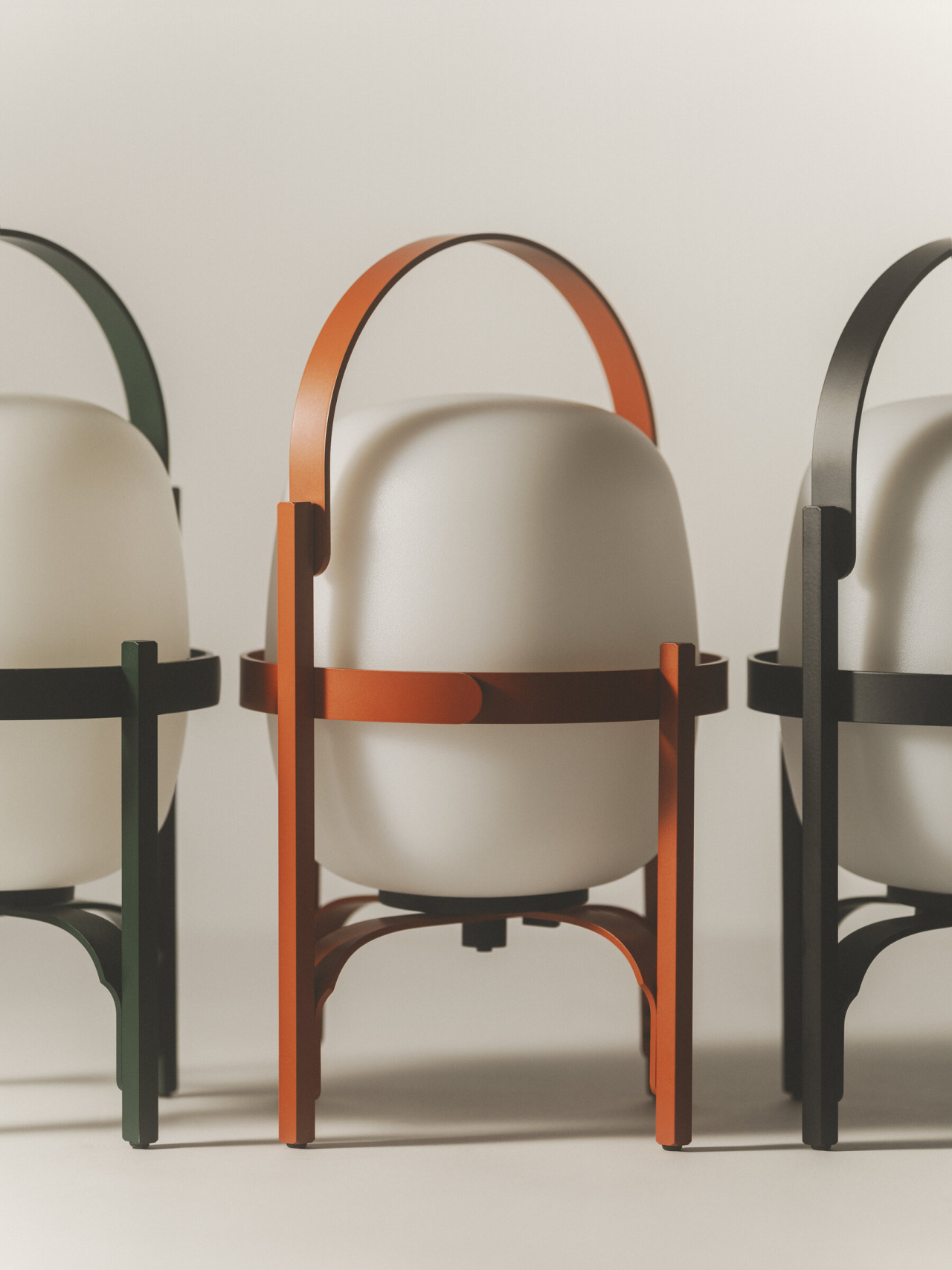
Designs such as the TMC lamp and the Cesta family endure because their intelligence is inseparable from use. They were not conceived as future icons. They solved practical problems with enough formal clarity to outlive the circumstances that produced them.
For collectors, that longevity raises an important distinction between historic original production and authorised contemporary manufacture. A design can remain culturally significant while being continuously produced. Value therefore depends on understanding the specific object in front of you: date, manufacturer, materials, edition history, condition and whether rarity is actually part of the design’s significance.

Milá’s Cesta family is especially instructive in a collector home because it demonstrates how an object can be distinctive without demanding visual dominance. The familiar luminous globe held within a simple frame has enough character to be recognisable, yet it adapts easily to rooms containing art, books and furniture from different periods.
The newer Cestita Alubat translates that idea into aluminium and portable technology without abandoning the original design logic. It is exactly the sort of object that exposes a false choice in interiors: a home does not have to decide between museum-quality collectables and useful things. The best design often succeeds because it remains useful while carrying an identifiable authorship and history.
For collectors interested in the next generation, Gallery FUMI’s collaboration with the Royal College of Art, AFTER SCHOOL, is worth approaching with the same seriousness as an established gallery exhibition. Recent graduates and alumni present work across textiles, ceramics and design, placing young practices directly into a commercial and curatorial context.
The value of graduate-adjacent collecting is not the fantasy of discovering the next famous designer at minimal cost. It is the opportunity to engage with work while the maker’s language is still visibly forming. At this stage, process often matters more than polish. Look for a coherent way of thinking across several objects rather than one spectacular prototype.
Ask how pieces are made, whether the designer can reproduce or evolve them, and what aspects are fundamental rather than accidental. A young practice with a clear material intelligence is usually more interesting than a single object engineered primarily for photography.
London’s scale rewards discipline. A collector could spend the week moving between launches and leave with very little understanding of anything seen. A better strategy is to build the route around three different kinds of encounter: one established collectible-design gallery, one historical or post-war design presentation, and one emerging platform.
At the established end, ask about edition sizes, artist proofs, fabrication changes and exhibition history. With historic design, distinguish original production from later authorised editions and reissues. With emerging makers, document everything: material, dimensions, date, maker, production method and whether a work is unique, prototype or editioned.
And judge objects in relation to the home. The festival encourages viewing in rapid succession, but collecting is a much slower act. Consider where a piece would live, what it would sit beside and whether its interest depends on exhibition lighting or survives ordinary daylight and daily use.
The strongest parts of London Design Festival 2026 are not the loudest launches. They are the moments when design reveals a deeper timescale. Dubourg turns bronze into an image of transformation. Vízner makes the vessel a study in optical restraint. Chang shows how supposedly humble synthetic material can carry an entire visual philosophy. Milá demonstrates that usefulness can be a route to permanence rather than an obstacle to it. Young makers at FUMI and the RCA remind collectors that every mature language once began experimentally.
That range is London’s advantage. The city does not offer a single definition of collectible design, and it should not. For the serious collector, the festival is valuable because it places radically different answers close enough to compare.
London Design Festival 2026 runs from 12–20 September.
Blue Weather and Beyond the Vessel open at Carpenters Workshop Gallery, Ladbroke Hall, on 17 September and continue beyond the festival. More is More: The Magical World of Peter Chang runs at Lyon & Turnbull from 14–19 September, while Miguel Milá: A Life in Design is presented at twentytwentyone during festival week.
From Faye Toogood and Kate Malone to textile art, post-war furniture and new material-led designers, PAD London showed why serious collector homes are built beyond the frame.

Paris Internationale returns with 56 galleries, a new Canal Saint-Martin venue and a model built around discovery. Here is how collectors should use it.
Ibrahim Mahama, Lee Krasner, Oscar Murillo, Tracey Emin and more: the exhibitions that turn Art Basel Paris week into something larger than a fair.