
October 23, 2026
Exhibitions
Exhibitions
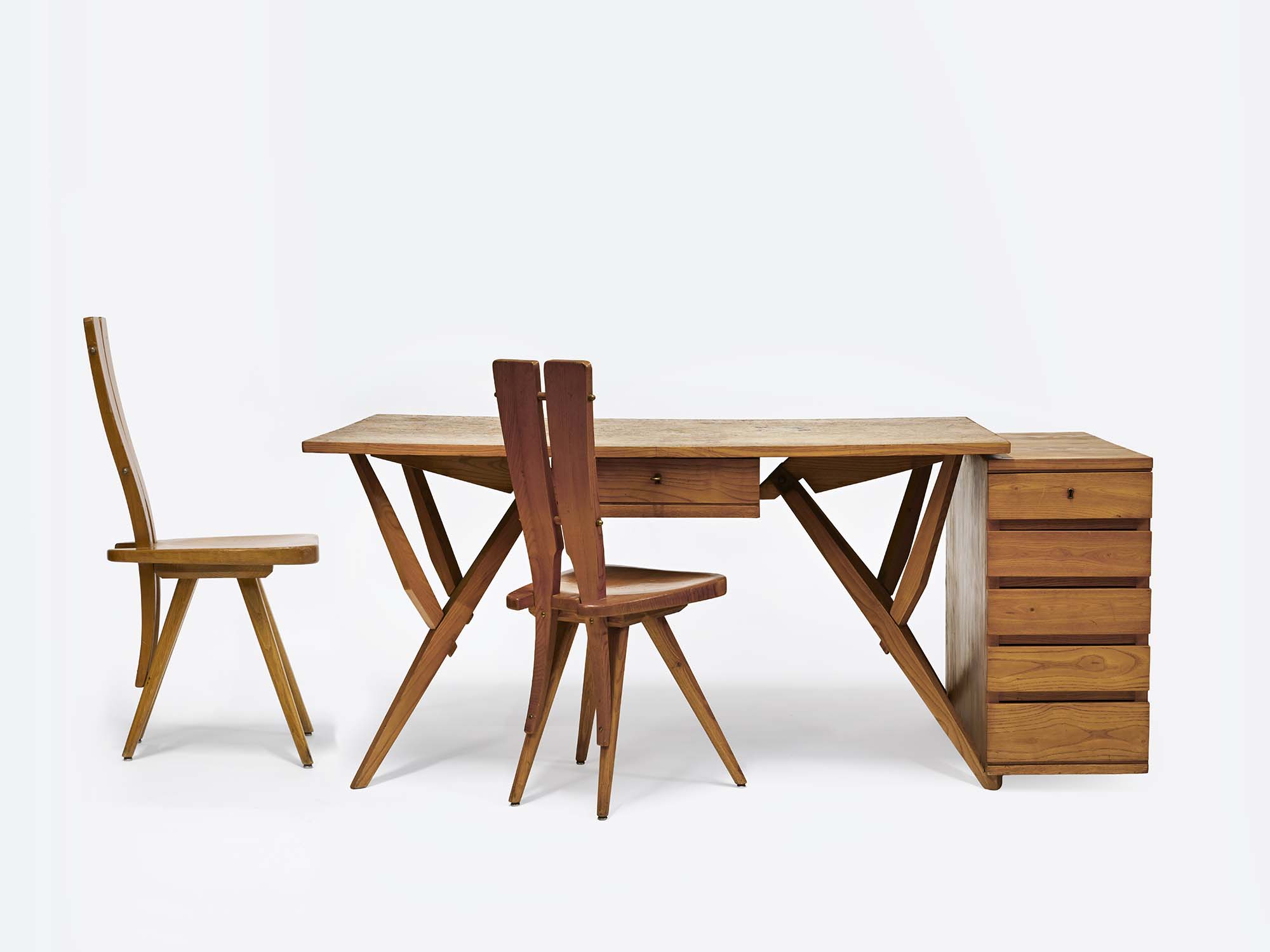
From Carlo Mollino and Faye Toogood to Misha Kahn and Gallery FUMI, PAD London 2026 showed what discerning art collectors can learn from sculptural furniture and material experimentation.
London Design Festival 2026 arrives just as the border between art, design and material practice becomes harder to defend. Here are the projects collectors should see—and the questions worth taking with them.

London Design Festival returns from 12–20 September 2026 at a moment when the border between fine art, collectible design and material research is increasingly porous. For art collectors, the most rewarding route is not a furniture-shopping circuit but a search for objects with ideas.
The art collector going to London Design Festival should begin with one rule: do not ask whether an object is art. Ask whether it rewards the same kind of attention.
This year’s programme makes that approach especially productive. Across London, exhibitions and installations foreground making, material research, new lighting, independent craft and the uncertain stage before an object becomes a finished “product.” The official festival runs from 12 to 20 September, with several key programmes concentrated between Bankside, Brompton, Soho and Shoreditch.
For collectors accustomed to fairs, the advantage of design week is the change of tempo. A chair asks you to consider weight and touch. A light alters the room around it. A vessel may be technically modest but materially radical. A prototype can be more revealing than a polished edition because the process is still visible.
The following stops are not a ranking. They are a collector’s edit: places where authorship, material intelligence and future collectibility are likely to be easier to discuss than brand recognition alone.
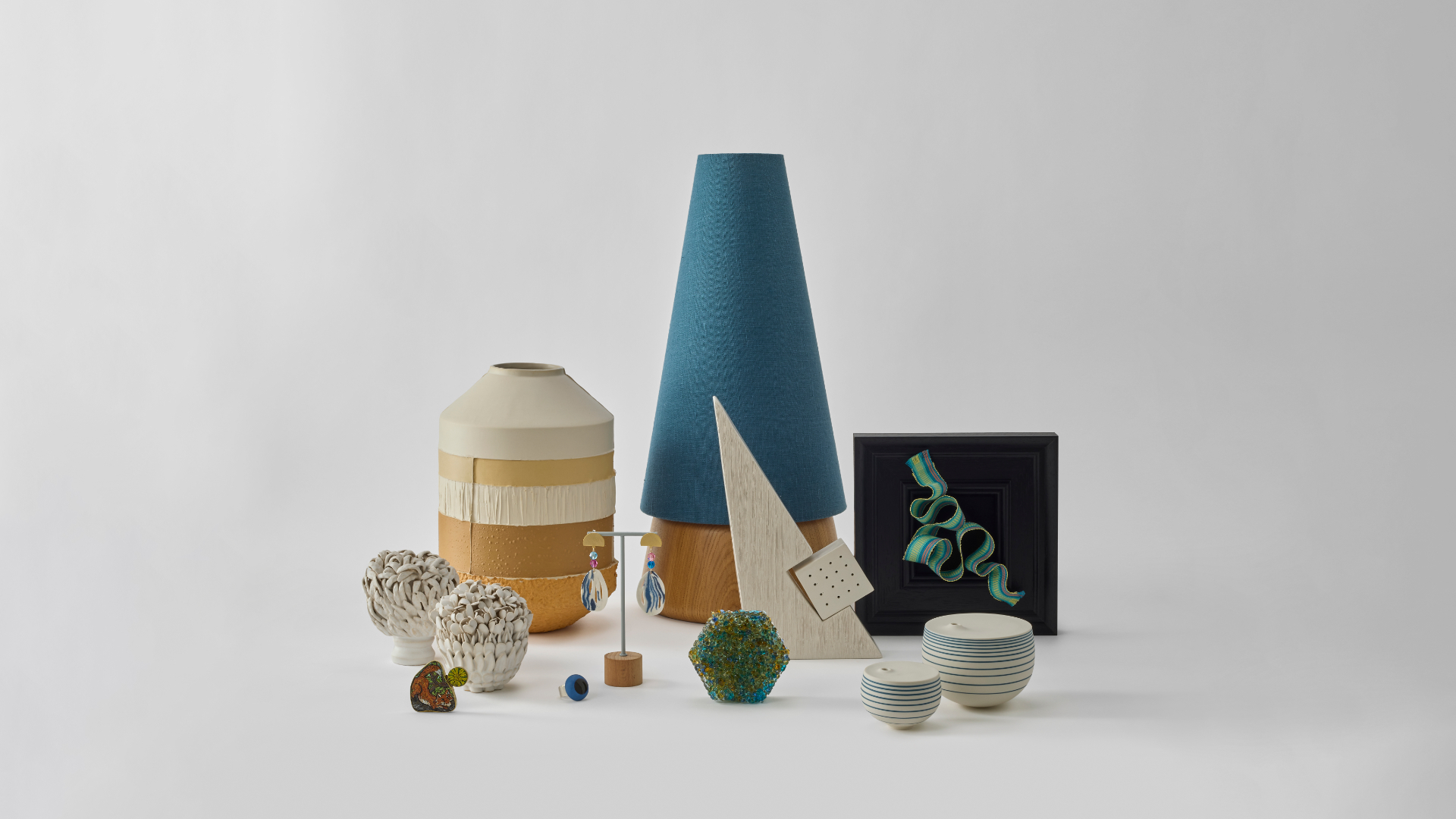
At OXO Gallery, Design-Nation’s Crafted Futures gathers 35 UK designer-makers across ceramics, jewellery, textiles, glass, wood, lighting, paper, fibre and metal. The works are available to purchase directly from the makers, and the programme includes opportunities to hear about process and material.
For art collectors, direct access is the important part. The most interesting design purchases often begin before a secondary market or canonical narrative has formed. That puts more responsibility on the buyer. You cannot rely on auction comparables or institutional consensus; you need to understand the maker’s process, production capacity, edition logic and relationship to material.
Ask how a work changes when repeated. Is each piece effectively unique because of firing, grain or handwork? Is the object repairable? Can the maker reproduce a damaged component? Are future versions likely to remain close enough that scarcity matters, or is the pleasure precisely in an open-ended body of work? These are collecting questions, not merely shopping questions.
Brompton Design District’s programme, curated by Alex Tieghi-Walker, is unusually aligned with collector thinking because it foregrounds the experiments, tools, collaborations and material accidents that precede the finished object. Projects include Rafael Prieto’s sculptural chairs responding to positions of the sun, Jesse Butterfield’s hand-hammered steel and sewn paper, Byron Pritchard shaping a single slab of sycamore without predetermined drawings, and an interdisciplinary Studio Iron exhibition crossing art, design and fashion.
The attraction here is evidence of decision-making. In fine art, collectors routinely value process—pentimenti, studio histories, material experiments, editions, foundry choices. Design deserves the same scrutiny. A beautifully resolved object can conceal how generic its thinking is; a visibly imperfect one may contain a far richer design proposition.

Faye Toogood’s new Johnny lighting family, shown at the studio’s Borough home on 14 and 15 September, is a particularly clear example of design behaving sculpturally without abandoning use. Paper skins are hand cut and sewn around steel frames; when illuminated they become translucent, while unlit they retain the tactile presence of crumpled material. The family includes pendant, standing and table forms.
Collectors should pay attention to what changes when the light is switched off. The strongest collectible lighting has an identity independent of illumination. It occupies space, handles scale and material, and creates a silhouette with enough authority to survive daylight. It also introduces a conservation question familiar to media-art collectors: electrical components may be replaceable, but how should replacements preserve the intended light quality and appearance over time?
That does not make the object fragile in a negative sense. It simply means the collector should acquire documentation as carefully as with any technically dependent artwork.
In Shoreditch, Lee Broom expands his Chant lighting language into The Chant Chambers, running 15–20 September. The installation develops a recognizable glass-block-inspired module into oversized chandeliers, wall lights, linear pendants and architectural structures that can extend through an interior.
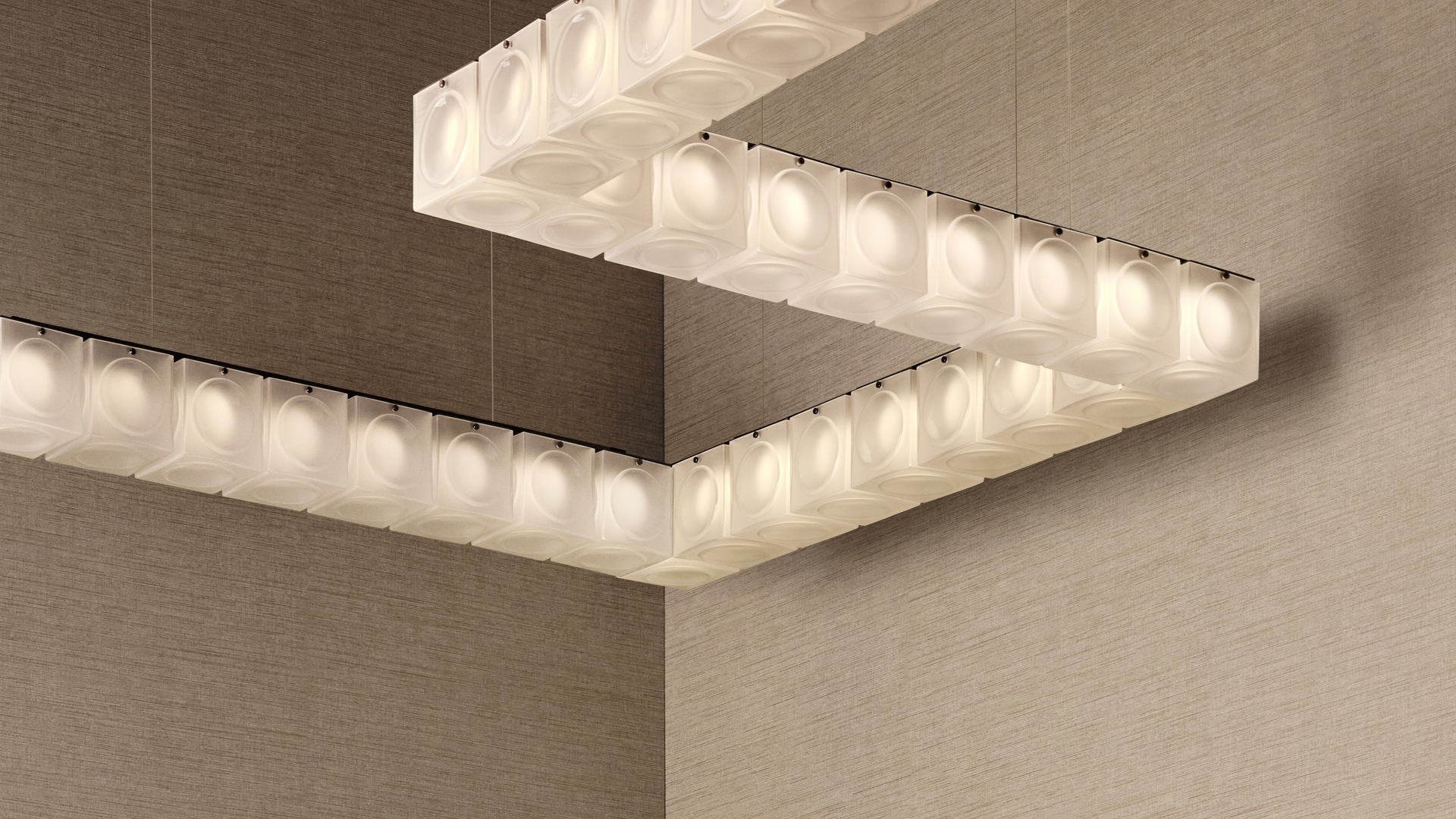
The collector question is what happens to authorship when a design becomes highly configurable. In art, edition size often provides a familiar scarcity framework. Architectural lighting can be different: a system may be customized to a room, making the installation itself more singular even when the components are repeatable.
That creates an opportunity—and a documentation burden. Record the original configuration, dimensions, component list, finish, driver specifications and any custom fabrication. If a major design is integrated into architecture, its provenance should include the room it was made for.
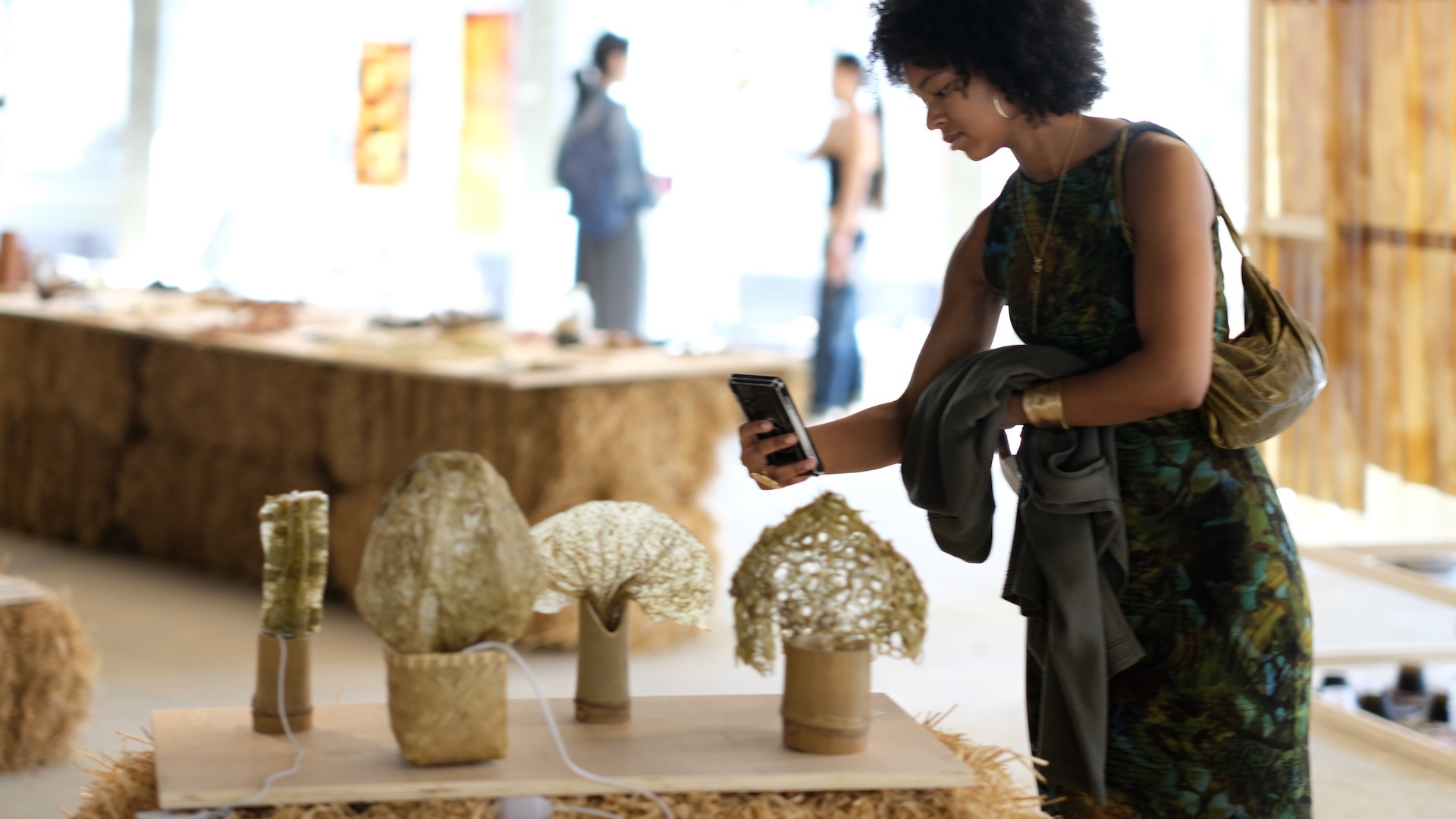
Material Matters returns at UNLOCKED Shoreditch from 15–17 September with projects ranging from waste-derived construction materials to biochar-based compostable foam, regenerative biomaterials, bacterial-grown tile and investigations into how hand-making can interact with AI-informed spatial design.
Not every project here is “collectible” in the conventional sense, and that is exactly why art collectors should go. Markets tend to reward finished authorship. Material research reminds us that important design history can begin with a process before it produces a recognizable object.
A collector interested in this territory should ask whether prototypes, samples, research archives or first production runs are available and properly documented. Museums collect such material because it records a shift in how things can be made. Private collectors can participate in that history too, particularly where the research connects to architecture, environmental design or experimental craft.
Heal’s Future Icons, on view 12–20 September, explicitly asks which furniture and lighting pieces might become tomorrow’s classics. That framing is useful if collectors resist the temptation to accept the answer too quickly.
An icon is not produced by a label on opening day. Longevity emerges from repeated use, technical intelligence, recognizability, influence and the ability to survive changes in taste. The strongest exercise at Heal’s may therefore be to disagree with the selection and explain why.
Look for objects whose novelty is structural rather than cosmetic. Ask what would remain if the fashionable finish changed. Does the design create a new typology, solve a persistent problem or formalize a technique other makers will borrow? Those are more durable indicators than immediate visual impact.
The best design-week purchase is not the object that looks most like art. It is the one whose design intelligence remains visible after the fair atmosphere disappears.
Do not try to cover London Design Festival comprehensively. Instead, choose a few projects in different categories and compare them through the same questions: authorship, material, scarcity, fabrication, repair, documentation and historical context. Take photographs of labels and construction details. Ask makers what has changed between prototypes and final versions. Request technical information before you need it.
Most importantly, imagine the object at home beside art you already own. Does it simply decorate the collection, or does it complicate it? A good design acquisition can reveal that what you thought was an interest in painting was actually an interest in surface; that your sculptures share a concern with balance; that your minimal collection needs something tactile; or that the most intelligent object in the room is the one people are allowed to sit on.
London Design Festival 2026 is valuable because it gives collectors permission to expand the field without lowering the standard. The disciplines may change. The quality of attention should not.
Design week encourages quick decisions because objects are physically present and makers are accessible. Use that access to improve the archive from day one. Ask for the designer’s full name, model title, year of design and fabrication, materials, dimensions, edition or production status, fabrication studio, care instructions and any certificate or signed documentation. If the piece is a prototype or unique variation, record exactly what makes it distinct.
For lighting and material-led work, add technical information: replaceable components, voltage, driver specifications, finish samples and repair contacts. For experimental biomaterials, ask how colour, strength and surface are expected to change over time. None of this diminishes the romance of discovery. It protects it. A future conservator—or simply your future self—will be grateful that the story of the object did not disappear with the fair label.
The festival’s scale makes over-scheduling tempting. Resist it. A collector will learn more by spending forty minutes with three makers than by photographing thirty stands. Leave gaps between districts, return to the object that remained in your mind, and compare what the maker says with what the object itself reveals. The goal is not to leave London Design Festival having seen everything. It is to leave with a sharper definition of what deserves to enter your home and your collection.
From Carlo Mollino and Faye Toogood to Misha Kahn and Gallery FUMI, PAD London 2026 showed what discerning art collectors can learn from sculptural furniture and material experimentation.

The last weeks of Koyo Kouoh’s In Minor Keys demand a slower way of seeing Venice. A practical guide to the central exhibition, national pavilions and what collectors should take away.

From Faye Toogood and Kate Malone to textile art, post-war furniture and new material-led designers, PAD London showed why serious collector homes are built beyond the frame.