
October 25, 2026
Exhibitions
Exhibitions
A rare London exhibition of new works and historical material returns us to Cady Noland’s uncomfortable vision of American spectacle, power and the ordinary object.
Friedman Benda reconstructs the creative domestic world of Wendell Castle and Nancy Jurs from a 1973 House Beautiful feature, returning museum-level furniture and ceramics to the context for which they were made: everyday life.
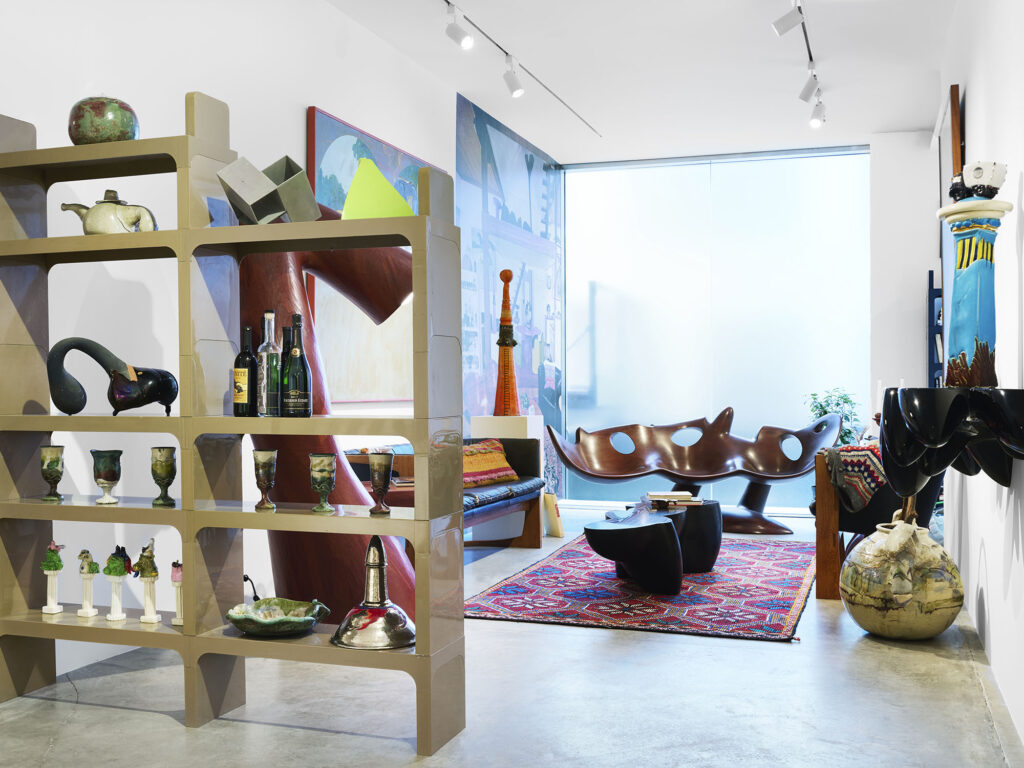
The most revealing room in a collector’s home is not always the one containing the most important object. It is the room in which art, furniture and ordinary life stop behaving like separate categories. That idea sits at the centre of Wendell Castle: Living, Friedman Benda’s New York exhibition reconstructing something of the extraordinary domestic world created by the American furniture maker Wendell Castle and his wife, the ceramic and multimedia artist Nancy Jurs.
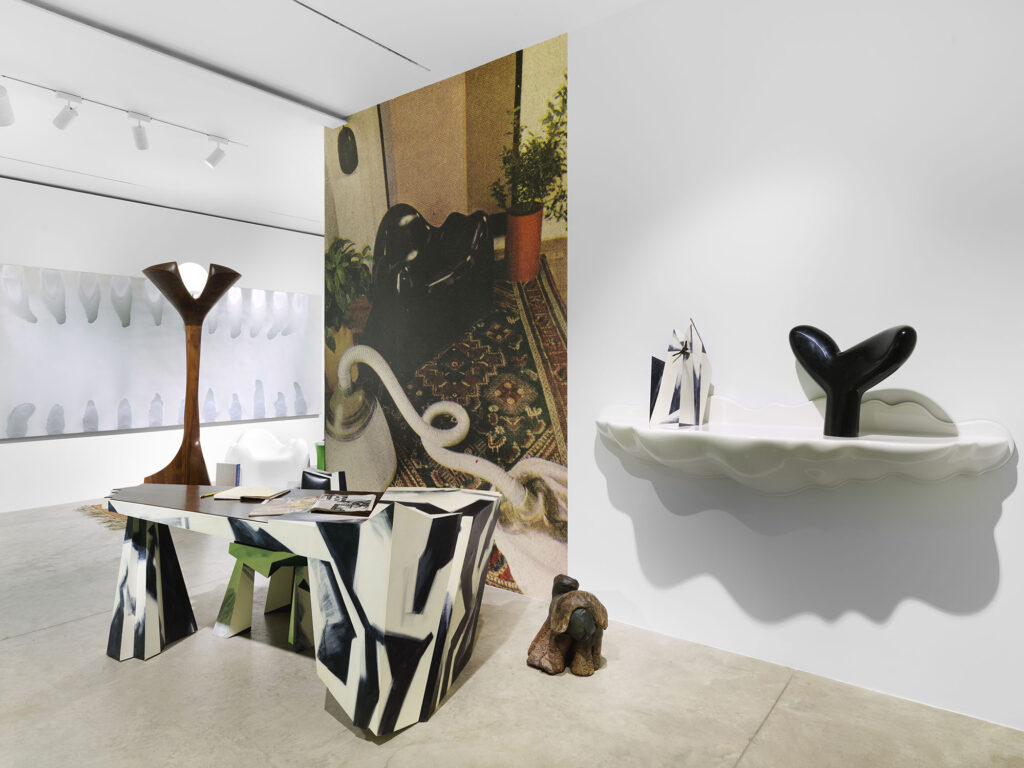
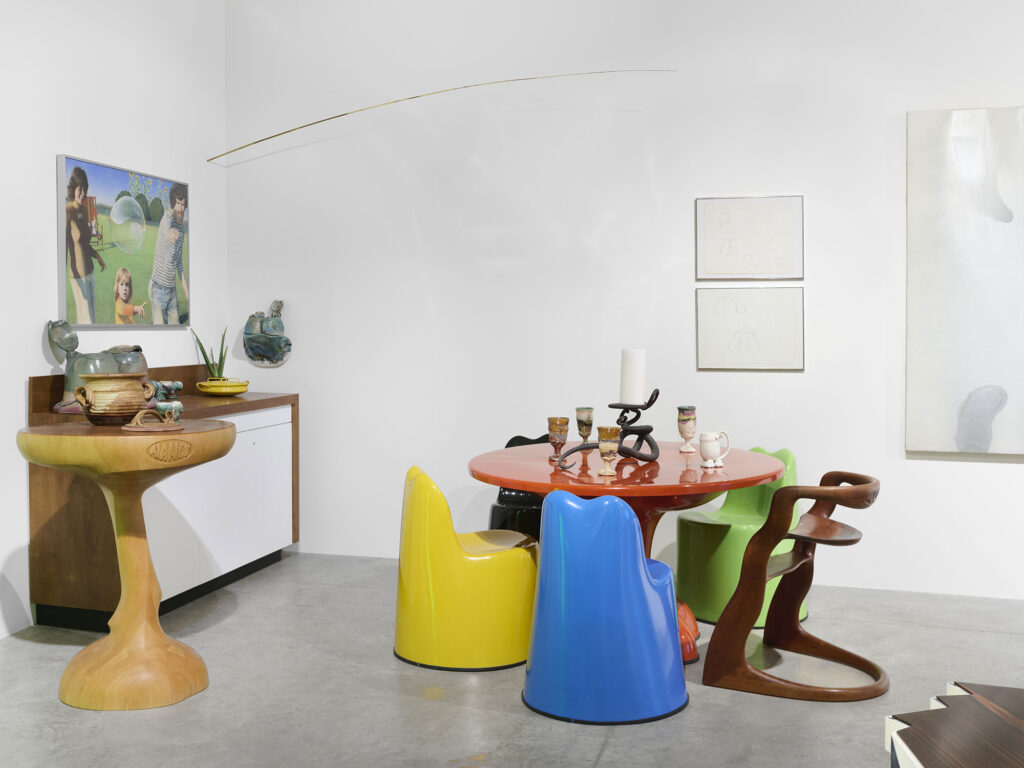
Curated by the couple’s daughter, Alison Castle, the exhibition takes a 1973 House Beautiful feature on the family’s Scottsville, New York home as its point of departure. That source is more than period decoration. It records Castle and Jurs’s work before museum display and design-market canonisation changed the way many of these objects are encountered. Furniture was furniture. Ceramics were used. Art belonged to rooms in which people ate, worked, entertained and raised a family.
For ARTCOLLECTORHOMES, that makes the exhibition unusually important. It asks a question that sits beneath almost every serious art interior: what changes when an object of exceptional formal ambition is allowed to remain part of daily life?
Castle, who died in 2018, is widely regarded as a foundational figure in American studio furniture. In 1963 he pioneered stack lamination, a method that allowed him to build substantial sculptural volumes in wood without accepting the structural conventions of traditional cabinetmaking. His chairs, tables, lamps and environments could be functional while behaving visually like sculpture.
Today that territory is familiar to collectors. The market for collectible design routinely places functional objects in dialogue with contemporary art. Castle’s importance is that he helped establish the conditions under which that dialogue became possible.
The exhibition includes major early works such as Chaise Rocker (1962), Floor Lamp (1967) and the multifunctional Environment (1972), alongside later pieces including Caligari’s Mistress’s Desk and Chair (1990), Arcadia (2010) and Opposites Attract (2017). Several objects documented in the 1973 article and not publicly seen since have been lent by the family.
Those loans are critical. They prevent the project from becoming a contemporary stylist’s approximation of a 1970s artist home. The exhibition is instead anchored by objects that actually participated in the family’s life, supplemented by domestic material intended to evoke kitchen, bedroom, dining and living spaces.
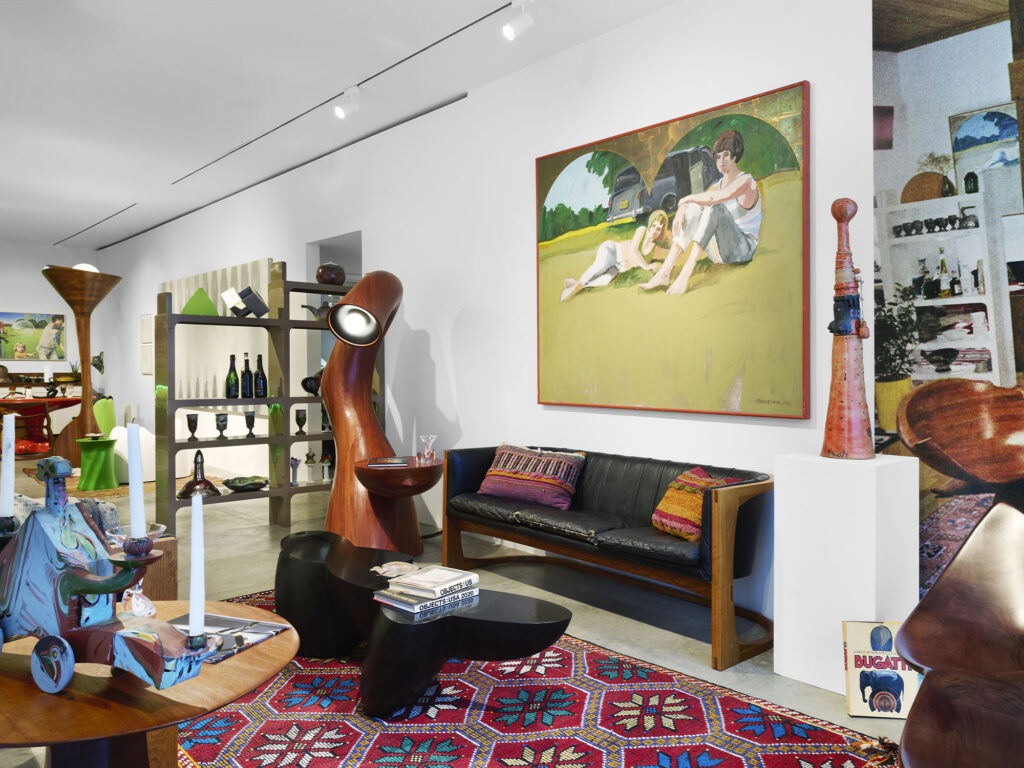
Alison Castle has made the exhibition’s premise explicit: many of these works are now normally encountered in museums, but they were made as furniture and were intended to be used. That distinction should resonate with collectors. Museum validation can protect an object’s historical importance while simultaneously distancing it from the circumstances for which it was conceived.
A chair displayed on a plinth is read differently from a chair positioned beside a table, lamp, painting, ceramic vessel and rug. Context restores relationships of scale. It also restores humour. Castle’s forms can be strange, biomorphic and theatrical, but in a domestic setting their eccentricity becomes surprisingly companionable.
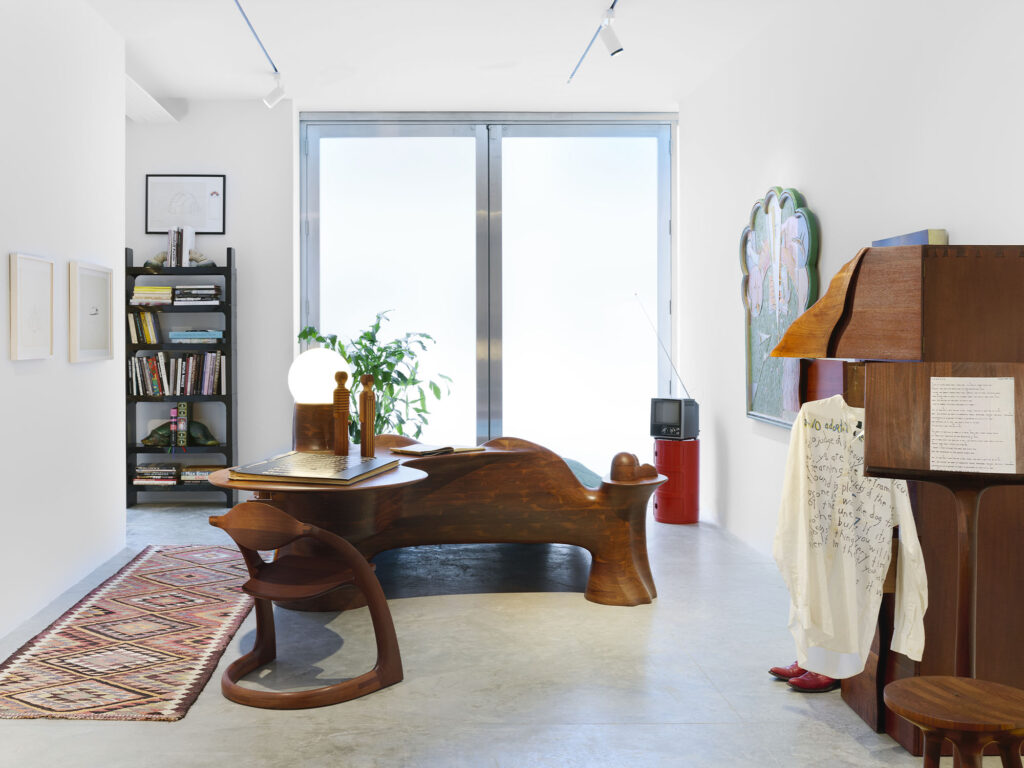
Nancy Jurs’s presence is equally important to that atmosphere. Her functional and sculptural ceramics complicate the idea of the home as a retrospective monument to a single celebrated designer. The original Scottsville environment was collaborative and social. Nearly everything was made by Castle, Jurs or artist friends. Authorship accumulated rather than being tidily separated.
The exhibition arrives at a moment when collectible design has become increasingly integrated into contemporary-art collecting. That convergence can produce extraordinary interiors, but it can also produce rooms in which every object is treated with such reverence that nothing seems capable of being lived with.
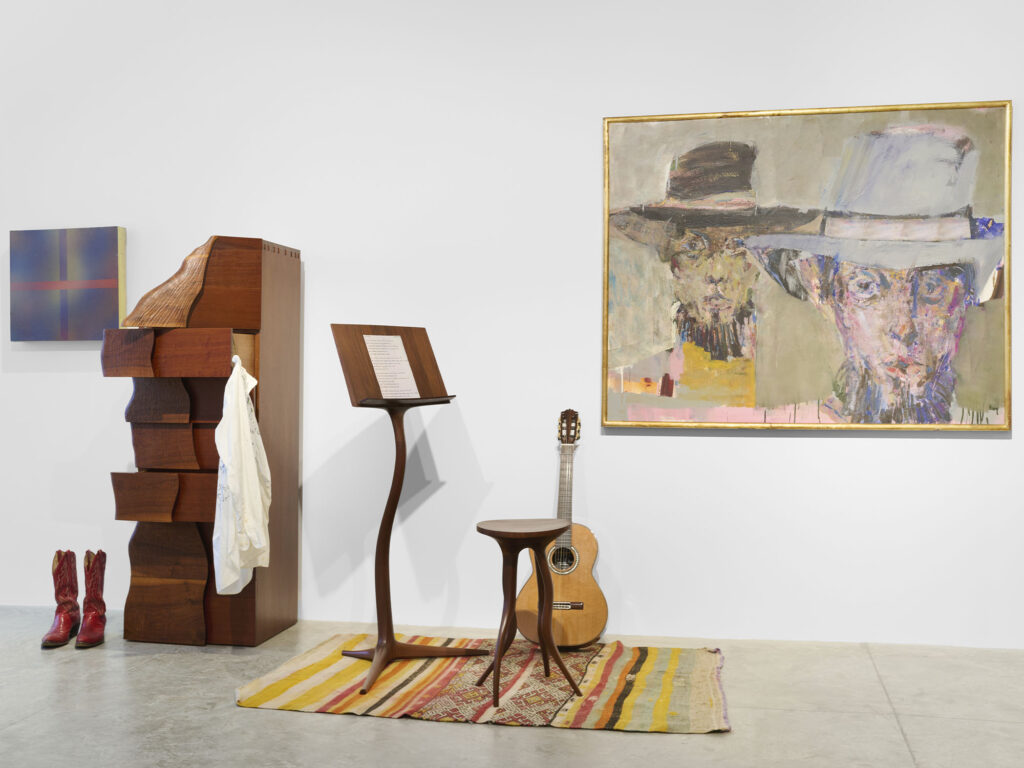
Castle’s home suggests another model. Serious objects do not necessarily require solemn rooms. A sculptural chair can coexist with ceramics, books, textiles and evidence of ordinary use. The quality of the collection comes not from isolating each object but from allowing strong objects to establish relationships.
That may be the exhibition’s most contemporary lesson. The best art-filled homes are not miniature museums. They possess a rhythm that museums cannot reproduce because domestic space has different responsibilities: comfort, repetition, intimacy, accident and memory. An object seen every morning acquires a different biography from one encountered once behind a barrier.
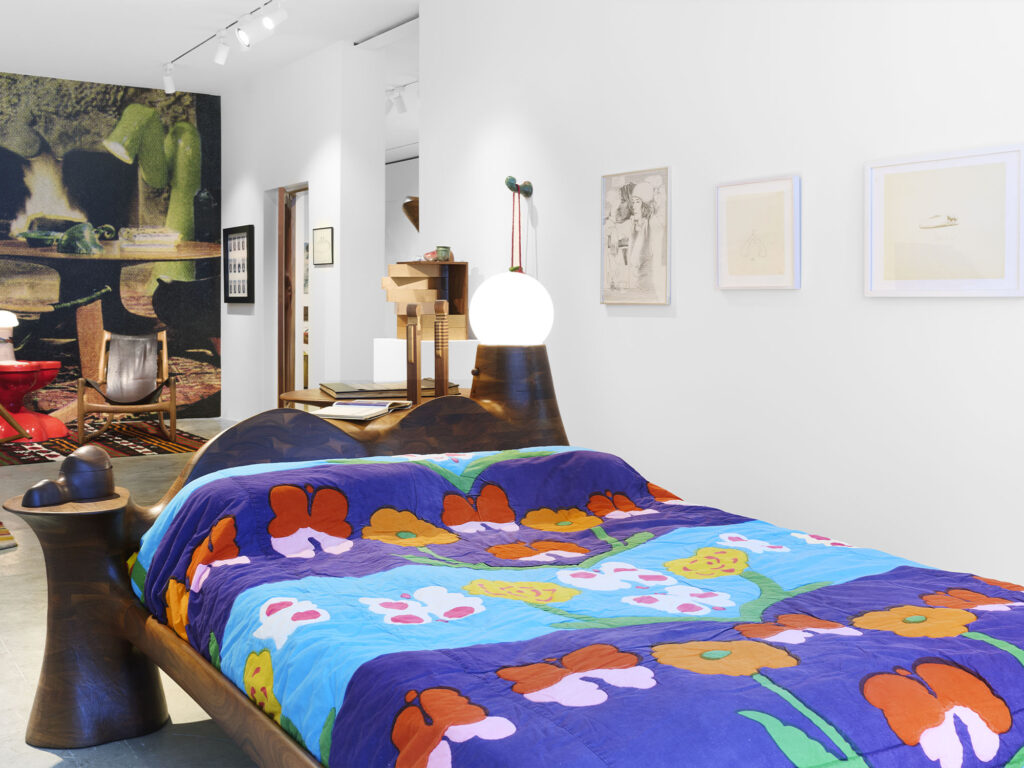
Wendell Castle: Living therefore succeeds as more than a design-historical reconstruction. It gives collectors a rare chance to reconsider the boundary between owning an important object and actually living with it. Castle spent six decades expanding the formal possibilities of furniture. This exhibition returns those experiments to the place where their radicalism may be clearest: the home.
Wendell Castle: Living
Friedman Benda, New York
17 September–17 October 2026.
A rare London exhibition of new works and historical material returns us to Cady Noland’s uncomfortable vision of American spectacle, power and the ordinary object.
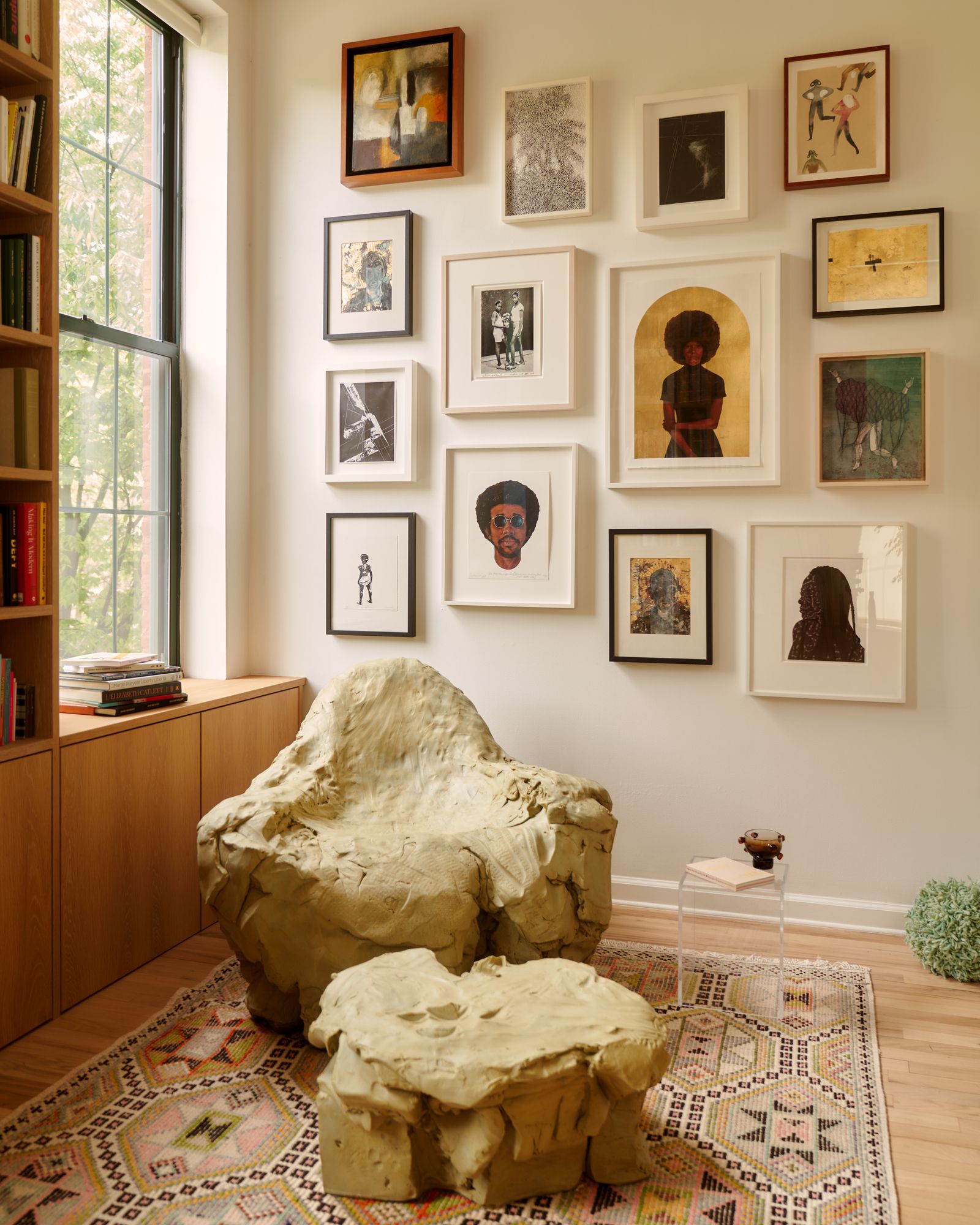
A gallerist’s Clinton Hill apartment reveals how painting, sculptural furniture, family history and unorthodox choices can make a home feel genuinely collected.
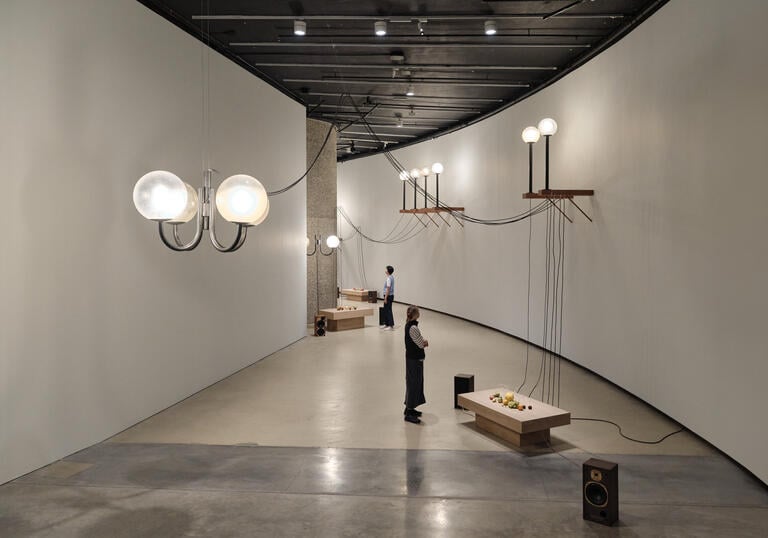
With light, sound, fruit and kinetic systems, Yuko Mohri makes the Barbican’s Curve into an argument for attending to what does not quite work as expected.