
October 24, 2026
Exhibitions
Exhibitions
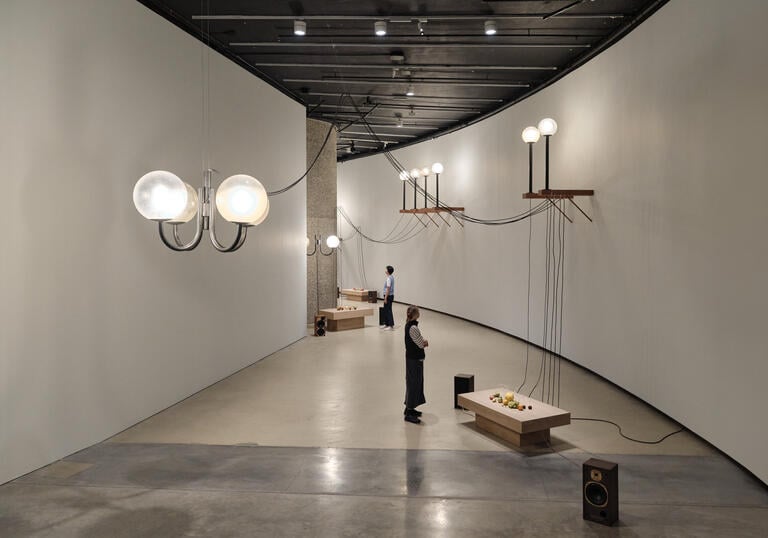
With light, sound, fruit and kinetic systems, Yuko Mohri makes the Barbican’s Curve into an argument for attending to what does not quite work as expected.
With a new Boesky exhibition and their first mid-career museum survey arriving almost in tandem, the Haas Brothers reveal the systems, material intelligence and serious sculptural ambition beneath their famous exuberance.

It is tempting, when confronted with the Haas Brothers, to begin with the joke. Their creatures have names that arrive with a wink; their furniture grows fur, horns, tongues and improbable anatomy; bronze, porcelain, glass and beadwork are pushed towards forms that seem to have wandered out of a parallel ecology. Humour has always been part of the attraction. But in 2026, with a major museum survey travelling across the United States and a new body of work opening at Boesky Gallery in New York, the more interesting question is what remains when the joke has done its work.
The answer is a remarkably coherent artistic system. Mathemagical, the Haas Brothers’ fourth solo exhibition with Boesky Gallery, opened in New York on 10 September and runs through 17 October. Almost simultaneously, Haas Brothers: Uncanny Valley is preparing to open at the Blanton Museum of Art in Austin on 27 September after earlier presentations at Cranbrook Art Museum and the Museum of Arts and Design in New York. The museum exhibition is the twins’ first mid-career survey, tracing roughly fifteen years of practice through more than eighty works.
Seen together, the two exhibitions make a persuasive case for Nikolai and Simon Haas as artists whose refusal to settle into a single category is not a branding exercise but the engine of the work. Sculpture, furniture, ceramics, painting, technology and craft are not competing identities here. They are parts of the same evolving language.
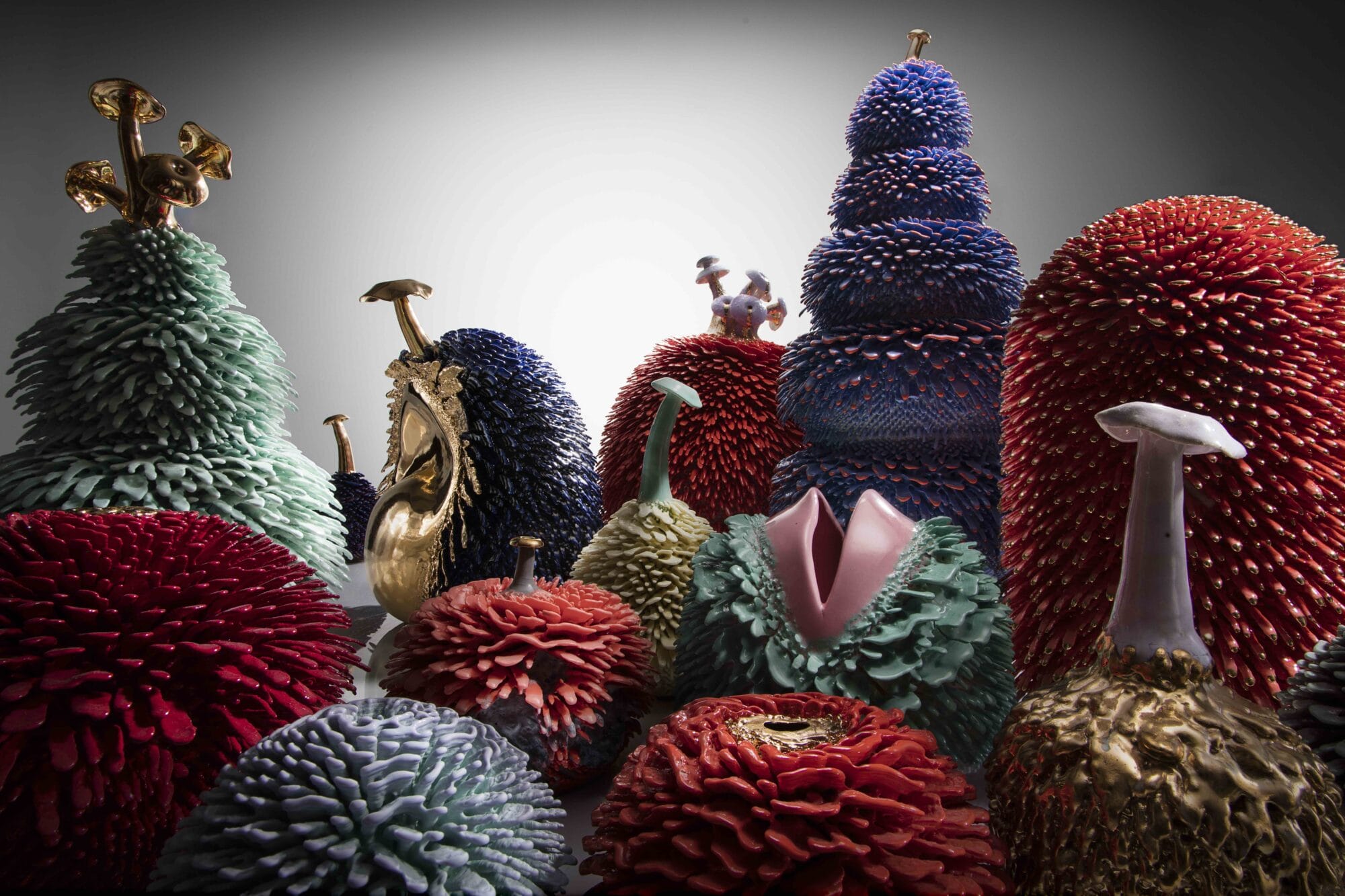
Uncanny Valley supplies the long view. The survey follows the practice from early furniture and creature-like objects through beaded flora, accreted ceramics, digital fabrication, large-scale sculpture and newer painting. It is a useful corrective to the tendency to encounter the Haas Brothers one spectacular object at a time. A furry Beast or an improbably sensual stool is memorable in isolation; a museum survey reveals the underlying repetition, mutation and rule-making that bind the works together.
Mathemagical then shows where those systems have led. The new paintings begin with recognisable, almost nostalgic landscapes before being transformed by a procedure derived from reaction-diffusion equations — mathematical models that can describe the emergence of natural patterns. Paint is thickened with a custom acrylic medium developed with Golden Artist Colors and applied according to predetermined rules. The result is not a mechanical image. It is a surface that feels as if it has grown.
This distinction matters. The Haas Brothers are not using mathematics to drain subjectivity from art; they use systems to create conditions in which surprise can occur. Order becomes a way of producing exuberance.
The Haas Brothers have always understood that delight is an unusually effective way to disarm the viewer. Much contemporary art announces its seriousness before the encounter begins. The Haas universe does the opposite. A viewer may first be seduced by colour, texture, comedy or anthropomorphic suggestion, only to discover that the object is supported by extraordinary technical discipline.
That has occasionally made the work easy to underestimate. Whimsy is still treated suspiciously in parts of the art world, as though pleasure and intellectual ambition must exist in inverse proportion. Uncanny Valley demonstrates how inadequate that assumption has become. The surfaces may be comic, erotic or cute, but the studio’s recurring concerns are rigorous: emergence, natural systems, replication, mutation, embodiment and the unstable boundary between the familiar and the alien.
The title itself points to that instability. The “uncanny valley” describes the discomfort that can occur when a non-human form comes close to looking human without quite arriving there. The Haas Brothers reverse the problem repeatedly. Their creatures are not convincingly human or animal, yet they generate sympathy because personality is engineered into posture, scale, texture and expression. Cuteness becomes a kind of Trojan horse.

The Accretion works are central to understanding how the studio has matured. What began with hand-thrown ceramic forms covered through repeated additions of wet clay developed into a broader method that could migrate into bronze and painting. In each case, a simple starting structure is subjected to repeated action. Complexity arrives through accumulation.
That process mirrors the natural phenomena the brothers reference: coral, fungi, mineral deposits, cellular growth. It also helps explain why their work often looks organic even when its making is highly controlled. A rule is established, but the outcome retains variation. Repetition does not create sameness; it creates difference.
The new bronze Beasts in Mathemagical push this logic further. Wax is built up through a coil-based accretion process to produce a dense, fur-like skin before the object is cast and patinated. The familiar Beast archetype becomes technically more complex and, paradoxically, more sculptural. What once might have been read primarily as mischievous design now holds its own as bronze portraiture from a fictional species.
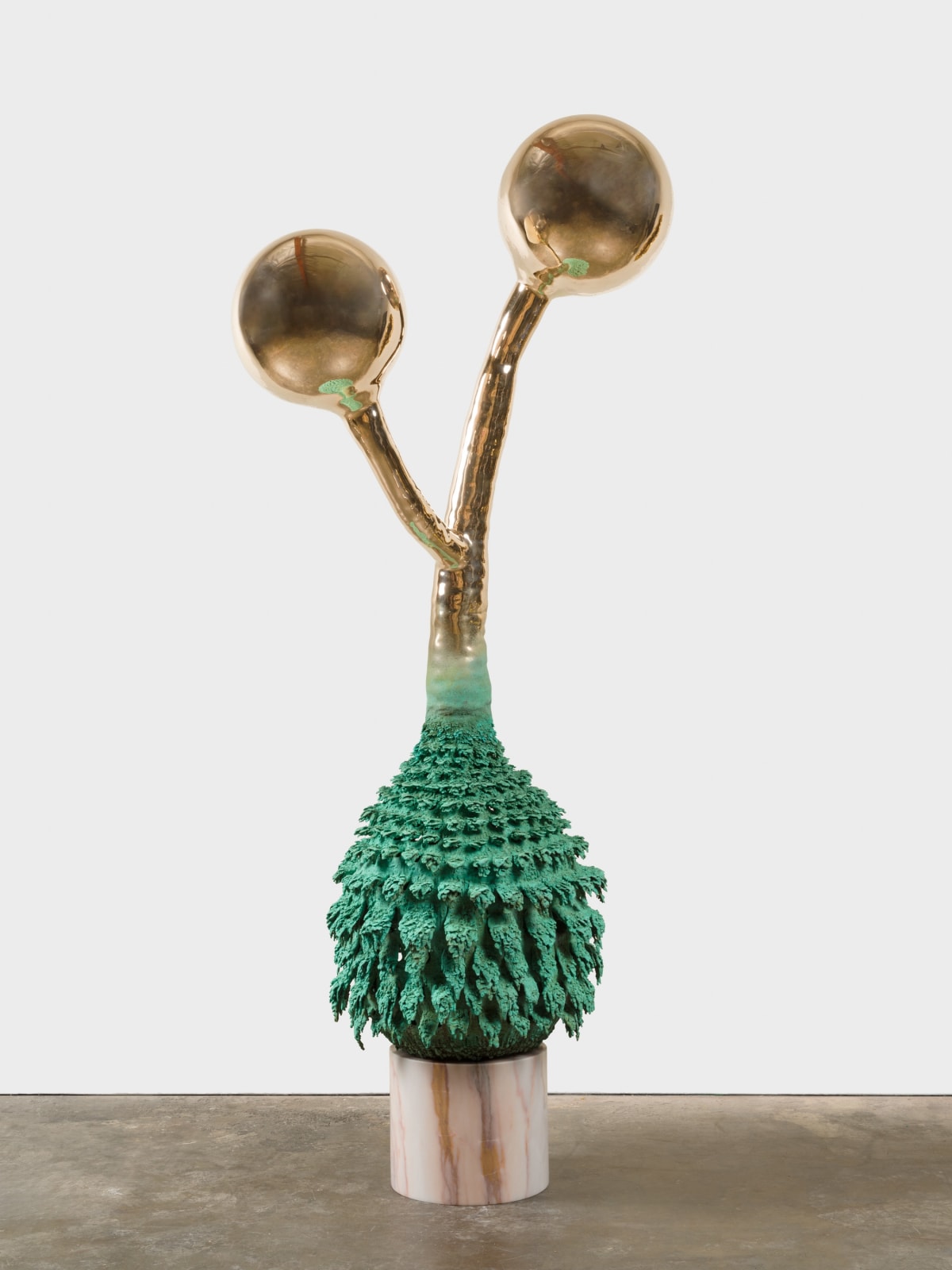
The largest work in Mathemagical, The Peach Tree, is perhaps the clearest summary of the studio’s ambitions. Its carved stone base acknowledges the brothers’ stonemason father and their continuing engagement with stone. A bronze trunk carries the Accretion logic into metal. Venetian glass beads form foliage assembled according to algorithms designed to produce convincing leaves. Illuminated blown-glass peaches complete an object that is simultaneously sculpture, light source, landscape fragment and feat of collective making.
The beadwork was produced with the Haas Sisters of Lost Hills, a group of women from an agricultural community in central California with whom the artists have collaborated for years. That relationship is important because it complicates the myth of the isolated artist. The Haas studio increasingly operates as a network of specialist knowledge: stone, bronze, glass, beadwork, chemistry, computation and hand-making pass through different people before arriving in a single object.
For collectors, that collaborative complexity is part of the work’s significance. It also means documentation matters. Materials, fabrication histories, editions where applicable, care requirements and provenance should be understood with the same seriousness applied to major contemporary sculpture.
One of the most useful things a museum survey can do is reveal when an argument has expired. For years, the Haas Brothers were routinely discussed through the question of whether their work belonged to art or design. The breadth of Uncanny Valley makes that debate feel increasingly beside the point.
A sculptural seat does not cease to be sculpture because a person can sit on it. A ceramic form does not become minor because its technique emerges from a craft tradition. A digitally fabricated object is not less material because software helped determine its structure. The Haas Brothers’ practice is strongest precisely where those inherited hierarchies begin to dissolve.
This is also why the work has become increasingly relevant to collectors whose homes no longer resemble conventional galleries. The most interesting contemporary interiors now accommodate collectible design, sculpture, ceramics, historic furniture and painting without demanding a strict hierarchy between them. Haas works thrive in that environment because they can reorganise a room rather than merely occupy a wall.
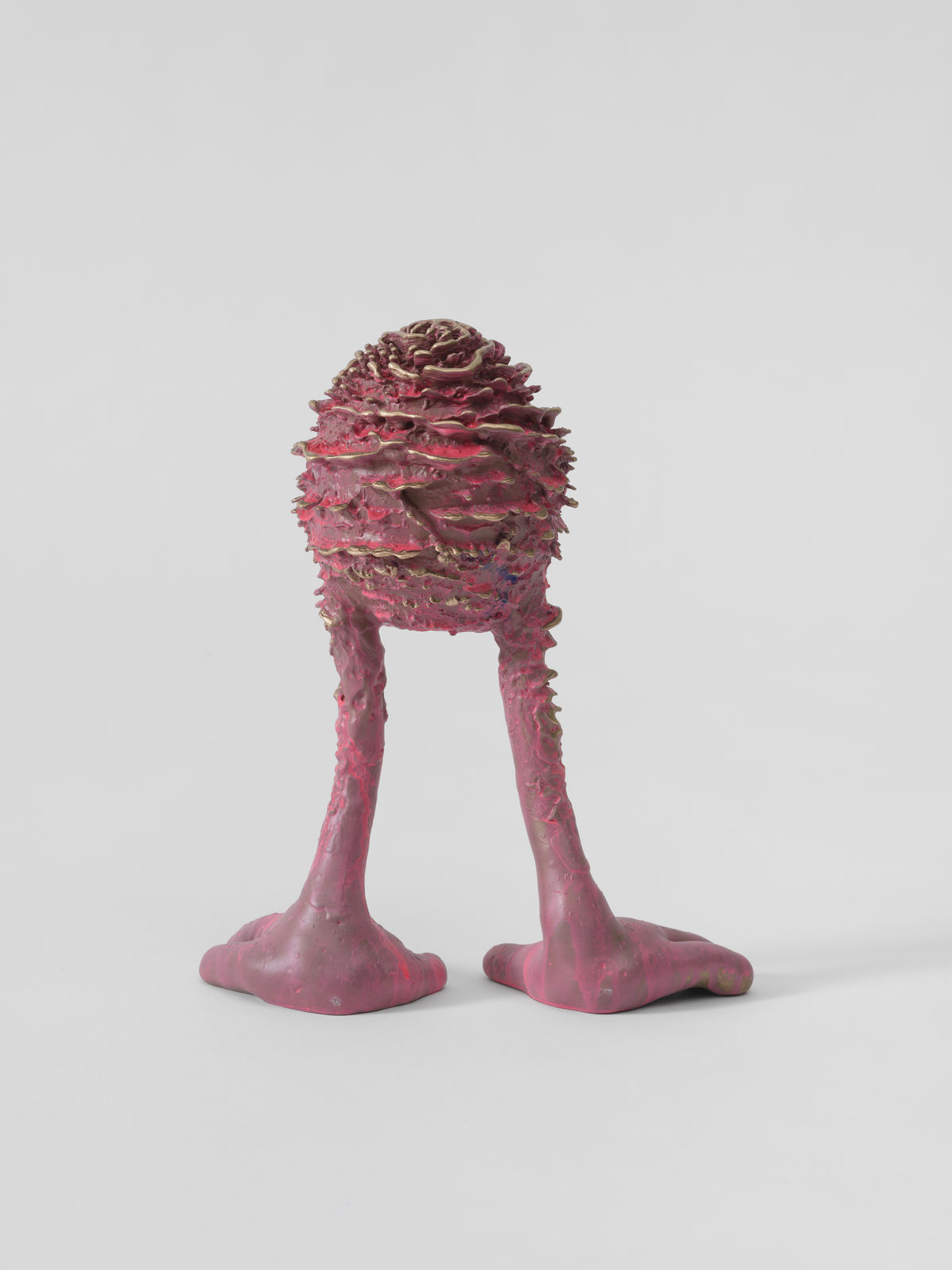
The expanding range of Haas Brothers work makes discernment more important, not less. Collectors should resist buying only the punchline. The strongest works tend to reveal a productive relationship between concept, process and material — a form in which the technical solution feels inseparable from the personality of the object.
In ceramics, surface quality and the logic of accretion deserve close attention. In bronze, patina and casting quality are crucial. In beaded works, scale, complexity and the relationship between the underlying armature and the bead structure can radically alter presence. In newer paintings, the interest lies in how rule-based application transforms an initially legible scene into something materially and visually unstable.
Context also matters. With a travelling mid-career survey now establishing an institutional overview of the practice, works connected to key bodies of work can be judged against a clearer historical framework. This is not a reason to collect by museum validation alone; it is a reason to understand where an object sits within a rapidly clarifying career.
The achievement of these two exhibitions is that they allow the Haas Brothers to become more serious without becoming more solemn. That distinction is worth protecting. The humour remains, as do the bodies, the puns, the improbable creatures and the unapologetic pleasure in beautiful materials. What has changed is the scale of the argument around them.
Mathemagical shows artists still testing their own procedures rather than repeating successful signatures. Uncanny Valley demonstrates that those signatures were never isolated eccentricities in the first place. Across fifteen years, the brothers have built an ecosystem governed by recurring rules, mutations and emotional cues.
The result is a practice that is more disciplined than its exuberance initially suggests and more generous than much work that announces its intellectual ambition more loudly. The Haas Brothers have not escaped the categories of art, craft and design by choosing one over the others. They have built a world in which the categories can coexist — and then invited collectors to live inside it.
Haas Brothers: Mathemagical is at Boesky Gallery, New York, 10 September–17 October 2026. Haas Brothers: Uncanny Valley opens at the Blanton Museum of Art, Austin, on 27 September 2026 and runs through 17 January 2027.
With light, sound, fruit and kinetic systems, Yuko Mohri makes the Barbican’s Curve into an argument for attending to what does not quite work as expected.

A new contemporary art centre has opened on Renault’s historic Île Seguin site. Cecilia Alemani’s Moteur Imaginaire turns the factory, car and machine into a century-spanning argument about modern life.
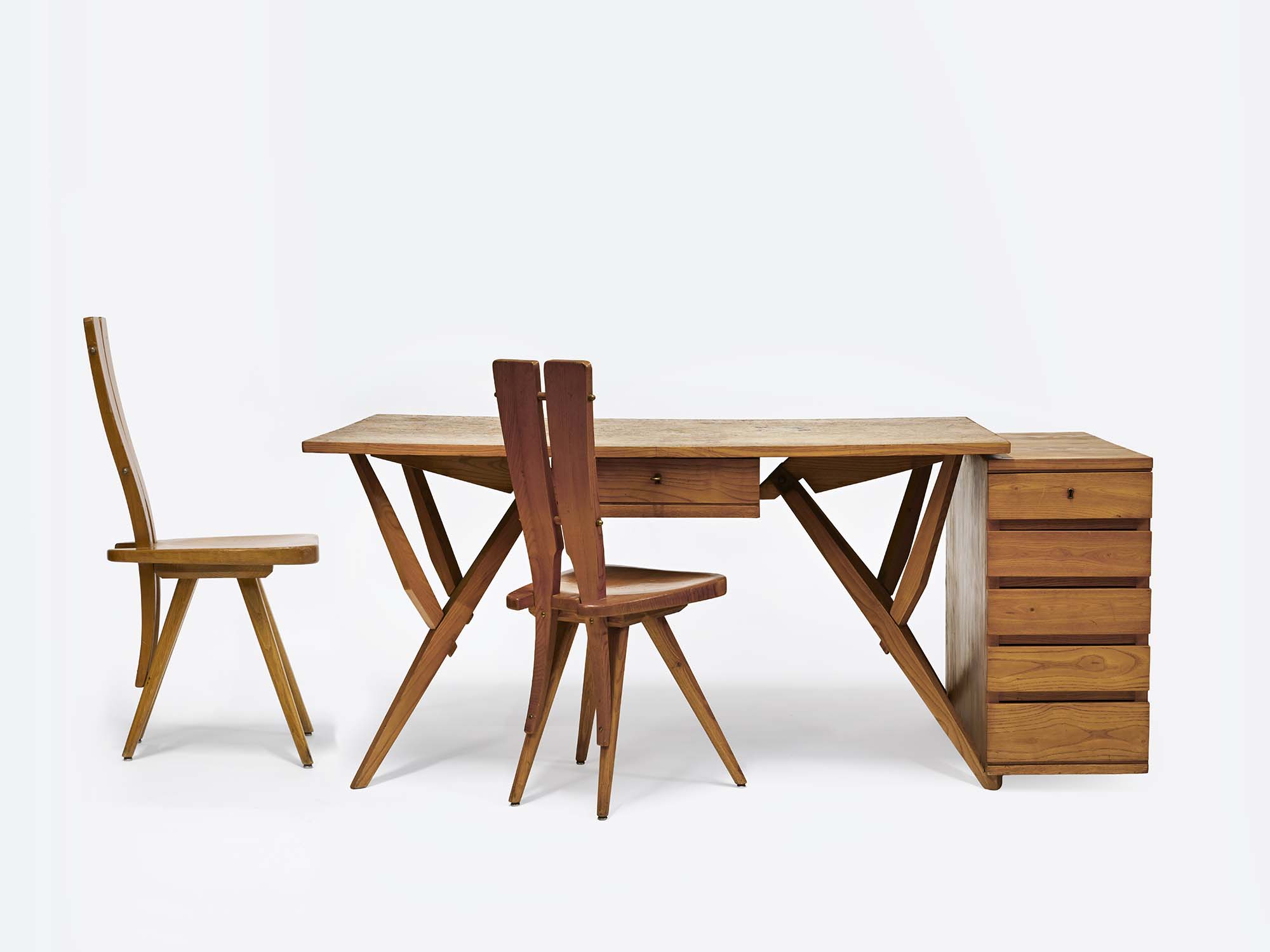
From Carlo Mollino and Faye Toogood to Misha Kahn and Gallery FUMI, PAD London 2026 showed what discerning art collectors can learn from sculptural furniture and material experimentation.