
November 16, 2026
Articles
Articles
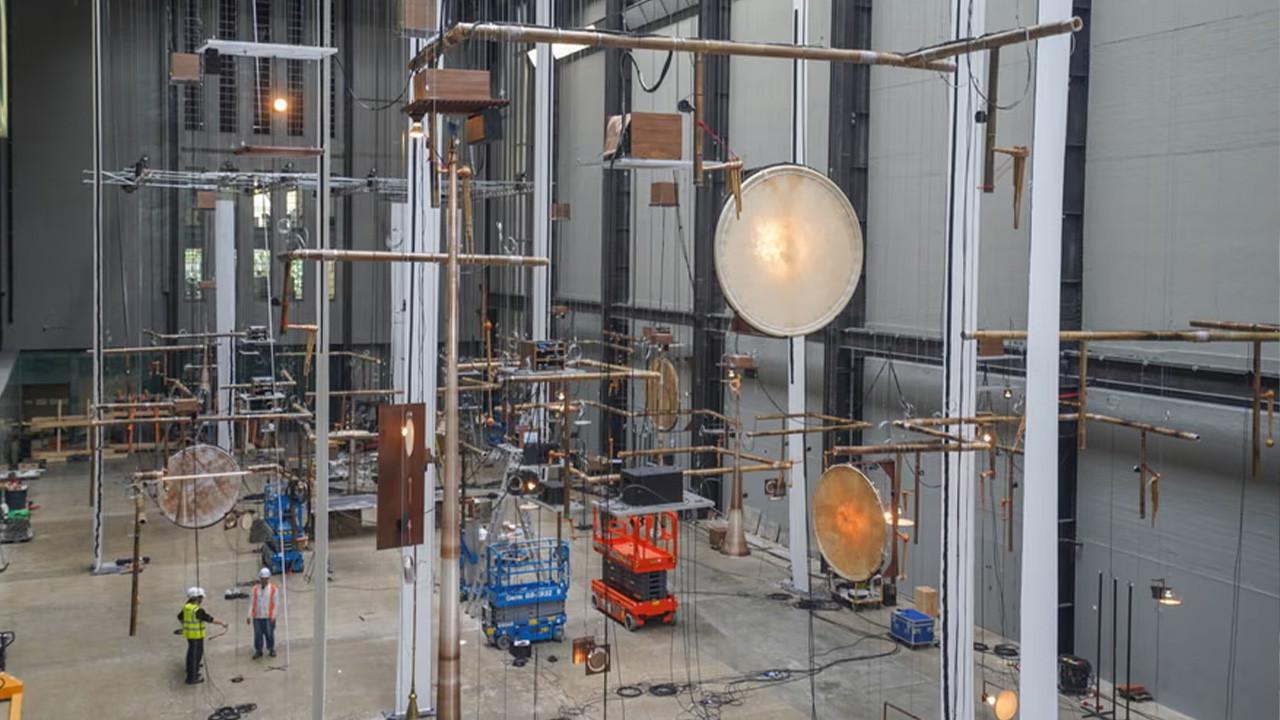
An installation of shengs, horns, drums, wind, software and vibrating stones redefines the museum as a place to listen with the entire body.
A closer look at Arturo Kameya’s new paintings at GRIMM New York and the material language of memory, myth and everyday Peru.

ARTCOLLECTORNEWS | Gallery Watch | November 2026
A society rarely tells its story through official records alone. It also remembers itself through football shirts, domestic interiors, advertising, schoolyard talk, inherited expressions and the small objects that survive a change of government or a family move. Arturo Kameya has made an unusual artistic language out of those unofficial archives. In Clavo torcido no teme martillo / A bent nail fears no hammer, opening at GRIMM in New York, his paintings explore the places where private memory and collective history refuse to stay separate.
The gallery frames Kameya’s new exhibition through the sociopolitical narratives of Peru, particularly the impressions left by growing up in suburban Lima during the 1990s. That period is part of a longer and contested national history, but the artist’s practice is not an illustrated textbook. What interests him is how experience becomes an image, and how an image can become a shorthand for an entire set of assumptions. Popular motifs do not necessarily explain an event; they may instead show what people remember when an explanation has failed them.
This approach is important in an art world sometimes tempted to ask painters from outside the traditional Western centres to deliver a legible national identity. Kameya’s work does something less comfortable. It treats identity as inconsistent, assembled and often humorous. A familiar reference can be meaningful and ridiculous at once; an apparently private recollection can carry the pressure of institutional politics. The paintings resist the neatness of the cultural summary, inviting the viewer to look for relations among fragments rather than for a single encoded message.
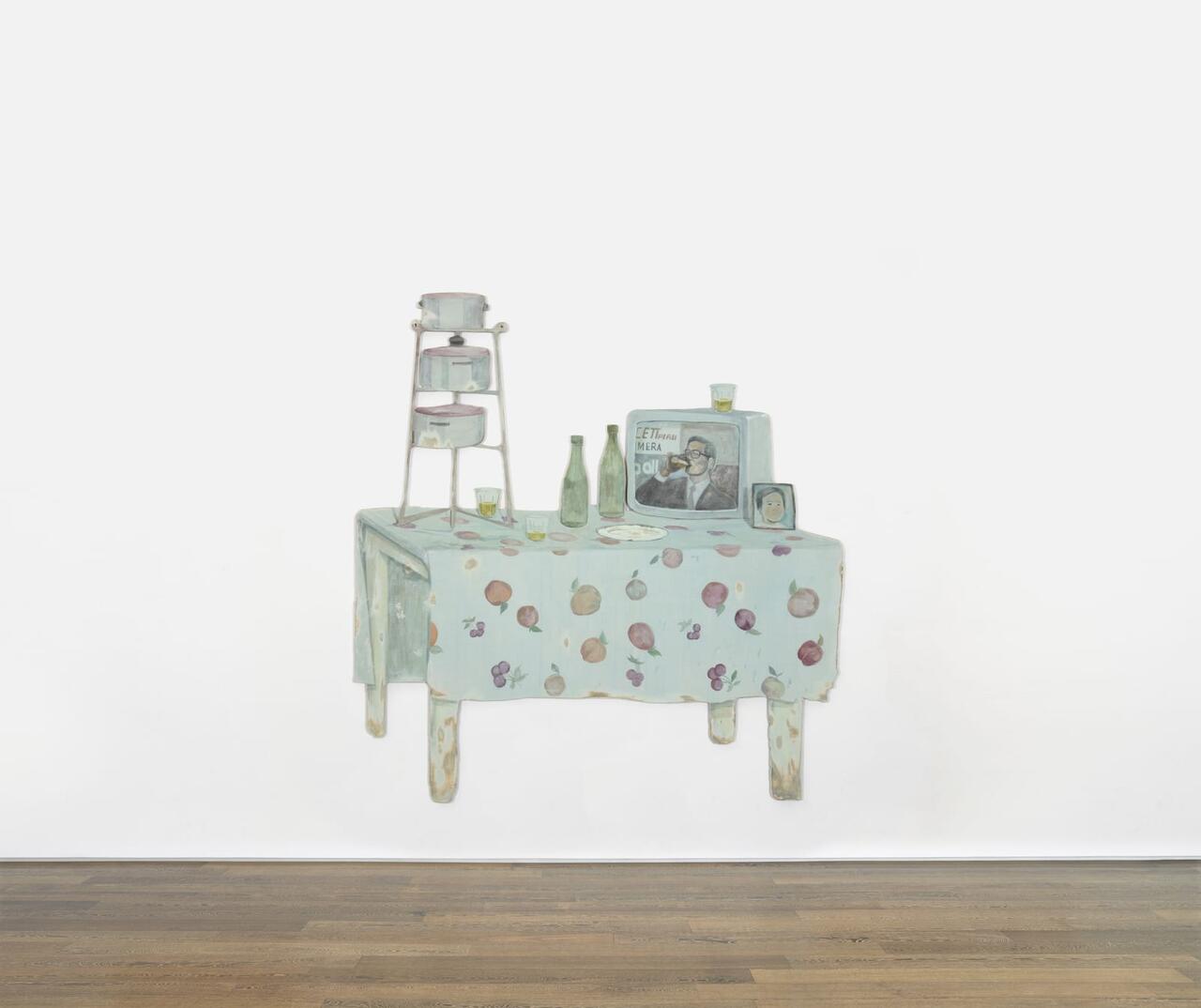
The exhibition’s Spanish title, Clavo torcido no teme martillo, is rendered by the gallery as A bent nail fears no hammer. The phrase is striking because it turns a familiar instrument of discipline into an oddly fragile threat. A bent nail has already failed to remain straight; the force intended to reshape it may no longer work in quite the expected way. As a title, it suggests the difficulty of forcing individual or collective experience into one acceptable form.
It would be simplistic to assign this proverb a single political meaning and then search the works for illustrations. Its power lies in its openness. Does the nail represent resistance, damage, adaptation or the stubborn persistence of a life that will not conform? Each possibility changes the emotional register of the exhibition. The phrase gives Kameya room to consider how people respond to the demands of society without turning painting into a declaration of uncomplicated heroism.

The imagery Kameya draws on includes sport, football, folk traditions and internet culture. These registers might appear to belong to different historical moments, but in lived experience they continually overlap. A childhood memory may be reshaped by an image discovered years later; a piece of popular culture may make a political era suddenly vivid; an ordinary room may be recalled less accurately than the feeling it contained. Kameya treats that instability not as a problem to be corrected but as the working condition of memory.
This is why his pictures can seem both specific and uncertain. The viewer senses that the artist is working with a recognisable world, yet individual details are not obliged to resolve into a documentary record. Such painting asks for a different kind of critical attention: not the speed of identifying a reference, but the patience of recognising how references are edited and rearranged. The most rewarding encounter may come when an apparently marginal object shifts the meaning of the entire image.

Kameya’s broader practice moves among painting, installation and other media, and he has been especially interested in the texture of environments. In earlier work, muted colours and layered materials have given his images the quality of interiors recalled at some remove. Rather than making a convincing illusion of an untouched reality, these surfaces seem to acknowledge that remembering is a material procedure: selection, abrasion, reconstruction and the occasional disappearance of a detail.
That quality matters to the new paintings at GRIMM. Their subject is not only what an image depicts but the way images acquire authority. A surface that appears incomplete may leave the viewer uncertain whether something is missing or whether the incompletion is the most accurate account possible. Painting becomes an analogue to memory itself: capable of extraordinary precision in one area and resistant to explanation in another. It is a persuasive answer to the assumption that political content must be delivered through visually didactic means.

There is a danger in turning an artist’s biography into a master key, especially when the work engages with political experience. Kameya’s connection to Lima is important, and the gallery makes it central to the current exhibition, but it does not follow that every detail must be read as a direct confession. A painting can connect remembered reality with invented circumstances, hearsay or the structure of a joke. In that mixture, individual memory becomes a place where larger forms of power can be encountered without always being named.
The result can have a more enduring effect than a topical statement. A visitor unfamiliar with Peru may not recognise every cultural reference, yet the mechanisms of authority and nostalgia remain accessible. Societies everywhere invest emotionally in stories about where they came from, who belongs and what deserves to be preserved. Kameya’s images make room for doubt around those narratives while retaining the sensory pleasures that make them persuasive in the first place.

The New York exhibition at GRIMM runs from 6 November 2026 to 9 January 2027. The gallery’s international programme offers the artist an audience with varied levels of familiarity with Peruvian culture, and that is a potentially productive test for the paintings. They should not be judged solely by how easily a visitor can decode local references. The question is whether they sustain attention once the initial satisfaction of recognition has passed.
This is also one reason to resist describing such exhibitions as simply representational. The relationship between image and meaning is unstable; the paintings may be more concerned with the construction of a social viewpoint than with the accurate description of its contents. That complexity becomes apparent through a slow visit, moving between works and noticing how familiar motifs return in changed contexts. Individual paintings may open out onto a larger argument, yet each must still function as a convincing visual experience.

For collectors considering an artist whose work crosses national, autobiographical and material registers, provenance is necessary but not sufficient. It matters to understand the evolution of the practice, the context of an individual exhibition and whether a particular work exemplifies a lasting preoccupation or a one-off experiment. Kameya’s movement among installation, painting and assemblage also makes questions of medium, conservation and presentation unusually relevant. The artwork’s physical character should not be treated as incidental to its conceptual argument.
There is another responsibility in collecting work concerned with specific cultural histories: to resist flattening it into an exotic signifier. A strong collection allows artworks to remain complex and internally contradictory. The most rewarding acquisitions often become more interesting with research and time, as the viewer discovers references that were not immediately apparent. In this sense Kameya’s work offers the opposite of a quick souvenir of a place: an encounter that keeps asking how any place is remembered.
The exhibition is a compelling subject for an international art readership because it does not require a simple opposition between local specificity and wider relevance. The most particular images can expose shared habits of remembering, and a strange proverb can become an unexpectedly exact way of describing power. Kameya’s achievement lies in making those relations visible while allowing humour, ambivalence and visual pleasure to survive.
For galleries, this is the value of a focused artist presentation over a broad list of names: the time to demonstrate what a practice actually does. For viewers, it is an invitation to ask more than whether a picture looks familiar. Clavo torcido no teme martillo is at GRIMM, 54 White Street, New York, from 6 November 2026 to 9 January 2027. It deserves attention not because it promises a comprehensive portrait of Peru, but because it refuses the idea that such a portrait could ever be complete.
An installation of shengs, horns, drums, wind, software and vibrating stones redefines the museum as a place to listen with the entire body.
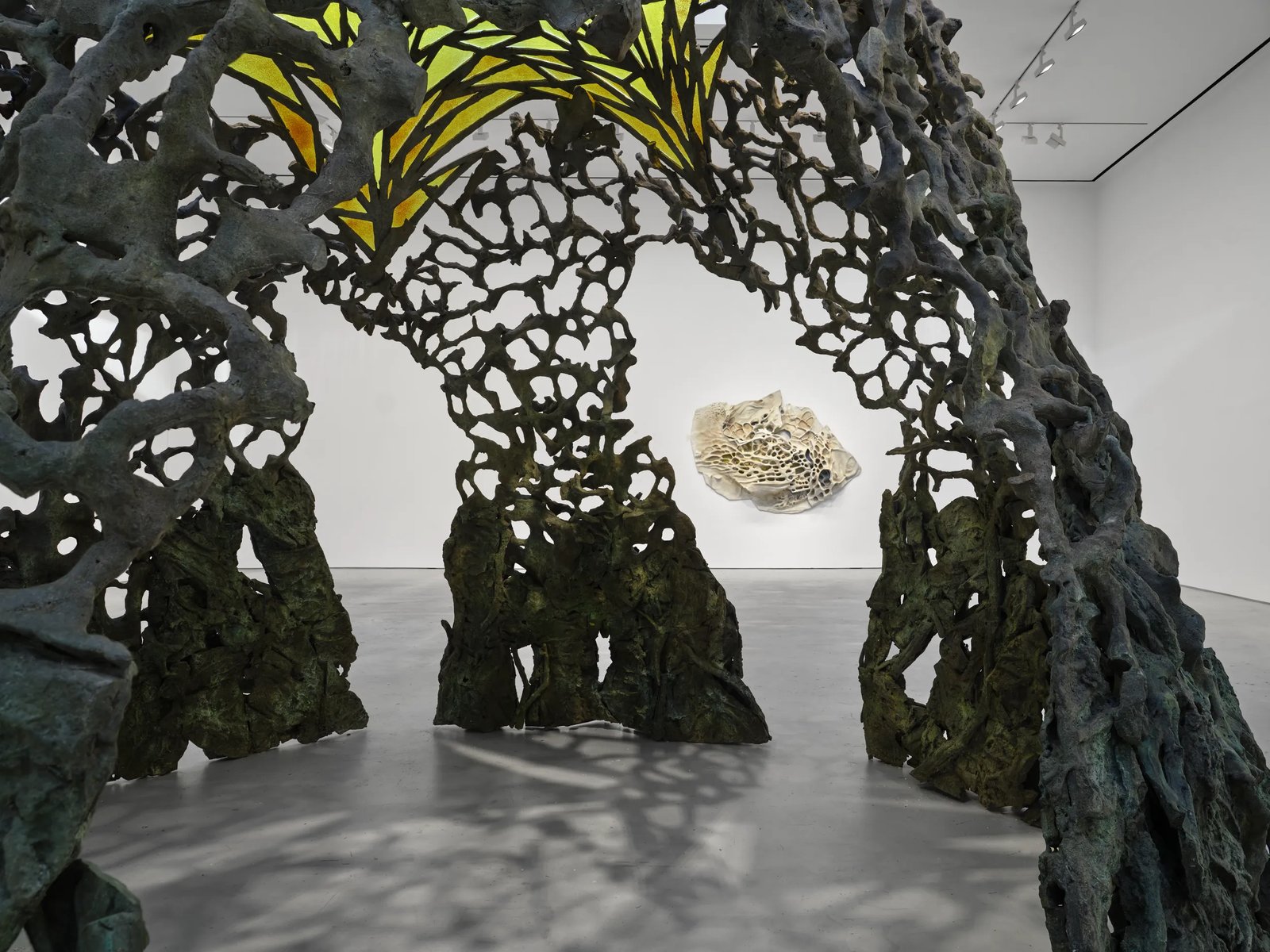
Cristina Iglesias’s new Dome and four 2026 wall sculptures transform Hauser & Wirth New York into a terrain of roots, erosion, geometry and changing light.

A current, verified route to Abu Dhabi’s exhibitions outside Frieze: new works at 421, Louvre Abu Dhabi and Cultural Foundation, with the art behind each show.
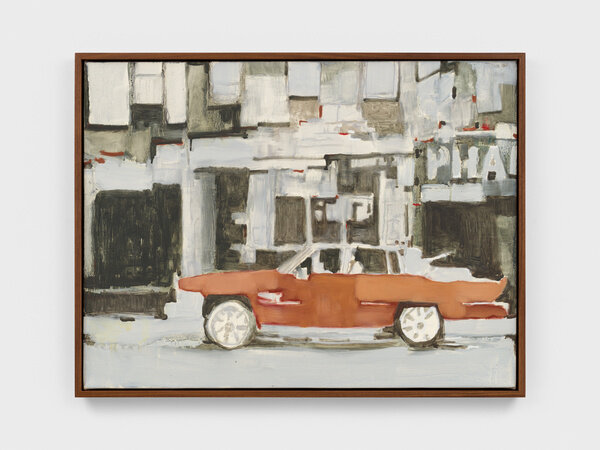
There is an unusual kind of uncertainty in Donyel Ivy-Royal’s paintings. A house can be unmistakably a house, and yet the air around it seems to carry several different moments at once. A wall may register as architecture, weathered paint, a partly erased sign or the memory of a place passed every day. The image remains recognisable without settling into description. This quality is at the centre of By the time the rain comes, we will be home, the Brooklyn-based artist’s first solo exhibition with Jack Shainman Gallery, opening in…