
October 24, 2026
Exhibitions
Exhibitions
With light, sound, fruit and kinetic systems, Yuko Mohri makes the Barbican’s Curve into an argument for attending to what does not quite work as expected.
Alix Vernet sees the backs of New York air conditioners as archives: fragile aluminum surfaces that record weather, maintenance, touch and heat exchange. LANDMARKS turns overlooked infrastructure into some of the city’s strangest new monuments.
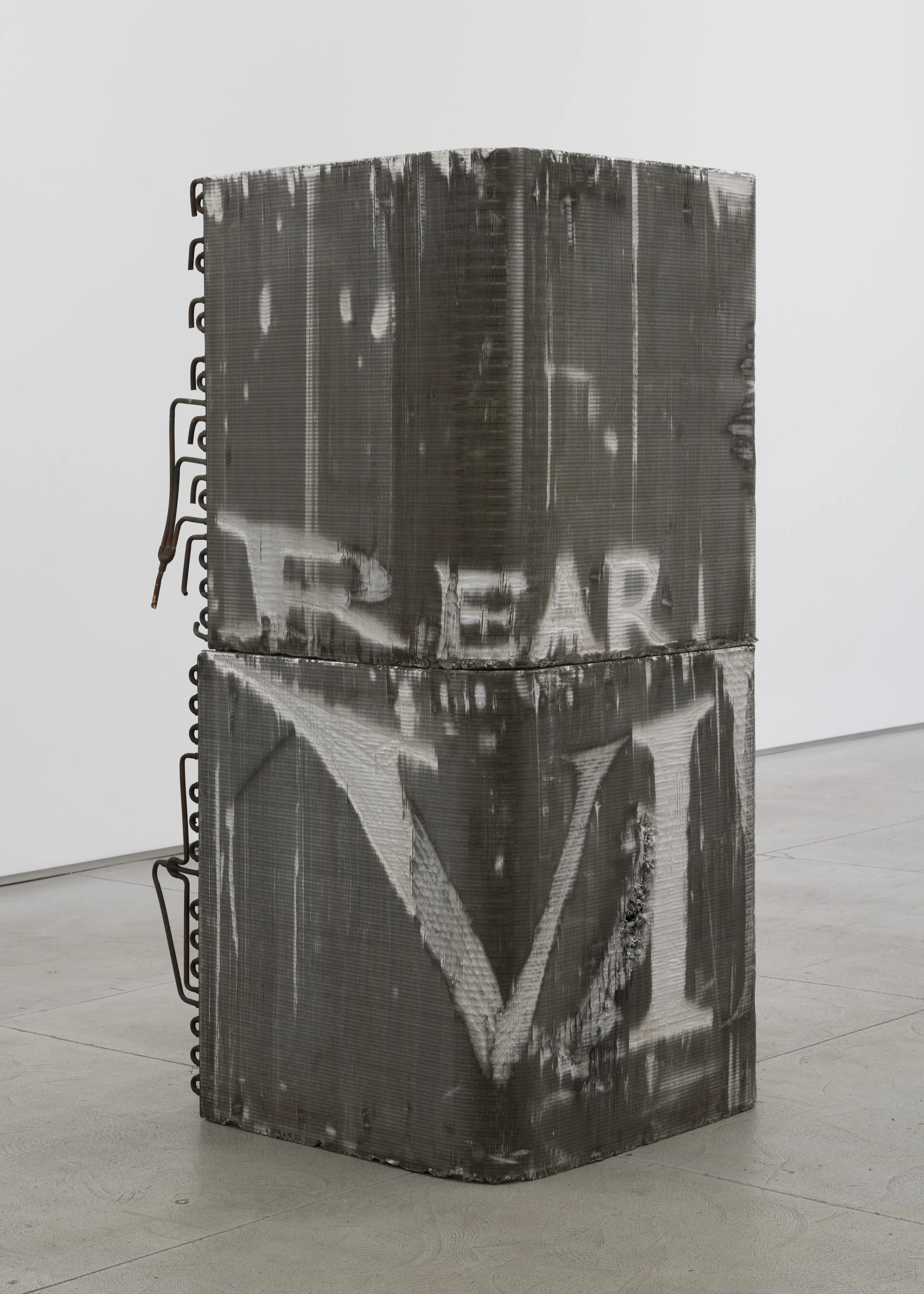
The back of a New York air conditioner is a remarkably intimate piece of public architecture. It belongs to a private interior but projects into the street. It regulates one room by exchanging heat with everybody else’s air. Dust, rain, grease, fingerprints and maintenance collect on a surface the owner rarely sees and pedestrians almost never consider.
Alix Vernet has spent years working on fire escapes, casting façades and letterforms across New York. The backs of air conditioners kept interrupting the view. In LANDMARKS, her first solo exhibition at Chapter NY, those neglected condenser coils become the exhibition’s central material: freestanding columns and wall reliefs that resemble damaged monuments from an industrial civilisation still very much in use.

Vernet’s premise works because the condenser already contains contradictory scales. Its thin aluminum fins are fragile enough to bend under a fingertip, yet the unit participates in an enormous urban system of climate control. Stacked behind buildings and across façades, these machines form a visual infrastructure that is everywhere precisely because nobody is supposed to look at it.
The gallery describes the condensers as contemporary ruins. That does not mean they are obsolete. Their ruined appearance comes from exposure: buckled metal, corrosion, scratches and accumulated dirt. The comparison to a standing stone or civic monument emerges when Vernet separates the component from the machine and gives it vertical space.
Suddenly an object designed to disappear into infrastructure acquires frontal authority.
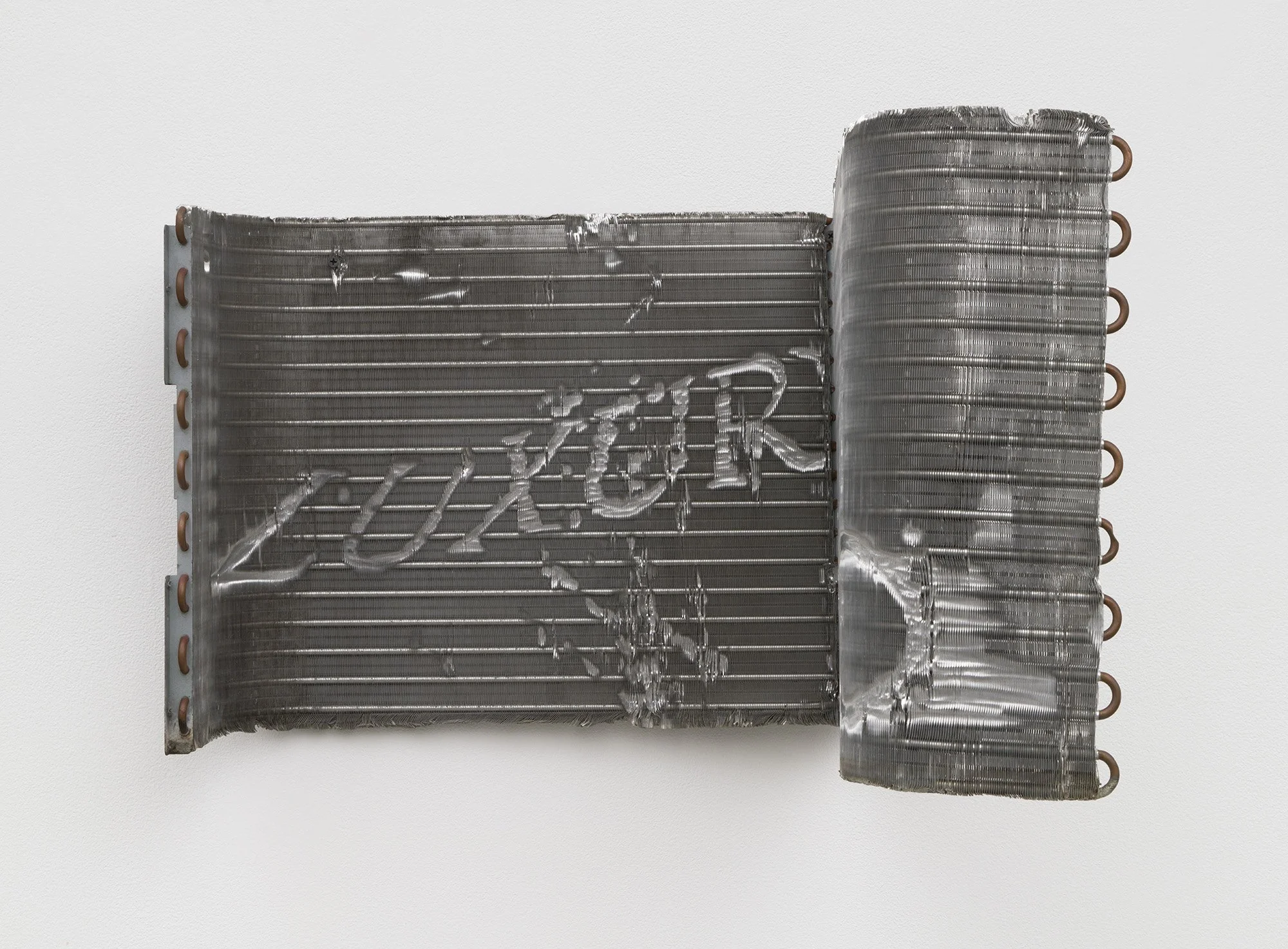
One of the strongest ideas in LANDMARKS is Vernet’s description of the condensers as indexical records—closer to photographs than ordinary readymades. A photograph registers light from an event; these surfaces register contact.
Dust enters the fins. Water produces oxidation. Repairs leave bends. Human hands leave grease and pressure. Graffiti, scratches and accidental impacts accumulate without a single author. The condenser therefore contains a compressed history of environmental and social encounters.
Vernet adds to that record rather than cleaning it away. Custom stencils derived from monuments, public signage and overheard language are pressed and scratched into the metal. Existing damage and deliberate inscription become difficult to separate.
Air conditioning is usually discussed through comfort, architecture or climate policy. Vernet approaches it through the boundary between public and private space. Cooling an interior requires exporting heat outside. The machine literally materialises an exchange between one controlled environment and a shared atmosphere.
That relationship has become more visible as cities confront hotter summers, rising energy demand and the uneven distribution of climate control. Vernet does not turn the sculpture into a policy diagram, but the material already carries those politics. An air conditioner is both domestic appliance and part of a vast energy system.
The condenser’s exposed position is especially revealing. The polished interior device belongs to comfort; the battered exterior component absorbs the consequences.
LANDMARKS develops directly from Vernet’s earlier work with architectural casts. In 2023, a Frieze review described her climbing Saint Marks Place fire escapes to mould surviving tenement ornament, later recombining those fragments with letterforms taken from public memorials and civic architecture.
That practice was already concerned with what gentrification preserves and erases. Decorative lintels on working-class housing became historical evidence; memorial typography was detached from its official location and recomposed into unstable poems.
The condensers extend that archaeology from ornament to infrastructure. Vernet is no longer only asking which historical façades survive. She is asking what contemporary city surfaces are accumulating now.
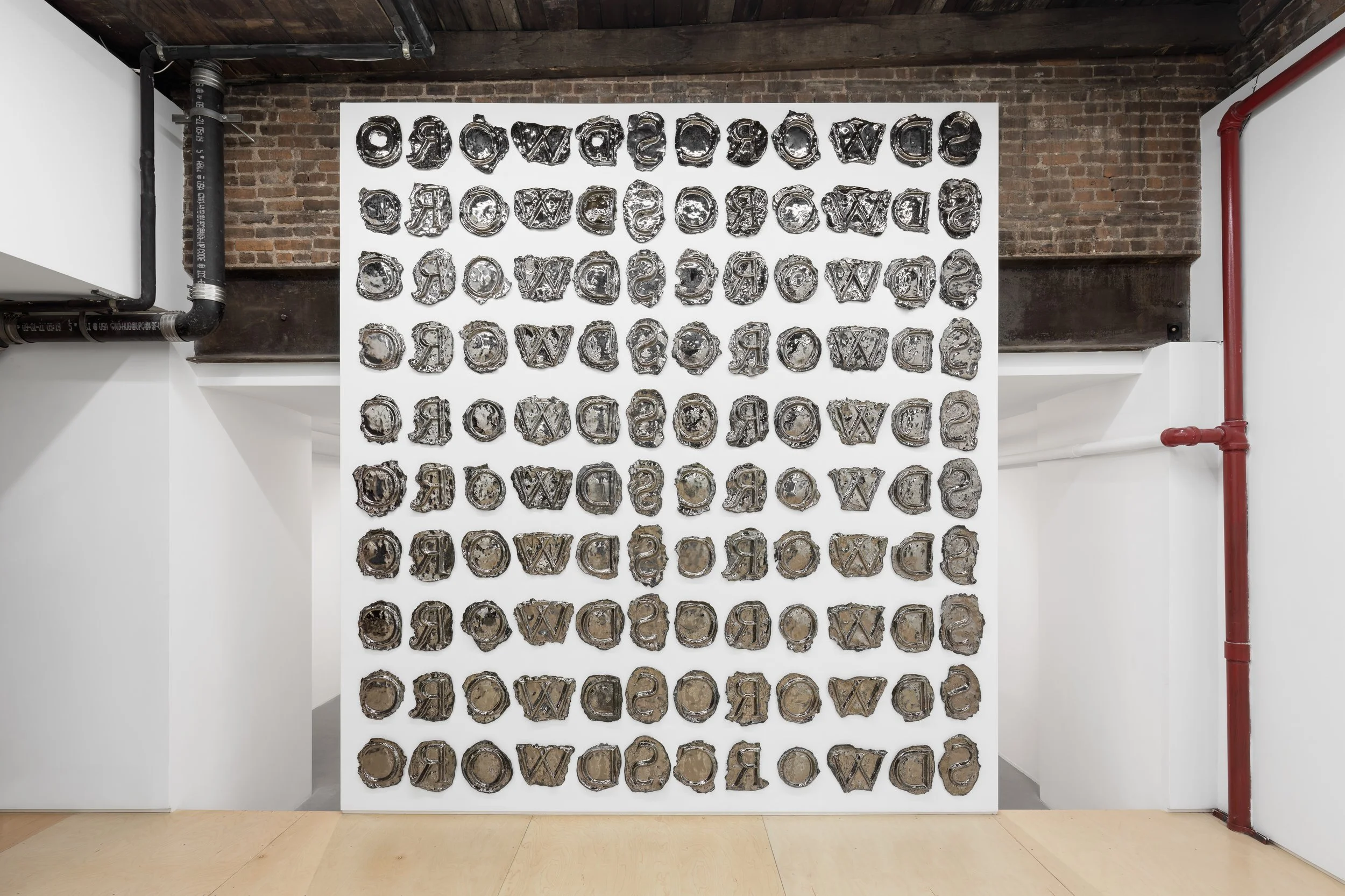
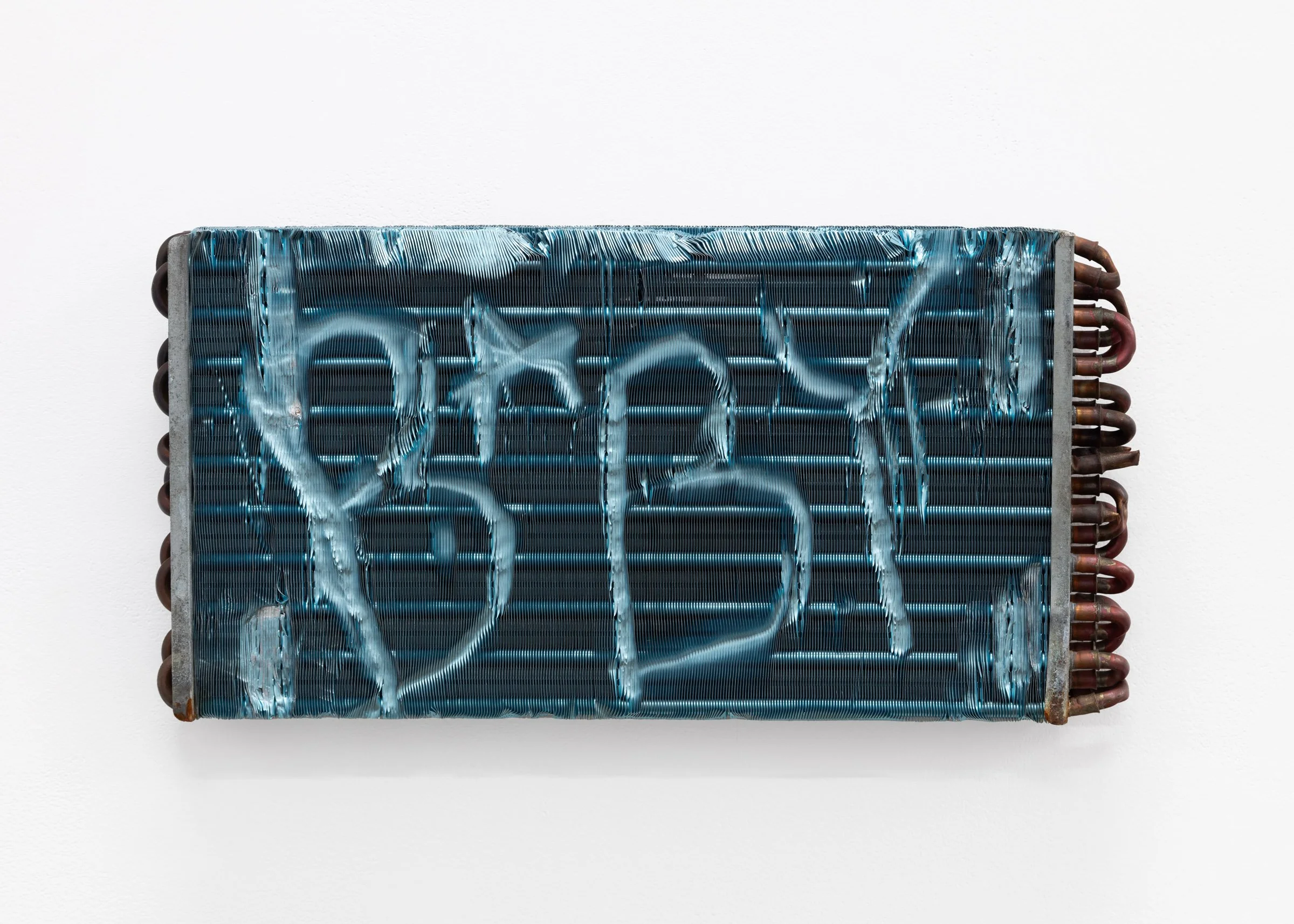
Words recur across Vernet’s work, but they resist the clean legibility of signage. In the new condenser pieces, phrases gathered from conversations, monuments and street encounters dissolve into the mesh of the fins. Language flickers rather than announces itself.
This is crucial because city language is usually directive: stop, exit, no parking, memorial names, advertisements, building numbers. Vernet takes those authoritative forms and makes them vulnerable to material interference.
The city becomes readable only in fragments. That may be more truthful than a coherent map.
Collecting Vernet requires an unusually careful understanding of condition. A bent fin, stain, scratch or oxidised copper tube may be essential historical evidence rather than damage to be restored. The acquisition record should therefore include detailed photography of the work at the point of sale and a written description of intentional versus accidental pre-existing condition.
Aluminum condenser fins are thin and easily deformed. Handling should be planned with the artist or gallery, and cleaning should never be undertaken simply to make the surface look newer. The work’s meaning depends partly on retaining residue and wear.
For freestanding works, confirm approved orientation, supports and minimum clearance. For wall works, retain mounting hardware and diagrams. If text has been pressed or scratched into the fins, photograph it under raking light so future changes can be distinguished from the original state.
The collector should also keep provenance about the source object where available. A condenser removed from a particular New York building carries a different documentary history from anonymous industrial material.
Vernet is at an early point in her career: born in 1997, she completed her Yale MFA in 2026. That makes it tempting to frame the exhibition around market emergence. The work is more interesting if one begins elsewhere.
What LANDMARKS demonstrates is a coherent method moving across several bodies of work: cast, impression, residue, text, architecture and the city as an accumulation of surfaces. The air conditioner is not a novelty object discovered for one clever show. It follows logically from years spent asking how built environments record contact.
That is the reason collectors should pay attention. Not because a young artist has found a photogenic material, but because the material extends an already legible investigation.
Vernet turns an object most New Yorkers try not to see into an archive of the city’s atmosphere. The monument was outside the window all along.
Alix Vernet: LANDMARKS is at Chapter NY, New York, through 17 October 2026.
With light, sound, fruit and kinetic systems, Yuko Mohri makes the Barbican’s Curve into an argument for attending to what does not quite work as expected.

A new contemporary art centre has opened on Renault’s historic Île Seguin site. Cecilia Alemani’s Moteur Imaginaire turns the factory, car and machine into a century-spanning argument about modern life.
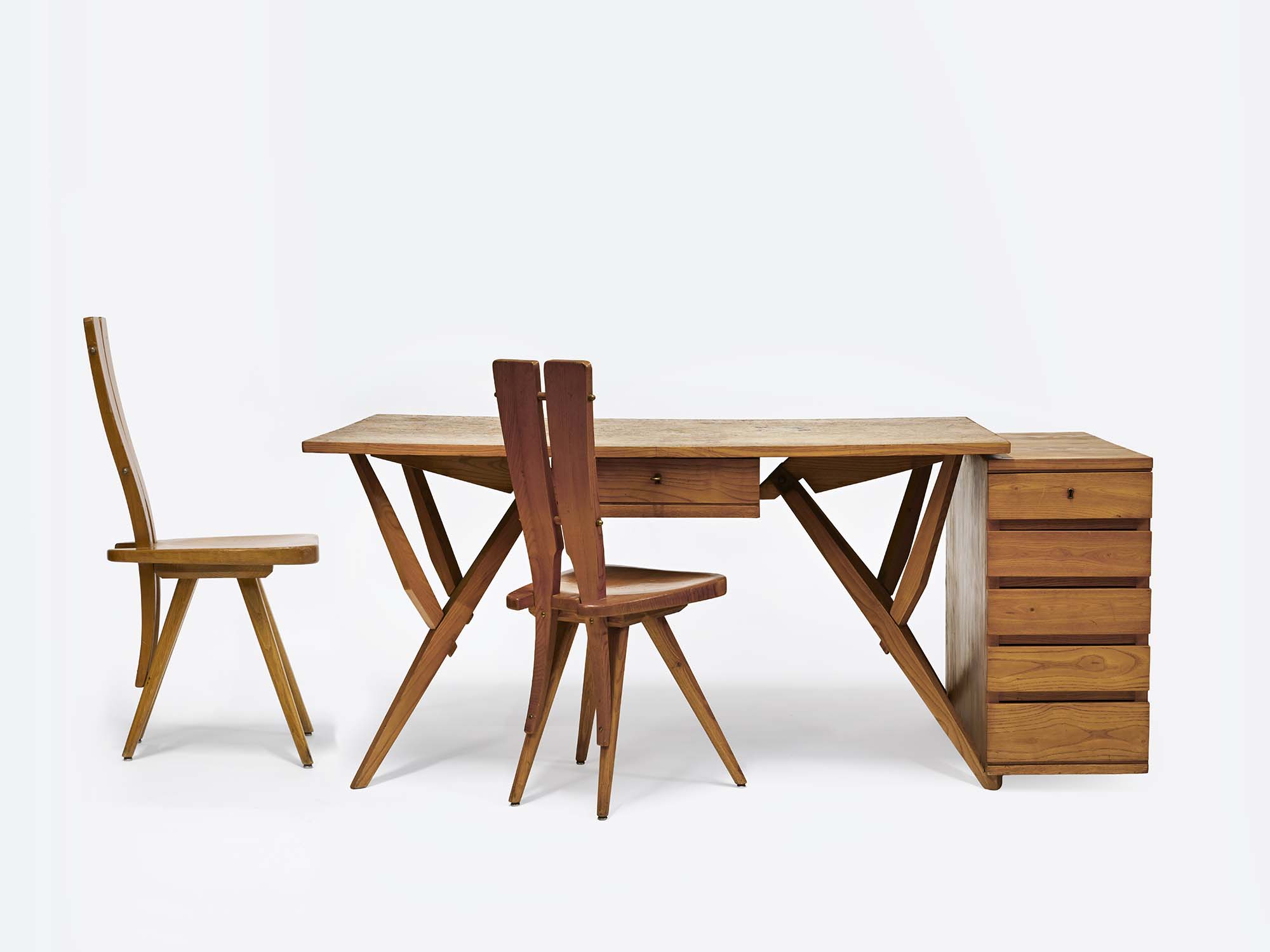
From Carlo Mollino and Faye Toogood to Misha Kahn and Gallery FUMI, PAD London 2026 showed what discerning art collectors can learn from sculptural furniture and material experimentation.