LATEST NEWS:
RARE VAN GOGH PAINTING UNSEEN FOR SIX DECADES HEADS TO AUCTION WITH ESTIMATES REACHING $180 MILLION •  CHRISTIE'S LONDON FRIEZE WEEK SALES SURPASS £218 MILLION, SIGNALING RENEWED CONFIDENCE IN THE TOP END OF THE MARKET • BTS STAR AND ART COLLECTOR RM STEPS INTO THE CURATORIAL SPOTLIGHT WITH SFMOMA EXHIBITION • BRITISH MUSEUM REPORTEDLY SECURES $40 MILLION DONATION AS THE FUTURE OF THE PARTHENON MARBLES RETURNS TO PUBLIC DEBATE • ROY LICHTENSTEIN RETURNS TO THE WHITNEY WITH HIS FIRST MAJOR RETROSPECTIVE IN MORE THAN THREE DECADES • TATE ACQUIRES WORKS BY MICHAELA YEARWOOD-DAN AND LUIS FERNANDO ZAPATA DURING FRIEZE LONDON 2026 • ABU DHABI EXPANDS ITS CULTURAL AMBITIONS AHEAD OF THE INAUGURAL FRIEZE ABU DHABI FAIR • ARTISTS SEEK NEW REPRESENTATION FOLLOWING THE CLOSURE OF STEPHEN FRIEDMAN GALLERY, RAISING QUESTIONS ABOUT THE FUTURE OF THE TRADITIONAL DEALER MODEL • NEW INDEPENDENT ART FAIRS CHALLENGE FRIEZE'S ESTABLISHED FORMAT AS LONDON'S ART WEEK ATTRACTS ALTERNATIVE VOICES • TAREK ATOUI TRANSFORMS TATE MODERN'S TURBINE HALL INTO AN IMMERSIVE EXPLORATION OF SOUND AND SPACE • ROYAL ACADEMY AND LONDON MUSEUMS REVISIT THE LEGACY OF THE 1990S BRITISH ART SCENE
Go Back
Magazine

Agnes Gund: When a Great Collection Becomes a Public Instrument

As Christie’s prepares a new sale benefiting the Gund Art Foundation, Agnes Gund’s collection offers a rare lesson in how buying, giving and selling can form one coherent legacy.

Articles
Articles
Agnes Gund: When a Great Collection Becomes a Public Instrument

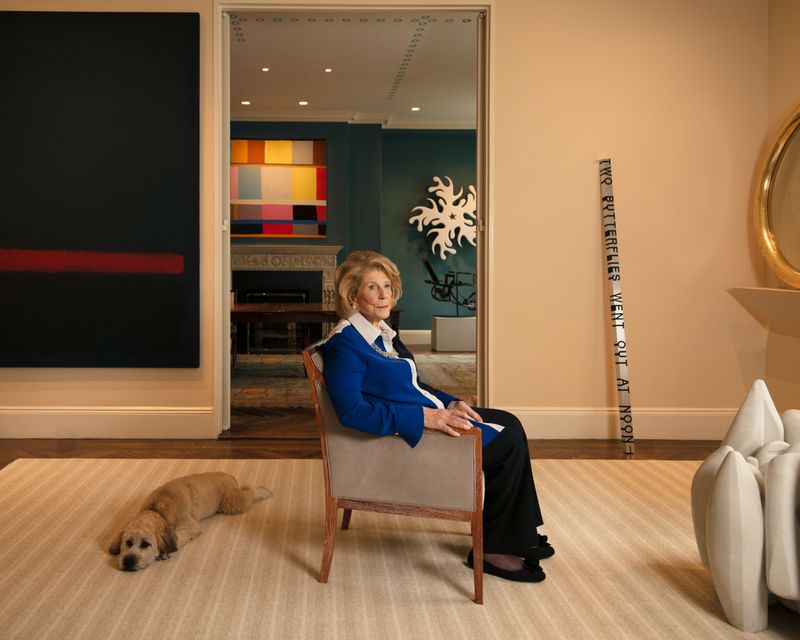
Agnes Gund built one of the most instructive models of collecting in post-war America because she never allowed ownership to become the end of the story. She bought artists early, formed long relationships with them, gave works to museums, funded education, chaired institutions and, when necessary, sold masterpieces so that the value accumulated inside art could be redirected toward society.

This November, Christie’s will offer another substantial group from her collection with proceeds benefiting the Gund Art Foundation. The sale is important as a market event, but it is more important as a collector story: it asks what a collection is ultimately for.

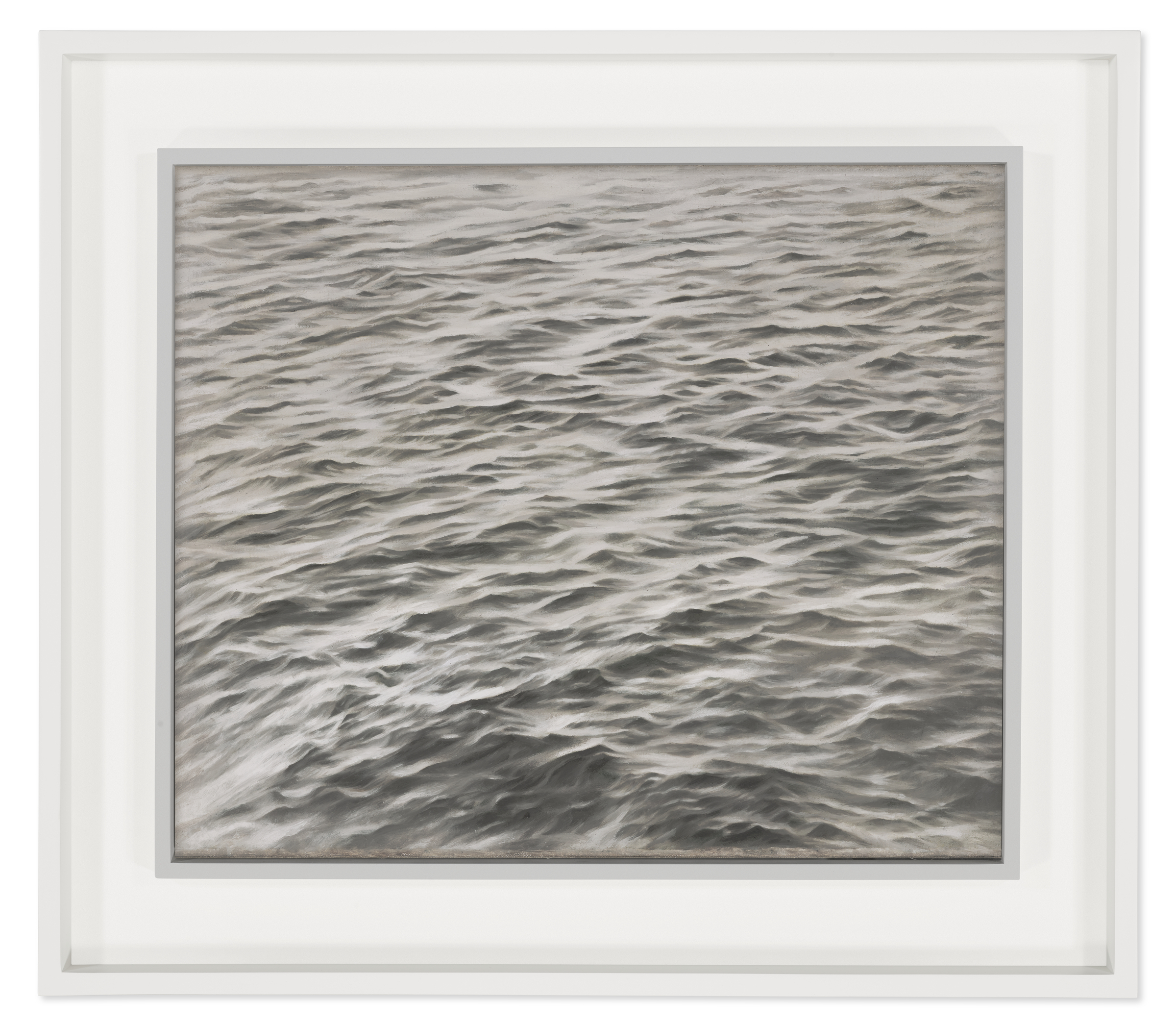
Vija Celmins Untitled Ocean 1990
Vija Celmins, Untitled (Ocean), 1990, from the Agnes Gund collection. Estimated at $6–8 million at Christie’s, it is the market headline of the November group. Courtesy Christie’s.

Collecting by relationship rather than category

Gund’s collection spans the mid-1940s through the late 2010s and includes artists as different as Vija Celmins, Alexander Calder, Ellsworth Kelly, Roy Lichtenstein, Glenn Ligon, Robert Rauschenberg, Robert Ryman, Cindy Sherman, Sarah Sze and Cy Twombly. Christie’s notes that many works were acquired directly from artists, reflecting a collector who built through friendship and sustained engagement rather than simply buying retrospectively from an accepted canon.

That matters because it creates a different kind of collection. The thread is not medium, movement or investment profile. It is attention.

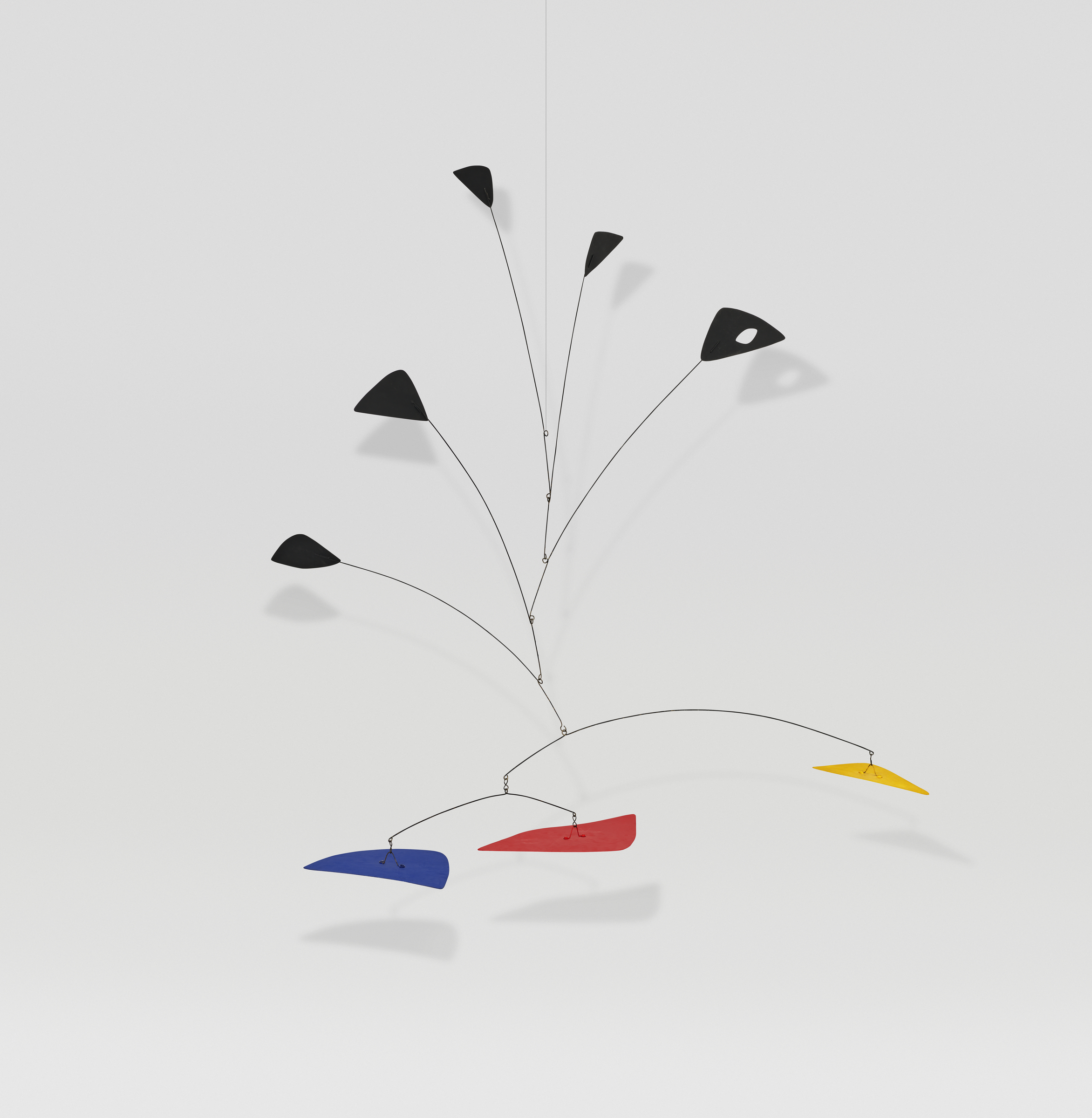
Alexander Calder The Eye in the Black 1963
Alexander Calder, The Eye in the Black, 1963, estimated at $3–5 million. Gund’s collection repeatedly joins major names to works that reflect long personal and institutional relationships. Courtesy Christie’s.

The Celmins is the market headline

The top lot from the November Gund group is Vija Celmins’s Untitled (Ocean) (1990), estimated at $6–8 million in Christie’s 21st Century Evening Sale on 19 November. Gund acquired it from David McKee Gallery in 1991. The picture later appeared in major exhibitions including Celmins’s 2018–20 retrospective at SFMOMA, the Art Gallery of Ontario and the Metropolitan Museum of Art.

Celmins is an ideal artist through whom to understand Gund’s eye. The work is almost aggressively anti-spectacular. Its power lies in attention, repetition and the instability between photographic source and handmade surface. A collector who lived with it for thirty-five years was not collecting visual noise.

Calder, Twombly and Rauschenberg

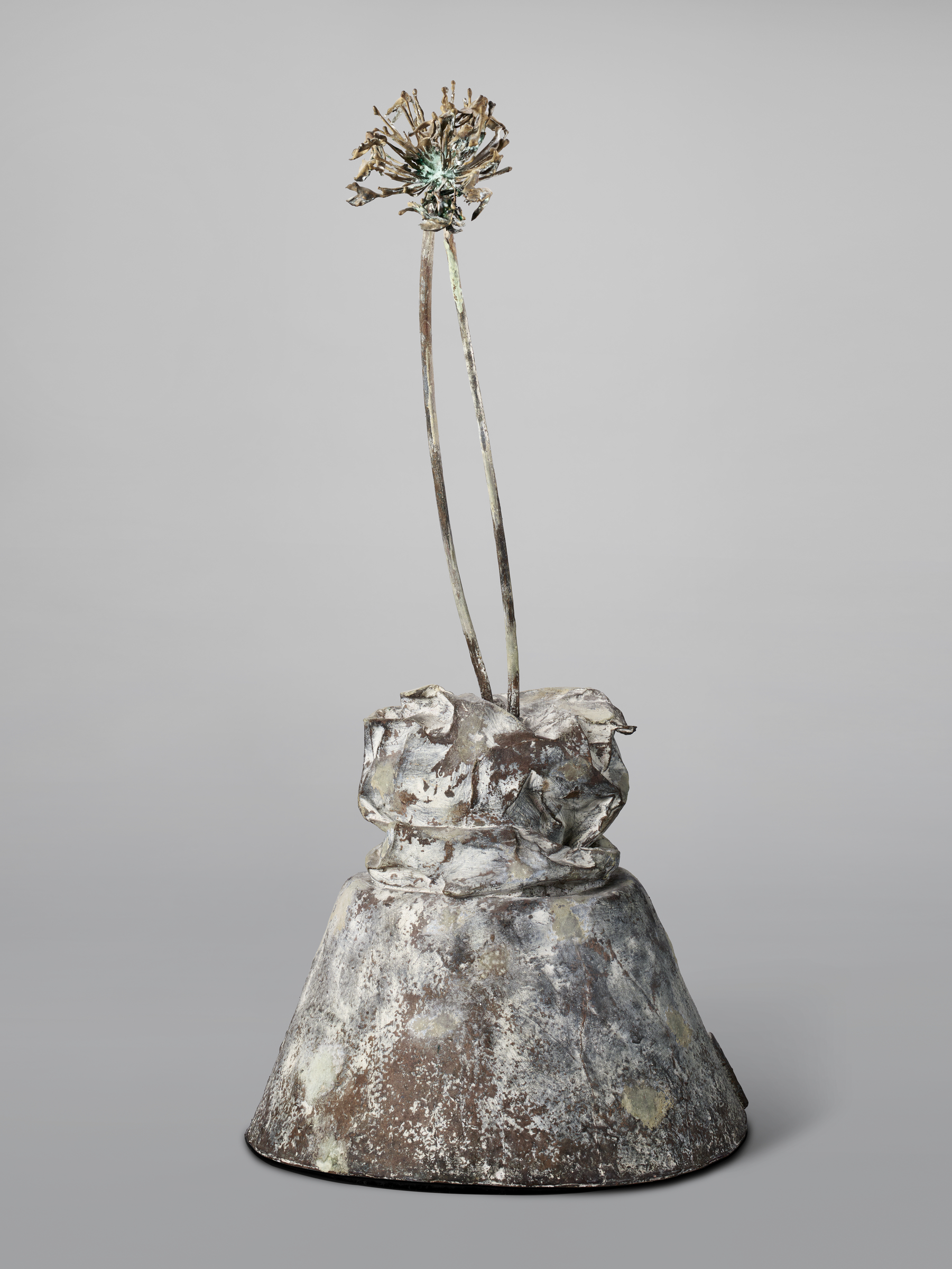
Alexander Calder’s The Eye in the Black (1963) is estimated at $3–5 million. An untitled Cy Twombly bronze from 1997 carries a $2–3 million estimate. Rauschenberg’s tiny Untitled (Gold Painting) from 1953 is estimated at $1–1.5 million. These works are very different in scale, but each reflects Gund’s attraction to artists who expanded the definition of what a painting or sculpture could be.

Cy Twombly Untitled bronze 1997
Cy Twombly, Untitled, 1997, bronze, estimated at $2–3 million in the Gund sale. Courtesy Christie’s.
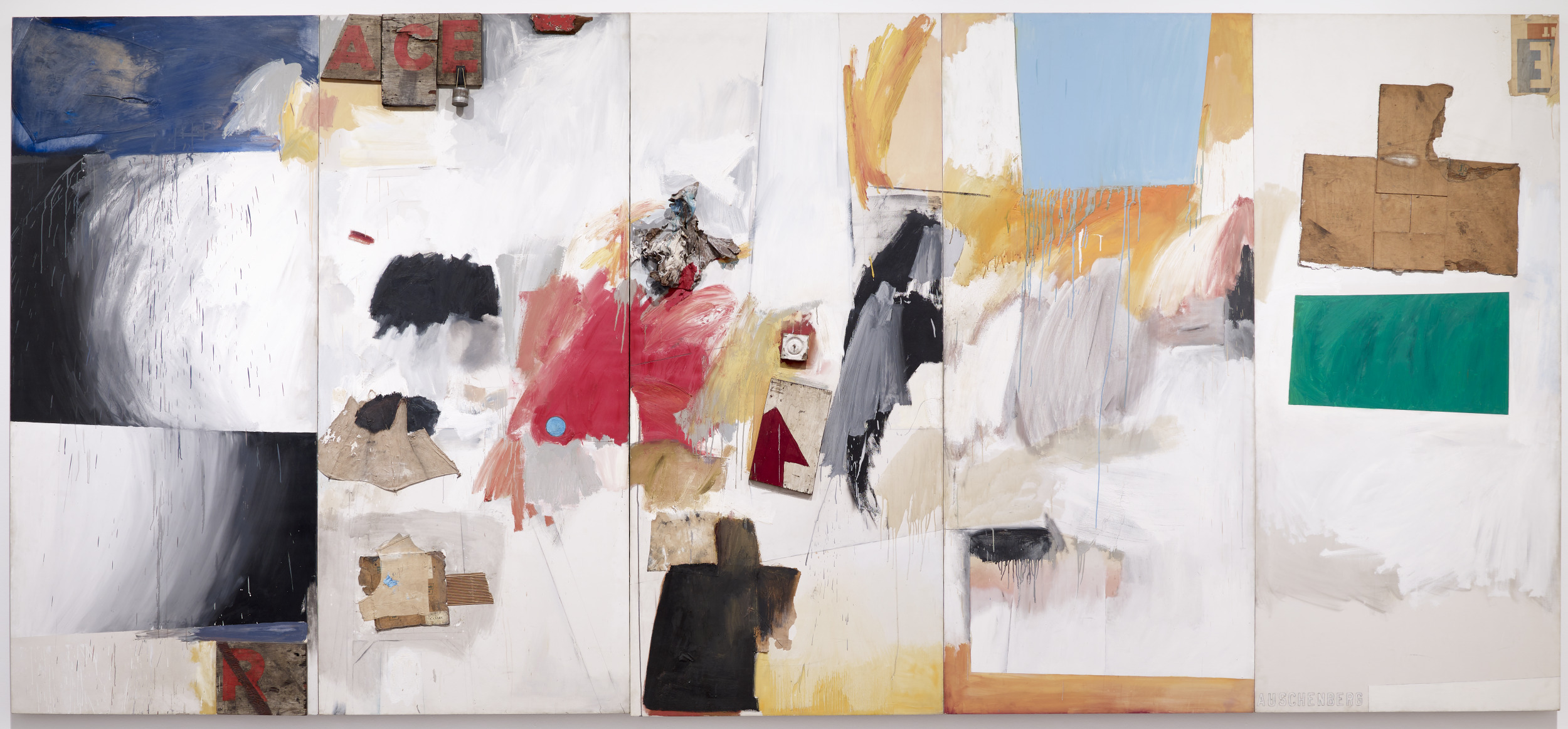
Robert Rauschenberg Ace 1962 1963
Robert Rauschenberg, Ace, 1962–63, collection context. Gund’s Christie’s group includes a different Rauschenberg, a 1953 Gold Painting, estimated at $1–1.5 million. Image: Buffalo AKG Art Museum.

The collector who sold a masterpiece on purpose

Gund’s most famous act of deaccessioning came in 2017, when she sold Roy Lichtenstein’s Masterpiece privately and used $100 million of the proceeds to establish the Art for Justice Fund. The gesture was radical because it treated a major artwork not as the untouchable summit of a collection but as stored capacity.

The logic did not diminish the art. It broadened the definition of what ownership could accomplish.

Museums, education and access

Gund served as president of the Museum of Modern Art from 1991 to 2002 and played a major role in the institution’s expansion. She donated hundreds of works to MoMA and many other institutions. In 1977, after New York City budget cuts reduced arts education in public schools, she founded Studio in a School, creating a direct bridge between artists and children.

The pattern is remarkably consistent: acquire, learn, share, build infrastructure.

What collectors can learn from Gund

The lesson is not that every collector should create a foundation. It is that legacy planning should begin while a collection is still alive. Keep records. Build relationships with institutions before gifts become urgent. Think about which works belong together and which may have greater public value apart. Understand that selling can be as deliberate as buying.

Most importantly, decide whether the collection is meant to preserve the collector’s name or extend the collector’s values. Gund’s example consistently favoured the second.

The November sales are therefore not simply the dispersal of property. They are another phase in a system she spent decades constructing, one in which art circulates between private rooms, museums, schools, artists, auction houses and social causes. That circulation may be Gund’s most enduring work.

Date
Share

Latest Posts

Verónica Mar: From Nature to Essence

In an extensive interview, Spanish sculptor Verónica Mar discusses UNIVERSO in Madrid, her evolution from sculptural furniture to monumental portals, and the relationship between form, space and the invisible.
October 31, 2026
Articles
Articles
New York November Auctions 2026: The 10 Lots That Will Test the High End

Kandinsky at $60–80m, Lichtenstein at $20–30m, Kusama, Nara, Bacon, Hopper and Agnes Gund: the November lots that matter beyond the headline estimates.

October 30, 2026
Exhibitions
Exhibitions
Tokyo in November 2026: Six Exhibitions Collectors Should See

Art Week Tokyo meets Mariko Mori’s landmark retrospective, while SCAI, KOTARO NUKAGA, Taka Ishii, Pace and KOSAKU KANECHIKA sharpen the gallery route.