
November 3, 2026
Articles
Articles

The new Dasha Shenkman Focus Fund has placed three Okiki Akinfe works into Abbot Hall. Its real significance is a model of private patronage that creates public institutional value early.
The new Dasha Shenkman Focus Fund has placed three Okiki Akinfe works into Abbot Hall. Its real significance is a model of private patronage that creates public institutional value early.
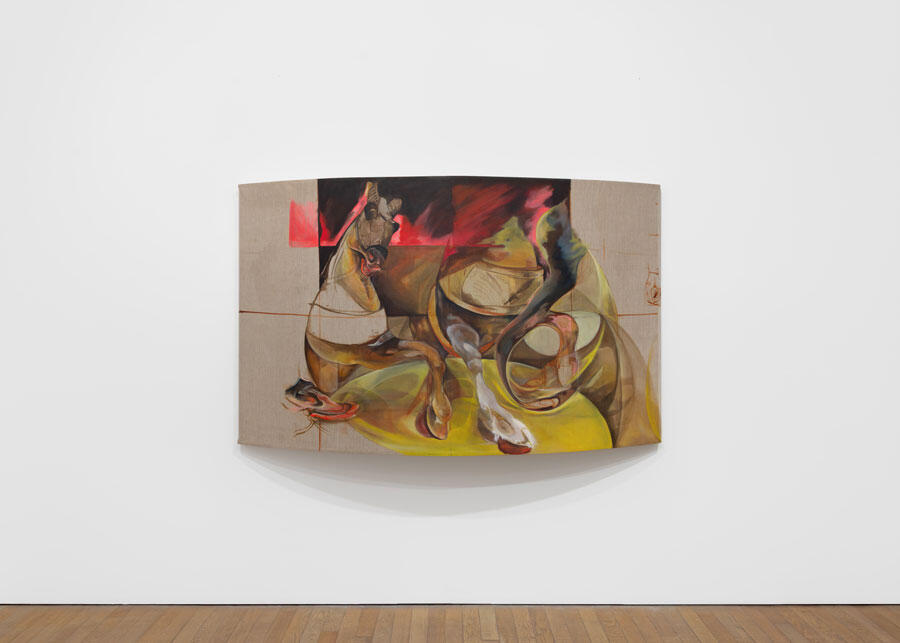
The new £30,000 Dasha Shenkman Focus Fund has placed three works by Okiki Akinfe into Abbot Hall’s public collection. The importance of the gesture is larger than the price: it shows how private collecting capital can be used to create institutional validation at precisely the point when an emerging artist is most exposed to market acceleration.
Art fairs are designed around private transactions, yet some of their most consequential purchases are the ones removed from the private market almost immediately. At Frieze London 2026, the Contemporary Art Society launched the Dasha Shenkman Focus Fund, a £30,000 acquisition initiative for a young artist in the fair’s Focus section. Its inaugural selection was Okiki Akinfe, whose work was presented by Ginny on Frederick. A painting, a lightbox and a preparatory drawing have been acquired for Abbot Hall in Kendal — the first acquisition of Akinfe’s work by a UK public museum.
The facts are straightforward. The implications are not. The fund sits at the intersection of philanthropy, collecting, emerging-market formation and public responsibility. It asks a question that private collectors increasingly face: can patronage do more than accumulate objects?

The work at the centre of the acquisition, Fame is a Gun (2026), is a self-portrait. Akinfe sits backwards on a chair, her arm extended so that her hand forms the shape of a gun while a shadow interrupts the face. The painting keeps visible the grid, measurements and underpainting from which the image has been constructed. It is a useful metaphor for the career moment itself: visibility is being built, but its scaffolding has not been concealed.
Akinfe graduated from the Royal College of Art in 2023 after studying at the Slade, had her first solo exhibition with Ginny on Frederick in 2025 and an institutional presentation at PEER in 2026, and is included in British Art Show 10. These are significant signals, but they do not yet represent the settled consensus that surrounds an established artist. The Shenkman fund is therefore taking a different kind of risk from a museum buying retrospectively. It is making public commitment while the artist’s position is still being formed.

Markets and museums operate with different mandates, but the first public acquisition has a powerful symbolic effect. It places a work inside a collection designed, at least in principle, to outlast fashion cycles and individual ownership. It also gives future researchers, curators and audiences access to an artist at a stage that private collections can easily absorb and render invisible.
For an emerging artist, that distinction matters. A rapid sequence of private sales can produce scarcity without producing public knowledge. A museum acquisition can interrupt that pattern by creating an object that is not expected to return to auction as soon as prices rise. In Akinfe’s case, the decision to acquire three related works rather than a single painting is especially intelligent. Painting, lightbox and preparatory drawing allow an institution to represent process as well as product.

The Contemporary Art Society has worked with Frieze for a decade to bring works into UK public collections. The new Focus Fund narrows the proposition to an emerging artist at a critical point. In an environment where public acquisition budgets are constrained, this type of targeted private funding can be genuinely catalytic.
But the model is strongest when philanthropy supports curatorial judgement rather than replacing it. A museum should not become the passive beneficiary of a collector’s taste, nor should a fair prize function as a marketing device dressed up as public service. The value of the CAS structure is mediation: collector capital, specialist knowledge and museum needs are brought together through an independent acquisition framework.
That distinction deserves attention from collectors considering their own legacy. Donating an established blue-chip work late in a collecting career is valuable, but funding acquisitions earlier can change what public collections are able to represent in the first place.

Akinfe’s paintings are especially suited to this conversation because they make process visible. Exposed linen, drawn grids, revisions and underpainting remain active alongside more resolved passages. The figure appears to be arriving and dissolving at once. The works resist the easy visual finality that can make figurative painting instantly consumable in a fair booth.
The strategy has art-historical precedents, but Akinfe uses it to stage uncertainty around self-image and recognition. The title Fame is a Gun is pointed in the context of an emerging artist whose public visibility is increasing. Fame offers agency, reach and economic possibility, but also exposure. The gun gesture is deliberately unstable: performance, threat, joke and self-protection occupy the same pictorial space.
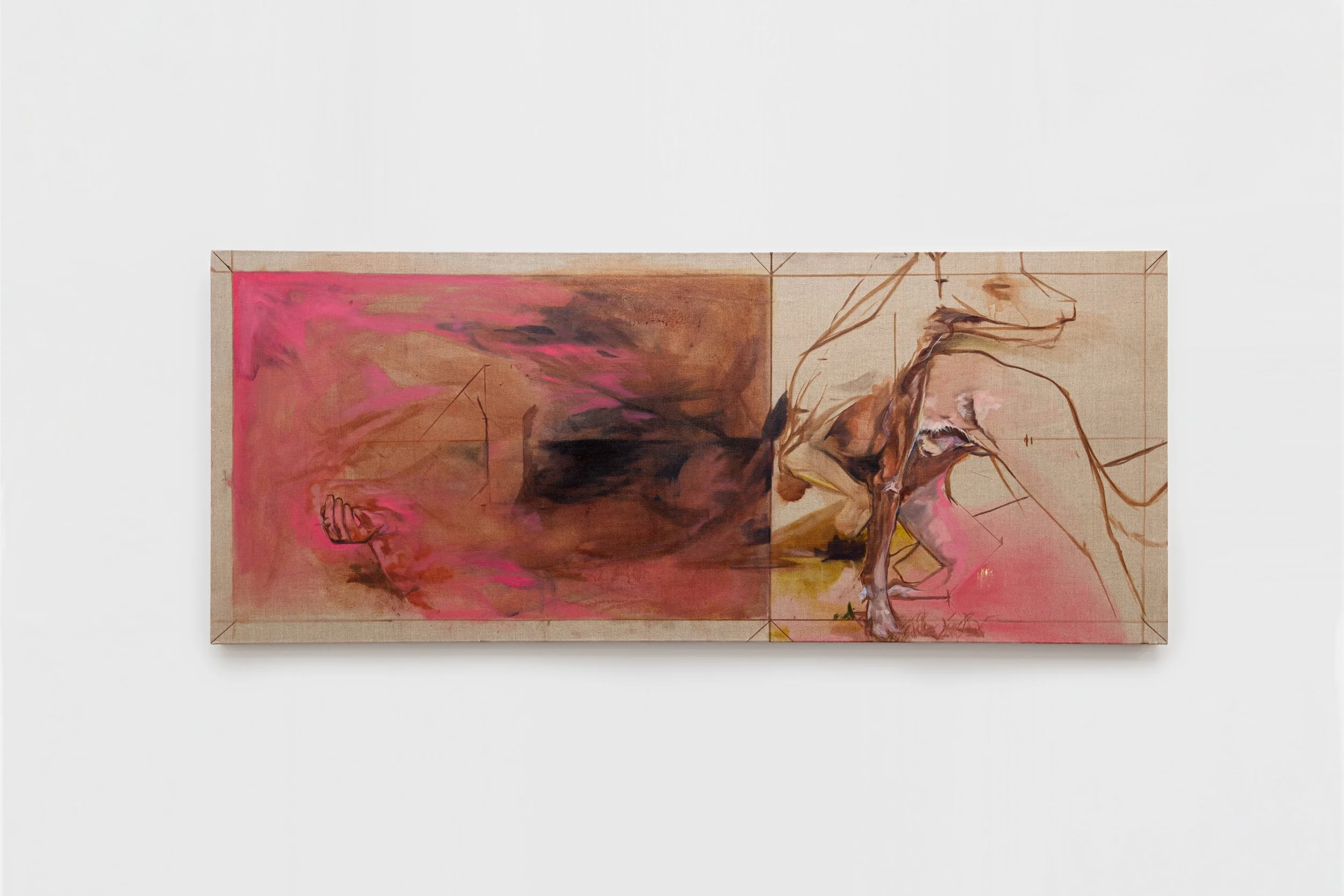
Dasha Shenkman’s involvement is interesting because it moves the collector from buyer to enabler. Shenkman has long worked with the Contemporary Art Society and has donated works to public collections. The new fund formalises a principle that sophisticated collectors often arrive at over time: not every meaningful relationship with art needs to end in personal ownership.
That is an important counterweight to the culture of acquisition. Collecting can generate expertise, relationships and capital. Those resources can then be redirected toward commissions, conservation, research, residencies or acquisitions for museums. The most mature form of patronage may therefore include knowing when not to take the work home.

£30,000 is not a transformative sum by the standards of the international art market. That is precisely why the fund is instructive. It demonstrates that impact is not always proportional to headline price. At the right career moment, the first museum acquisition can affect scholarship, visibility and the future institutional history around an artist in ways that a much larger private transaction cannot.
For Abbot Hall, the acquisition brings a young contemporary practice into a public collection beyond London. For Akinfe, it establishes a museum relationship before the market has finished deciding how to price the work. For Shenkman, it turns collecting capital into public cultural infrastructure.
And for other collectors, it offers a useful model. The question is no longer simply, “What should I buy?” It can also be: “What should exist in public because I helped make the acquisition possible?”
The new Dasha Shenkman Focus Fund has placed three Okiki Akinfe works into Abbot Hall. Its real significance is a model of private patronage that creates public institutional value early.
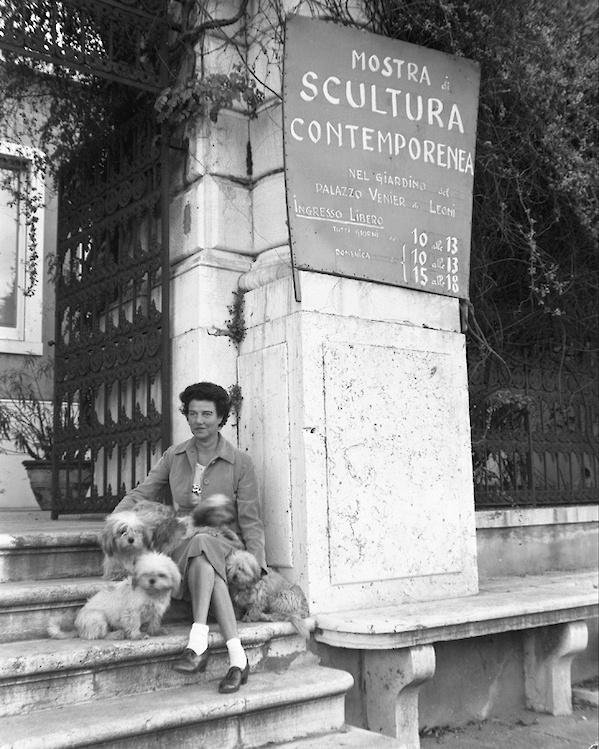
At Palazzo Venier dei Leoni in Venice, Peggy Guggenheim made modern art part of daily life—and left a model for the home as a living collection.

In an extensive interview, Spanish sculptor Verónica Mar discusses UNIVERSO in Madrid, her evolution from sculptural furniture to monumental portals, and the relationship between form, space and the invisible.