
October 12, 2026
Articles
Articles
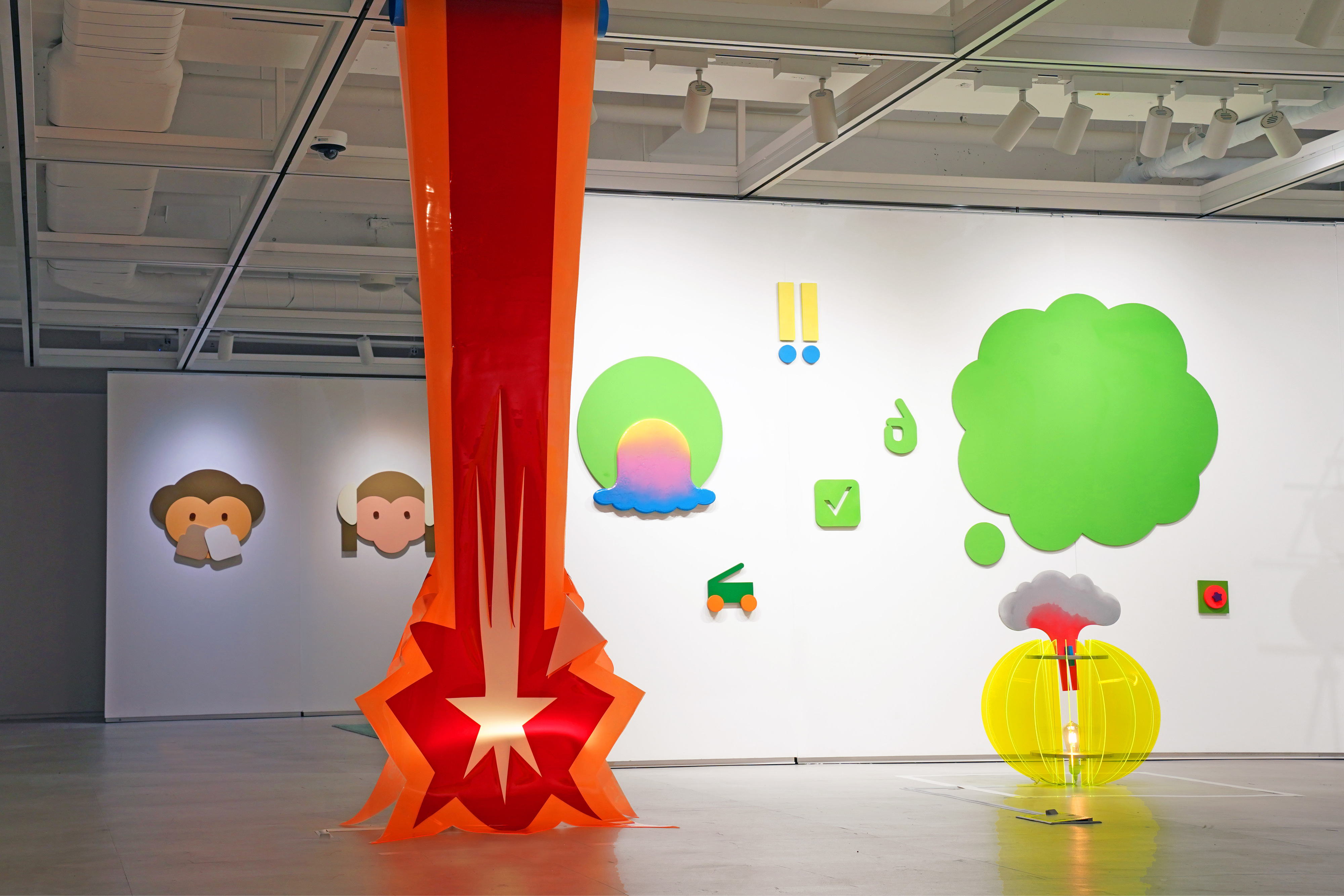
Yelin Lee's Ghost Play transforms emojis into sculpture, uses chroma-key screens and a two-minute delay, and turns visitors into their own fleeting afterimages.
Suzanne McFayden’s new Austin home offers a rare lesson in designing around a mature collection: less gallery-white neutrality, more atmosphere, edited hangs and rooms that allow art, furniture and personal history to shape one another.
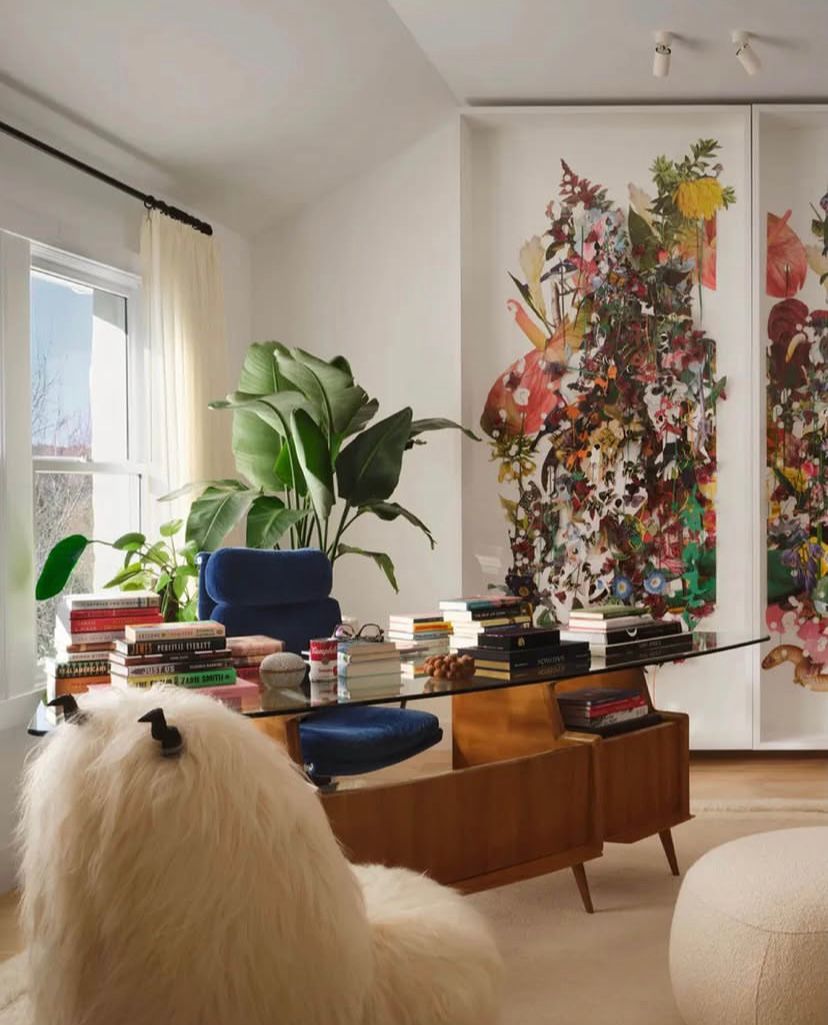
The second home a collector makes for a collection can be more revealing than the first. Not because it is larger, more expensive or more complete, but because the collector has already learned what the art needs—and what they themselves no longer need from a house.
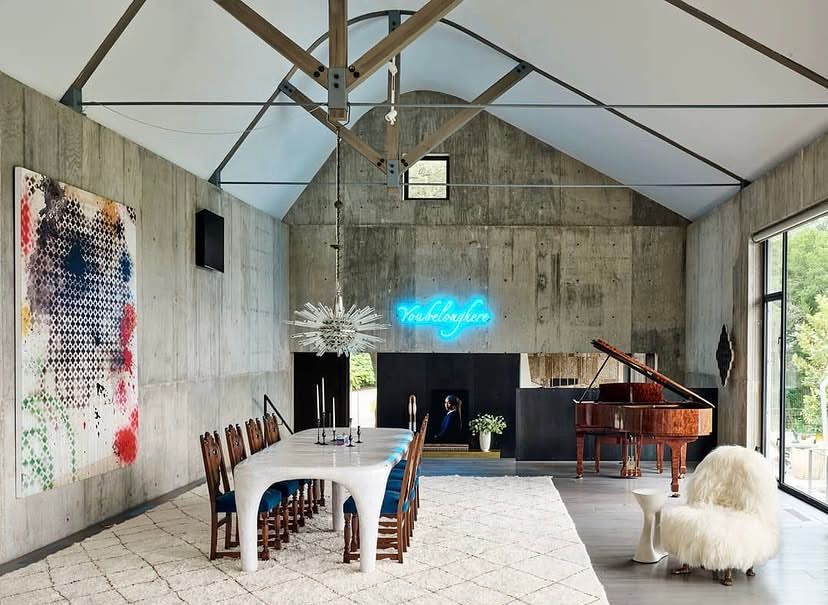
Suzanne McFayden’s new Austin residence is an unusually clear example. The writer, philanthropist and contemporary-art collector previously lived in a 7,000-square-foot Brutalist concrete house in Austin, a project published by Architectural Digest in 2019. For her next chapter she wanted something materially and emotionally different: smaller in feeling, warmer, more nourishing, but still with enough wall space and architectural intelligence to live seriously with art.
The result, revealed by Architectural Digest in July 2026, is less a domestic museum than an argument for the opposite idea: that a strong collection becomes more legible when the house is allowed to remain a house.
McFayden returned to architect Paul Lamb and interior designer Jennifer Vaughn Miller, collaborators on her previous residence. Reusing the team is significant. A mature collector does not necessarily need a new aesthetic language with every house; sometimes the more interesting challenge is to ask trusted collaborators to interpret a changed life.
The new property sits among red and live oaks in Austin’s Hill Country, with landscape by Word + Carr. From the exterior, it is comparatively discreet. Inside, however, the organising principle is highly deliberate. Lamb’s approach draws on Louis Kahn’s idea that architecture begins with the room: the house is built as a sequence of distinct environments rather than as one spectacular container into which art is later inserted.
That inside-out logic is useful for collectors. Too many art houses begin with uninterrupted walls and neutral finishes, then discover that neutrality can become its own kind of visual noise. McFayden’s house starts instead with the question of how particular rooms should feel—and then lets art, furniture, colour and light build those feelings together.
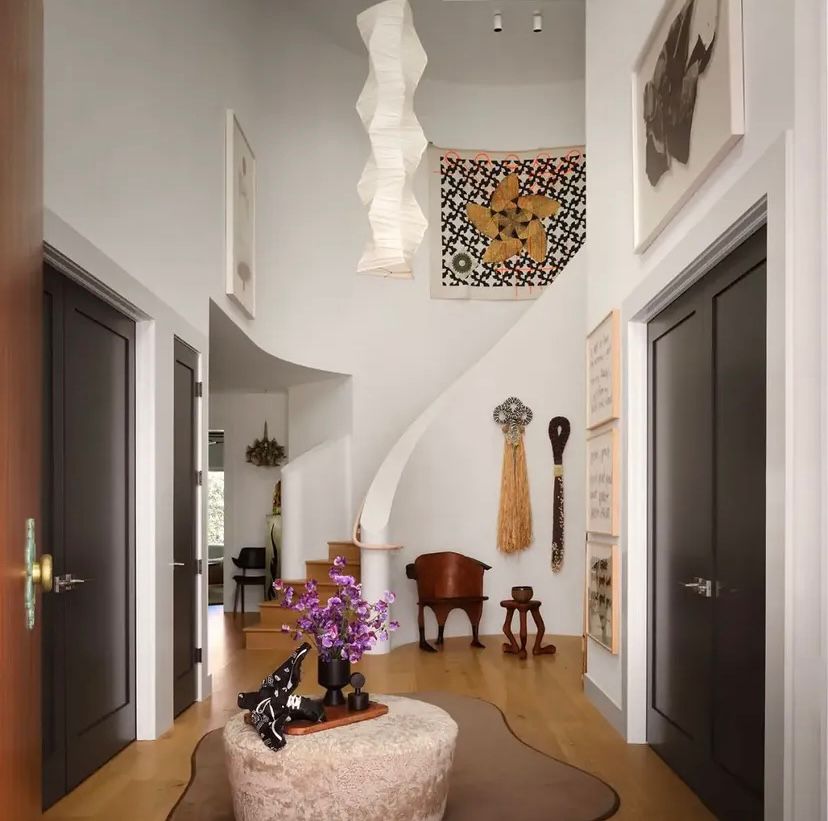
The entrance sets the tone quickly. A custom pineapple doorknob references a Jamaican symbol of hospitality. Inside, a vintage Isamu Noguchi Akari hangs above a custom rug; furniture includes a Senegalese tribal chair, a Haas Brothers bench and an upholstered ottoman. The art moves across media and generations: Sanford Biggers, Frida Orupabo, Ayana V. Jackson and Nádia Taquary appear in the foyer alone.
This is not a conventional “statement artwork over console” entrance. It behaves more like an index. Craft, design, contemporary art and cultural memory coexist from the first room, signalling that the collection is not organised by a single hierarchy of medium or price.
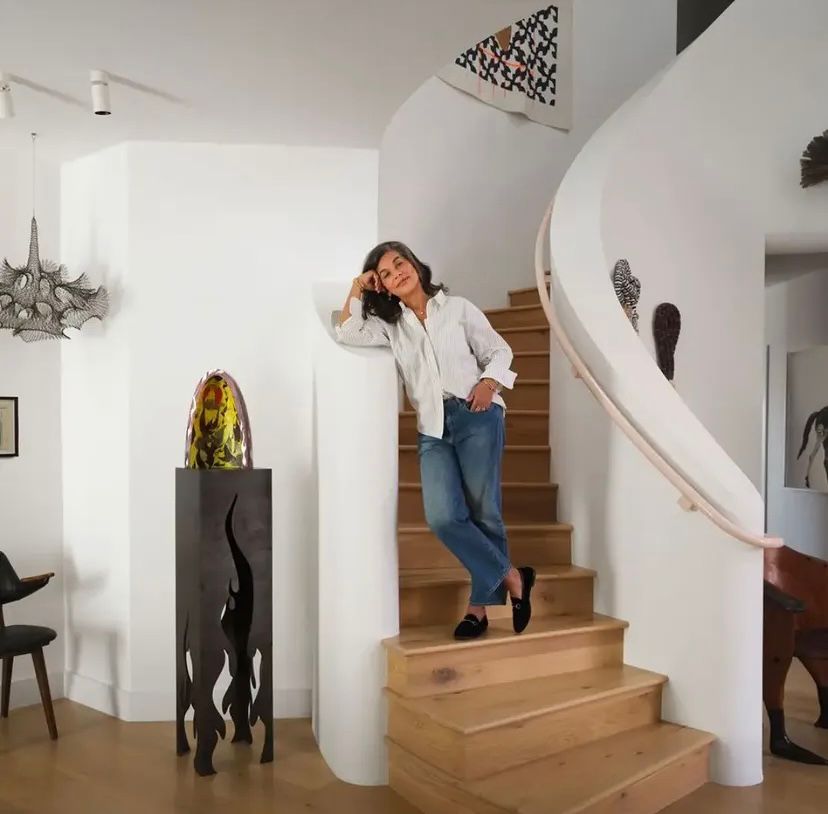
The staircase extends that principle. Works associated with Jean-Michel Basquiat, Ruth Asawa, Nate Lewis, Naudline Pierre and Allison Janae Hamilton occupy an architectural transition rather than a formal gallery. The effect is important: major names are not isolated in ceremonial zones. They are absorbed into daily movement.
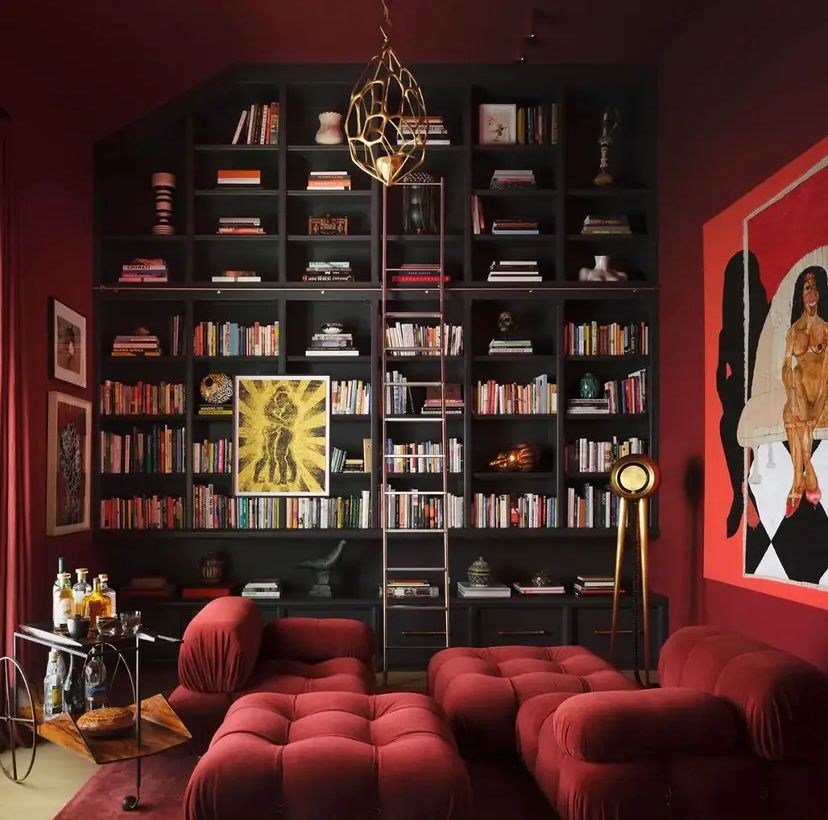
The most immediately instructive room may be the library. Painted in a deep red and furnished with a low-slung Mario Bellini sofa, dark shelving and sculptural lighting, it rejects the idea that serious art requires white walls. Works by Tschabalala Self and Didier William sit within a room already full of colour, books, objects and texture.
The decision works because the interiors are not trying to mimic the art. Vaughn Miller’s palette moves through greens, ivories, rose, crimson and natural materials, creating atmosphere while maintaining enough tonal discipline for individual works to hold their space. The broader lesson is simple: contrast does not have to mean white. A room can support art through rhythm, scale and material coherence rather than through emptiness.
That approach becomes especially useful in long-held collections. Collectors often buy across years, moods and categories. A permanently neutral envelope can make that diversity feel more disparate, not less. Strong interior colour can sometimes create the connective tissue.
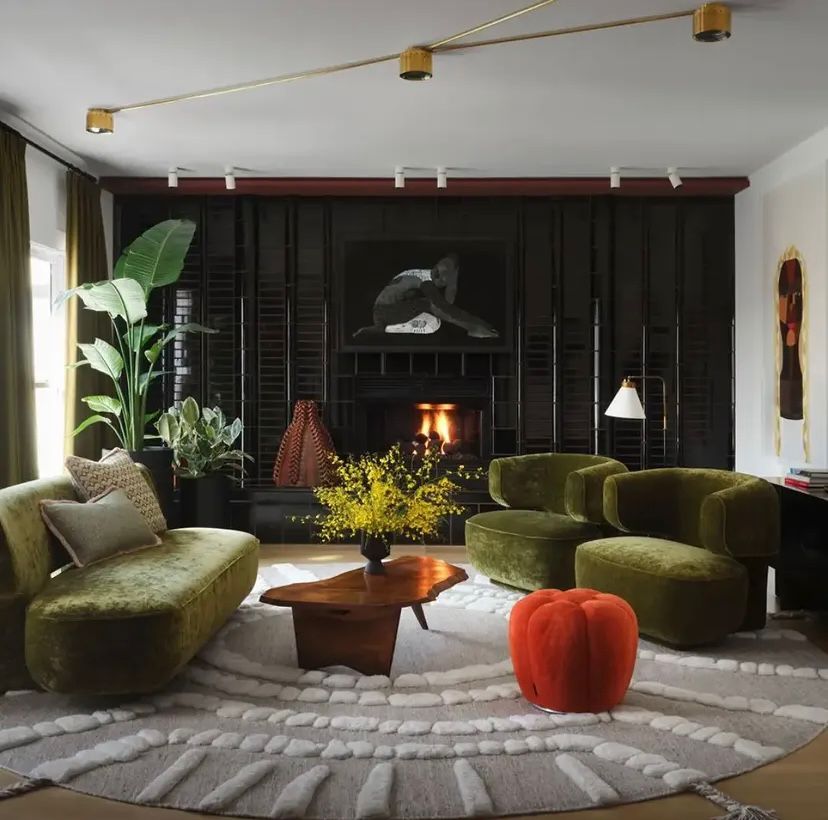
The relationship is not one-directional. In several rooms, specific works shaped the design decisions around them. A large Ebony G. Patterson diptych anchors McFayden’s upstairs study; the room was planned with the scale and visual density of the work in mind. Elsewhere, a media-room wall of black-glazed terra-cotta forms a backdrop for Derrick Adams and a sculpture by Simone Leigh, giving what could have been a purely functional television room its own visual identity.
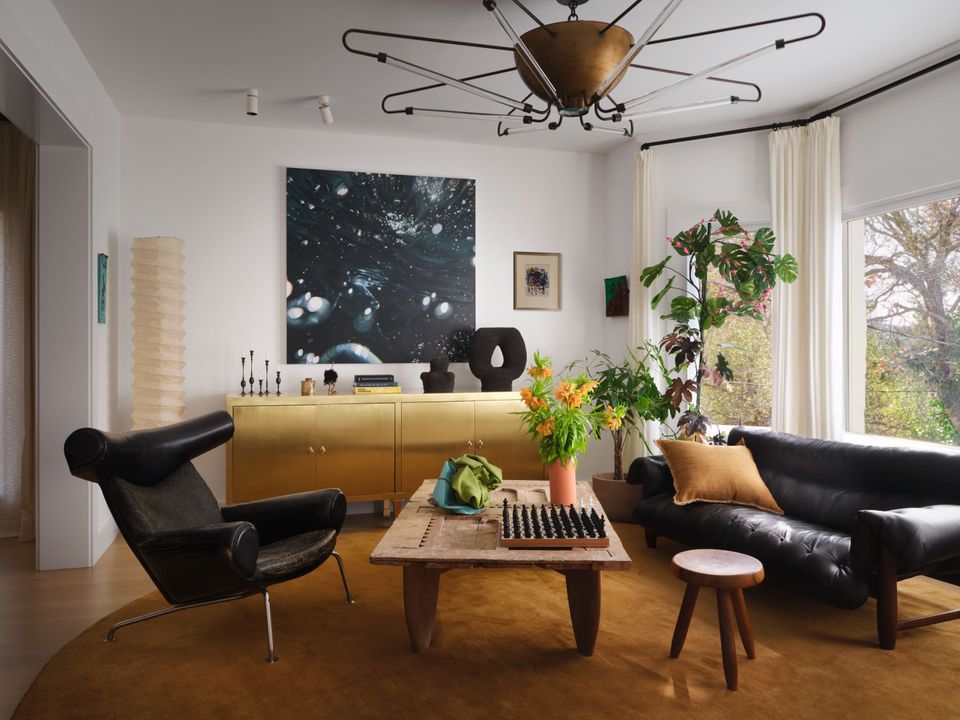
In the living room, the collection is integrated into a looser constellation of modern design: a Sergio Rodrigues Mole sofa, a Hans Wegner Ox chair, a Charlotte Perriand stool, Noguchi lighting and a coffee table incorporating an antique Moroccan door. Works by Purvis Young, Calida Rawles, Donte Hayes, Joan Mitchell, Kennedy Yanko and No Martins occupy the same field.
The room makes an important point about collector interiors. The presence of important design does not diminish the art if both are given visual autonomy. In fact, furniture with real authorship can make a collection feel more intentional because the eye understands that every object has been chosen, not merely installed.
The dining room continues the house’s refusal of automatic symmetry. A custom ceramic table by Hun Chung Lee is placed closer to one wall rather than centred, leaving more room for people to circulate. Paintings by Wangari Mathenge and Raphaël Barontini share the space with sculptural works by Simone Leigh and Lynda Benglis.
For collectors, this is a deceptively practical idea. Domestic rooms are often arranged around furniture first, leaving art to fill whatever wall space remains. Here, circulation, art and furniture are considered at the same time. The result is less static—and better suited to a home intended for conversation and gathering.
McFayden has spoken elsewhere about collecting through a physical, intuitive response—what she has called a “quickening.” That instinct is visible in the new house because the works are not grouped as if demonstrating a thesis to an external audience. Personal connections remain legible.
Lorraine O’Grady’s Fir-Palm, for example, hangs in a guest room rather than in a formal display space. Elizabeth Catlett’s orange onyx Nude Torso sits in the primary bedroom seating area, where McFayden encounters it on waking. Tavares Strachan’s blue neon You Belong Here appears in a private study alongside works by Kehinde Wiley and Morel Doucet. The placement gives the collection an emotional geography: public, social, reflective and intimate rooms carry different kinds of intensity.
That is a useful distinction for anyone building a home around art. Not every “best” work requires the most public wall. A private placement can deepen the relationship between owner and object precisely because it is seen repeatedly without performance.
Perhaps the most sophisticated feature of McFayden’s new house is what is not visible. A substantial collection cannot all be installed at once, and a smaller or more atmospheric house makes selection unavoidable. That is not a limitation. It can be a curatorial advantage.
Collectors often reach a stage at which acquisition has outpaced display. The instinctive response is to seek more wall space. McFayden’s house suggests another route: edit harder, rotate intelligently and let architecture establish intervals. The collection then remains active. Works can reappear in new relationships rather than becoming fixed permanently to one wall.
That flexibility may be the real meaning of the “third act” McFayden describes. The house is not designed to prove that the collection has arrived. It is designed to keep it alive.
Yelin Lee's Ghost Play transforms emojis into sculpture, uses chroma-key screens and a two-minute delay, and turns visitors into their own fleeting afterimages.
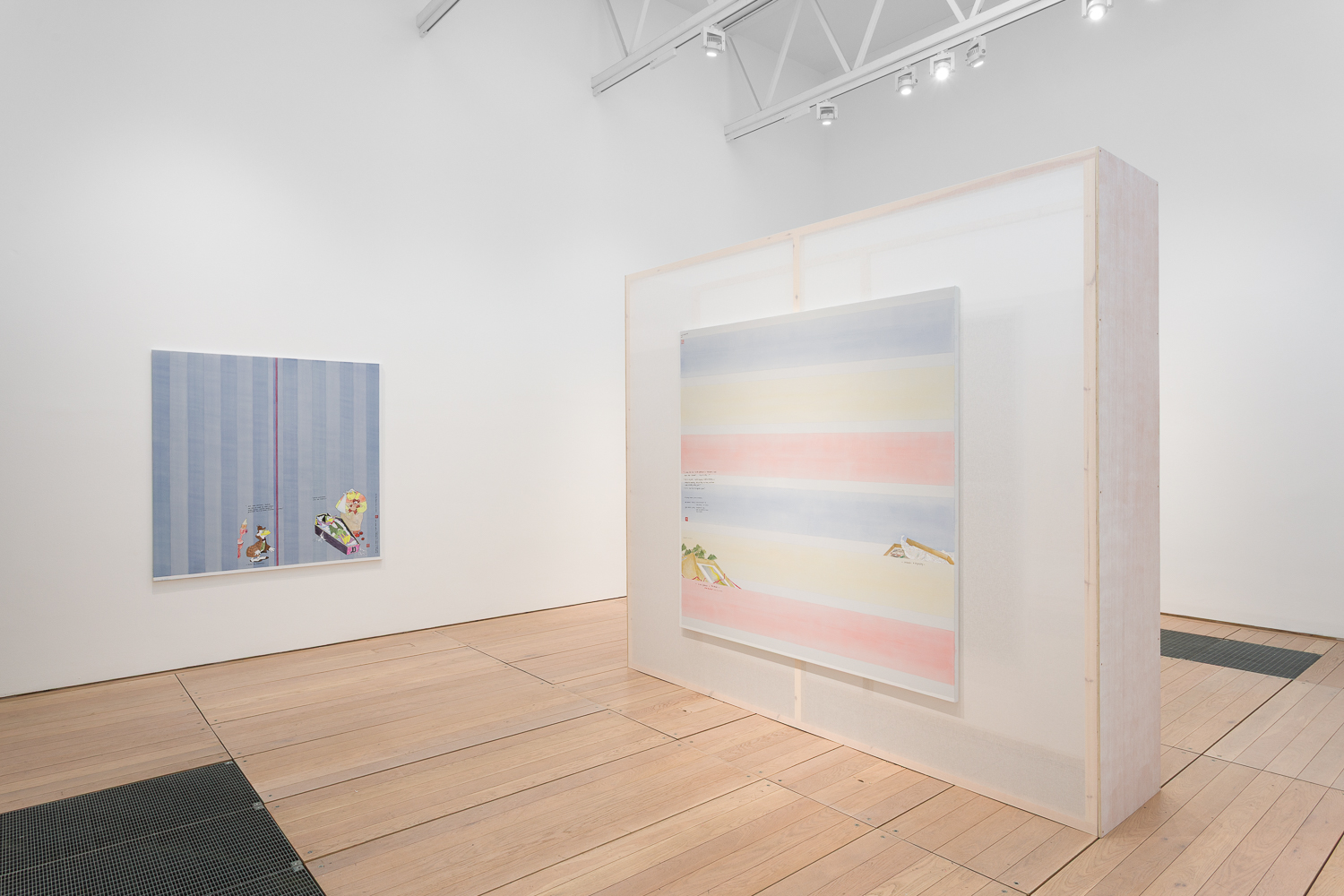
In her first UK institutional exhibition, Evelyn Taocheng Wang turns mistranslation, Agnes Martin, Chinese literati painting and fantasies of Britain into a deliberately unstable language of identity.
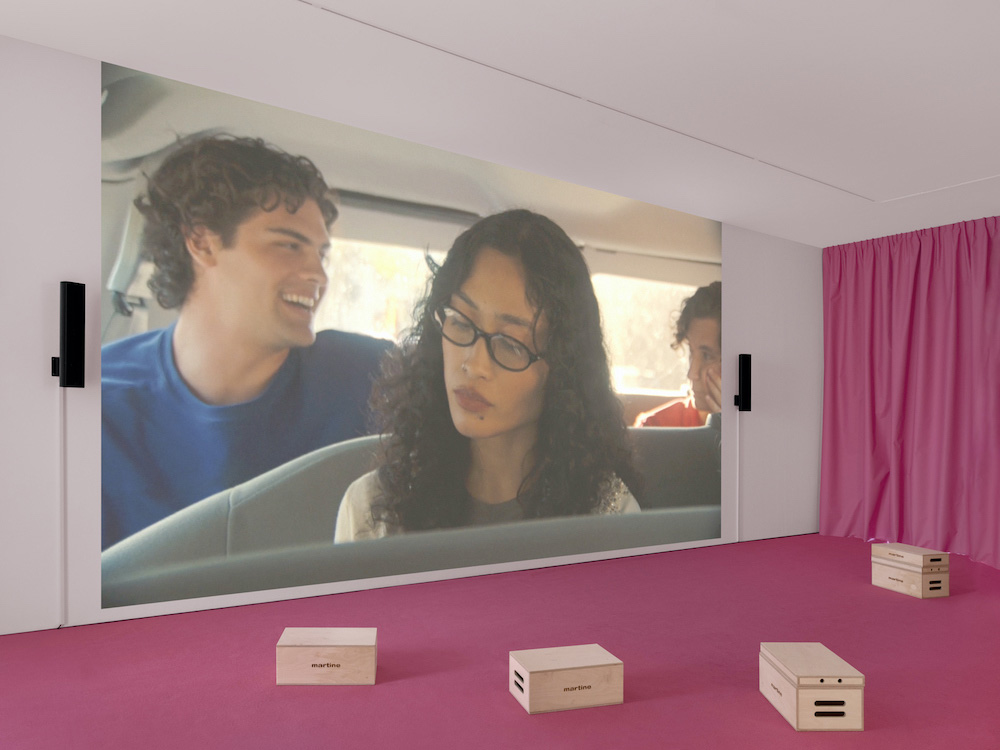
From Robert Ryman and Lorna Simpson to Mary Ramsden, Martine Syms and Nicola Turner, the strongest London route during Frieze week begins outside the fair.