
November 5, 2026
Articles
Articles
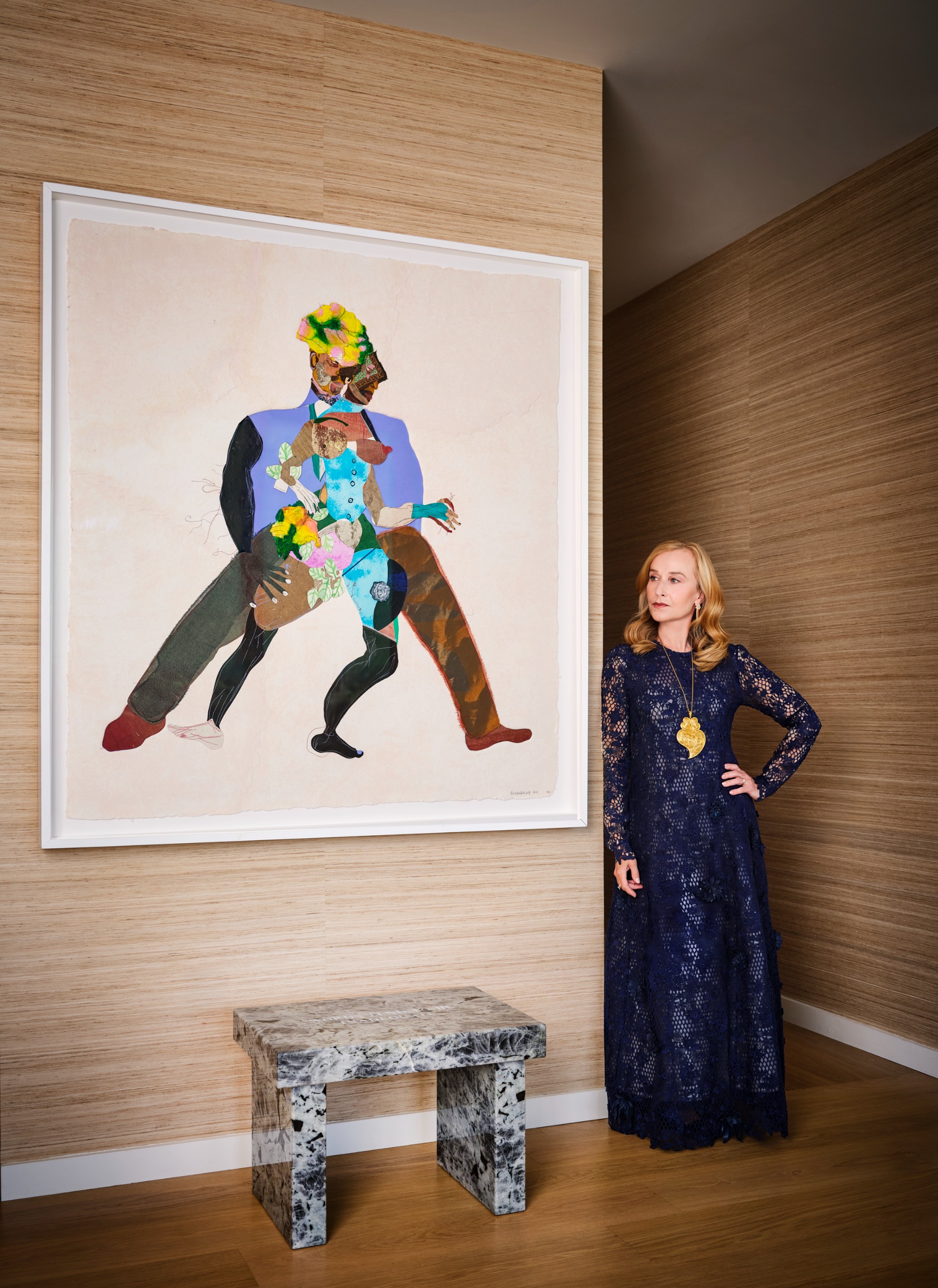
Kelly Behun’s West Chelsea apartment for former US ambassador Randi Charno Levine shows how a serious contemporary collection can grow from relationships, patronage and a new Joana Vasconcelos commission.
Kelly Behun’s West Chelsea apartment for former US ambassador Randi Charno Levine shows how a serious contemporary collection can grow from relationships, patronage and a new Joana Vasconcelos commission.

Randi Charno Levine’s West Chelsea apartment is compelling not because it contains important art, but because the collection behaves like a social history. Designed by Kelly Behun and transformed by a new Joana Vasconcelos commission, the home shows what happens when collecting is built through relationships, cultural diplomacy and long-term support of artists.
Collector homes often become visually impressive for the wrong reason. Art is installed as proof of taste, furniture is selected to stay out of its way, and the result approaches the atmosphere of a private viewing room. Randi Charno Levine’s apartment in a BIG-designed West Chelsea tower offers a more interesting model. Its collection is serious, but the home is not organised around intimidation.
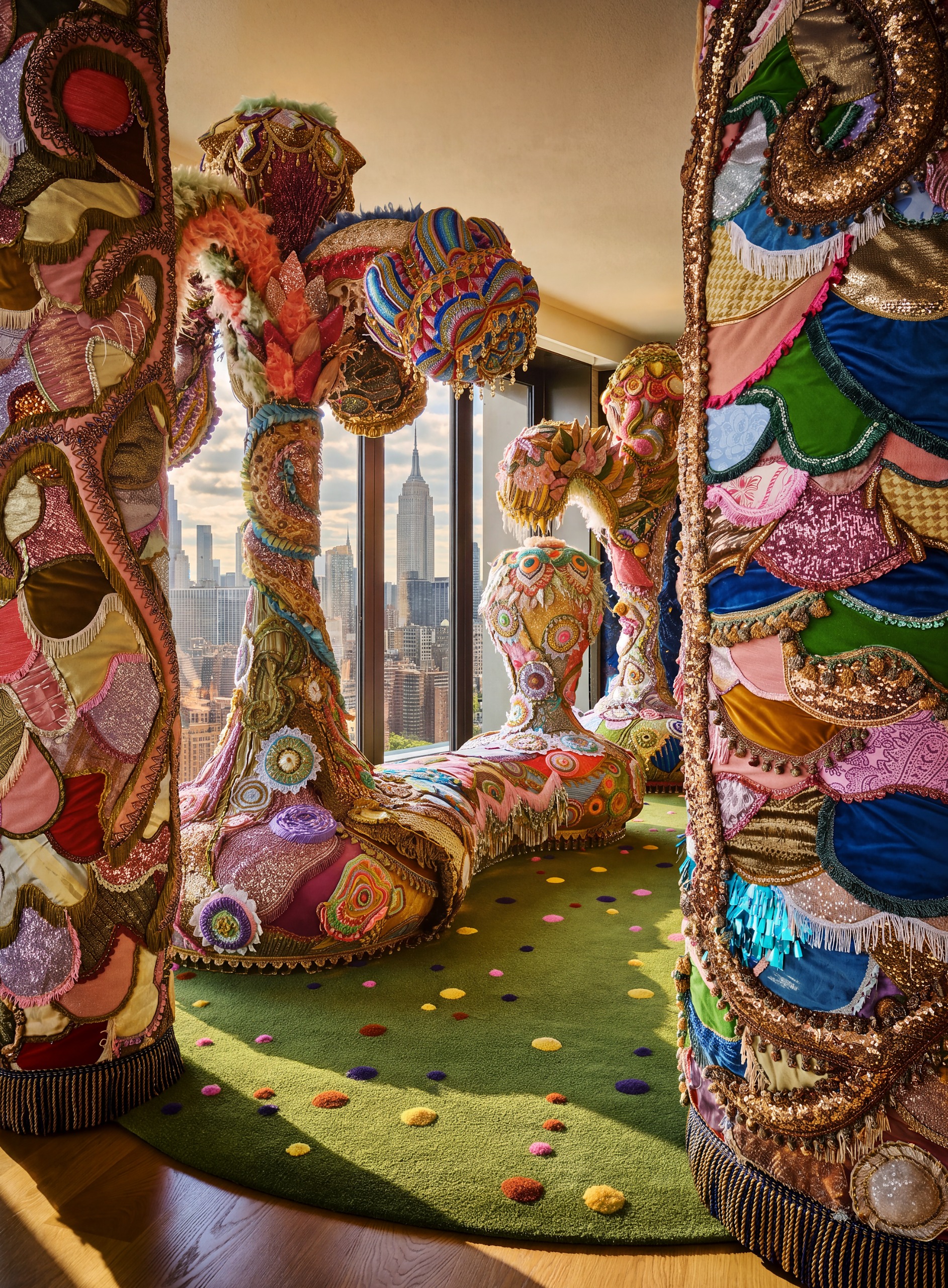
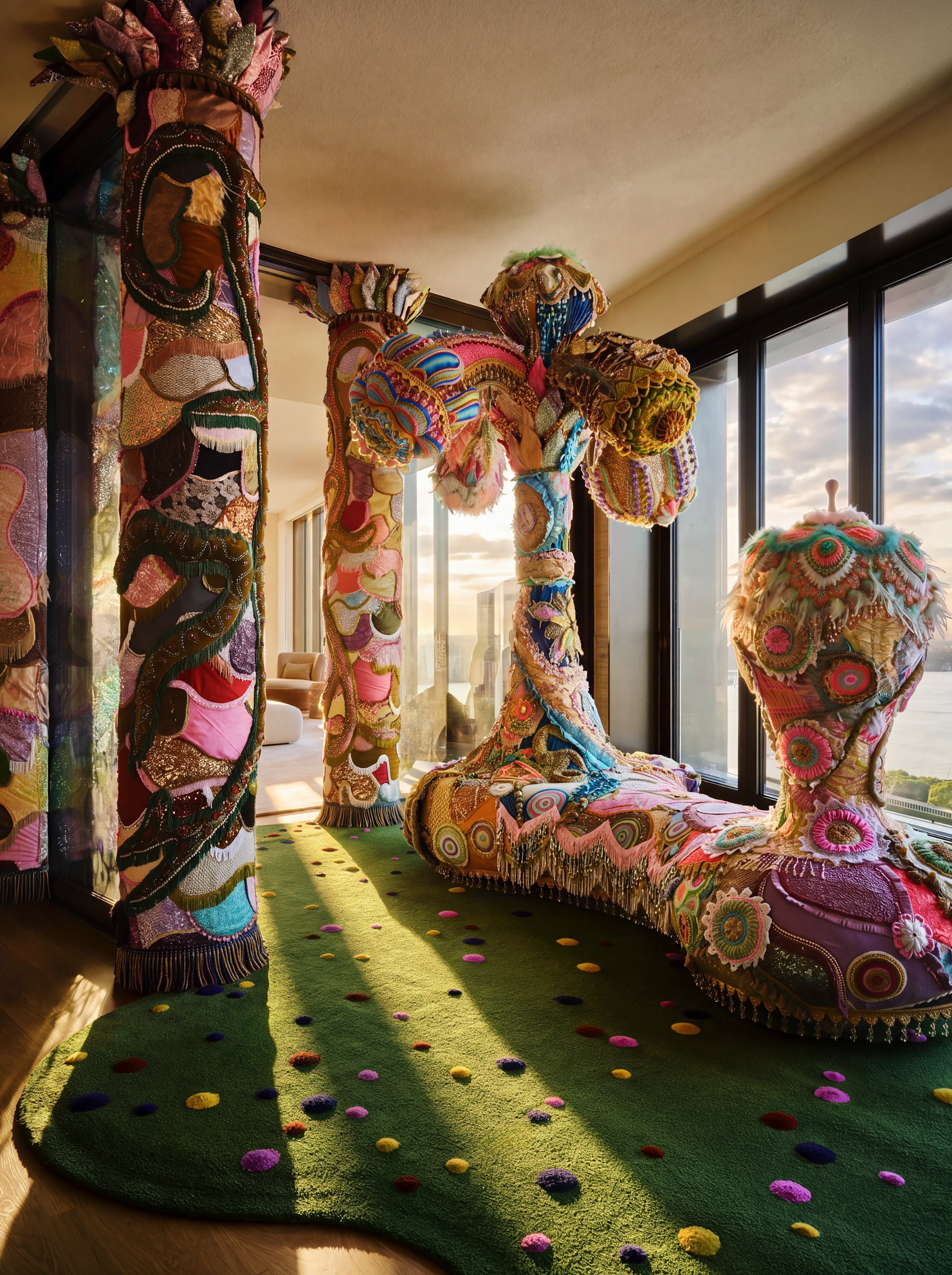
Levine, the former US ambassador to Portugal, has collected contemporary art over decades. The apartment designed by Kelly Behun contains works by artists including Tschabalala Self, Jenny Holzer, Cecily Brown, Hank Willis Thomas, Jeffrey Gibson, Kara Walker, Amy Sherald, Alison Elizabeth Taylor and Christopher Myers. Yet the most revealing work is the newest: a site-specific installation by Portuguese artist Joana Vasconcelos that has turned the loggia into what Levine describes through the commission’s spirit as a kind of garden of delights.
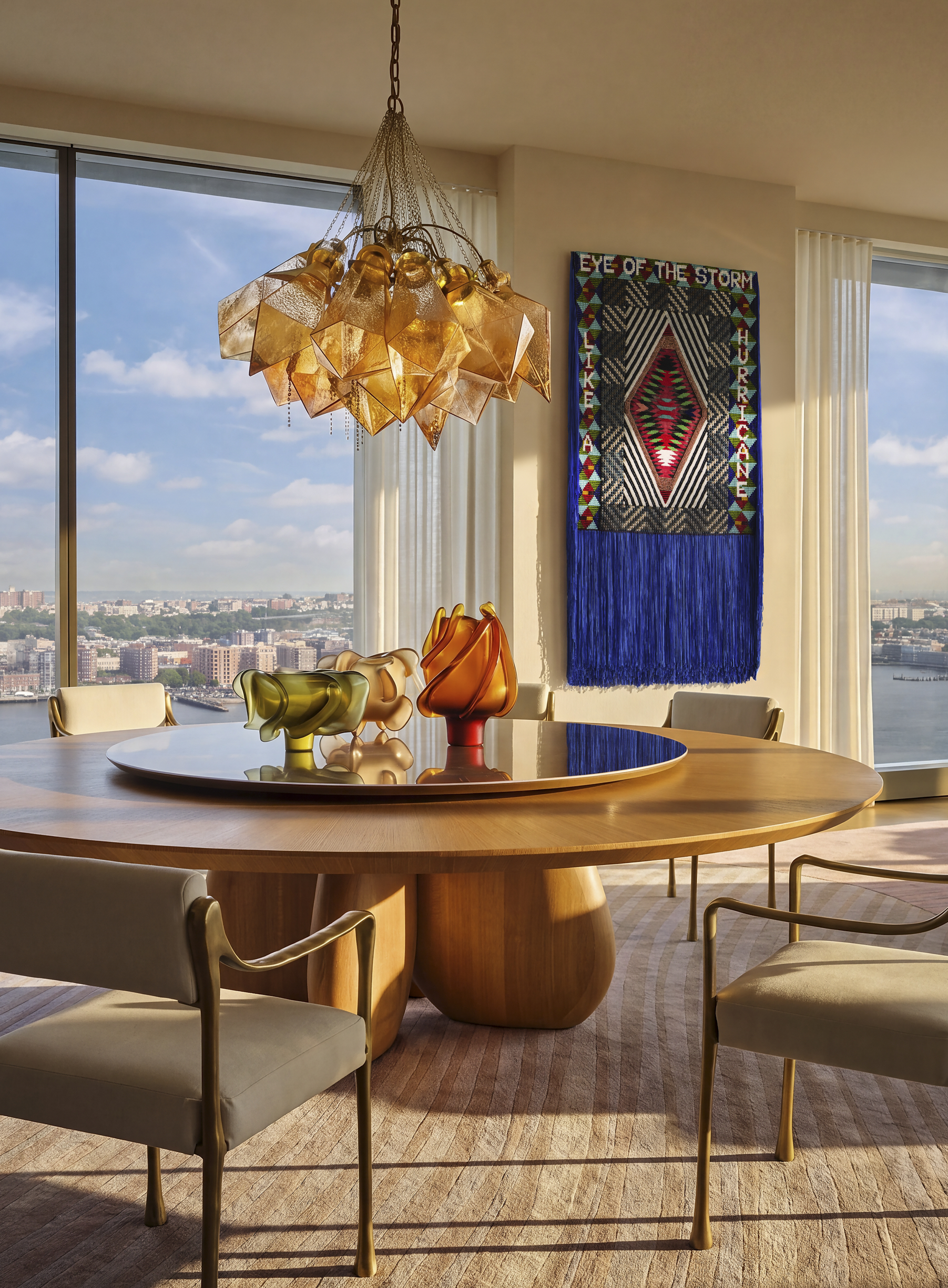
Levine’s collecting cannot be separated from her public life. Her ambassadorship in Portugal brought her into direct contact with the country’s cultural community, but the more important point is how she used that access: not merely to acquire, but to build relationships and create exchanges between artists and audiences.
In 2023 she curated an exhibition in Portugal that brought American and Portuguese artists into dialogue. Vasconcelos contributed a monumental wrought-iron teapot; the relationship continued, including an invitation to the artist’s immersive installation for Dior’s Autumn/Winter 2023 presentation in Paris. The eventual Manhattan commission grew from that history.
This is collecting as cultural diplomacy in the most useful sense. The collector is not simply buying a finished object after consensus has formed. She is participating in a longer conversation in which exhibitions, introductions, travel, patronage and domestic commissioning all matter.
Vasconcelos’s installation occupies the loggia at the edge of the apartment, where views open toward the Empire State Building, Hudson Yards and the river. The artist’s exuberant vocabulary — crochet, textile, fringe, feathers, beads and ruffles — is translated into colourful columns and exaggerated palm-like forms that can also function as seating.
The significant move is that the work is not treated as an artwork placed into a finished interior. It changes how the threshold between inside and outside is understood. It is sculptural, architectural and usable. Behun echoes upholstery materials from the apartment within the commission, creating continuity without trying to domesticate Vasconcelos’s maximalism.
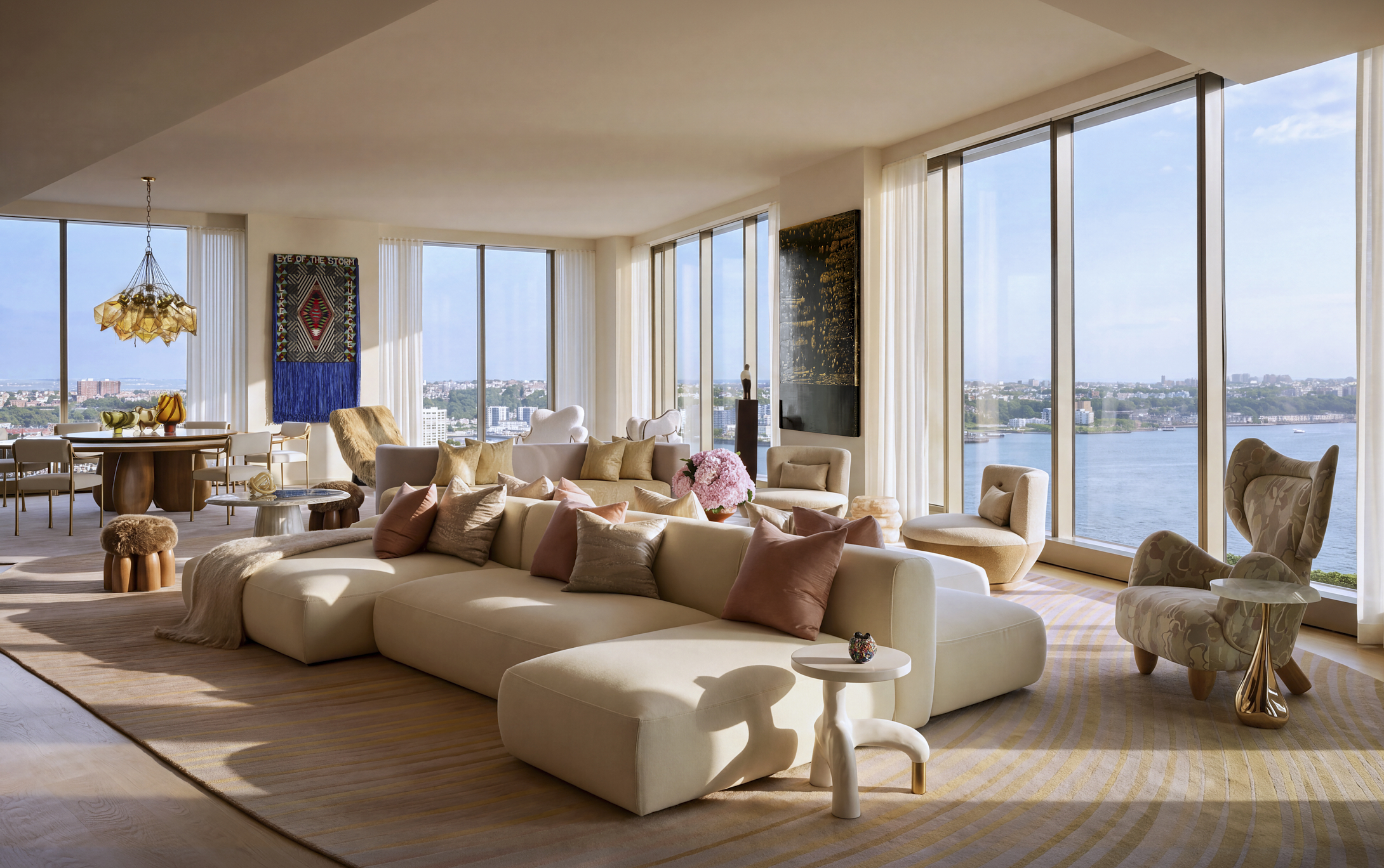
Behun’s interiors are comparatively restrained, but not neutral. Custom oak tables, an Emmanuelle Simon chair, Minotti seating, a Casey McCafferty side table and a Behun rug create layers of texture and craft. The design does not mimic the art’s colour or compete with it through theatrical gestures. Nor does it default to the anonymous white cube.
This middle ground is difficult. Collector interiors often fail when either the designer tries to “match” an artwork or the art adviser insists that every wall become a display surface. Here, furnishings establish comfort and rhythm first. The art is allowed to interrupt those rhythms.
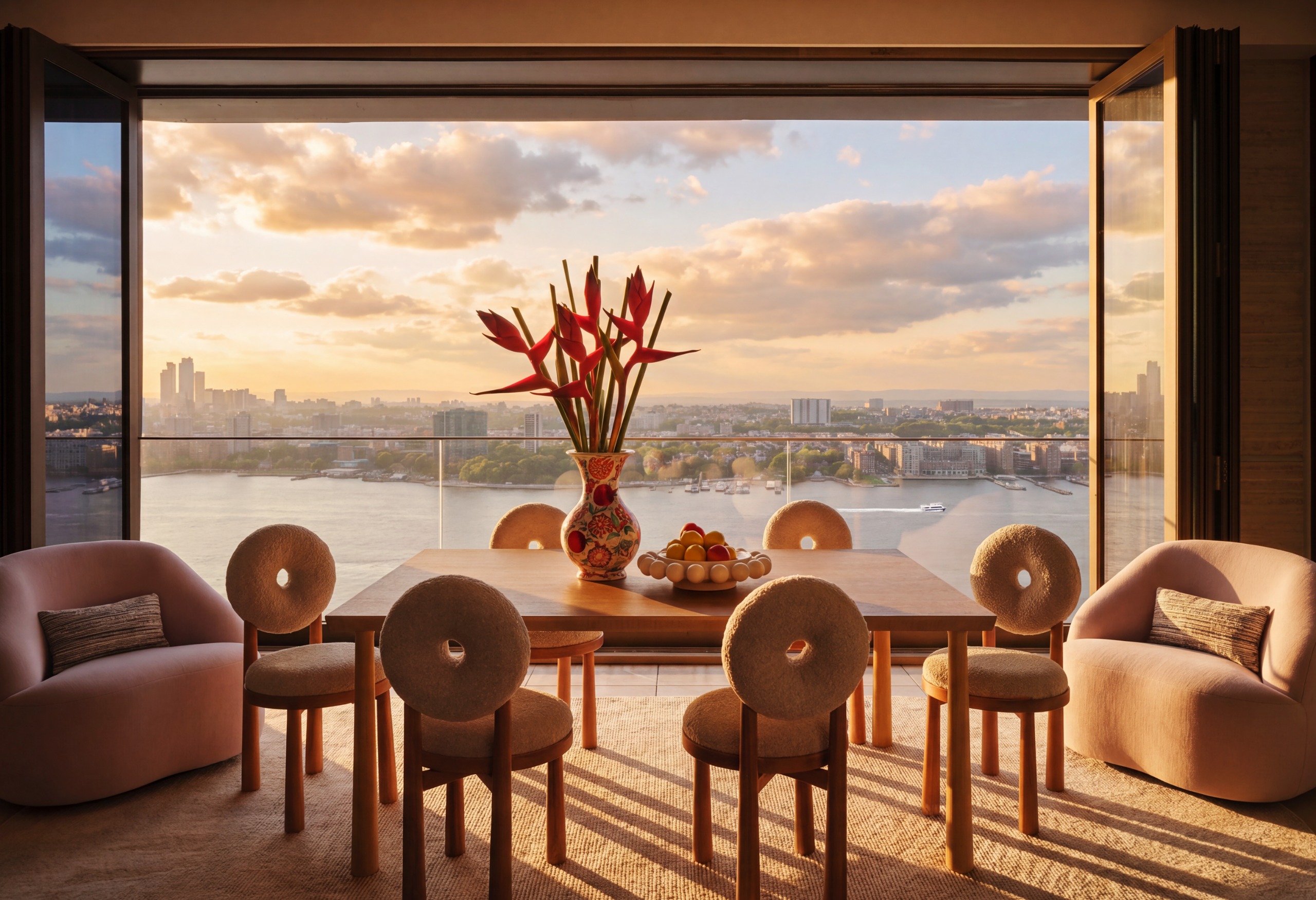
Levine’s collection includes artists whose work addresses race, identity, representation and power. In a museum, those concerns are encountered through labels, institutional framing and public discourse. In a home, the relationship is different. A painting or textile may be passed every morning, encountered during dinner or seen obliquely from another room.
That repetition can deepen the relationship with difficult work. It can also reveal whether a collector has acquired an artwork for its intellectual and emotional force or merely for status. Domestic space removes some of the theatre of the gallery. What remains is the question of whether the object continues to generate attention after familiarity sets in.
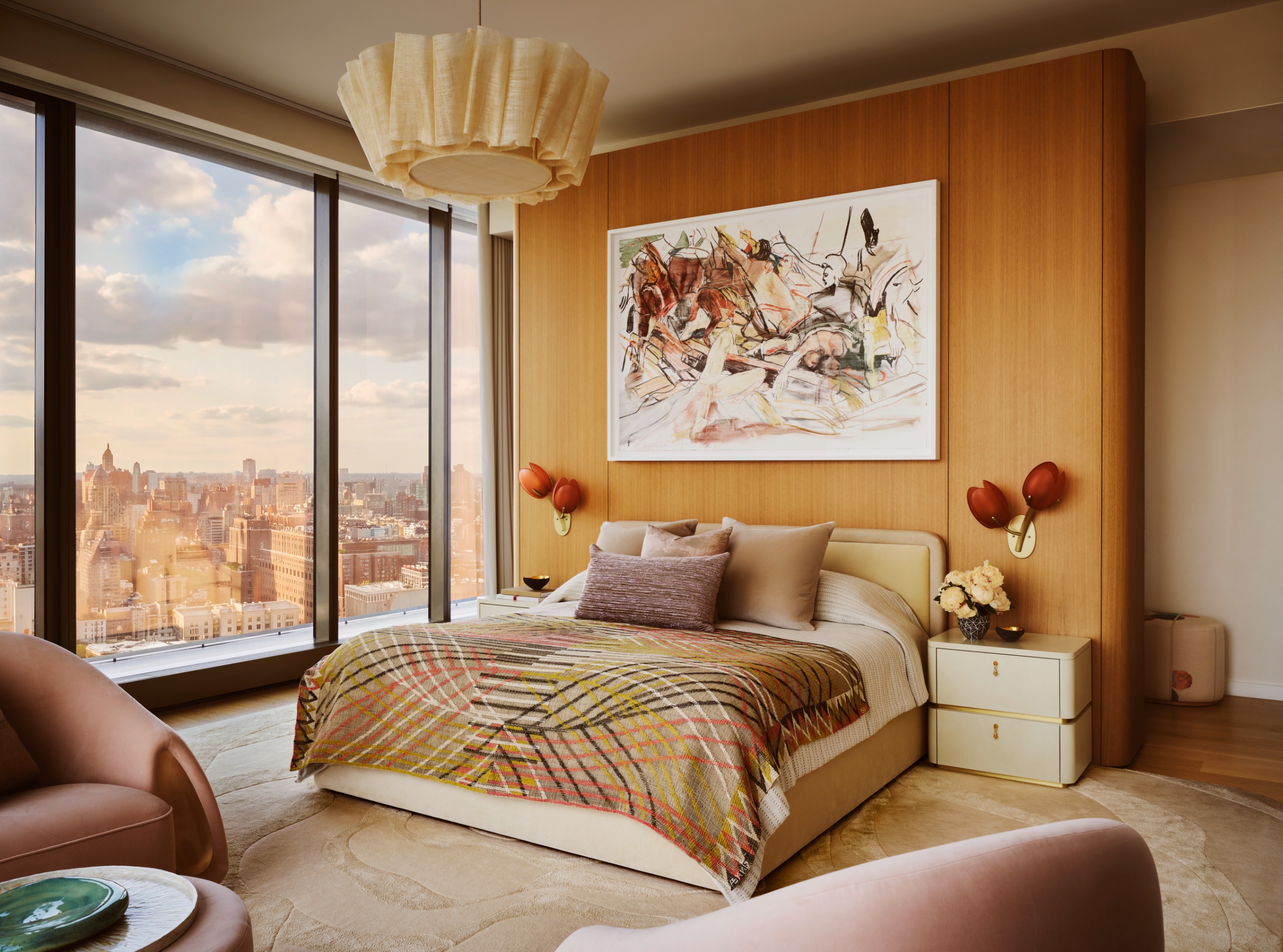
The best collector homes feel cumulative rather than solved. They contain evidence of changing taste, friendships, mistakes, discoveries and periods of obsession. Levine’s apartment has that quality despite the coherence of Behun’s design. The art does not feel selected to complete a scheme; the scheme has been built to accommodate a collection that already has its own biography.
That difference is visible in the Vasconcelos commission. It is difficult to imagine choosing such an exuberant installation simply because a loggia needed “art.” It exists because a relationship made the leap from public cultural exchange to private collaboration.
There is a broader lesson here for collectors building homes around art. The strongest interiors do not begin with the question “Where can the collection fit?” They begin by understanding how the owner actually lives with objects and people. Some works need distance. Others become more meaningful through proximity. Commissions may require the architecture itself to change.
Levine’s home also demonstrates that patronage can be a form of collecting. Supporting an artist through commissions, exhibitions and introductions creates a relationship with practice that is richer than treating acquisition as the final step of a transaction.
Most importantly, the apartment remains recognisably a home. Art is everywhere, but there is no demand that visitors behave as though they have entered a private museum. That informality is not a lowering of standards. It is the point: a collection becomes most convincing when it is fully integrated into a life.
Kelly Behun’s West Chelsea apartment for former US ambassador Randi Charno Levine shows how a serious contemporary collection can grow from relationships, patronage and a new Joana Vasconcelos commission.

The new Dasha Shenkman Focus Fund has placed three Okiki Akinfe works into Abbot Hall. Its real significance is a model of private patronage that creates public institutional value early.
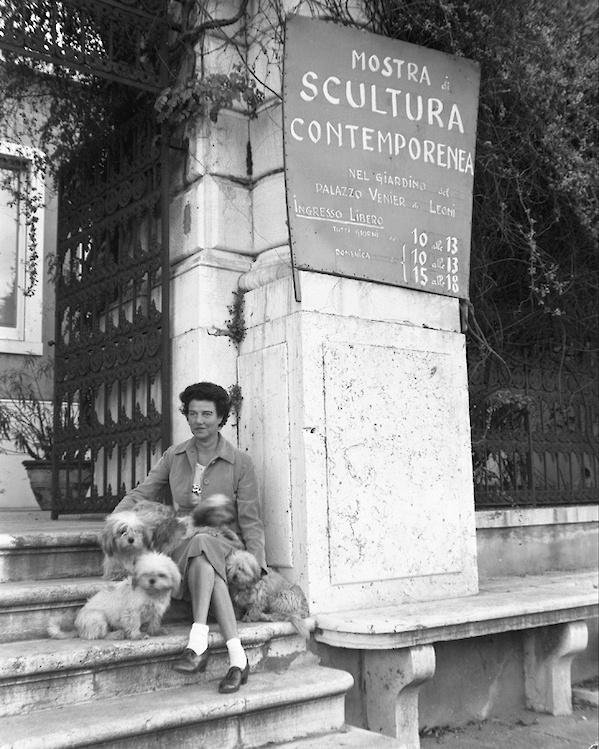
At Palazzo Venier dei Leoni in Venice, Peggy Guggenheim made modern art part of daily life—and left a model for the home as a living collection.