
September 4, 2026
Articles
Articles
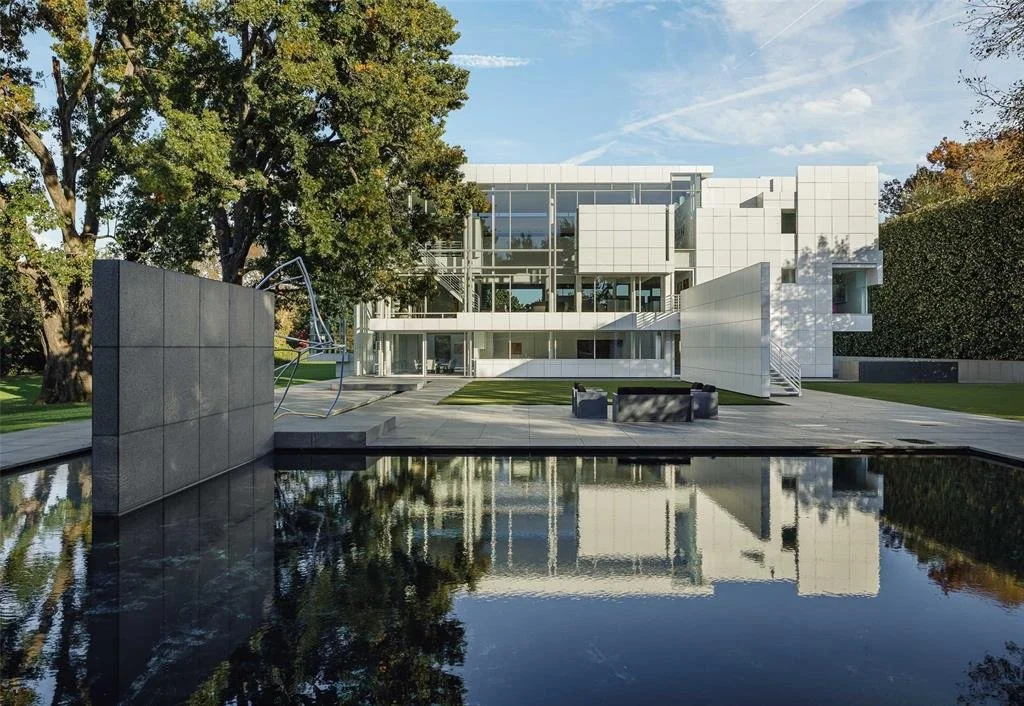
As Richard Meier’s Rachofsky House enters a new chapter, its real significance is not the listing price but the question it poses: what does a home become when architecture is designed to think with art?
As Richard Meier’s Rachofsky House enters a new chapter, its real significance is not the listing price but the question it poses: what does a home become when architecture is designed to think with art?
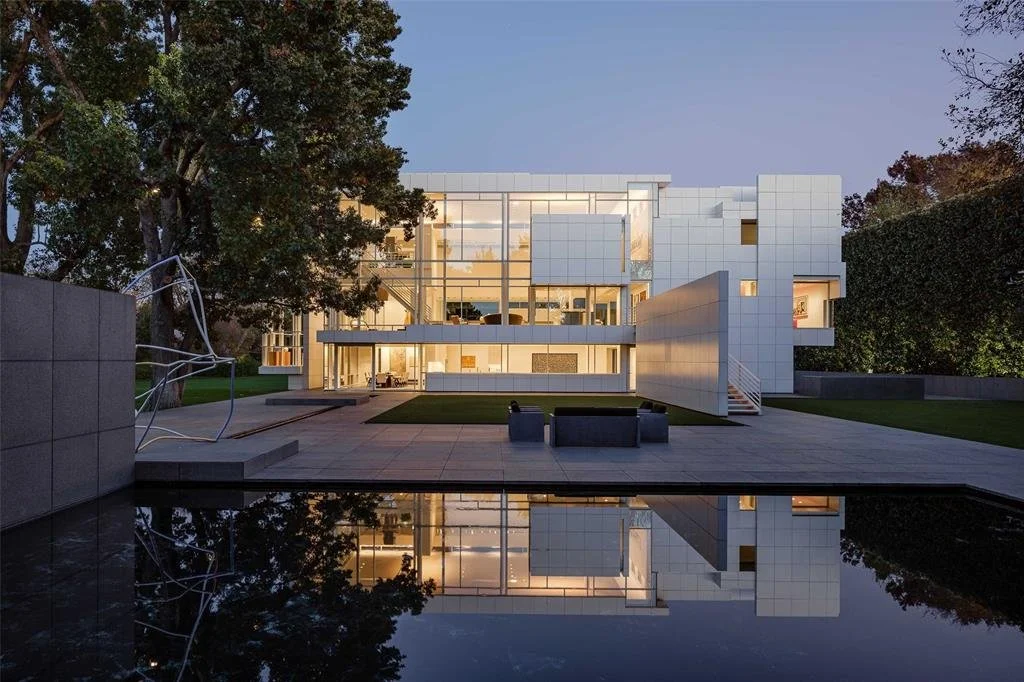
Few private houses have made the relationship between architecture and contemporary art as explicit as Cindy and Howard Rachofsky’s Dallas residence. Its 2026 sale is therefore more than a property story: it asks what happens when a collector-built environment becomes culturally significant in its own right.
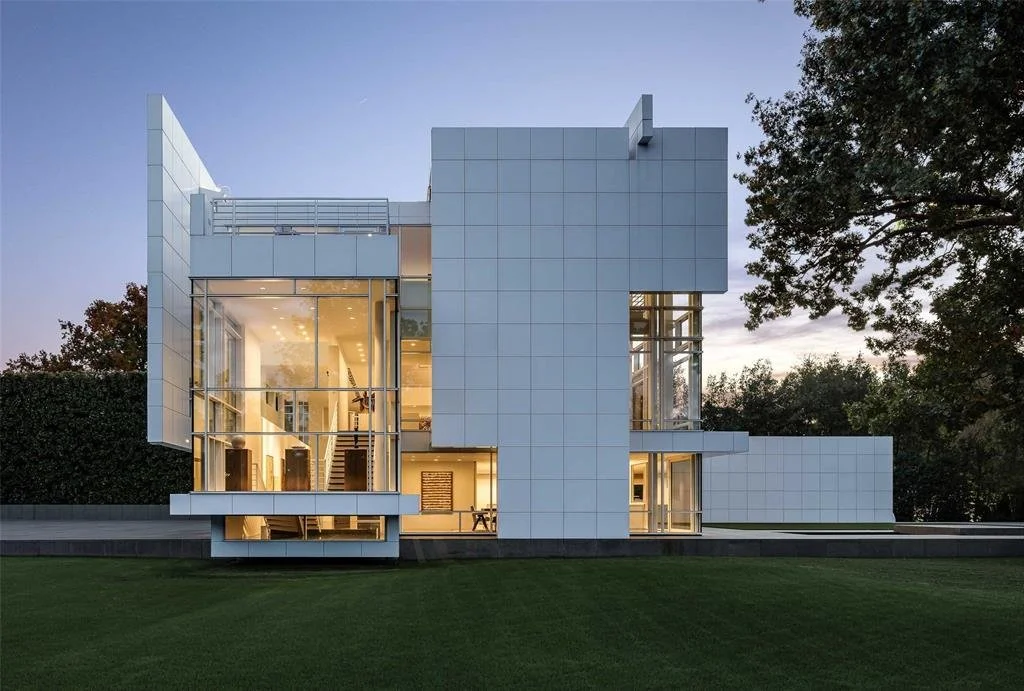
A house can be designed to contain art, or it can be designed to change the way art is seen. The Rachofsky House belongs to the second category. Completed in 1996 by Richard Meier, the white, elevated structure in Preston Hollow was conceived as a private dwelling but developed into one of Dallas’s defining sites for contemporary art, with rotating installations inside and site-specific sculpture across the grounds.
That history makes the property’s appearance on the market in 2026 unusually charged. The 9,062-square-foot residence was publicly offered at $23 million in October 2025 and reduced to $17.5 million in May 2026; live listing data last updated in July still showed it active at that figure. Price is the easy headline. The more important question is whether the next owner is acquiring real estate, architecture, a piece of Dallas cultural history—or some combination of all three.
For collectors, the house is useful because it makes visible a problem that usually remains private. Once architecture has been shaped by decades of art, can it ever become simply a house again?
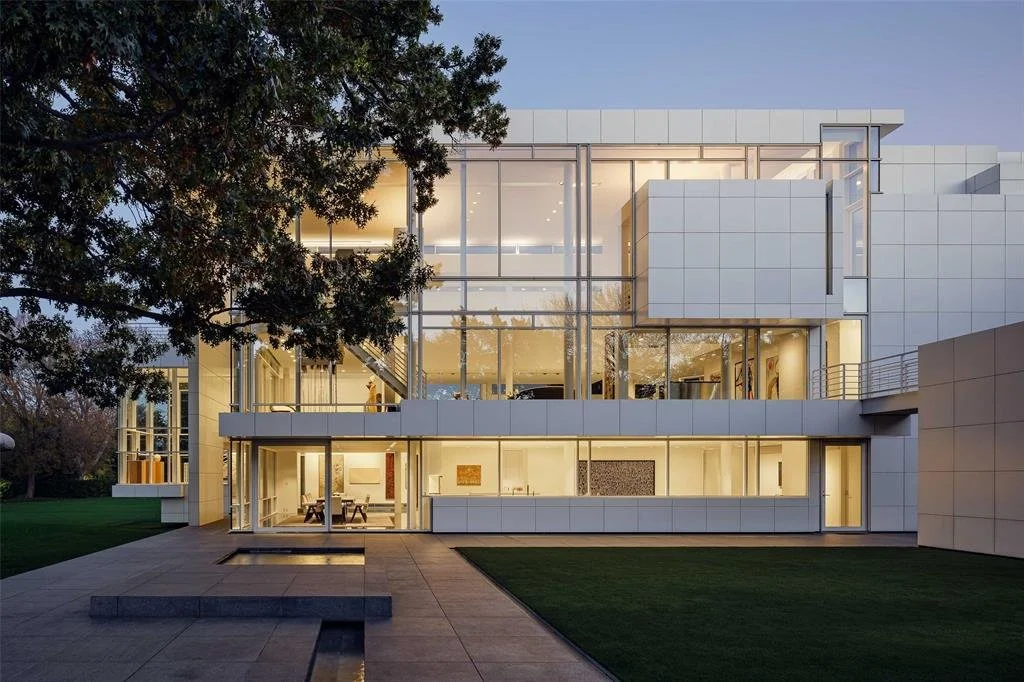
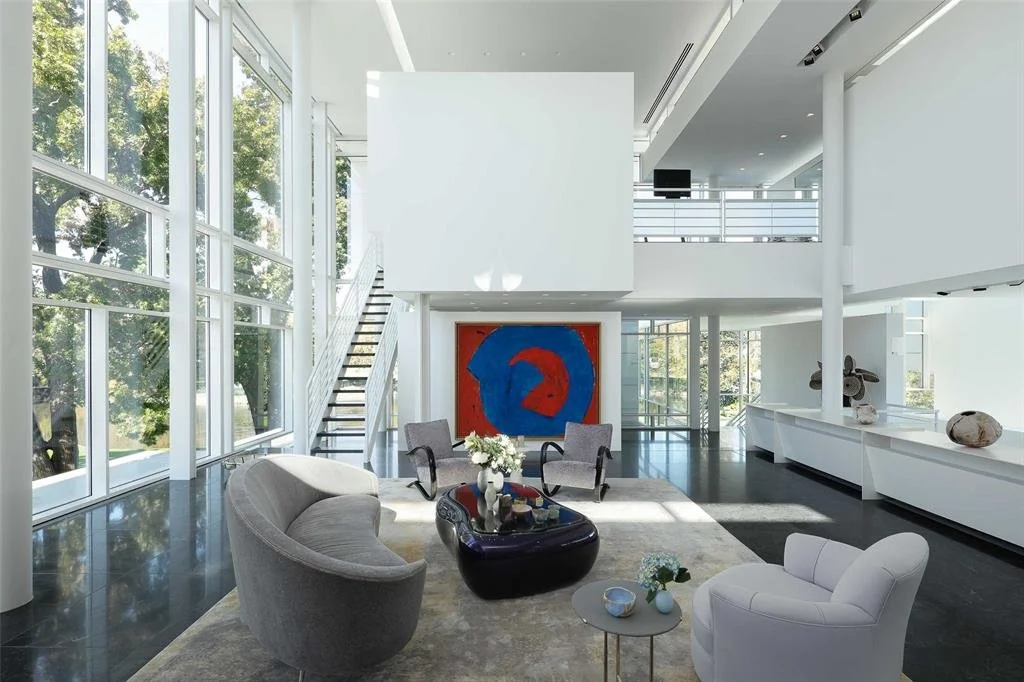
Meier described the house as a procession: exterior to interior, formal to intimate, and eventually back outside. The double-height second-floor living room functions as the heart of that sequence. Through the glazed rear plane, pond, oak trees, sky and changing light remain continuously present. The architecture does not merely provide walls for art; it puts art in competition and conversation with the site.
This matters because many collector homes solve practical requirements without asking what those solutions do aesthetically. They provide reinforced walls, controlled light, generous circulation and sufficient scale—important things—but stop at capability. The Rachofsky House goes further. Its geometry, transparency and movement create conditions that can make one work feel radically different from another.
The house’s own archive makes that explicit. Installations were repeatedly reconsidered, often annually, with rooms organized around intellectual rather than decorative relationships. A 2008–09 “primer” placed historically catalytic works in the entrance and dining areas, more psychological material upstairs, nonobjective postwar work in the library, and younger voices elsewhere. The home behaved less like a permanent hang than a curatorial laboratory.
The Rachofsky Collection now comprises roughly 800 works and is especially strong in global forms of Minimalism, postwar European and Italian art, postwar Japanese art and questions of postwar identity. Lucio Fontana, Piero Manzoni, Alberto Burri, Mario Merz, Donald Judd, Robert Ryman, Atsuko Tanaka, Kazuo Shiraga, Felix Gonzalez-Torres and Louise Bourgeois are among the artists represented.
There is an obvious formal affinity between Meier’s architecture and certain parts of that collection, but the house is most interesting when the match is not perfect. Rigorous architecture can sharpen unruly work. Fragile material can make white geometry feel less absolute. Figurative or psychologically charged art can expose how quickly “neutral” modernism becomes a mood of its own.
This is a useful lesson for collectors commissioning new houses. Building an interior that stylistically imitates the collection can be limiting. An architecture of capacity—good light, scale, circulation, structure and flexibility—often serves art better than an architecture of resemblance. The collection will change. New mediums will arrive. A room that seems ideal for paintings may eventually need to hold a suspended sculpture, a sound work or something that requires darkness.
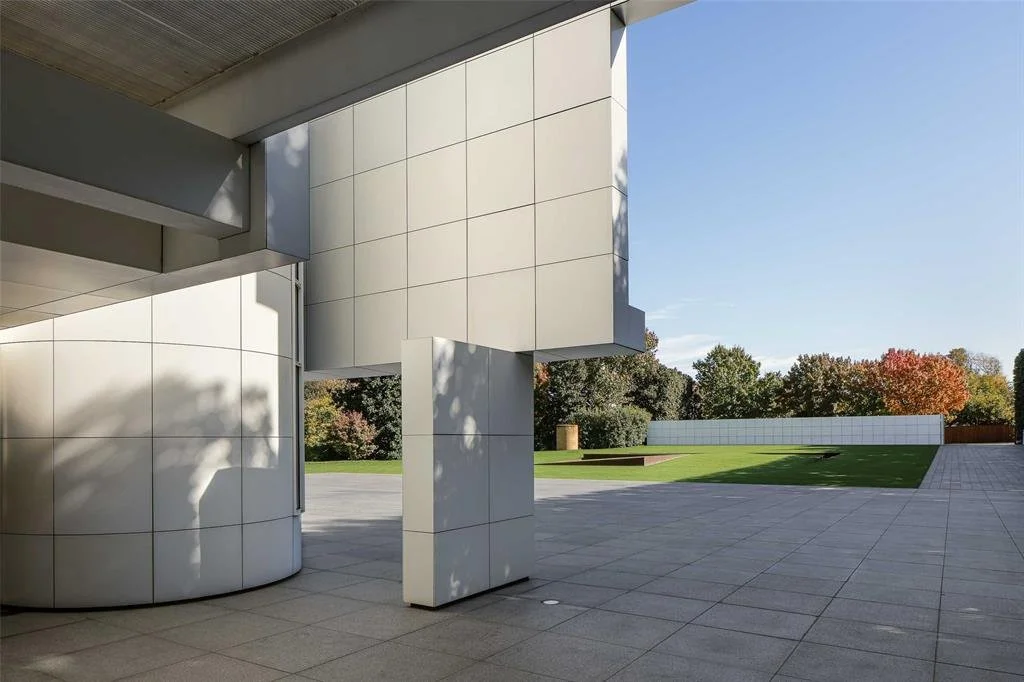
The Rachofsky House also complicates the word “private.” It is a home, but its cultural role has long exceeded domestic use. Its installations, events and relationship to the broader Rachofsky collection helped make it part of Dallas’s art ecosystem. Site-specific outdoor works were made in relation to the grounds. Artists responded to the architecture. Visitors learned the collection through the building rather than through storage or auction catalogues.
That kind of cultural capital is difficult to transfer. A buyer can acquire the structure and land, but not automatically the collecting history that made the place matter. Nor should the house be frozen as a memorial to one taste. The interesting stewardship question is whether future use can acknowledge what happened there without converting a living building into a shrine.
Collector homes face this issue more often than the market admits. When important collections disperse, architecture can lose the objects that gave its spaces scale and purpose. A wall designed for a monumental work becomes oddly blank. A plinth becomes meaningless. Conversely, a new collection can reveal capacities the original owners never tested.
A culturally important collector home should not be preserved as a photograph. Its deeper value lies in preserving the possibility of serious looking.
The 2026 listing turns the Rachofsky House into a rare live case study in the afterlife of collector architecture. It demonstrates why conversations about legacy should begin before a house, collection and estate are forced into separate decisions. If a residence has hosted important works, commissioned site-specific art, supported public programming or become embedded in a city’s cultural identity, that history deserves documentation just as carefully as the provenance of an artwork.
Documentation can include installation photographs, floor plans, correspondence with artists, lighting and engineering records, wall histories and decisions about commissioned works. These materials may ultimately matter to scholars even if the property becomes fully private.
The house also offers a more immediate lesson: collectors should think about display as a changing practice, not a final fit-out. The Rachofskys’ own installations were repeatedly rethought. Rooms changed intellectual purpose. Works gained and lost neighbours. That willingness to reinstall is one reason the building became more than an immaculate piece of 1990s architecture.
Whether the next chapter preserves the same degree of art-world access is a question for the future owner. But the house has already demonstrated something enduring: architecture can become part of collecting when it is used not to flatter possessions, but to keep testing them.
Recent discussion around the Rachofsky House has understandably included architectural preservation. In August 2026, Dallas architecture commentary pointed to the vulnerability of even celebrated modern houses when land value becomes a powerful competing force. For collectors, however, preservation should be understood more broadly than preventing demolition. A building can survive physically and still lose the cultural information that made it significant.
Installation histories are part of that information. The official Rachofsky archive shows how repeatedly the same architecture was asked different questions: Italian postwar art, sculpture, identity, recent acquisitions, single-artist interventions. Those shifts record a collector’s intellectual development. They also reveal something about individual artworks—how scale, light and proximity altered their reading in a domestic setting.
A future owner does not need to recreate those displays. In fact, doing so indefinitely could reduce the house to a historical set. More meaningful stewardship would protect the conditions that allowed change: the spatial sequence, significant landscape relationships, the possibility of installing art ambitiously and a record of what has already taken place there.
This is increasingly relevant as major private collections move between generations. Collectors routinely prepare catalogues, appraisals and provenance files for objects while leaving the history of the rooms undocumented. Yet a collection’s domestic life can become essential evidence. Photographs of how works were lived with, artists’ visits, site-specific decisions and changes made to accommodate particular pieces can all matter later. The Rachofsky House is an unusually visible example of a principle that applies far beyond Dallas: houses can carry collection provenance too.
The outdoor programme adds another layer to the sale. The Rachofsky House has long noted that most of its outdoor works are site-specific and rarely move. That fact is conceptually important even when ownership, transfer and future display are governed by separate legal arrangements. A site-specific work is not simply sculpture placed on expensive land. Its meaning may depend on grade, sightline, vegetation, approach, distance from the house or a particular relationship to water and sky.
Collectors commissioning such works should document those dependencies while the artist, fabricator and original context are available. What may be altered without compromising the work? Can a tree be replaced? Does a pond level matter? Is the work intended to weather? If it must move, is relocation considered a new installation requiring artist or estate involvement? The answers belong in the collection file, not only in the memory of the owner.
The Rachofsky House makes this issue unusually legible because Meier’s architecture already treats landscape as part of the interior experience. When site-specific art is added, property, architecture and collection become overlapping systems. That is one reason the house’s next chapter is culturally interesting: even before any decision about use is made, it demonstrates how deeply collecting can become embedded in place.
As Richard Meier’s Rachofsky House enters a new chapter, its real significance is not the listing price but the question it poses: what does a home become when architecture is designed to think with art?

Before Art Basel Paris arrives in October, September brings a concentrated Paris season spanning Kerry James Marshall, Cezanne, Christian Marclay, Paris Design Week, Fine Arts Paris and a gallery-history exhibition in the Marais.
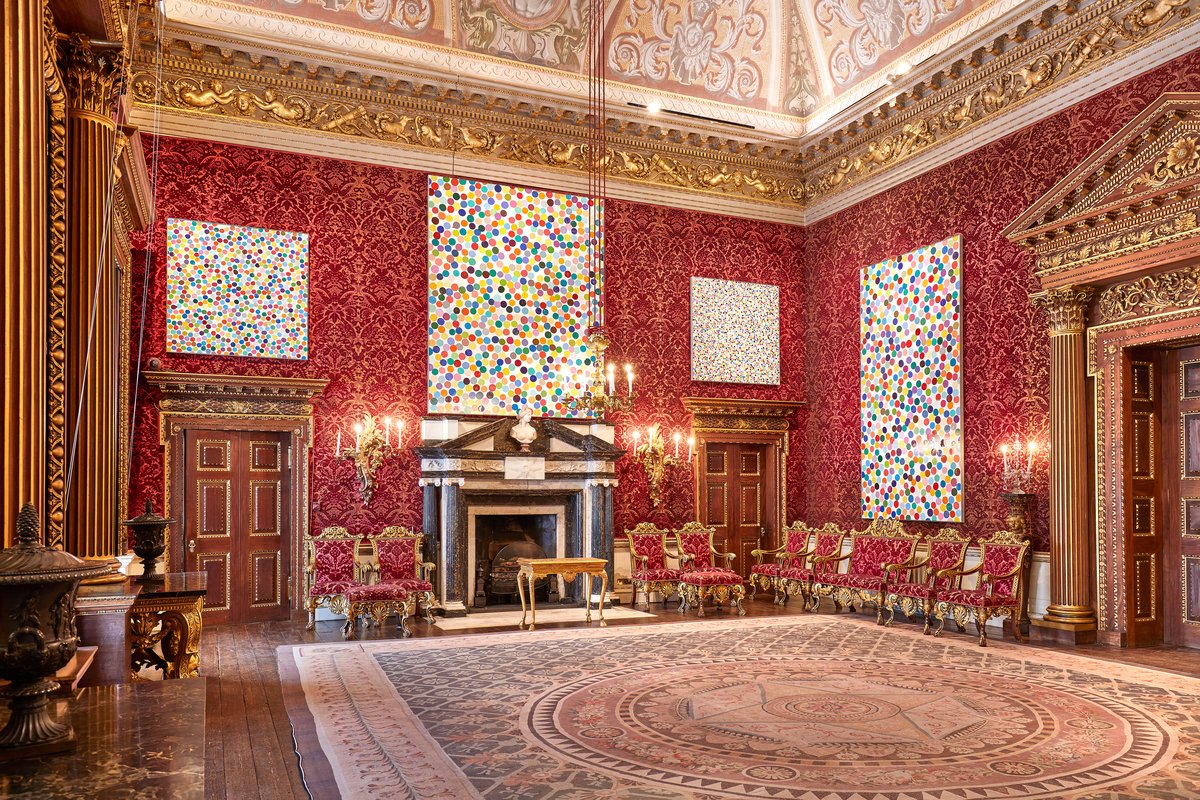
Gagosian’s Damien Hirst solo booth at Frieze Seoul is less a comeback than a compact map of a highly segmented market—placing Spots, Spins, cabinets, Colour Space, Secret Gardens and Treasures side by side for collectors.