
October 23, 2026
Exhibitions
Exhibitions
From Carlo Mollino and Faye Toogood to Misha Kahn and Gallery FUMI, PAD London 2026 showed what discerning art collectors can learn from sculptural furniture and material experimentation.
From Carlo Mollino and Faye Toogood to Misha Kahn and Gallery FUMI, PAD London 2026 showed what discerning art collectors can learn from sculptural furniture and material experimentation.
The most important question raised by PAD London 2026 is not whether collectible design now belongs in the art market, but how carefully collectors distinguish sculptural ambition from good merchandising. The fair returned to Berkeley Square from 13 to 18 October, bringing historic furniture, experimental materials, ceramics, lighting and jewellery into unusually close proximity. For ARTCOLLECTORHOMES, its significance lies in a wider shift: homes are becoming sites where functional objects are judged with the seriousness long reserved for painting and sculpture.
PAD offers a concentrated encounter between historical design and contemporary authorship. An important nineteenth- or twentieth-century object may share the same fair with a recent work by a maker who moves between sculpture and furniture. That adjacency can sharpen the collector’s eye, but it should not blur essential distinctions. Historical design invites documentation of date, maker, production history and restoration. Contemporary collectible design adds questions about edition limits, fabrication, variants, studio involvement and the conditions under which a work can be reproduced.
The best presentations did more than propose expensive things to own; they showed how material knowledge becomes an artistic language. At Galerie Boketto’s Through and Through, transparency, weight and form offered a conceptual route into the objects. Elsewhere, contemporary craftspeople placed sculptural experimentation in the company of practical domestic use. These are not neutral display choices: a booth built around materials reveals the decisions through which an object acquires its value.

The New York gallery’s 2026 PAD presentation assembled Andrea Branzi, Carmen D’Apollonio, Andile Dyalvane, Misha Kahn, Kaori Kurihara, Raphael Navot, Adam Pendleton, Samuel Ross, Faye Toogood, Jonathan Trayte, Thaddeus Wolfe and others. The breadth is deliberate. It argues that the boundaries between industrial design, functional sculpture and conceptual practice are increasingly porous. Yet the most productive comparisons are precise, not sweeping: what does each maker do with a chosen material that another does not?
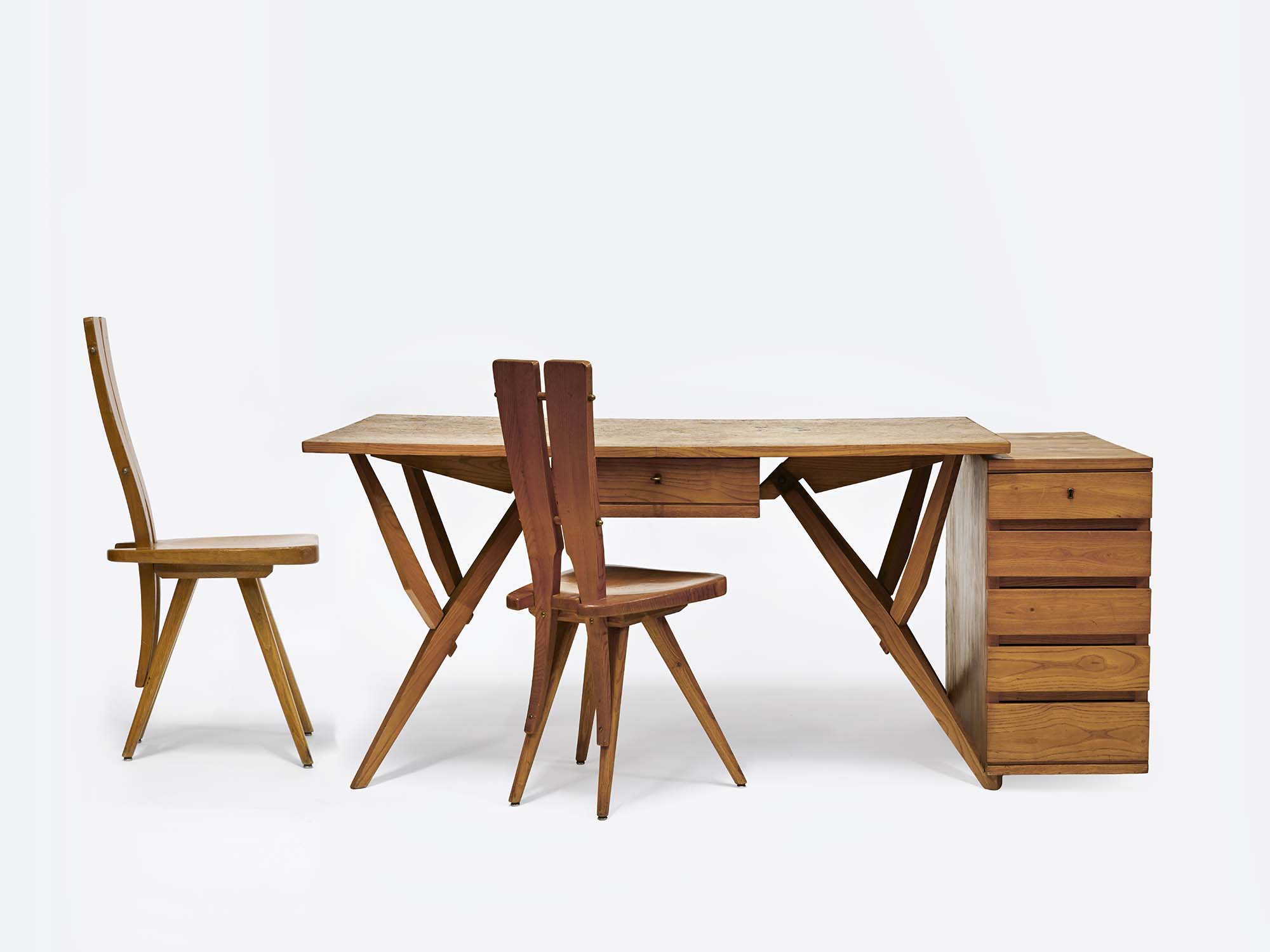
One remarkable historical anchor was Carlo Mollino’s writing desk for Casa Editrice Lattes (1951), shown with chairs from Casa del Sole (1954). Mollino’s designs are inseparable from his architectural imagination, and their presence offered a useful measure against which to read new works. A collector considering a mid-century piece should separate original construction from later restoration, understand variations among documented versions and inspect surfaces and joints. Historical rarity is an argument to investigate, not an automatic guarantee of quality or condition.
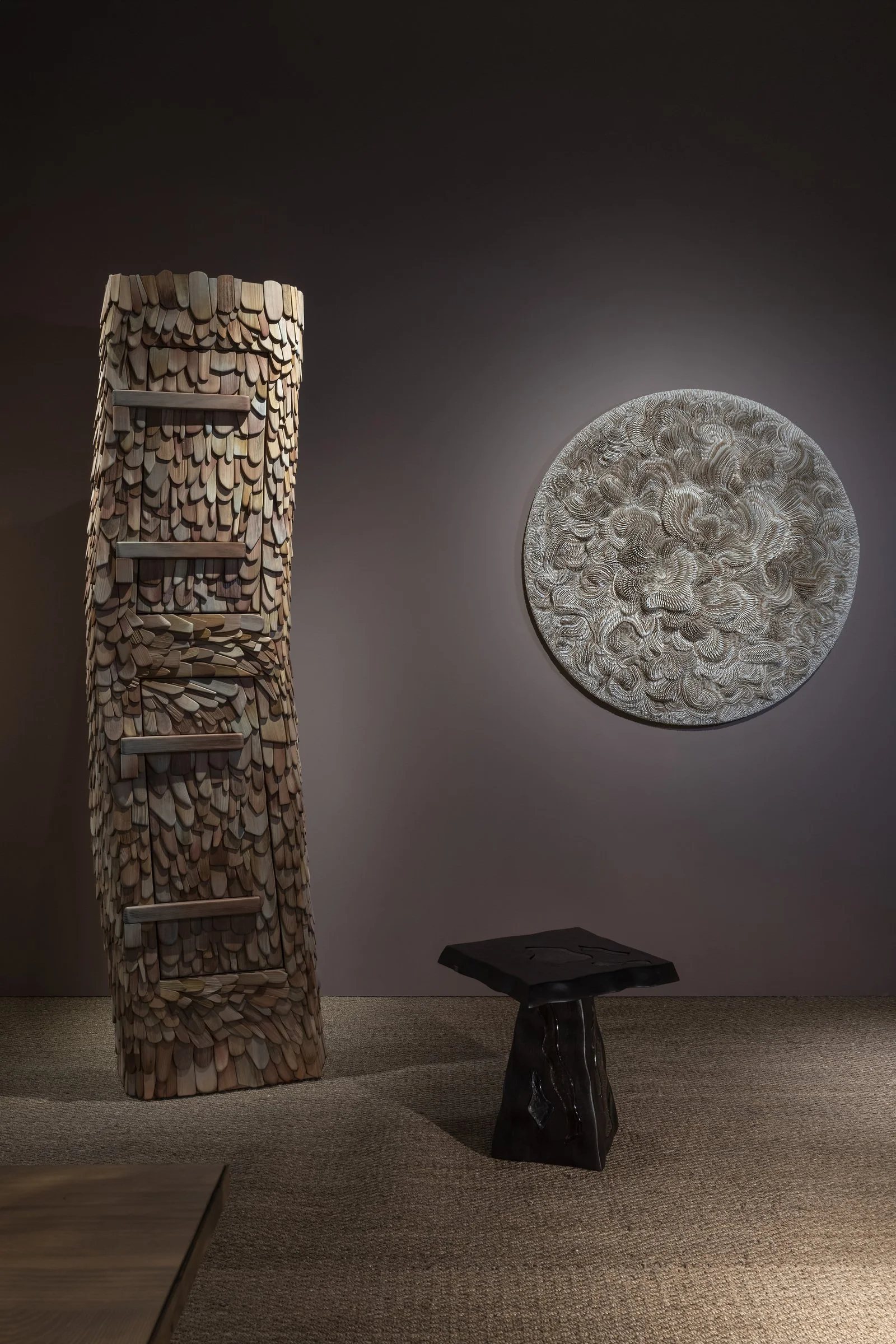
Misha Kahn’s presentation included new works in his Rock series, combining natural minerals with cast bronze, alongside a large mohair tapestry. The dialogue between the mineral and the manufactured is central to the appeal: what looks almost geological is, in part, the outcome of elaborate design and engineering decisions. Faye Toogood’s Cairn, a hand-carved oak chair, operates in a different register. It treats a domestic typology with the gravity and tactility of a sculptural mass. Both ask a collector to reconsider what counts as useful without needing to abandon utility.
Samuel Ross’s bench Amnesia or platelet apparition?, combining white marble and Safety Orange-lacquered steel, creates a collision of material associations. Marble signals permanence and monumentality; industrial orange invokes warning and infrastructure. The work’s value is not exhausted by how photogenic that collision may be. To understand it as design, examine joinery, weight, surface finishing and edition information, alongside the artist’s longer sculptural research.

Carmen D’Apollonio’s sculptural lights and Andile Dyalvane’s ceramics foreground different relationships between making, cultural reference and personal form. Thaddeus Wolfe’s vessels bring a particular concern with glass and surface. Each invites an object-level encounter in which the evidence of processes—firing, casting, polishing, cutting or assembly—is part of the art. For the domestic collector, however, this appreciation should be accompanied by practical questions: are repairs possible, will the maker or gallery provide care instructions, and how should fragile works be packed and insured?
This is especially important when a sculptural object performs an everyday function. A lamp may need compliant electrical fittings, replaceable components and professional installation. A ceramic vessel may be a sculpture rather than an item suitable for food or water. A chair may be structurally sound without being intended for intensive daily use. “Functional” and “usable by everyone, every day” are not synonyms. Clear documentation protects both the object and the owner.
PAD’s broader 2026 programme offered compelling material-led practices outside the names that regularly dominate secondary-market discussion. Rebeka Rácz’s The Watcher Coffee Table, shown through Initio Arts & Design, uses richly coloured, patterned surfaces to complicate an otherwise familiar domestic form. Gallery FUMI’s presentation demonstrated the continuing importance of the sculptural and handmade within a design-led context, while younger names and galleries tested combinations of metal, wood and textile that deserve attention beyond a single fair week.
For collectors this is an opportunity to broaden habits without surrendering standards. Ask whether the gallery can document a work’s edition and authorship, who actually fabricated it, and how the maker’s practice has developed. Research independent exhibitions and public collections where relevant; avoid assuming that fair inclusion alone confers institutional importance. At the same time, a young designer’s unfamiliarity need not count against a purchase if the work makes a serious, sustained proposition that the buyer understands and wishes to live with.
The technical questions are familiar but often neglected. Establish edition and prototype status; confirm dimensions, total weight and load limits; request materials and finish specifications; inspect any historic restoration; document provenance and prior ownership; understand servicing, certificates and workshop attribution; and calculate installation and shipping before payment. Keep condition photographs and invoices with the collection database. For objects containing wood, glass, fabric, ceramics or sensitive finishes, environmental stability and placement are part of stewardship.
Perhaps the greatest lesson of PAD 2026 is that the most interesting homes will not be assembled from one period or one marketplace. A Mollino desk, an experimental light, a new ceramic vessel and a contemporary painting can inhabit one room without becoming a showroom if the owner knows why each belongs there. Collectible design is most compelling when it changes daily life as well as the market category to which an object belongs.
Exhibition dates and source material: PAD London, Berkeley Square, 13–18 October 2026 (now closed). Friedman Benda 2026 presentation; official exhibitors; documented fair-installation images.
From Carlo Mollino and Faye Toogood to Misha Kahn and Gallery FUMI, PAD London 2026 showed what discerning art collectors can learn from sculptural furniture and material experimentation.
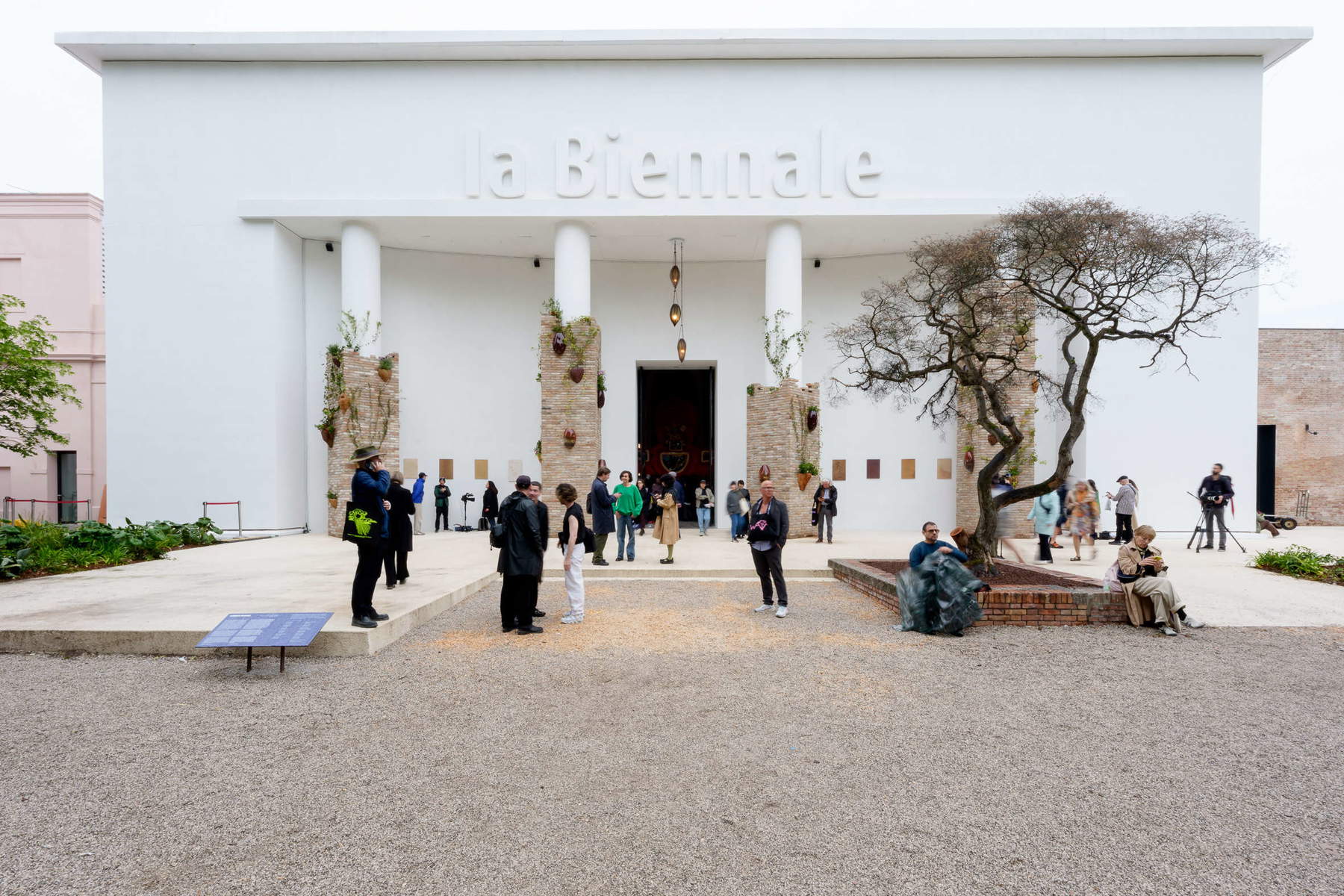
The last weeks of Koyo Kouoh’s In Minor Keys demand a slower way of seeing Venice. A practical guide to the central exhibition, national pavilions and what collectors should take away.

From Faye Toogood and Kate Malone to textile art, post-war furniture and new material-led designers, PAD London showed why serious collector homes are built beyond the frame.