
October 12, 2026
Articles
Articles
Yelin Lee's Ghost Play transforms emojis into sculpture, uses chroma-key screens and a two-minute delay, and turns visitors into their own fleeting afterimages.
Four early Yayoi Kusama watercolours preserved in Joseph Cornell’s archive reveal how friendship, receipts and archival care can transform provenance into art history.
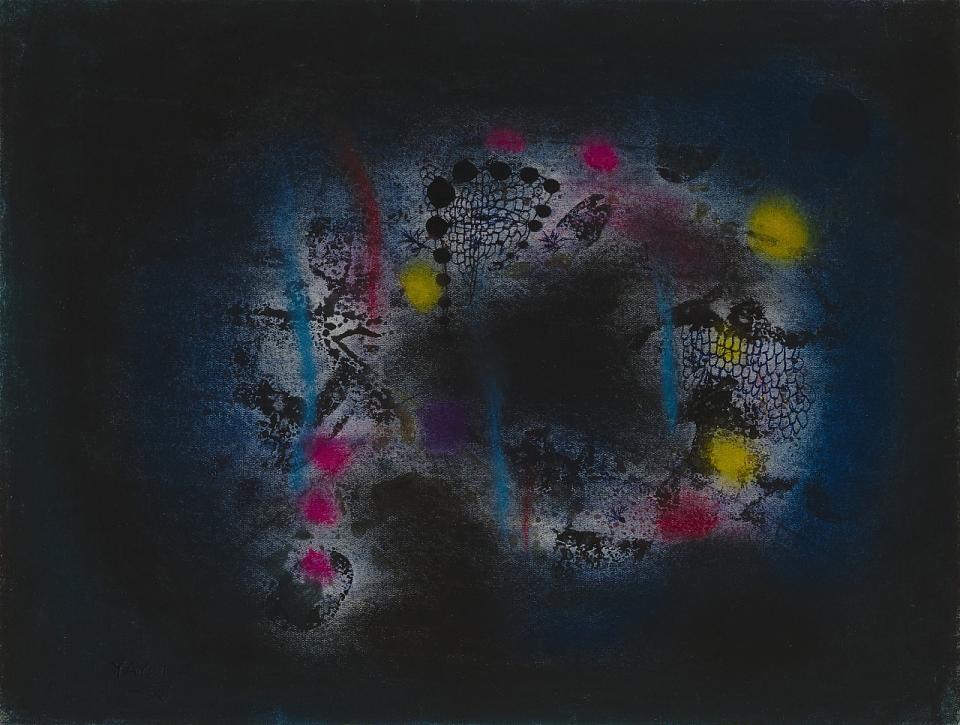
Four small works on paper by Yayoi Kusama spent decades inside Joseph Cornell’s archive before being recognised for what they were. As the Smithsonian returns the story to attention in 2026, their real significance lies not in a fresh “discovery” but in what they reveal about friendship, documentation and the deeper meaning of provenance.
Some provenance stories begin with a dealer’s invoice. This one begins inside another artist’s house. On 27 August 2026, the Smithsonian American Art Museum returned The Lost Kusamas to the front of its collection stories. It is an irresistible headline, but the chronology matters. The four watercolours were found by archivist Anna Rimel in 2018 while she was working through material preserved in SAAM’s Joseph Cornell Study Center. They were transferred into the museum’s art collection in 2019 and made their public debut in 2021. What is newly timely is the opportunity to look again at what the episode means.
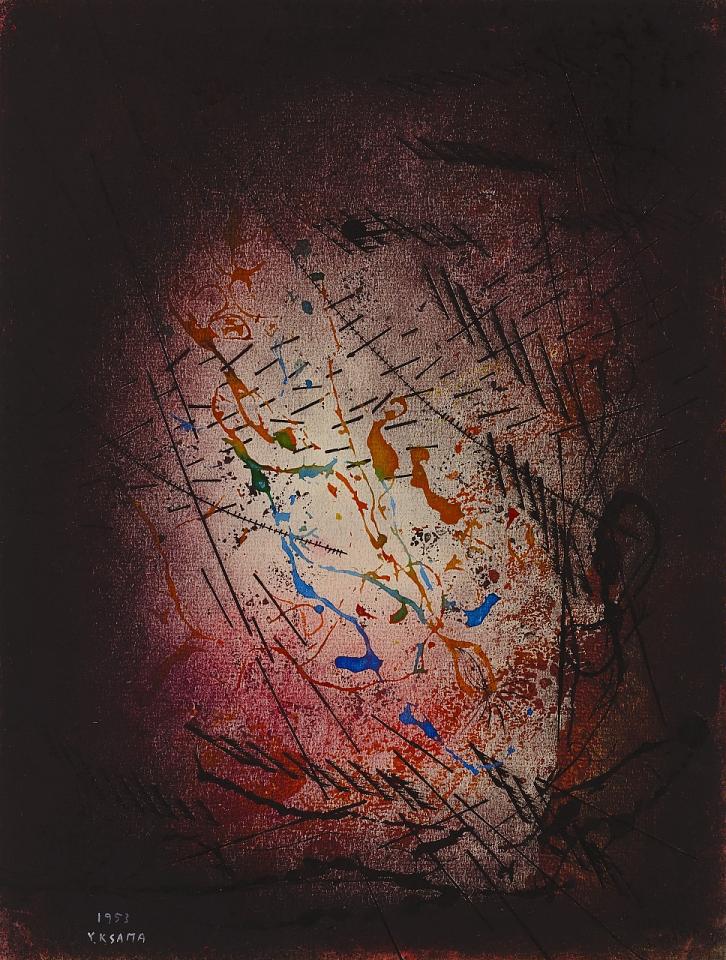
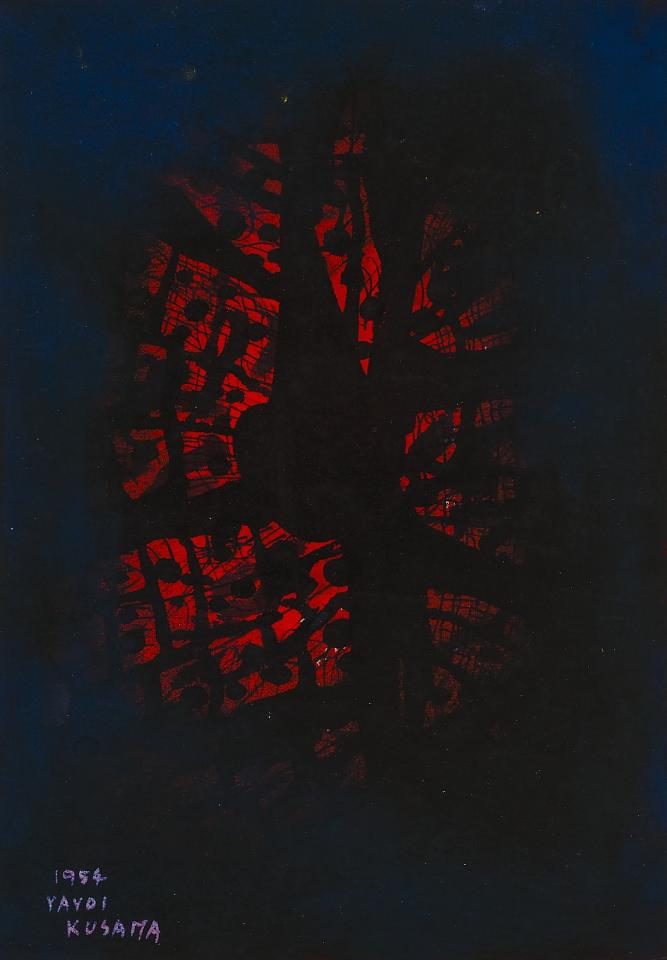
The works are modest in scale and early in date: Autumn and Forlorn Spot from 1953, Deep Grief from 1954 and Fire from around 1954. They were made before the Infinity Nets, before the mirrored rooms and before dots and pumpkins made Kusama one of the most instantly recognisable artists in the world. Yet the four sheets already contain something important. Their microscopic, cellular and cosmological forms seem to hover between inner space and an expanding universe. Seen retrospectively, they do not look like juvenilia waiting for the “real” work to begin. They look like concentrated beginnings.
The crucial fact is that these works did not simply drift into Cornell’s papers by accident. Cornell bought them. SAAM’s archive preserves a receipt dated 22 August 1964 recording his purchase of the four Kusamas. That single piece of paper turns an archival surprise into a documented episode of artist-to-artist collecting.
Cornell and Kusama had met in New York in 1962. He was almost three decades older and already established for the enigmatic box constructions that transformed fragments of everyday material into private theatres of memory. Kusama was building a career in a city that could be both exhilarating and punishing. Their friendship lasted until Cornell’s death in 1972. The surviving record suggests a relationship in which emotional intimacy, artistic exchange and practical support overlapped. Cornell sometimes gave Kusama his own works to sell so she could retain a commission when money was difficult; he also became a buyer of her work.
For collectors, the distinction matters. Provenance is often reduced to a sequence of names designed to establish clean title: artist, gallery, collector, auction house, next collector. That legal chain is essential, but it is not the whole story. Here the identity of one owner adds an art-historical layer. Cornell was not merely a famous name in the ownership history. He was a fellow artist whose own practice revolved around found images, intimacy, memory and the charged life of small things. Knowing that he chose these particular sheets changes how we look at them.
Kusama left Japan in 1957 with roughly 2,000 works on paper, intending in part to sell them to support herself. The four Cornell sheets came from that portable body of work. Their survival is therefore tied to the economics of becoming an artist as much as to aesthetics: paper could travel, paper could be sold, and paper could carry a developing language across borders before the artist had the resources to realise it at architectural scale.
That is one reason early works deserve more careful looking than the market sometimes gives them. Collecting an early drawing by a major artist should not be treated as a budget substitute for an iconic mature painting or installation. The more interesting question is whether the early object contains a problem the artist kept returning to. In Kusama’s case, repetition, accumulation, unstable scale and the oscillation between the bodily and the cosmic are already present. The later work does not simply enlarge these sheets, but it makes their questions easier to recognise.
This is also why chronology matters. A work can be visually attractive yet historically peripheral, or understated yet pivotal. The collector who wants depth should ask where a piece sits within the development of a practice: what came immediately before and after it, whether the artist exhibited related works, whether comparable examples remain in the studio or have entered museums, and whether scholars regard the group as an experiment, a transition or a sustained body of work.
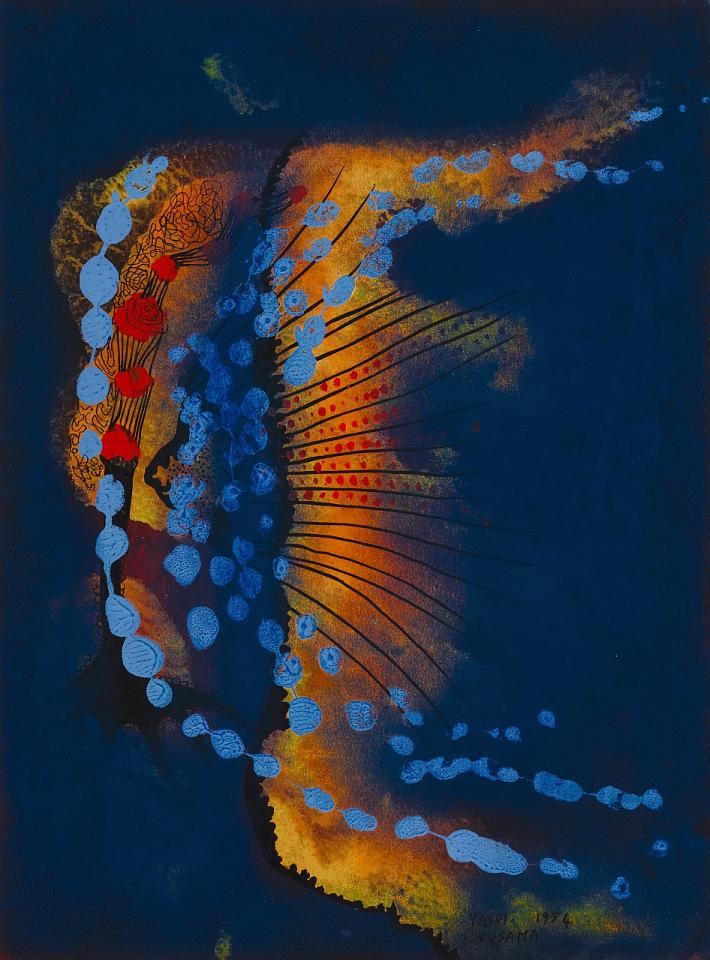
There is another collector lesson hidden in the story: documents that appear secondary can become primary evidence. The works survived in Cornell’s orbit because his material world was preserved with unusual seriousness. Correspondence, photographs, receipts and ephemera were not discarded as clutter after his death; they became a research collection. Decades later, the receipt could answer the most obvious provenance question—why were four Kusamas there?—while the surrounding correspondence could illuminate a relationship that a bare ownership line could never explain.
Private collectors rarely need to build a scholarly archive on Cornell’s scale, but the principle is transferable. Keep the original invoice. Save meaningful correspondence with artists and galleries. Preserve exhibition checklists, labels, condition reports, shipping documents and installation instructions. Record when a work was lent and where it was reproduced. If a purchase followed a studio visit or involved unusual circumstances, write down the facts while they are still fresh. A future curator may care about the detail that feels trivial today.
Digital convenience makes this both easier and more fragile. Important exchanges now happen through email, text messages and messaging apps that are easy to lose when phones change or accounts close. A serious collection database should therefore be more than a list of values for insurance. It should function as a private institutional memory.
The art market loves a good story, which is precisely why collectors should distinguish documented history from romantic inference. “From the collection of another artist” can be genuinely significant, but significance depends on evidence and context. Did the artist-owner buy the work, receive it as a gift or acquire it later on the secondary market? Did the two artists know one another? Was the work kept for decades, exchanged quickly or merely stored on someone else’s behalf? Is there correspondence that establishes why it mattered?
With the Kusamas, the paper trail is unusually satisfying. We know Cornell acquired the works. We have a dated receipt. We know the artists were close. The works remained within material associated with his life and studio until the archive yielded them to a curator and archivist capable of identifying their importance. None of this requires speculative mythology.
Collector NotesKeep the paper trail: invoices, receipts, emails, labels, shipping records and loan documentation can become part of a work’s scholarly history.Ask where an early work sits: date alone does not make an object important; look for continuity between the work and questions that shape the mature practice.Record relationship provenance carefully: a celebrated prior owner matters most when the connection is documented rather than anecdotal.Do not neglect works on paper: drawings can preserve the first appearance of ideas later realised at monumental scale.Separate history from price: a compelling provenance can deepen interpretation without guaranteeing a financial premium.
The most appealing version of this story is that four Kusamas were “lost” and then found. The more useful version is subtler. The works were protected by an ecosystem of collecting: Cornell’s decision to buy them, his habit of preserving material, the Benton family’s stewardship, SAAM’s decision to establish a study centre, an archivist’s attention and a museum’s willingness to move works from documentary holdings into the art collection when their status became clear.
Collections create futures that their makers cannot predict. Sometimes the work that looks peripheral becomes central once scholarship catches up. Sometimes an old receipt is the object that gives a painting back its biography. And sometimes four small sheets of paper, kept because two artists once cared about each other’s work, become a reminder that provenance at its best is not bureaucracy attached to art. It is the record of how art moved through lives.
Yelin Lee's Ghost Play transforms emojis into sculpture, uses chroma-key screens and a two-minute delay, and turns visitors into their own fleeting afterimages.
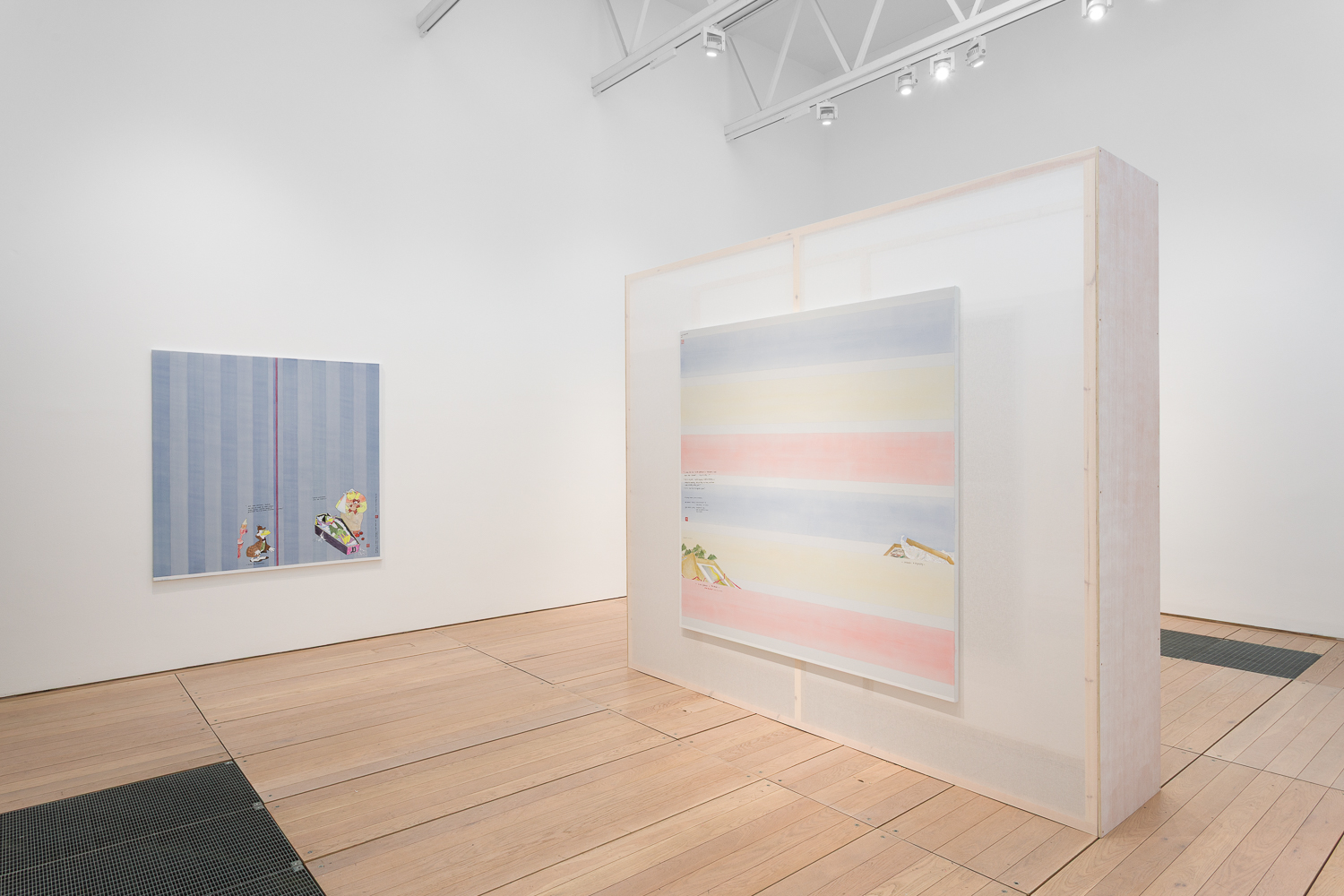
In her first UK institutional exhibition, Evelyn Taocheng Wang turns mistranslation, Agnes Martin, Chinese literati painting and fantasies of Britain into a deliberately unstable language of identity.
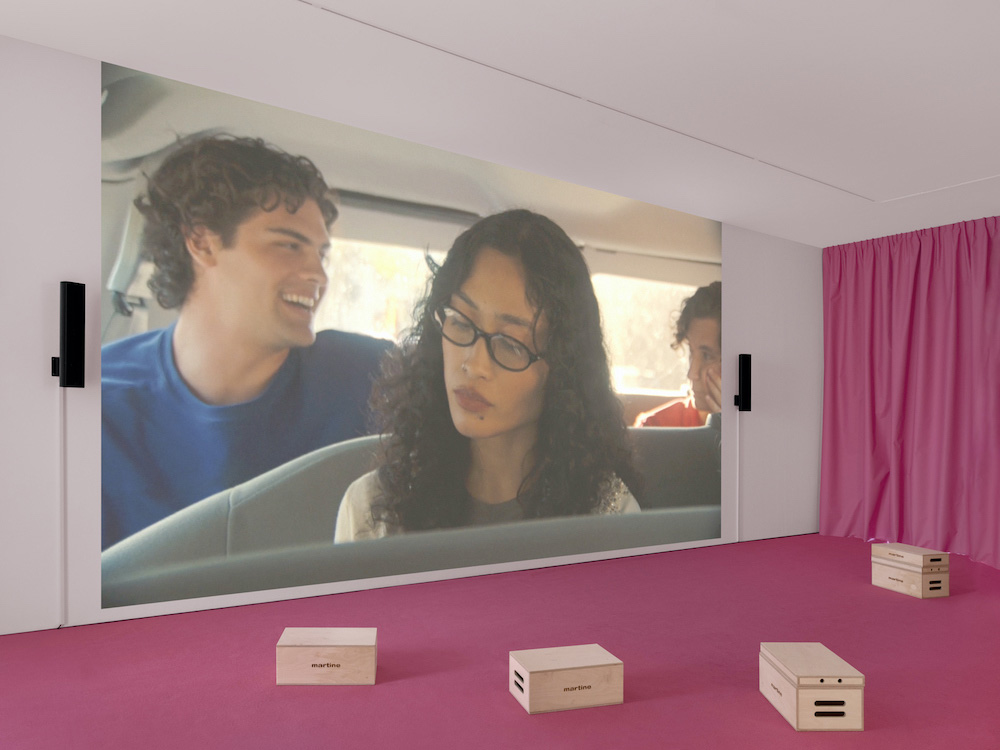
From Robert Ryman and Lorna Simpson to Mary Ramsden, Martine Syms and Nicola Turner, the strongest London route during Frieze week begins outside the fair.