
October 17, 2026
Exhibitions
Exhibitions

Nearly 150 works from RM’s collection meet SFMOMA in a major exhibition of Korean modern and contemporary art. Its real lesson is how a private collection develops a coherent eye.
At Perrotin London, Iván Argote celebrates fifteen years of Mamarrachos by turning scribbles, gallery rules and institutional authority into an unusually playful form of critique.

Iván Argote has spent much of his career making authority look less solid than it wants to appear. Monuments become vulnerable to touch, museums become stages for apparently illicit interventions, and the solemn architecture of the gallery is interrupted by gestures that can feel adolescent, affectionate or mischievous before their politics fully register. In Mamarrachos: Quinceañera, his first solo exhibition at Perrotin London and his ninth with the gallery, Argote returns to a body of work that has accompanied him for fifteen years and asks what happens when the throwaway mark is allowed to grow up without becoming respectable.
The title marks the fifteenth birthday of the Mamarrachos series. The Spanish word can describe a badly drawn figure, a mess, or a person whose appearance seems ridiculous or disordered. Argote’s works begin with drawings that are almost aggressively unserious: rapid digital scribbles made in seconds. He then enlarges them to a scale at which the casual gesture becomes architectural. Curving forms extend beyond the expected rectangle of the picture, with MDF supports pushing the drawing physically into the room.
There is a useful contradiction at the centre of the series. A scribble is normally understood as something provisional: what happens before the “real” work begins, or while attention is elsewhere. Enlargement changes that status. A mark made quickly can become several metres wide, materially complicated and expensive to fabricate. The spontaneous gesture is preserved, but the infrastructure around it becomes highly deliberate.
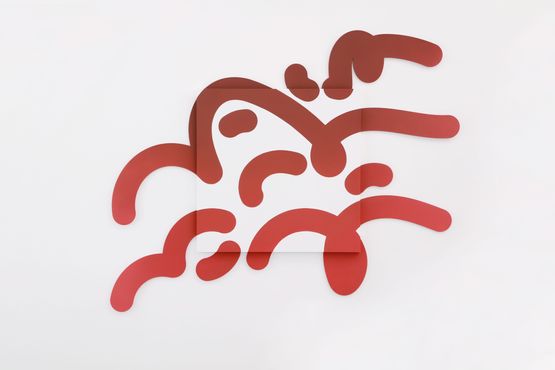
For collectors, that tension is more interesting than the apparent humour. Argote is not simply celebrating doodling. He is testing which kinds of gestures culture allows to become monumental. The museum, the civic monument and the polished gallery all rely on conventions that tell us what deserves seriousness. A mamarracho destabilises those conventions because its visual language still carries the memory of boredom, irreverence and informal mark-making even after it has been enlarged and carefully installed.
Argote’s early video Retouch established the pattern. Made in 2008, it appears to show him spray-painting two Mondrian paintings at the Centre Pompidou. The action feels scandalous because the museum has trained us to understand proximity to a canonical work as a privilege governed by strict rules. Yet the vandalism is fictional: the intervention was digitally constructed frame by frame and no artwork was damaged.
The distinction matters. Argote did not need to destroy a Mondrian to reveal how deeply the museum’s authority is embedded in the viewer. The possibility of transgression was enough. Fifteen years later, the Mamarrachos continue that strategy with less confrontation. They do not attack the institution. They behave inside it with the wrong degree of decorum.
The exhibition also revisits Circles, a work in which a spray can is attached to a chain and visitors are invited to mark the gallery walls. The chain restricts movement, meaning that freedom is offered through a system that visibly defines its limits. The current London iteration uses purple paint. Repeated gestures accumulate into a collective drawing that is at once unruly and mechanically constrained.
That is a more precise account of participation than the word “interactive” usually allows. Every participatory artwork has rules. Argote makes the rule part of the image. The visitor can act, but only within a radius already decided by the artist and the architecture.

Argote’s larger public works help explain why these apparently playful gestures matter. His practice repeatedly questions the language of monuments: who receives a pedestal, which histories become permanent, and whether public sculpture can acknowledge uncertainty rather than pretending to settle it. In those works, stone, bronze and architectural scale are often made to feel provisional. In the Mamarrachos, the direction is reversed: the provisional doodle is given the scale and seriousness of monumental form.
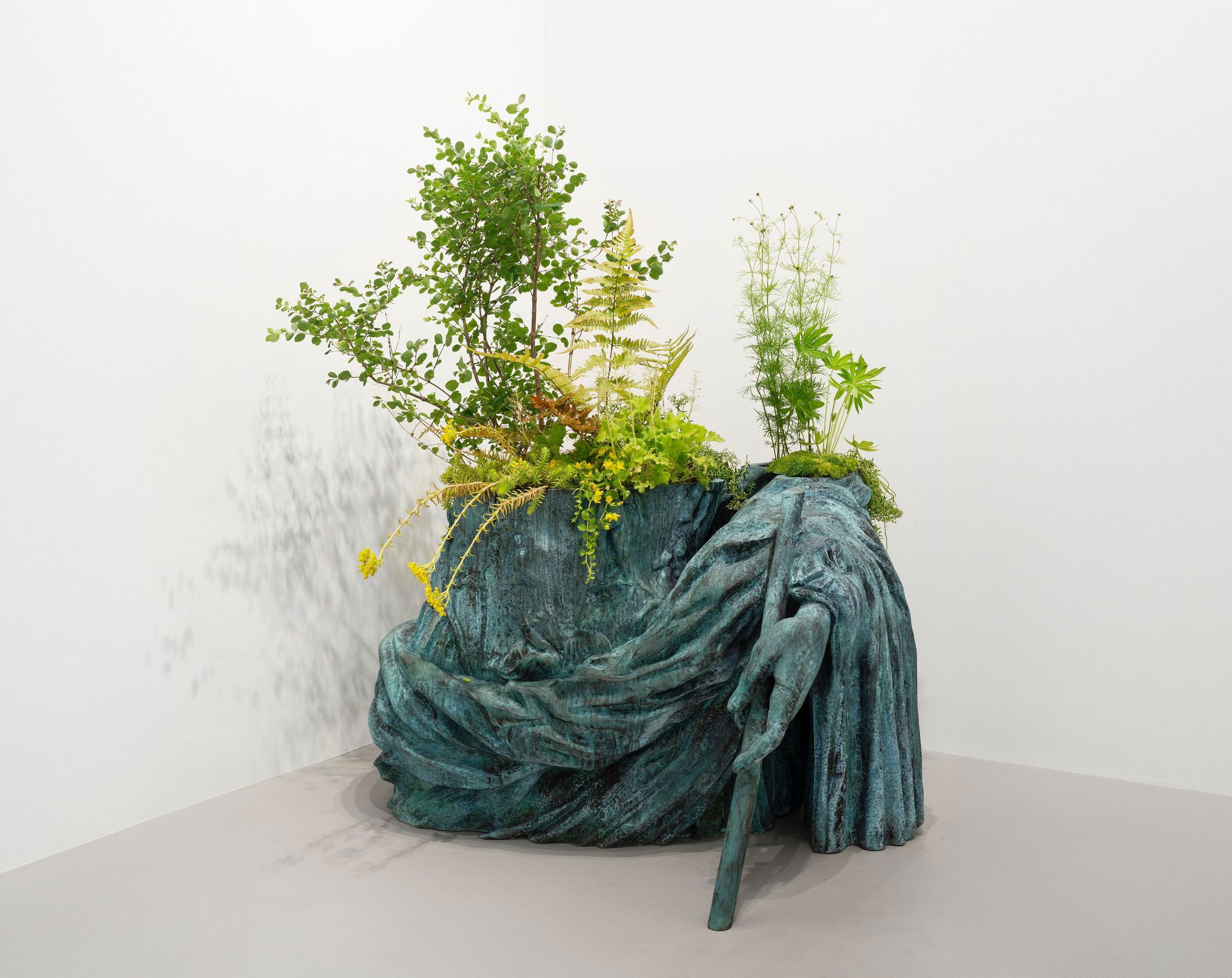
The polished stainless-steel work Antipodos (2026) sharpens this question. Its reflective surface brings the room and the viewer into the object, while its title suggests opposite points or positions. Reflection is not simply decorative: it makes any attempt to stand outside the work impossible. The viewer becomes part of the image while looking at it.
Argote extends the logic onto the floor with a printed carpet that mirrors elements of the ceiling, walls and artworks. Visitors walk across a reproduction of the space they occupy. The architecture is doubled, flattened and subjected to wear. It is a characteristically economical gesture: the gallery remains physically intact while its hierarchy is inverted. Ceiling becomes floor; architecture becomes image; the visitor becomes the agent who damages the reproduction through ordinary movement.
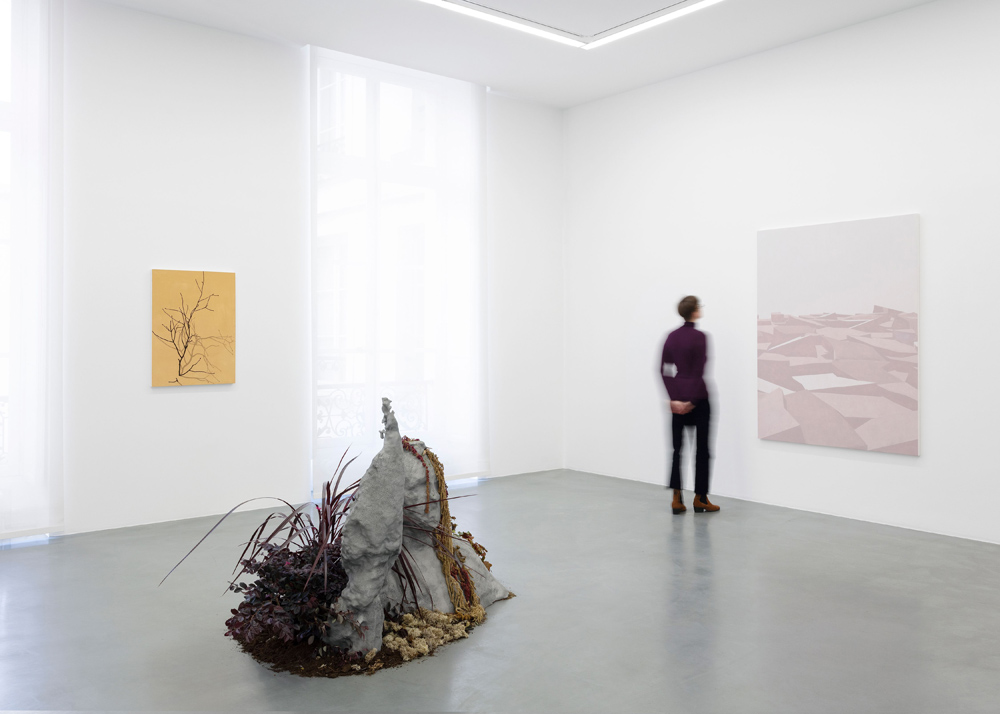
The attraction of Argote’s work can make it easy to under-read. Humour travels quickly in photographs, especially at fairs and online. The stronger test is whether the work continues to reorganise the viewer’s relation to an institution, an object or a familiar symbol after the joke has been understood. In the best examples, it does.
For the Mamarrachos, collectors should document the relationship between the original digital gesture and the fabricated support, as well as the precise materials and installation requirements where a form extends beyond a conventional frame. For participatory and installation works, instructions are fundamental. A work such as Circles is not merely the material remaining at the end of an event; its conditions of activation are part of what is being acquired or exhibited.
The danger of revisiting a long-running series is that what began as irreverence can harden into a signature. Mamarrachos: Quinceañera is most persuasive when it keeps that danger visible. The works are more professionally fabricated and institutionally legible than the gestures from which they began, yet they continue to look as though they have entered the gallery without fully accepting its behavioural code.
That is also why Argote remains useful in a contemporary art landscape increasingly fluent in the language of monuments, decolonisation and institutional critique. His work rarely announces those subjects in the tone of a lecture. It approaches them sideways, through a scribble, a prank, a reflected room or a public object behaving badly. The humour is not an escape from seriousness. It is the mechanism that allows seriousness to arrive without becoming monumental itself.
Iván Argote: Mamarrachos: Quinceañera
Perrotin London
6 October–19 December 2026.
Nearly 150 works from RM’s collection meet SFMOMA in a major exhibition of Korean modern and contemporary art. Its real lesson is how a private collection develops a coherent eye.
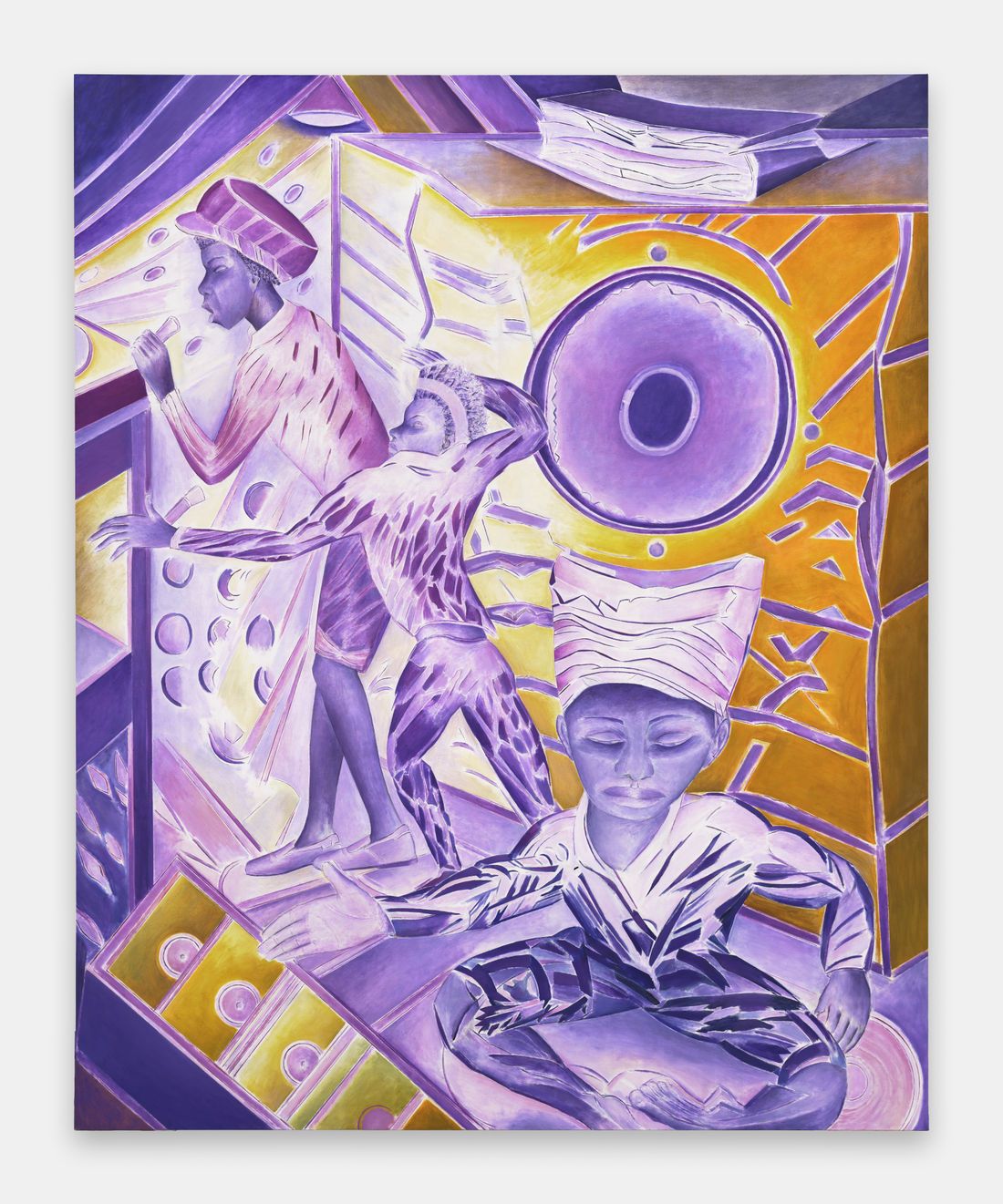
Thaddaeus Ropac’s representation of Denzil Forrester places one of Britain’s great painters of dub, dancehall and Black social space inside a new international chapter.
At Perrotin London, Iván Argote celebrates fifteen years of Mamarrachos by turning scribbles, gallery rules and institutional authority into an unusually playful form of critique.