
October 12, 2026
Articles
Articles
Yelin Lee's Ghost Play transforms emojis into sculpture, uses chroma-key screens and a two-minute delay, and turns visitors into their own fleeting afterimages.
At Reina Sofía, Felix Gonzalez-Torres’s candy spills, paper stacks, curtains and light strings reveal why participation can be generous without ever becoming easy.
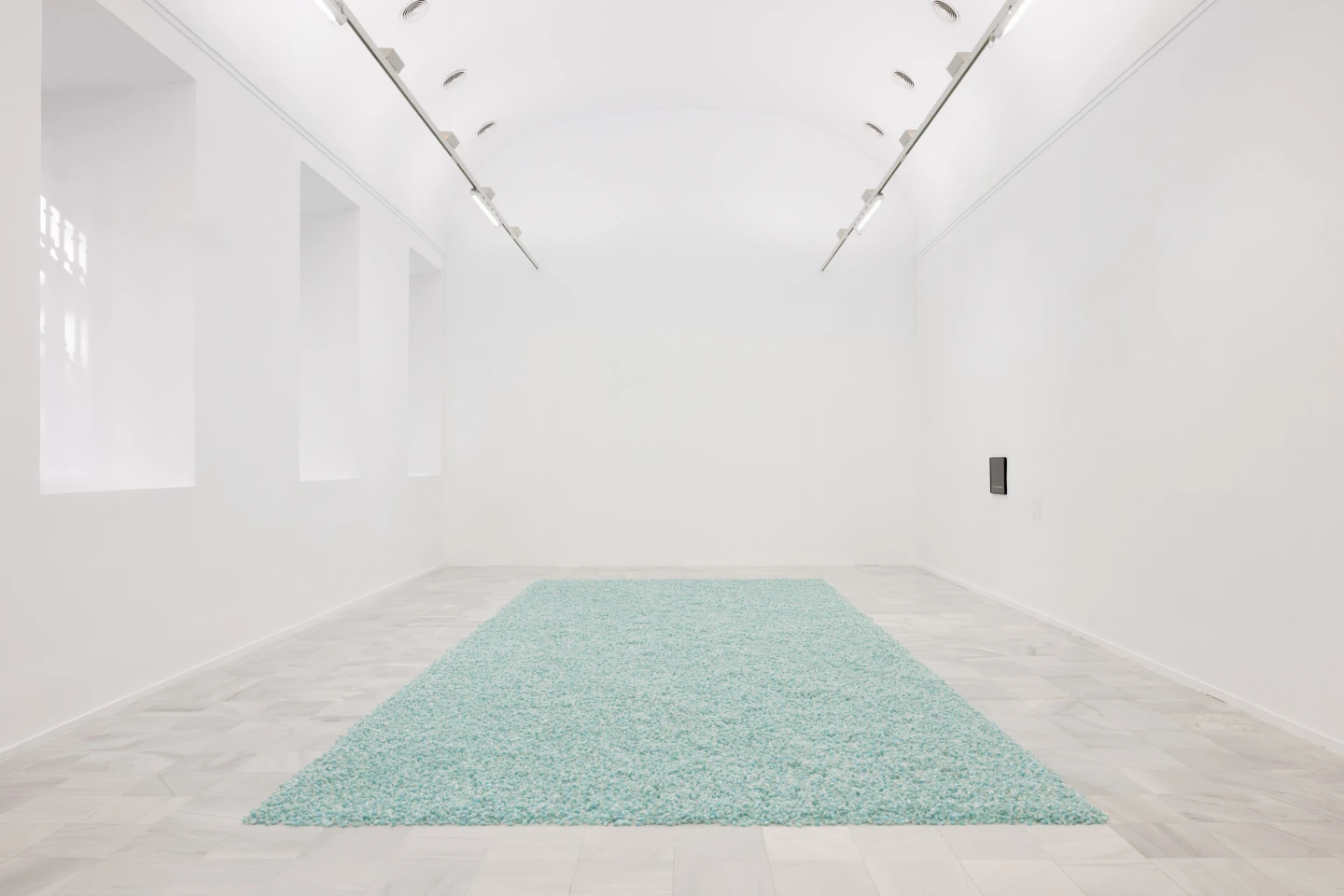
Felix Gonzalez-Torres made some of the gentlest-looking works in late twentieth-century art, and some of the most demanding. A pile of sweets can be inviting. A stack of paper can be taken away. A string of light bulbs can make a room feel almost domestic. Two clocks can look unremarkable until one understands why they have been asked to keep time together. The seduction is real, but it is never the end of the work.
That is what makes Sweet Revenge at the Museo Reina Sofía such an important exhibition to revisit now, several months after its opening. Running through 12 October 2026, it is the first large-scale presentation of Gonzalez-Torres in Madrid and brings together more than fifty works across the first floor of the Sabatini Building, while billboards extend the exhibition into metro stations around the city. Curated by Alejandro Cesarco and Nancy Spector, the show does not treat participation as a historical novelty. It asks why an art of permission, loss and replenishment still feels so unusually alive.
Madrid is not incidental. Gonzalez-Torres passed through the city as a teenager in 1971 after leaving Cuba, before relocating to Puerto Rico. He returned in 1991 for the group exhibition El Jardín Salvaje, where he first presented “Untitled” (Revenge), a spill of blue candies. The phrase “sweet revenge” came from his own reflection on returning after almost twenty years. In the current exhibition, that biographical loop becomes a framework without becoming a biography lesson.
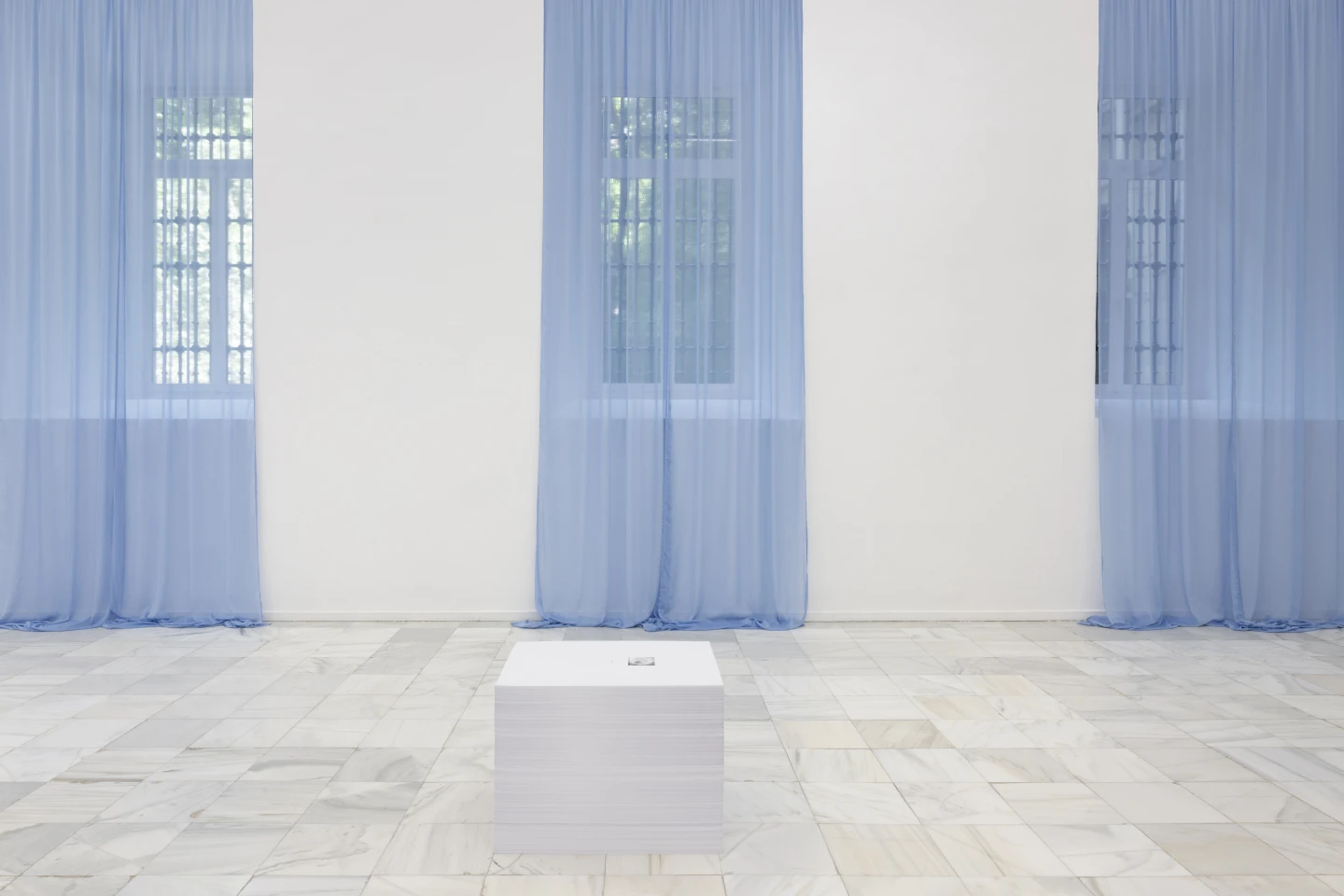
The most familiar description of Gonzalez-Torres’s candy and paper-stack works is that the visitor may take something away. That description is correct and insufficient. The crucial point is not that the museum becomes generous for a moment. It is that ownership, depletion and renewal are built into the artwork’s life.
The Felix Gonzalez-Torres Foundation’s current core tenets make the structure unusually clear. When a candy work is manifested, viewers must be permitted to take individual candies. The owner or authorised borrower decides how the work is installed within parameters left deliberately open by the artist, and also determines whether and how it is replenished. A work may therefore become smaller as the day passes, return to an ideal weight, shift configuration at its next installation, and remain the same artwork through those changes.
For collectors, this makes Gonzalez-Torres a useful corrective to the assumption that ownership means control over a fixed object. The owner is a steward of a set of responsibilities and possibilities. The material can be replaceable while the work remains highly specific. The certificate, installation history, authorised interpretation and understanding of the artist’s parameters become part of the work’s continuity.
What looks like permission is also responsibility. You may take a sweet. The owner may replenish it. Neither gesture is neutral.
That tension explains why generosity in Gonzalez-Torres is never sentimental. The viewer receives something because the work allows itself to diminish. Giving is linked to loss. Replenishment answers depletion without pretending that nothing has happened. This can be read through the experience of AIDS, grief and the death of the artist’s partner Ross Laycock in 1991, but the formal structure prevents the work from collapsing into illustration.
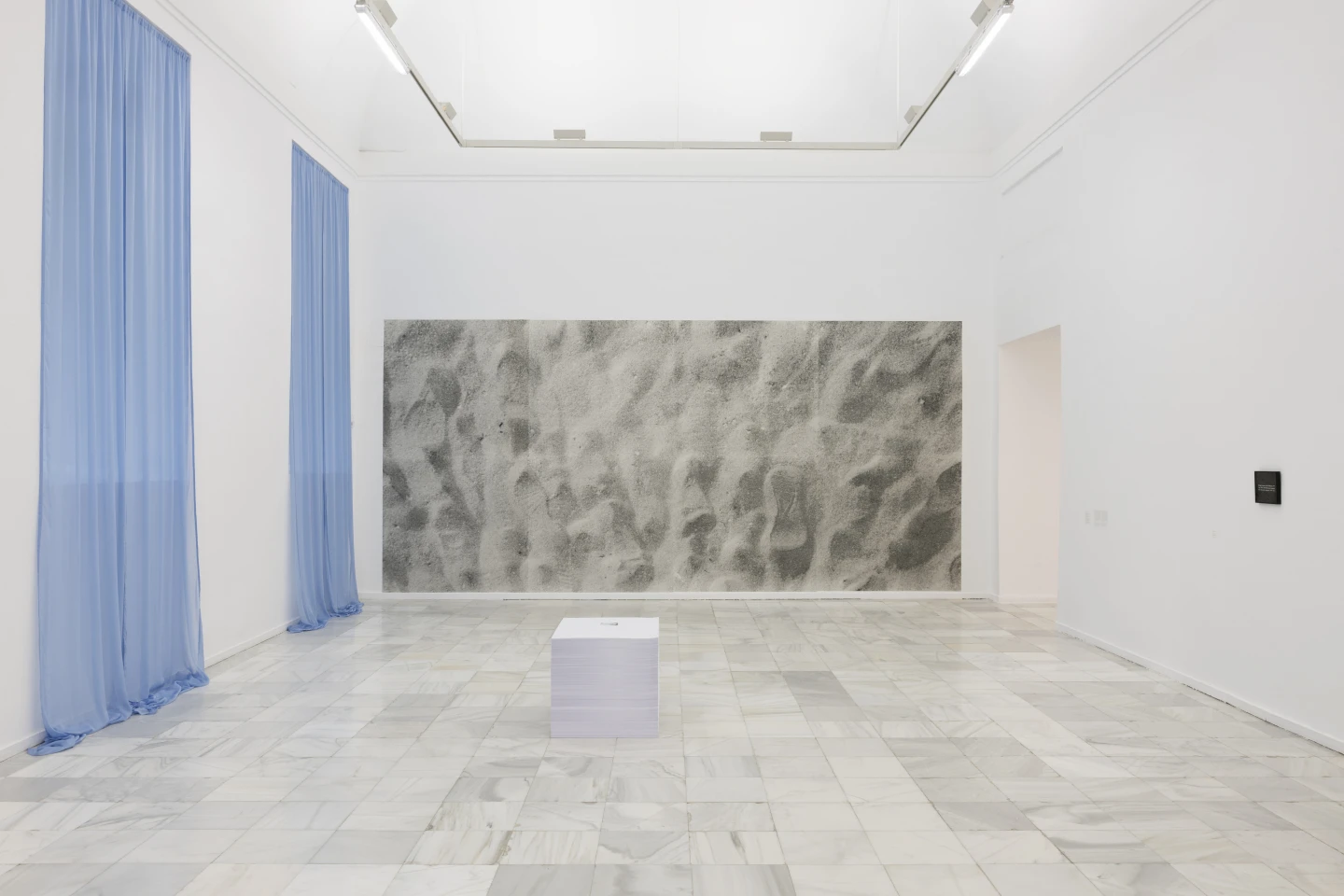
Gonzalez-Torres understood the visual authority of Minimalism: serial forms, industrial materials, repetition, the apparent neutrality of a white gallery. He also understood how easily neutrality can conceal power. His answer was not to reject Minimalist language but to contaminate it with biography, public life, desire and time.
A stack remains geometrically exact until somebody takes a sheet. A pair of clocks begins in synchrony and becomes an image of eventual difference because mechanical objects cannot remain perfectly aligned forever. Curtains divide space but also move with air and bodies. Strings of bulbs can be installed differently from one manifestation to another. Mirrors return the visitor’s body to an environment that might otherwise claim detachment.
Sweet Revenge is strongest when it allows these works to operate without too much explanatory pressure. The rooms are spare enough that the viewer notices small shifts: the soft blue of a curtain against marble flooring, a paper stack occupying the floor like a low sculpture, the almost embarrassing beauty of exposed light bulbs. The work does not need to announce its seriousness. It trusts duration.
This is one reason Gonzalez-Torres remains difficult to imitate. Many artists have adopted participation, relational gestures, take-away objects and variable installations. Far fewer have made those devices feel inevitable rather than programmatic. In his best works, the conceptual structure and the emotional register are inseparable. Remove the possibility of taking and the candy spill changes. Remove the ideal weight and the depletion loses its counterpoint. Remove the title and a different layer of association disappears.
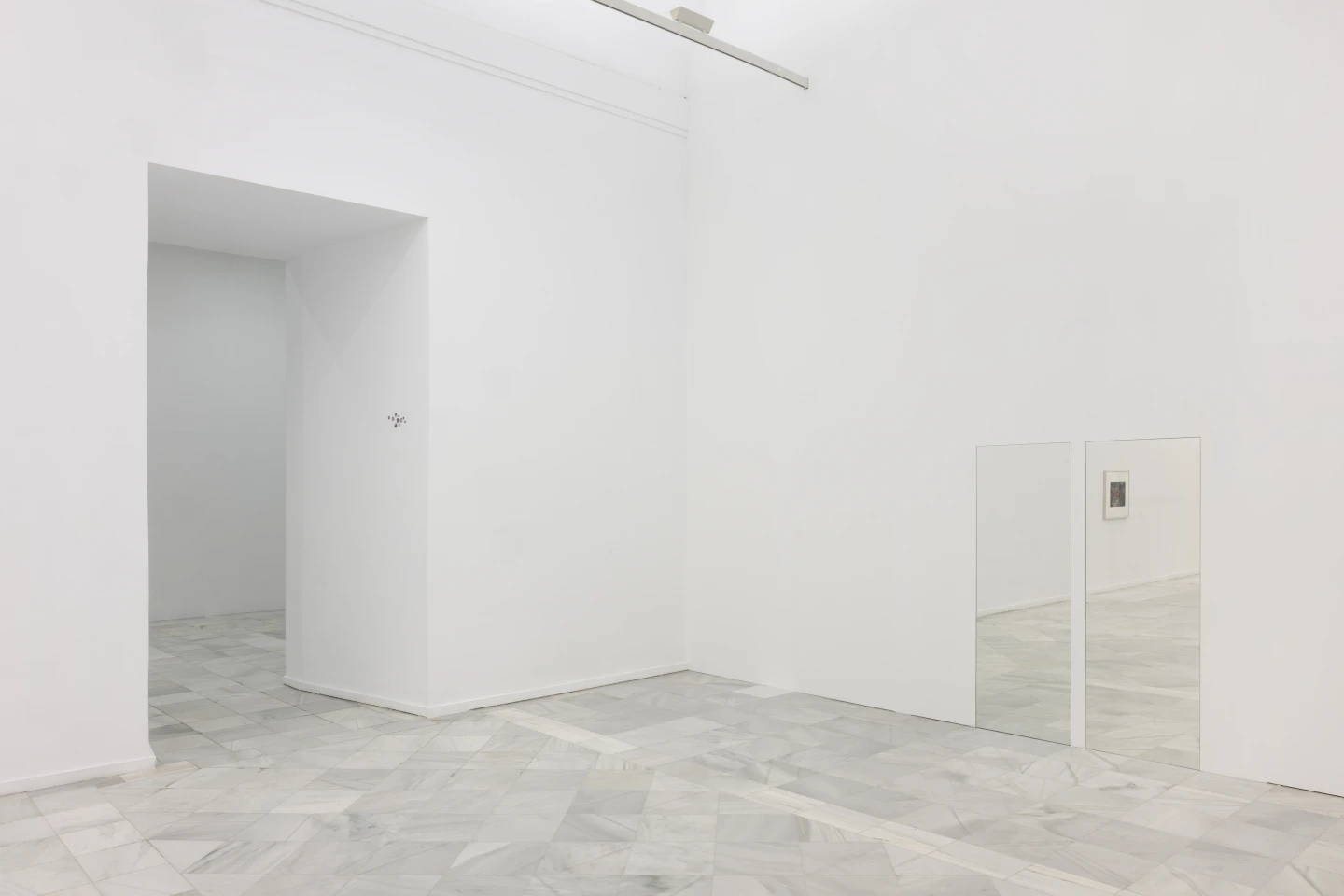
Gonzalez-Torres worked during the AIDS crisis and in a United States transformed by conservative politics, culture wars and institutional arguments about public funding. His art was political, but it rarely behaved like a placard. That distinction is newly valuable.
The works often withhold the image one expects. A title can introduce romance, illness, war or a contested public narrative without illustrating it. A billboard can present an empty bed rather than a slogan. A candy spill can carry associations of body weight, appetite, pleasure, illness and communal taking without prescribing one correct reading. The political charge comes partly from the viewer’s inability to outsource interpretation.
That open structure is sometimes mistaken for vagueness. In fact it is disciplined ambiguity. The artist established enough rules for the work to remain itself and enough openness for successive owners, museums and audiences to make meaningful decisions. The exhibition’s central paradox—sweetness and revenge—is therefore not just a poetic title. It is a model for the whole practice: opposing conditions held together rather than resolved.
For a collector, that means installation history matters unusually strongly. How was a work manifested? At what scale? Was it replenished? How were variable elements interpreted? Were those decisions consistent with the Foundation’s core tenets? Documentation is not bureaucratic residue here; it helps record how a concept has lived.

Thirty years after Gonzalez-Torres’s death in 1996, contemporary art is saturated with interactivity. Museums invite participation; immersive exhibitions promise experiences; audiences photograph themselves inside installations. Yet his work often feels more contemporary than projects built expressly for that economy because it does not flatter participation.
Taking a candy is easy. Understanding what taking means is not. The visitor becomes implicated in the work’s change, but is not rewarded with the fantasy of becoming its co-author. The artwork remains larger than the gesture. Likewise, the museum cannot simply preserve the work by protecting its material from touch. In some cases, preventing participation would contradict the work.
This has a quiet institutional consequence. Museums are usually built around care through restriction: do not touch, do not cross the line, preserve the original material. Gonzalez-Torres asks conservation and participation to coexist. His work makes museums care for an artwork partly by permitting it to be used up.
That is where the generosity becomes radical. It is not a mood. It is a redistribution of agency inside systems—museum, market, ownership, authorship—that usually depend on limiting agency.
That has a further consequence for the market. With a conventional painting, two careful owners may display the same object differently, but the material work itself remains substantially unchanged. With Gonzalez-Torres, authorised decisions about placement, quantity, configuration and replenishment can become part of what a later audience actually encounters. Ownership therefore carries an interpretive dimension that collectors should neither exaggerate nor evade.
The strongest owners will resist the temptation to make the work more spectacular than it needs to be. A larger pile, brighter room or more theatrical configuration is not automatically more faithful. The Foundation’s framework is valuable precisely because it keeps interpretation connected to the artist’s parameters. Good stewardship can mean restraint: understanding the difference between freedom built into a work and freedom imposed on it.
This makes exhibition history unusually revealing. Photographs of earlier manifestations are not simply installation souvenirs; they form a record of how the work has been understood across institutions and decades. For a prospective buyer, those records can illuminate scale, context and precedent while also demonstrating that no single installation exhausts the work’s possibilities.
Gonzalez-Torres thus turns a familiar collector anxiety—whether one is merely possessing an object—into a more demanding question. What kind of caretaker will you be when the artwork asks you to make decisions?
Exhibition: Felix Gonzalez-Torres: Sweet Revenge, Museo Reina Sofía, Madrid, through 12 October 2026.
Curators: Alejandro Cesarco and Nancy Spector.
Scale: more than fifty works, with elements extending into Madrid through billboard installations in metro stations.
Key work: “Untitled” (Revenge), 1991, blue candies in clear wrappers, endless supply; the Foundation lists an ideal weight of 325 lb.
Collector question: for variable, replenishable or certificate-based works, acquire the complete documentation and understand what decisions an owner is authorised—and required—to make.
Image rights: current museum installation imagery is available online; obtain the original press JPEGs and exact photographer credits from Reina Sofía before publication.
Sweet Revenge succeeds because it does not make Gonzalez-Torres newly relevant by forcing him into the present. It reveals how much of the present was already contained in the work: questions about care, participation, identity, ownership, public space and what it means for an artwork to survive without pretending to remain unchanged.
The blue candies are beautiful. They are also disappearing. The brilliance of Gonzalez-Torres is that neither fact cancels the other.
Yelin Lee's Ghost Play transforms emojis into sculpture, uses chroma-key screens and a two-minute delay, and turns visitors into their own fleeting afterimages.
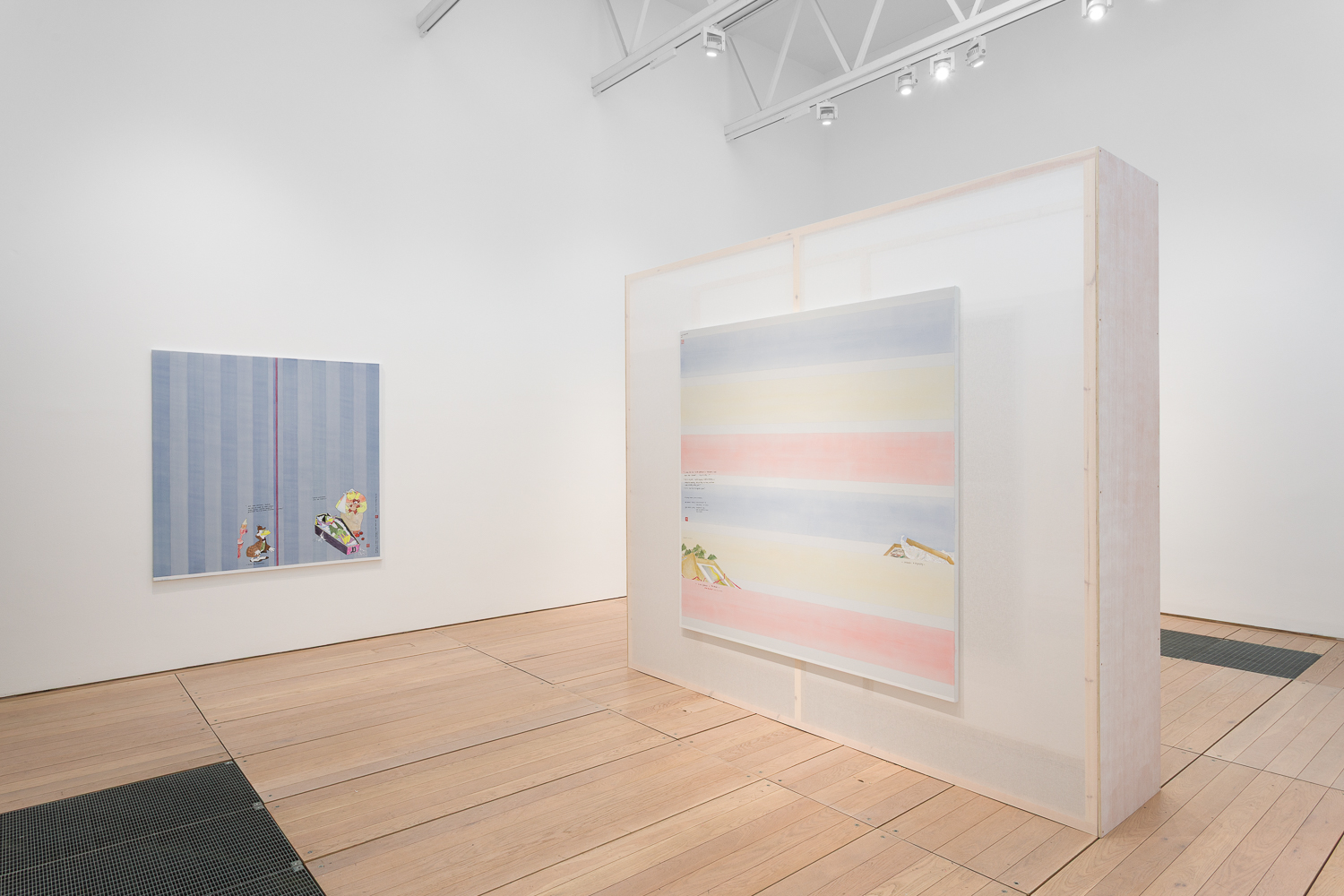
In her first UK institutional exhibition, Evelyn Taocheng Wang turns mistranslation, Agnes Martin, Chinese literati painting and fantasies of Britain into a deliberately unstable language of identity.
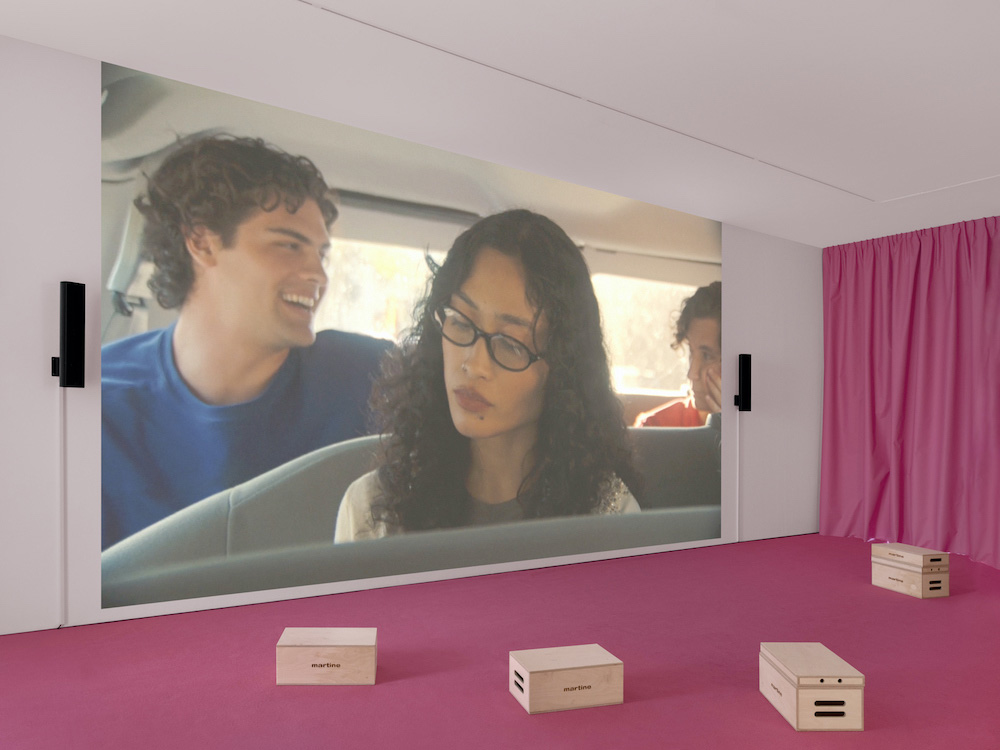
From Robert Ryman and Lorna Simpson to Mary Ramsden, Martine Syms and Nicola Turner, the strongest London route during Frieze week begins outside the fair.