
October 17, 2026
Exhibitions
Exhibitions

Nearly 150 works from RM’s collection meet SFMOMA in a major exhibition of Korean modern and contemporary art. Its real lesson is how a private collection develops a coherent eye.
Cindy Sherman’s new Fabric Matrons series turns Chanel fabrics, ageing, jewellery and self-invention into an unsettled study of who fashion allows to remain visible.
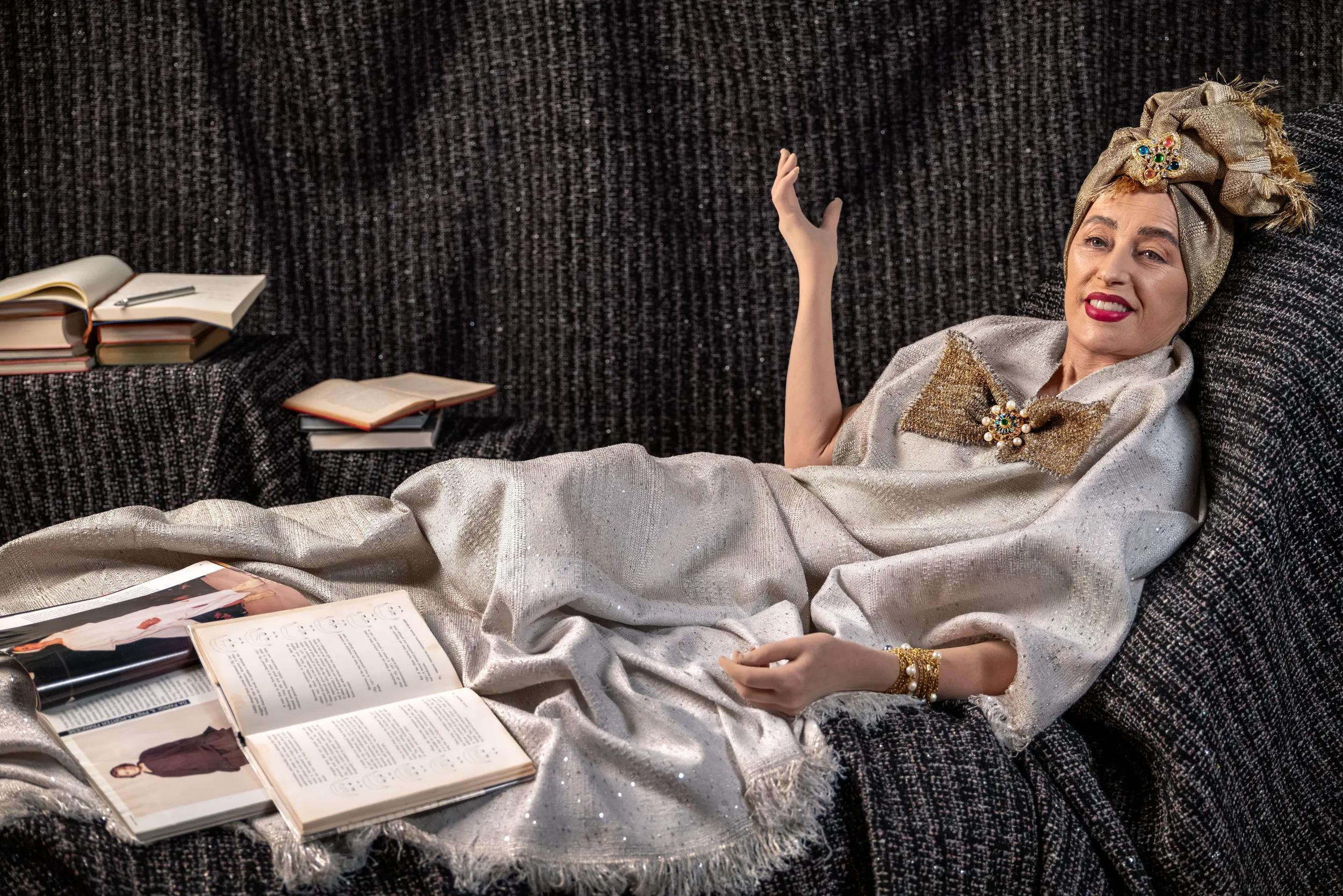
Cindy Sherman has spent nearly five decades proving that a face can be both intensely specific and completely unreliable. Her new Fabric Matrons series, at Hauser & Wirth London through 23 December, brings that argument into an arena the artist has returned to repeatedly: fashion as a machine for constructing identity, status and visibility. This time, however, the women Sherman invents are older, elaborately draped and less interested in performing the conventional fantasy of youth.
The exhibition is an advance into unfamiliar territory without abandoning Sherman's central method. She remains model, photographer, stylist, make-up artist and director. The figures are still inventions rather than portraits. But the fabrics—many drawn from or connected to the Chanel archive—give the work a density that is materially different from the familiar language of costume. Cloth does not simply dress these women. It accumulates around them, protects them, exaggerates them and occasionally threatens to consume them.
Fashion photography has historically organised visibility around youth, novelty and the promise that a body can be transformed through clothing. Sherman has always understood the aggression inside that promise. Her early fashion commissions frequently pushed styling toward grotesquerie, refusing the polished compliance expected of an image designed to sell clothes.

Fabric Matrons turns the problem toward ageing. These are women who appear to have lived inside systems of taste long enough to understand them. Jewellery, drapery, colour and pose communicate wealth or ceremonial authority, but the performance is never seamless. Sherman lets seams show in a conceptual sense even when the visual surface is lavish. The viewer can feel the construction of the character without being able to locate a stable person beneath it.
That instability is important because the cultural language around older women is often brutally reductive. Visibility can disappear at the same time that social status increases. Fashion celebrates age selectively, usually when it can be framed as eccentricity, exceptional preservation or inherited elegance. Sherman refuses to provide a single reassuring category.
The word “matron” is deliberately awkward. It carries authority, domesticity, respectability and age, but also the historical tendency to define women through roles rather than individual interior lives. Sherman turns that role into a costume and then refuses to tell us whether the costume is armour, prison or pleasure.
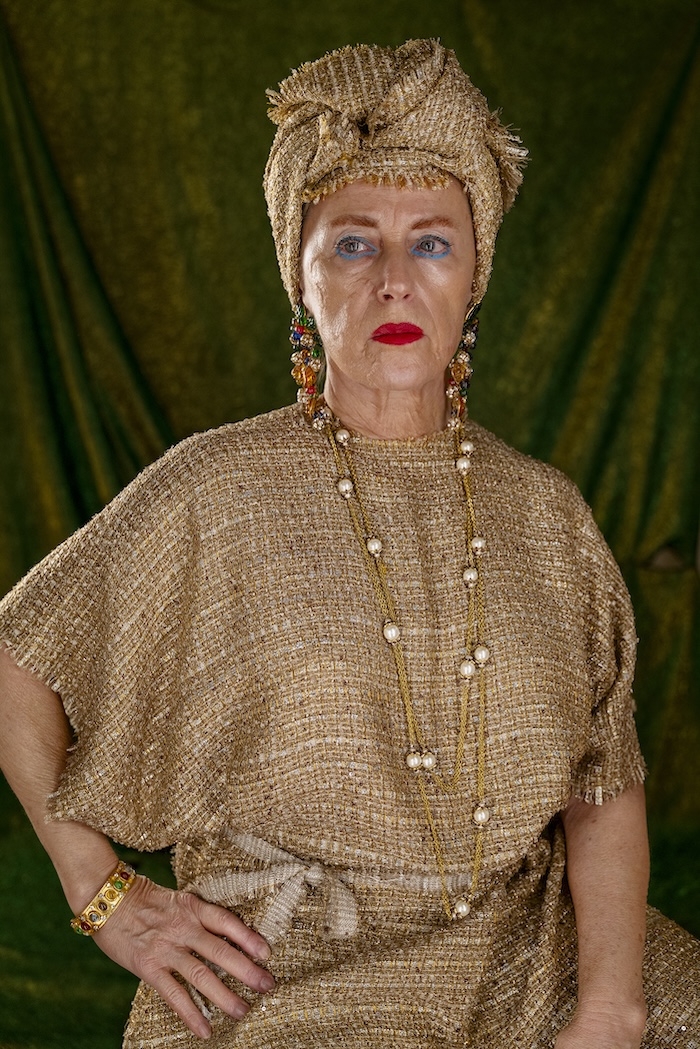
The elaborate fabrics intensify this ambiguity. Drapery has a long art-historical history as a demonstration of skill: painters and sculptors used folds to animate bodies, indicate luxury and create movement. Sherman makes the fold do psychological work. Fabric conceals the real body while inventing another one. A shoulder can become architecture; a sleeve can become mass; jewellery can feel like evidence of power or the burden of maintaining it.
Sherman's relationship with Chanel extends beyond this exhibition. She previously worked with garments from the house in the Ominous Landscapes period of 2010–12, where fashion objects were placed into deliberately unstable psychological settings. The current use of archival Chanel fabrics is therefore less surprising than it first appears.
What matters is how the luxury material behaves after it enters Sherman's image system. Brand value cannot stabilise the character. The fabric can be sumptuous and the woman can still appear anxious, severe, comic or unknowable. This is one reason the series should not be reduced to a collaboration story. Sherman treats fashion as raw material for identity, not as a guarantee of glamour.

Sherman’s working method continues to matter in an era when photographic images are increasingly produced through large teams, automated systems and generative tools. She constructs these characters largely alone. That solitary process makes the work less like fashion production and more like performance for a camera whose audience arrives later.
The distinction also complicates the idea of the self-portrait. A conventional self-portrait promises access to the artist. Sherman uses her own body to deny that promise. The more recognisable her face becomes across decades of work, the less useful it is as evidence of a stable self.
At seventy-two, Sherman is working with a subject that cannot be entirely external to her. The new figures are inventions, but the physical fact of ageing gives the series a different pressure from earlier performances of characters much older than the artist was at the time. In recent discussion of the series, Sherman has acknowledged recognising traces of her late mother in one of the images. That does not turn the work into autobiography; it shows how impersonation can become a route through memory.

The strongest new photographs are likely to be those where the viewer cannot decide whether to laugh, admire or retreat. Sherman’s career has depended on that discomfort. Beauty is rarely absent, but it is never allowed to operate innocently.
For collectors, the new series arrives with an unusually established critical and institutional framework. Sherman’s market is deep, and the temptation will be to compare the Fabric Matrons immediately with earlier canonical bodies of work. A better first question is whether the new pictures create a genuinely distinct psychological territory.
Scale, edition information, print process and production date remain central. Sherman’s photographs depend on the relationship between a constructed fictional person and the highly controlled material object of the print. Condition and colour consistency therefore matter, particularly for works whose effect relies on saturated fabrics and detailed surfaces.
The paradox of Sherman’s career is that she became one of the most recognisable artists alive by repeatedly disappearing into invented women. Fabric Matrons makes that paradox newly pointed. These figures demand to be seen, but the more elaborately they present themselves, the less certain we become about who is actually there.
That is a precise response to a culture in which visibility is treated as both entitlement and obligation. Fashion promises that identity can be made legible. Sherman has spent a lifetime showing the opposite: every visible surface can produce another disguise. In the new work, age does not resolve that problem. It gives the disguise more history.
Cindy Sherman: Fabric Matrons
Hauser & Wirth London
13 October–23 December 2026.
Nearly 150 works from RM’s collection meet SFMOMA in a major exhibition of Korean modern and contemporary art. Its real lesson is how a private collection develops a coherent eye.
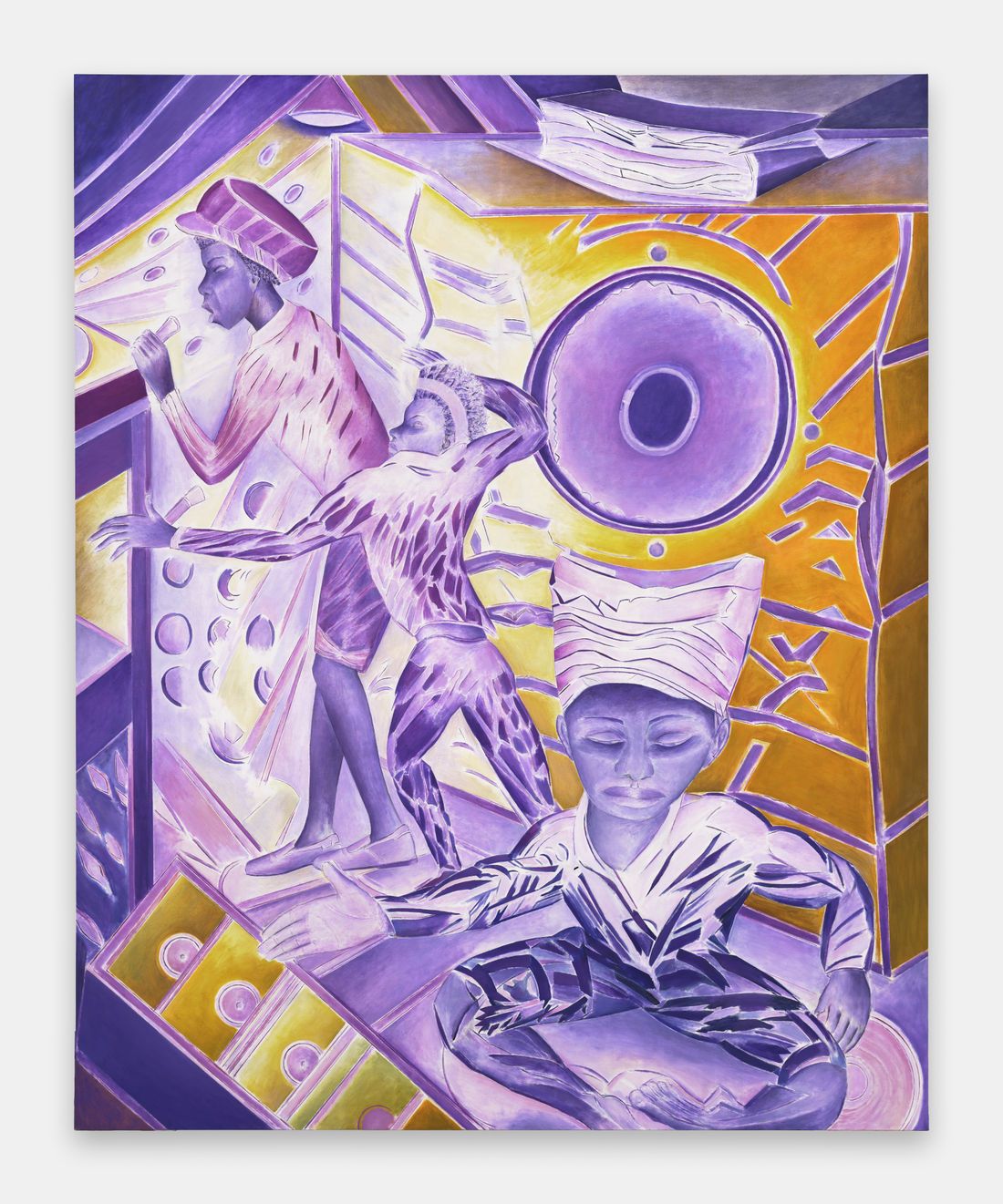
Thaddaeus Ropac’s representation of Denzil Forrester places one of Britain’s great painters of dub, dancehall and Black social space inside a new international chapter.
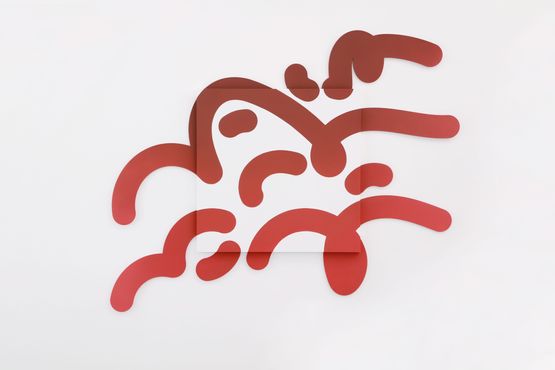
At Perrotin London, Iván Argote celebrates fifteen years of Mamarrachos by turning scribbles, gallery rules and institutional authority into an unusually playful form of critique.