
October 18, 2026
Exhibitions
Exhibitions

From a £5 million Brueghel and three major Alice Neel sales to George Rickey, global modernism and a £675,000 Triceratops skull, Frieze Masters rewarded collectors who looked beyond categories.
Cecily Brown’s Picture Making turns uncertainty into a painterly method: figures emerge, dissolve and return across twenty-five years of paintings, drawings and monotypes.
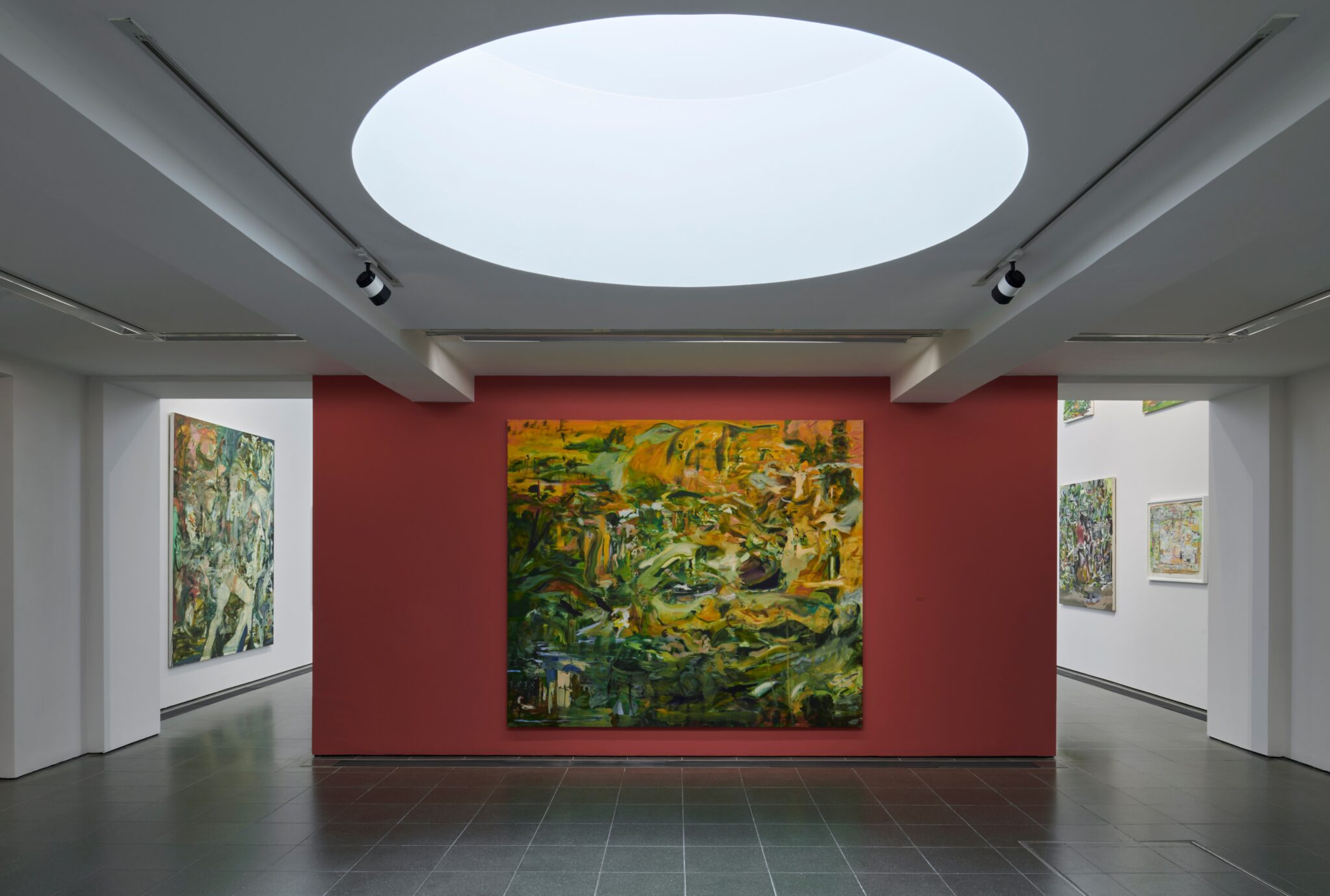
Cecily Brown’s paintings are often described as hovering between abstraction and figuration. The phrase is accurate, but it has become too comfortable. It suggests a balanced midpoint, as though the viewer simply waits for a figure to emerge from painterly weather. At Picture Making, Brown’s major exhibition at Serpentine South, the experience is more unstable than that. Recognition arrives, collapses, returns in another part of the canvas and then makes you doubt what you thought you saw.
The exhibition, on view through 6 September 2026, is Brown’s first major solo presentation of paintings in a UK institution since Modern Art Oxford in 2005. New works made for Serpentine sit beside key paintings dating back to 2001, recent monotypes and drawings. The span is useful because it shifts the question away from whether Brown has changed styles and toward something more interesting: how many different kinds of looking can one pictorial language sustain?
Kensington Gardens matters to the show. Brown was born in London and has worked in New York for three decades; the Serpentine site draws out memories of English parkland, children’s books, woodland imagery, boating, amorous couples, nursery rhymes and the darker threat hidden inside apparently innocent stories. Nature is not backdrop. It is an engine for pictorial uncertainty.
Brown’s best paintings do not conceal an image and then reward the viewer for finding it. They make recognition unreliable. A shoulder may become a patch of ground. Foliage can acquire the pressure of a body. A face appears because several marks momentarily agree to behave like one, then dissolves when the eye moves.
This is why reproductions can be misleading. A small image encourages the viewer to solve the picture quickly: find the couple, the animal, the boat, the woodland scene. In front of the paintings, scale disrupts that confidence. Marks that seemed descriptive on a screen become events in paint. A sweep of pale colour may perform simultaneously as light, skin and a brushstroke that insists on its own material existence.
Brown has long been discussed in relation to painters including Willem de Kooning, Francis Bacon and the broader history of gestural painting, but Picture Making demonstrates why influence is not enough to explain her. Quotation in Brown is less a matter of borrowing a recognisable style than of treating art history as a storehouse of pictorial situations: bodies in landscape, bathers, erotic entanglements, hunting scenes, fragments of old-master composition and the peculiar theatricality of English illustration.
Brown does not ask us to choose between image and paint. She asks how long both can remain true at once.

There is an unfashionable pleasure in this exhibition: the pleasure of looking hard without being given a conceptual key that unlocks everything. Brown’s paintings resist the contemporary expectation that an artwork should be summarised efficiently in wall text, a caption or a single photograph.
That resistance is not anti-intellectual. It is intensely visual. The intelligence lives in how images are built and unbuilt. Colour creates emphasis and then destroys it. Dense areas hold the eye until a quieter passage pulls attention elsewhere. Brown can make a canvas feel full to the point of excess while leaving enough structural gaps for the eye to circulate.
The recent works connected to park life are particularly effective because the subject already contains social ambiguity. Parks are cultivated nature: public and intimate, designed and wild, respectable and historically associated with secrecy, flirtation, danger and leisure. Brown’s amorous couples and uncanny nature walks use that instability rather than illustrating it.
There are moments when the density can become mannered. A painter with such an identifiable touch risks having virtuosity harden into signature. Picture Making is valuable because the works on paper and the twenty-five-year span expose differences within the apparent continuity. Some paintings are more spatially legible; others are almost aggressively unresolved. Some rely on chromatic seduction; others make drawing carry the pressure.
Untitled (Boating), made between 2021 and 2025, demonstrates Brown’s ability to turn a legible scene into an unstable emotional register. Two figures occupy a boat-like structure amid blue-grey paint. The subject might suggest leisure or intimacy, but the brushwork refuses the calm coherence of a conventional pastoral image. Water, clothing, body and surrounding space press into one another.
That friction matters because the English landscape carries an enormous burden of pictorial nostalgia. Brown is clearly attracted to that history without submitting to it. Children’s illustrations and nursery material enter the work alongside adult desire and painterly violence. The pastoral becomes something remembered imperfectly: seductive, comic and vaguely threatening.
The exhibition title is therefore unusually precise. “Picture making” is more active than “painting.” It directs attention to the construction of images—the moment disparate marks begin to cooperate as a scene—and to the possibility that they may stop cooperating again.
For collectors, this is a useful way to compare Browns. The immediate market shorthand—big, energetic, semi-figurative painting—is not enough. One should ask how a specific work controls the eye. Does the density have internal hierarchy? Does the image continue to change with prolonged looking, or does it settle too quickly? Is the palette carrying structure or merely impact? How does the date relate to a sustained group of subjects?
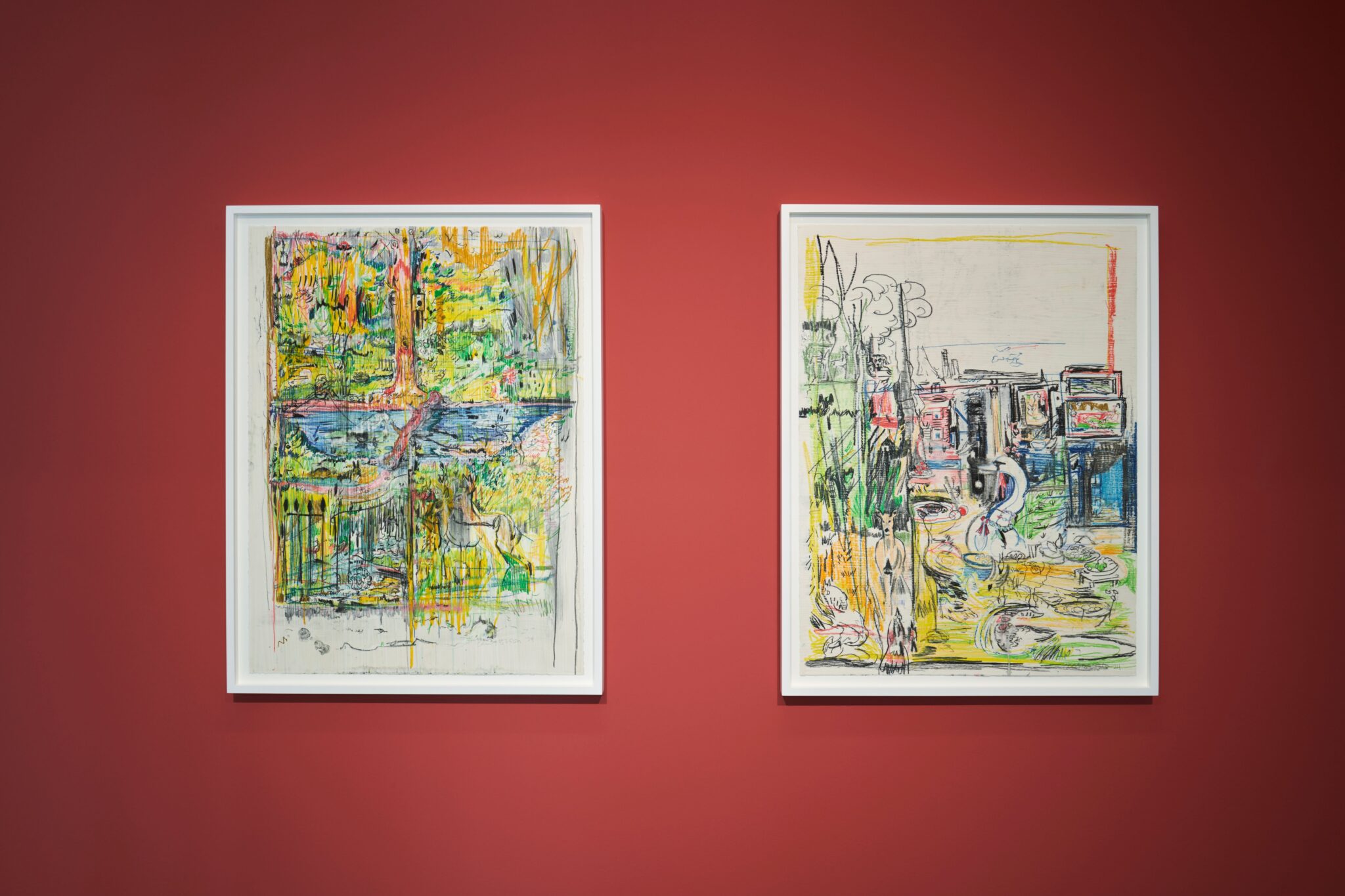
The drawings and monotypes are not included to offer a smaller, more affordable Cecily Brown. Their usefulness is formal. They let viewers see the speed and editing of Brown’s image-making with fewer layers available to disguise indecision.
In painting, an uncertain passage can be buried, scraped, overpainted or absorbed into a dense surface. On paper, the movement of a line is more exposed. That makes the works useful companions to the canvases: not preparatory explanations but different tests of how little information is required before an image begins to exist.
Collectors who move between media should resist treating these works as simply subordinate to paintings. Medium, date, subject, scale, provenance, exhibition history and individual quality remain more informative than a hierarchy in which canvas automatically outranks paper. The Serpentine installation helps because it places different media inside the same argument.
The monotypes and drawings are important because they prevent the exhibition from becoming an argument about virtuoso oil paint alone. On paper, Brown can be faster, more skeletal and more explicit about the structures beneath an image. A contour arrives without the cushioning authority of a large canvas; a body can be suggested by a few strokes and then abandoned before it becomes descriptive.
For collectors who know Brown primarily through major paintings, these works offer a useful warning against reading scale as importance. They expose habits of cropping, repetition and visual quotation that recur across the larger compositions, sometimes more legibly precisely because there is less material to look through. They also show how much of Brown’s apparent abundance is organised rather than accidental.
The exhibition benefits from letting these different speeds coexist. A large painting can hold the eye for twenty minutes and still refuse resolution; a drawing may deliver its first structure almost instantly, then become stranger as the viewer notices what has been omitted. Brown’s achievement is not that she makes ambiguity attractive. It is that she makes ambiguity active. Looking becomes a sequence of hypotheses rather than a search for the hidden correct picture. That is also why reproduction is particularly unreliable with Brown: a thumbnail tends to reward the first readable motif, while the physical painting makes scale, brush pressure, erasure and competing passages arrive at different speeds. The exhibition restores that temporal experience.
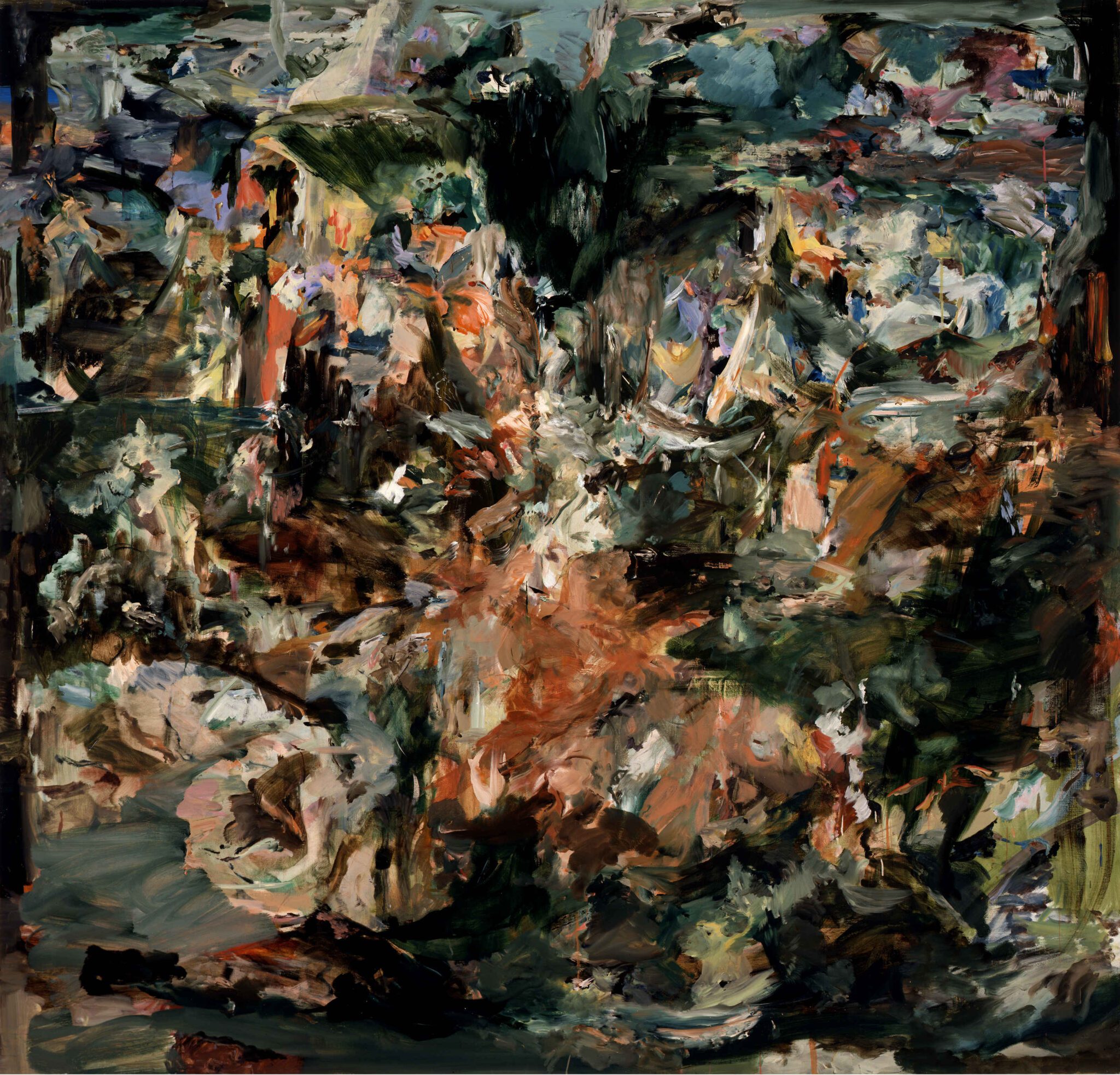
Contemporary painting is periodically told to justify itself through novelty: new technology, new material, new social framework, new relation to the image economy. Brown’s work makes a different case. Painting can still be contemporary because perception remains unstable. The medium does not need to become something else to encounter the present.
That is not a defence of tradition for its own sake. Brown’s paintings are interesting when they make inherited pictorial languages difficult again. They take motifs with deep historical memory—figures in landscapes, lovers, animals, woodland—and deny the viewer the smooth satisfaction of possession. You cannot quite own the image with your eye.
The exhibition also benefits from Serpentine South itself. Its relatively intimate galleries prevent the paintings from becoming anonymous large-format commodities. Proximity matters. The viewer can move between a dense canvas and a smaller paper work, then look back across a room and discover that a painting reads differently at distance.
Exhibition: Cecily Brown: Picture Making, Serpentine South, London, through 6 September 2026.
Context: first major solo presentation of Brown’s paintings in a UK institution since Modern Art Oxford in 2005.
Range: new works made for Serpentine, key paintings dating to 2001, plus recent monotypes and drawings.
Look for: internal structure rather than surface energy alone—how long a painting can keep figure and abstraction in productive tension.
Publication: Serpentine has co-published a 206-page catalogue designed by Irma Boom, including a new interview with Hans Ulrich Obrist.
Picture Making is a generous exhibition because it does not solve Brown. It gives us enough time, enough chronology and enough changes of scale to notice that uncertainty is not a haze laid over the paintings. It is the subject.
The pleasure comes from being wrong, looking again and discovering that the picture was still being made by your attention.
From a £5 million Brueghel and three major Alice Neel sales to George Rickey, global modernism and a £675,000 Triceratops skull, Frieze Masters rewarded collectors who looked beyond categories.

Frieze London closed with sold-out emerging booths, meaningful institutional acquisitions and selective blue-chip buying. The real story was not a boom, but a market rewarding specificity.

Nearly 150 works from RM’s collection meet SFMOMA in a major exhibition of Korean modern and contemporary art. Its real lesson is how a private collection develops a coherent eye.