
October 24, 2026
Exhibitions
Exhibitions
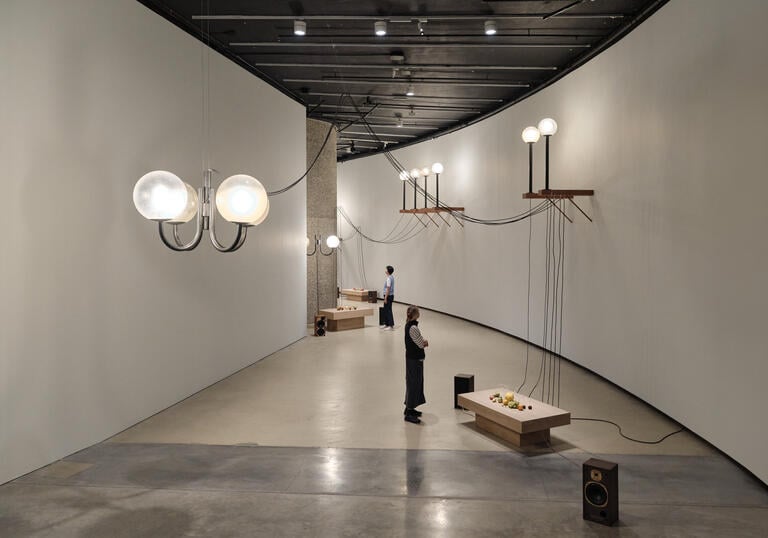
With light, sound, fruit and kinetic systems, Yuko Mohri makes the Barbican’s Curve into an argument for attending to what does not quite work as expected.
With light, sound, fruit and kinetic systems, Yuko Mohri makes the Barbican’s Curve into an argument for attending to what does not quite work as expected.
London’s Barbican has an unusual gallery in The Curve: a long, bending room whose architecture dictates the encounter before the first artwork begins. Yuko Mohri has taken that condition seriously in In Concert, a site-responsive commission that treats the gallery as a changeable environment of light, sound and moving parts. The result belongs to a growing contemporary-art conversation about machines, but it is less interested in technological spectacle than in how a system behaves when it is allowed to remain imperfect.
Mohri works with kinetic assemblage, ordinary objects and elements that refuse exact control. Air, water, humidity, gravity and magnetism are not neutral materials in her hands; they are collaborators. A visitor who expects machines to perform the same action repeatedly encounters an artistic language built on variability.
The official 2026 installation photographs show suspended lighting, wires, speakers and tables bearing fruit. These are humble objects, but their arrangement is carefully staged. The audience is asked to hear and watch processes that might ordinarily disappear beneath a polished finished product. The difference between accident and composition becomes harder to define as components respond to one another and to the conditions of the room.
The installation is not an illustration of environmental crisis or a simple celebration of repair culture. Its force comes from sustaining contradictions. The setup can feel improvised and exact at the same time; the work uses tools of control to make room for unpredictability. It proposes that attentive maintenance may itself be a form of creativity.
For collectors accustomed to painting or sculpture as stable objects, the durational nature of Mohri’s art is important. There may be no single definitive image that fully describes the installation. A short video clip can reveal movement but flatten the experience of sound. A photograph can preserve the visual relationships but cannot deliver the gallery’s changing acoustic atmosphere.
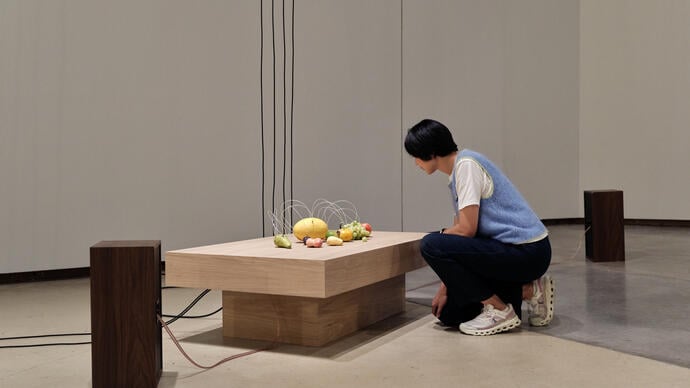
Conservation therefore becomes a conceptual question. Should a motor be repaired to retain original behaviour, or should the work’s capacity to fail remain visible? Which components can be replaced and which carry essential meaning? Artists working with technological and everyday systems make such questions part of the life of an artwork rather than problems for museums to solve decades later.
The commission also arrives during the Barbican’s ongoing attention to renewal and renovation. Mohri’s emphasis on entropy and repair resonates with that institutional context without serving as a decorative metaphor for it. A vast cultural complex is a machine of systems — heating, lighting, movement, communication, labour — and the artist asks viewers to notice that all such systems rely upon continual adjustment.
In this respect the exhibition offers an alternative to technological perfectionism. What happens when we value an object not for seamless operation but for its legible history of care? The question reaches beyond art into architecture, collecting and the practical ethics of keeping things alive.
Visit slowly, ideally allowing enough time for sound and movement to register beyond the initial visual impression. Note the relationship between a change in one part of the system and a response somewhere else. The Curve’s shape encourages an unfolding encounter; returning to an earlier position may reveal something that had not yet happened on the first pass.
Yuko Mohri: In Concert runs at the Barbican from 1 October 2026 to 24 January 2027. Admission is free according to the Barbican’s current exhibition information. This is an editorial analysis grounded in the institution’s published programme and 2026 installation photographs.

Mohri has acquired international visibility in part because her installations are easy to recognise but difficult to reduce to a single image. The elements are approachable: fruit, improvised mechanisms, musical equipment and the equipment of everyday repair. Yet the central drama is temporal. A thing changes position, a material ages, a sound is produced and then disappears. These works reward the visitor who stays long enough to recognise that the ordinary is not static.
The connection with musical performance is more than a poetic title. Her objects become part of arrangements that generate sequences, pauses and unexpected interruptions. A gallery installation can be understood as a score without the guarantee that every performance will sound alike. This quality separates her practice from highly automated immersive installations built to reproduce the same experience at every visit. The possibility of variation is a defining condition rather than a flaw.
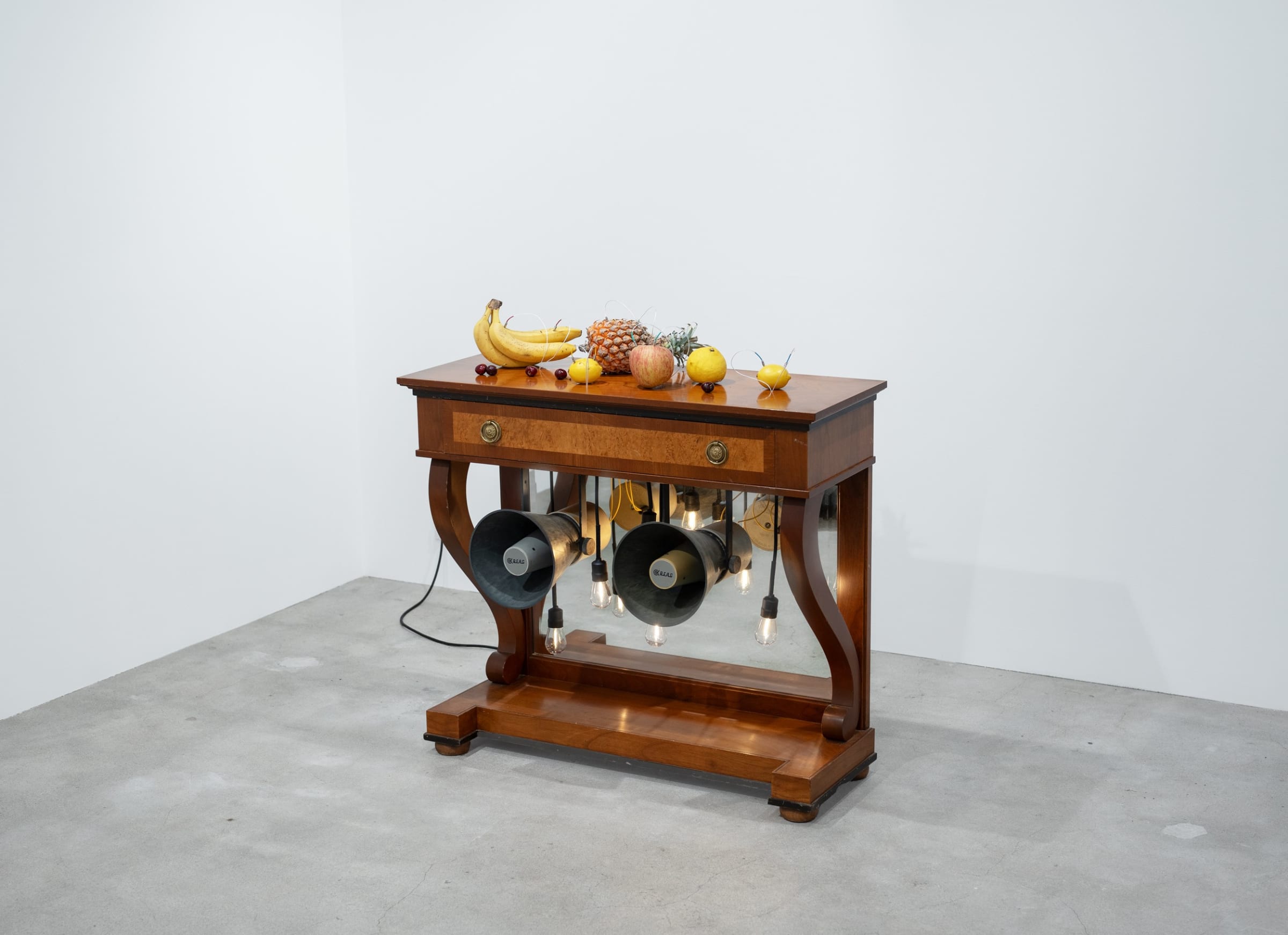
With installations that incorporate perishables, electronics and mechanical components, collecting begins with unusually detailed questions. Which elements are originals and which are understood as replaceable? Does a change in the species of fruit affect the work’s conceptual identity? Who calibrates the mechanisms, and what documentation is provided for reinstallation? Does a failing component call for immediate repair, or does the state of temporary failure belong to the intended encounter?
These are not reasons to avoid such art. They are reasons to acquire it responsibly. A technical rider, a full inventory, installation diagrams, approved substitutions and records of the artist’s intent may be every bit as consequential as the certificate and invoice. Mohri’s work encourages collectors to recognise that care is not an administrative afterthought but part of what allows the work to exist across time.
A useful way to experience In Concert is to identify a single gesture—a light changing, a cable moving, an object responding—and then trace the chain of effects around the gallery. Rather than searching for the central sculpture, pay attention to distributed relationships. The Curve’s long geometry can make the work seem different from opposite ends. The visitor becomes a temporary witness to a system that does not exist in a definitive static state.
Contemporary art has no shortage of technological wonder. Mohri’s contribution is quieter and potentially more enduring: she turns vulnerability into an intelligence of materials, and repair into something worth looking at. This is one of the strongest arguments for seeing the exhibition before it closes in January, ideally on more than one occasion.
Dates: 1 October 2026–24 January 2027. Location: London, UK.
Research and official information: www.barbican.org.uk
With light, sound, fruit and kinetic systems, Yuko Mohri makes the Barbican’s Curve into an argument for attending to what does not quite work as expected.
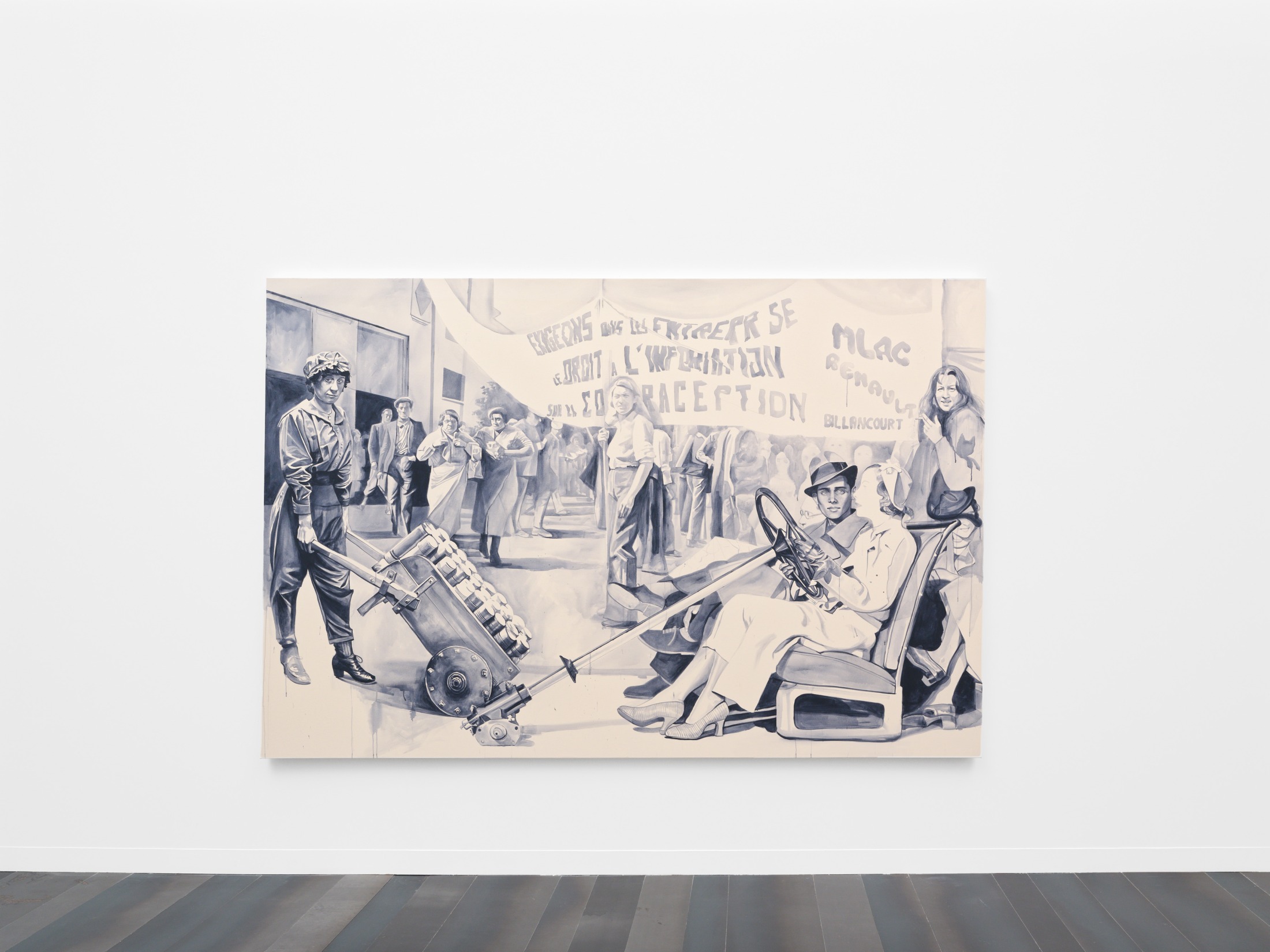
A new contemporary art centre has opened on Renault’s historic Île Seguin site. Cecilia Alemani’s Moteur Imaginaire turns the factory, car and machine into a century-spanning argument about modern life.
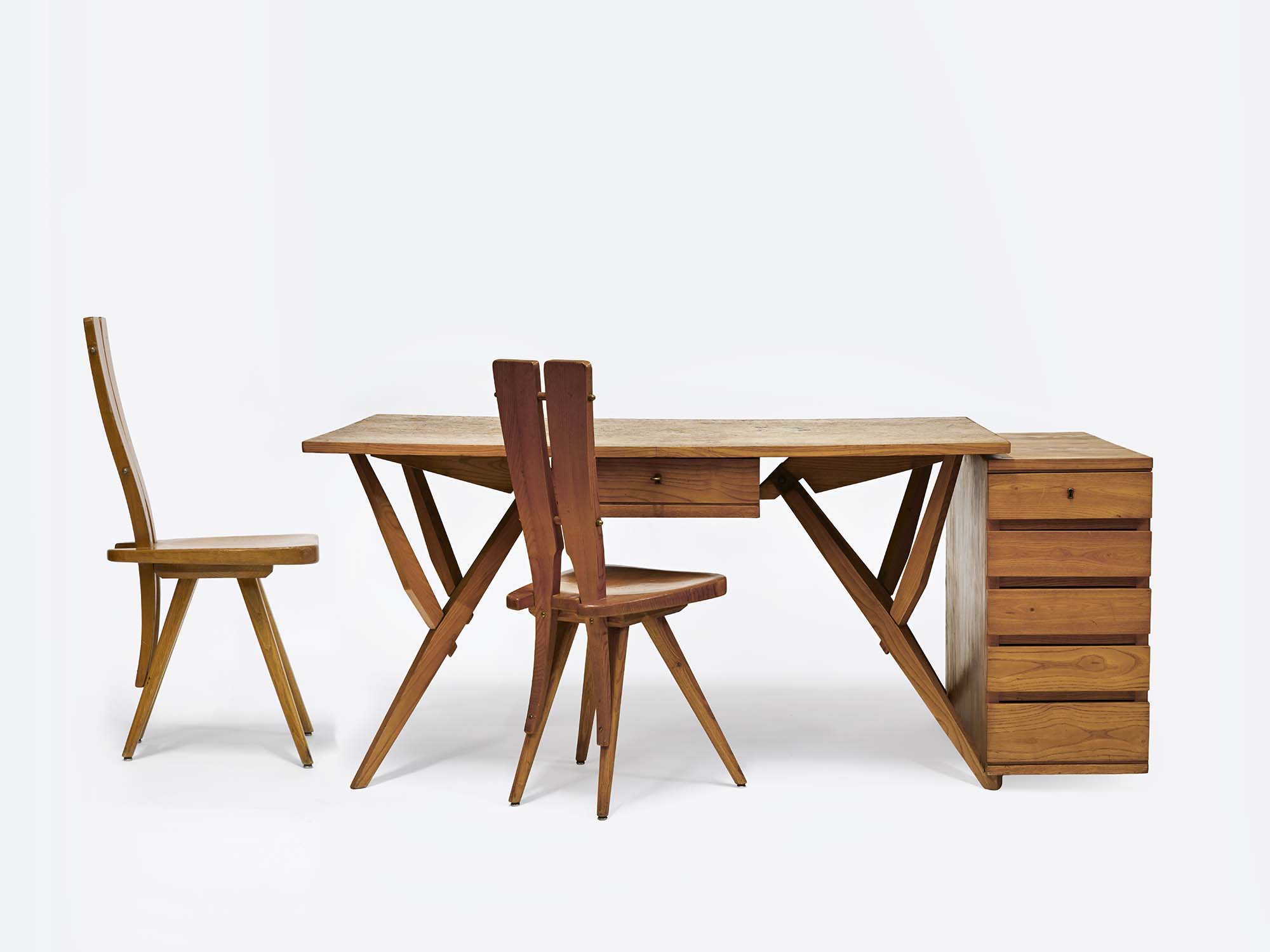
From Carlo Mollino and Faye Toogood to Misha Kahn and Gallery FUMI, PAD London 2026 showed what discerning art collectors can learn from sculptural furniture and material experimentation.