
October 24, 2026
Exhibitions
Exhibitions
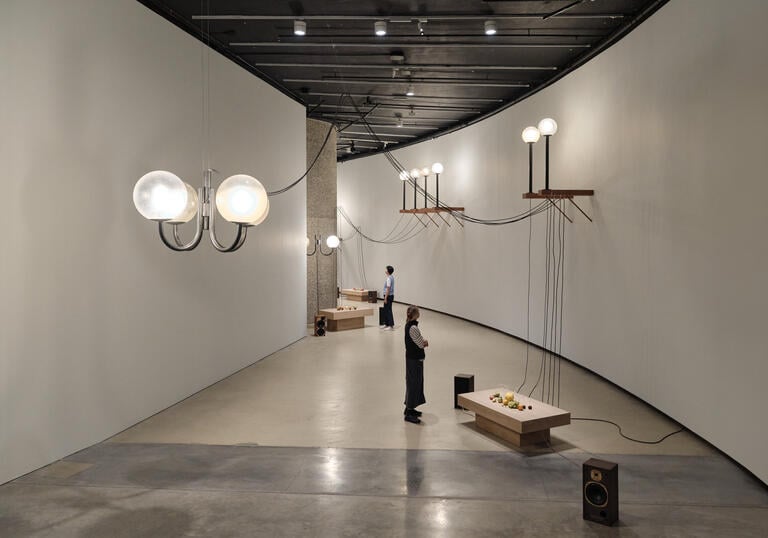
With light, sound, fruit and kinetic systems, Yuko Mohri makes the Barbican’s Curve into an argument for attending to what does not quite work as expected.
A new contemporary art centre has opened on Renault’s historic Île Seguin site. Cecilia Alemani’s Moteur Imaginaire turns the factory, car and machine into a century-spanning argument about modern life.
Paris Art Week has a new centre of gravity just beyond the périphérique. On 17 October, Le Large opened on Île Seguin in Boulogne-Billancourt, a site whose industrial history is inseparable from Renault and whose cultural redevelopment has been gathering scale for years.
The inaugural exhibition, Moteur Imaginaire, is curated by Cecilia Alemani and uses that history rather than trying to erase it. More than one hundred works by 55 artists from 23 countries bring Renault’s corporate art collection into dialogue with new commissions and contemporary practices. Seventeen artists were invited to make work specifically for the exhibition.
Île Seguin was once dominated by Renault’s vast factory complex. Le Large’s strongest decision is to treat that industrial past as a material archive rather than a picturesque backstory. The exhibition begins with the company’s pioneering “Research, Art and Industry” programme of the late 1960s, when artists were invited into production environments and given access to industrial tools, materials and expertise.
That history produced encounters with figures including Simon Hantaï, Julio Le Parc, Jean Tinguely, Jean Dubuffet, Victor Vasarely, Arman and Robert Doisneau. Corporate collecting is often discussed as branding; Renault’s programme is more interesting because it also functioned as production infrastructure.
Alemani structures the exhibition into five chapters: Usine de mes pensées, Forces motrices, Corps sociaux, Objets du désir and La machine humaine. Together they move from the factory as workplace to the car as fetish object, from migrant labour to automation and post-human systems.
The exhibition’s central question is not whether machines are good or bad. It is how machines reorganise desire, work, identity and social life — and how artists can reveal the ideologies hidden inside apparently neutral technologies.
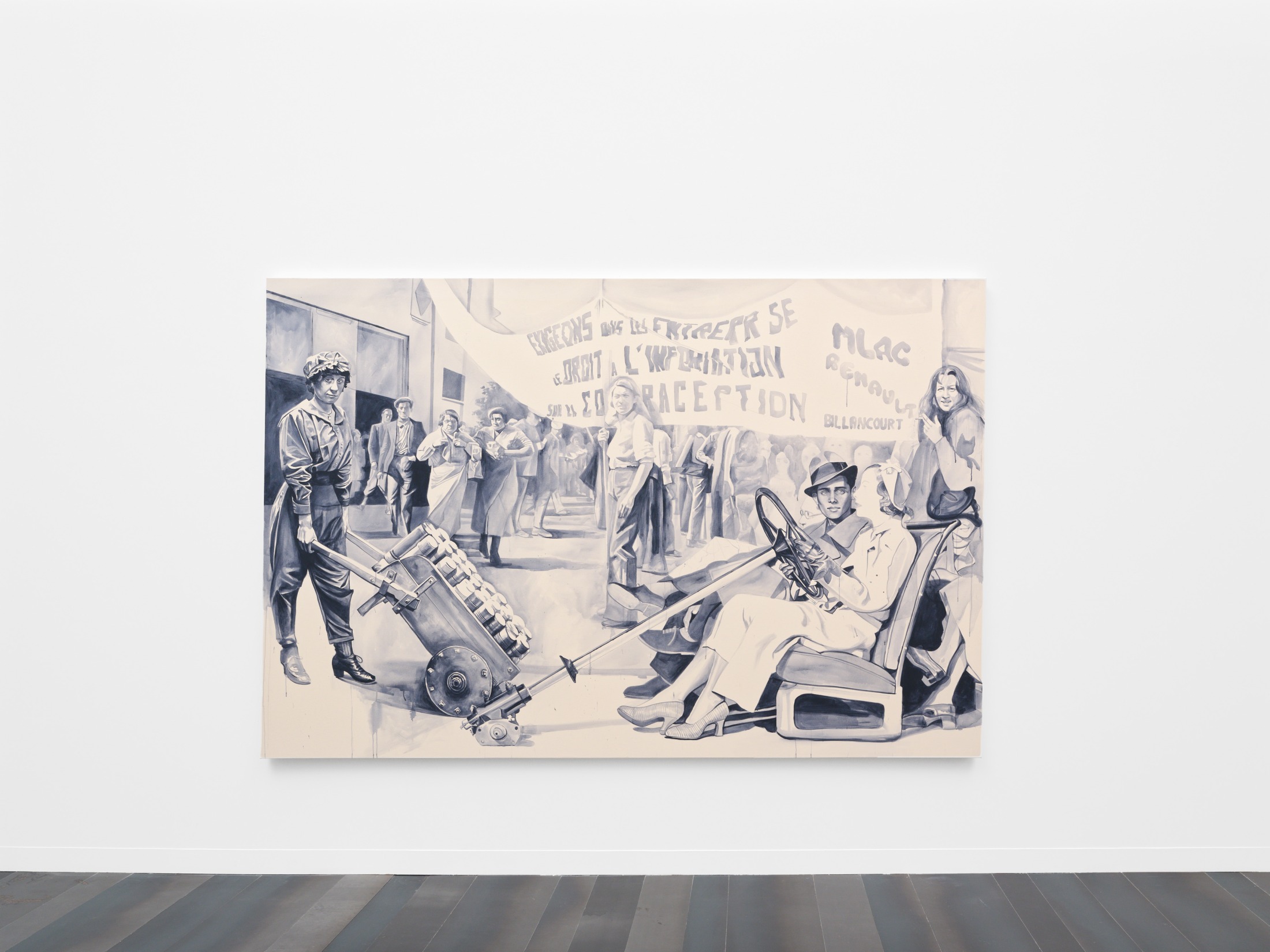
Giulia Andreani’s Amaxophobia was created for the exhibition. Her practice has long mined photographic archives and official imagery to uncover the gendered and political structures hiding inside twentieth-century history. At Le Large, the automotive setting gives that method a particularly sharp edge.
Cars are among modernity’s most successful images of freedom, but the factory systems behind them are also histories of repetition, discipline and labour. Andreani’s cool monochrome language slows down the seduction of industrial imagery and makes it readable as evidence.
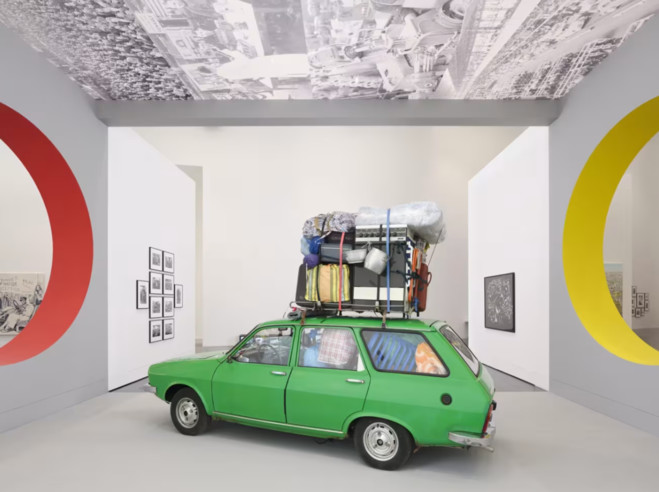
Mohamed El Khatib’s R12 cathédrale turns one of the most familiar vehicles in French and North African family memory into a loaded monument. The Renault 12 became part of summer journeys between France and the Maghreb, frequently carrying astonishing amounts of luggage, gifts, furniture and household goods. The car was transport, but also a moving domestic archive.
That history makes the work particularly effective on Île Seguin. An object produced by French industry returns not as a symbol of corporate engineering but as a vessel for migration, family economies and transnational memory.
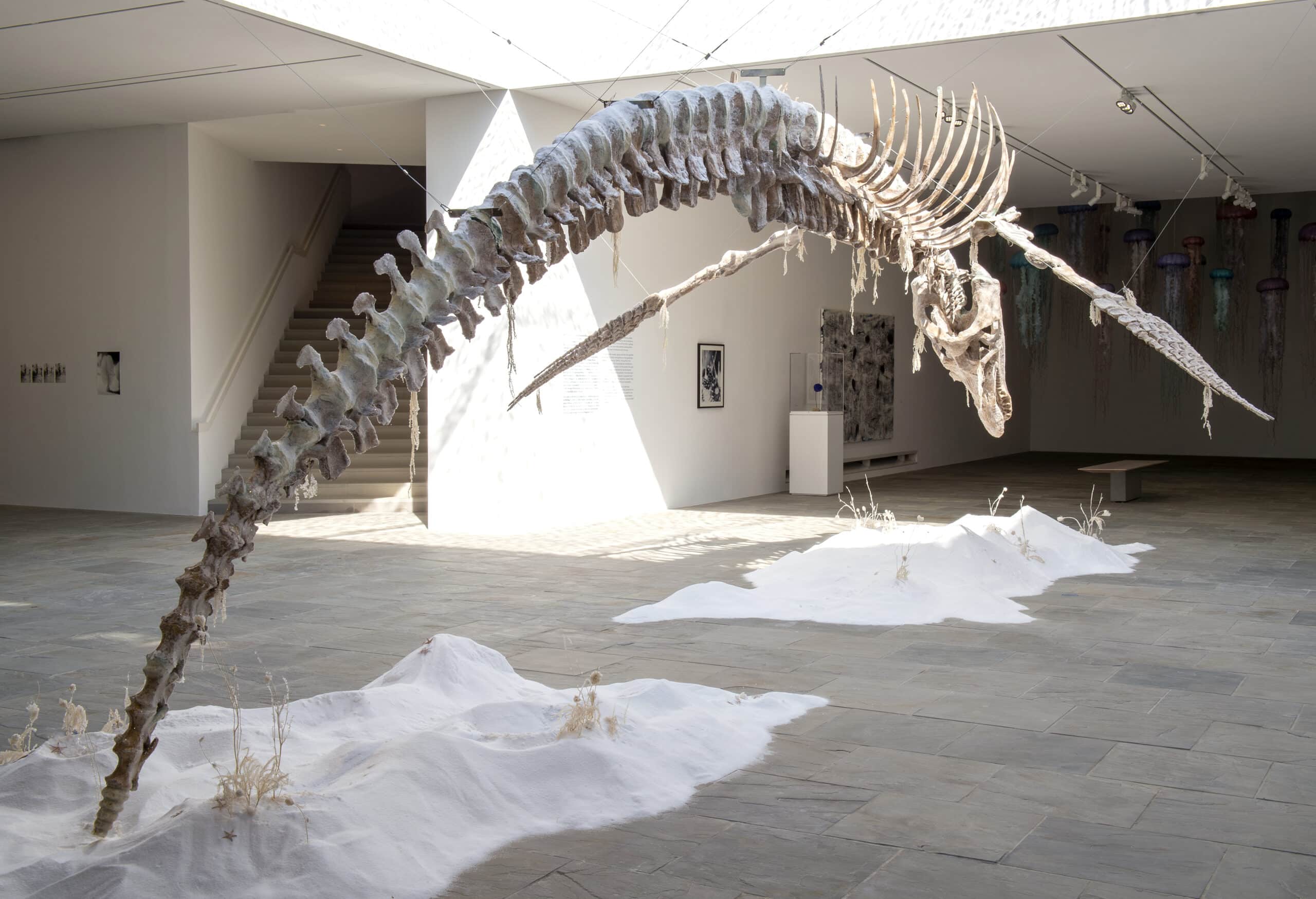
Bianca Bondi’s intervention pushes the automobile toward ruin and ecology. The Renault body becomes a host for sand, vegetation, moisture and chemical transformation. The car — perfected as a sealed industrial product — is opened to contamination.
It is one of the exhibition’s clearer images because it allows time to enter the object. Manufacturing promises repeatability; decay produces difference. For collectors of installation and materially unstable work, that raises practical questions about conservation, replacement, growth and what counts as the work’s authentic state.
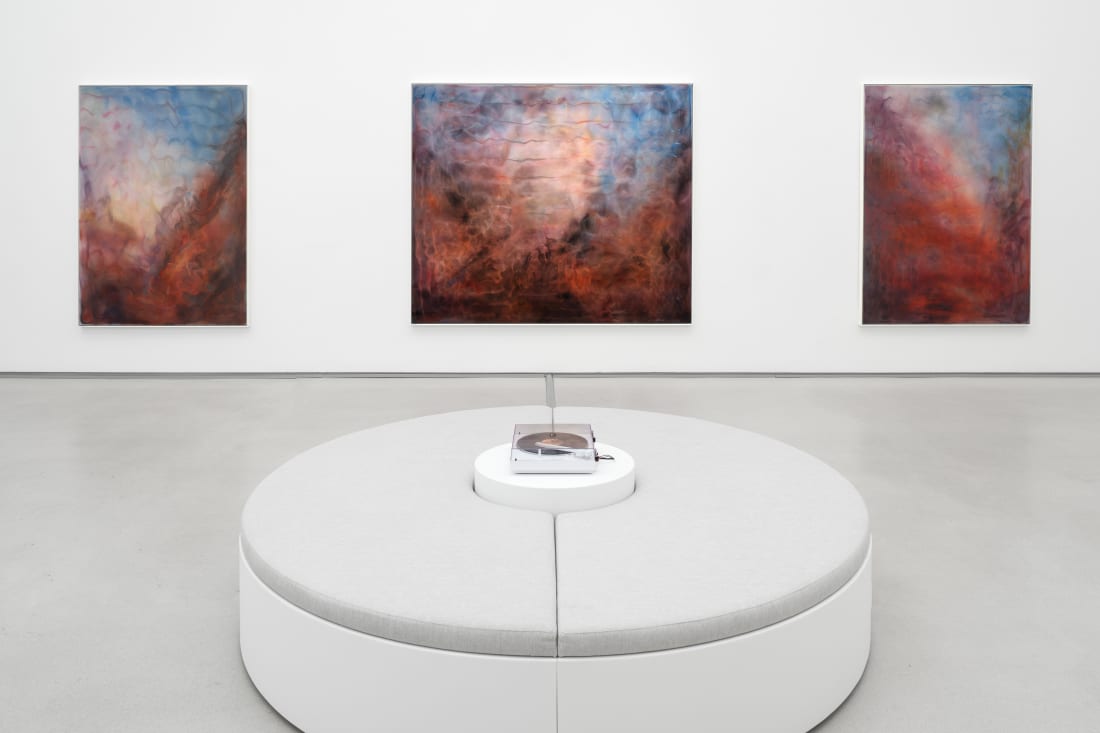
Oliver Beer approaches machines less through speed than vibration. His work has repeatedly treated architecture and objects as acoustic bodies. At Le Large, sound becomes a way of thinking about systems that are otherwise invisible: resonance, transmission, hidden energy and the translation of environment into experience.
The work also demonstrates why new art centres matter. Sound and installation practices are difficult to understand through fair booths and sales PDFs. They need time, architecture and technical conditions. Paris Art Week benefits when collectors can move between market spaces and places built for non-transactional encounter.
Bertrand Lavier’s Formula 1 work may be the exhibition’s most obvious collision between automotive spectacle and artistic authorship. Lavier has spent decades testing what happens when objects are designated, painted, displaced or reframed until categories collapse. A racing car already operates close to sculpture: engineered surface, fetish object, branded body and technology compressed into form.
Painting it does not make it less functional so much as reveal how aesthetic its industrial design already was.
Timing matters. Le Large opens days before Art Basel Paris, when collectors, advisers, museum professionals and galleries are already concentrated in the city. But its relevance should extend beyond fair week. A new institution proves itself through programming after the launch spectacle has passed.
Moteur Imaginaire is a smart opening move because it is site-specific without being provincial. Renault’s history anchors the exhibition, but the artists expand it into questions of automation, environmental damage, migration, sexuality, labour and technological control.
The show is especially useful for collectors interested in practices that exceed conventional objects. Several commissions depend on vehicles, sound, moving image, installation or changing materials. Before acquiring related work, ask for technical specifications, conservation protocols, fabrication histories and clear definitions of which components are unique, replaceable or editioned.
Corporate collections are another point of interest. Renault demonstrates that a company collection can become historically meaningful when it documents long-term relationships with artists rather than merely decorating offices. The challenge is preserving archives and context so the collection remains legible after corporate priorities change.
Le Large opens with an exhibition that understands the symbolic danger of its own site. It would have been easy to romanticise Renault’s factory history or turn the automobile into nostalgic design. Alemani instead treats the machine as a contested social object.
The strongest works are those that refuse the clean mythology of progress: a family car overloaded with memory, a vehicle overtaken by organic matter, a painting that reopens official history, a racing machine turned into an aesthetic proposition.
For visitors in Paris during Art Basel week, Le Large is worth the detour not because it is new, but because it offers something the fair cannot: enough space and time for the machinery behind contemporary life to become visible.
Moteur Imaginaire
Le Large, Île Seguin, Boulogne-Billancourt
17 October 2026–7 March 2027.
With light, sound, fruit and kinetic systems, Yuko Mohri makes the Barbican’s Curve into an argument for attending to what does not quite work as expected.
A new contemporary art centre has opened on Renault’s historic Île Seguin site. Cecilia Alemani’s Moteur Imaginaire turns the factory, car and machine into a century-spanning argument about modern life.
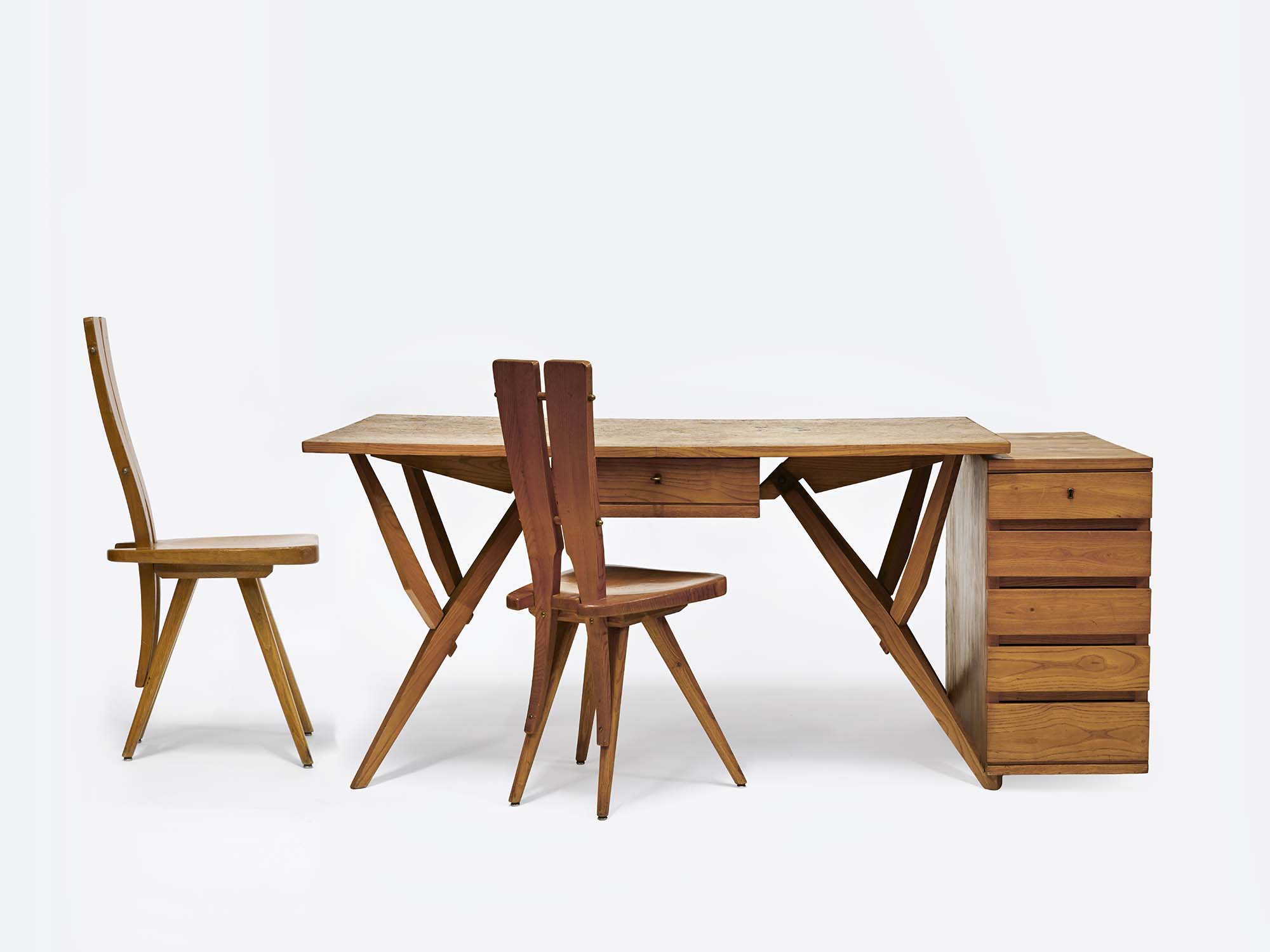
From Carlo Mollino and Faye Toogood to Misha Kahn and Gallery FUMI, PAD London 2026 showed what discerning art collectors can learn from sculptural furniture and material experimentation.