
October 24, 2026
Exhibitions
Exhibitions
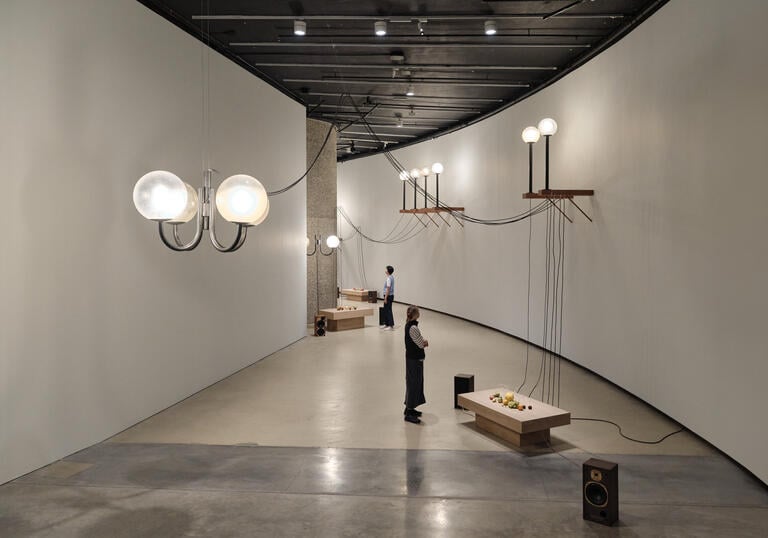
With light, sound, fruit and kinetic systems, Yuko Mohri makes the Barbican’s Curve into an argument for attending to what does not quite work as expected.
OBTUSE (°): , the inaugural exhibition of Obtuse Archive at Galleria Objets, brings together thirteen artists and three performers across sculpture, installation, sound, and performance. Decentering painting and privileging material experimentation, the show explores spatial tension, encounter, and the productive unresolved, positioning Obtuse Archive as a cultural platform in motion.
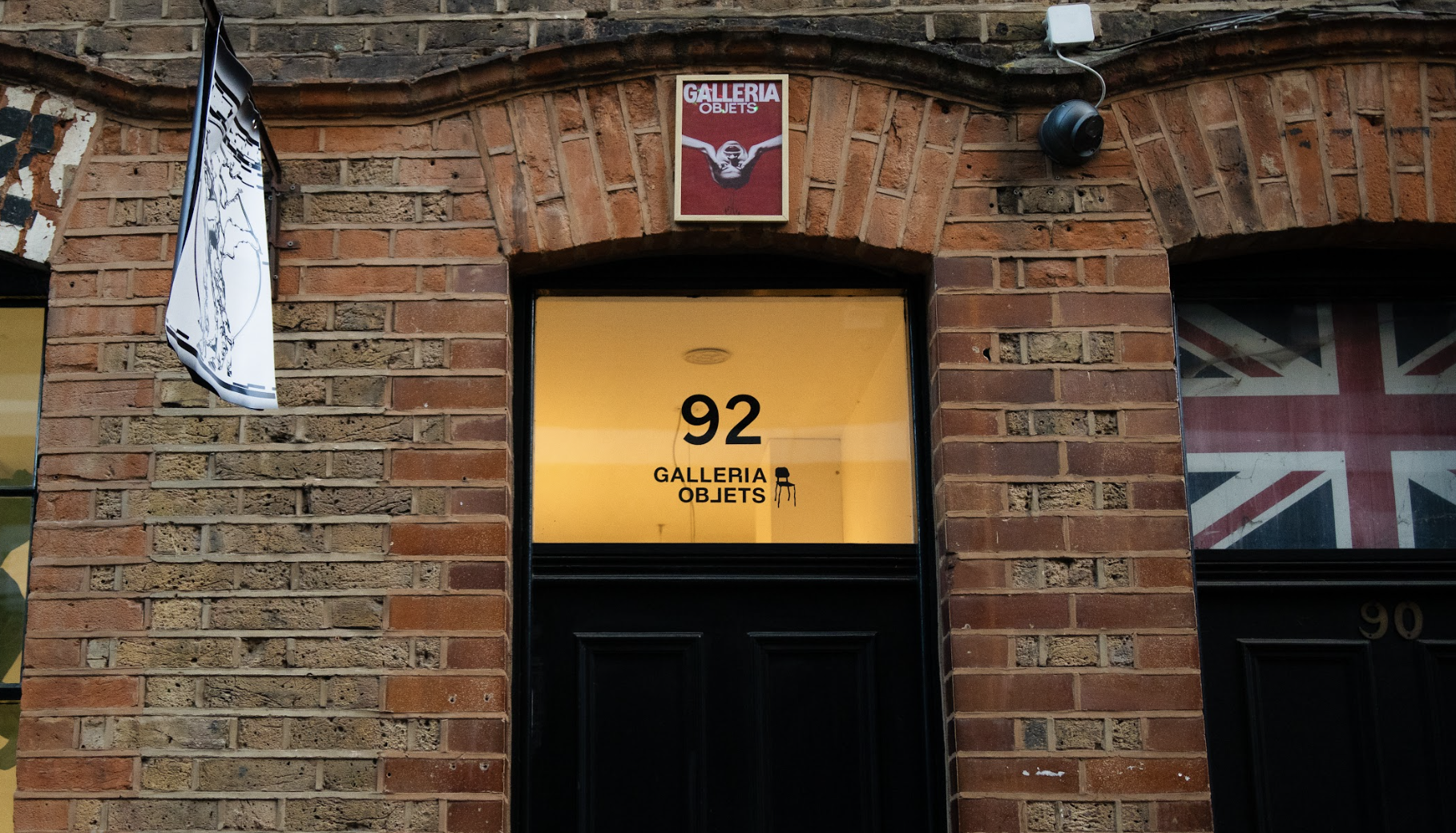
Obtuse Archive entered London’s cultural landscape with its inaugural exhibition as an ode to critical proximity over spectacle, proposing a fully embodied, sensory experience.Insisting on a holistic approach to artistic production and reception, this is not an exhibition calibrated for market legibility, but one structured aroundreverberation—where material experimentation, spatial thinking, and alternative narratives converge. With OBTUSE (°), staged as a two-day exhibition and live programme at Galleria Objets from 18–19 December, Obtuse Archive positions itself as an archive in motion: a curatorial platform that values encounter over consumption, process over product, and the slow accumulation of meaning over immediate resolution.
Co-founded by Selin Kir and Yang Rung Chen, Obtuse Archive defines itself less as a venue than as a curatorial condition—an evolving archive attentive to what lingers, misaligns, or resists disappearance. This ethos is materially and spatially articulated in OBTUSE (°), which brings together thirteen artists and three performers working across sculpture, installation, sound, performance, and food. The programme unfolded across two private views, emphasising encounter,recurrence, and temporal layering rather than a singular opening moment.
Rather than proposing a unified narrative, the exhibition functions as a choreography of partial alignments, where relationships emerge through proximity and co-presence.
Taking its title from the obtuse angle—situated between stability and collapse, extension and refusal—this geometry becomes a conceptual framework through which the works operate:leaning, suspended, unresolved. Rather than proposing a unified narrative, the exhibition functions as a choreography of partial alignments, where relationships emerge through proximity and co-presence. This logic resonates throughout the exhibition, where sculpture forms the gravitational core. Bold geometric structures and objet trouvé assemblages articulate the bodily and the domestic as sites of tension and inscription.
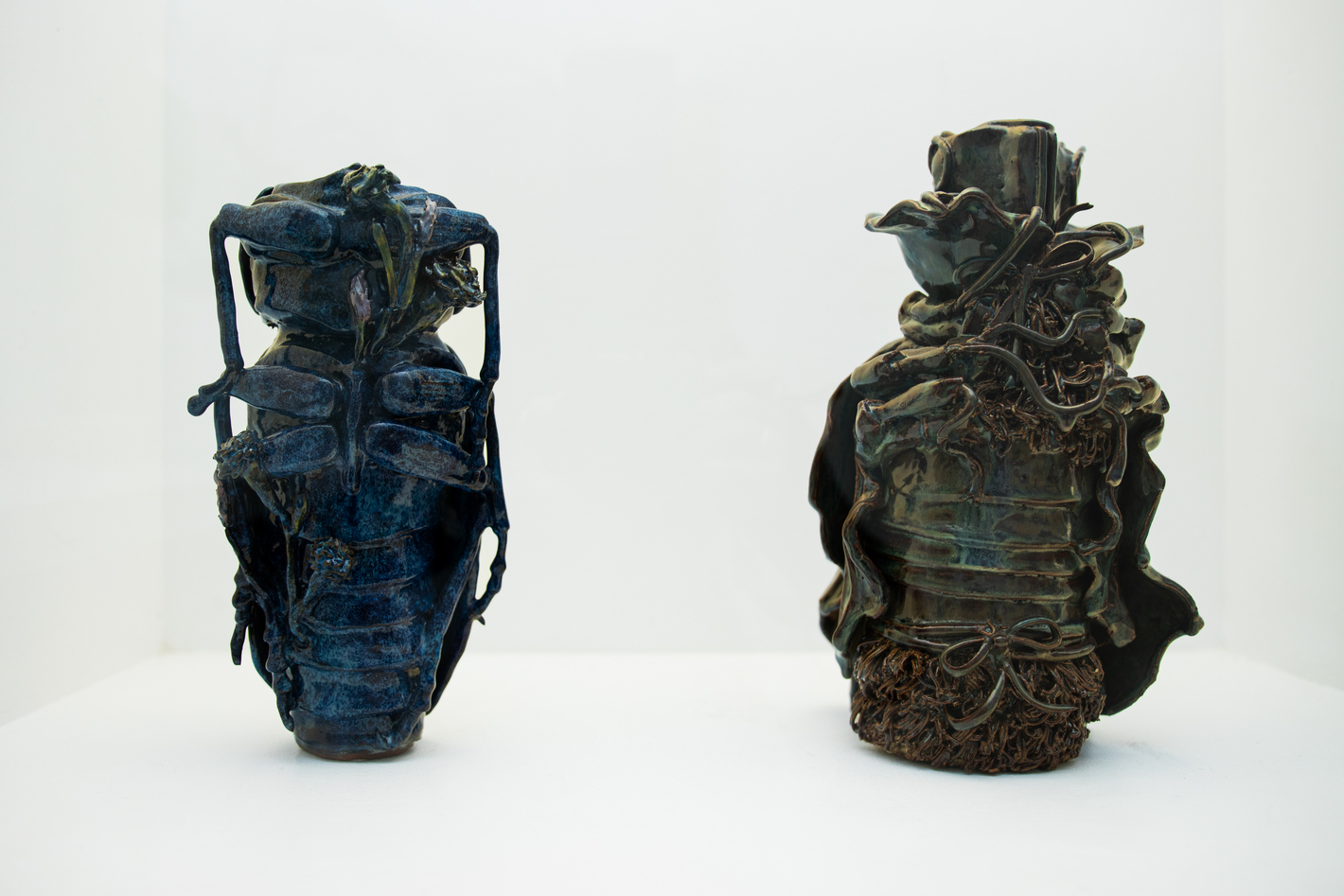
Upon entering the gallery, awindow-cased display introduces sculptures by Abigail Norris, Cas Campbell, and Meitao Qu, evoking a baroque, archival cabinet-of-curiosities aesthetic. Campbell’s and Qu’s meticulously crafted stoneware, alongside Norris’s living,organism-like objects, are presented as social relics—material traces ofhumanity suspended between care, decay, and classification.
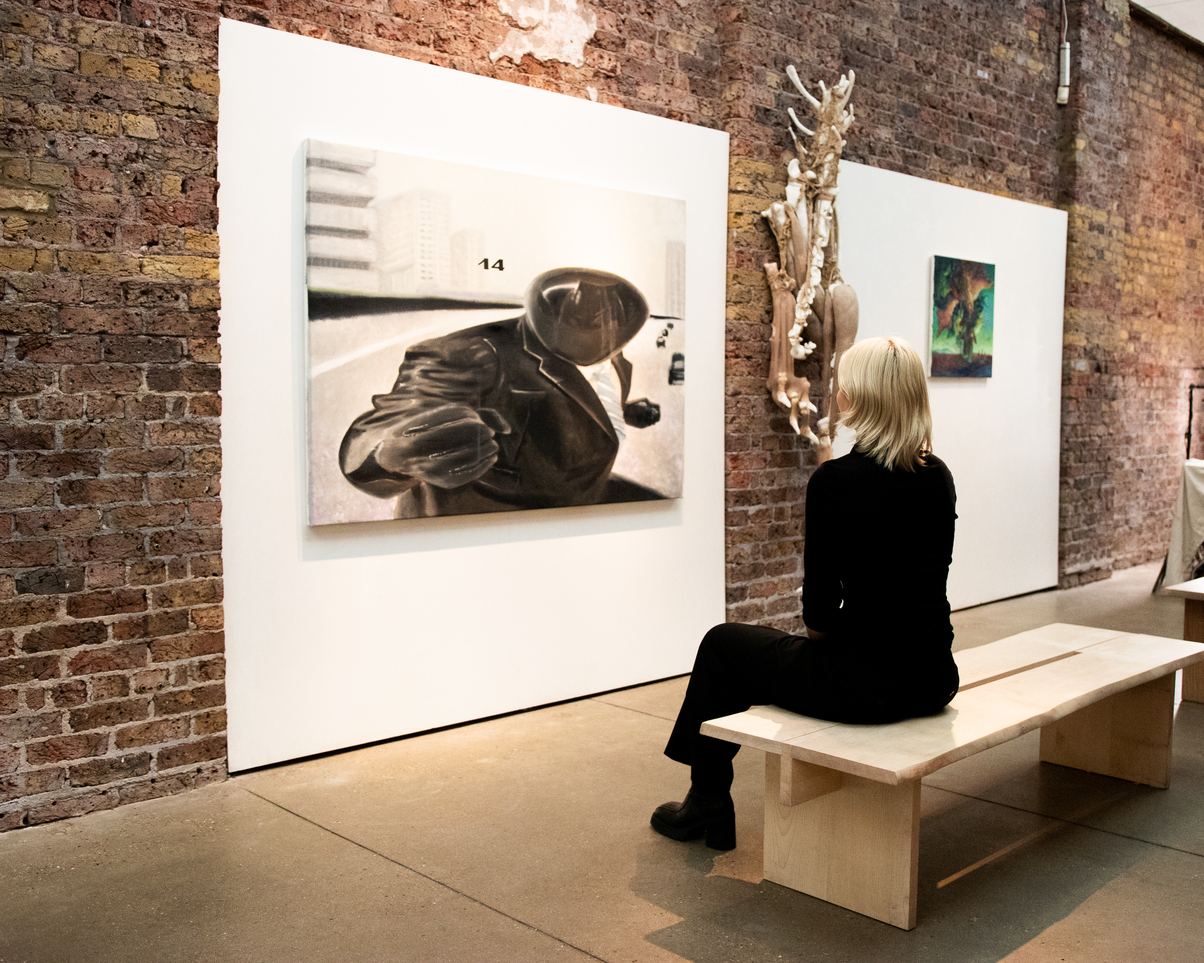
The main gallery unfolds withinthe long, narrow architecture of Galleria Objets as a deliberately unsettledspatial composition, where works are positioned not to resolve the space but to hold it in tension. Exposed brick walls, visible traces of the building’s former life, and a pitched skylight ceiling create a raw, almost provisional setting that resists the neutrality of the white cube. Sculptural forms punctuating the space with a sense of bodily presence and latent movement.
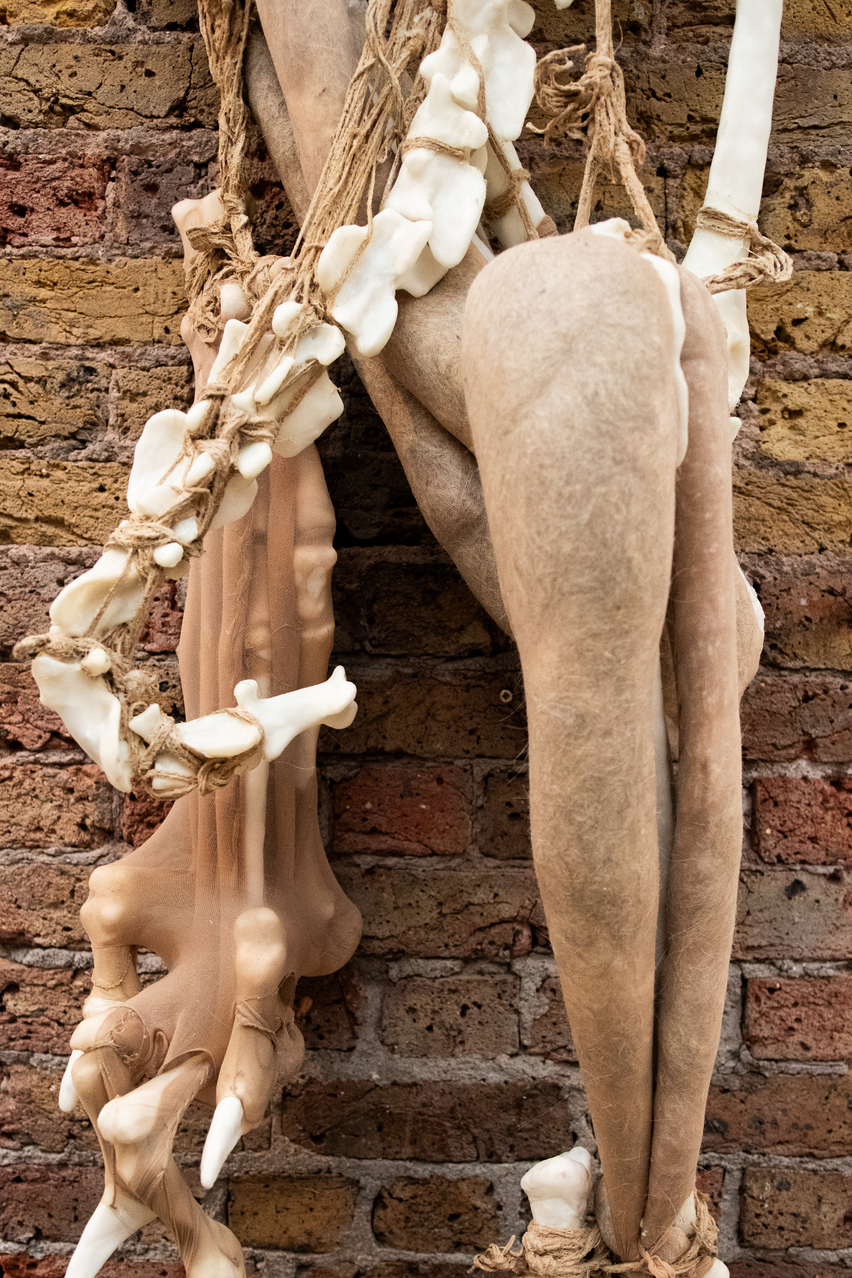
Abigail Norris’s assemblages of bonelike structures introduce a quieter but no less unsettling register. Ode to a Cello (KnotMake Sense) (2025), a soft, drooping homage to Claes Oldenburg’s Soft Viola,transforms musical form into something bodily and domestic. Constructed from yak hair, wheatgrass, latex, and vintage textiles, the work stages an uneasy coexistence between wildness and social respectability.
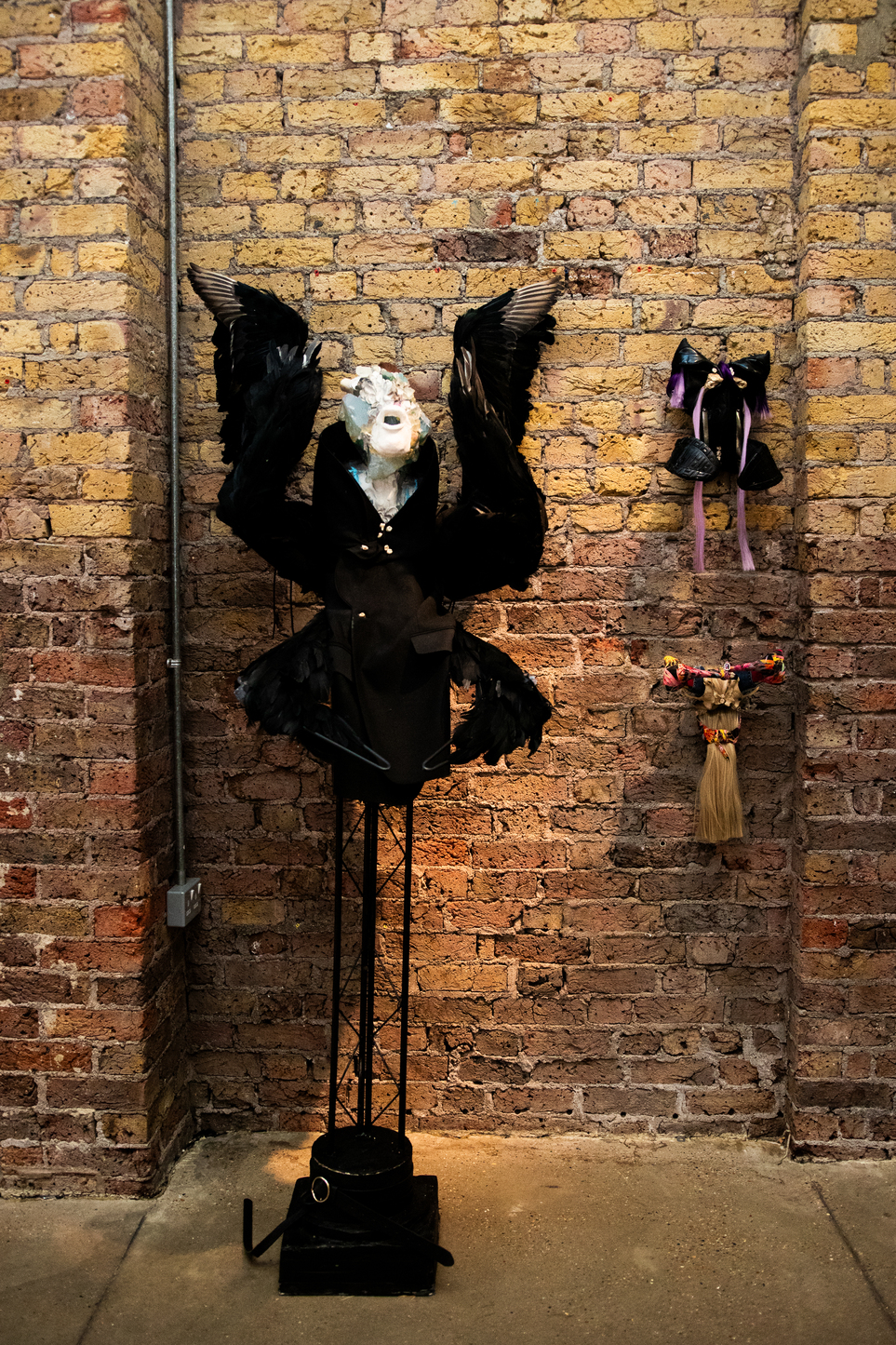
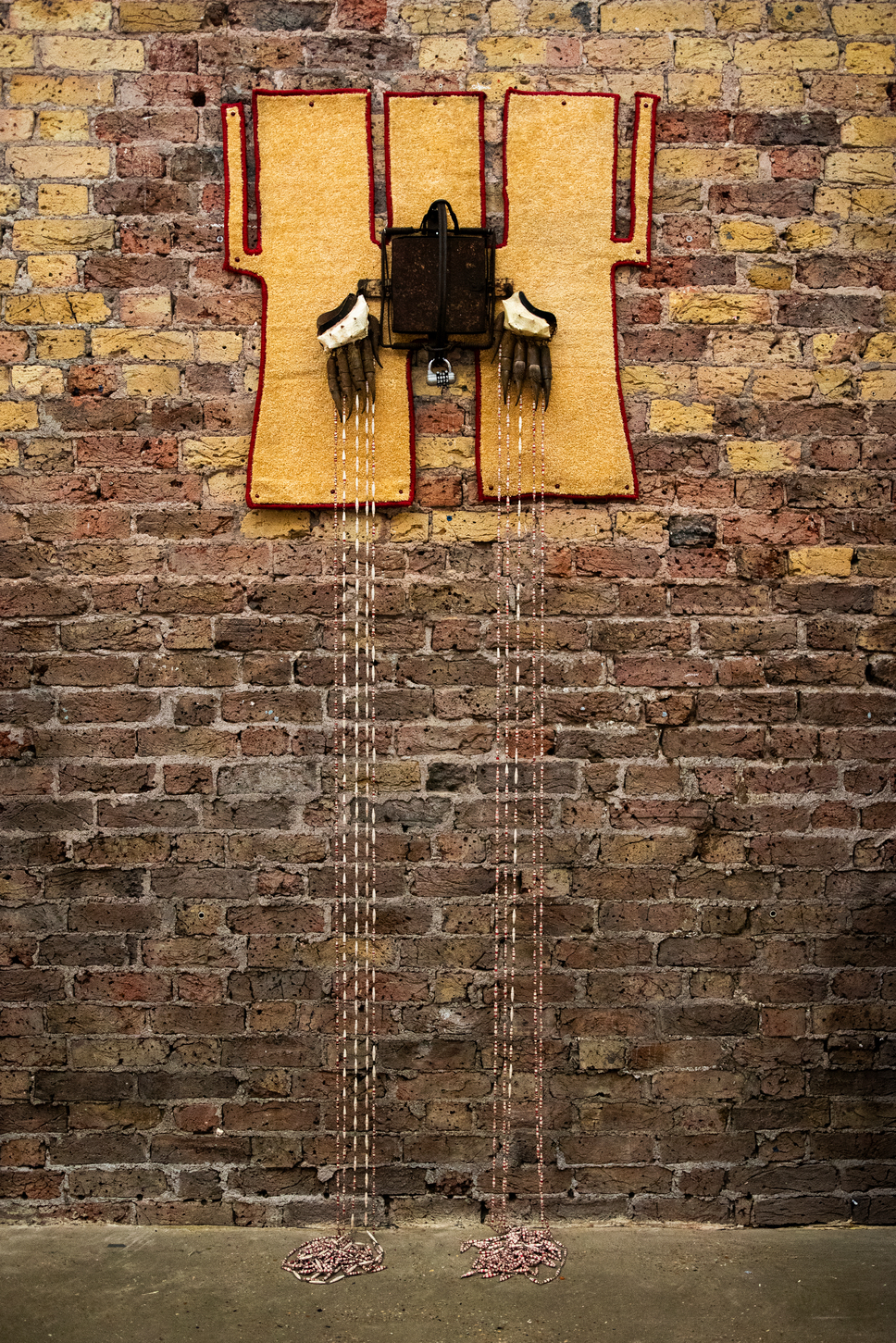
Speaking of hair, it is difficult to miss Irene Pouliassi’s celestial taxidermy, which anchors the space with amythic threshold figure assembled from found objects, bones, garments, and industrial materials. Neither human nor animal, the work resists fixed identity, speaking to societal violence and bodily vulnerability. It entersinto a precise dialogue with Juntao Gao’s Phantom Limb No. 1, where animal traps, carpets, curtains, and industrial hardware introduce a latent violence and a sense of bodily absence.
Operating within a similar rhetoric but with a more clinical inflection, Bo Sun’s wall sculpture A Clockwork Delirium (2025) appears a few metres away. Its intricate constructionbears witness to an exhaustive study of anatomy and the mechanics of creativeimpulse, oscillating between control and excess.
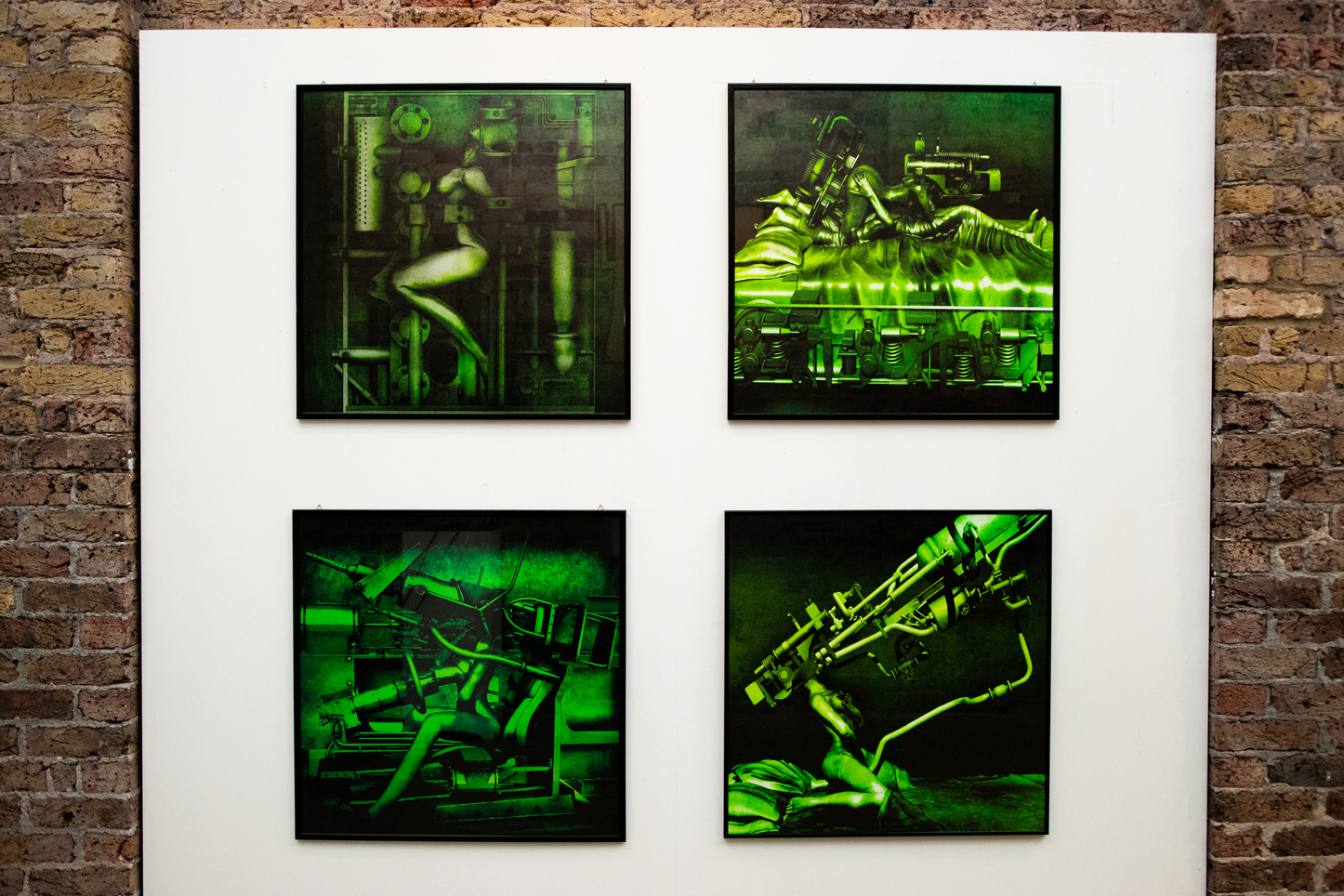
Painting is present but deliberately decentered, with Alfred Francis Pietroni’s digital paintings articulating a bodily architecture in which sex and machinery are entwined,enveloping one another in a register of emotional and psychic poetry. Interrupting the architecture rather than decorating it. This spatial distancing prevents painting from asserting dominance, situating it instead within a broader material and conceptual conversation.
Overall, the exhibition occupies a space between domestic familiarity and threat, reinforcing its broader investment in instability and unresolved tension. Media coexist without hierarchy, allowing sculpture, painting, sound, and performative traces to operateon equal footing.
Sound, performance, and food extend the exhibition beyond static display, activating the space as lived and contingent. These temporal elements resist documentation and fixation, aligning with Obtuse Archive’s refusal of standardised production cycles. The archivehere is not a repository of completed objects, but a slow, accumulating field of gestures, residues, and encounters.
As an inaugural programme, OBTUSE(°) avoids the didacticism often associated with first statements. Instead, it proposes a way of working that privilegeshesitation, drift, and partial visibility. In doing so, Obtuse Archive situates itself convincingly among London’s emerging curator-led platforms, offering not a corrective to the existing art ecosystem, but an alternative rhythm within it—one that allows meaning to remain productively unresolved.
With light, sound, fruit and kinetic systems, Yuko Mohri makes the Barbican’s Curve into an argument for attending to what does not quite work as expected.

A new contemporary art centre has opened on Renault’s historic Île Seguin site. Cecilia Alemani’s Moteur Imaginaire turns the factory, car and machine into a century-spanning argument about modern life.
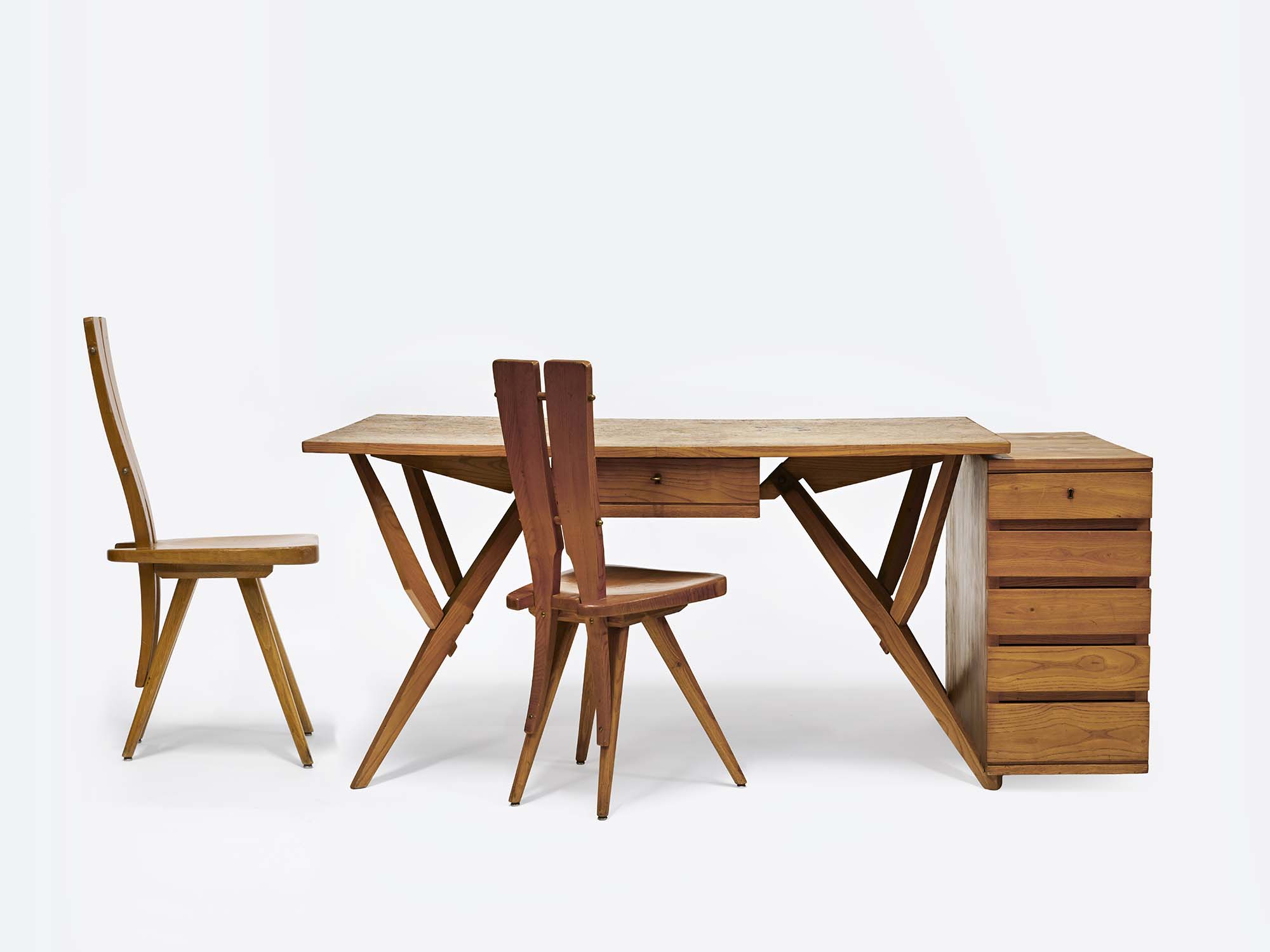
From Carlo Mollino and Faye Toogood to Misha Kahn and Gallery FUMI, PAD London 2026 showed what discerning art collectors can learn from sculptural furniture and material experimentation.