
October 18, 2026
Exhibitions
Exhibitions

From a £5 million Brueghel and three major Alice Neel sales to George Rickey, global modernism and a £675,000 Triceratops skull, Frieze Masters rewarded collectors who looked beyond categories.
A reported $450 million Blaquier consignment at Sotheby’s is more than a trophy sale: it is a test of how privacy, provenance, guarantees and collection identity create value.
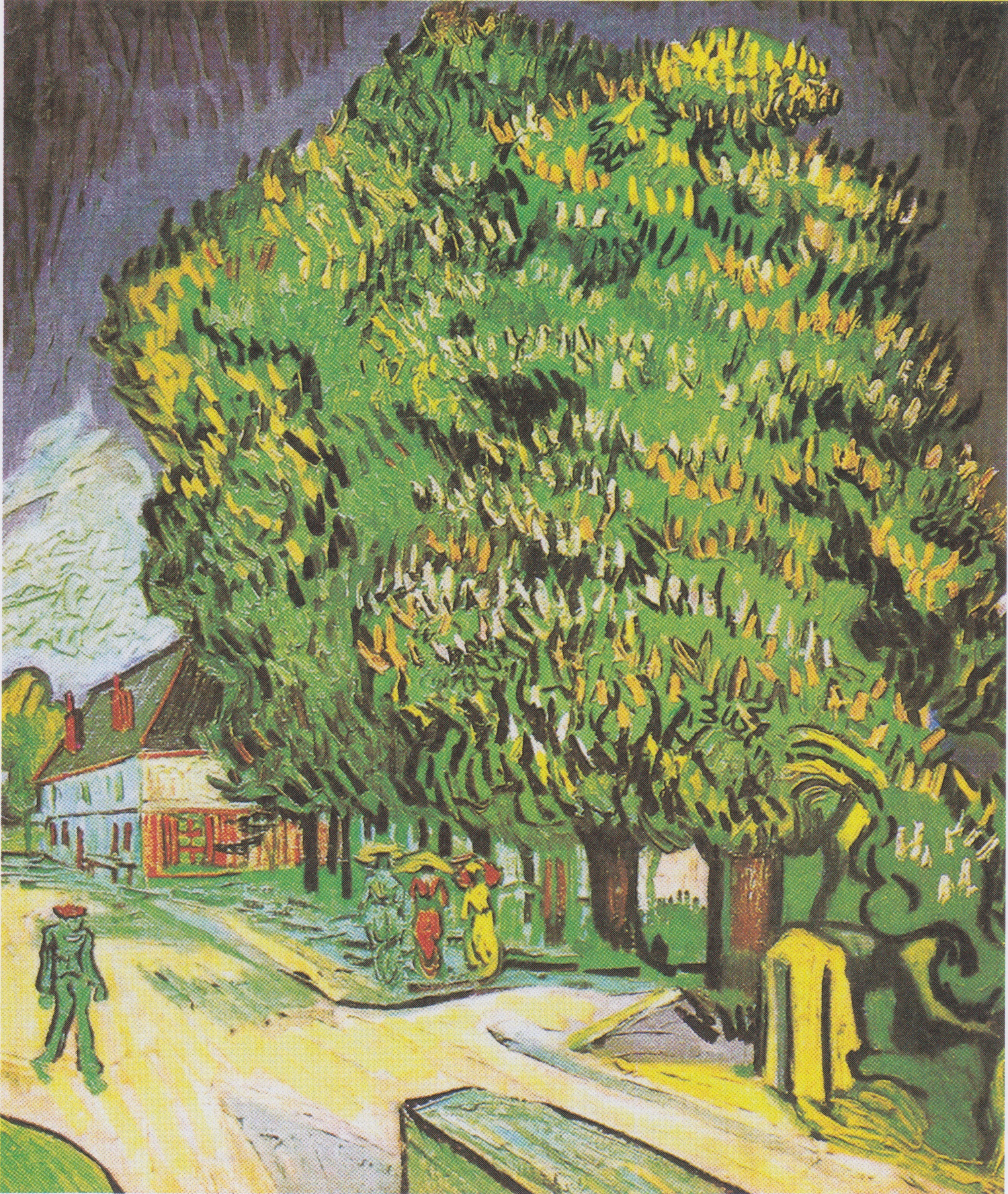
Some collections are famous because they are seen. Others become famous because they are not. The Blaquier collection belongs to the second category: a private Argentine holding of Impressionist and Post-Impressionist art whose scale has long been known within the trade but whose public identity has remained comparatively discreet. Now, according to market reporting, a tranche worth roughly $450 million has been secured by Sotheby’s for sale by the children of Nelly Arrieta de Blaquier and Carlos Pedro Blaquier.
Sotheby’s had not publicly confirmed the consignment when the report emerged, so the exact catalogue, estimates and sale structure remain to be seen. That uncertainty is part of what makes the story important. Before a single lot is hammered down, the Blaquier material already illustrates a structural change at the top of the art market: the rarest commodity may no longer be the masterpiece itself, but the coherent private collection capable of producing several masterpieces at once.
The headline work is Vincent van Gogh’s Châtaignier en fleurs roses et blanches—catalogued as F751/JH1992, painted at Auvers-sur-Oise in May 1890 and long recorded in a private South American collection. Artnet reported that a leading adviser believed it could command $150–200 million on a strong day. That is not yet a formal Sotheby’s estimate; it is market intelligence, and it should be read as such.
But the number is not absurd in context. The top end of the Van Gogh market is governed by a brutally simple equation: extraordinary demand meets extraordinary scarcity. The most desired works are not merely expensive; they are infrequently available. When one arrives with long private ownership and a narrative that connects it to a recognised collecting dynasty, the sale is not offering only a canvas. It is offering an event.
That distinction matters. At the highest level, auction houses increasingly sell historical moments: the collection unseen for decades, the estate that will not return, the masterpiece whose next appearance could be a generation away. Scarcity is no longer described only at artist level. It is manufactured—or, more accurately, revealed—at collection level.
Reports also identify a Cézanne harlequin, a Degas racecourse scene, a Pissarro Paris view and Renoir’s En canot (Jeune fille à la barque) among the likely highlights. A source familiar with the works suggested the Cézanne could exceed $120 million, while the Degas, Pissarro and Renoir were discussed above $25 million each.
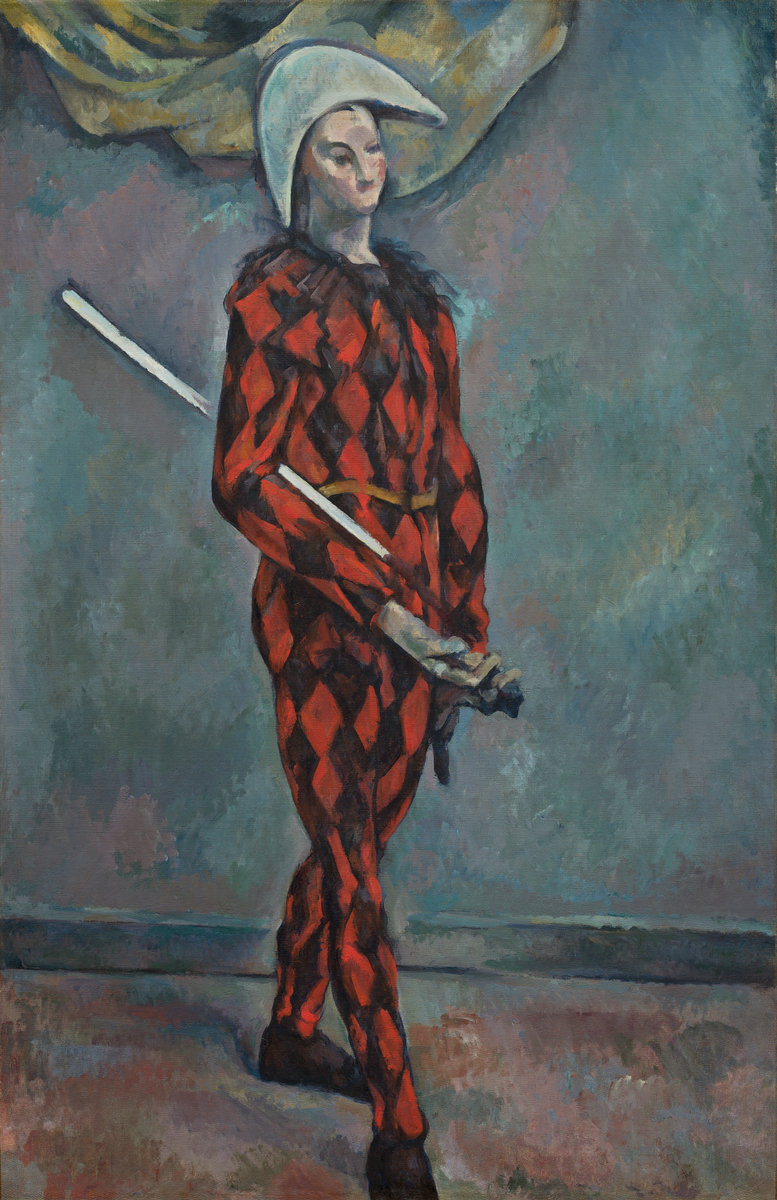
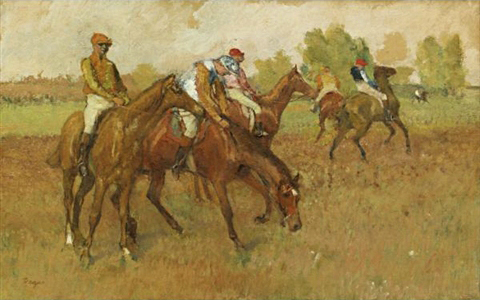
There is a reason those works become more legible when presented together. A collector’s choices act as a form of secondary provenance. They tell the market that these objects passed the same threshold of taste, resources and access. A great collection can therefore add a subtle premium to an individual work—not because the former owner changes the paint surface, but because the ownership history changes how the work is framed, trusted and remembered.
This is one of the least quantifiable forces in the auction business. Catalogue prose can describe it, but cannot calculate it. “From an important private collection” can be meaningless marketing language; from the right collection, it can be a real market signal. The difference lies in coherence and credibility.
Artnet reported that Sotheby’s secured the group after offering a substantial guarantee, despite Christie’s having handled important Blaquier property before. Christie’s is said to have privately sold Van Gogh’s Zouave for around $190 million, and it has also secured the family’s silver collection for a London sale.
Guarantees reveal the economics of trophy consignments. The auction house is not simply competing for the right to sell an object. It may be underwriting price risk in order to acquire market share, prestige, client relationships and the halo effect created by a blockbuster season. In that sense, the auction house can become temporarily similar to the collector: it accepts concentration risk because the asset is scarce enough to justify it.
For sellers, a guarantee converts uncertainty into a floor. For auction houses, it can secure a collection that changes the perception of an entire season. For buyers, however, the existence of guarantees and third-party financing is a reminder that the theatre of the auction room sits on top of a sophisticated risk-transfer structure. The hammer price is the visible endpoint of negotiations that began months earlier.
The geography is equally important. The Blaquier collection complicates the lazy idea that museum-level European modernism naturally migrates only through London, Paris, New York or Switzerland. Great collections have long been built in Latin America, sometimes with exceptional depth and less public exposure. Nelly Blaquier was described by the New York Times in 1995 as the owner of Argentina’s largest private art collection.
When such a collection enters the international sale circuit, it redraws the map of where masterpieces have been quietly held. This matters for scholarship as much as for prices. Private ownership can remove works from public view for decades; dispersal can suddenly generate new photography, conservation data, catalogue research and provenance detail. The sale is therefore both a financial event and an information event.
The story also comes with a reminder that collections exist inside legal jurisdictions, not above them. Argentine authorities had pursued a customs matter concerning the export of a group of works to Luxembourg. Artnet reported that the issue was resolved in July 2026 and the proposed penalty on the artworks was waived; several of those exported works are expected to form part of the Sotheby’s offering.
Collectors should resist reducing this to scandal. The useful lesson is more practical: cross-border movement is itself part of provenance. Export licences, temporary imports, tax status, cultural-property rules, freeport storage and customs declarations can determine whether a future transaction is clean, delayed or impossible. The more international the collection, the more its documentation must function like an archive rather than a drawer of receipts.
The Blaquier sale also poses a philosophical question about private collecting. A private collection can be intensely personal, even secretive, for decades. Then death, inheritance or changing family priorities can turn privacy into provenance almost overnight. Rooms that were never intended as public statements become a historical chapter in a sales catalogue.
That transition is not necessarily a betrayal of the collector. Dispersal has always been one of the ways collections re-enter cultural circulation. Museums acquire. Other collectors compete. Works once hidden become visible. Scholarship is revised. The identity of the original collection survives in footnotes, labels and sale titles even after the physical group disappears.
There is, however, a tension. The stronger the single-owner brand, the greater the incentive to market the collection as an entity—and the faster that entity can be dismantled lot by lot. The art market is remarkably good at monetising coherence at the exact moment coherence is being destroyed.
When Sotheby’s publishes the full catalogue, attention will naturally settle on whether the Van Gogh reaches nine figures, whether the Cézanne sets a new benchmark and whether guarantees prove aggressive or prescient. Those are legitimate questions. But the more consequential measure may be the depth of bidding across the group.
If multiple works attract competition from different regions and collector generations, it will suggest that the market’s ultra-high end remains capable of absorbing a concentrated release of museum-quality material. If the response is selective, it will confirm a market increasingly willing to pay almost anything for the exceptional while discounting merely excellent work.
Either way, the Blaquier collection is more than a sale. It is a reminder that the art market does not simply price artists. It prices stories of custody, scarcity and access. Sometimes the most valuable thing a collector leaves behind is not a single masterpiece, but the fact that the masterpieces were chosen—and kept—together.
Reporting status: 19 August 2026. Sotheby’s had declined to comment in the initial market report; formal catalogue details and estimates should supersede reported expectations when released.
From a £5 million Brueghel and three major Alice Neel sales to George Rickey, global modernism and a £675,000 Triceratops skull, Frieze Masters rewarded collectors who looked beyond categories.

Frieze London closed with sold-out emerging booths, meaningful institutional acquisitions and selective blue-chip buying. The real story was not a boom, but a market rewarding specificity.

Nearly 150 works from RM’s collection meet SFMOMA in a major exhibition of Korean modern and contemporary art. Its real lesson is how a private collection develops a coherent eye.