
October 23, 2026
Exhibitions
Exhibitions

From Faye Toogood and Kate Malone to textile art, post-war furniture and new material-led designers, PAD London showed why serious collector homes are built beyond the frame.
New Zealand–born, UK-based artist Cas Campbell works across ceramics, handmade paper, sculpture, and installation to explore humanity’s deep connection to nature. Drawing on evolutionary history, queer identity, motherhood, neurodivergence, and overlooked lives, Campbell’s practice weaves the personal with the historical. Their recent ceramic works construct alternative icons inspired by boundary-breaking female and queer figures, reframing ideas of gender, care, and permanence. In this in-depth interview, Campbell reflects on their journey from painting and installation to clay, the impact of becoming a young parent, and the slow development of a research-driven studio practice. The conversation offers an intimate insight into an emerging artist reshaping contemporary ceramics through tenderness, and resilience.

ARTCOLLECTORNEWS: Please tell us a bit about yourself and your artwork?
I’m a New Zealand-born artist, currently based between Brighton and London. I make paintings, sculptures and installations that look at the human connection to nature, particularly through the lens of evolutionary history, and with an interest in how this relates to queer culture, motherhood, gender roles, neurodivergence, environmental concerns and human experience. My work is personal and historical, and I try to draw connections between the things that are important today and the wider context of history.
ARTCOLLECTORNEWS: How has your background shaped your artistic practice?
I grew up in New Zealand but moved to England nearly twenty years ago. I no longer have the accent or a passport, but childhood is such an intrinsic part of who you are. I grew up autistic without a diagnosis and found joy and escape in the natural world, which was incredibly accessible. I was lucky enough to spend most of my free time outdoors, exploring and creating without restriction, and this fundamentally shaped who I am and therefore the work I make. Later experiences of moving to England, coming out as queer and becoming a young parent at nineteen also became themes I often return to in my work.

ARTCOLLECTORNEWS: How has your creative process changed over the years?
It took me a long time to stop making work I was told to make. I’d always been quite confident, but becoming a mother so young really shook that confidence and sense of identity, right around the same time I went to art school - when you need those things. For a while, I’d change what I was making quite quickly if it received negative feedback. You also don’t have a lot of time or mental space when you’re a parent to a baby or toddler, so for several years, my work was deliberately fast, intuitive and unconscious, because I didn’t have the time to spend longer on it. That gradually changed as my son got older. I was able to think more deeply, spend time with ideas and research, and go into the studio with a stronger sense of what I wanted to achieve. Now I’ve got a more settled understanding of how I work best, and how to embed research, criticality, feedback and experimentation into my process.
ARTCOLLECTORNEWS: How has your artwork evolved since you first started making art?
I think the form of the work has changed so many times - from painting to printmaking, to installation, to papermaking and now sculpture - but the ideas have always been there.
ARTCOLLECTORNEWS: What inspired you to become an artist?
I wanted to be a musician before I wanted to be an artist. I played in a metal band and was interested in the intersection between art and music. I felt like the alternative music world offered something that the sterility of the white-walled gallery wasn’t able to meet - an excitement, immersive atmosphere and emotional honesty. I found those things in the artists I liked at the time - Rothko, Munch and Goya - but wanted to bring them into music rather than art. When I found out I was pregnant, I realised it’d be harder to pursue music because of the lifestyle of playing and touring, so I applied to art school instead.
ARTCOLLECTORNEWS: Are there any particular artists or movements that have greatly influenced your work? In what way?
I think this comes in phases and usually relates to the ideas and techniques I’m close to at that time. When I’m interested in a certain type of work, everything else feels boring to look at and it becomes a very intense obsession. I worked this way through the Northern Romantics, then the Abstract Expressionists, and then more contemporary artists working in interesting ways, like Tauba Auerbach and Jacqueline Humphries. I was never interested in ceramics, so waking up to that world has been an all-consuming obsession over the last few years. There’s so much history to cover and so many new artists.

ARTCOLLECTORNEWS: How did you arrive at your style? What can you tell us about your individual style and visual language?
My work heavily references nature and patterns, which I like to use from both the micro perspective - like the scales of a moth wing - to larger imagery like the topography of maps, layers of geological sediment and tide patterns. Those things represent ideas of camouflage and concealment, but also a deeper connection to cycles and renewal. In my paintings, handmade paper and installations, I use mineral pigments like ochres and oxides, which create a specific palette. I’m drawn to those colours, so I bring them into the ceramic work too.
ARTCOLLECTORNEWS: After talking with you at your latest exhibition, with Sherbet Green you mentioned strong female characters as well as fossils and insects and more. How do you select your subject matter and related themes and why are they important to you and how do they inform your artistic practice?
I’ve always had an intuitive, gut-based approach to choosing subject matter and worked from what felt right. Developing this show pushed me to go deeper with research and subject matter, and to find ways to express multi-layered concepts. When I realised I wanted the sculptures to represent specific people, I landed on Mary Anning almost immediately. She was a natural choice for everything I wanted to talk about - nature, evolution, gender, sexuality and motherhood. So I began with her and then looked for other figures who’d sit well alongside her.
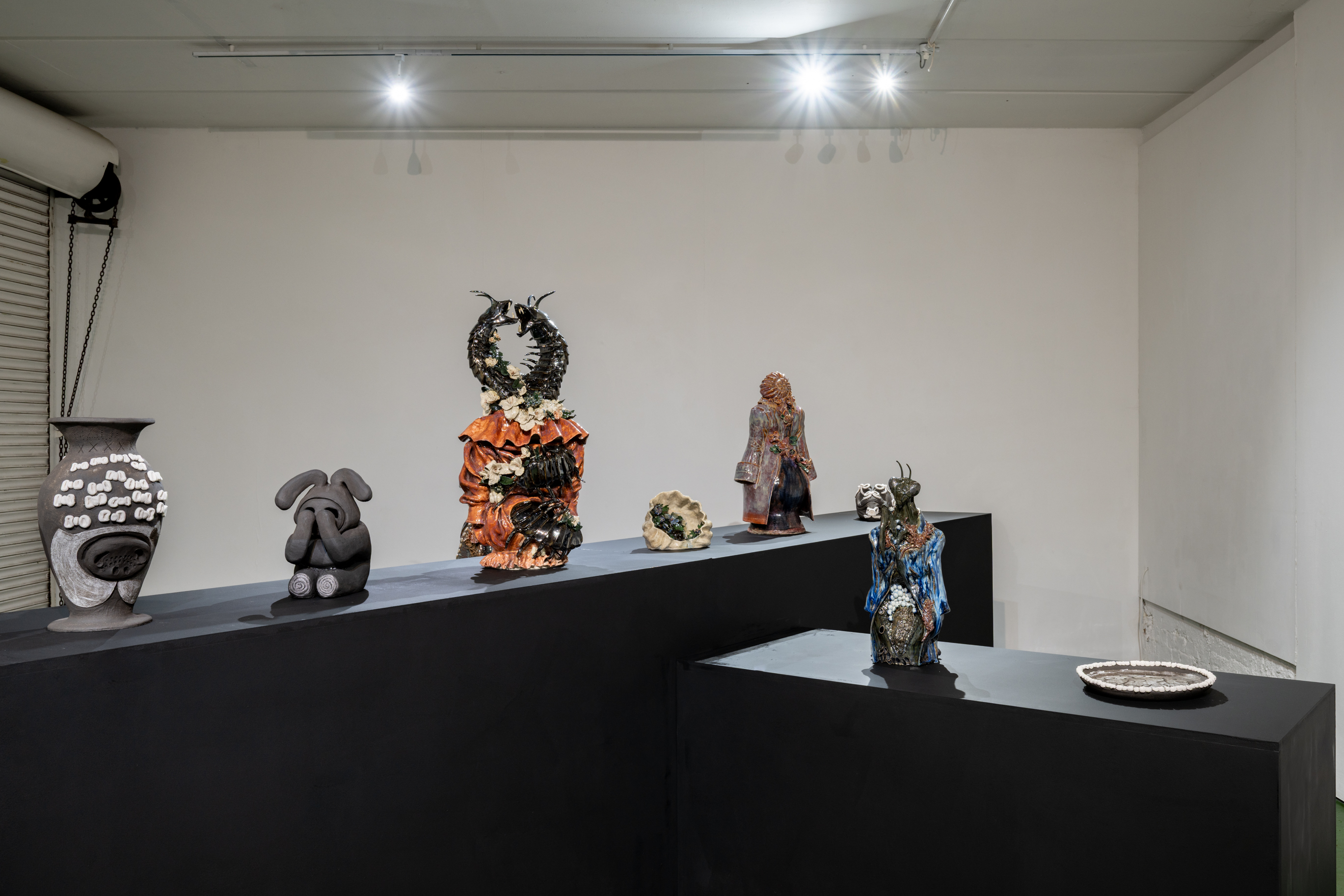
ARTCOLLECTORNEWS: Please tell us a bit more about your latest body of work
It’s a series of ceramic works inspired by deep time and evolutionary history - a time where the idea of a stable natural order begins to loosen as species emerge, adapt and disappear. Each ceramic piece follows a specific historical female figure, often queer, whose life or work in some way shaped our understanding of the world, broke boundaries and existed out of step with their era. I’ve taken their stories and used the visual framework of icons to create anthropomorphic forms, exploring how we perceive fixed systems - from gender to motherhood, queerness and divergence - and how those can be broken down.
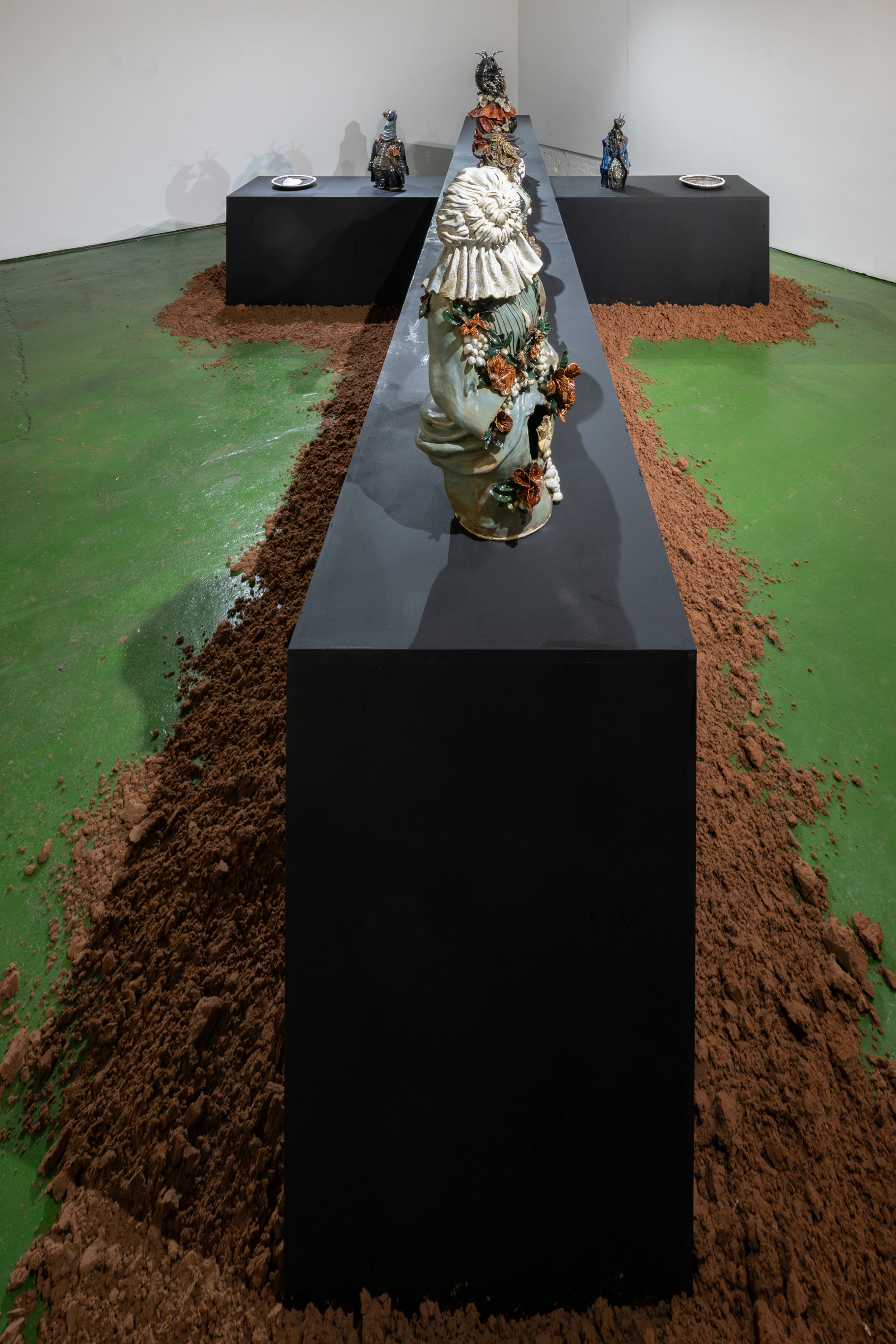
ARTCOLLECTORNEWS: Can you tell us a bit about your latest exhibition Icon(oclast) with Sherbet Green as well as any other upcoming exhibitions or projects that you are excited about?
(Icon)oclast is a duo show with BLCKGEEZER. For both of us, it’s our first full ceramic show. We’ve each produced a body of work that looks at how icons are constructed, preserved, and who they exclude. BLCKGEEZER’s work pulls apart contemporary icons like Hello Kitty and Madonna and Child imagery, while mine constructs alternative icons from overlooked lives and histories.
My main project right now is to get back into the studio and make more work - and I’m very excited about that!
ARTCOLLECTORNEWS: Your wonderful ceramics are, in some cases, aggressively beautiful yet intricate and delicate. Can you tell us a bit about your process of creating a new artwork from concept to completion?
Ceramics is completely different to any medium I’ve worked with before, and I’ve learned that I need to plan the end piece before I even open a bag of clay. I usually begin with a thread of an idea - sometimes a person, sometimes a form. For example, Arran, the sculpture of two entwined millipedes, began with the intention to include a millipede and developed through several stages of research and drawing.
I work through reading, drawing and sketching, producing multiple designs before settling on one. From there, I think about the practical constraints - where the piece will need to be split for firing, how joins can be concealed, and how the structure can remain stable.
Then, the work needs to be built within one to two weeks before the clay dries. It then dries slowly for several weeks, is bisque-fired, and finally glazed. I currently use commercial glazes, applied in multiple thin, diluted layers.
ARTCOLLECTORNEWS: What is your favourite medium to work with? Please tell us a bit about how the medium influences or supports the ideas behind your work
My practice is currently split between handmade paper and clay. Both are tactile processes that come from natural or repurposed materials. Clay is often talked about as having intrinsic links to the earth and its history, and I found that with my natural paper works (which would be imbued with mineral pigments, soil, seaweed and stones) I was connecting to those same themes from a different angle.
ARTCOLLECTORNEWS: Are there any techniques you have developed that you use consistently in your artwork?
My handmade paper works are created on large outdoor frames that I built and designed after realising I wanted to make works bigger than the commercial papermaking trays. I also developed a method of mixing the mineral colours directly into the paper pulp, and pouring it in repeated layers onto the frames to create the large-scale pieces.
The ceramic work is so new that I’m quite content to work within the parameters of techniques created by others!
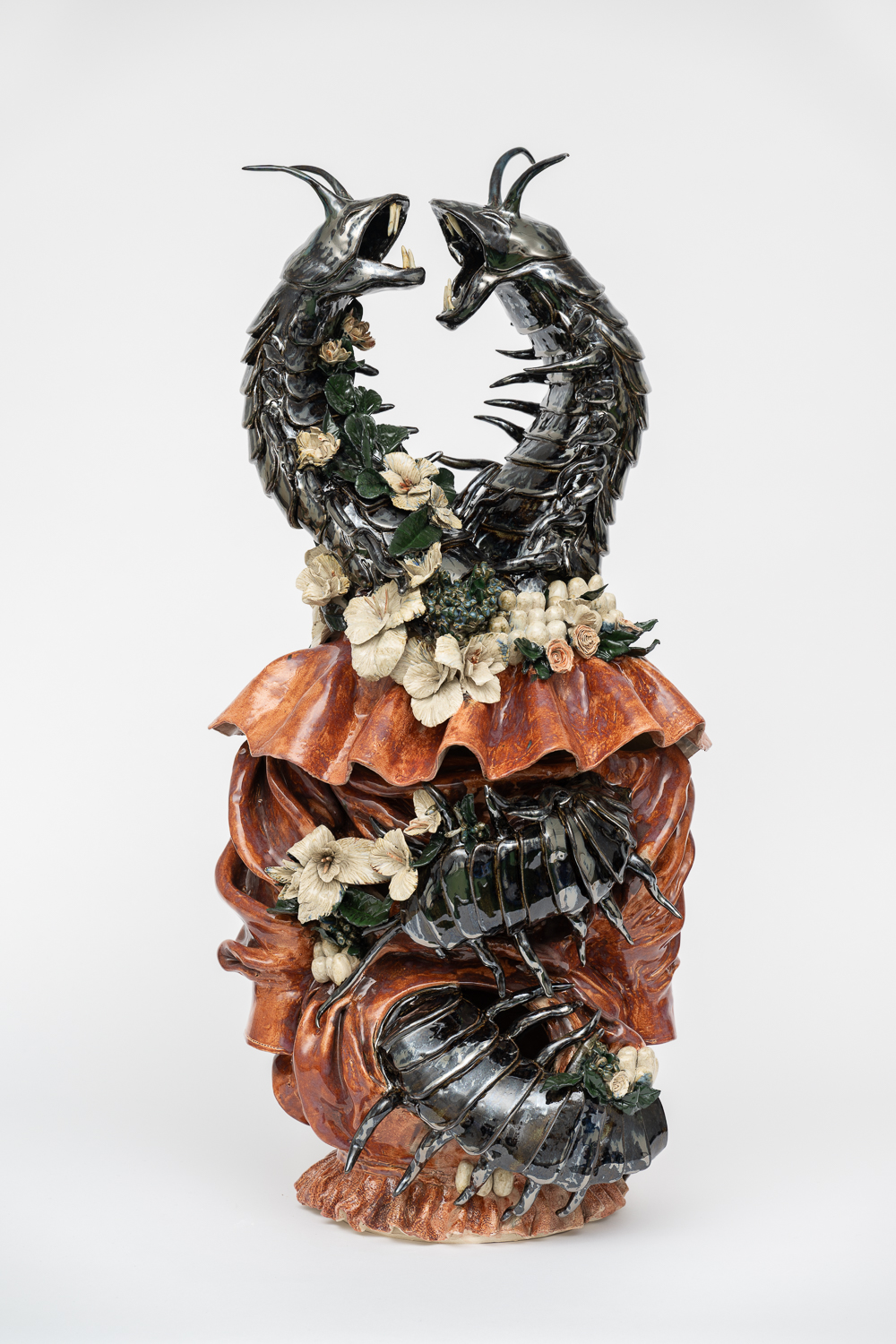
ARTCOLLECTORNEWS: What has been the most memorable artwork you have created? What makes this piece memorable?
It’s really difficult to pick one. I think ‘Arran’ is a sculpture that will always be memorable and very close to my heart because it was inspired in part by my engagement.
ARTCOLLECTORNEWS: Can you tell us a bit about a few specific pieces you have created that you are particularly proud of?
I’m proud of ‘Hidden Rivers,’ a 20 metre handmade paper installation that I created for a solo show on a boat last summer. I had to build a custom 6-metre frame in my garden, and then a structure to roll up and hold the paper in place as it dried, segment by segment. I also bought a 6-metre marquee to keep it safe during the drying process. It took three months to create, and was inspired by the different periods of evolutionary history.
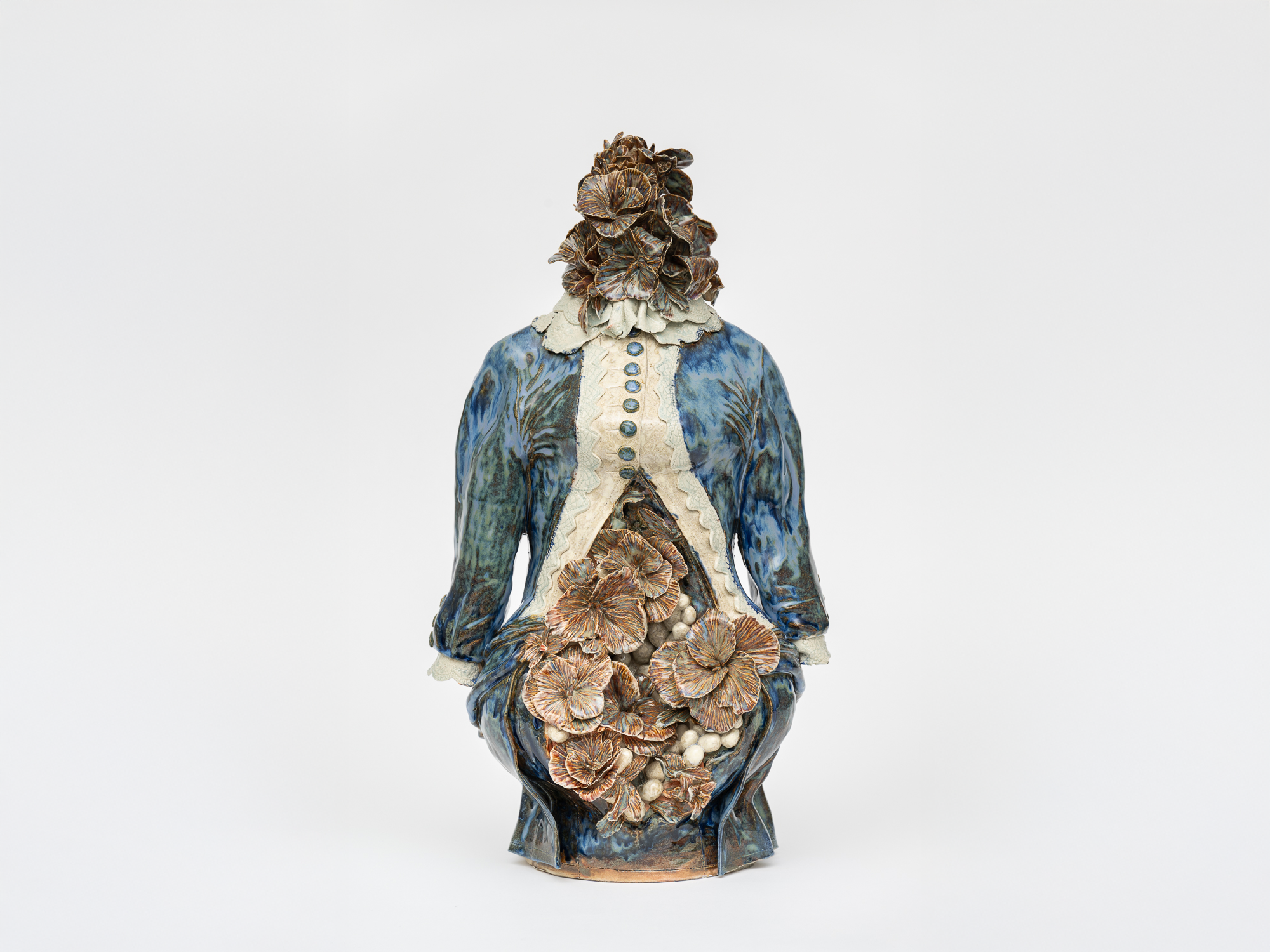
I’m also really proud of ‘Elan,’ a piece in the current show at Sherbet Green, which was inspired by the Victorian naturalist Margaret Fontaine. It was the first time I experimented with using thin glaze layers on a piece, and the first piece that I felt fully embodied everything I’d wanted it to say. It’s about her journey from a restricted upbringing to a life travelling the world, collecting butterflies, and about navigating life on your own terms.
ARTCOLLECTORNEWS: Are there any other techniques or materials you would like to learn how to use in the future?
There are always more! I’m hoping to do more welding or perhaps work with glass in the future. But ceramic work is still very new, and there's so much to learn there first.
ARTCOLLECTORNEWS: Do you have any upcoming exhibitions or projects you are particularly excited about?
I’m actually excited to be off-deadline for the first time in over a year. Last year I had multiple shows back-to-back, while preparing for the Sherbet Green show. It was an immense privilege to be so busy, but I’m excited to go back into the studio for a little while. I’ve started a new body of work, looking at queer figures from the 20th century, Rococo vases, and marine ecosystems. I’ve got two pieces nearly built, and they’re already the most ambitious sculptures I’ve ever made, so I’m really excited for this new series
ARTCOLLECTORNEWS: What do you think is the most important skill a studio artist should have?
Perseverance and the ability to keep showing up - especially when you don’t want to.
ARTCOLLECTORNEWS: What do you think has been the biggest challenge in your creative career?
The hardest challenge for me was learning that connecting with other artists or people working in the arts was as important as working in the studio. I’m quite introverted, and I was a solo parent for eight years, so on a practical level, it was really hard to go out and meet people. But going to the RCA was an amazing chance to meet other artists and start to connect with a wider community, and some of those artists are my best friends today.
ARTCOLLECTORNEWS: What advice would you give to aspiring studio artists?
This links to the last answer - putting effort into building community in the same way you build a body of work. Many opportunities have come through self-organised group shows with friends or shared open studios. These networks become the people you call for advice, who recommend you for opportunities, and who support you professionally and personally. The most important thing is to go out, see work, make real connections and show up consistently.
ARTCOLLECTORNEWS: Excellent. Thank you so much for your time and insightful answers.
From Faye Toogood and Kate Malone to textile art, post-war furniture and new material-led designers, PAD London showed why serious collector homes are built beyond the frame.

Paris Internationale returns with 56 galleries, a new Canal Saint-Martin venue and a model built around discovery. Here is how collectors should use it.
Ibrahim Mahama, Lee Krasner, Oscar Murillo, Tracey Emin and more: the exhibitions that turn Art Basel Paris week into something larger than a fair.