
October 18, 2026
Exhibitions
Exhibitions

From a £5 million Brueghel and three major Alice Neel sales to George Rickey, global modernism and a £675,000 Triceratops skull, Frieze Masters rewarded collectors who looked beyond categories.
At Carl Freedman Gallery, Crossing Into Darkness sees Dame Tracey Emin step into the role of curator with striking emotional authority, assembling a multigenerational constellation of artists — from Goya, Munch, Bourgeois and Kiefer to Danielle McKinney, Lindsey Mendick and Celia Hempton — to explore vulnerability, mortality and psychological depth. Through restrained lighting, careful spatial choreography and an instinctive pairing of historic and contemporary voices, Emin transforms darkness into a space of reflection rather than despair.
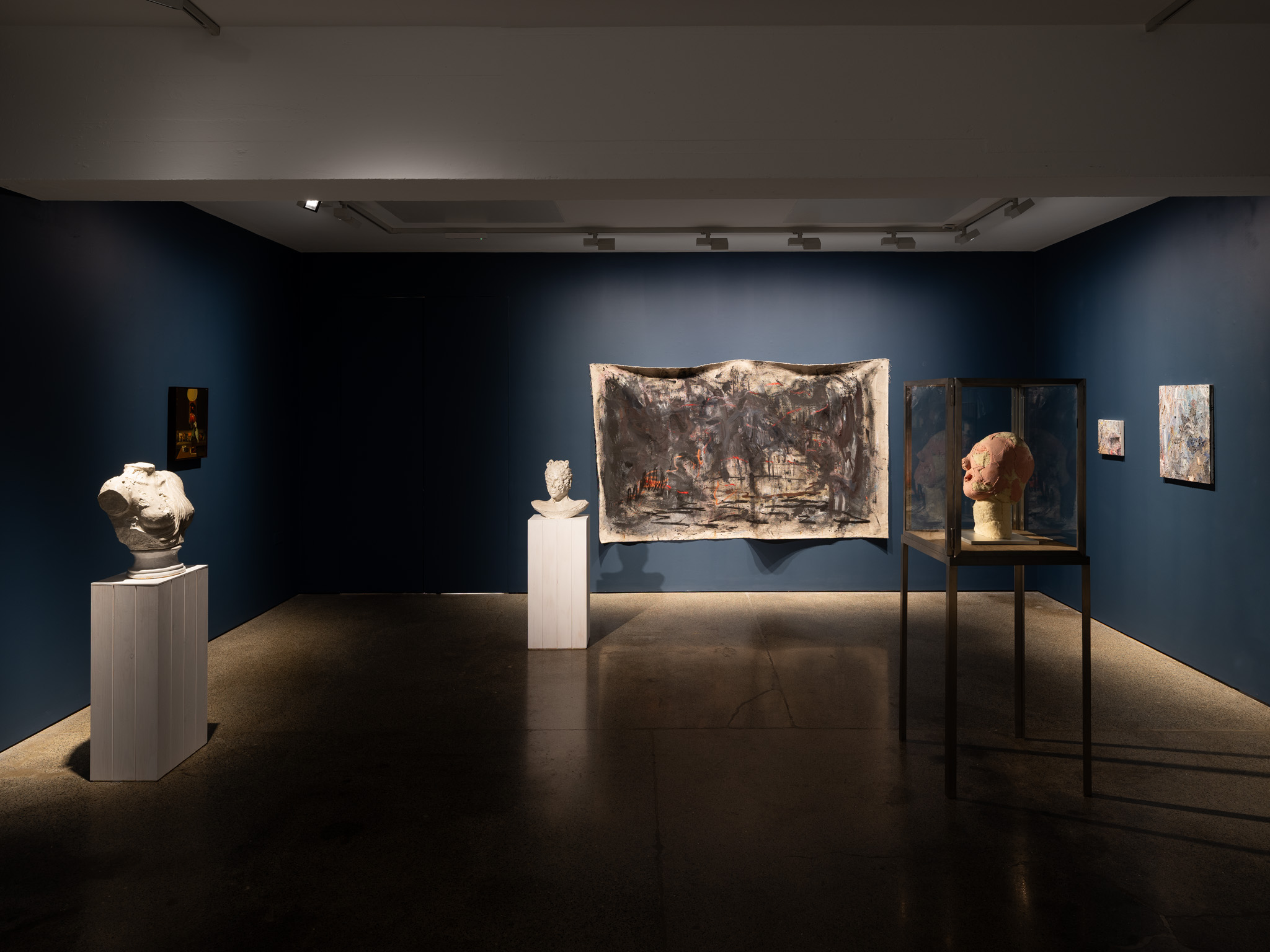
There is a particular kind of authority that comes not from spectacle but from conviction. Crossing Into Darkness, curated by Dame Tracey Emin at Carl Freedman Gallery, is governed by precisely that force: a quiet but unwavering belief that art, at its most vulnerable and most uncompromising, can articulate the psychic states we often struggle to name. Dame Tracey Emin does not seek to entertain or overwhelm; She makes us slow down, adjust to shadow, and to enter a space where emotional and existential truths rise gradually to the surface.
Emin’s curatorial approach is strikingly personal without ever becoming insular. Rather than assembling a conventional survey of “dark” imagery, she has constructed something closer to a community of kindred spirits — artists across generations bound by their willingness to confront mortality, desire, grief, and the body’s fragility. The result is less a thematic group show than an immersive, almost devotional environment.
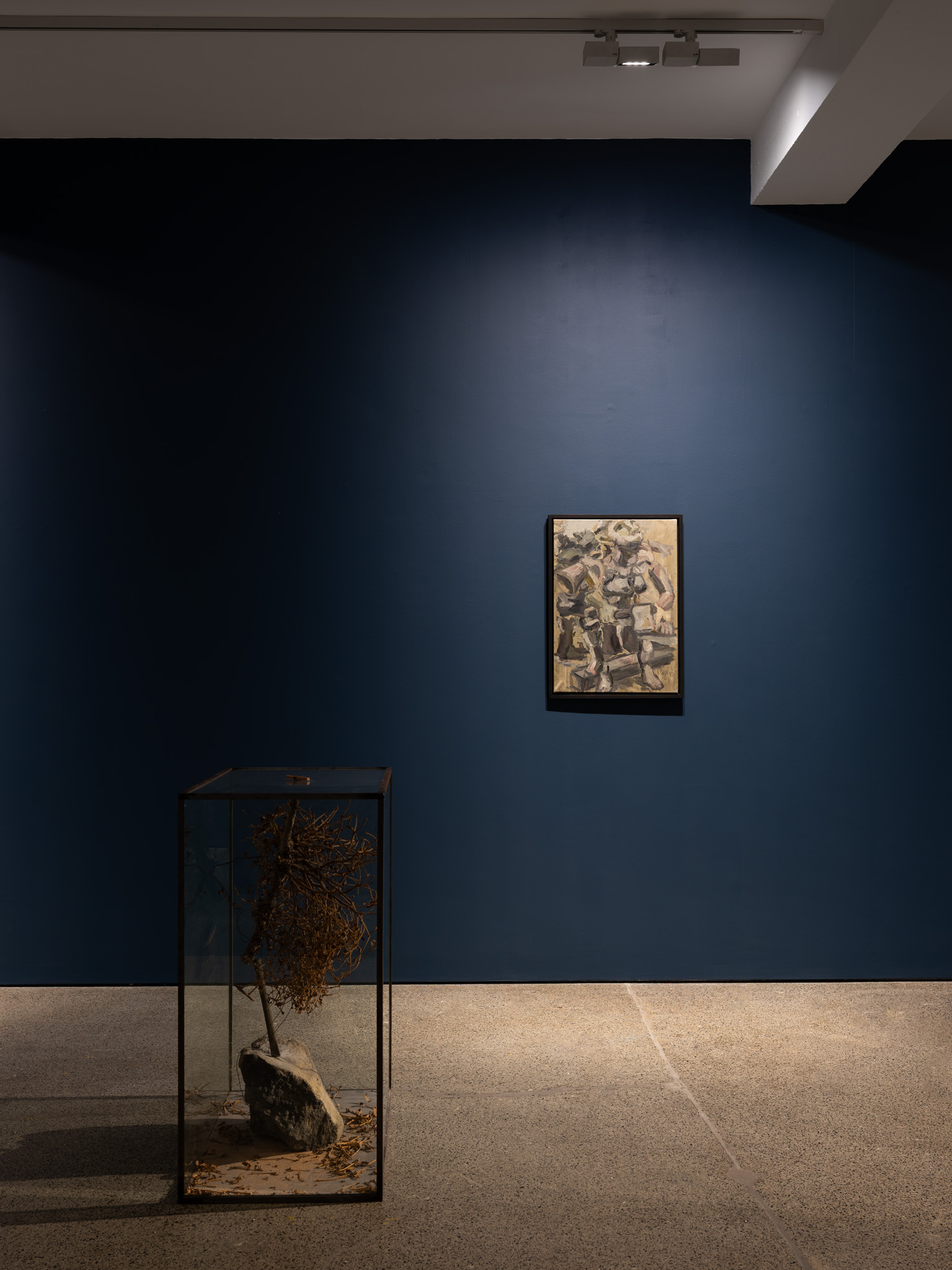
Emin’s curatorial vision is immediately evident upon entering the gallery’s hushed spaces: the lighting, deliberately somber yet exacting, draws the gaze into the works with an almost gravitational pull, evoking a state of contemplation rather than passive observation. This atmospheric staging is not merely aesthetic but strategic — it aligns form with the show’s thematic intent, rendering darkness as a perceptual field within which each work resonates with both individual and collective histories. Emin’s orchestration of space and mood is itself a work of art.
Exceling in its ecumenical embrace of artistic voices, uniting historical titans such as Edvard Munch, Louise Bourgeois, and Anselm Kiefer with the incisive contributions of contemporary practitioners associated with Emin’s own studios. Within this dynamic constellation, works converse across generations: Munch’s raw existential self-portrait echoes in Bourgeois’s sculptural agonies; Bastelitz’s fragmented figures converse with Kiefer’s mythic vitrine — and through it all, the emergent voices of Joline Kwakkenbos, Lindsey Mendick, and Laura Footes ripple with an unguarded urgency that feels of-the-moment and deeply personal.
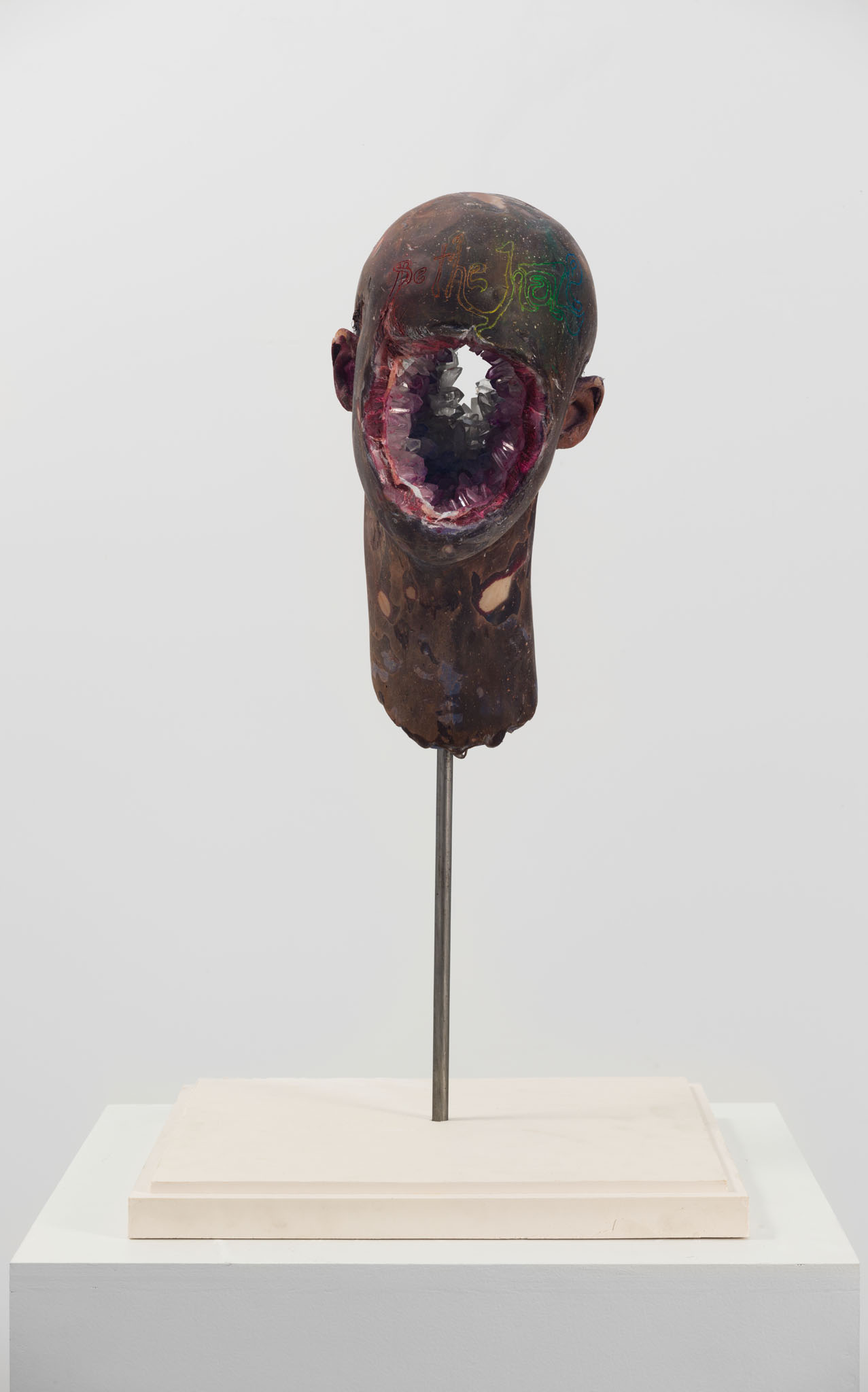
What distinguishes the exhibition, however, is Emin’s refusal to let these canonical voices dominate. She places them in active dialogue with contemporary and emerging artists, many of whom bring raw, unfiltered immediacy to the theme.
Emin’s own contributions, particularly the expansive I Am Protected and the monoprint like I Vanished and Reappeared, function as the exhibition’s emotional lodestars. These works distill her signature candour — vulnerable yet sovereign — and anchor the thematic arc in lived experience. Here, darkness is not an abstract trope but a visceral confrontation: the spectre of mortality, the residue of suffering, and the potential for solace and rebirth. In positioning her own work alongside masterpieces and emerging practices, Emin reaffirms her belief in art’s connective tissue — that it not only reflects the human condition but also shapes it.
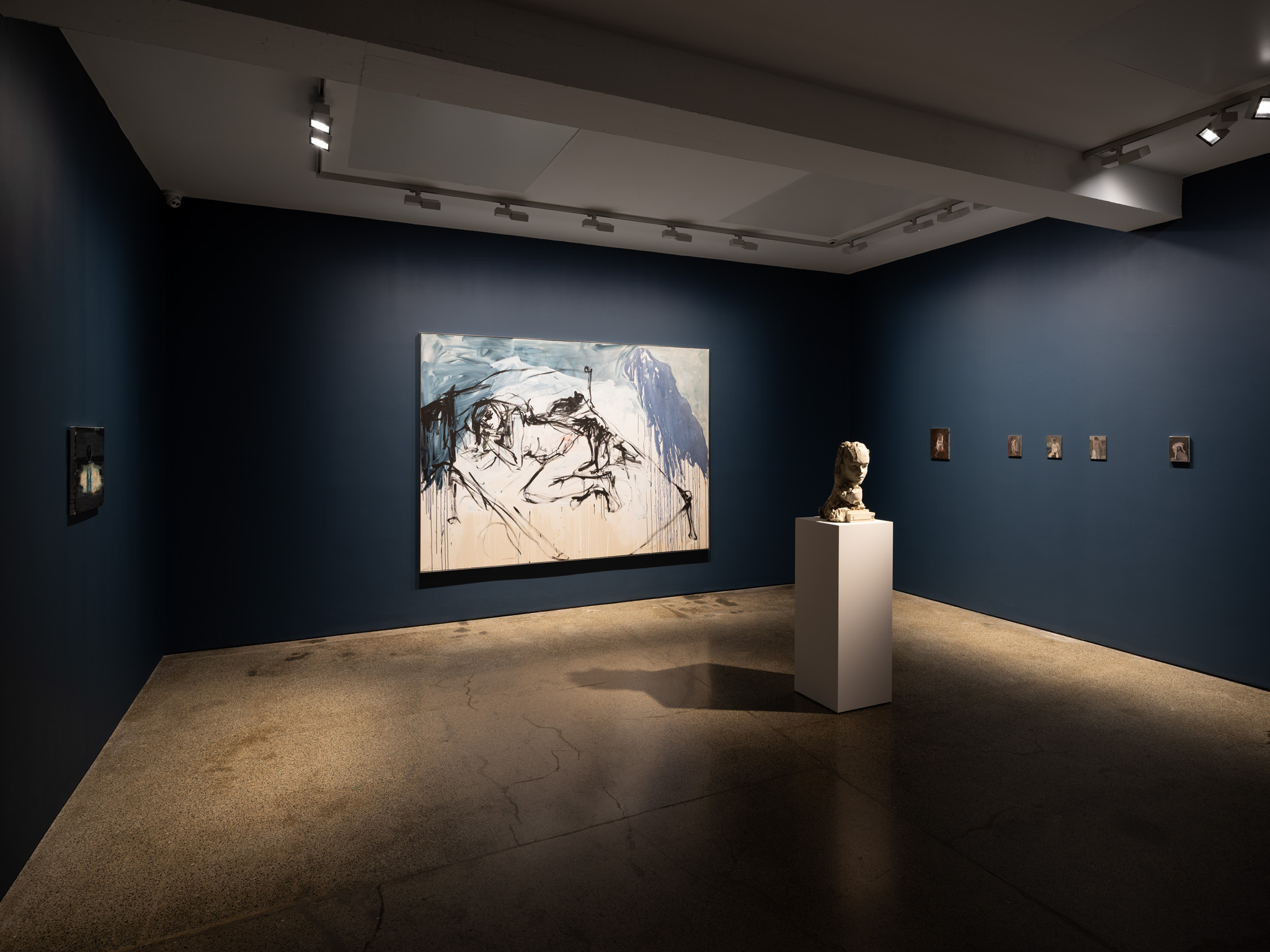
Perhaps the most striking achievement of Crossing Into Darkness is the way it invites rather than overwhelms. Through careful curation and a refusal to sentimentalise, Emin advances a compelling thesis: that confronting the shadowy terrains of psyche and society is to locate an axis of renewal. This exhibition does not simply depict darkness; it converts it into a space of interrogation, empathy, and — ultimately — illumination. It is a testament to Emin’s maturity as an artist-curator and to her unrelenting commitment to art as a vessel for emotional truth.
What becomes clear is that Emin is curating not from theory but from experience. The selection reflects decades of looking, loving, and learning from other artists. This lends the exhibition an authenticity that is rare in contemporary curatorial practice. The relationships between works feel earned rather than engineered.
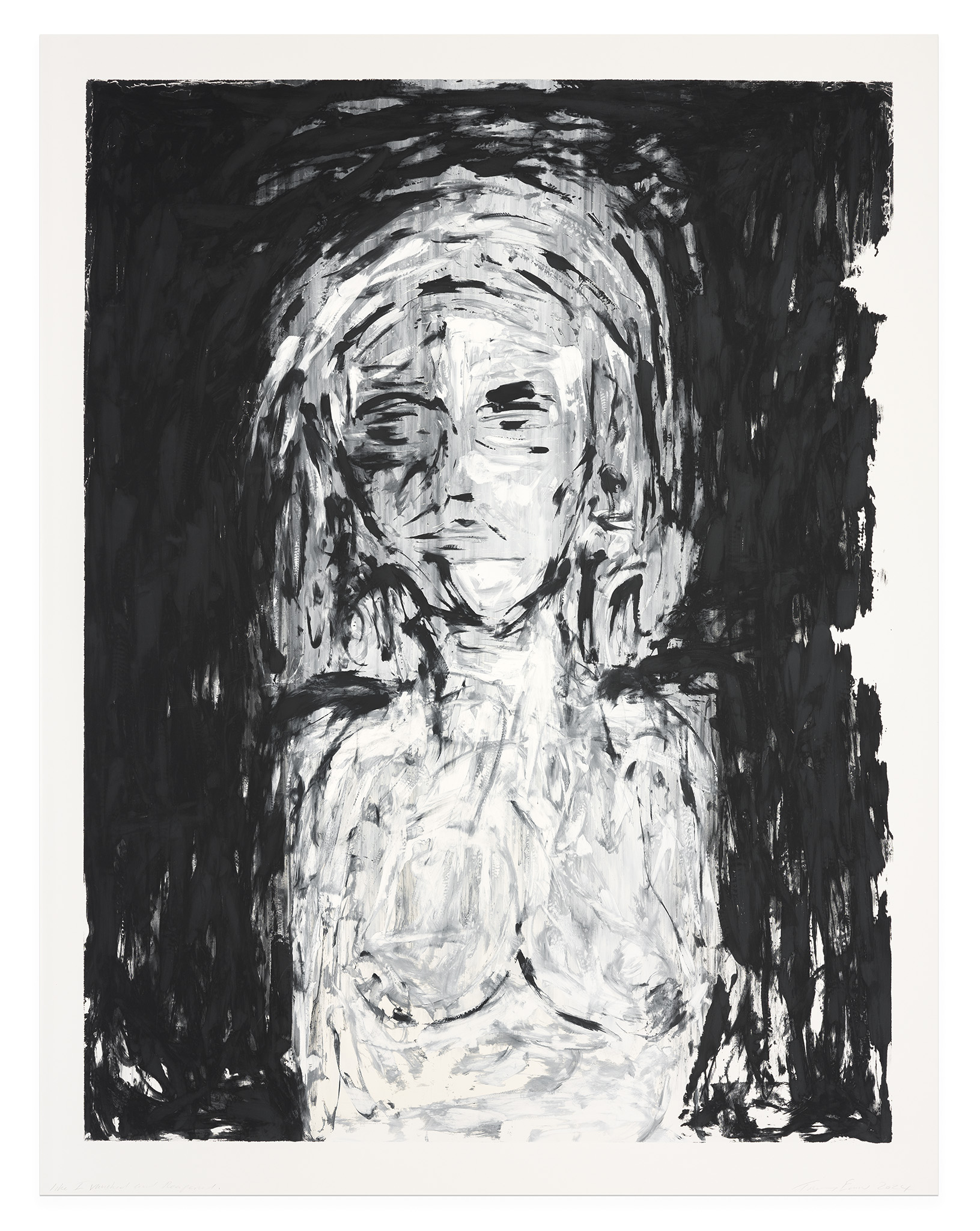
Resisting Cynisism, the exhibition treats vulnerability as strength and emotional intensity as a form of knowledge. In a cultural moment often dominated by irony and spectacle, Emin offers sincerity — and does so without sentimentality. The show proposes that to look directly at suffering, memory, and the limits of the body is not an act of despair but one of clarity.
Few artist-curators could marshal such a diverse group — from Goya to McKinney, Bourgeois to Mendick — and make them speak in a single, coherent voice. Emin accomplishes this with remarkable assurance. She has created not simply an exhibition but an atmosphere, a psychological landscape that lingers long after leaving the gallery.
Crossing Into Darkness confirms Tracey Emin’s stature not only as one of Britain’s most significant artists, but as a curator of rare emotional and intellectual acuity — one capable of turning shadow into revelation.
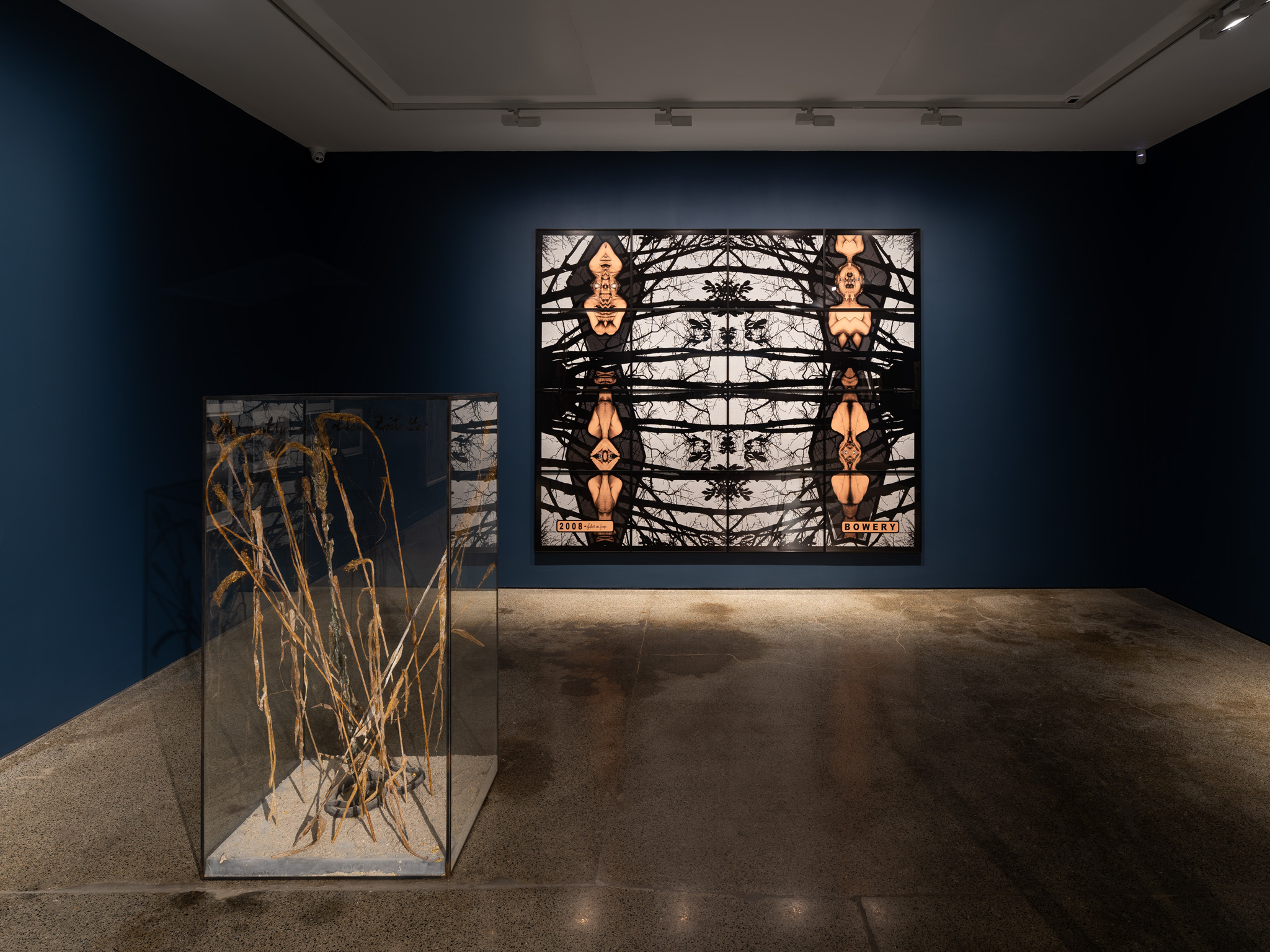
Crossing Into Darkness brings together a group of artists whose works confront the darkness inherent in human experience, not as something to be feared but as a necessary threshold toward renewal. In times marked by upheaval and uncertainty, this journey feels both universal and deeply personal.
Featuring works by David Altmejd, Georg Baselitz, Louise Bourgeois, Marlene Dumas, Tracey Emin, Laura Footes, Antony Gormley, Francisco Goya, Gilbert & George, Celia Hempton, Anselm Kiefer, Joline Kwakkenbos, Mark Manders, Danielle Mckinney, Lindsey Mendick, Juanita McNeely, Edvard Munch, Hermann Nitsch, Janice Nowinski, Anna Pakosz and Johnnie Shand Kydd.
Preview
17th January, 5-7pm
Dates
18th January – 12th April 2026
Carl Freedman Gallery
28 Union Crescent
Margate CT9 1NS
From a £5 million Brueghel and three major Alice Neel sales to George Rickey, global modernism and a £675,000 Triceratops skull, Frieze Masters rewarded collectors who looked beyond categories.

Frieze London closed with sold-out emerging booths, meaningful institutional acquisitions and selective blue-chip buying. The real story was not a boom, but a market rewarding specificity.

Nearly 150 works from RM’s collection meet SFMOMA in a major exhibition of Korean modern and contemporary art. Its real lesson is how a private collection develops a coherent eye.