
October 24, 2026
Exhibitions
Exhibitions
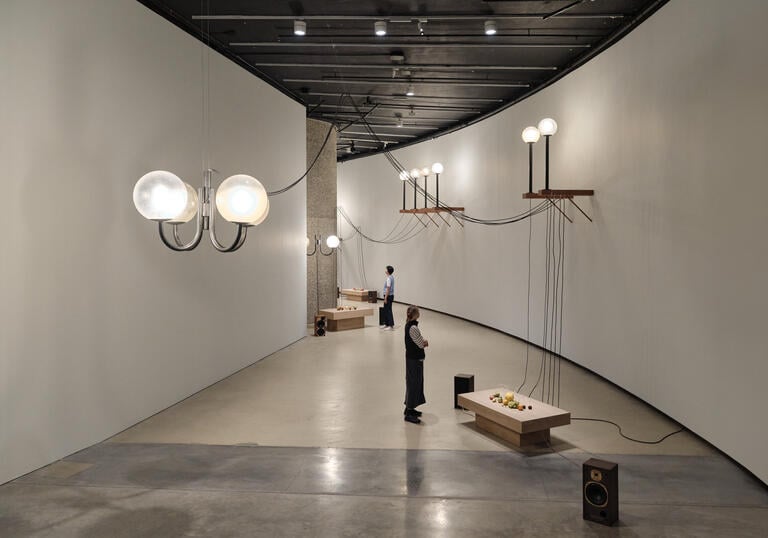
With light, sound, fruit and kinetic systems, Yuko Mohri makes the Barbican’s Curve into an argument for attending to what does not quite work as expected.
The Athens Biennale has announced a major restructuring of its governance alongside the appointment of Thiago de Paula Souza as curator of its 8th edition in 2027. The new model introduces a formalised structure of trustees, advisors, and curatorial leadership, consolidating the Biennale within a tightly interlinked network of cultural patrons, collectors, and institutional stakeholders. While presented as an “evolving ecosystem,” the shift reflects a broader transformation in contemporary art governance, where cultural legitimacy is increasingly shaped through structures aligned with private capital and strategic institutional management. Against this backdrop, de Paula Souza’s curatorial practice—rooted in institutional critique and transnational experimentation—introduces a productive tension between radical discourse and formalised cultural power.
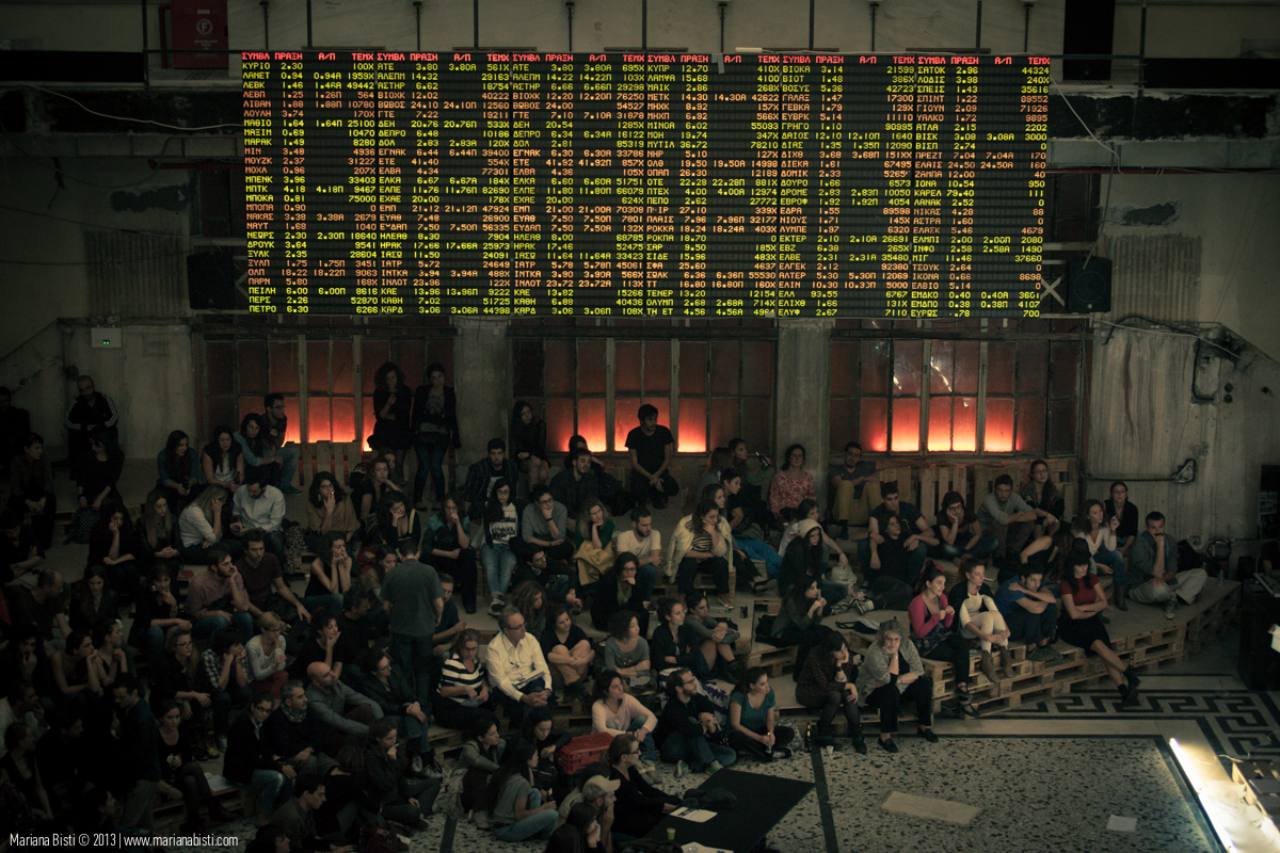
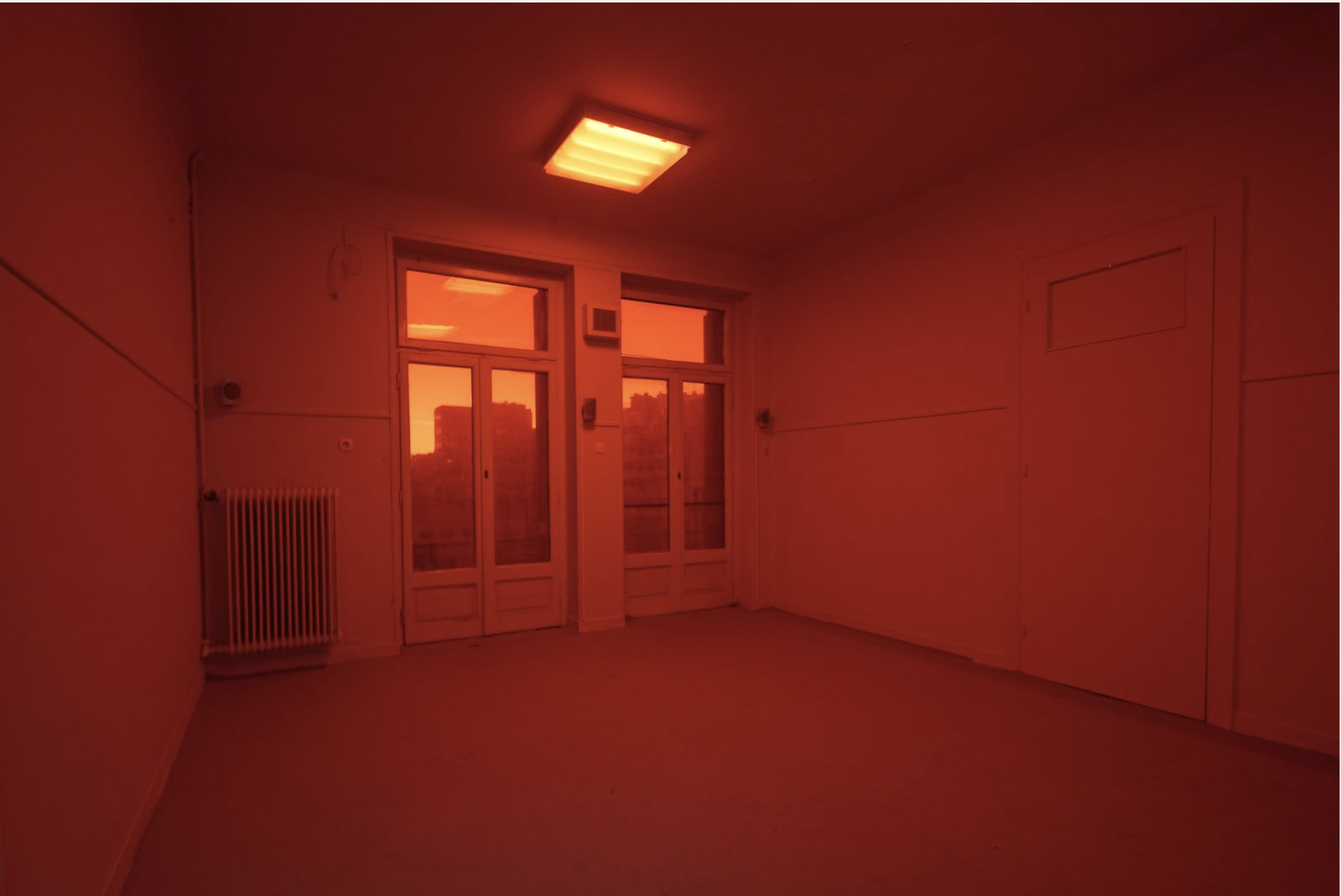
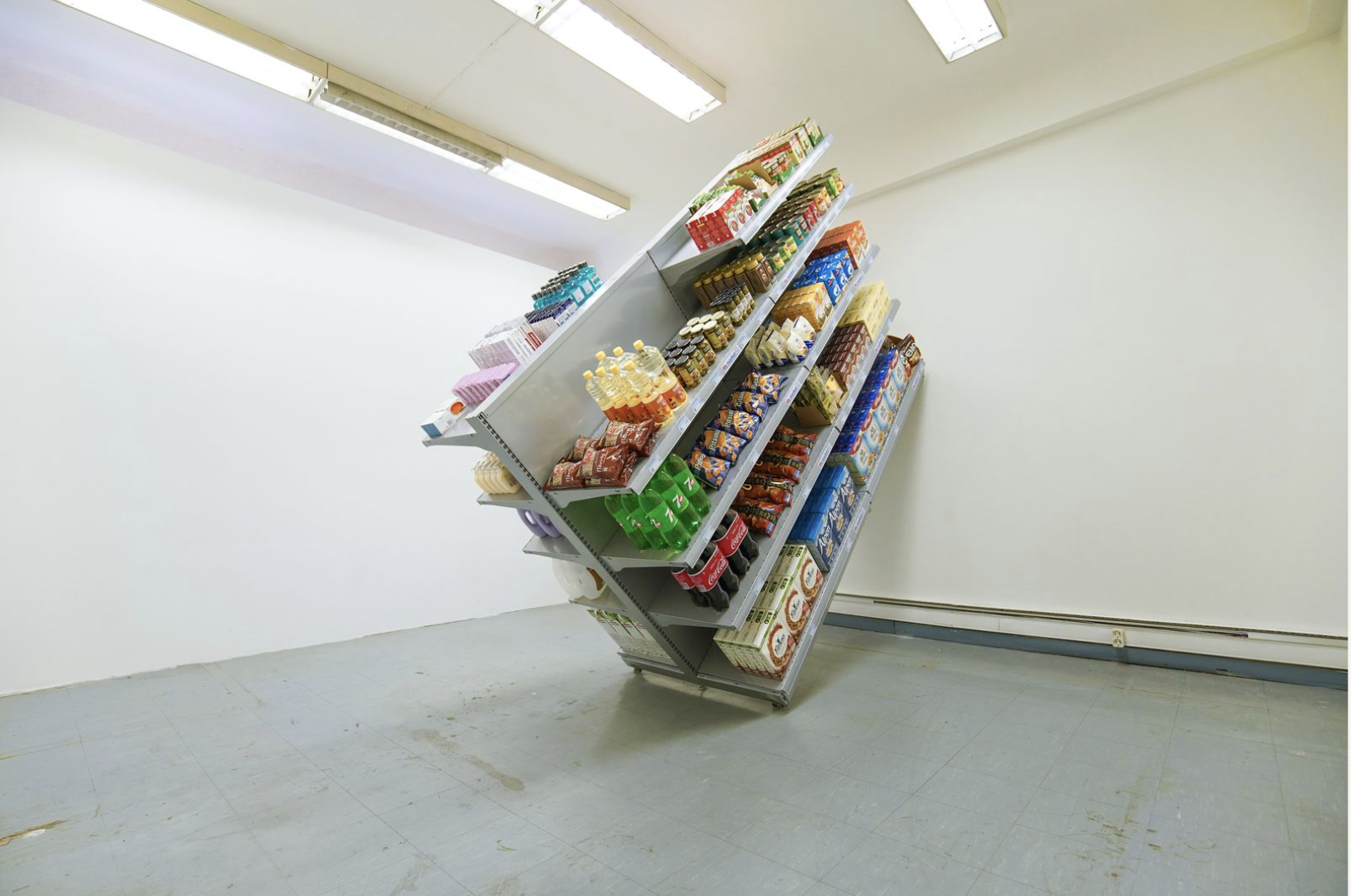
Installation view at the 4thAthens Biennale 2013 “AGORA”
The Athens Biennale has announced a sweeping restructuring of its governance alongside the appointment of Brazilian curator Thiago de Paula Souza for its 8th edition in 2027. On the surface, this reads like institutional maturation. In practice, it signals something more delicate—and more consequential: the formal consolidation of cultural power into a tightly interwoven ecosystem of private capital, advisory influence, and curatorial selection.What is being built is not simply a biennial infrastructure. It is a governance model for cultural legitimacy.
Founded in 2005 as a reactive, independent gesture against institutional inertia, the Athens Biennale once positioned itself as an alternative to the very systems it now mirrors. Two decades later, it has not abandoned that ambition—but it has radically reorganised the conditions under which it operates.The new structure introduces a Board of Trustees, Advisory Board, and Curatorial Committee, forming what is described as a “collective, evolving ecosystem.” At its centre sit two co-chairs: George Economou and Dakis Joannou—figures whose influence in contemporary art is inseparable from their positions within global capital flows. Around them is a dense constellation of collectors, entrepreneurs, and cultural patrons and other leading voices in the contemporary art field.
According to the Biennale, the aim of this governance structure is to ensure institutional continuity, strengthen organisational capacity, and support the Biennale’s long-term cultural impact. Alongside the Board, an Advisory Board has been established to provide strategic input and broaden the institution’s international engagement.
While reflecting a growing trend among major cultural platforms to adopt more formalised governance models, the structure also highlights the increasing complexity of sustaining large-scale biennials in a globalised cultural environment. The question is no longer whether collectors influence institutions. It is how fully that influence has become institutional form.
The inclusion of an Advisory Board—featuring corporate leadership, legal advisors, and cultural strategists—further embeds the Biennale within a governance logic borrowed from corporate and philanthropic sectors.This is where the model becomes explicit: culture is no longer merely produced or exhibited; it is managed, optimised, and strategically positioned within international networks of influence.The rhetoric of “sustainability,” “international reach,” and “strategic development” is not neutral. It signals a shift from cultural experimentation toward institutional risk management. The Biennale is no longer just asking what art can do—it is increasingly concerned with what the institution can withstand.
In this sense, Athens is not only hosting a biennial. It is hosting a soft power prototype of 21st-century cultural governance.
The appointment of Thiago de Paula Souza introduces a familiar but strategically important tension: the selection of a curator whose intellectual framework explicitly engages with refusal, transmutation, and anti-neoliberal critique.His curatorial trajectory—spanning the Bienal de São Paulo, Raven Row, Para Site, and multiple transnational research-driven exhibitions—positions him firmly within a discourse of institutional critique. His interest in gender nonconformity, eroticism, spiritual transformation, and material mutability suggests a practice invested in destabilising normative categories of body, identity, and matter.Yet this is precisely where the contradiction sharpens.
%20Nysos%20Vasilopoulos%20(01).jpg)
The Athens Biennale is simultaneously adopting a governance model that is more consolidated, more structured, and more closely aligned with elite cultural capital than at any point in its history.The question is not whether de Paula Souza’s ideas are radical. They are. The question is what happens when radical curatorial frameworks are embedded within increasingly formalised power structures designed to ensure continuity, legitimacy, and institutional longevity.
And here is when athens has transformed from a art Laboratory to a Mirror and from there to rewriting the rules. The city remains an ideal site for this experiment precisely because of its contradictions. It is a city where austerity politics, migration flows, tourism economies, and archaeological heritage coexist in constant tension. The Biennale has long leveraged this condition as curatorial material. But the current restructuring suggests a shift in emphasis: from interpreting contradiction to managing it.
The institution now describes itself as an “evolving ecosystem.” And some might argue that ecosystems, by definition, are not governed by trustees, advisory boards, and strategic committees composed of cultural capital stakeholders. They are shaped by friction, unpredictability, and imbalance. Yes—I agree. But what we see here is something more complex: a collective push to rewrite the norms from within the very core of the system. From the artists, the art, and the ideas themselves, extending outward to the stakeholders who have long positioned themselves as supporters of the field. For years, they have been funding and sustaining emerging artistic practices, acting as a backbone for what could be described as Greece’s cultural “brain gain” in contemporary art. Now, they return in a more visible role, not only to endorse but to demonstrate what support truly means when it becomes structural, sustained, and strategically embedded within cultural production itself.
What is being constructed here is something different: a ecosystem that simulates openness.
In Conclusion : A Biennale That Knows Exactly What It Is Becoming. Spring 2027 will not simply stage an exhibition. It will stage a governance model in action—one that brings together radical curatorial discourse and highly structured institutional authority under the same roof. The Athens Biennale is no longer positioning itself outside the system. It is helping define what the system now looks like. And that, perhaps, is the most important shift of all. Not experimentation versus institution. But institution as experimentation’s new architecture of control.
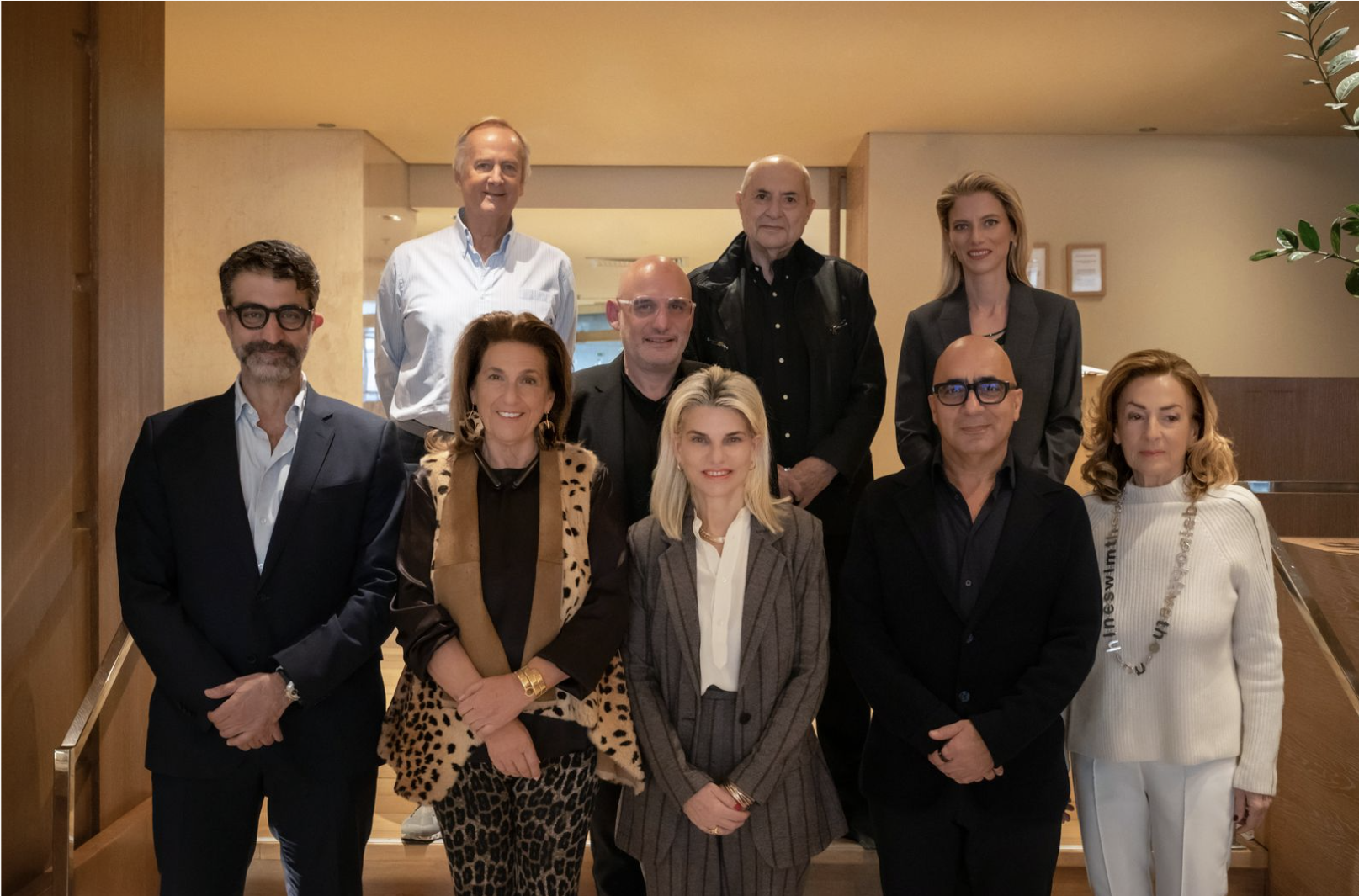
A New Governance Architecture
The Board of Trustees,chaired by George Economou and Dakis Joannou, assumes strategicoversight, ensuring the organisation’s long-term sustainability, institutionaldevelopment and cultural impact.
Founding Members of the Board ofTrustees:
Alexia Antsakli Vardinoyanni, founder of ARTFLYER
Magda Baltoyanni-Kallitsantsi, collector
Dimitris Daskalopoulos, collector of contemporary art,custodian of the D.Daskalopoulos Collection, Greece, and founder of NEON | Organization for Culture and Development
Harry David, collector of Contemporary African and African Diaspora Art (The Harry David Art Collection)
Alexandros Diogenous, entrepreneur, collector, founder of Pylon Art & Culture
George Economou, entrepreneur and art collector (co-chair)
Füsun Eczacıbaşı, architect, art collector, andpatron of the arts (honorary member)
Mareva Grabowski-Mitsotakis, creative consultant,entrepreneur
Dakis Joannou, businessman, collector, founderand president of the DESTE Foundation for Contemporary Art (co-chair)
Irene Panagopoulos, collector and cultural advocatebased in Greece
Ninetta Vafia, lawyer and art collector
The Advisory Board operatesas a think tank, strengthening the organisation’s strategic development andinternational reach.
Members of the Advisory Board:
Elina Kountouri, director of NEON | Organization for Culture and Development D.Daskalopoulos
Dimitris Koutsopoulos, CEO of Deloitte Greece
Thomas Oberender, Berlin and Athens-based curator, festival maker and writer
Chloe Vaitsou, independent art advisor and cultural strategist
Yerassimos Yannopoulos, co-managing partner, Zepos & Yannopoulos
The Curatorial Committee is established for the first time, introducing a new model of curatorial process. In collaboration with Poka-Yio, it recommends the curator of each edition and contributes to shaping the artistic programme. The 8th Athens Biennale Curatorial Committee consists of Massimiliano Gioni, KaterinaGregos, Stefanie Hessler, and Gabi Ngcobo.
Thiago de Paula Souza appointedcurator of the 8th Athens Biennale
Following the proposal of the Curatorial Committee, the Board of Trustees has appointed Thiago de Paula Souza as curator of the 8th Athens Biennale, to takeplace in Spring 2027.
Thiago de Paula Souza is a curator based in São Paulo. He is interested in exhibition making and in the possibilities that the formatcontinues to offer for fostering political imaginaries. In recent years, he hasexplored ideas and artistic practices that regard the notion of transmutationas a central element—whether through eroticism, gender nonconformity and modesof intimacy, as well as through the transformation of organic matter, spiritualtrance. He believes these practices might contribute to rethinking morebalanced forms of coexistence between humanity and other beings.
His curatorial activity includes:co-curator of the 36th Bienal de São Paulo (2025), co-curator of the 38th Panorama da Arte Brasileira at MAM São Paulo (2024); co-curatorof Some May Work as Symbols: Art Made in Brazil, 1950s–70s, at RavenRow, London (2024); co-curator of the Nomadic Program at the Vleeshal Centerfor Contemporary Art, Netherlands (2022–2023); co-curator of While we areembattled at Para Site, Hong Kong, and Atos de Revolta at MAM Rio,Brazil (2022); member of the curatorial team of the 3rd edition of Frestas –Trienal de Artes, in São Paulo, Brazil (2020–2021); curatorial advisor for the58th Carnegie International, United States (2021/2022); curator ofTony Cokes’s first solo exhibition in the Netherlands, at BAK, Utrecht(2018–2019); and a member of the curatorial team of the 10th BerlinBiennale (2018).
He currently serves on the Artistic Committee of NESR Art Foundation in Angola. Thiago de Paula Souza is a PhD candidate in the arts program at HDK-Valand – Academy of Art and Design at the University of Gothenburg, Sweden. His research examines artistic practicesthat combine refusal and collaboration as tools against neoliberal cooptation.
With light, sound, fruit and kinetic systems, Yuko Mohri makes the Barbican’s Curve into an argument for attending to what does not quite work as expected.

A new contemporary art centre has opened on Renault’s historic Île Seguin site. Cecilia Alemani’s Moteur Imaginaire turns the factory, car and machine into a century-spanning argument about modern life.
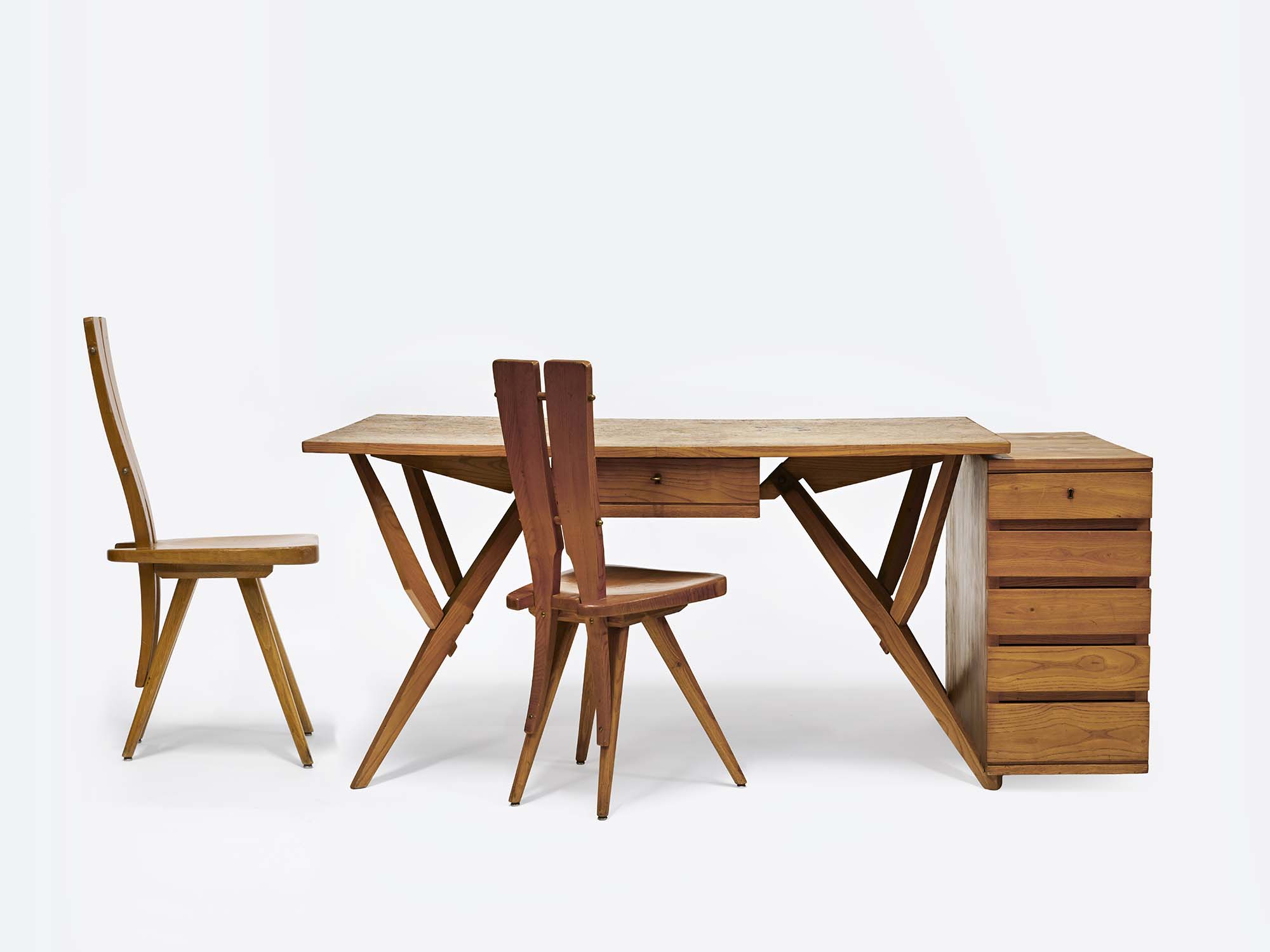
From Carlo Mollino and Faye Toogood to Misha Kahn and Gallery FUMI, PAD London 2026 showed what discerning art collectors can learn from sculptural furniture and material experimentation.