LATEST NEWS:
Aurora Ortiz, Catherine Harper, Deborah Stockdale, Eileen Harrisson, Eva Brá Barkardóttir, Giuseppe Mario Urso, Irene MacWilliam, Janet Wilkinson and Susan Beck, Jimena Pardo, June Gamble, Ladies who sew (Rathlin Island), Linda Adams, Lisa Raye Garlock, Luz Ferran Latorre, Mara Loytved-Hardegg, Michele Connor, Nia Hefe Filiogianni, Sandra Pendon, Susan Hughes, Teresa McKendry, and Violeta Morales.
Presented to mark the International Day of Peace and generously supported by Mason Hayes & Curran LLP, The Silent Vocal Language of Textiles brings together Conflict Textiles and D Contemporary in an exhibition that explores the extraordinary ability of textiles to communicate where words fail.
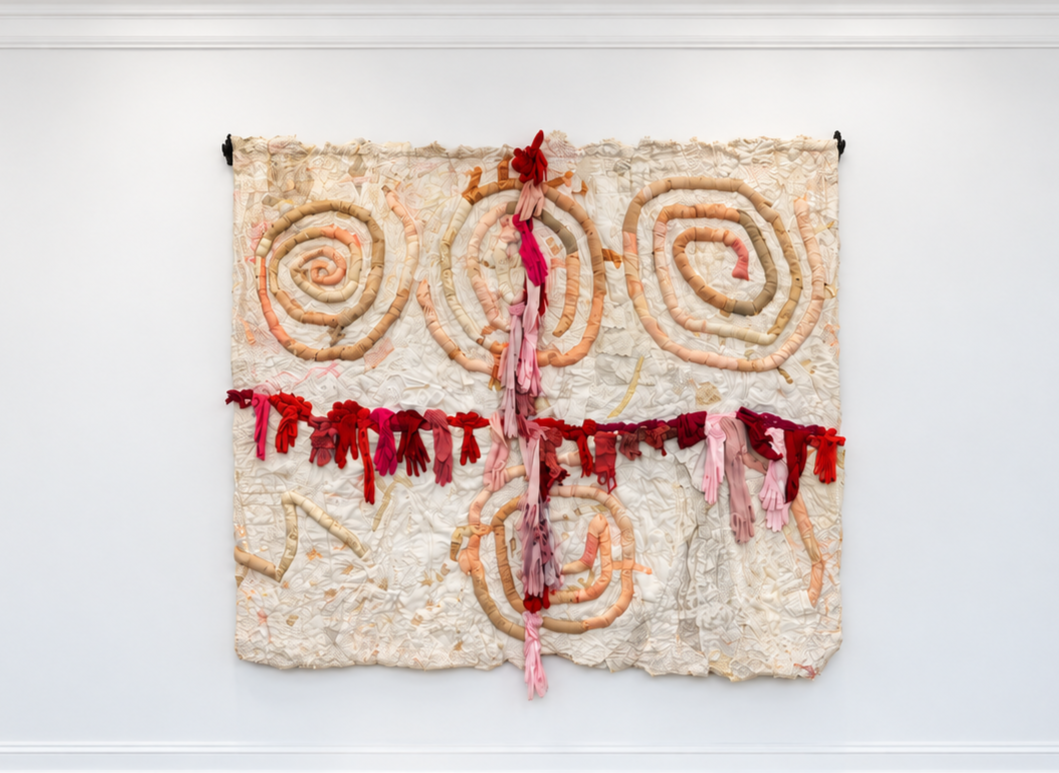
Presented to mark the International Day of Peace and generously supported by Mason Hayes & Curran LLP, The Silent Vocal Language of Textiles brings together Conflict Textiles and D Contemporary in an exhibition that explores the extraordinary ability of textiles to communicate where words fail.
Featuring works from the internationally recognised Conflict Textiles Collection, the exhibition reveals how cloth, thread and stitch become powerful testimonies of conflict, resilience and hope. Created by artists and communities affected by political violence across the world, these textiles transcend language and borders, offering deeply human perspectives on memory, loss, displacement and survival.
Founded in 2008 by curator Roberta Bacic, Conflict Textiles grew from The Art of Survival: International and Irish Quilts in Derry/Londonderry. Inspired by the Chilean arpilleras—hand sewn textiles made by women during Chile's military dictatorship to document lives silenced by oppression—the collection has become an internationally respected material body and online archive of textile testimonies from communities affected by conflict. The live archive is housed by Ulster University through CAIN Archive - Conflict and Politics in Northern Ireland.
Northern Ireland occupies a significant place within the collection. Through quilting, embroidery and appliqué, textile artists have documented the legacy of The Troubles, preserving personal experiences of loss, imprisonment, separation and resilience while creating space for dialogue and reflection.
Today, the language of the arpillera has spread across Latin America, Europe, Africa, Asia and the Middle East, addressing themes including human rights, migration, environmental justice and peacebuilding.
Over the past eighteen years, Conflict Textiles has developed into an internationally recognised resource for exhibitions, education and community engagement, demonstrating how creativity can preserve memory, foster empathy and contribute to reconciliation.
The Silent Vocal Language of Textiles reflects the paradox at the heart of the exhibition: textiles are silent objects, yet they possess an unmistakable voice. Through careful craftsmanship and personal testimony, these works become living archives of remembrance, inviting visitors to pause, reflect and consider the enduring human impact of conflict.
At a time when violence and displacement continue to shape lives across the globe, the exhibition offers a timely reminder that art can challenge silence, preserve memory and inspire dialogue. Together, these remarkable works affirm that even the quietest materials can speak with extraordinary clarity about our shared humanity and our collective responsibility to imagine more peaceful futures.

.jpg)
.jpg)





.webp)