LATEST NEWS:
Ron Mueck
Mori Art Museum presents Ron Mueck’s psychologically charged figurative sculptures, where shifts in scale intensify vulnerability, anxiety and human presence.
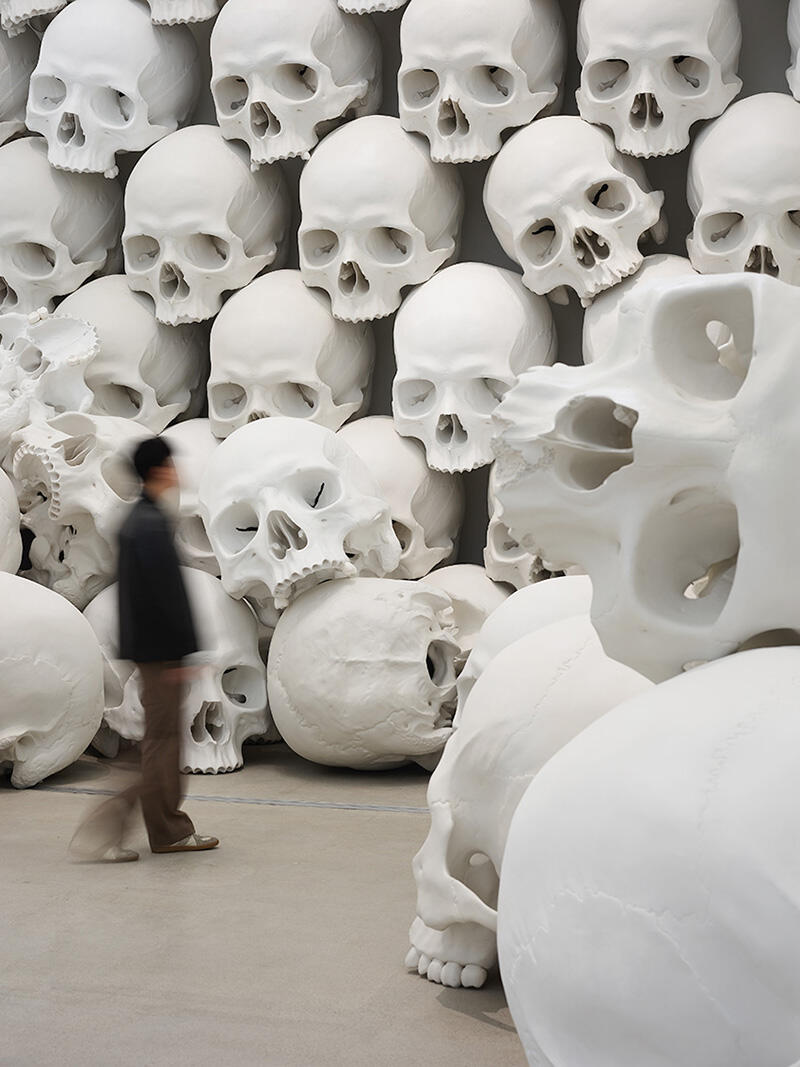
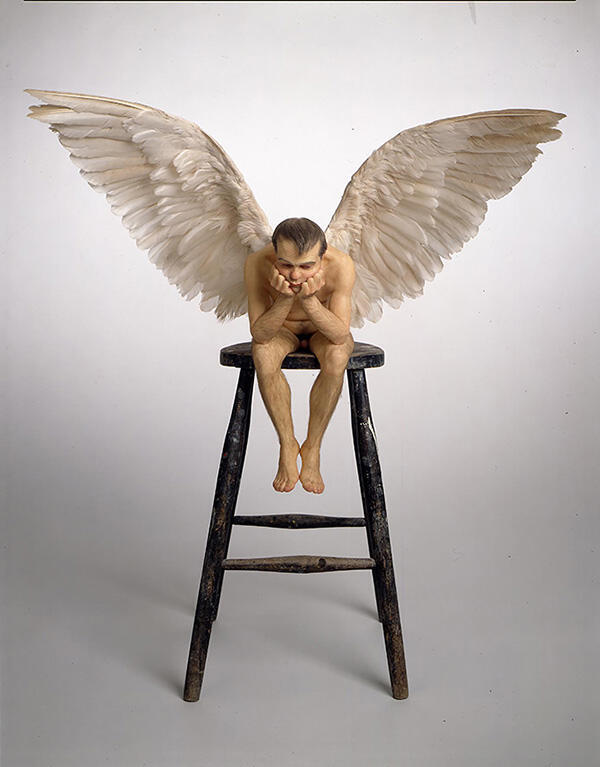
Mori Art Museum presents Ron Mueck’s first major solo exhibition in Japan in eighteen years, bringing together eleven sculptures that trace the development of his practice from early works of the 1990s to more recent projects. Six works are shown in Japan for the first time, including the early sculpture Angel (1997), while the monumental installation Mass (2016–17) forms the centrepiece of the exhibition.
Mueck is known for figures whose extraordinary realism is destabilised by changes in scale. Bodies are far larger or smaller than expected, creating a tension between familiarity and unreality. Rather than functioning as demonstrations of technical virtuosity, these shifts in scale are used to intensify psychological states including solitude, vulnerability, anxiety and resilience.
Mass consists of one hundred monumental human skulls arranged differently for each venue. At Mori Art Museum the installation occupies approximately 300 square metres, turning the gallery into a dense environment that visitors must physically navigate. The skull, familiar from memento mori traditions, medicine, archaeology and popular culture, becomes both a universal image and a group of subtly individual forms.
Other works include In Bed (2005), a vast figure whose distant gaze turns an ordinary private moment into a monumental encounter; Man in a Boat (2002), in which a naked figure appears isolated within an ageing vessel; and Ghost (1998/2014), whose elongated adolescent body creates an uneasy relationship between vulnerability and scale. Photographs and films by Gautier Deblonde, who has documented Mueck’s studio practice for more than twenty-five years, reveal the prolonged processes behind these sculptures.
The exhibition originated through Mueck’s long collaboration with Fondation Cartier pour l’art contemporain. First presented in Paris in 2023, it travelled to Milan and Seoul before arriving in Tokyo, its only venue in Japan.
Hero Image credit: Ron Mueck, Mass, 2016–17. Synthetic polymer paint on fibreglass. Collection: National Gallery of Victoria, Melbourne, Felton Bequest, 2018. Installation view: Ron Mueck, National Museum of Modern and Contemporary Art, Seoul, 2025. Photo: Nam Kiyong. Photo courtesy: Fondation Cartier pour l’art contemporain and National Museum of Modern and Contemporary Art, Korea.
Organizers: Mori Art Museum | Fondation Cartier pour l’art contemporainIn
Special Association with Australian Embassy Tokyo
Corporate Sponsors: OBAYASHI CORPORATION | KAJIMA CORPORATION
Grant from: British Council

.jpg)
.jpg)



.webp)