LATEST NEWS:
Maria Gvardeitseva
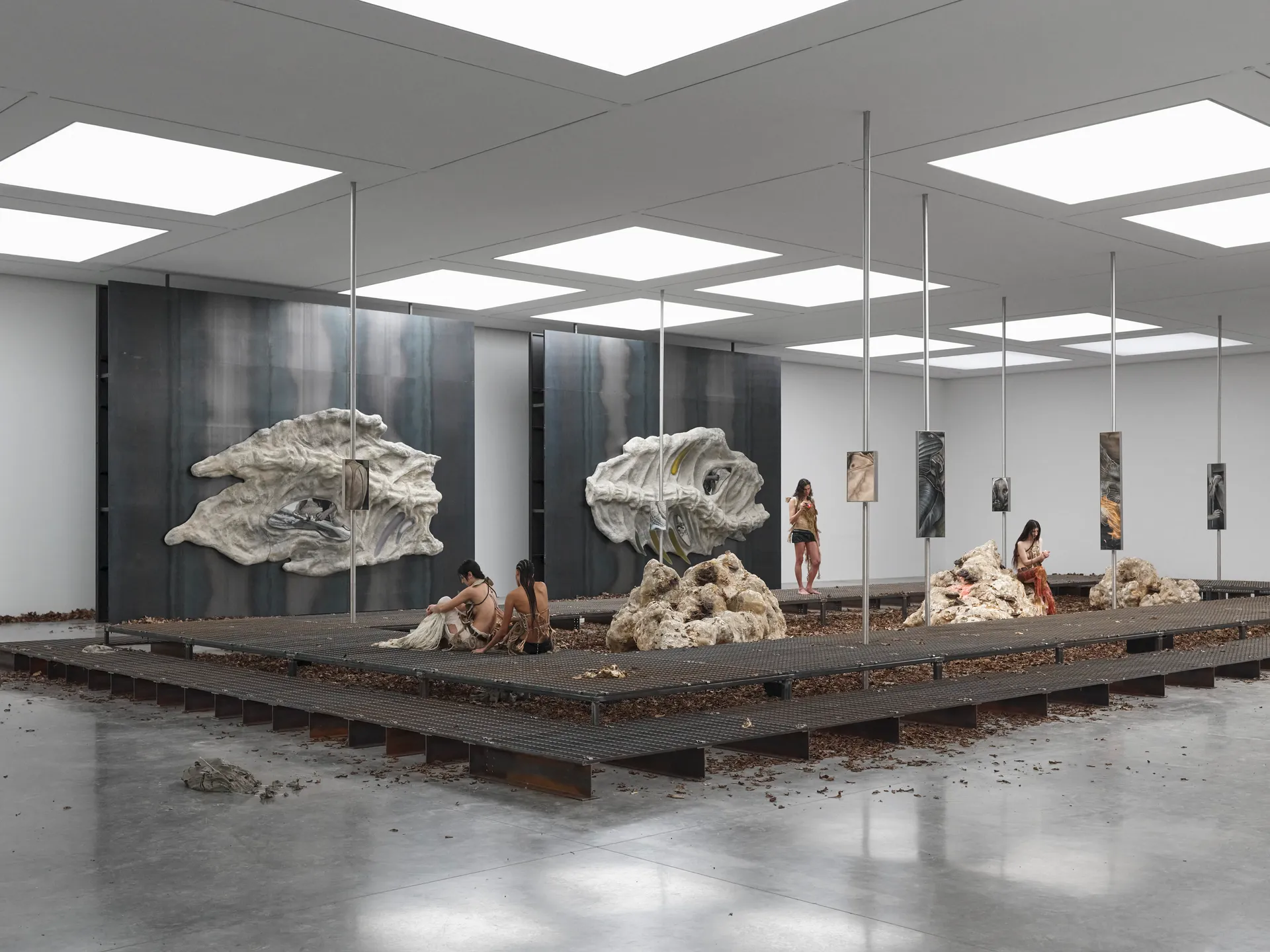
CUT ART in Riga opens La Petite Mort, a new exhibition by Maria Gvardeitseva, on November 13. Curated by Tīna Pētersone, the show begins with a question: if marriage has its rites, why does divorce have almost none?
CUT ART Gallery is pleased to present La Petite Mort, a solo exhibition by Belarusian-born conceptual artist Maria Gvardeitseva, curated by Tīna Pētersone and on view from 13 November through December 2026. The exhibition begins with a striking cultural gap. Marriage is marked by ceremony, witnesses and public declaration. Divorce, one of the most significant transitions of adult life, is usually reduced to paperwork and private grief.
For Gvardeitseva, this question became personal after twenty years of marriage. She began speaking with other divorced women, and their stories became 5-Minute Bedtime Stories (Skira, 2025), a reworking of the fairy tale whose heroines begin where “happily ever after” ends. They are not rescued. They leave, choose and write their own stories. One question from this research drives the exhibition: if marriage has its rites, why does divorce have almost none?
La Petite Mort sets out to build the ritual that divorce lacks. Drawing on Arnold van Gennep’s model of the rite of passage, Gvardeitseva creates a personal mythology across a range of media. The exhibition moves from rupture and mourning, through the uncertain space between identities, towards the body, autonomy and pleasure. Divorce becomes a passage rather than a failure: the end of one identity and the beginning of another.
The title holds both sides of this story. La Petite Mort, “the little death”, evokes the end of a relationship and of a former self. In French it is also an expression for orgasm. Moving from mourning towards desire, the exhibition asks whether an ending can have its own ritual, its own dignity and its own story.
About the artist
Maria Gvardeitseva (b. 1982, Minsk) is a multidisciplinary artist based between Lisbon and Riga. Her practice moves between personal experience, political history, religion and gender. She works with materials that hold a trace of the body, such as wax, porcelain, latex, hair and textiles, and turns memory and pain into visual narratives that combine realism with mythic imagery. She holds an MA in Arts and Politics from Goldsmiths, University of London. Her work has been exhibited at the Riga Ghetto and Latvian Holocaust Museum, the Mark Rothko Art Museum in Daugavpils, the Courtauld Institute of Art and Photo London. In 2022 she was a finalist in the national selection for the Belarusian Pavilion at the 59th Venice Biennale.
About the curator
Tīna Pētersone is an independent curator based in Riga and co-founder of Riga Art Week. Her practice examines the systems, rituals and hidden undercurrents of contemporary life, and much of her work builds connections between the Baltics and other art scenes. She holds an MFA in Curating from Goldsmiths, University of London, and has taken part in residencies and fellowships including Cité Internationale des Arts in Paris and the Performa Biennial in New York. She recently worked on contemporary art commissions for Liepāja 2027, European Capital of Culture. Recent projects include Rosie Gibbens’s To Dust: A Memorial for Robot Vacuum Cleaners (Riga Art Week, 2026) and Nelly Agassi’s Aftermath (Kim? Contemporary Art Centre, 2025).
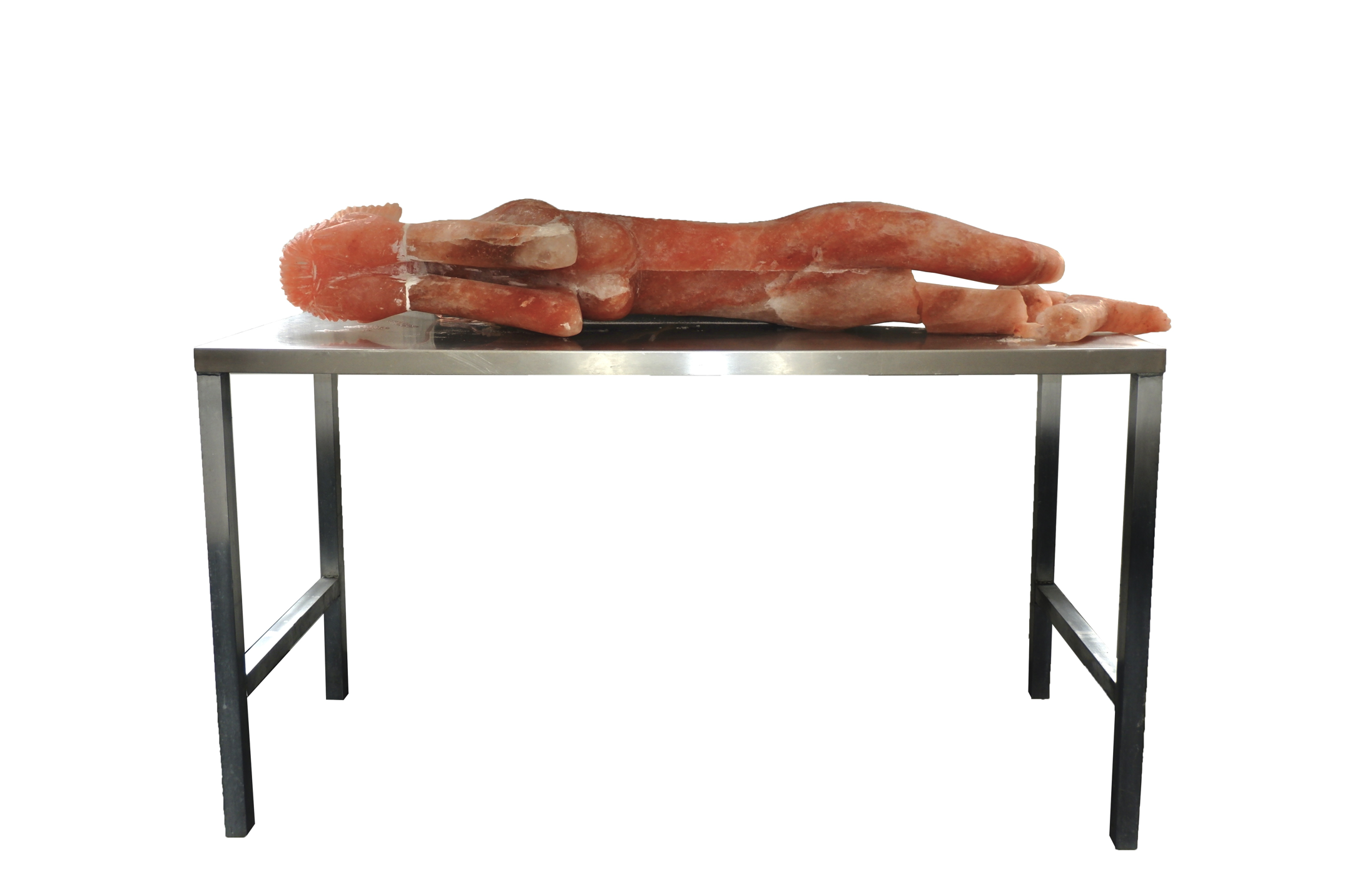
Drizzling (im)perfection is the artist’s research into profound social crises that individuals can experience at various levels and stages. In her artistic practice, Gvardeitseva relives parting, pain and through the "personal" speaks about the socio-public.
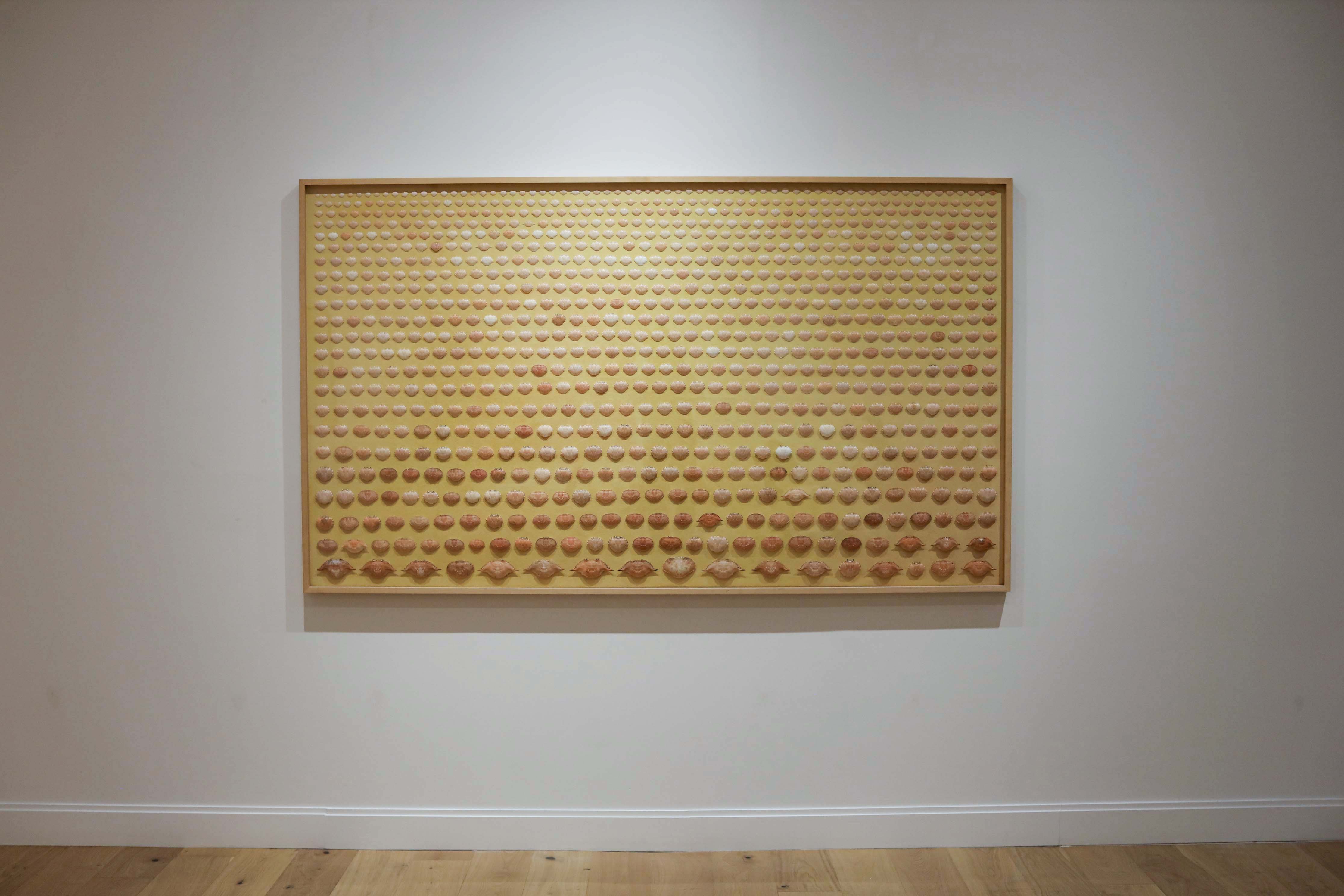
The painful pink salt color of the skin also reveals the issue of standardized Eurocentricity skin tone, referring to the Renaissance and images of the flesh. Female flesh dissolves in the flow of... modern life.
Meticulously crafted from pink sea salt, it is displayed on a 120 cm metal medical stand. Every five minutes, water cascades from the ceiling, causing the salt to progressively dissolve until it completely vanishes at the end of the cycle. Both the body sculpture and the water share a mineral composition identical to human beliefs, shamanism, and just tears, which we are so afraid of in an unemotional or overemotional society.
In her practice, Maria Gvardeitseva reflects on the fragility of social behavior and individual feelings, on the turbulence and instability of universal values that are devalued and dissolved.
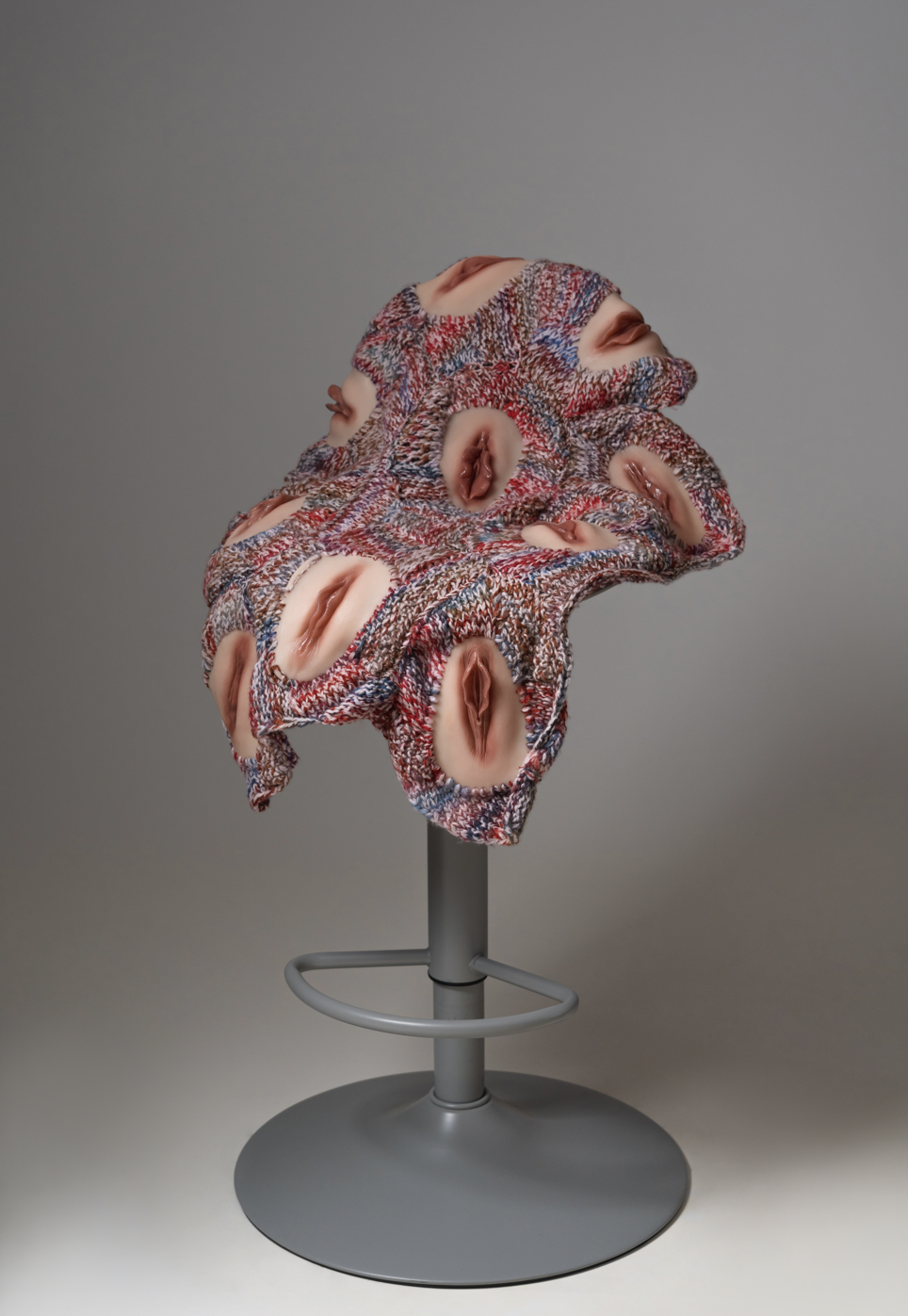
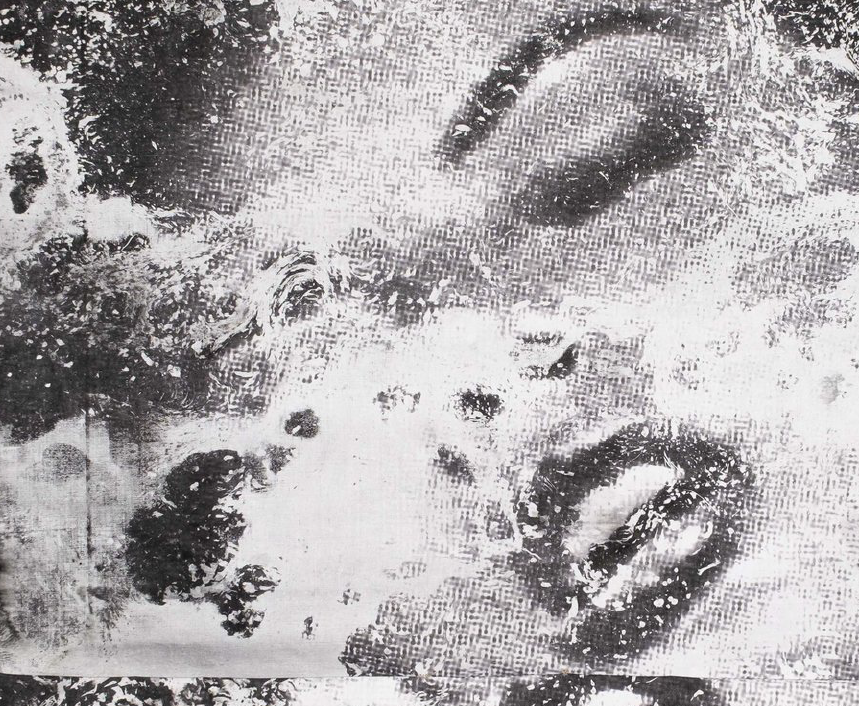
This diptych is my reflection on misogyny as a power. Misogyny starts with mothers when they have the power to raise their sons in a narcissistic way, so those sons when grown up, execute penetration acts for collecting as part of their identity. Misogyny starts with mothers when they bring their infant daughters for clitoral circumcision in a quarter of the world — in Africa, Asia, and the Middle East — raising the number to 230 million mutilations worldwide.
Misogyny starts with women spreading hate against other women. The black color on the Madonna symbolizes darkness in the biblical meaning, as well as power. A baby is born out of darkness, and a mother is that darkness, and power. And a mother has this dark power to raise boys and girls in that misogynistic manner.
It is a provocative exploration of misogyny as a manifestation of power, examining its roots in maternal influences and cultural practices. I suggest that mothers can inadvertently perpetuate misogyny, whether through the nurturing of certain behaviors in their sons or through their involvement in practices like clitoral circumcision.
The pieces also explore how misogyny is sustained within female relationships, highlighting the role women can play in perpetuating gender-based animosity. A notable element within the diptych is the depiction of the Madonna cloaked in black, symbolising the dual themes of biblical darkness and power.
This imagery serves as a metaphor for the mother's role as both a creator and a perpetuator of cultural and gender norms, wielding power to either foster or hinder the development of her children's identities in relation to gender and power
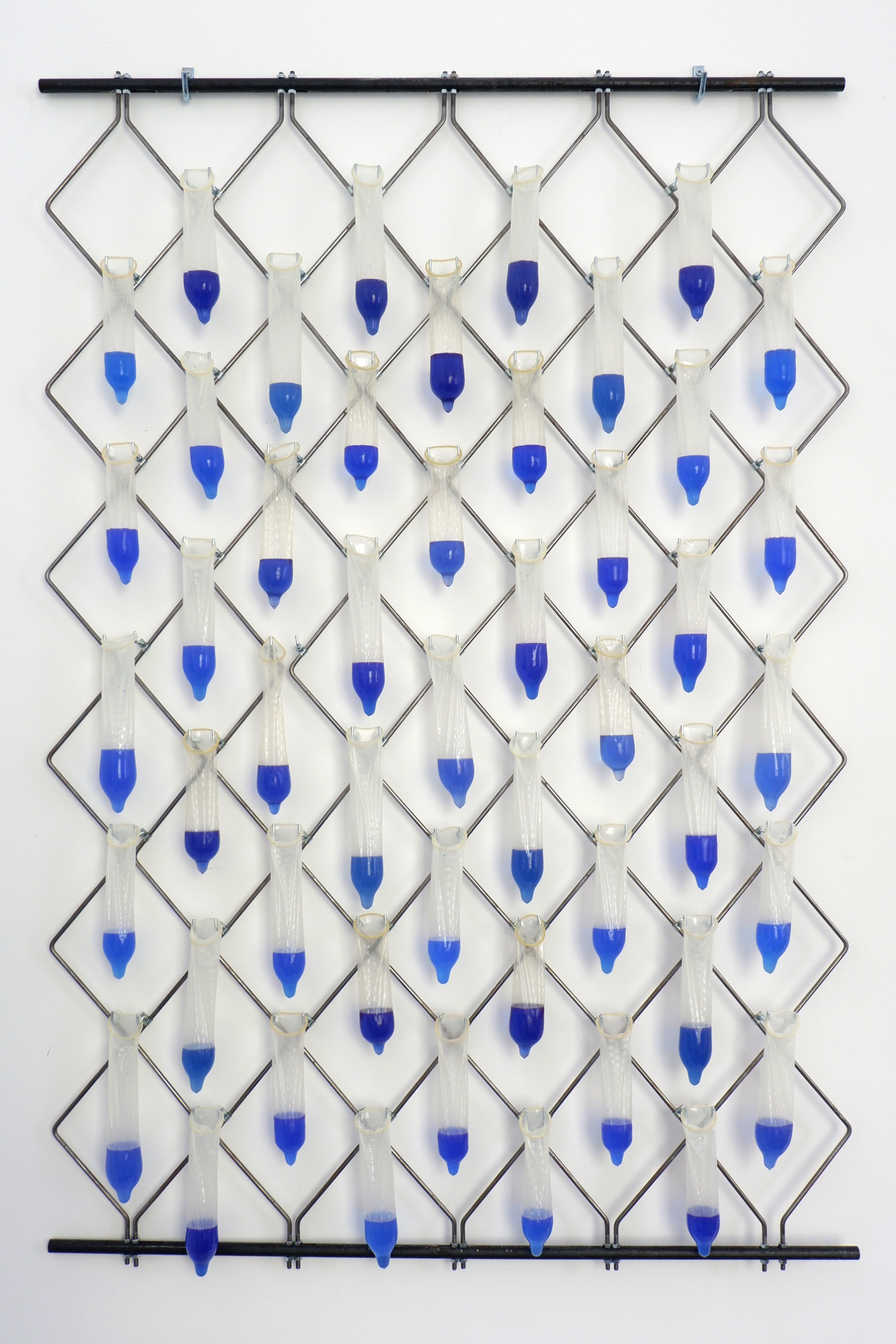
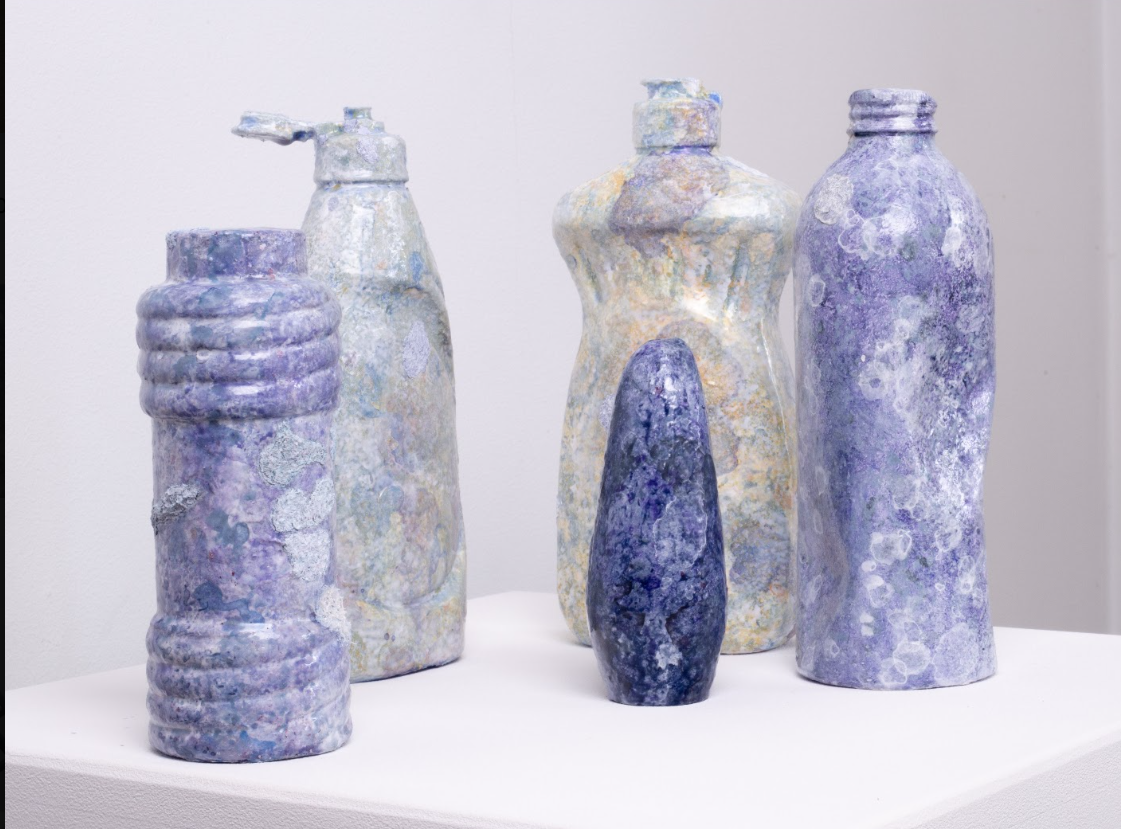
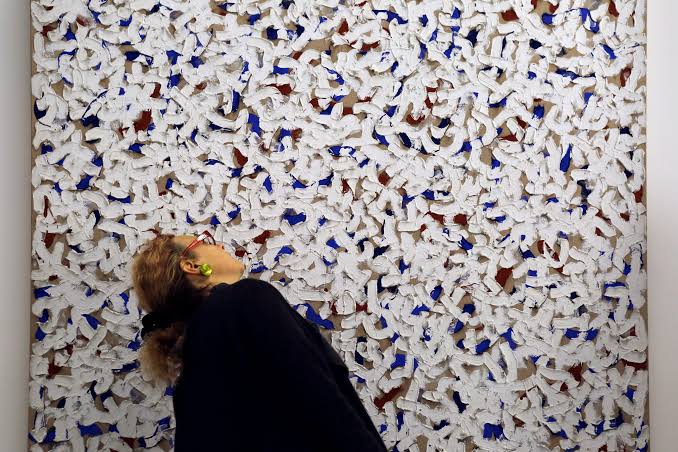
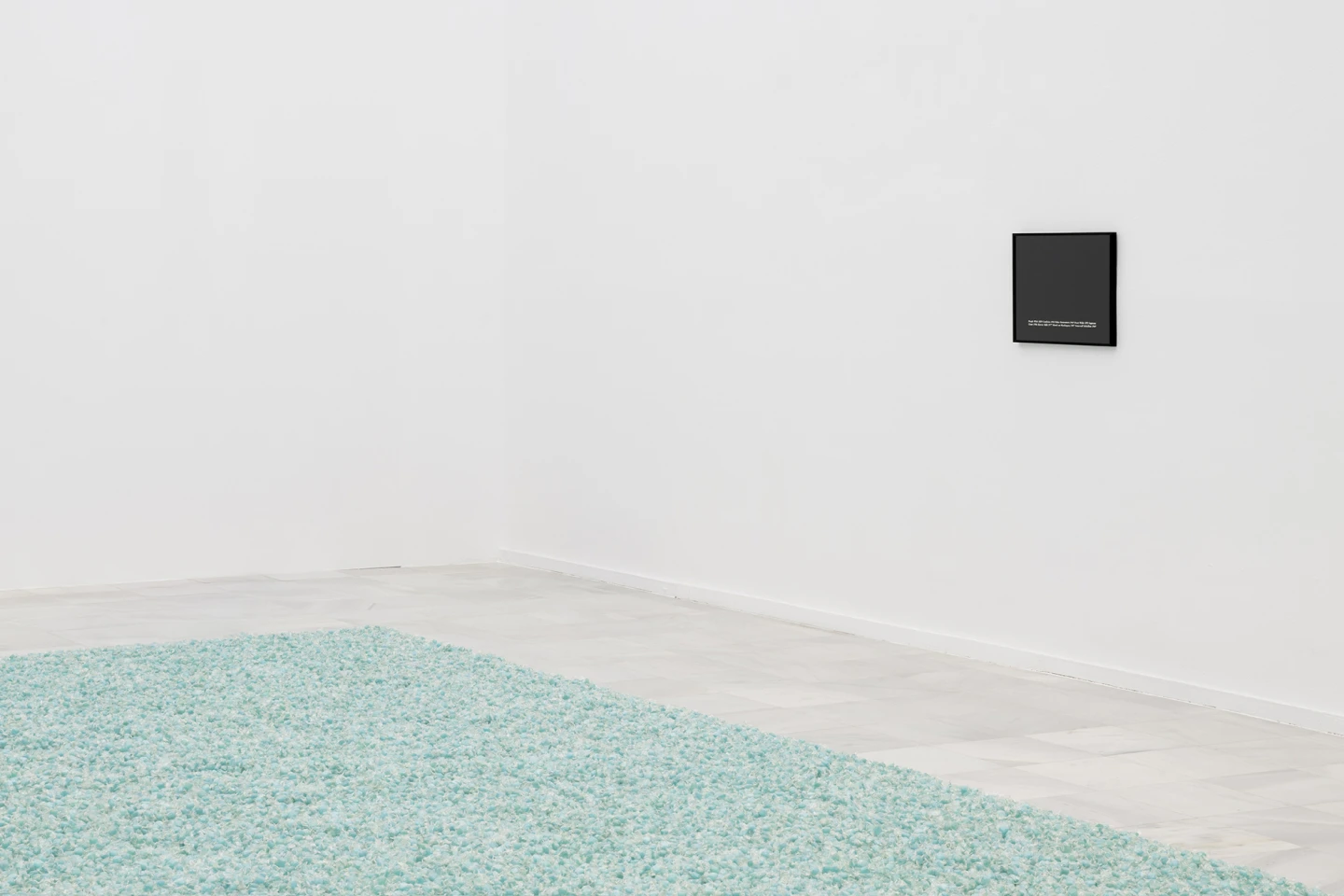
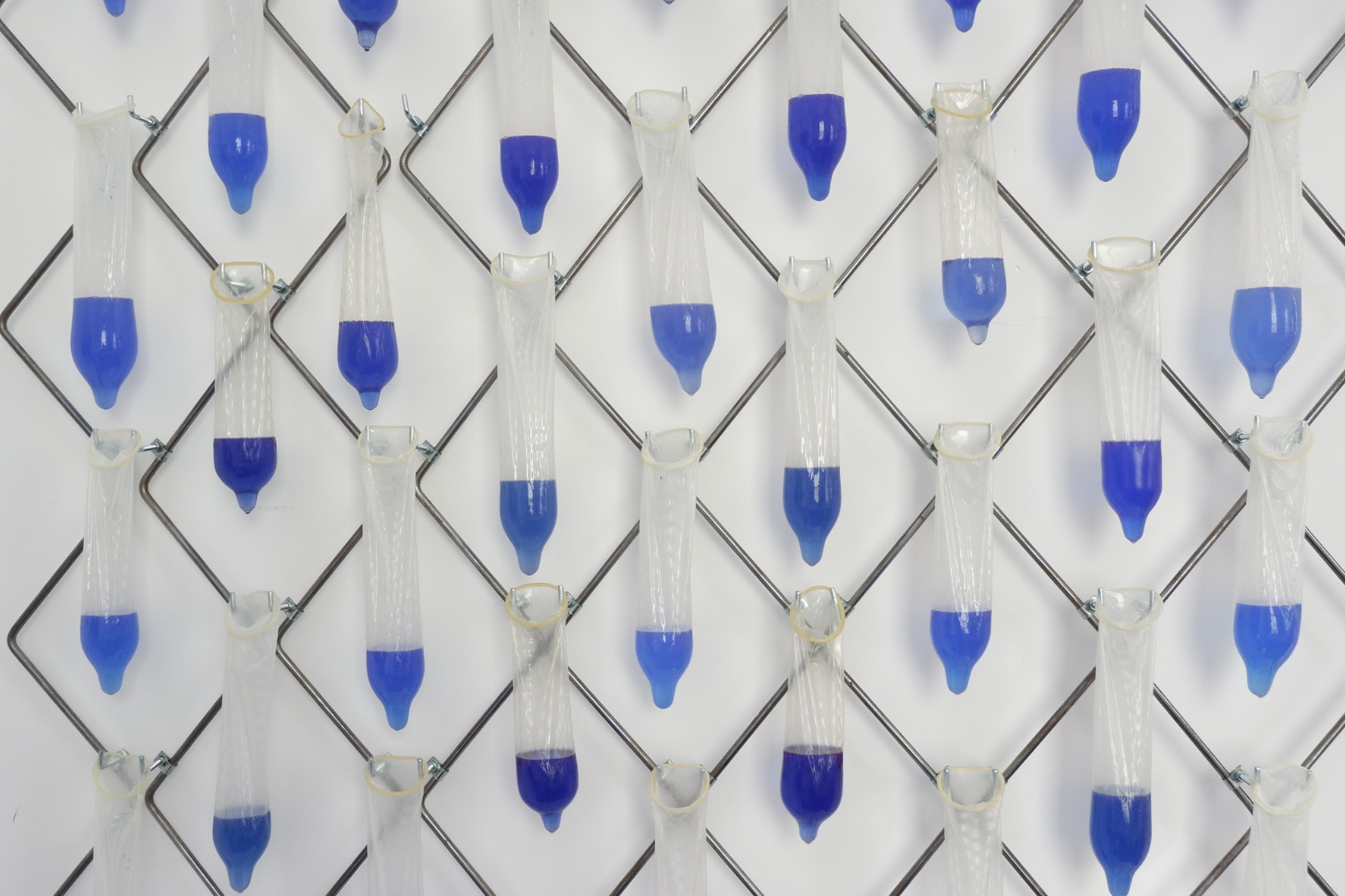
Using the homage to “Anthropometries” — performances by the French artist Yves Klein, where naked girls, called the “living brushes” by the artist, were dipped in blue paint and left imprints of their bodies on canvases. Maria Gvardeitseva proposes to reconsider the practice from the point of gender equality, and, therefore, chooses a masculine-centric object for her sculpture – a condom. Maria explores themes of loss, feminism, and identity in this sculpture. Like Klein, she also uses a special blue colour that she created, only she calls it International Misogynistic Blue. The artwork is based on the in-depth interviews with women about their stories on separation and divorce. Each condom in the artwork reflects a personal story of betrayal and cheating, and has its name.
This work is a part of the 5-Minute Bedtime Stories book by the artist.