LATEST NEWS:
Julio Le Parc
Light, movement and colour animate Tate Modern’s major survey of kinetic and optical-art pioneer Julio Le Parc.
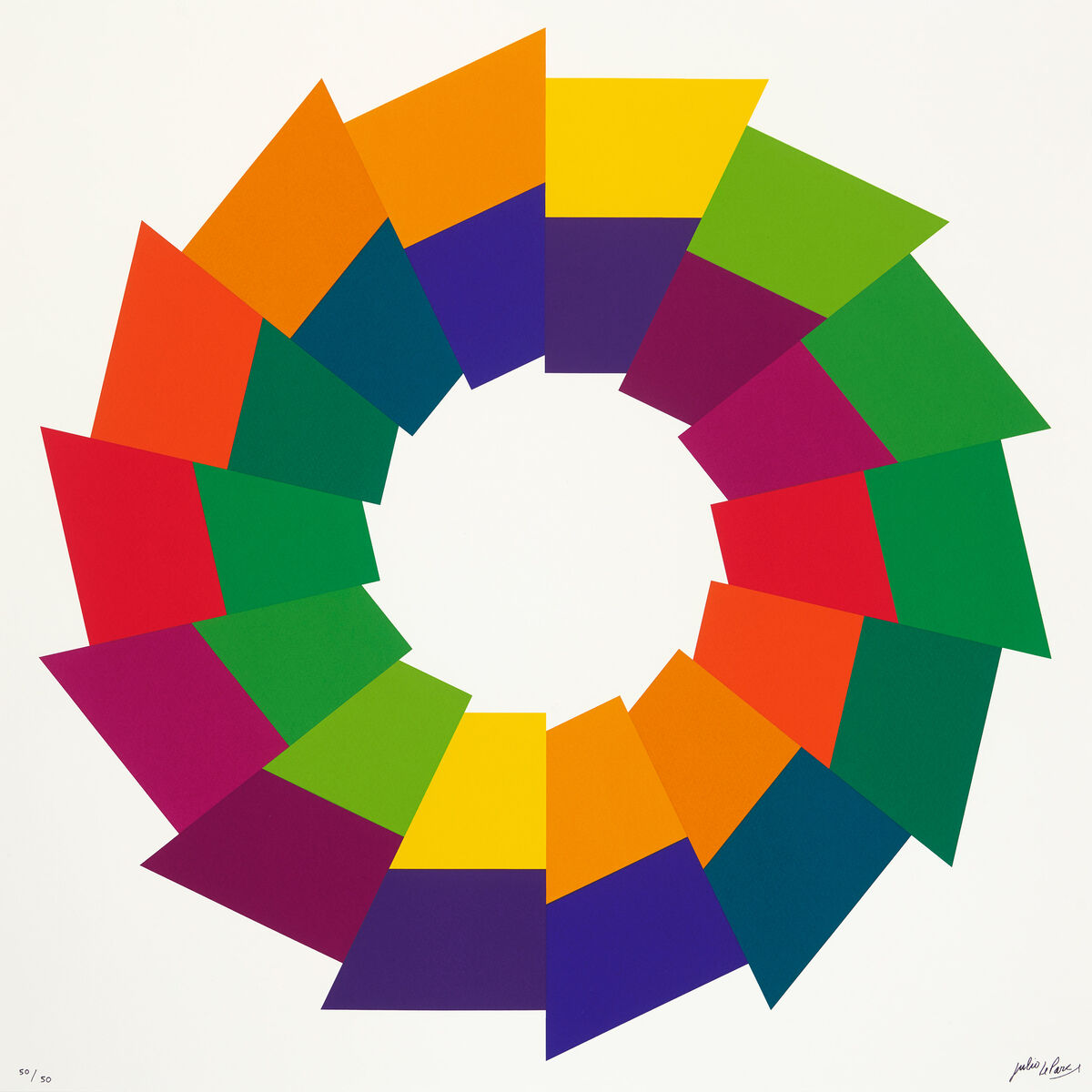
Light. Colour. Action. surveys Julio Le Parc’s pioneering investigations into movement, perception and participation. Across kinetic sculpture, light installations, optical works and immersive environments, the exhibition shows how Le Parc challenged the idea of art as a fixed object to be contemplated from a distance.
From the late 1950s onward, Le Parc developed works activated by shifting light, reflective surfaces, mechanical movement and the viewer’s own position. Images appear unstable because the work changes as people move through it, making perception itself one of the exhibition’s central materials.
The presentation also foregrounds Le Parc’s political and democratic ambitions. He resisted the authority traditionally attached to the individual artist and sought forms that could be playful, collective and accessible. Participation was not an accessory to the work but a way of questioning established hierarchies between artwork, institution and audience.
Seen over several decades, the works reveal how experiments first associated with kinetic and optical art anticipated later immersive and interactive practices. The exhibition emphasises Le Parc’s sustained interest in creating situations in which spectators become active participants.
Image credit: Julio Le Parc, Thème 90, 2025/2026. Screen print produced for Tate on the occasion of Julio Le Parc: Light. Colour. Action.

.jpg)
.jpg)



.webp)