LATEST NEWS:
Cecilia Vicuña
Whitechapel Gallery presents the first major UK exhibition of Cecilia Vicuña, spanning six decades of painting, textile, installation, poetry, performance, film and activism.

Whitechapel Gallery presents the first major UK exhibition of Cecilia Vicuña (b.1948, Santiago, Chile) – one of Latin America’s most internationally renowned artists, poets, and feminist activists. Spanning six decades, the exhibition provides a unique opportunity to explore Vicuña’s interdisciplinary practice, which intentionally dissolves the boundaries between visual art, poetry, performance, ritual and activism, and encompasses painting, textile, photography, installation and film.
Born and raised in Santiago, Vicuña came to London in the early 1970s, where she self-exiled after the violent military coup against President Salvador Allende in 1973. London provides the starting point for this exhibition – Vicuña had a studio in Stepney Green when she was a student at the Slade School of Art (1972-1974), and her time here marked a key moment in her development. In the early 1970s, London was a hub for politically engaged artists from across the globe, providing a nexus for resistance and liberation movements, where artistic experimentation and political organising were deeply intertwined. As a creative and personal response to the situation in Chile, Vicuña’s practice became more explicitly political during the Allende period (1970-73), a process that intensified in London reflecting her experience of displacement, loss, political violence and instability.
A key facet of Vicuña’s work, evident from the 1960s onwards, is her deep commitment to honouring and preserving ecosystems and indigenous systems of knowledge. She regards the destruction of the natural world and erasure of indigenous communities as interconnected forms of violence and sees their recovery and preservation as the only way to imagine and create alternative futures. Many of her installations function as acts of remembrance for cultures, languages and ways of being that have been suppressed by dominant Western models and colonial systems.
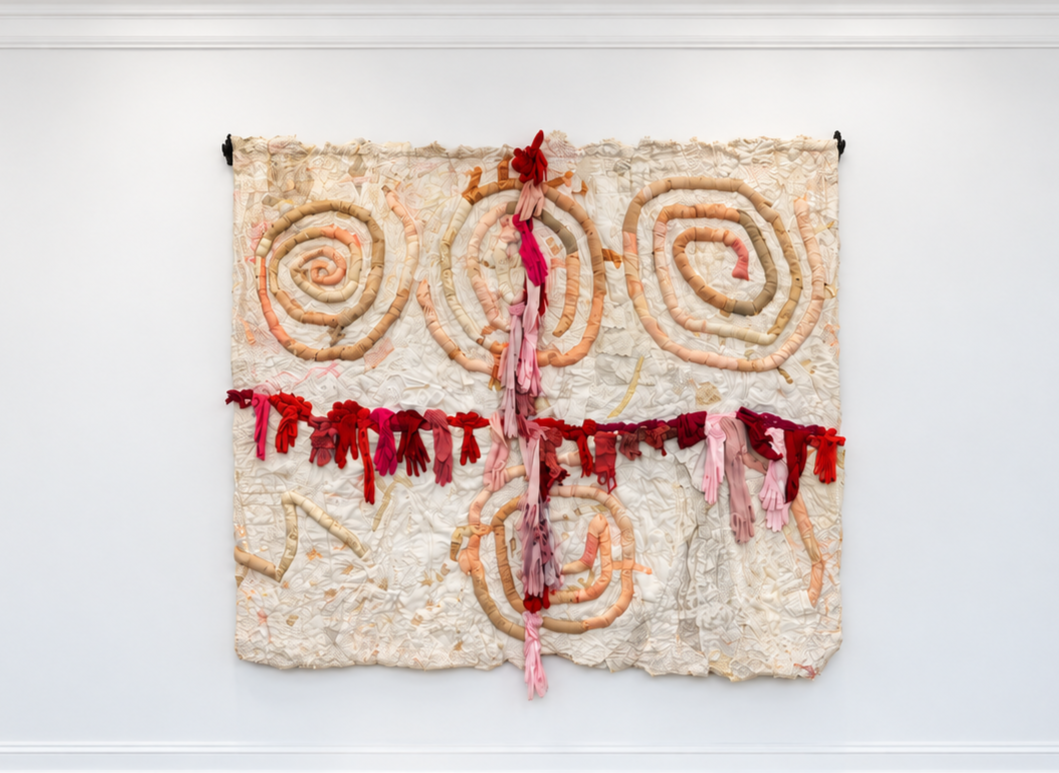
The exhibition opens with Quipu Menstrual (2006–2024), a dense sculptural installation of unspun wool in vivid shades of red and brown suspended from the ceiling. Vicuña has been creating ‘quipus’ (knots) for over 50 years as striking embodiments of an ancestral, non-alphabetic communication system rooted in Andean culture. Traditionally used in pre-Hispanic civilisations, quipus were used to encode knowledge and transmit messages or stories through intricate systems of braiding and coloured threads. Vicuña reclaims and reactivates this ancient language as a living symbol of memory and resistance, often producing quipus through collective making processes adding a distinctive communal dimension to the works. Quipu Menstrual grew out of The Blood of Glaciers / La sangre de los glaciares, a performance on Chile’s El Plomo Glacier in 2006 in which Vicuña carried red wool threads and laid them at the foot of the striated glacier, drawing a symbolic parallel between menstrual blood and melting ice – both vital, cyclical, and under siege.
Another key aspect of Vicuña’s artistic language are the series of works titled precarios. She began making these small sculptures in the mid-1960s, crafted from hand-bound booklets, newspaper cuttings, papers, prints, fabric, feathers and other found materials. Originally laid out on the beach for the high tide to erase, these fragile ‘spatial poems’ are defined by their ephemerality and challenge conventional understandings of sculpture as fixed or permanent, offering instead a poetic counterpoint to the extractive logics of colonisation and capitalism. Vicuña’s only surviving precarios from her time in London, Precarios: A Journal of Objects for the Chilean Resistance (1973–74), will be shown alongside archival documentation of the 400 lost works from the same collection.
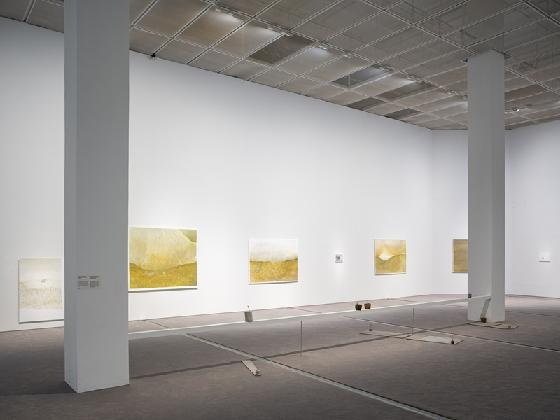
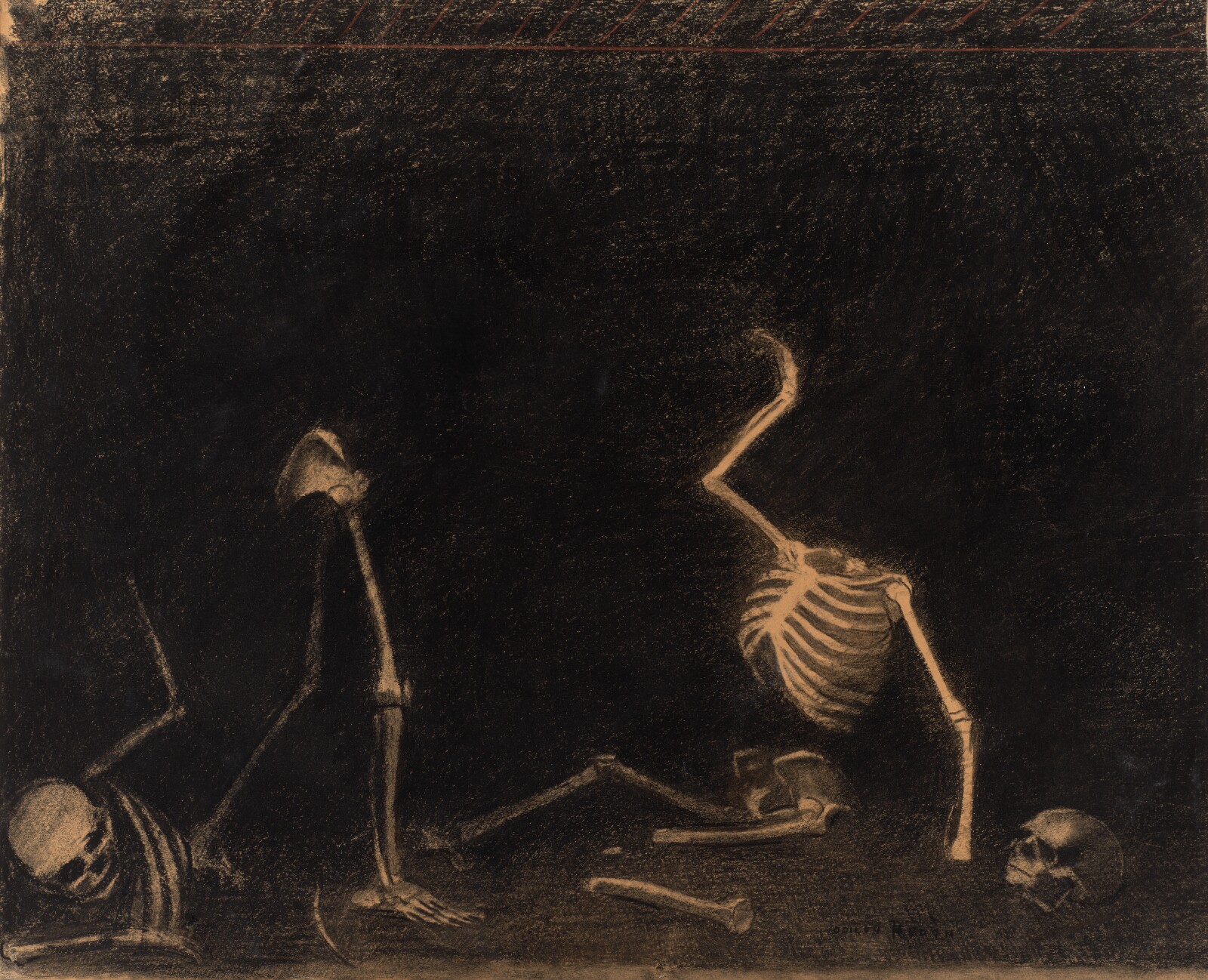
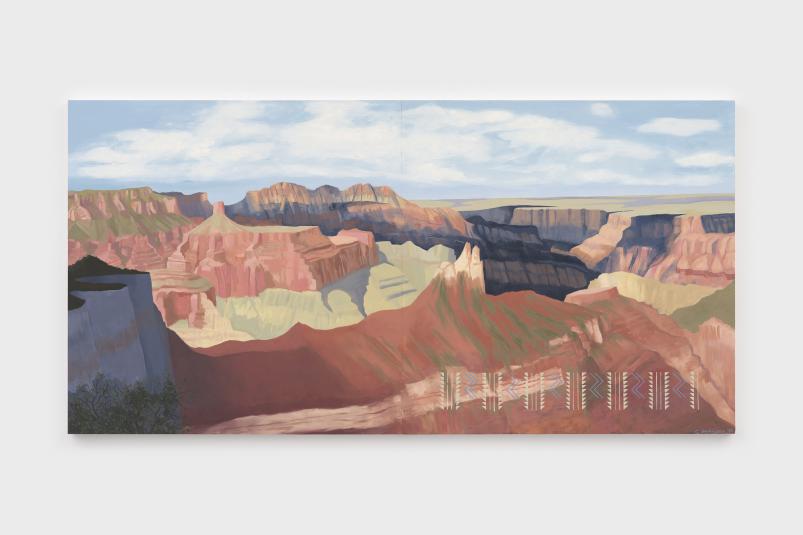
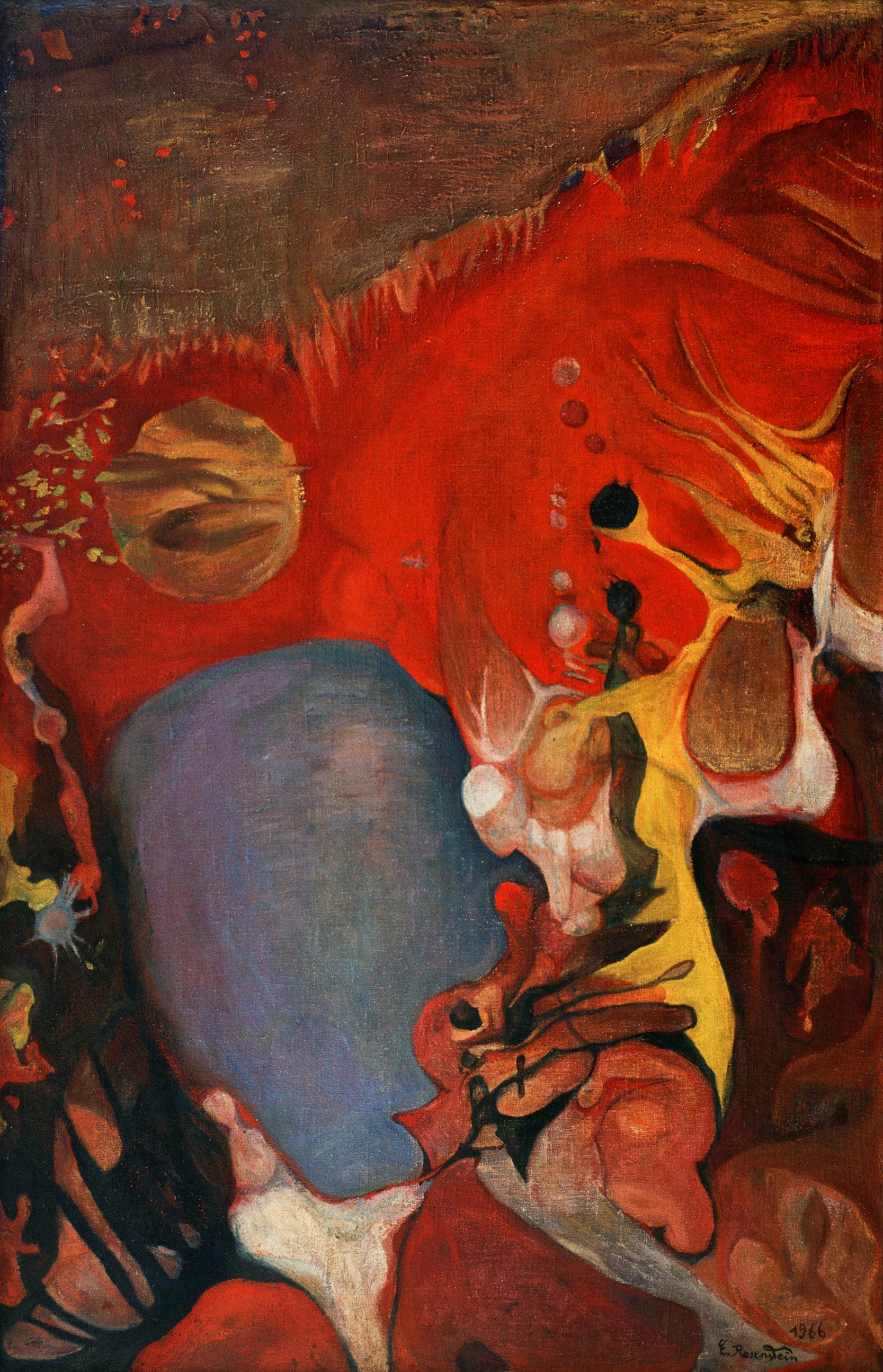
Although widely recognised today for her quipus and precarios, Vicuña is a poet and painter and conceives her sculptures and installations as poetic acts. The sculptural works in the lower Gallery are placed in dialogue with a selection of paintings from Vicuña’s time in London in the 1970s. These are shown alongside other paintings from the same period that were lost and have been subsequently repainted; and a recent series that continues her engagement with Indigenous knowledge and cultural memory.
Also on display are a series of works dedicated to Vicuña’s performances and interventions in public spaces which she has been developing from the 1960s to the present day. These include the short film What is Poetry to You? (1980). Filmed in the vibrant streets of Bogotá, where she was based from 1975 to 1980, the work presents a series of intimate encounters where Vicuña asks various individuals, from children and street performers to scientists, artists, and sex workers, the same question: ‘What is poetry to you?’. The responses range from deeply personal reflections to broader political statements, highlighting poetry as a vital, communal, and transformative force.
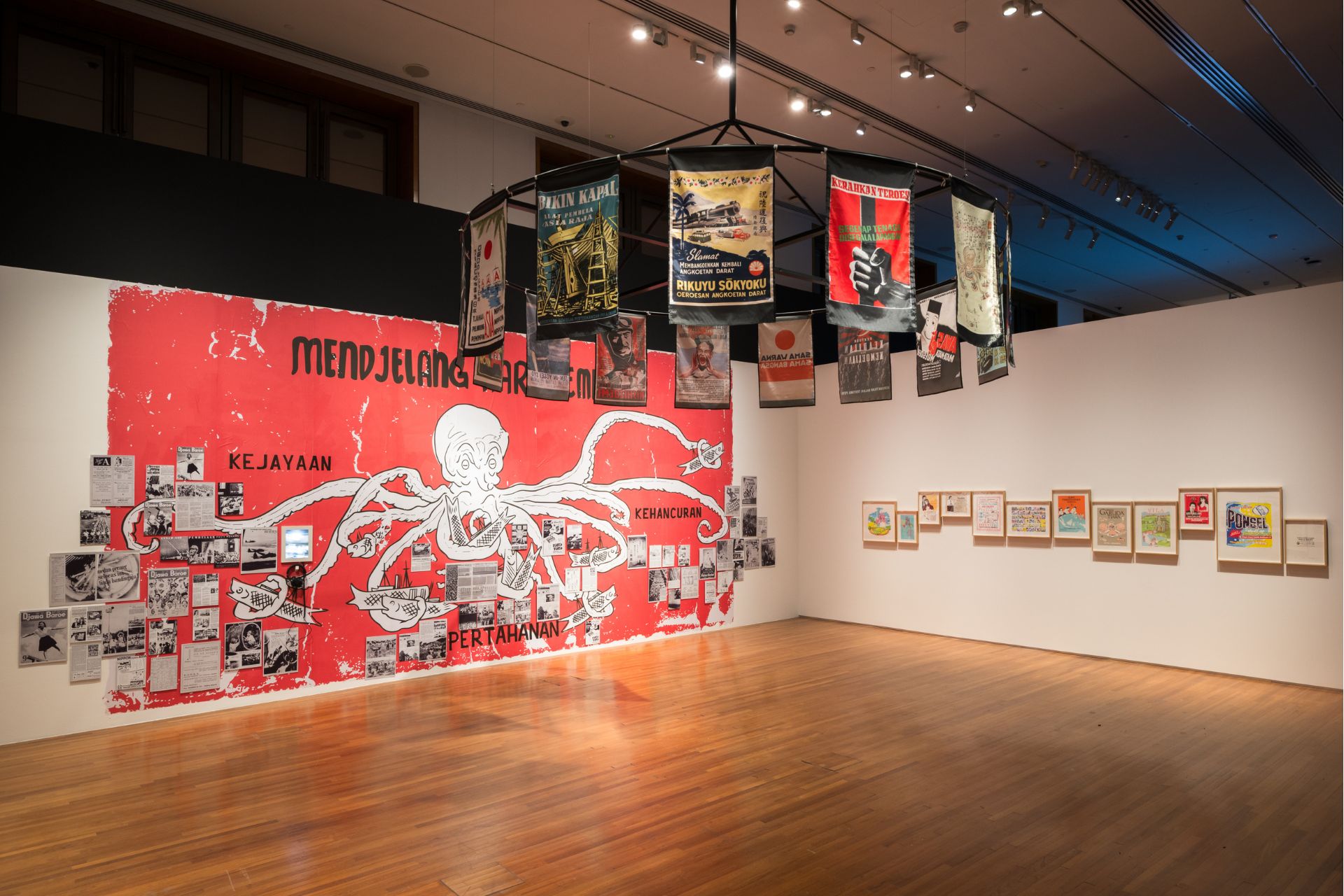
The exhibition continues with a key contextual element, a dedicated display on Artists for Democracy (AFD), the organisation Vicuña co-founded in London in 1974 with David Medalla, John Dugger and Guy Brett in solidarity with Chile and other liberation struggles worldwide. This section brings together never-before-seen documents, photographs and printed materials, offering insight into both the collective’s activities and Vicuña’s formative time in London.
Visitors will also encounter Vicuña’s Palabrarmas series, including the 28 pencil and paper AMAzone Palabrarmas (1978) that bring together drawings, collages and textiles. The works emerge from the fusion of two concepts: words (palabras) and weapons (armas) and language is broken apart and reconstructed to reveal hidden or new meanings. Vicuña started this series in 1974 in London, when military dictatorships gripped Latin America and she imagined that these nonviolent, linguistic tools might combat the brutality of that era. Her poetic proposition of ‘words as weapons’ remains relevant today, offering concise, powerful messages of struggle and hope.
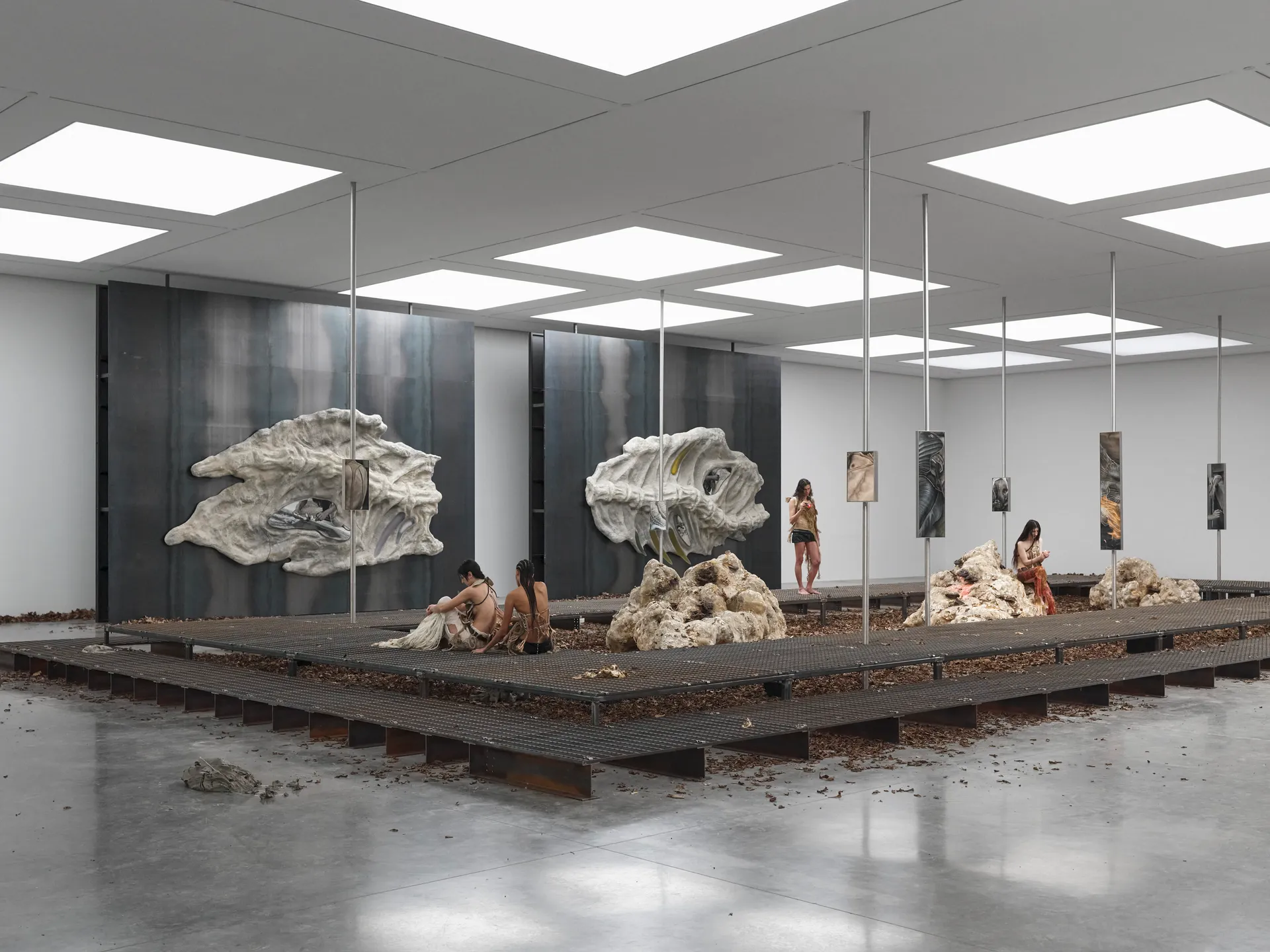
Concluding the exhibition is Foraging Quipu (2025-2026), a new large-scale participatory installation first realised the Irish Museum of Modern Art (IMMA) in Dublin in 2025, composed of plant matter, found objects and materials gathered by local communities. For the London presentation, an open call invitation was extended to local audiences to gather dry plant matter and lightweight debris from their surroundings, creating a collective archive of ecological traces, chance encounters and personal acts of attention. The resulting installation weaves together these contributions into a suspended quipu, a form inspired by the ancient Andean system of knotted cords used for recording and communication.
Throughout her practice, Vicuña has explored the relationships between people, place, memory and the natural world. Foraging Quipu extends this approach by transforming everyday acts of collecting into a shared artistic gesture, bringing together materials shaped by different environments and histories. Branches, seeds, roots, fungi, textiles, fragments of wood, plastics and other found objects coexist within the work, creating a poetic assembly that reflects both ecological interdependence and human responsibility towards the environments we inhabit.
With support from: Embassy of Chile in the UK
Cecilia Vicuña Exhibition Circle and Patrons: Xavier Hufkens, Lehmann Maupin, New York, Seoul, London, Soliman Travel. Jane Soliman, Juliana Fortunato Wates, Zarela Feeney, Mareida Restaurant
.jpg)
.jpg)



.webp)