LATEST NEWS:
Augustas Serapinas
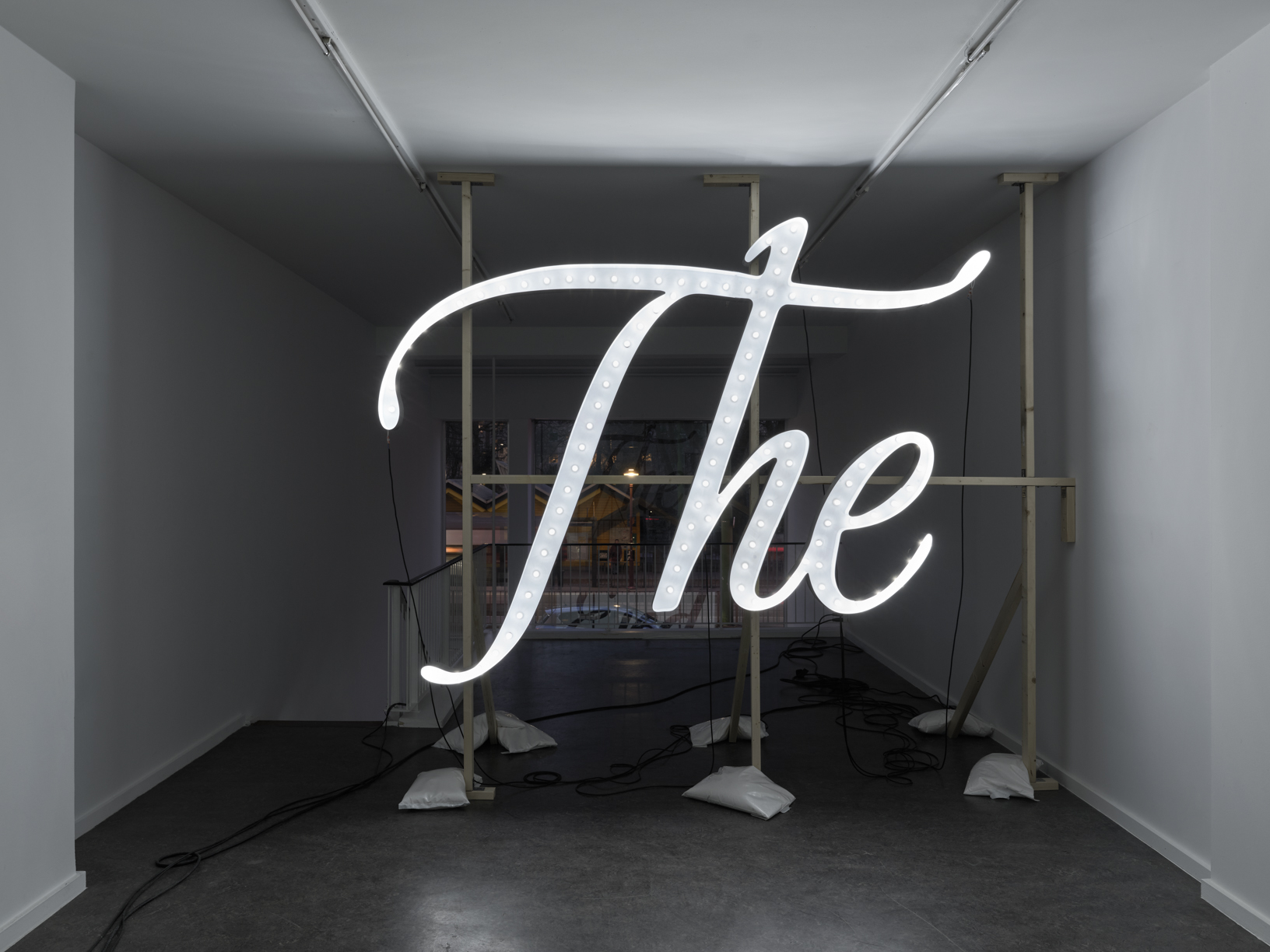
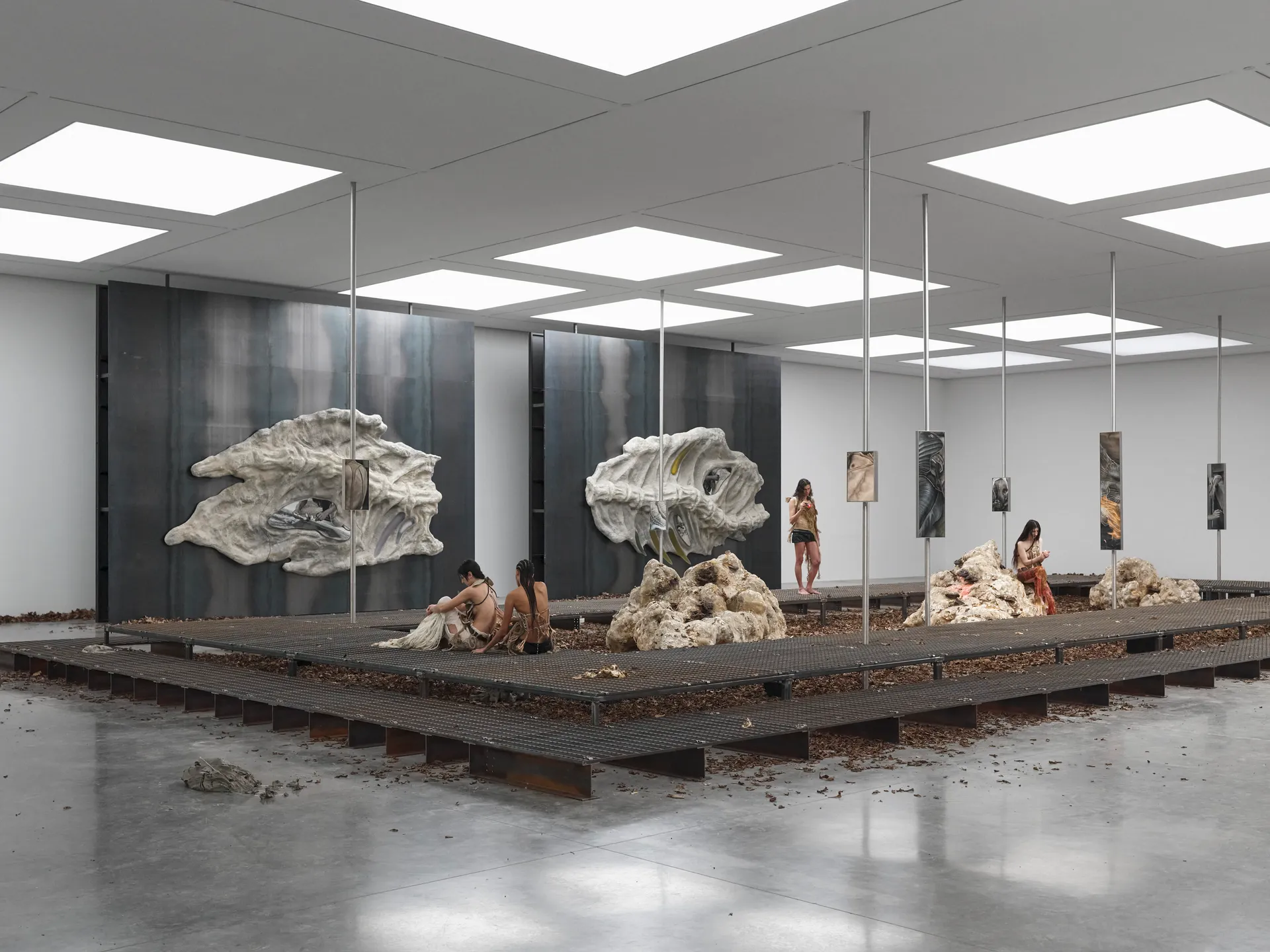
In summer 2026, Nottingham Contemporary is thrilled to present the first institutional solo exhibition in England by Lithuanian artist Augustas Serapinas featuring his large-scale sculptural installation, Physical Culture
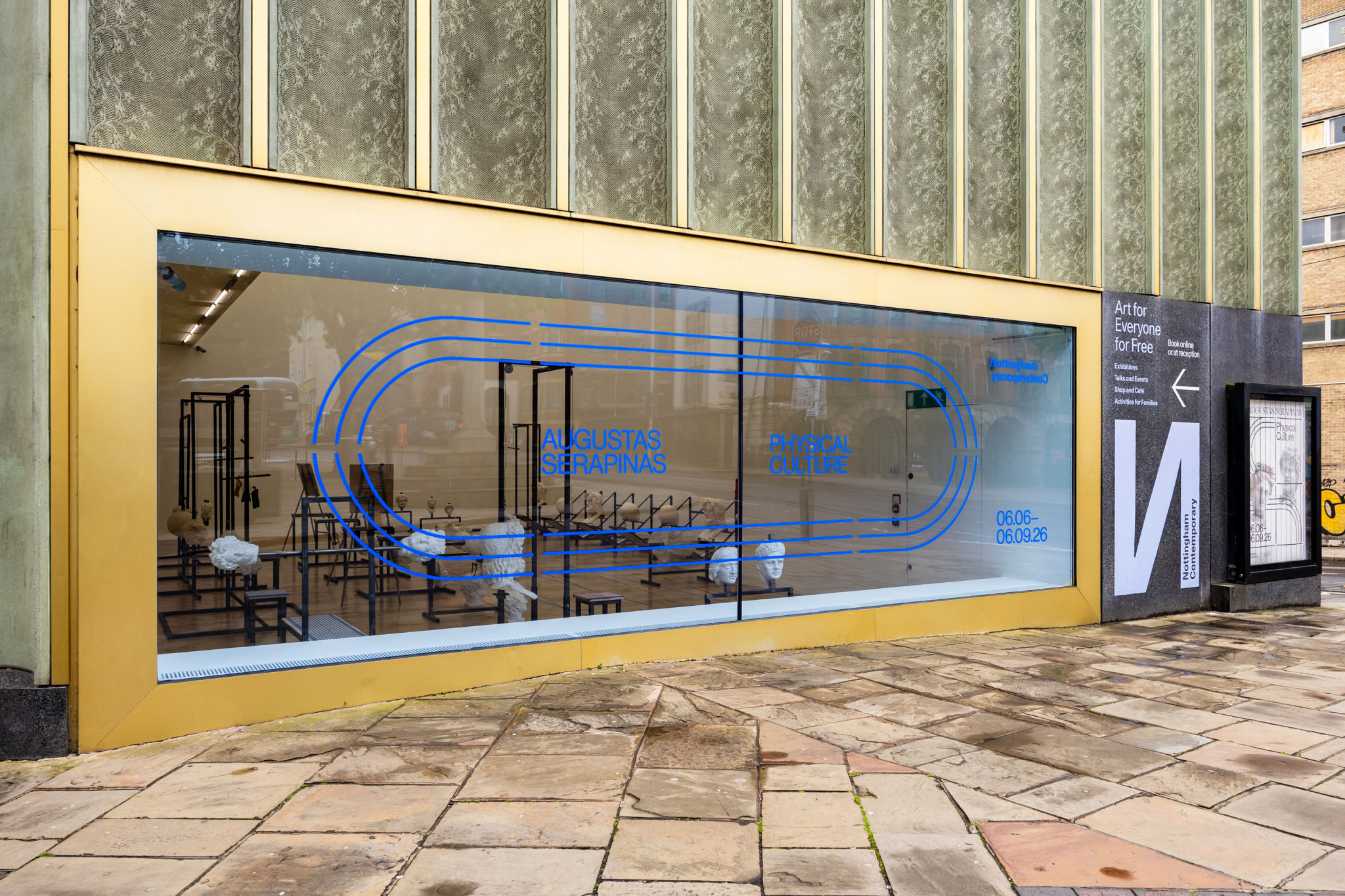
The first iteration of Physical Culture was created in 2012 while Serapinas was a third-year student at the Vilnius Academy of Arts’ Sculpture Department. Since then, various versions of the installation have been exhibited internationally, including at Contemporary Art Centre (CAC) Vilnius, Lithuania (2025), Unlimited at Art Basel, Switzerland (2023), 1857 project space in Oslo, Norway (2017), Bâtard performance art festival in Brussels, Belgium (2016), and Frieze art fair in London, UK (2016).
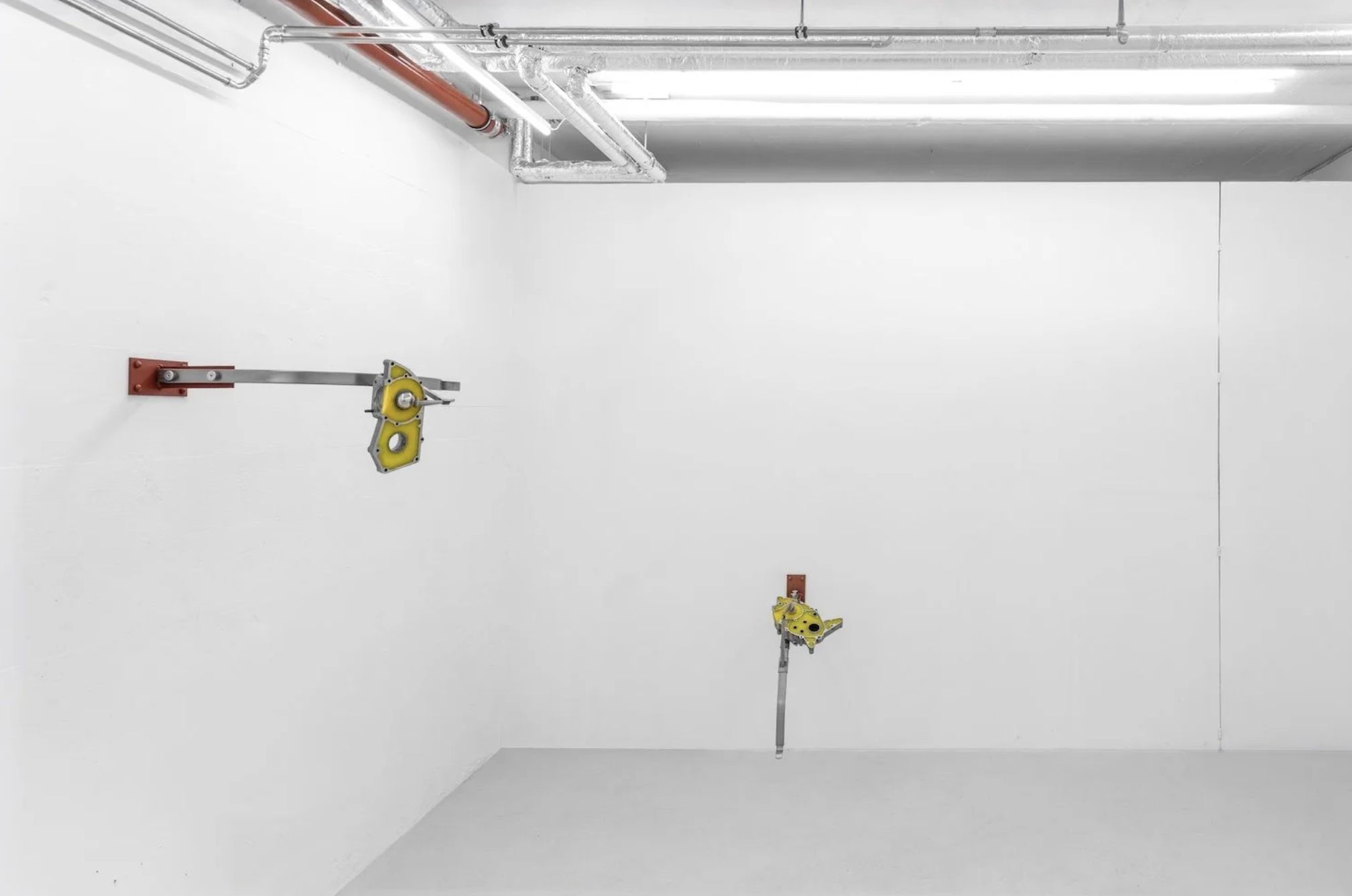
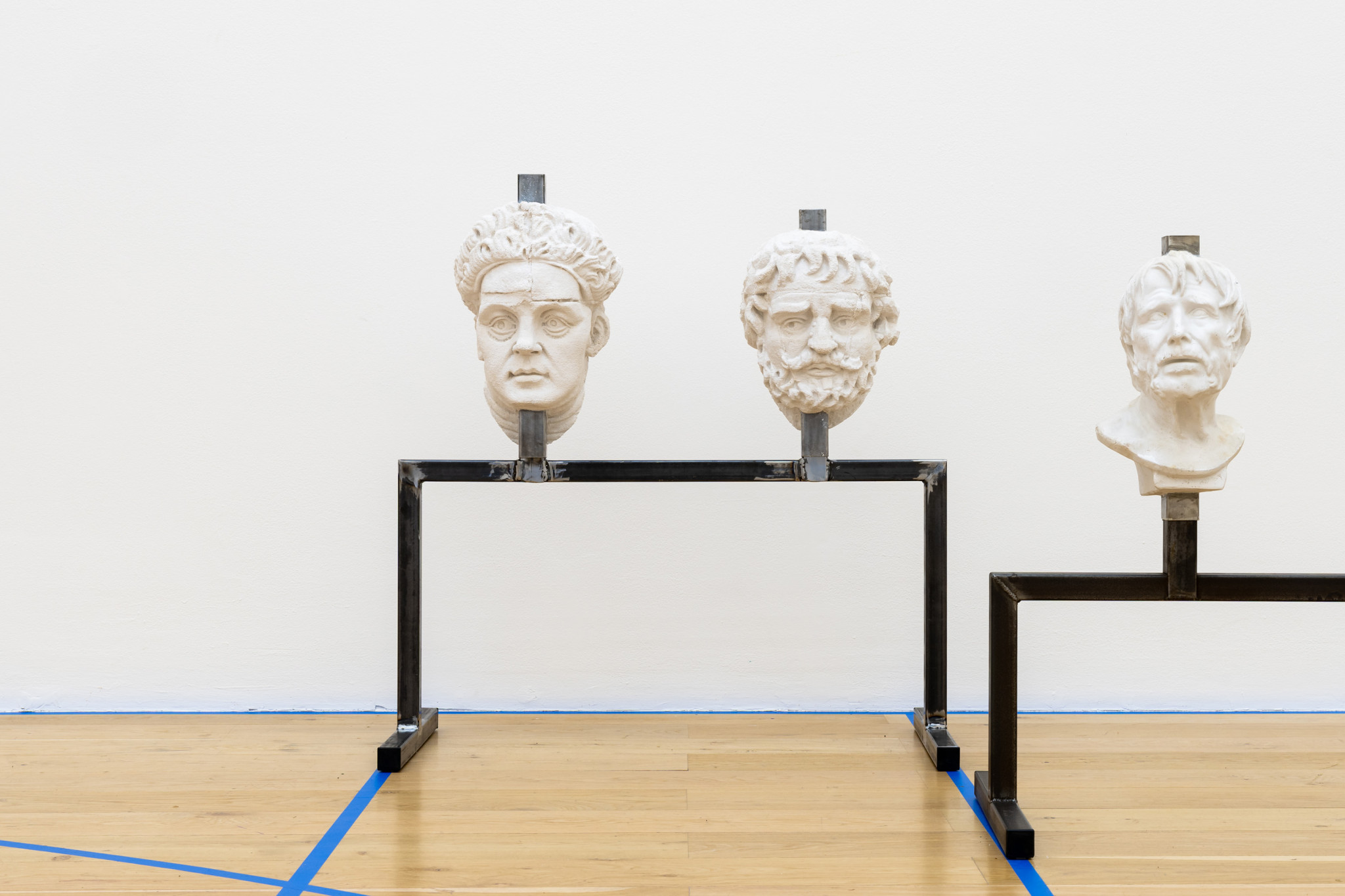
Following CAC’s expansive edition of this work, Nottingham Contemporary will present a new reconfiguration spanning across two of our largest gallery spaces. The exhibition will invite audiences into a hybrid space of activity — performance space, drawing studio, and gym — featuring fully operational metal fitness machines with jesmonite sculptures replacing conventional weights.
The exhibition will also feature newly commissioned elements not seen before, made in collaboration with students and staff at Nottingham Trent University and local fitness instructors. The work will be activated with a dynamic live programme punctuating the exhibition season, where local fitness groups will be invited to participate in exercise classes in the galleries; students from local universities will be invited to partake in life drawing classes; and community wellbeing groups will be invited to host mixed-ability sessions and holistic workshops.
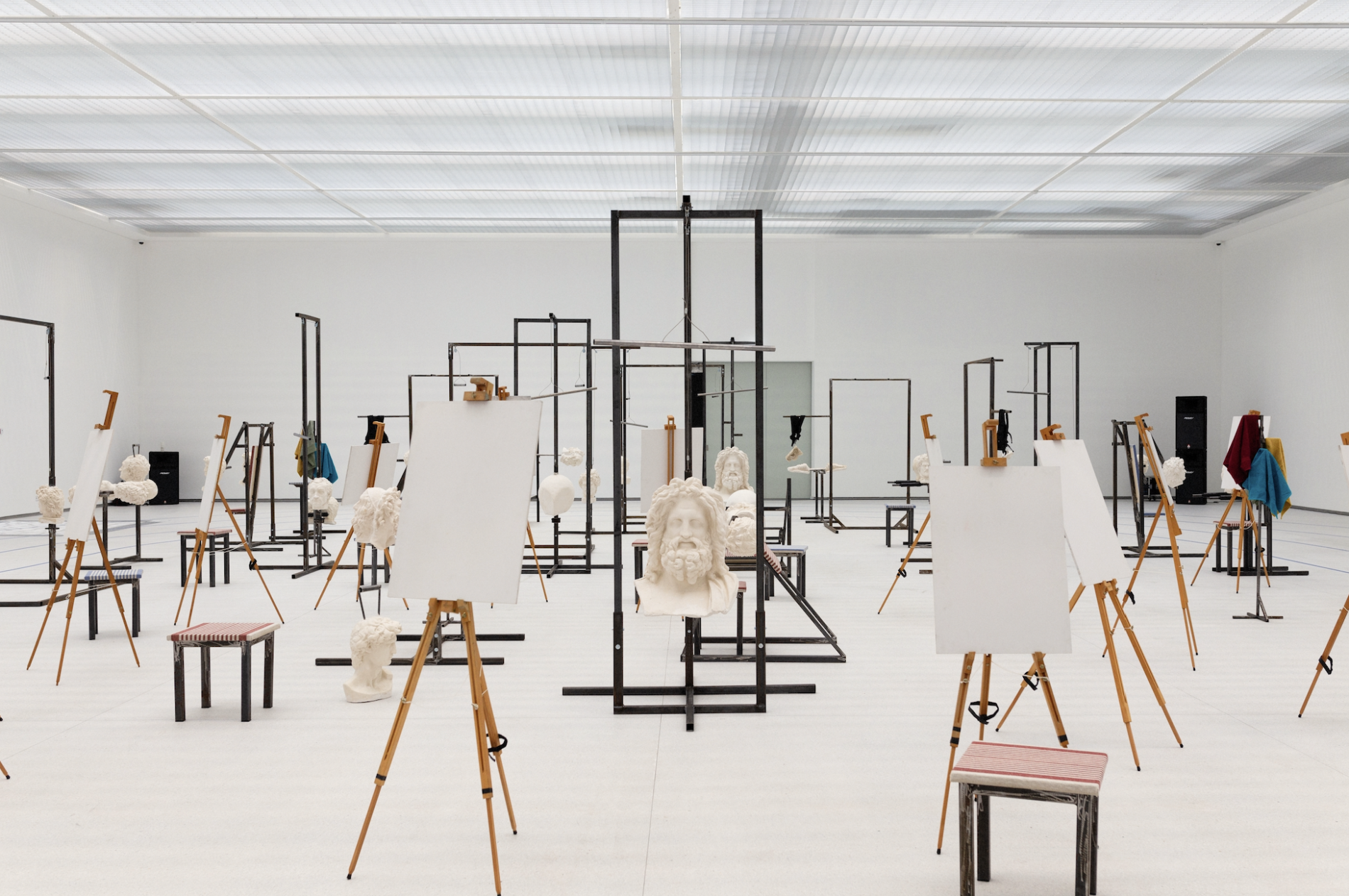
The installation is inspired by Serapinas’ experience as a student at the National M. K. Čiurlionis School of Art in Vilnius, where art education follows a classical methodology emphasising the importance of life drawing and the mastery of painting and sculpture techniques. In this vein, the work looks at crossovers between the repetitive and diligent skills required to create classical forms in Western art history and the discipline required to sculpt the body in the gym.
Revisiting the art school’s archives, Serapinas has reconstructed copies of his own student work, such as portraits of his classmates, an earthworm, and an alien, as well as plaster models once used for drawing classes and replicas of well-known sculptures, such as Michelangelo’s David (16th century) and Apollo Belvedere (2nd century), long considered exemplars of classical antiquity.
Serapinas’ wider practice is invested in recomposing public spaces to foreground and problematise the assumptions that shape them. Researching each site his work appears in, he uncovers hidden dynamics of social hierarchy, economy and memory that decide how institutions function, how people interact, who they pay attention to, and which objects are unacknowledged.
Serapinas strategises and weaponises the physical existence of secrets and access to spaces, uncovered through researching the history of materials, their usage and traditions.

.jpg)
.jpg)



.webp)