
Johnny Marr: The Guitars Behind the Sound
From the Rickenbacker that helped define The Smiths to his signature Jaguar, Johnny Marr’s guitars show how instruments become working archives and cultural objects.

Photo: University of Salford Press Office / Wikimedia Commons, CC BY 2.0.
Johnny Marr has spent more than four decades proving that a guitar can be both an instrument and an idea. The objects associated with his career are compelling because they map the evolution of a sound: Rickenbackers, Jaguars, Gretsches, Gibsons and amplifiers moving through songs, bands and decades, each carrying evidence of a working musician rather than a static celebrity archive.
That idea became unusually visible in September 2026 when Christie’s London presented Marr’s Guitars: The Johnny Marr Collection. Christie’s reported total proceeds of £3,649,280 across 111 lots, more than three times the estimate. Bidders registered from 34 countries, and 81 per cent of registrants were new to the auction house. The result mattered beyond price. It demonstrated how musical instruments can cross from fan culture into a sophisticated international collecting category.
The Rickenbacker that carries a sound
The sale’s top lot was Marr’s 1982 Rickenbacker 330 Jetglo, which sold for £358,400 against an estimate of £60,000–£80,000. Christie’s connected the guitar to early Smiths gigs and recordings including “This Charming Man,” “Still Ill” and “You’ve Got Everything Now.” Marr himself identified the instrument particularly strongly with the sound of “What Difference Does It Make?”

In collecting terms, that is the difference between a beautiful vintage Rickenbacker and a historically significant Rickenbacker. The model, year and condition matter, but the extraordinary premium of meaning comes from documented creative use. The object is connected to composition, recording and performance — three layers of provenance that make it evidence of an artistic process.
An archive that remained alive
The Christie’s sale was not a mausoleum. Several instruments had been used on Marr’s 2026 album The Age of Everything, released on 2 October. That continuity is central to understanding musician collections: the best are often working archives, altered by new songs, repairs, touring and changing preferences.

Marr’s career also makes his collection unusually broad. After The Smiths he worked with The The, Electronic, The Pretenders, Modest Mouse and The Cribs, alongside a long solo career and collaborations across pop, rock and film. The objects therefore connect not only to a single group but to a network of musical histories.
The Jaguar as a designed collaboration
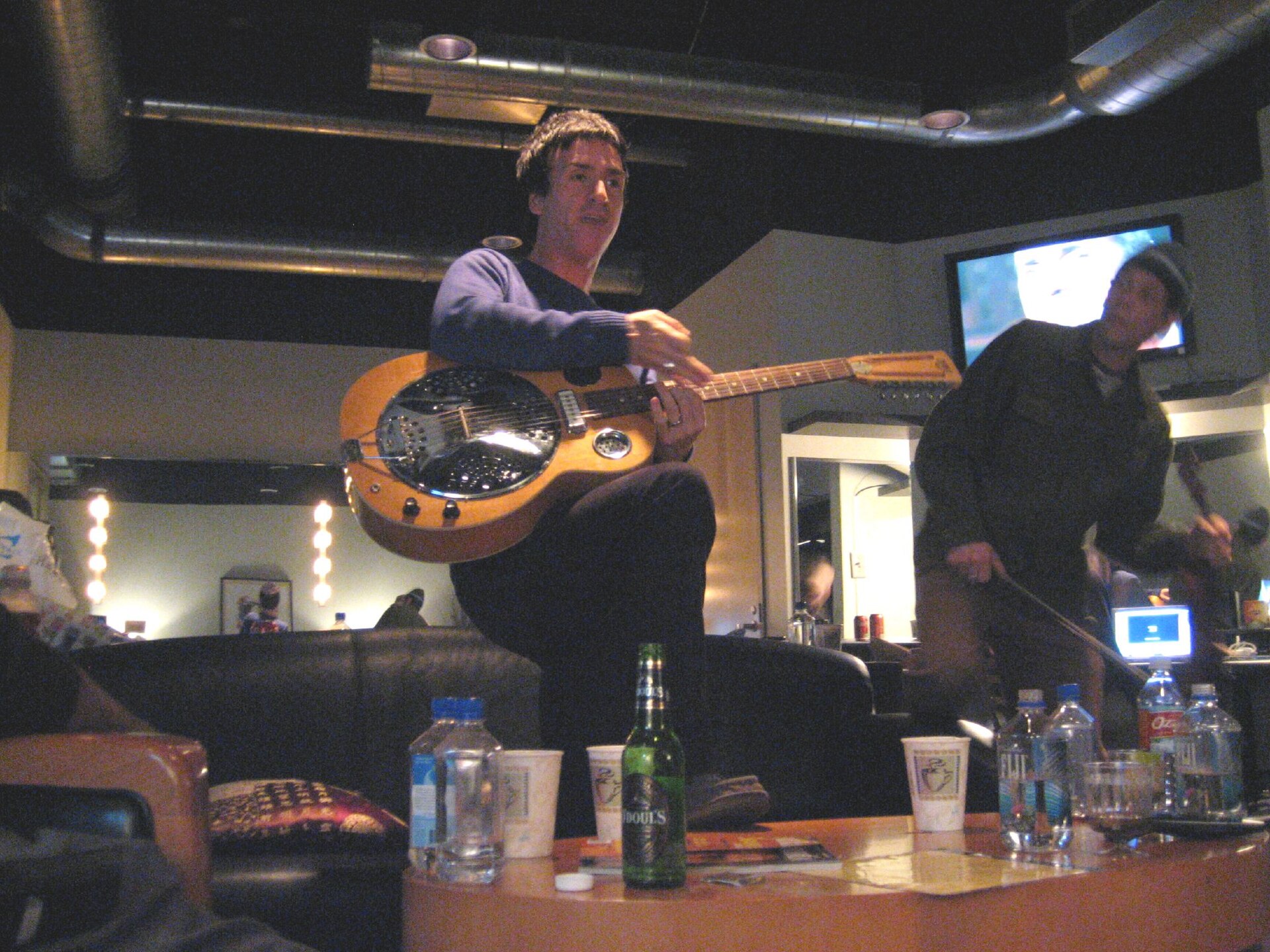
Another part of the story is the Fender Johnny Marr Signature Jaguar. Introduced in 2012 after what Marr described as a four-year process, the model was based partly on his 1965 Jaguar but altered around the practical demands of his playing. Fender’s specification included custom-wound pickups, a four-position blade switch, modified bridge hardware and a neck profile derived from Marr’s vintage instrument.
The point is not simply that the guitar bears his name. It records a musician’s preferences translated into industrial design. Fender said in 2025 that the original signature Jaguar had become one of its best-selling signature models, and released a new limited-edition version with further changes. The designed object had moved from private adaptation to manufactured culture.

When provenance becomes public memory
Instrument collecting has traditionally occupied an awkward space between connoisseurship and memorabilia. Marr’s collection shows why that distinction is increasingly inadequate. A historically important guitar can be assessed through craftsmanship and specification, but also through photographs, recordings, stage footage, studio documentation and testimony. Provenance can be unusually rich because the creative act itself was recorded.

Christie’s also presented the sale through its Private & Iconic Collections department rather than treating the instruments as an eccentric side category. That positioning is revealing. The object is being understood in the same way collectors have long understood significant design, manuscripts or personal archives: as a vessel for biography and cultural history.
The emotional difficulty of deaccessioning
Marr’s own comments around the Rickenbacker make another collector theme visible: letting go. Collections often present themselves as rational systems, but the objects that matter most are rarely neutral. Marr described the Rickenbacker as difficult to part with while also speaking about a desire to move forward. That tension — memory against renewal — is familiar to collectors far beyond music.

The 2026 sale also had a philanthropic dimension: the hammer proceeds from 31 lots were designated for Guide Dogs and the National Autistic Society. It is another reminder that the final chapter of provenance can be intentional. How a collection is dispersed becomes part of its history.
Why Marr belongs at the beginning of COLLECTED
Marr’s guitars embody the proposition behind this new section. They are instruments, design objects, working tools, historical documents and emotionally charged possessions. They demonstrate that collecting culture is most interesting when categories overlap.
The future of serious collecting journalism will not be limited to asking what an object cost. It will ask what it did, who used it, what changed because of it and why the physical thing still matters after the sound has faded.