
Galileo: The Book That Changed Our Universe
Galileo’s 1610 Sidereus Nuncius transformed telescopic observation into a printed object that helped change how Europe understood the heavens.

Galileo Galilei, Sidereus Nuncius, Venice, 1610. Public domain via Wikimedia Commons.
There are rare books that preserve a text, and there are rare books that preserve the moment a new way of seeing entered the world. Galileo Galilei’s Sidereus Nuncius — the Starry Messenger — belongs decisively to the latter group.
Published in Venice by Tommaso Baglioni in March 1610, the slim quarto announced observations made through Galileo’s improved telescope: a rugged, imperfect lunar surface; innumerable stars invisible to the naked eye; and four bodies orbiting Jupiter. The Library of Congress describes its copy as containing woodcut and engraved illustrations, with lunar images derived from Galileo’s own drawings. The book compressed an extraordinary sequence — observation, drawing, argument, printing and circulation — into an object that could travel.
A book made from looking
What makes Sidereus Nuncius so compelling as a collectible object is the intimacy between page and instrument. Galileo did not merely propose a theory. He looked, recorded and published. The telescope extended perception; the book extended the telescope’s reach across Europe.
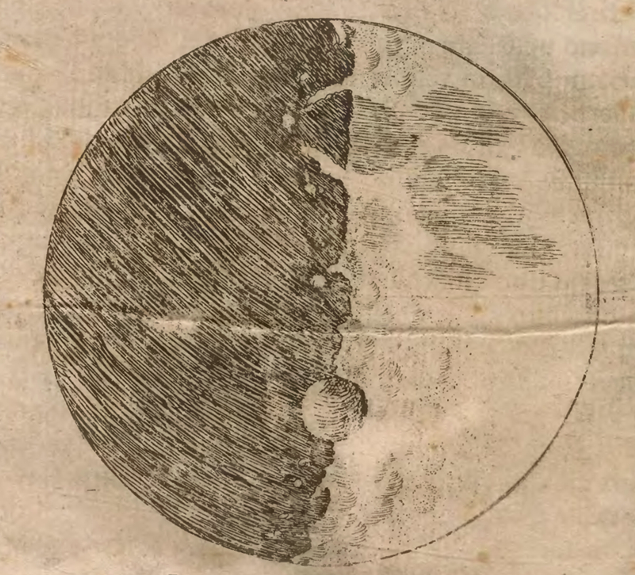
That distinction matters. Earlier cosmology could be argued through inherited authorities and mathematical models. Galileo’s publication placed repeated visual observation at the centre of persuasion. The illustrations are therefore not ornamental. They are part of the evidence.
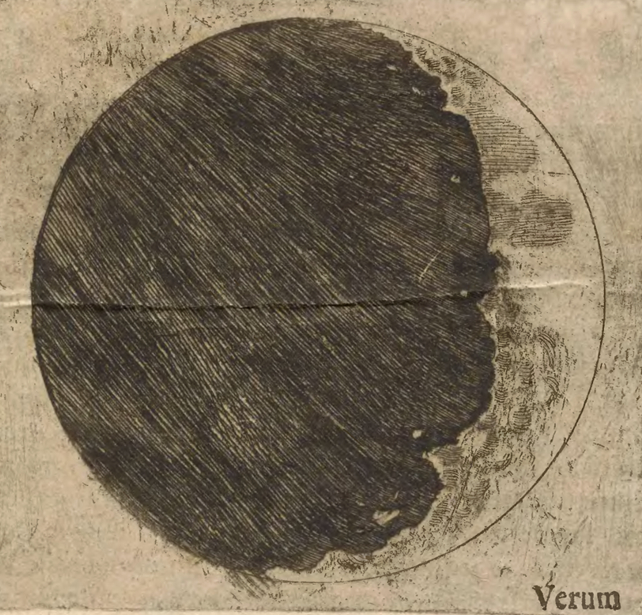
The Moon becomes a place
Galileo’s lunar observations challenged the traditional conception of the heavens as perfectly smooth and incorruptible. Through light and shadow he inferred mountains, depressions and an uneven surface. For a modern reader, accustomed to spacecraft photography, it is easy to underestimate how destabilising that proposition was.
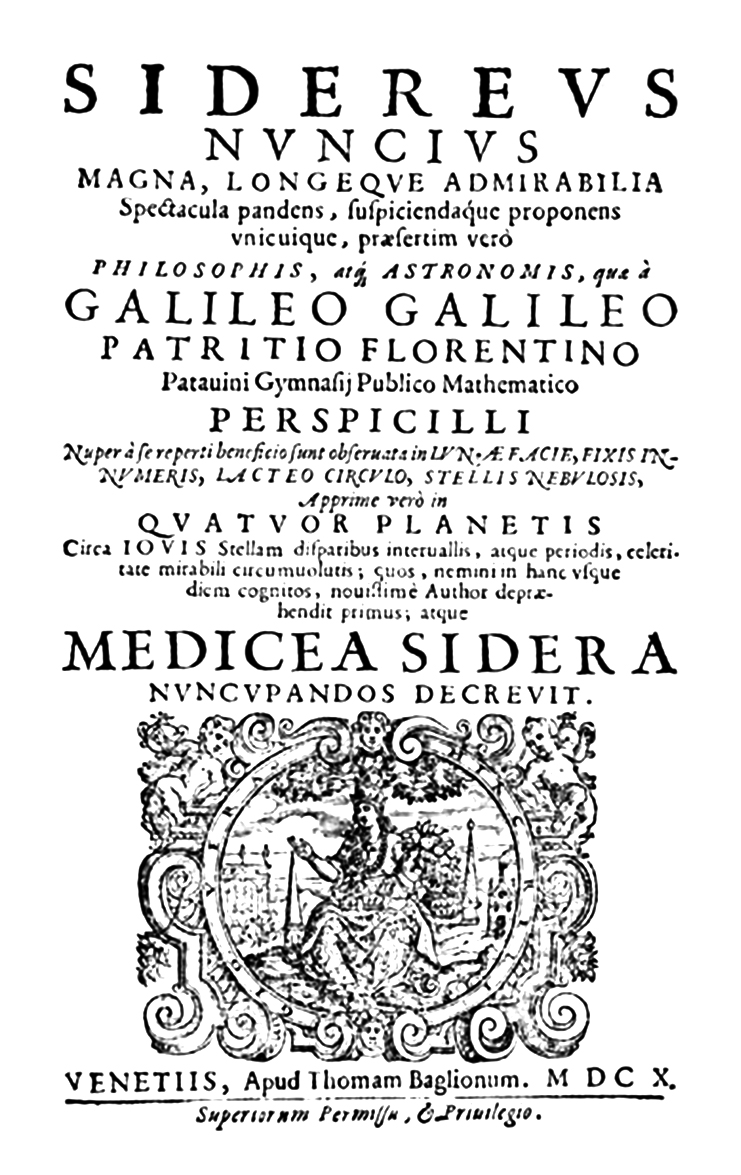
The surviving early editions preserve the historical encounter between familiar typography and radical content. They are Renaissance printed books that happen to contain a new visual universe. That tension — conventional object, revolutionary message — is part of their power.
Jupiter and the authority of sequence
The observations of Jupiter were equally consequential. Galileo recorded small points of light changing position around the planet and concluded that they were satellites. The fact that bodies could orbit something other than Earth did not by itself prove heliocentrism, but it weakened a central assumption of an Earth-centred cosmos.

For collectors of scientific books, the sequence of diagrams is especially evocative because it shows knowledge being assembled over time. We are not only reading the conclusion. We are watching a pattern emerge.
The physical book as scientific instrument
The rarity of Sidereus Nuncius is only one part of its significance. Copy-specific features — margins, bindings, annotations, ownership marks, paper and condition — can illuminate how the book circulated and was used. In a work with such a dense history of reception, provenance can connect a copy to the intellectual networks that absorbed the discoveries.

The Library of Congress acquired an important copy in 2008 after the title had remained on its desiderata list for decades. Its later facsimile project is an instructive example of the relationship between preservation and access: the original remains a rare material witness, while high-quality reproduction allows the knowledge it contains to circulate again.
Authenticity matters intensely
High-value scientific books require the same discipline as major art. Edition, issue, completeness, restoration, replaced leaves and provenance can materially affect significance. In works where diagrams and plates carry arguments, the loss or substitution of even a single leaf can change the integrity of the object.

That is why the best rare-book specialists work like historians as much as dealers. They compare typography, paper states, collation and known copies. The collector is buying a physical participant in history, not simply a famous title.
Why Galileo still belongs on a collector’s shelf
Sidereus Nuncius offers an unusually pure case of an object whose cultural importance exceeds category. It is a book, a scientific document, a visual record, a technological consequence and a political object dedicated to Medici power. It helped change the relationship between seeing and believing.
For COLLECTED, that is the definition of an iconic artefact: an object that not only survives history but helps explain how history changed.