LATEST NEWS:
Bernd and Hilla Becher
Icons of German postwar photography, Bernd and Hilla Becher meticulously documented industrial architecture across Europe and North America, challenging the distinction between documentary and fine art photography. The artist duo and couple used large-format cameras to create striking blackand-white images of industrial forms, strictly adhering to their formal aesthetic principles and typological approach
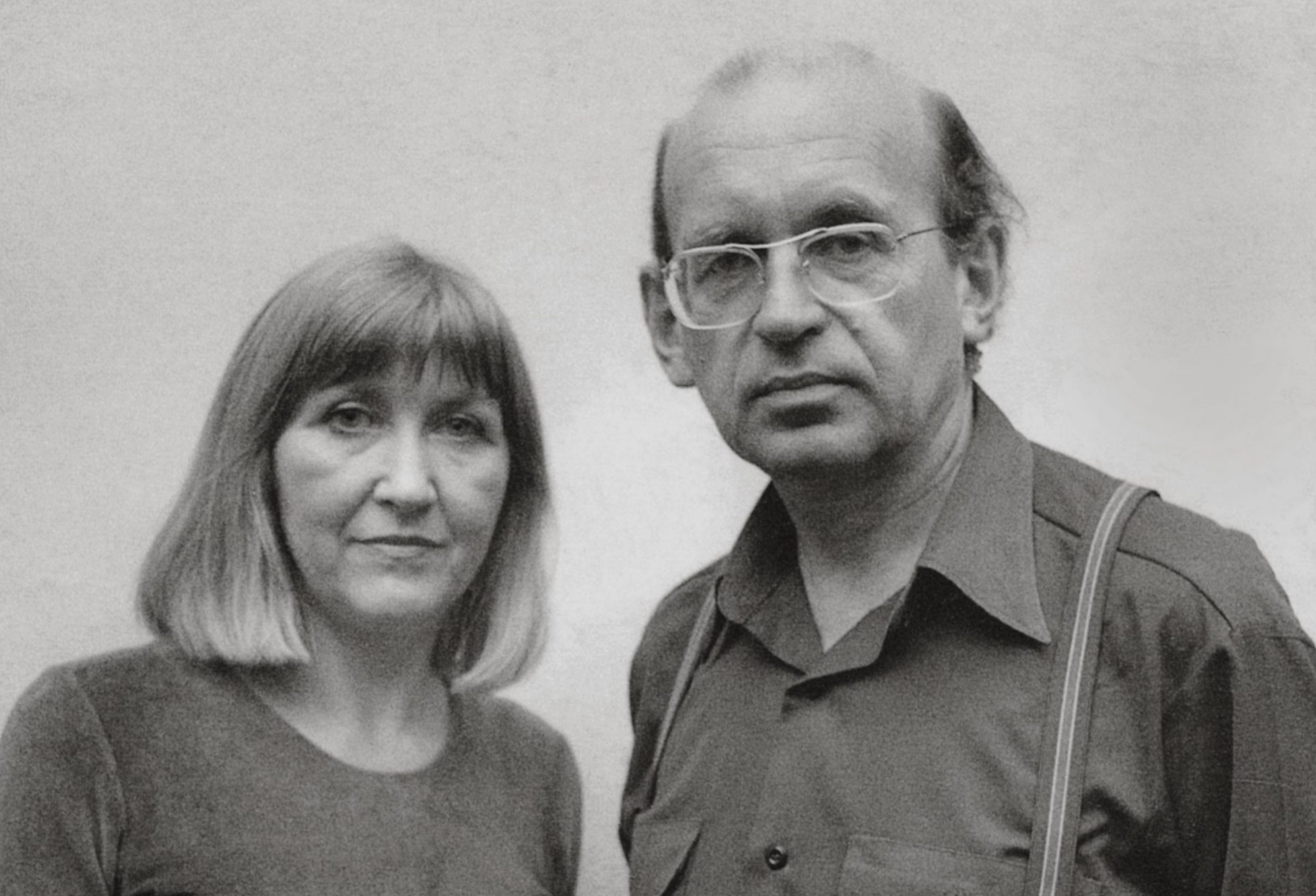
Icons of German postwar photography, Bernd and Hilla Becher meticulously documented industrial architecture across Europe and North America, challenging the distinction between documentary and fine art photography. The artist duo and couple used large-format cameras to create striking black-and-white images of industrial forms, strictly adhering to their formal aesthetic principles and typological approach. Their photography simultaneously distils each construction into a taxonomy of visually and functionally homogeneous structures, whilst emphasising the particular and eccentric character of each.
Sprüth Magers is pleased to present an eponymously titled solo exhibition featuring several groupings of the Bechers’ most recognisable archetypal forms: gas tanks, water towers, winding towers, framework houses and preparation plants. This is the artists’ first solo exhibition at Sprüth Magers, London, in over a decade, marking the first since Hilla Becher’s passing in 2015. In recognition of this fact, the five gas tanks that commence the exhibition are from Great Britain, several from London specifically, and most of the work has never been shown in the country before.
The Bechers’ photographs of gas tanks depict the circular edifice characteristic of historic gasometers: a metal guide frame with an expandable and retractable storage vessel within. These photographs record these gasometers at various levels of containment. Yet, unlike the other gas tanks on view, Gas Tank, Ilford, London, UK (2009) captures the gasometer at a moment in which it is nearly empty, thus revealing the complete ring of the structure’s discoid form. This visual distinction is made all the more apparent by the Bechers’ rigorous aesthetic approach and commitment to objectivity, which encourages close looking and the identification of difference.
Interweaving early and later work by the Bechers across a range of building types, including both single pieces and a typology, this exhibition reflects the profound variety produced from the artists’ concise methodology. Within the gas tanks on display, there are further formalistic groupings of structures that read as vertical, horizontal and even circular. Similarly, within the selection of water towers, there is geographical heterogeneity. The French, Belgian and even two rare Italian water towers reflect the formal diversity that can arise from buildings with corresponding functions across national borders and within them.
On the second floor, several winding towers are also presented. Unlike gas tanks and water towers built for containment, the purpose of these structures was operational, transporting materials and workers in and out of underground mines, and the corresponding photographs do not depict the full structure, which is partially underground.
The framework houses are the earliest works in the exhibition and record the distinctive architecture of Germany’s industrial Siegen region, one of the oldest iron-producing parts of Europe. In 1790, a law was passed that regulated the use of wood, which was needed for iron-smelting, resulting in the minimalistic, half-timbered domiciles unique to the region. A native of Siegen, Bernd Becher grew up in a framework house and would have been intimately familiar with its neoclassical proportions and idiosyncratic gables. Having been trained as a painter and illustrator, his early solo work depicts the Siegen landscape, initially taking photographs for the purpose of reproducing them by hand. This practice would prove an important source of influence for his collaboration with Hilla, who was already expertly skilled in the technical conventions of photography by the time they met.
From the domestic framework house to the quirky preparation plants that occupy the same room, the Bechers draw out an austere elegance within everyday architecture, inviting us to see the built environment of modernity not merely as a backdrop to industrial society, but as sculpture itself.
Bernd (1931–2007) and Hilla Becher (1934–2015) lived in Düsseldorf and worked together since 1959. A major solo show of their work will be on view at Fondazione MAST, Bologna (April 23 – September 27, 2026), which traveled from Die Photographische Sammlung/SK Stiftung Kultur, Cologne (September 5, 2025 – February 1, 2026). Other selected solo exhibitions include The Metropolitan Museum of Art, New York (2022), which travelled to San Francisco Museum of Modern Art (2022), National Museum Cardiff, Wales (2019), Josef Albers Museum Quadrat Bottrop (2018), Die Photographische Sammlung/SK Stiftung Kultur, Cologne (2016, 2013, 2010, 2006), Hamburger Bahnhof, Berlin (2005), Centre Pompidou, Paris (2004), K21 Kunstsammlung Nordrhein-Westfalen, Düsseldorf (2003) and the 44th Venice Biennale (1990). Group exhibitions include Barbican Art Gallery, London (2014), Pinakothek der Moderne, Munich (2014, 2004), MoMA, New York (2013), Solomon R. Guggenheim Museum, New York (2010), Hamburger Bahnhof, Berlin (2008), The National Museum of Modern Art, Tokyo (2005), Hammer Museum, Los Angeles (2004), Tate Modern, London (2004, 2003) and Documenta XI, VII, VI and V, Kassel (2002, 1982, 1977, 1972).

.jpg)
.jpg)










.webp)